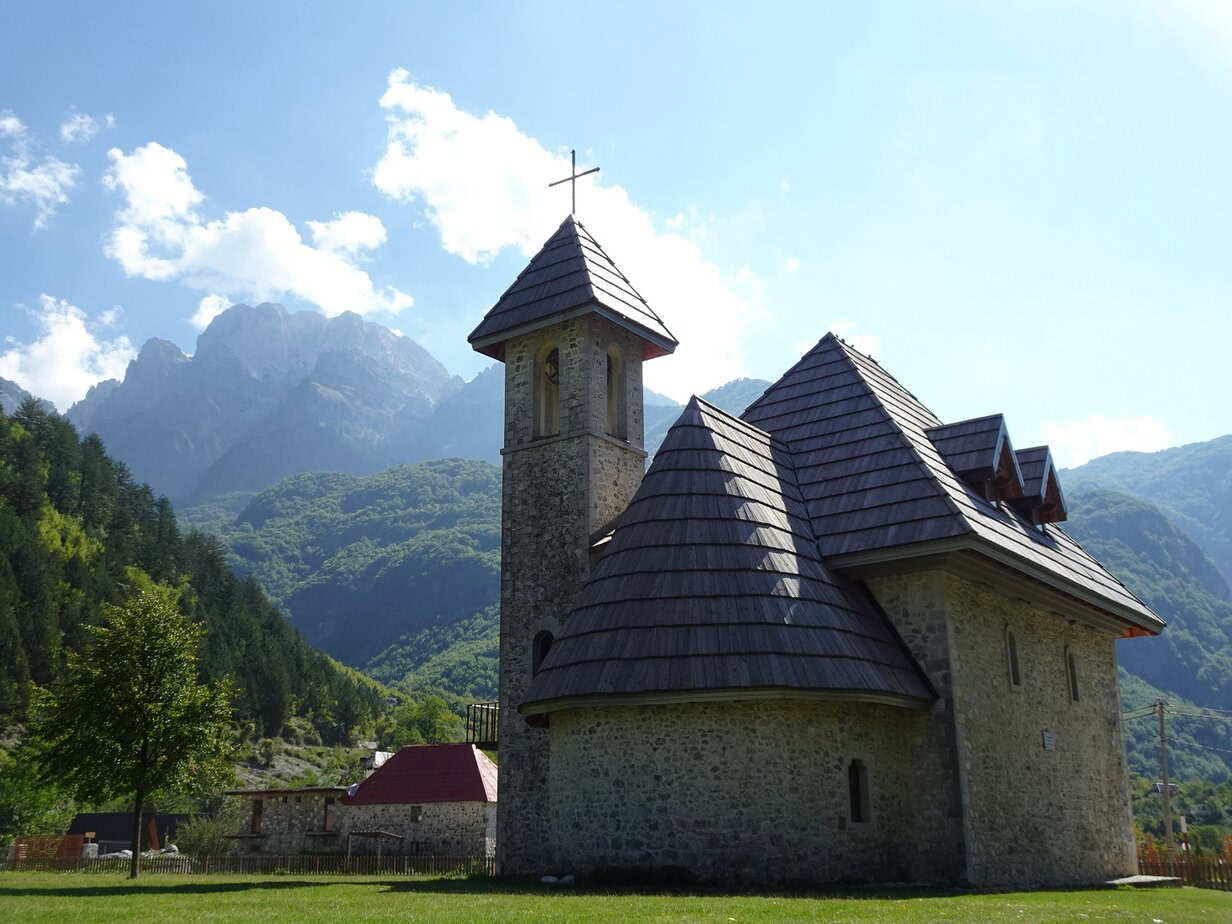
Theth was one of our favourite places that we came across on our trip through Northern Albania. The whole valley is very picturesque, with its little stone houses, pastures and the backdrop of dramatic limestone peaks, plus it’s a fantastic base for day hikes into the surrounding Albanian Alps.
A lot of people seem to come here to do the famous Theth-Valbonë Hike, but we thought it really pays to spend a few more days here, to explore the area and enjoy the laid-back vibe of the valley. Here are our favourite things to do in Theth.

This post may contain affiliate links, and I might earn a small commission at no additional cost to you. For more info, click here.
Guided Tours of the Theth Valley
If you don’t have your own transport or just want to visit Theth with a local guide, there are tons of guided tours available, including day-trips from Tirana, if you’re short on time. You can have a look at some well-rated options below.
The Best Things to Do in the Theth Valley
All of the spots I’ve described below can be visited from Theth village in a day or two, either before tackling the hike over the pass to Valbonë or instead of that, if you want to stick to some easier hikes.
Judging by the number of people we met, the most popular places around seem to be Grunas Waterfall and the Blue Eye in the surrounding mountains, as well as the Kulla e Ngujimit and Theth Church in the village proper.
If you want to avoid the crowds, it’s a good idea to check them out early in the morning or late in the afternoon. Most of the other places in this list we had basically to ourselves.
Grunas Waterfall (Ujëvara e Grunasit)
This seems to be one of the most popular hiking destinations in the area, and it’s easy to see why. With a height of 25m, Grunas Waterfall is quite impressive, but it’s also super easy to reach from the village.
It’s a mostly flat half-hour walk through the valley of the Theth River, before the path rises a little bit for the last 100 metres or so towards the base of the falls.
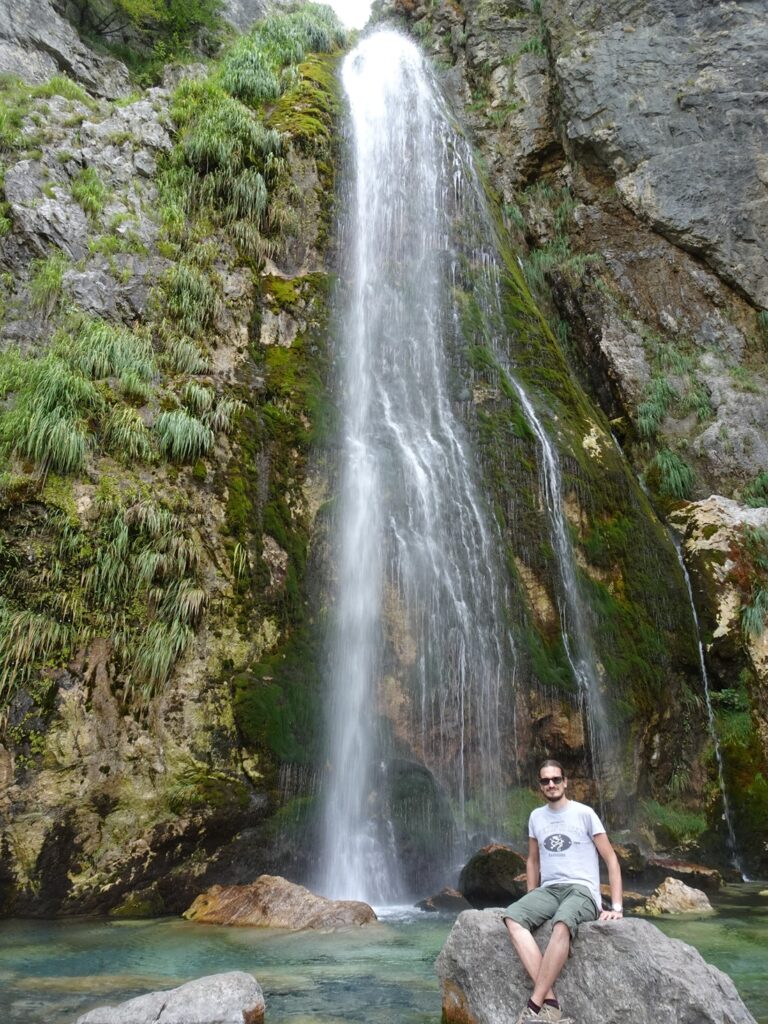
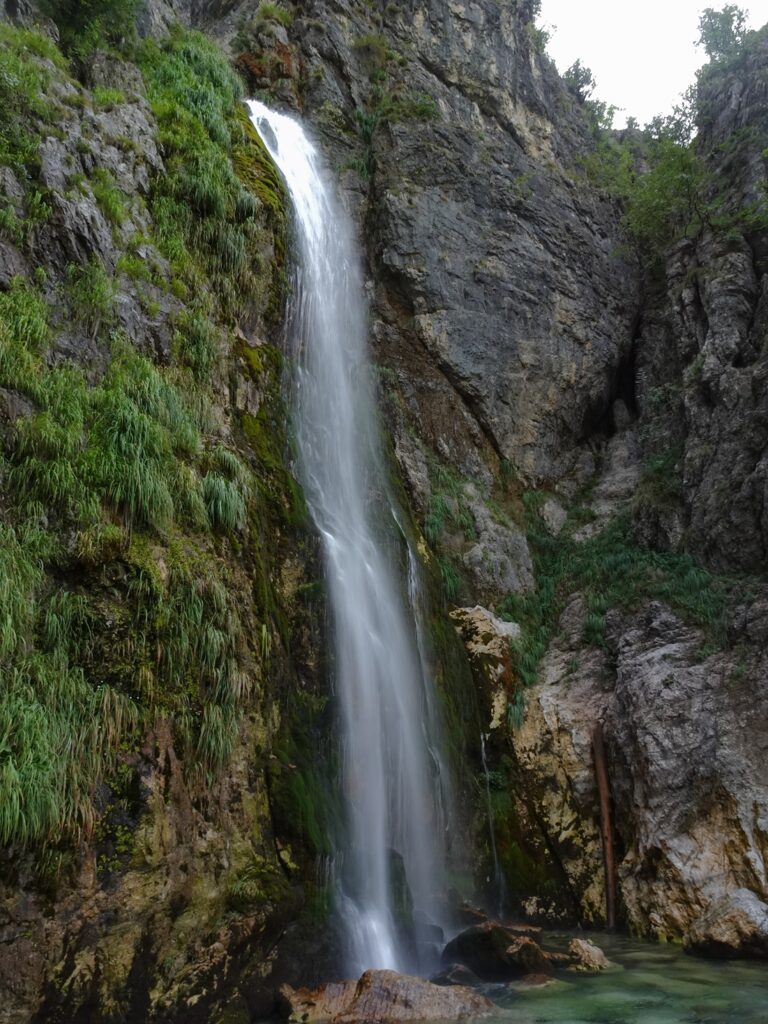
The fact that it’s so easy to get there also means that it can get very crowded, so I’d recommend getting here either before 9am or in the late afternoon. When we arrived around 9.30am, there were already a few people there and when we left about 15 minutes later, the place was quite packed.
To get to the waterfall, you’ll just have to follow the path south along the eastern side of the Thethi River Gorge from the southern end of the village, then stick to the higher trail to the left when the trail splits. Afterwards, you can also continue hiking through the valley to the Blue Eye.
Grunas Canyon
Close to Grunas Waterfall is another spectacular natural sight that most people seem to either seem to skip or not be aware of at all. At the southern end of Grunas Hamlet (which is really only a collection of three or four houses), the Thethi River narrows dramatically and flows through a canyon with 50m-high stone walls to both sides.
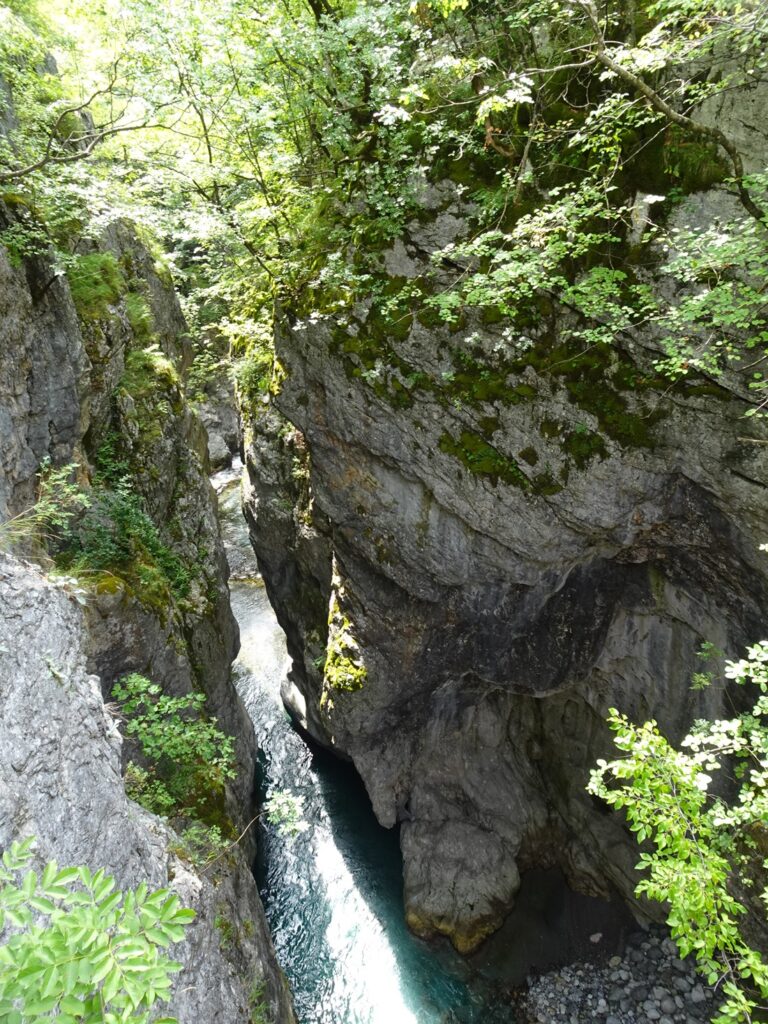
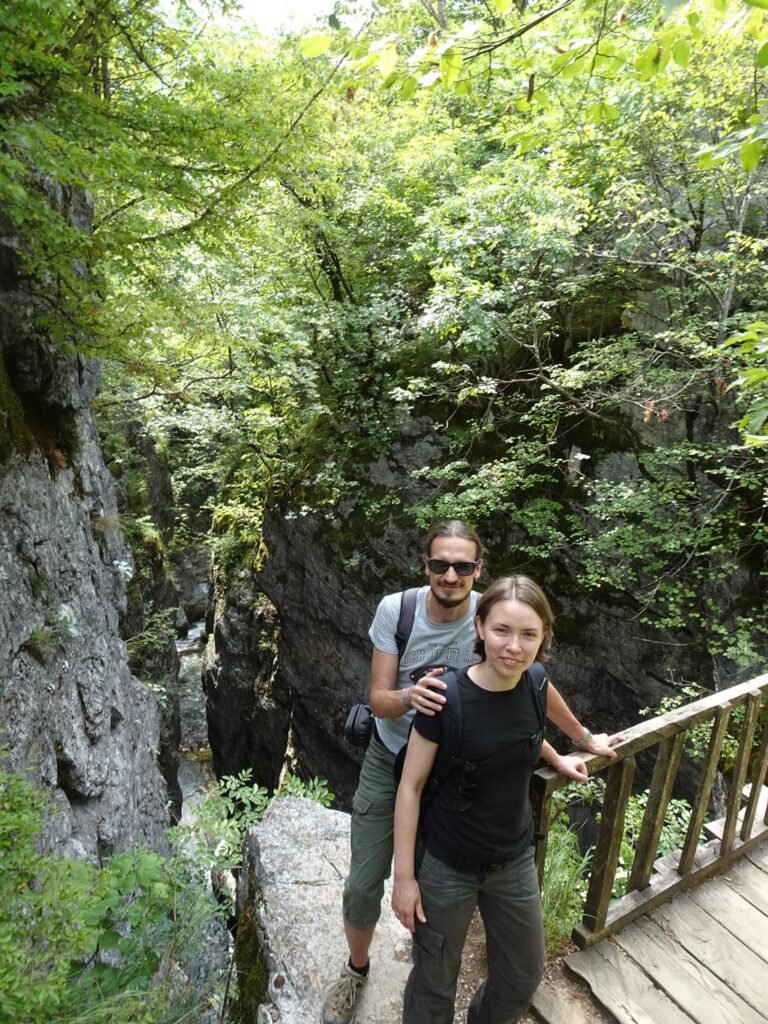
You can cross the canyon on a small wooden bridge, from where you have the best views down to the river. The bridge itself is on the way from the surfaced Theth-Nderlysaj Road to Grunas Waterfall and definitely worth the short detour if you’re continuing through the Lumi i Thethit Valley to the Blue Eye.
To do so, you’ll have to turn right off the main trail once you reach an open, terraced area, which are actually the remains of a prehistoric fortified settlement dating to the 8th century BC.
Blue Eye of Theth (Syri i Kalter)
This is another very popular spot, but it takes a little longer to reach than Grunas Waterfall. The trailhead is in the tiny village of Nderlysaj, from where you’ll have to walk for about 45 minutes up the mountain and through a spectacular valley to reach the Blue Eye.
There’s a new surfaced road to Nderlysaj, so you can drive here from Theth, ideally early in the morning to beat the crowds. The alternative would be to hike here from Theth via Grunas Waterfall in about 2 hours, but it might be pretty busy when you arrive, which was the case for us.
In the high season (summer), there also seems to be a minibus connection in the morning, so you might be able to catch a ride at least one-way. According to this website, there’s no fixed timetable, so you might have to ask around at your guesthouse or the visitor’s centre at the entrance to the valley.
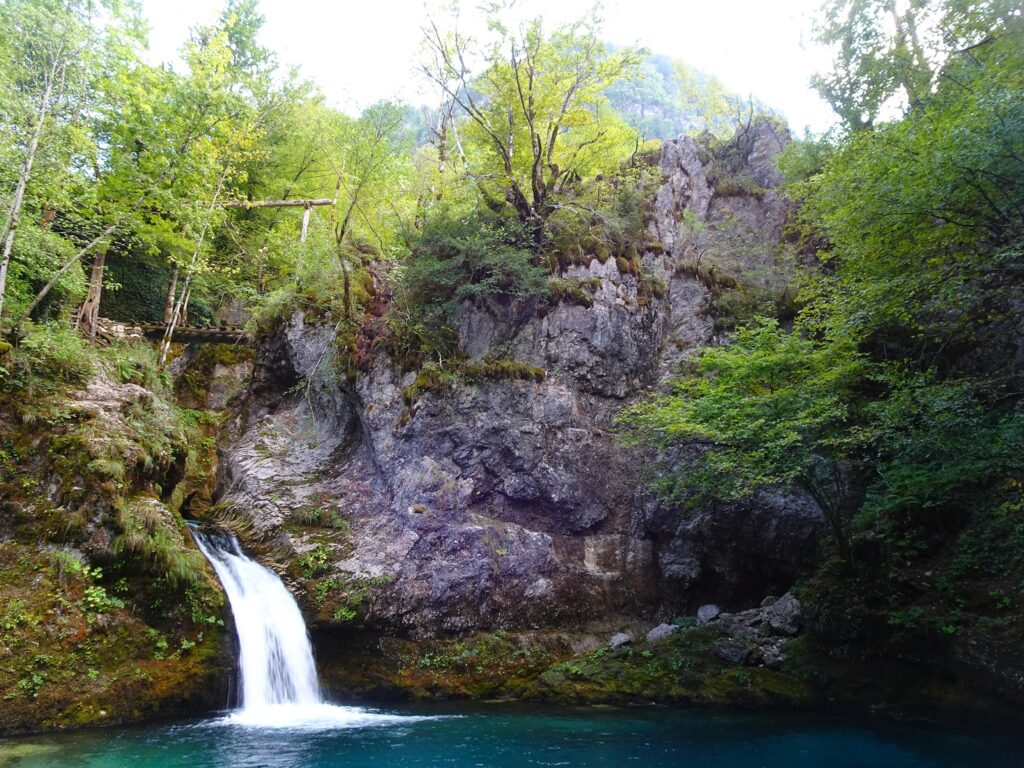
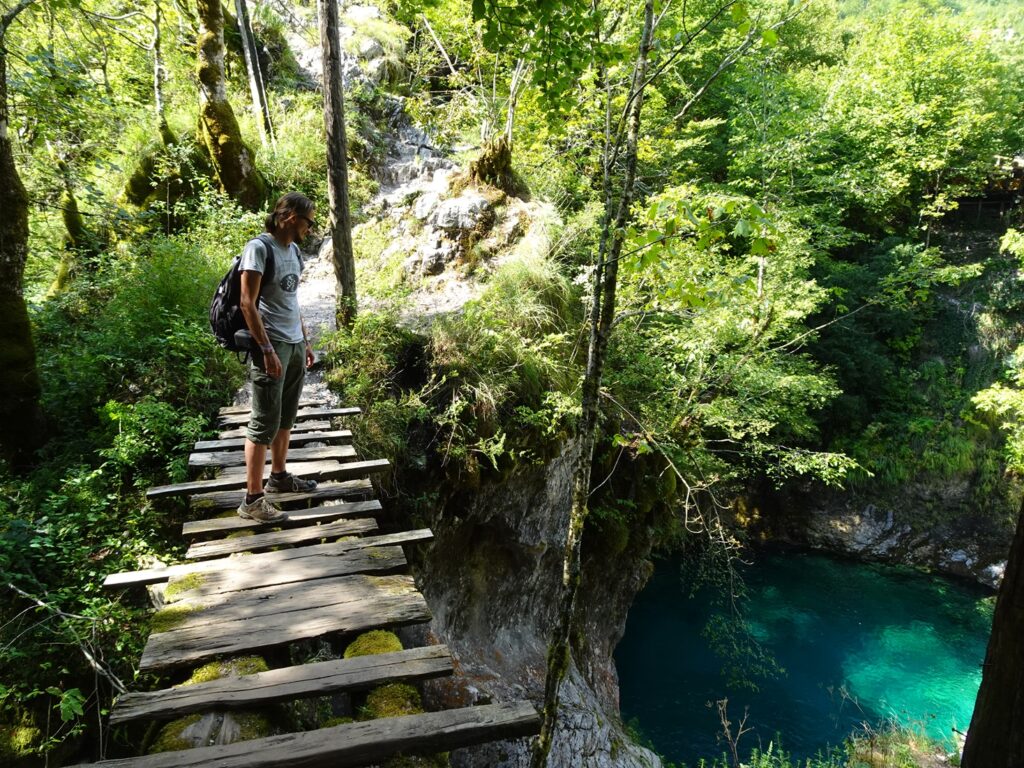
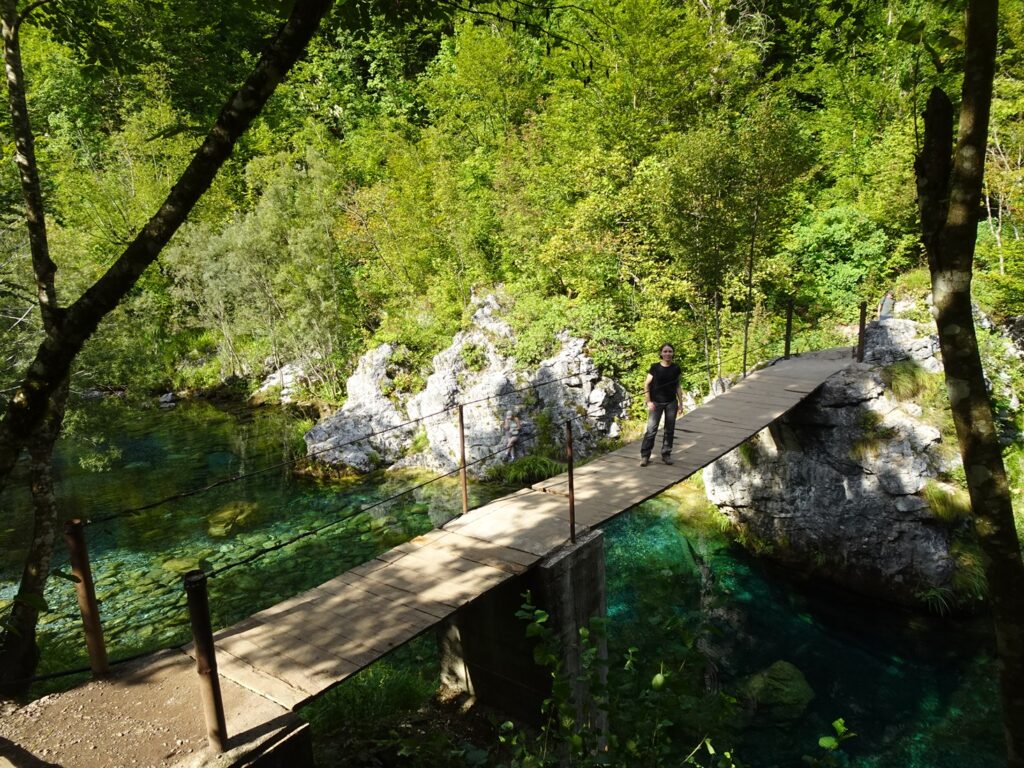
The Blue Eye itself is a pretty little mountain pool surrounded by karst cliffs, which is fed by an underground spring and a small cascade. It’s possible to take a swim in it, but I have to warn you that this was one of the coldest bodies of water I ever came across (topping even Lake Baikal). I don’t think I managed to stay in the water for longer than 30 seconds.
Otherwise, there’s a small café with nice outdoor seating on wooden balconies above the cliff and a wobbly wooden bridge over the waterfall with a nice view down into the pool. There’s another swimming spot in the Përroi i Zi River, which you’ll cross on a rope bridge on the way to the Blue Eye.
If the area is too busy for your tastes, I recommend following the river north-west for a few minutes, where we quickly left everyone else behind and had the amazing valley completely to ourselves.
Lumi i Thethit Valley
Considering the fact that this spectacularly beautiful valley connects the super popular Grunas Waterfall and Blue Eye, we were a bit surprised that we didn’t meet more people here. Then again, most people we met drove to the trailhead to the Blue Eye.
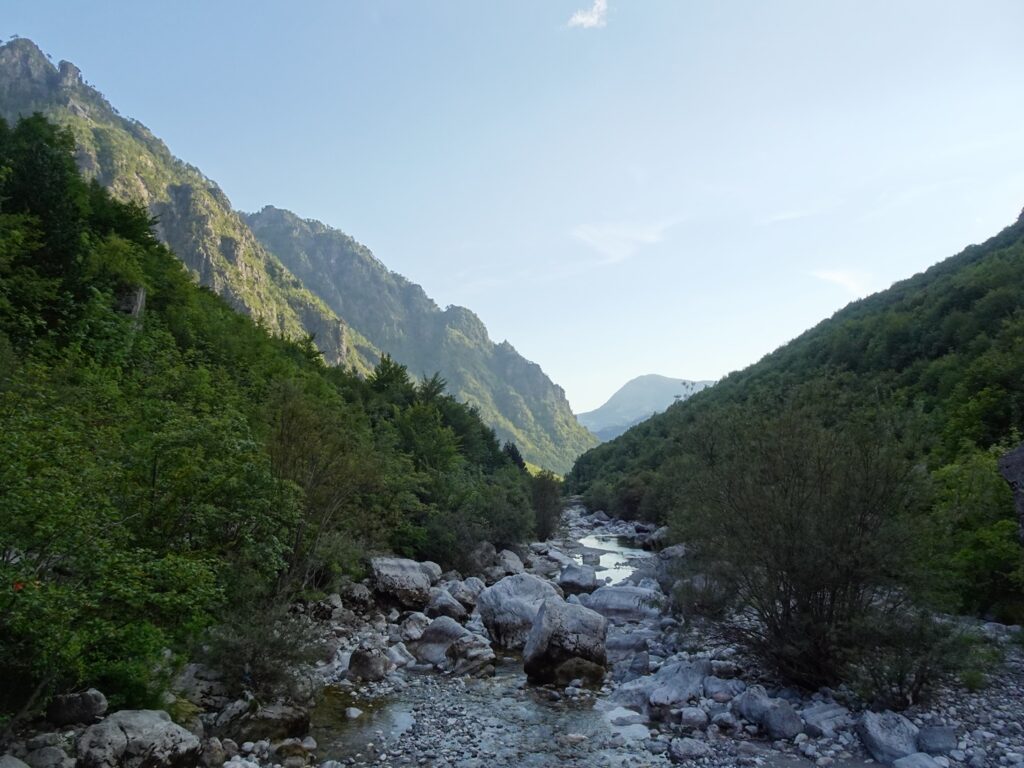
If you have the time to tackle the hike, I highly recommend doing it. It’s pretty easy and flat for the most part, and there are some amazing views of the Thethi River and the surrounding peaks. The main issue is that the lack of public transport to Nderlysaj for most of the year means that you might have to walk both ways.
That said, in the high season (summer), there seems to be a minibus connection from Theth to Nderlysaj in the morning, so you might be able to take the bus there and then walk back, but as there’s no fixed timetable, you’ll have to ask around for the current schedule.
Otherwise, you might also find someone who’ll give you a lift one-way. We met some people at Grunas Waterfall who took us along to Nderlysaj in their rental car, then walked back through the valley from the Blue Eye to Theth, which honestly was the ideal scenario.
The hike from Theth to Nderlysaj is about 5km and takes maybe 1.5 hours one way, if you take your time and enjoy the views along the way. That said, you’ll have to keep in mind that it’s another hour to continue to the other side of Nderlysaj Village and up to the Blue Eye, so make sure to bring enough time.
Have a Coffee at Kunora e Grunasit
One of our favourite places for a coffee in the area was Kunora e Grunasit, a traditional stone house, whose grounds have been converted to a small open-air café. The kulla itself is beautiful, and the garden has a great view of the surrounding peaks and down to the river.
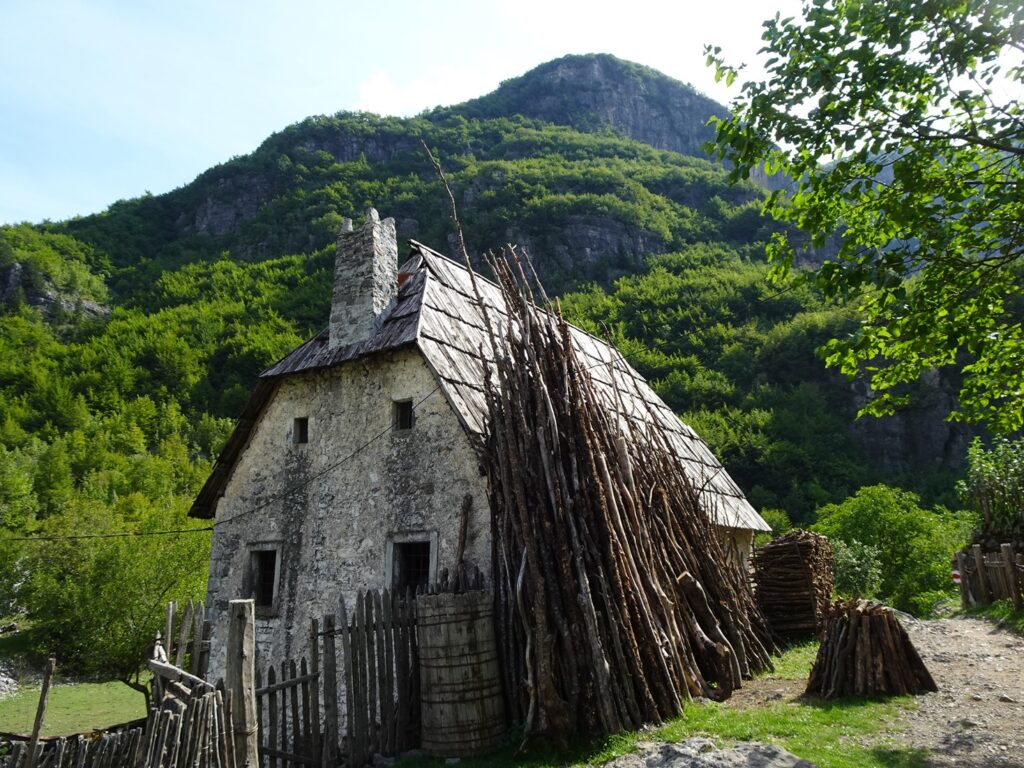
We stopped here on the way back from our all-day hike to the Blue Eye, but we thought that this would probably also be a nice place for a morning coffee. You’ll pass the place about halfway on the hike from Theth to Grunas Waterfall, shortly after the trail splits, and you’ll have to stick to the left-hand path.
Lock-In Tower (Kulla e Ngujimit)
This mid-19th-century building at the very southern end of the village is advertised by many different English names: Lock-In Tower, Reconciliation Tower, Shutting Tower, Tower of Zef Koçeku… the list probably goes on.
Ultimately, it’s another one of the kullas or stone tower-houses that you can find all over north-eastern Albania, but definitely one of the prettiest ones we came across (and one of only three we managed to visit the interior of).
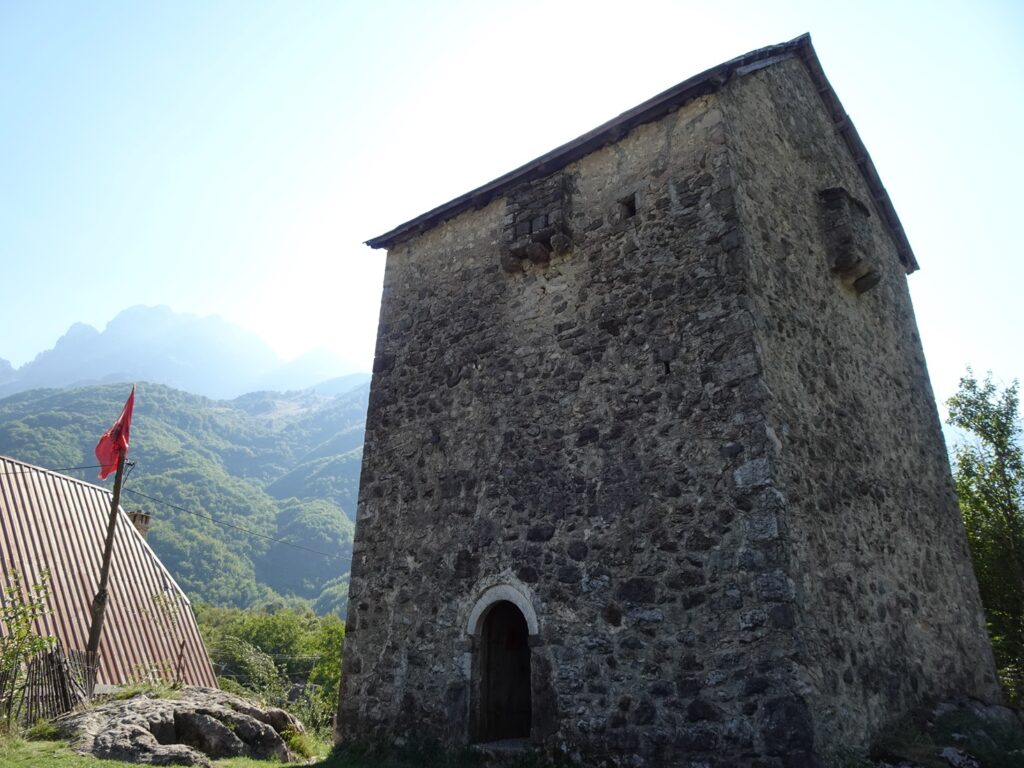
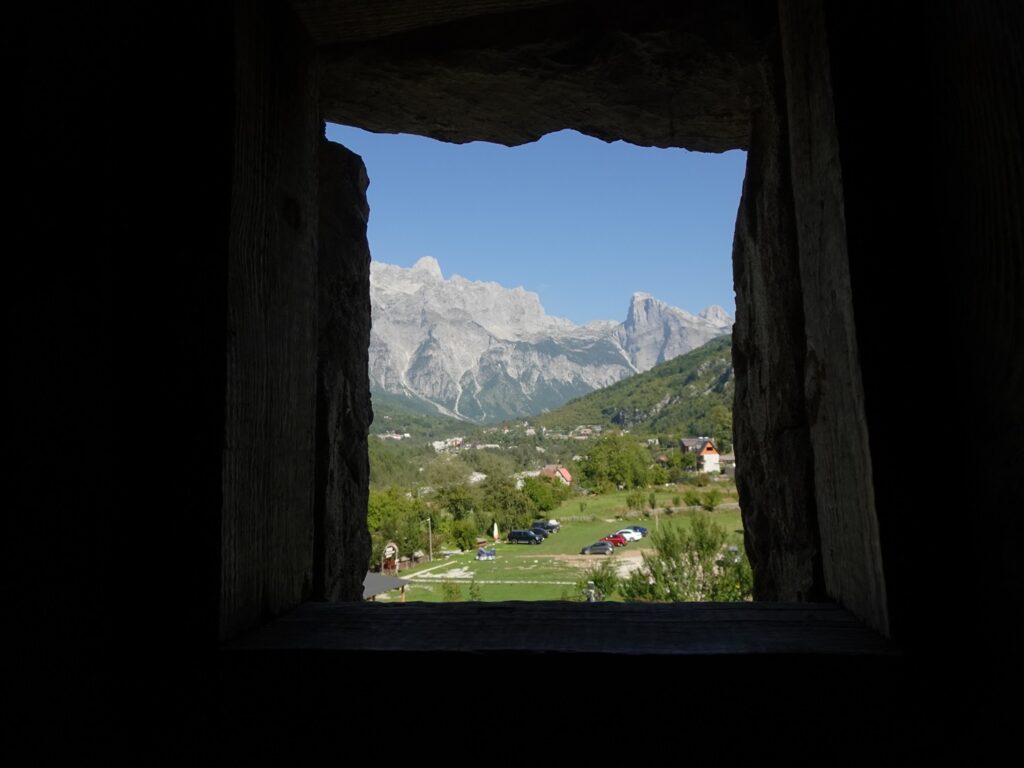
It was used as a temporary refuge for men who were targeted during the family blood feuds, which were decreed by the 16th-century Kanun of Leke Dukagjini, a kind of Albanian tribal code. People could hole up here for up to 15 days, while their fate was decided by a jury of village elders.
You can visit the inside of the building for 200 Lek. The tower was built atop a small rise right on the bare rock. We found it interesting that the rock just sticks up and wasn’t covered to make a level floor level. Then again, this part of the tower was only used as a storage space.
The upper levels could only be reached by a wooden ladder, which could be pulled in to fortify the rooms even better. The first floor has a few traditional pieces of furniture and historic photographs, while the top floor has only an ornate rug and nice views of the valley from its tiny windows.
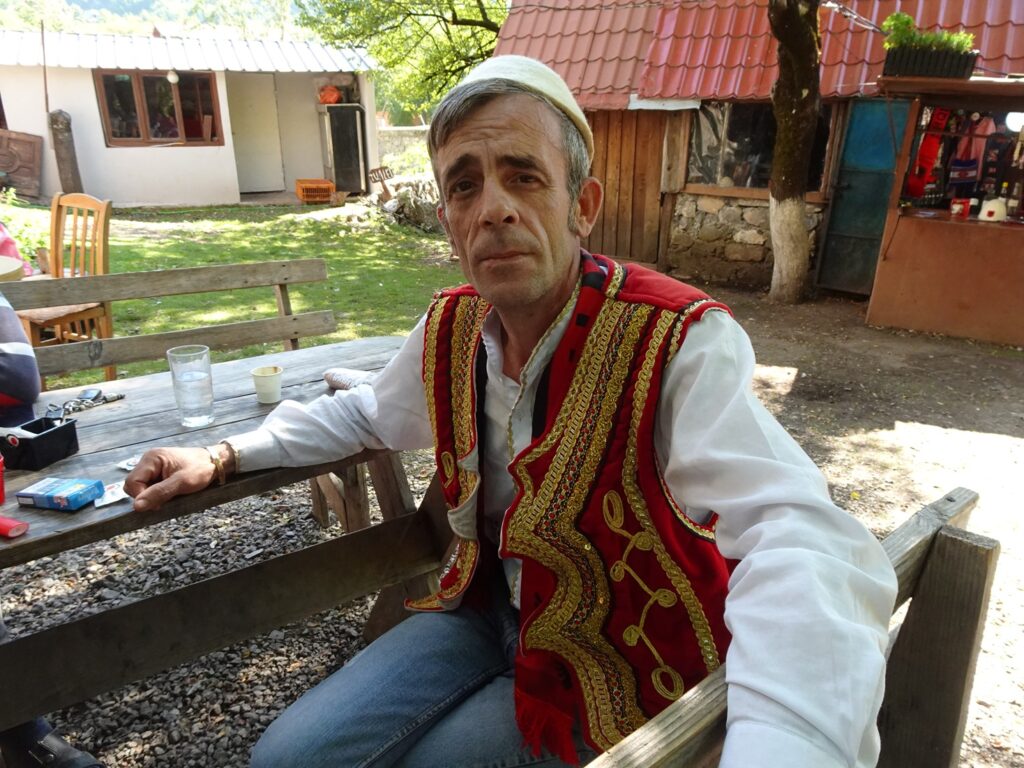
A tourist guide hangs around the garden, who might be able to explain the history a little more in-depth, but he was busy when we arrived, so we explored on our own. I still asked him for a picture afterwards, as I liked the traditional Albanian clothes he was wearing.
Theth Church
This super picturesque stone church in the centre of Theth dates to 1892 and luckily survived the Hoxha Regime, when a lot of other historic churches and mosques in Albania were destroyed. Every time we passed it, the church was closed, so I assume that they only open it for mass.
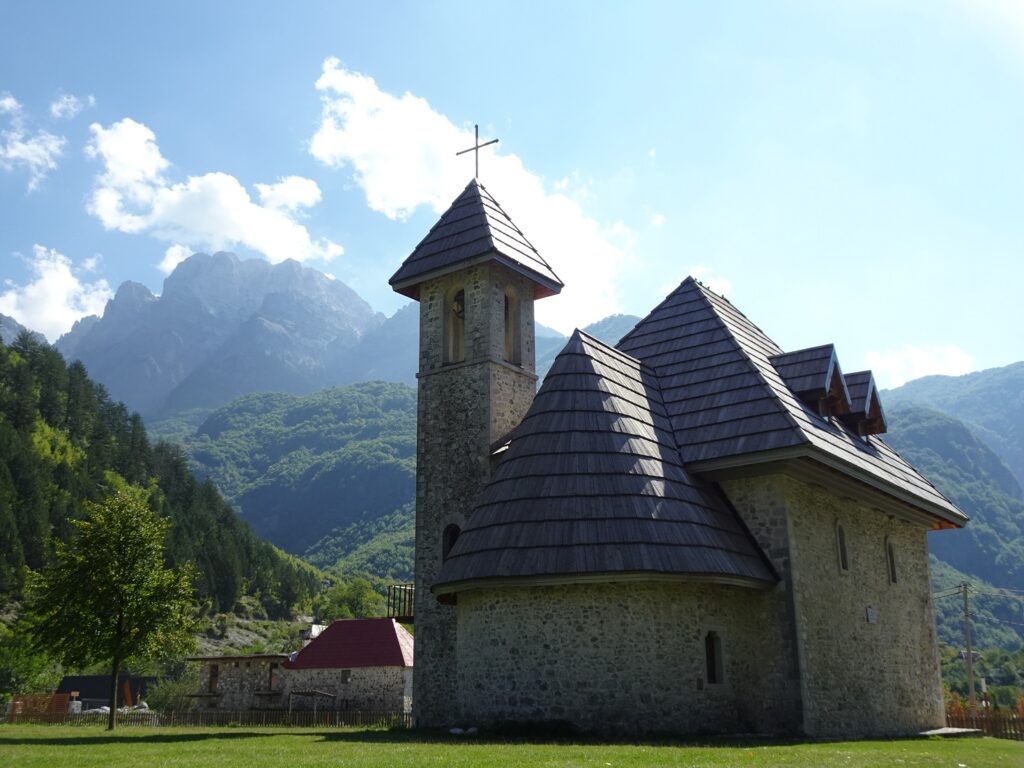
That said, we found the exterior alone very beautiful, especially on a sunny day with the tall peaks of the Albanian Alps in the background. Right next to the church, there’s a small graveyard, which I found almost as photogenic as the church itself.
National Park Visitor Centre
Right next to the bridge, where the road enters Theth Valley, there’s a modern visitor centre dedicated to the surroundings of Theth and the entire Alps of Albania National Park. Inside, there are two small exhibition rooms with information on the geology, plants, animals and cultural traditions in the area.
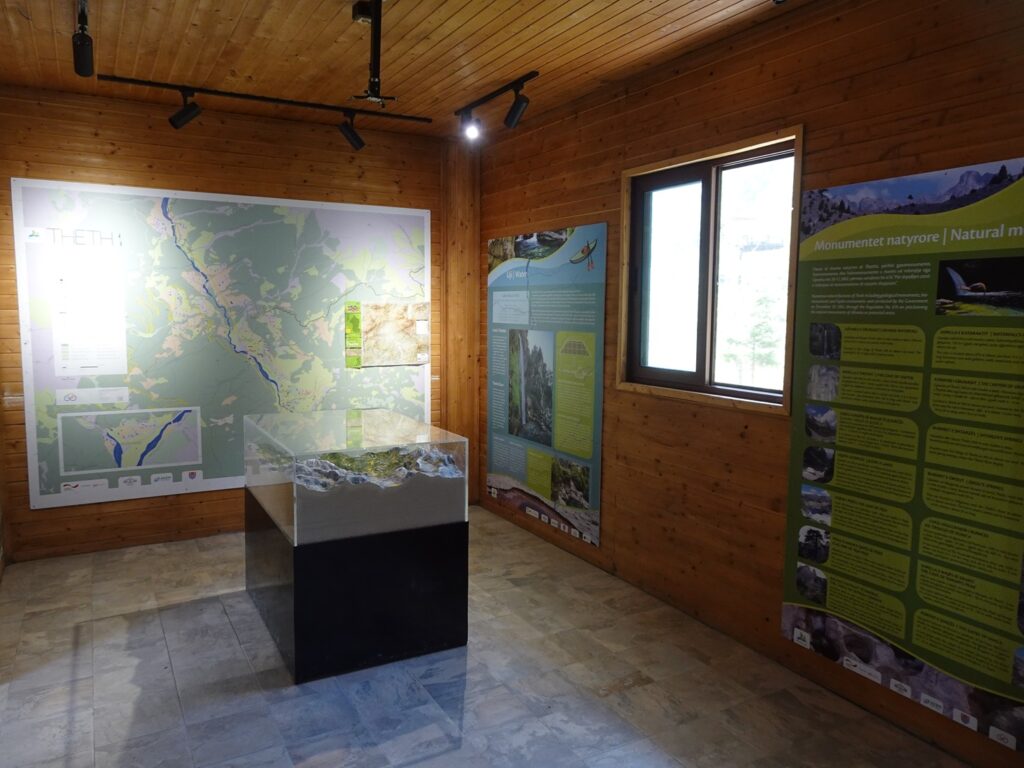
There’s also plenty of information on all of the historic and natural sights around Theth and the staff might be able to answer any other questions you might have. The opening times seem to be a little erratic – we found it open on a weekday around noon.
Try Some Traditional Albanian Food (and Drinks)
We absolutlely loved the hearty Albanian Food and attempted to try as many traditional dishes as possible during our two-week stay in the country. Theth has a number of good restaurants, especially at the southern end of the village near the Lock-In Tower.
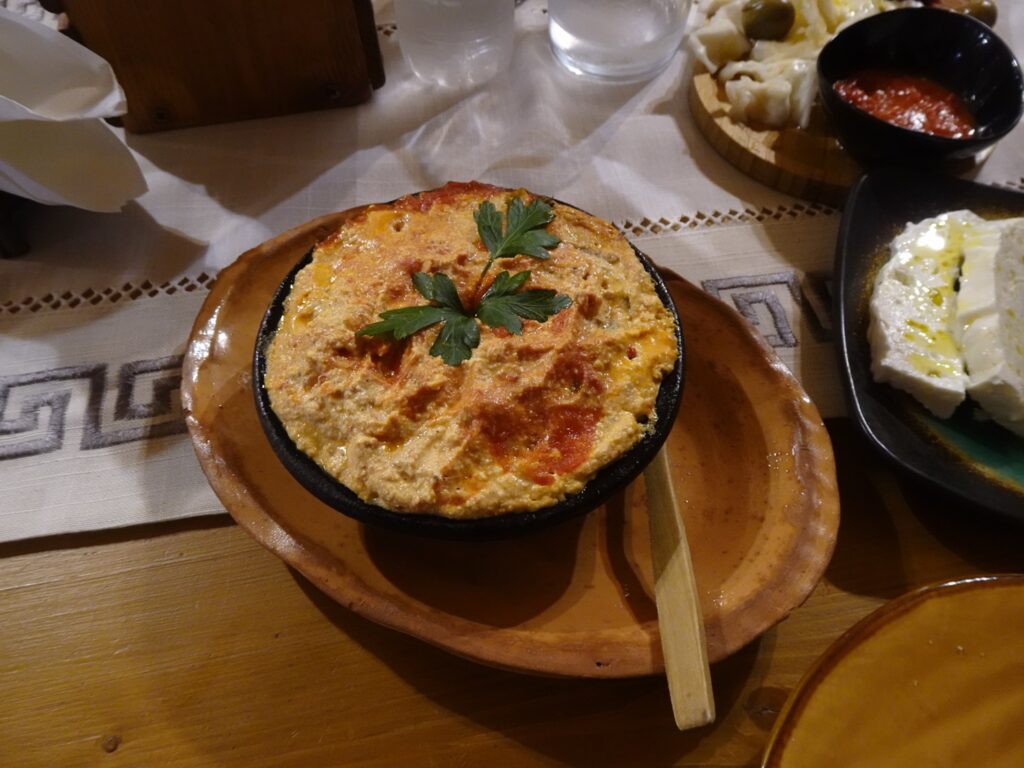
We can really recommend Restaurant Petriti, which had very friendly staff and amazing food. I loved the Fërgesë, which is a kind of hotpot with roasted pepper and feta cheese. A bit farther south there are a few simple grill restaurants on wooden balconies over the Thethi River, which are also worth checking out.
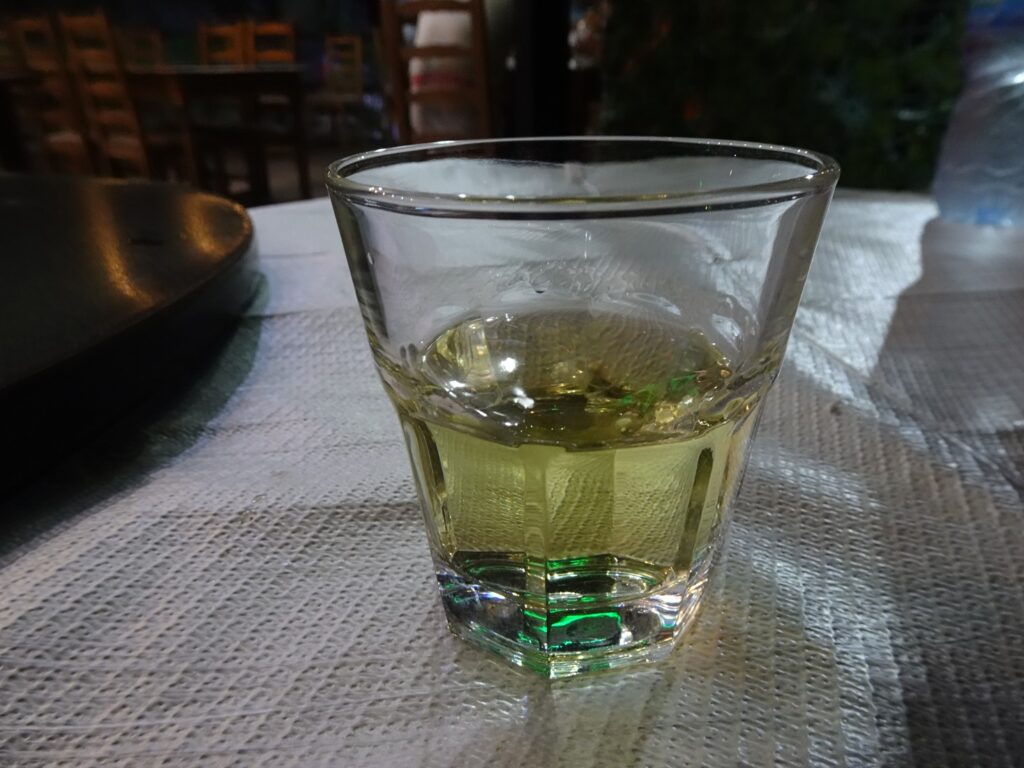
On our second evening in Theth, we went to Bar & Grill Waterfall. The food was fairly standard, but the views were awesome and I also tried the famous Raki Thanit, a regional Raki version distilled from the red fruits of the wild Cornelian cherry.
Gjeçaj Waterfall
This waterfall might not be quite as tall and impressive as Grunas Waterfall, but you’re almost guaranteed to have it completely to yourself. At least there was nobody else around when we dropped by.
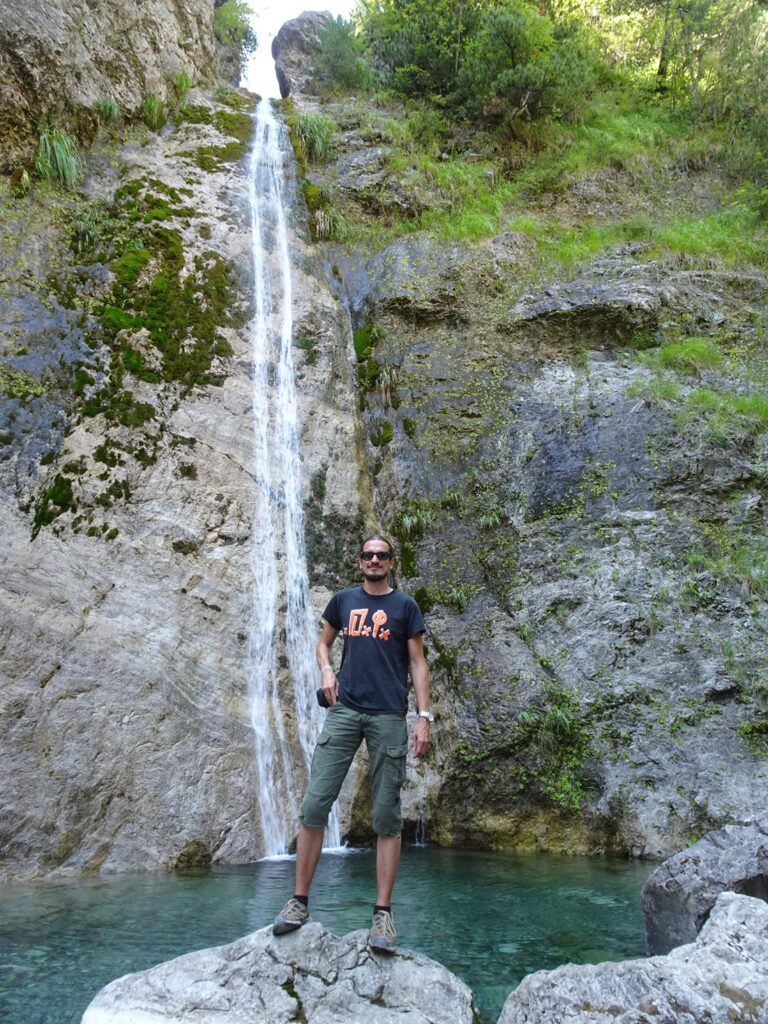
Have a close look in the water, when you’re here: we spotted loads of tadpoles in different stadiums of development in the pools at the bottom of the falls. If you’re in the mood, this would also be a nice, quiet spot for a swim, although I was cured after my freezing dip in the Blue Eye the day before.
Gjeçaj waterfall is close to the second bend in the asphalt road leading out of Theth towards the pass. You can leave your car in the bay by the side of the road and walk for a few minutes up to the cascade.
Old Abandoned Watermill
We spotted this historic building on a map in the visitor’s centre and decided to check it out, before leaving the valley. It’s really just a tiny former watermill, but once again we found it quite photogenic and you can still see the old grinding mechanism with the millstone inside.
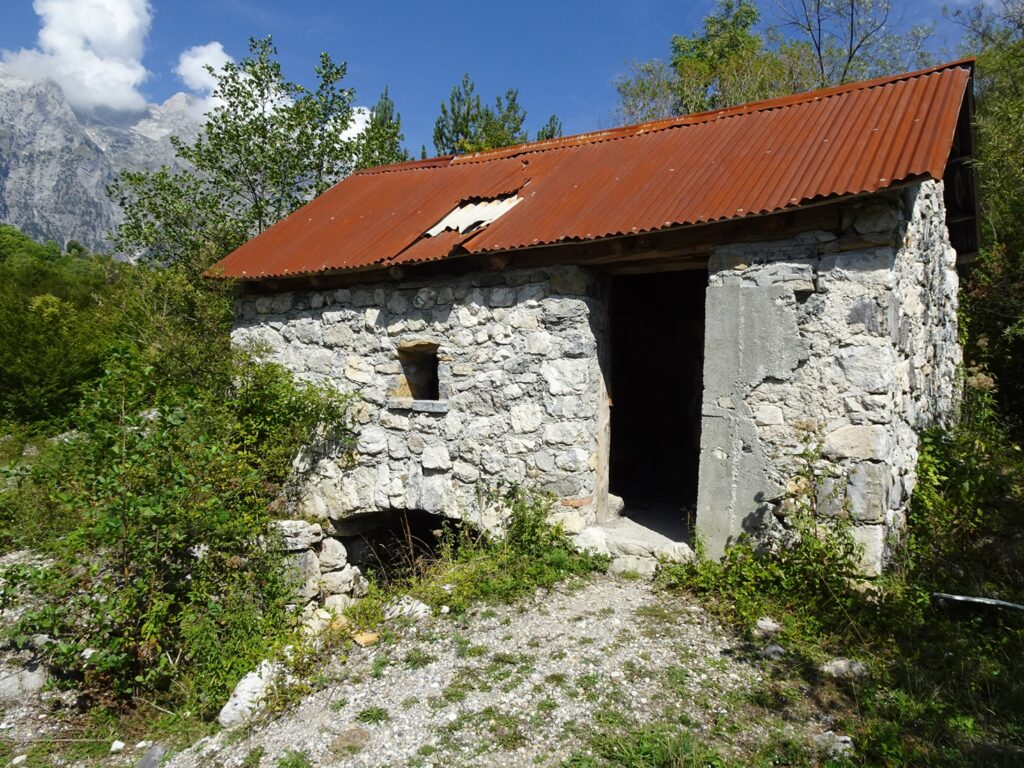
Right across the trail, there is a bigger abandoned building and when we peeked inside through the window, it turned out to be an abandoned sawmill right out of a forgotten 80s Slasher Movie.
The old watermill is at the northern end of Theth Village on the eastern side of the river, a 5 minute walk north of the road bridge at the entrance to the valley.
Have a Drink at Te Lumi Bar
Right around the road bridge by which you enter the Theth Valley, there’s a number of small cafés and bars looking out over the river. Te Lumi is the first place to the north of the bridge and in our opinion has the best views.
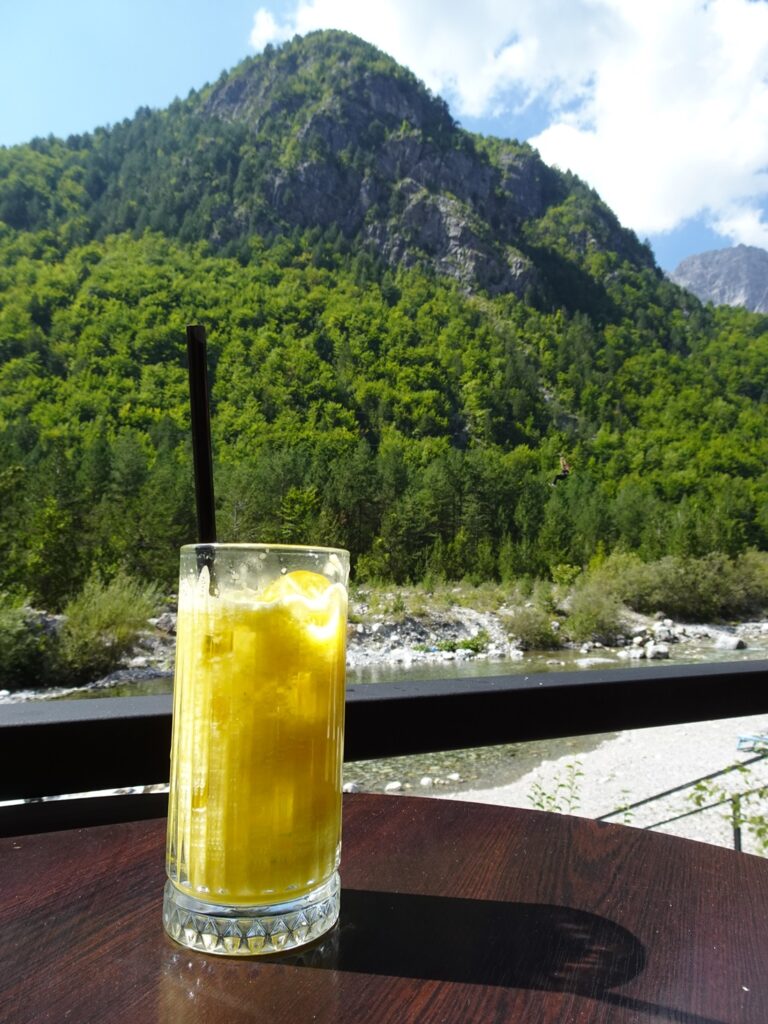
After ordering your drinks, make sure to walk around the building to sit on the terrace in the back, which has the best views. We had an iced coffee and a lemonade while watching the river go by, although the peace was occasionaly broken by people ziplining down the mountain slopes on the other side of the water 😂.
Theth Pass and Monuments Along the Way
The drive through the Albanian Alps to Theth is a long one and on the narrow, bending road you’ll have to constantly be mindful of oncoming traffic, as well as herds of cattle and sheep, who like to stand around in the most inconvenient parts of the road.
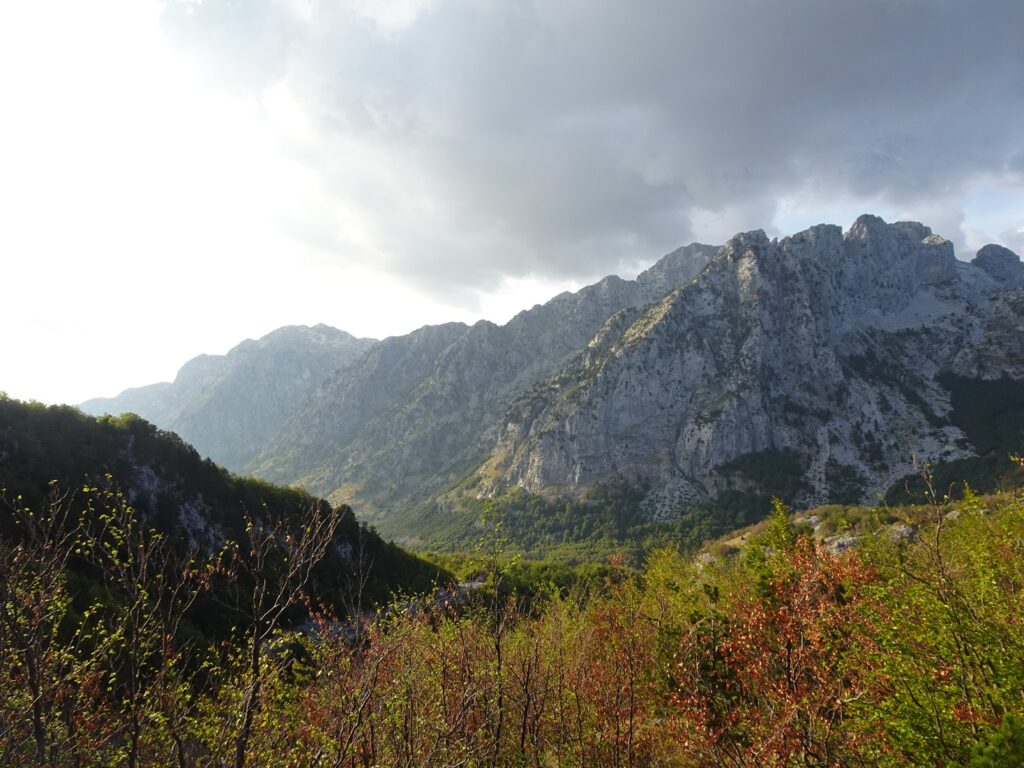
That said, it was not as nerve-wracking as some other roads I had driven before, and the views of the valleys and mountains along the way are often absolutely beautiful. I recommend stopping at the parking lot at Theth Pass either on your way to the valley or on the way back.
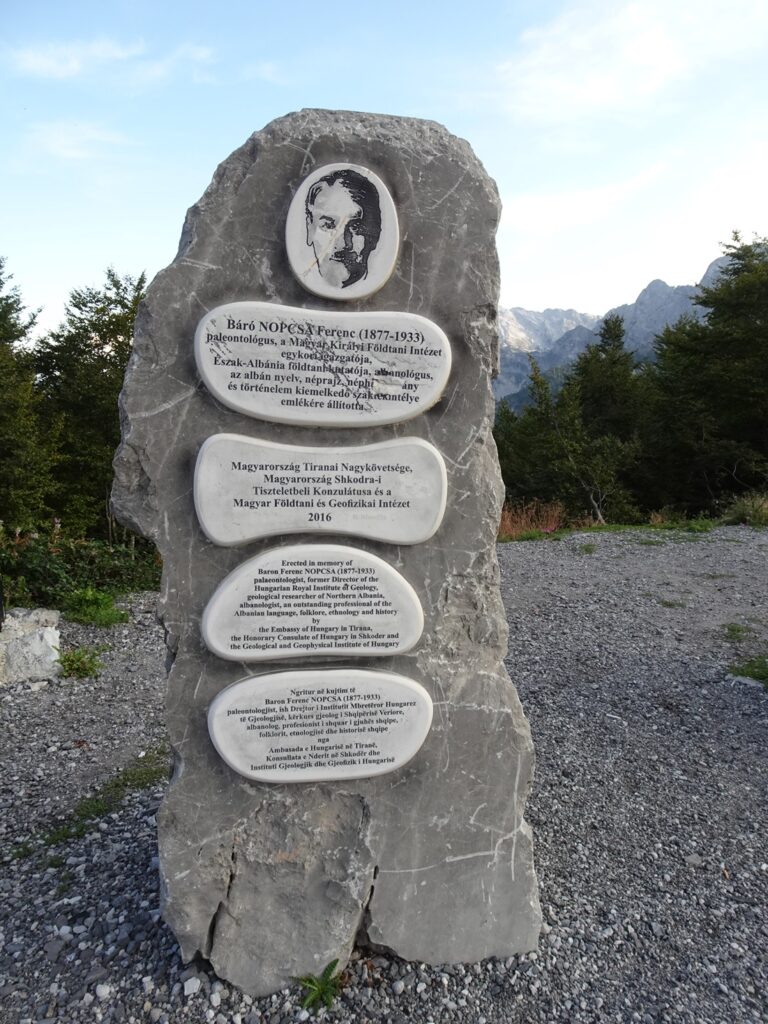
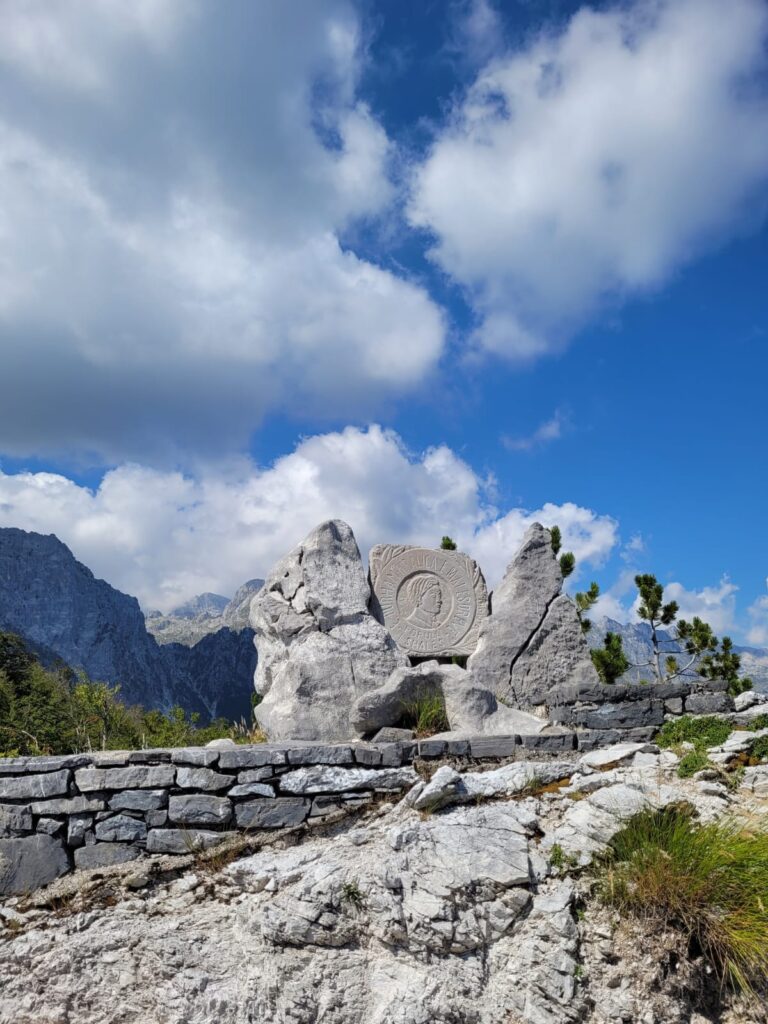
From here, the views both to the west and east are stunning. There’s also a Memorial for Ferenc Nopcsa, a Hungarian adventurer and scientist, who completed the first geological map of northern Albania. A few kilometres on in the direction of Theth, in a hairpin bend is another memorial, this time to Edith Durham, a British Anthropologist.
Theth Valley Map
All of the places described above can be found in this map of the Theth Valley.
Where to Stay in Theth
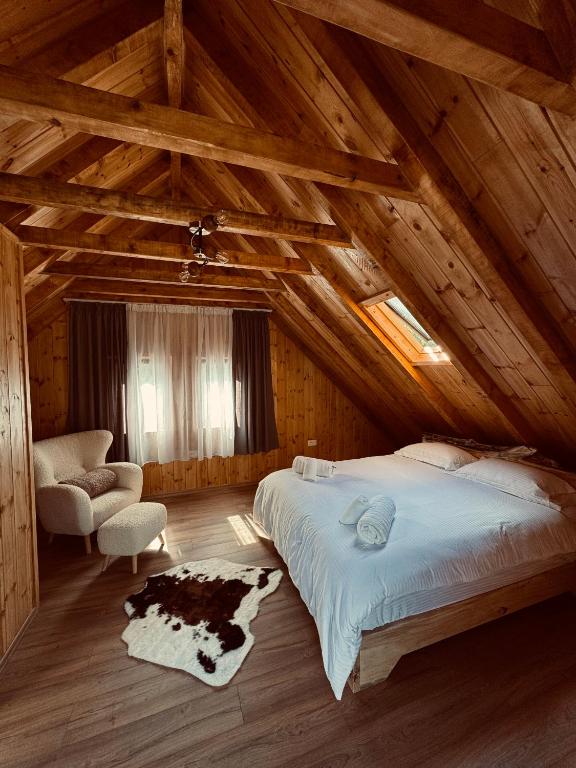
The whole valley is chock-full of hotels and guesthouses. We stayed at the simple, affordable Thethi Mountain and were very happy there. We especially liked the tasty breakfast which was served in their beautiful backyard.
Most places in the valley, like Te Sofra cater to more of a mid-range budget, while Villa Shkalla would be a more upscale choice.