Small La Désirade Island off Guadeloupe’s eastern coast was the first bit of land spotted during Columbus’ Second Voyage to America in 1493. For that reason, it was called “The Desired One” (i.e. La Désirade in French).
For centuries, Amerindian settlers didn’t much desire to live permanently on La Désirade, as it’s actually quite hostile to life. There are no significant natural springs, and for a long time water needed to be brought to the island by boat.
These days, about 1,500 people live on the island and we absolutely loved the sleepy, backwater vibe. We took the ferry from Saint-François to check out La Désirade’s pretty beaches and low-key historical attractions. Read on for everything you need to know about visiting La Désirade.

This post may contain affiliate links and I might earn a small commission at no additional cost to you. For more info click here.
What to See and Do on La Désirade
There aren’t any must-see sights on the island, which we actually found to be part of its charm. Instead, there are a couple of pretty beaches, some small villages and a few minor historical sites that are fun to explore.
La Désirade’s villages all lie along the island’s only road close to the southern coast, while the northern part is dominated by the Grande Montagne mountain chain. Ferries from Saint-François land at the “biggest” settlement Beauséjour in the western half of the island.
I listed the following places from west to east, so you could technically visit them in order and then hike back through the mountains, if you still have time and energy left.
Les Galets and Les Sables
From 1725 onward La Désirade was used to quarantine people suffering from leprosy and cholera from all the French Antilles Islands. This continued well into the 1950s and left traces in the form of various graveyards and abandoned hospital buildings on the island.
Les Galets and Les Sables, the two westernmost settlements on La Désirade, are where people suffering from cholera were detained. There’s a big wooden cross on the rocks at Pointe des Colibris, the south-western cape of the island, where you have some nice views to the eastern coast of Guadeloupe’s main island.
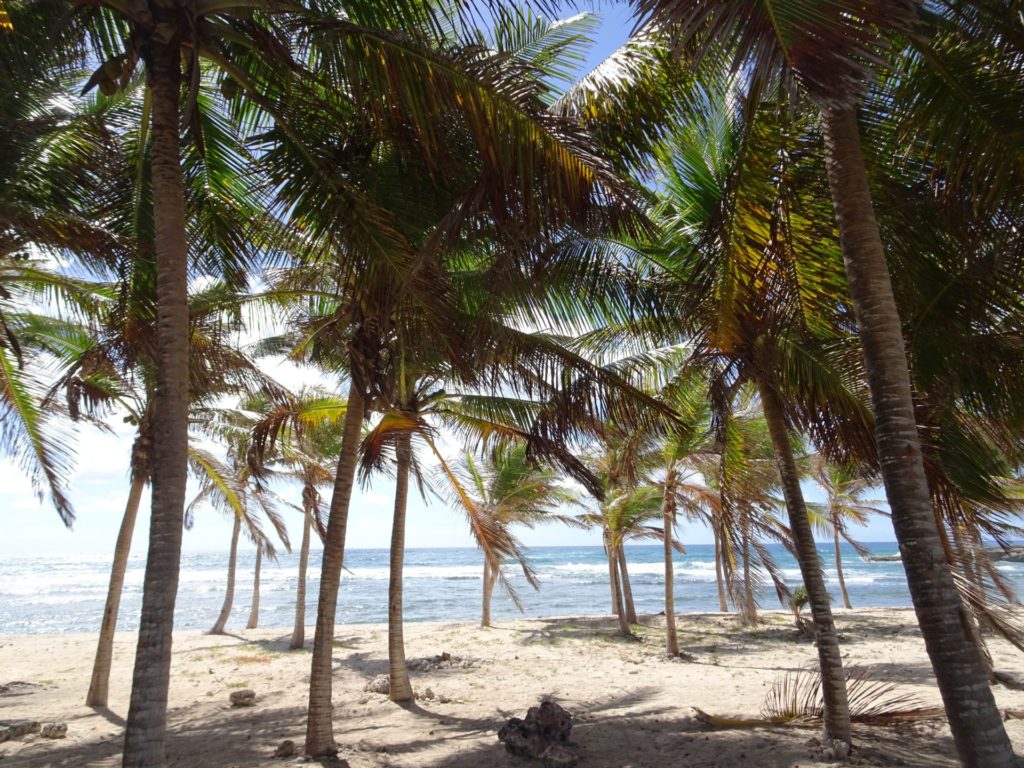
A little further east is the cute palm-fringed beach Plage des Galets, and behind that you’ll find the small cemetery of the cholera patients at Quarter des Galets.
The Tiny Capital Beauséjour
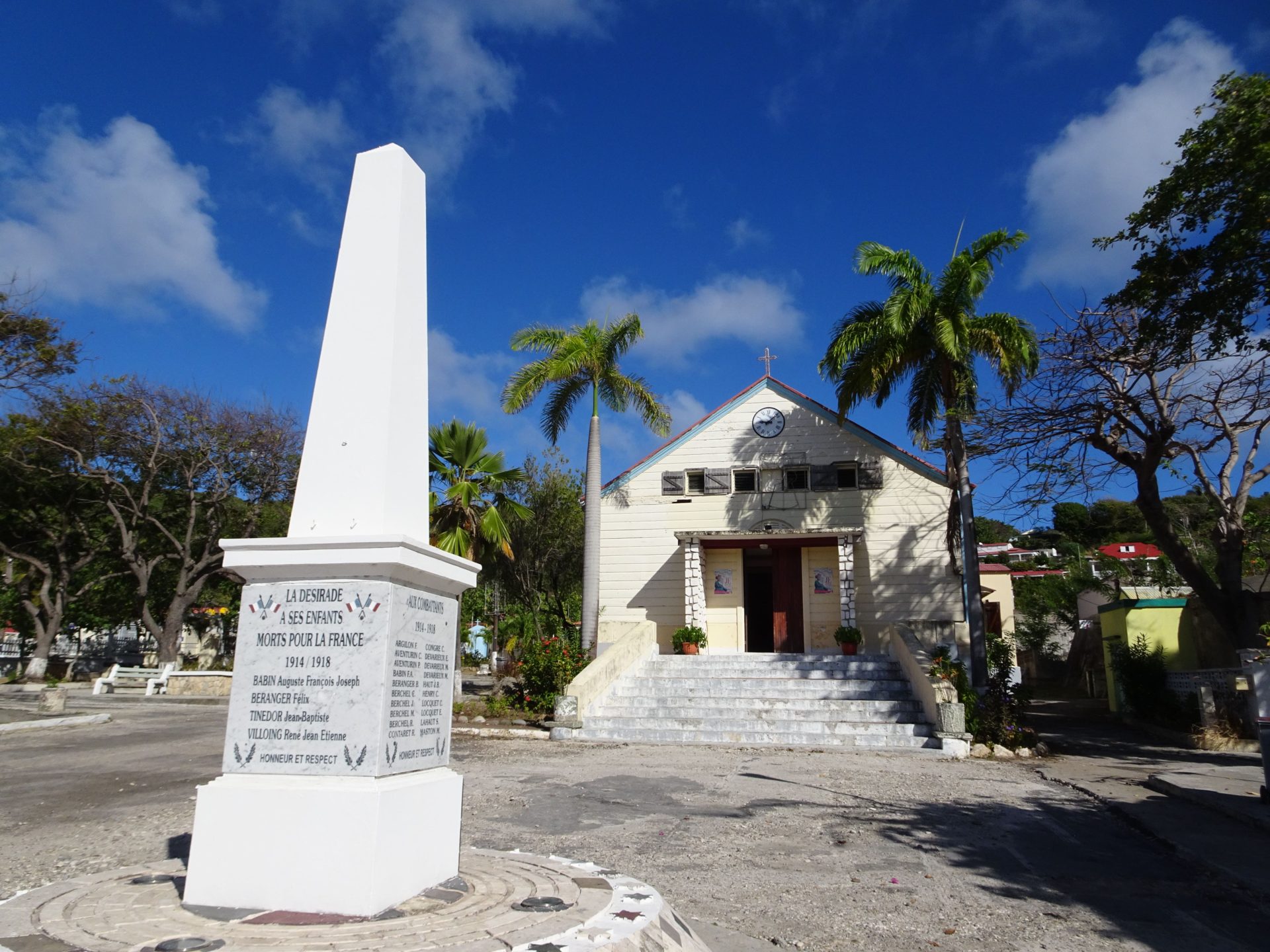
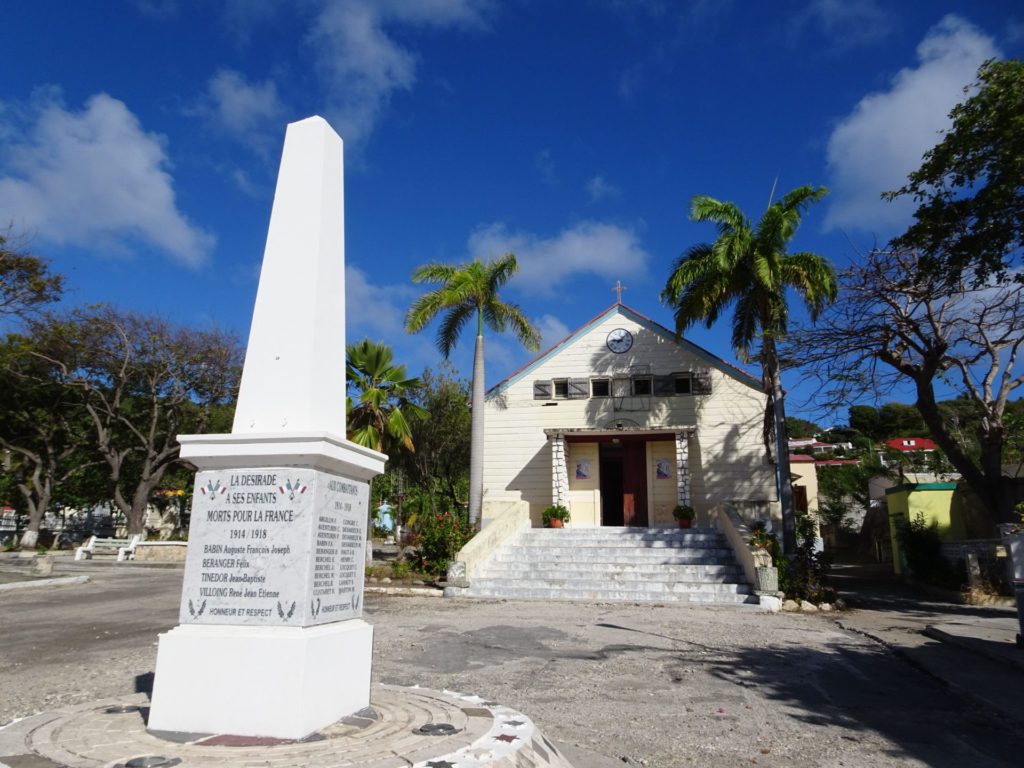
Beauséjour is the island’s biggest settlement, which isn’t saying much, since it still only consists of a couple of streets. The most interesting buildings lie around a cute central plaza, including the church of Notre-Dame du Bon-Secours and the small town hall building (mairie).
Opposite of the latter is a tiny park with a bust of local abolitionist Victor Schœlcher, whose former house you can technically visit in Pointe-à-Pitre (if it’s open, that is).
There are also two small beaches on either end of town, which are certainly the most easily accessible beaches from the ferry terminal, but we found Plage du Souffleur prettier and much quieter.
Chapel of Notre-Dame-du-Calvaire
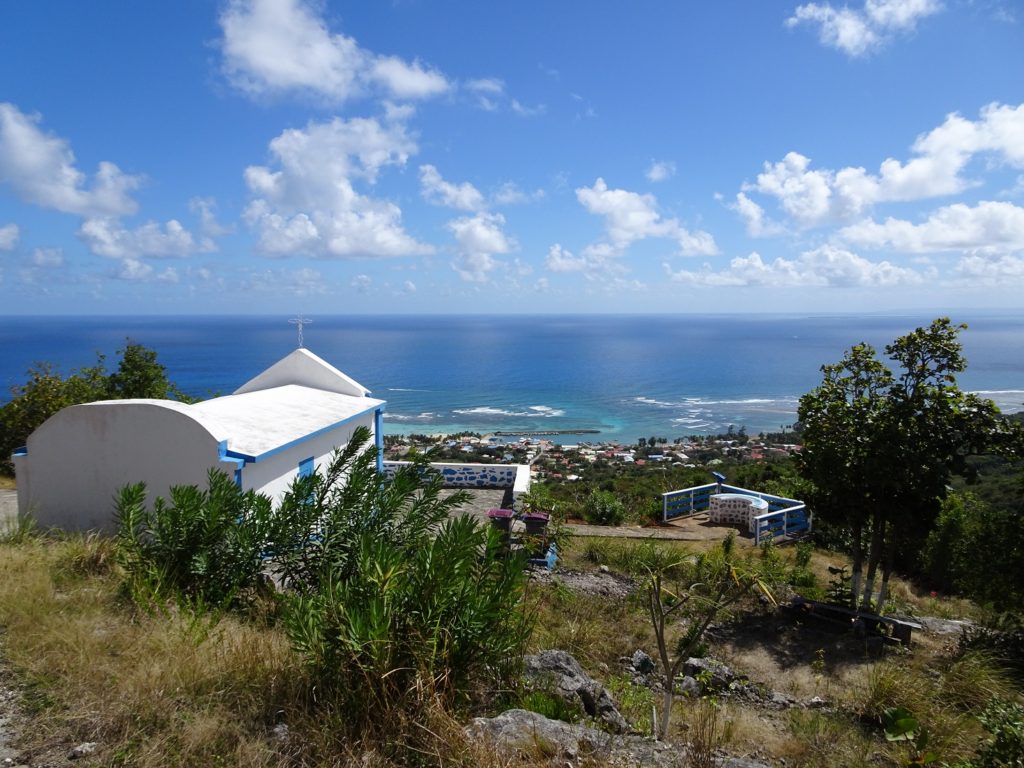
We thought that this little white-and-blue painted catholic chapel in the hills above Beauséjour wouldn’t look out of place on a Greek island. We spotted it from the coast and obviously had to hike up there. The interior is rather austere, but the view down to the coast and over to Guadeloupe is really good.
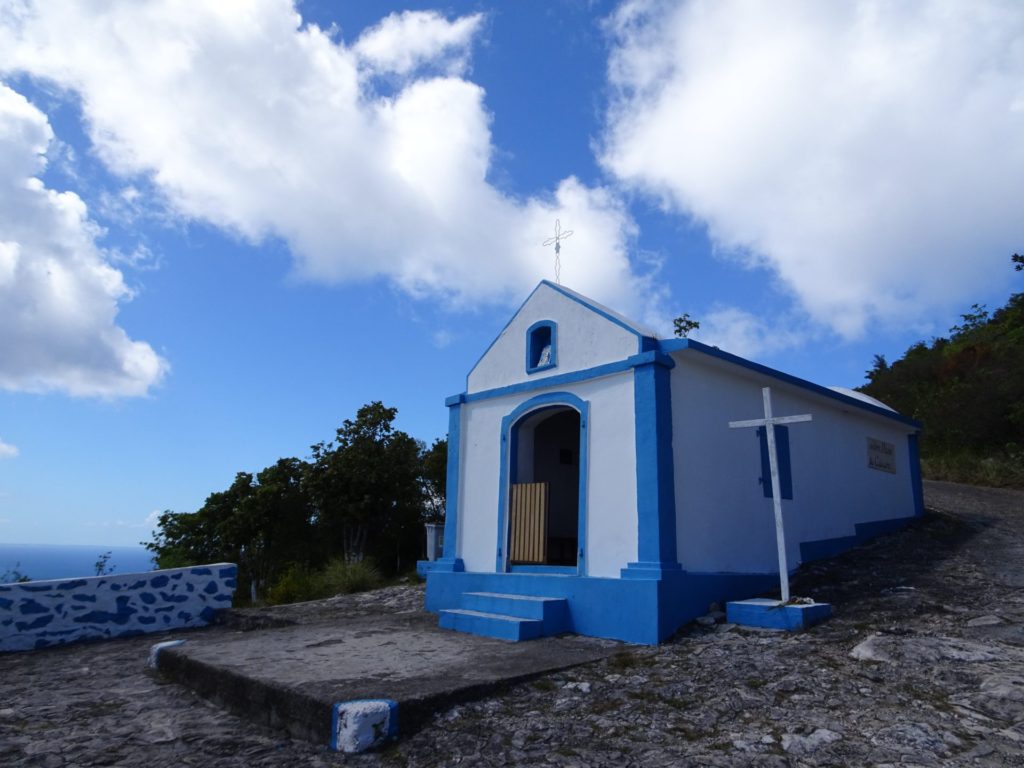
If you’re walking up here, expect a steep hike of about 30 minutes along an unshaded road. It’s probably best to do it in the morning or evening instead of the early afternoon, which is (of course) exactly when we did it.
Le Souffleur
Plage du Souffleur near the tiny village of the same name is the island’s most famous beach. It’s a beautiful stretch of white sand with lots of coconut palms. Despite its (modest) claim to fame, we only met two other people there when we visited. La Désirade is still somewhat off the beaten path, I guess.
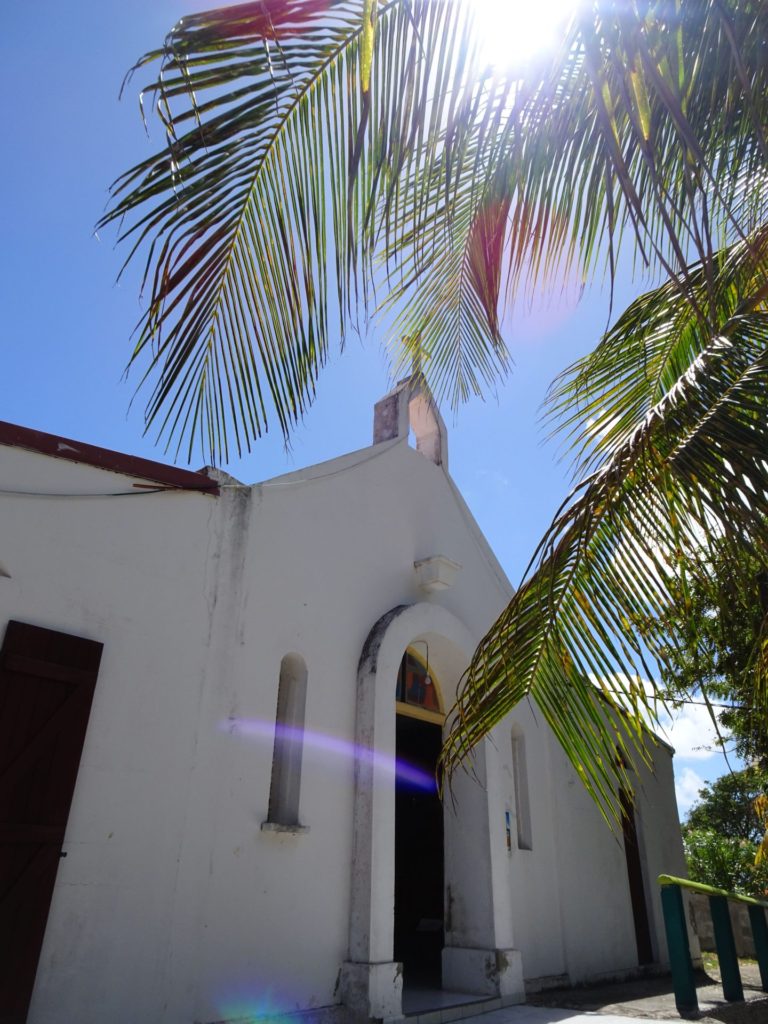
Along the main road you’ll find Saint-Jean-Baptiste du Souffleur, another cute white-plastered village church. For us, the most interesting feature inside was an intricate boat model which was placed inside the church as a votive offering by sailors who survived a shipwreck.
Baie Mahault and Pointe Double
Directly east of Baie Mahault, the island’s easternmost settlement, lie the ruins of the former leprosy colony, which include the foundation walls of several buildings and a rather big kiln.
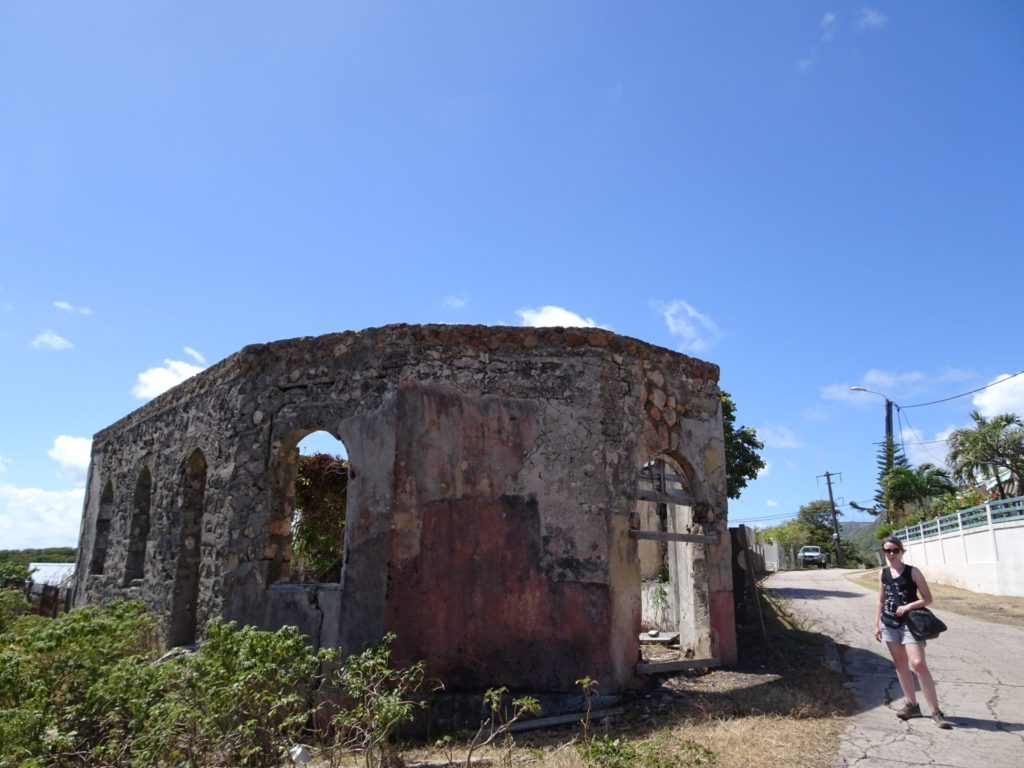
For us, the most impressive ruins were the remains of the little chapel, which still stand several feet high directly at the eastern end of Baie Mahault. There’s also a little cemetery with the graves of people who lived in the colony.
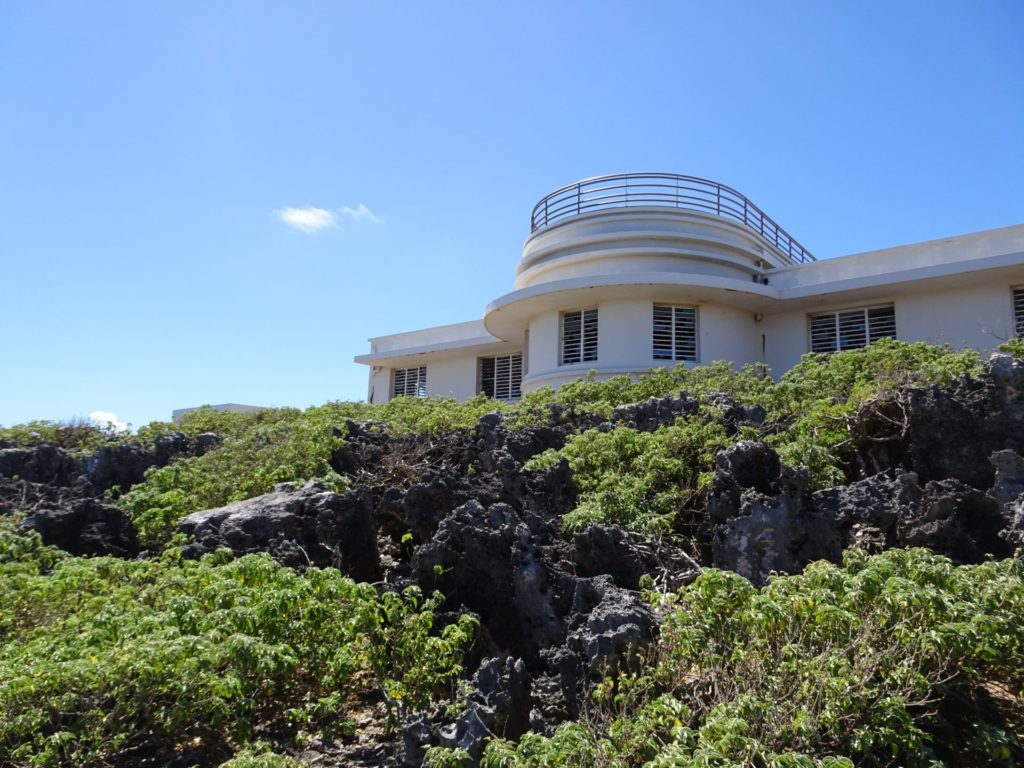
There are some more ruins (this time of an old cotton factory) on the way to Pointe Double, the eastern cape of La Désirade. On the way there we met plenty of curious goats, as well as some huge iguanas.
There’s another abandoned building on the cliff overlooking the Atlantic Ocean and after some research we learned that these are the remains of a former climate control station.
Hiking in the Grande Montagne
If you’re on the island for more than a day, you can also hike in the little mountain chain in the northern half of the island. There’s a footpath that runs the entire length of the ridge (and thus, the island).
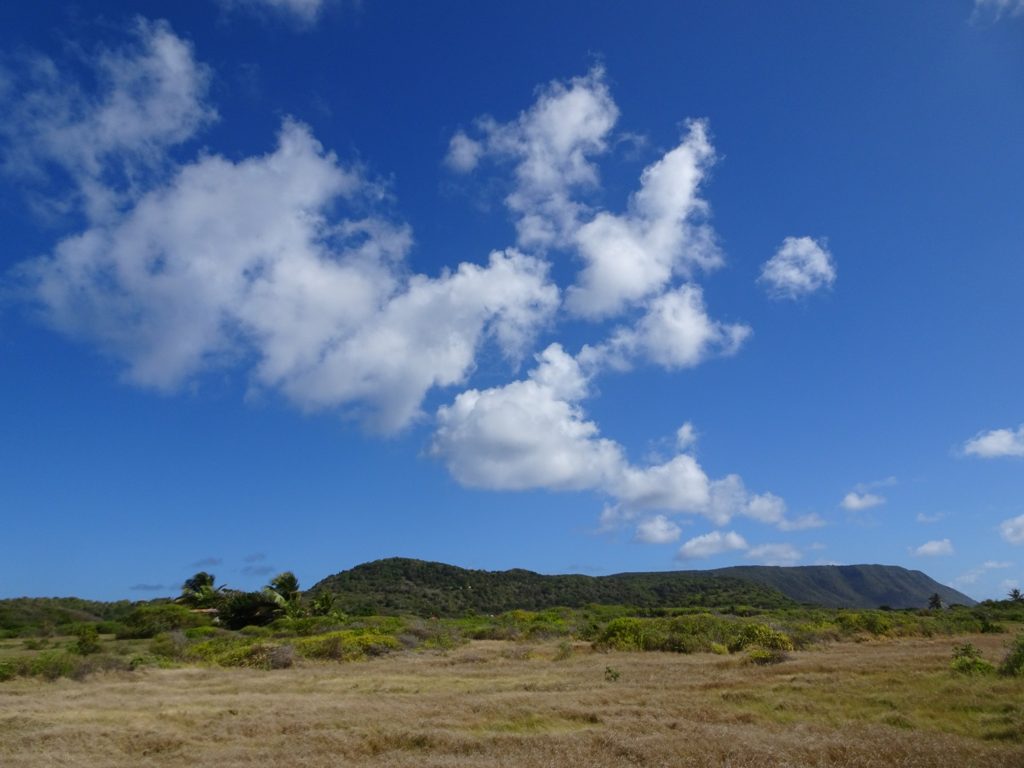
It’s really only an option if you’re staying on the island overnight, at least if you want to see other parts of La Désirade as well. We only came here on a day trip from Saint-François, so we skipped the hike, but it’s pretty clear that the views would be fantastic.
Animals and Plants on La Désirade
While you’re on the island, keep your eyes peeled for shy agoutis, of which we spotted a few, and surprisingly big iguanas, which we saw especially around Baie Mahault and the eastern cape.
A word of warning about another species which can be found all over La Désirade: We were warned about the Manchineel trees that grow mostly close to the sea. Every part of them is toxic and you shouldn’t even touch their bark or leaves. They’re easy to recognize, as their fruit looks like little green apples.
La Désirade Map
You can find all the sights mentioned above in this map of La Désirade.
Practicalities
How to Get to La Désirade
We used the Babou One Ferry from Saint-François in the southeastern part of Grand-Terre. When we did it, boats left Saint-François at 8 AM and 4:45 PM, returning from Beauséjour at 6:15 AM and 3:45 PM. Make sure to check that the schedule is still up-to-date here.
The trip takes about 45 minutes and costs about 30€ round-trip. To get to Saint-François from Pointe-à-Pitre, you’ll have to take a bus from the Gare Routière de Darboussier, which is located about 5 minutes south of the southeastern edge of the Place de la Victoire.
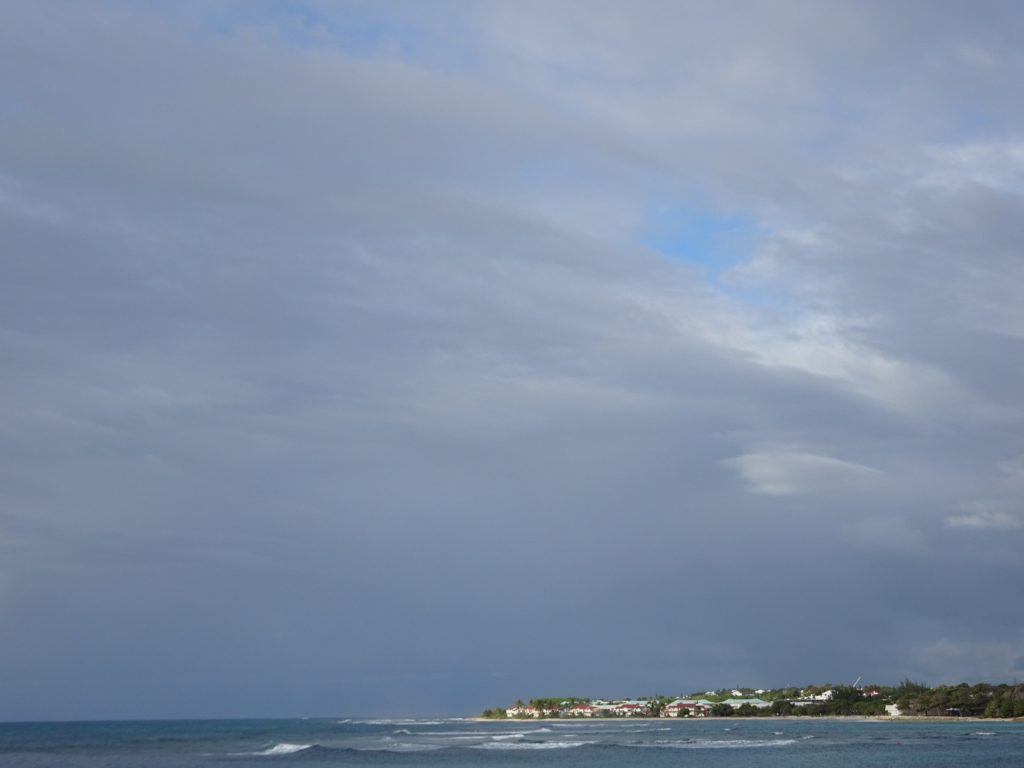
If you’re short on time, you could also fly to La Désirade from Pointe-à-Pitre with Air Caraïbes. It only takes 15 minutes, but it costs more than 100€ for a round-trip. Flights leave from Pointe-à-Pitre on Monday, Wednesday and Friday at 7:30 AM and 2:40 PM, on Saturday at 7:30 AM and on Sunday at 2:40 PM.
The flight back from La Désirade leaves half an hour later, respectively. Once again, you can check the current schedule here. You can make a reservations by calling 0590824700.
Transport on La Désirade
There is only one road, which runs for about 10km or 6mi. along the southern coast of the island, so this is where all of the moderate traffic on La Désirade passes. The easiest way to get around on the island would probably be to rent a scooter or bike at the marina in Beauséjour, for example at Jo Scooters.
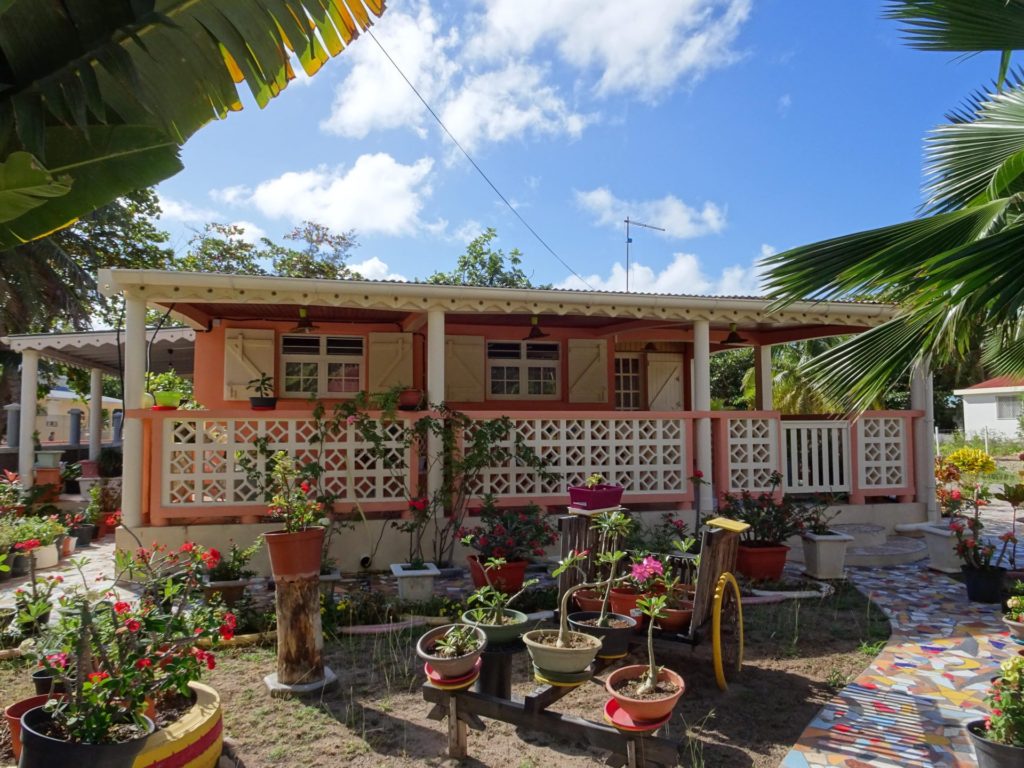
We decided to explore the island by using a combination of public transport, walking and hitch-hiking, which worked out quite well, too.
Just to give you an idea: We managed to see all of the places outlined above (except for La Grande Montagne) during a day trip by first walking to the Western Cape and back to Beauséjour, then taking the bus to Baie Mahault, walking to the Eastern Cape and afterwards hitch-hiking back to Beauséjour from Baie Mahault.
There are not many cars traveling along the main road, but the first one that passed us immediately gave us a ride.
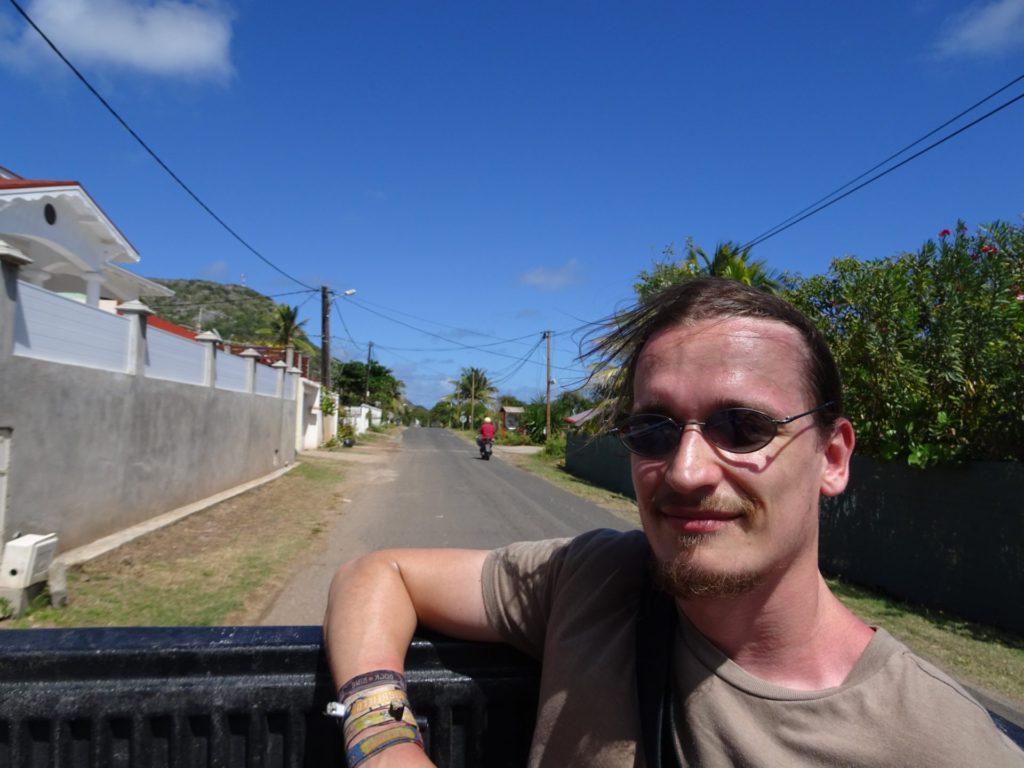
The bus service I mentioned above is convenient and a ride is just 1€, but the connections really are few and far between. You can check the schedule here. Finally, there are also a couple of taxis waiting for arriving ferries at the marina, which might be another good option if you’re short on time, but not on money.
Where to Stay on La Désirade
Like I wrote before, we visited La Désirade as a day trip, but I’m sure by staying there for a night or two you can seriously get away from it all. There are a couple of hotels and guesthouses, mostly around Beauséjour and the eastern end of the island.
Hotel Oasis would be a well-rated option, while at Zandoli Cottage you can rent an entire apartment. Both of these are located in Beauséjour. There are some other options on the tourism website of La Désirade.
Where to Eat on La Désirade
There are some fish restaurants in Beauséjour and in the villages along the southern coast. Beauséjour also has a couple of grocery stores around the plaza, in case you need to stock up on some drinks and snacks before setting out.
Where to Go Next
Pointe-à-Pitre, Guadeloupe’s cultural capital
La Soufrière Volcano, to climb the highest mountain on the Lesser Antilles
The Îles des Saintes, Guadeloupe’s own little slice of paradise