Japan has plenty of weird and wonderful sights, but we didn’t come across a more unusual place than Nagoro, a small mountain village populated by nearly life-sized dolls. We dropped by while visiting the secluded Iya Valley and it quickly became a highlight of our Shikoku itinerary.
Here’s everything you need to know about visiting this unique place.

This post may contain affiliate links, and I might earn a small commission at no additional cost to you. For more info, click here.
What is the Story Behind Nagoro?
Nagoro used to have about 300 inhabitants, but because of Japan’s decline in population and the advancing urbanization, the numbers dwindled until there were less than 30 people living in the village, by which time it became more or less of a ghost town.
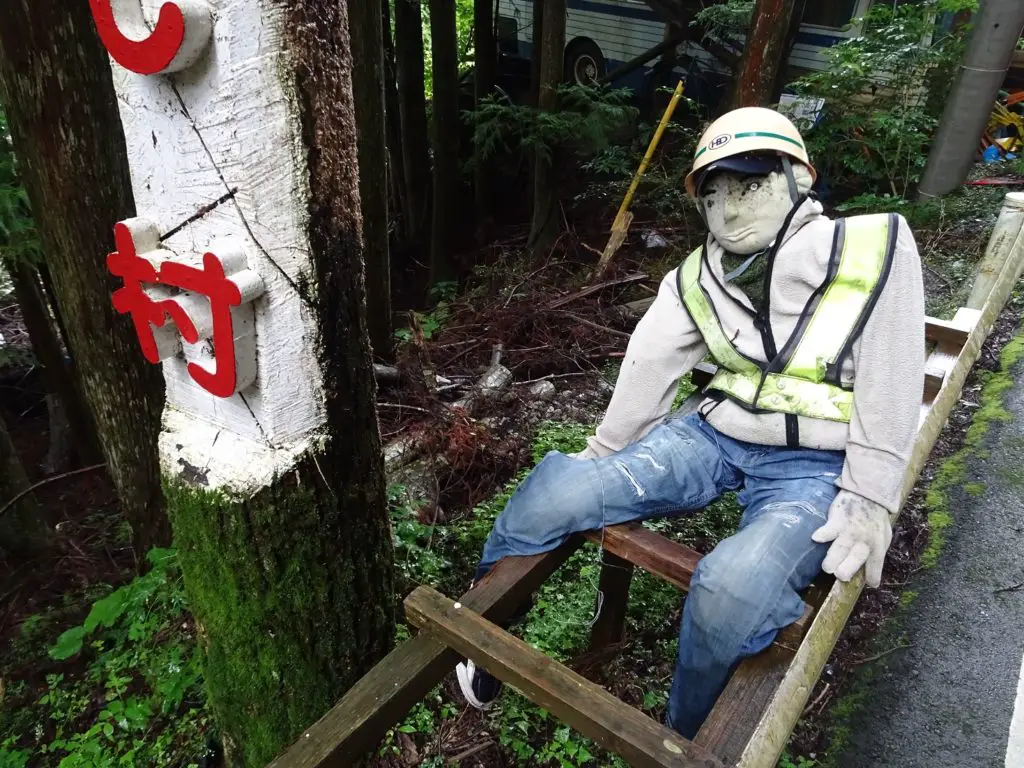
At some point, local artist Tsukimi Ayano decided to replace people who had died or moved away by puppets in their likeness. Neighbors picked up the idea, and soon every corner of Nagoro was populated by nearly life-sized dolls.
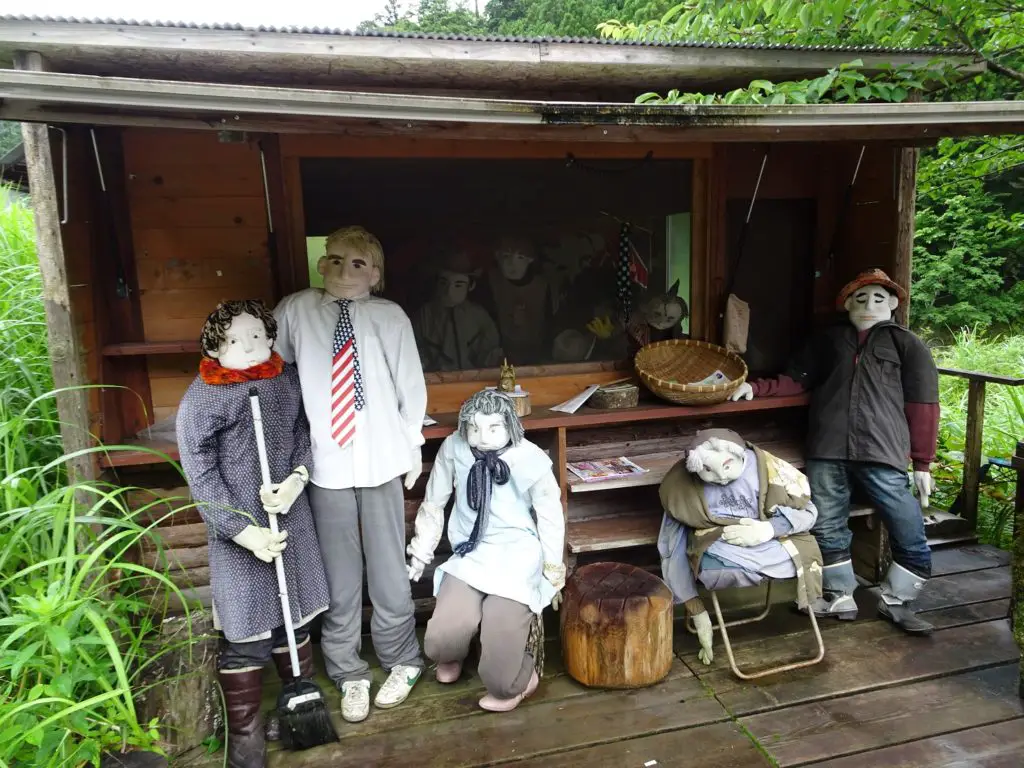
A lot of them are still based on former inhabitants of the village, but we also encountered some well-known international politicians in puppet form. Now, there are over 350 dolls in Nagoro, and new ones are still added.
Locally, Nagoro is known both as Doll Village and also as Scarecrow Village (Kakashi-no-sato).
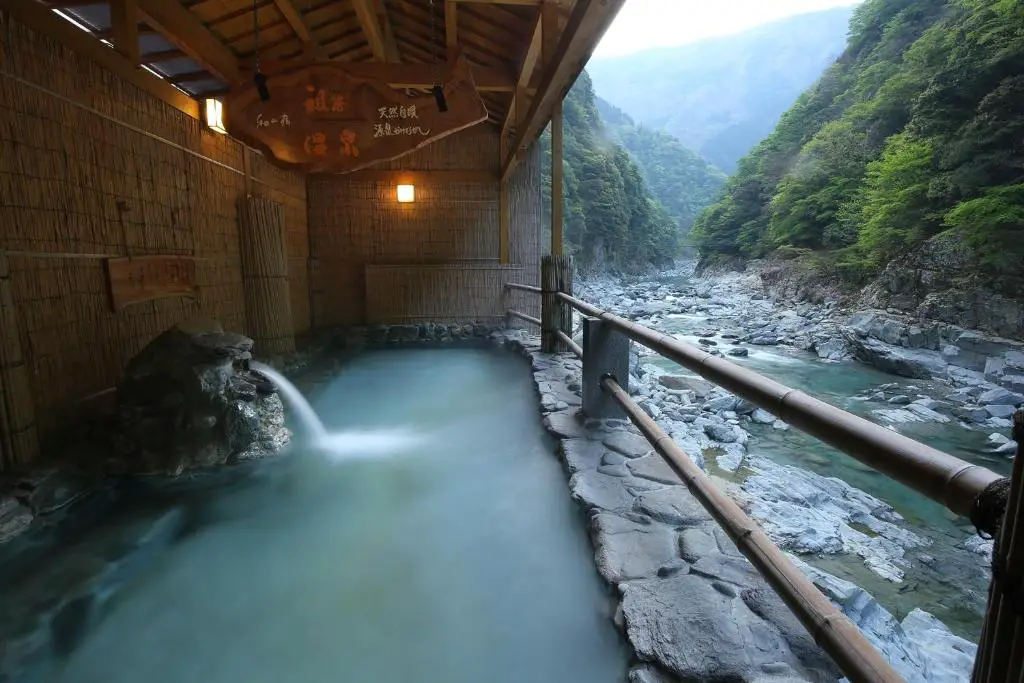
Iya Valley Hotel Tips
Budget: Heso Camp or 4S STAY Awaikeda Ekimae
Midrange: Hotel Kazurabashi (pictured)
Luxury: Hotel Iya Onsen
.
Where is the Village and How to Get There?
Nagoro lies in the eastern part of the beautiful Iya Valley on Shikoku Island. This area is rather remote and it would probably be easiest to get around by car. That said, we visited by using a combination of train and bus travel, which is possible with some planning.
You can reach the town of Oboke, at the western end of the Iya Valley by JR train from Kochi to the South (about 50 mins./1,300¥) and Takamatsu (about 1.5 hours/1,800¥) or Kotohira (about 40 mins./1,100¥) to the North. You might want to consider getting a regional train, as they are fantastic value.
Public buses in the valley are reliable but a little infrequent, so getting around here requires a bit of pre-planning. When we were there, four buses a day made their way through the valley. To get from Oboke to Nagoro, you’ll have to change buses at Kubo (you won’t have to wait there for long, as they’re perfectly timed).
The entire trip takes about 1.5 hours and is a bit pricey at about 2000¥, but you can kind of think of it as a sightseeing opportunity. If you sit on the right side of the bus in the direction of travel you can enjoy the wonderful views of the canyon on the way. You can check out the current bus schedules here. Nagoro is referred to as “Scarecrow Village” in the timetable.
Can You Spend the Night?
So you want to know how unsettling it actually is to spend a night in a village full of dolls, huh? I hear you, I would love to spend a night in Nagoro as well. Unfortunately, we didn’t find any accommodation in the village or nearby, so your best bet is to visit it on a day trip.
We stayed at Yoki Guesthouse in Miyoshi, but at the moment they only seem to rent entire apartments, making it more of a mid-range to top-end option. If you do decide to stay here, you can sleep in the traditional way on mattresses atop the tatami mats on the floor. The guest-house is run by Usin, who speaks English and is very knowledgeable about the surrounding attractions.
Currently, the most affordable options seem to be Heso Camp or 4S Stay Awaikeda Ekimae in Miyoshi.
Mid-Range and Top-End options are much more frequent here. One of the most popular ones is Hotel Iya Onsen, which has beautiful views and warm springs to bathe in. Hotel Kazurabashi near the western vine bridge also famously has open-air baths with a view. You can browse for more options here in the map below.
Our Experience of Visiting Nagoro
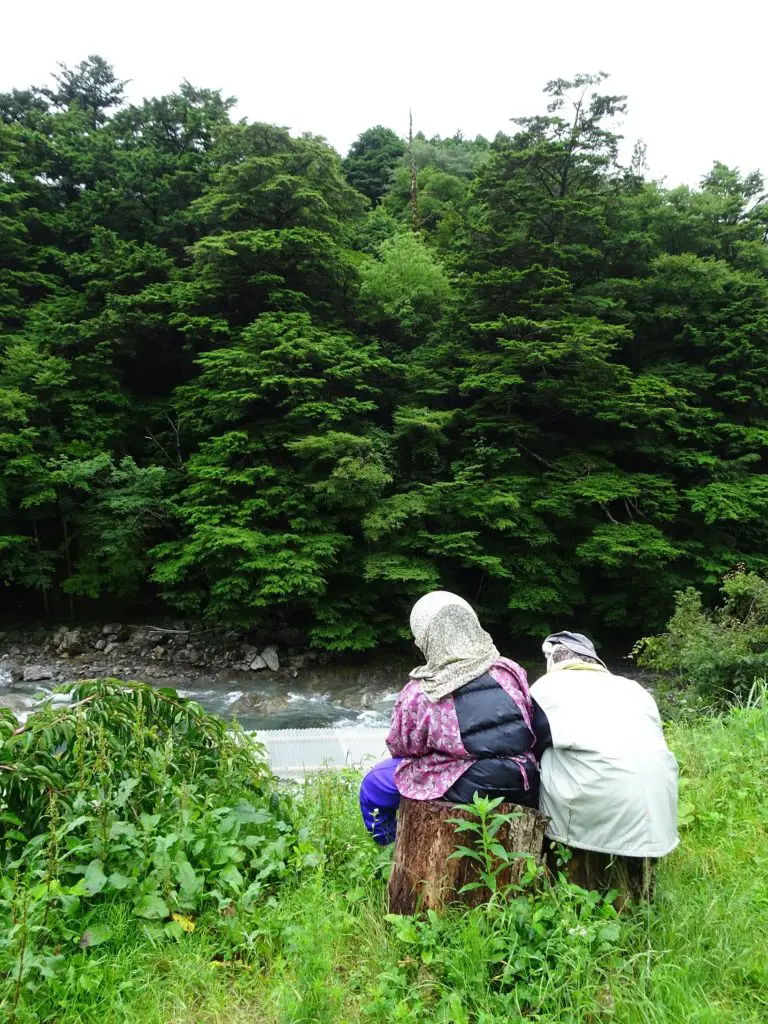
To us, the main part of the fun of visiting Nagoro was to just wander around the village, discovering the puppets in every corner, field and garden. They’re really all over the place, including along the main road leading to the village.
While we were there, we didn’t meet another living soul, which certainly added to the eeriness of the place. If you want to explore every corner of the village, you should plan about an hour in Nagoro, although you can get a general idea of the place in about 10 to 15 minutes.
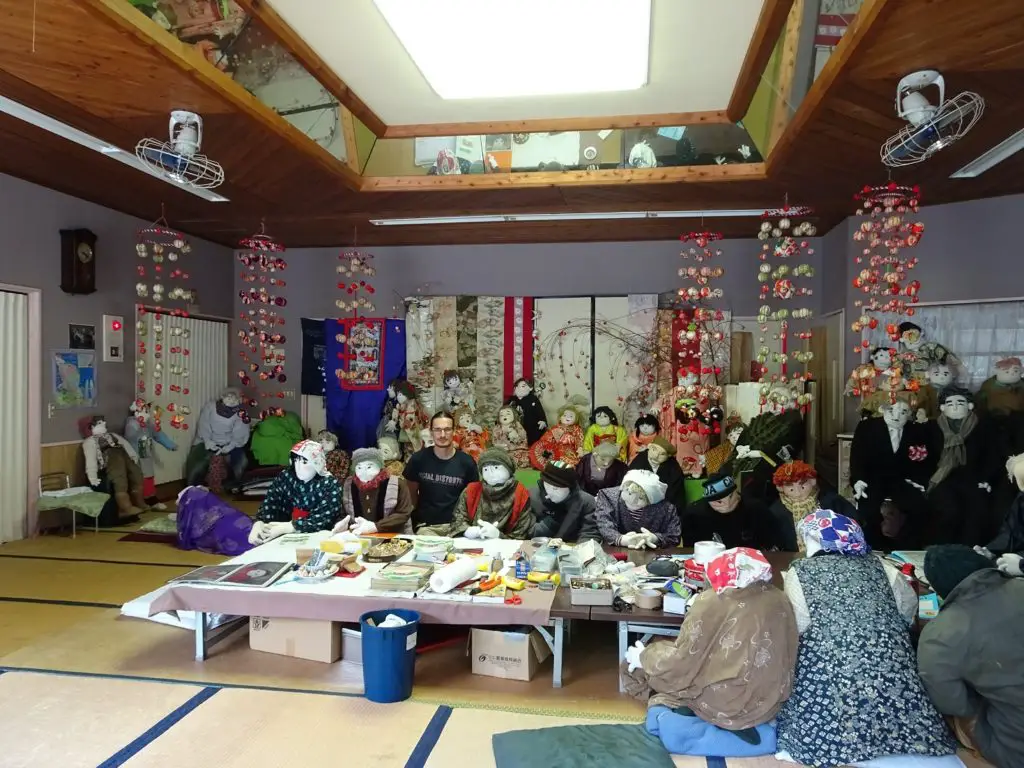
There are a couple of points of interest: The village hall contains an especially big group of puppets, as well as some leaflets with information on the history of the place, and the small bus stop at the western end of the village is the place were we spotted the political figures mentioned above.
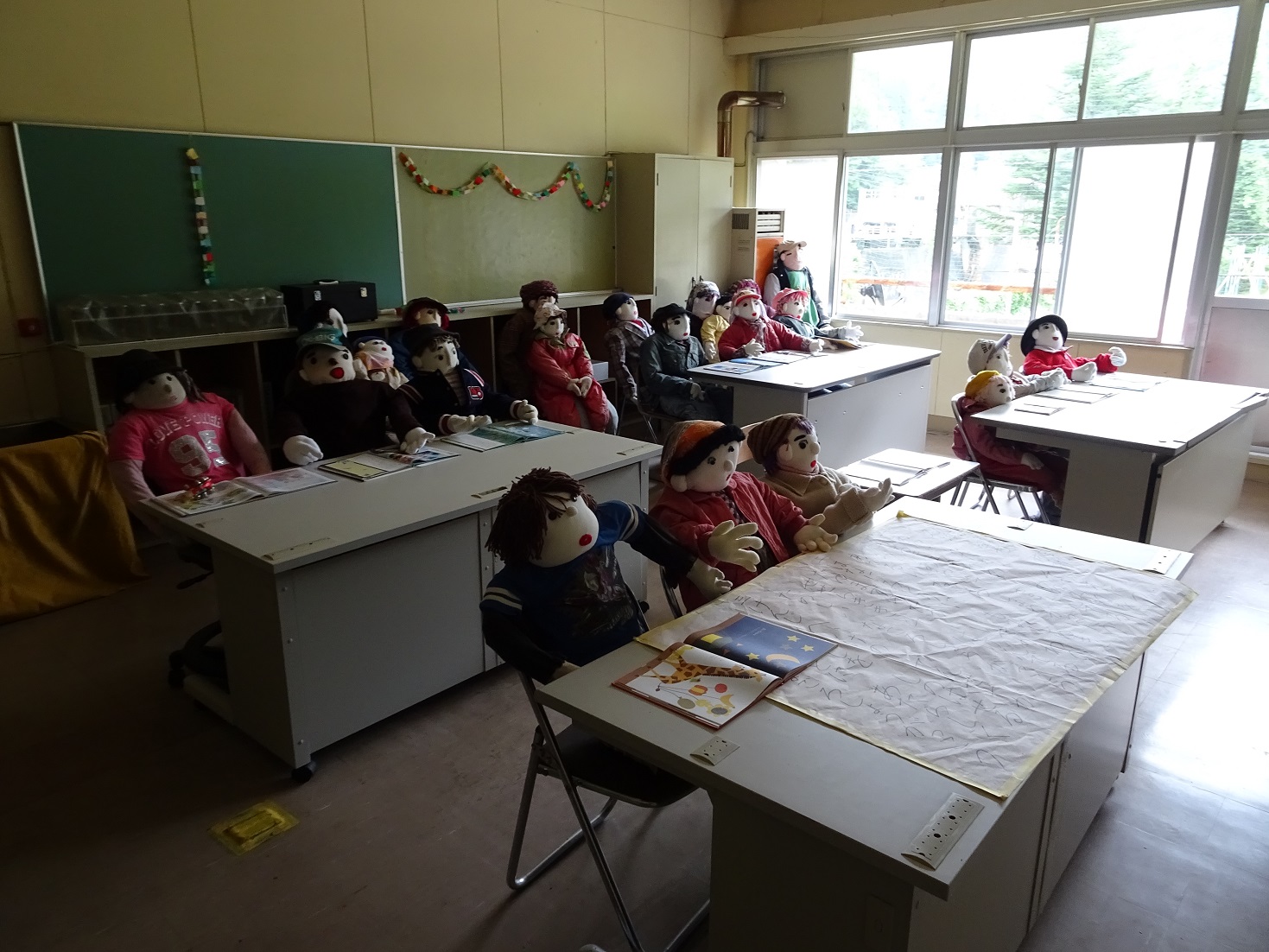
The one place you shouldn’t miss is the old school building to the south of the main road, where in lieu of students and teachers we found – you guessed it – tons of puppets. A big bunch of them sits the gym hall to the right of the main school building.
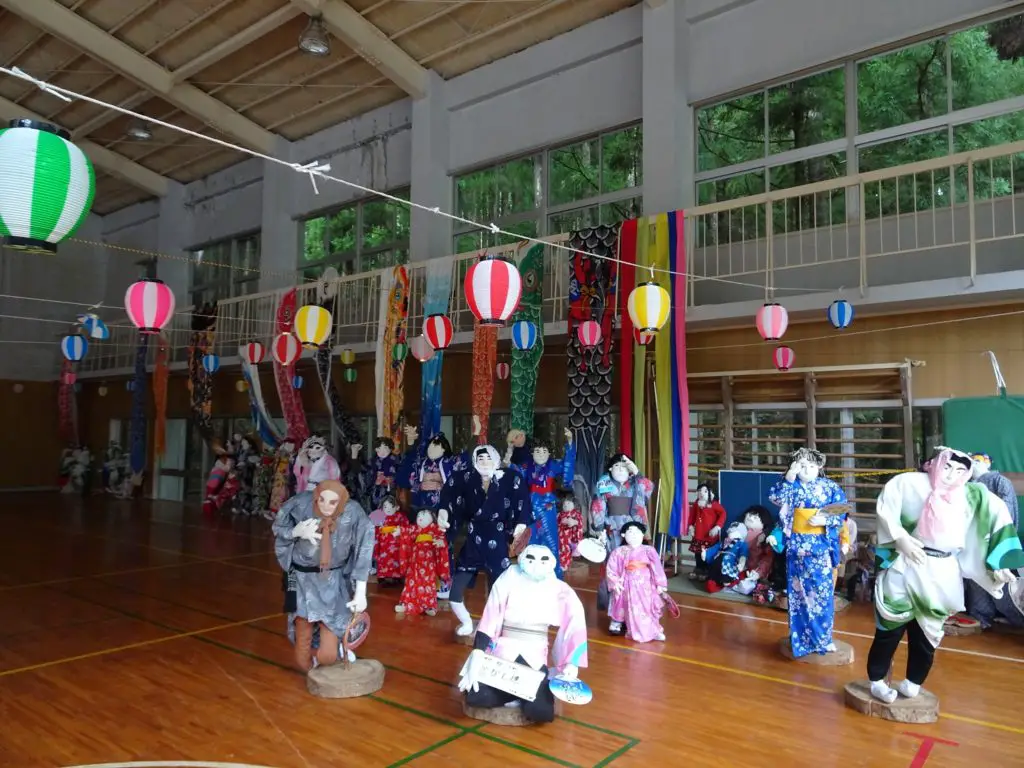
While the door to the gym hall was open when we were there, the main entrance of the school itself was locked. That said, we just walked around the back of the building, and were able to enter the school through the toilets, which were open.
Inside, the scary movie factor increased tenfold, with puppets populating almost every room in the building. There’s a teacher’s lounge and three whole classrooms full of doll-children sitting at every desk. On one of the chalkboards, someone had written the fitting question: “Where are the Living?”
Is There an Entrance Fee?
Nope – Apart from transport there, visiting Nagoro is completely free!
Other Things to Know about Nagoro
It’s a good idea to combine a visit to Nagoro with the Nizu Kazurabashi Vine Bridges further east or the Oku-Iya Monorail further west. If you want to pack all three into one day (as we did), the infrequent public transport requires some walking along the road or hitch-hiking in between.
If you want to do that, I suggest you start at the vine bridges (the next stop on the bus after Nagoro coming from the west) and work your way gradually back west, which is what we did.