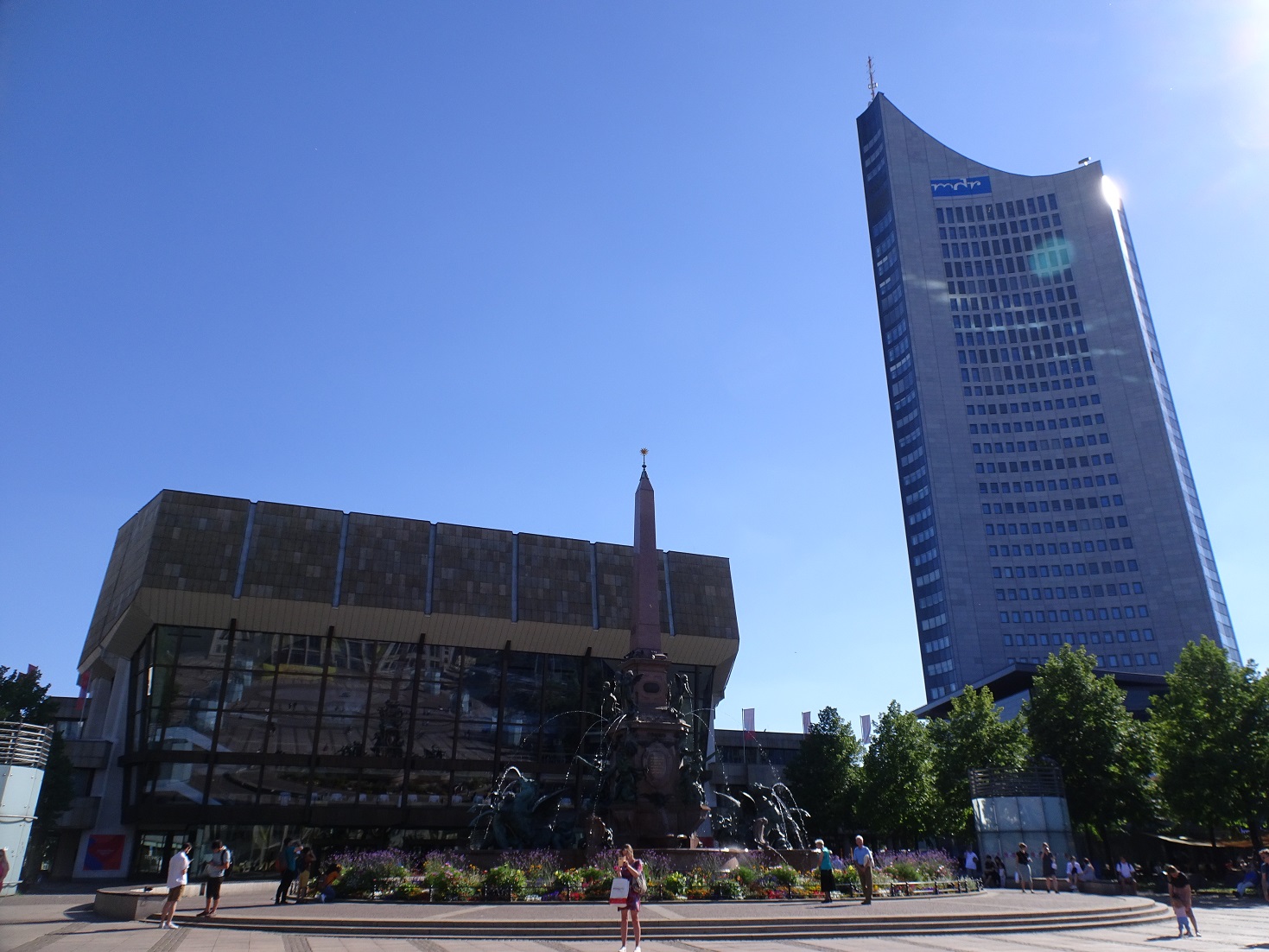
Central Germany’s largest city still seems to be kind of an off-the-beaten-path place for international travelers, despite the fact that it’s the country’s fastest-growing city and a cultural hotspot, thanks to its large university and important role in the contemporary art scene.
I’ve been living in Leipzig for over a decade now, so I figured it’s about time I share my local knowledge with you by presenting my perfect one-day itinerary for this amazing city. There are lots of interesting spots, however, and picking the right places for a short stopover isn’t exactly easy.
For that reason, I didn’t include any museums in my guide, as they usually take a lot of time to explore properly. That said, I’ve still mentioned some worthwile nearby museums in the stops of the itinerary, so if you’ve got an extra day or two in the city, I recommend you throw a few of those into the mix.
As it stands, here’s my ultimate one-day itinerary for Leipzig.

This post may contain affiliate links, and I might earn a small commission at no additional cost to you. For more info, click here.
Guided Tours of Leipzig
If you’re short on time or want the company of a local, there are plenty of guided tours of Leipzig available, like this highly-rated walking tour of the city centre. You can have a look at some more options below.
The Perfect One-Day Itinerary for Leipzig
You can start your explorations from Leipzig’s impressive Train Station, which was finished in 1915 and is still the largest railway station in all of Europe by floor area. If you leave the station through the south-western exit, you can follow Nikolaistraße south until you reach the cute Nikolaikirchhof square.
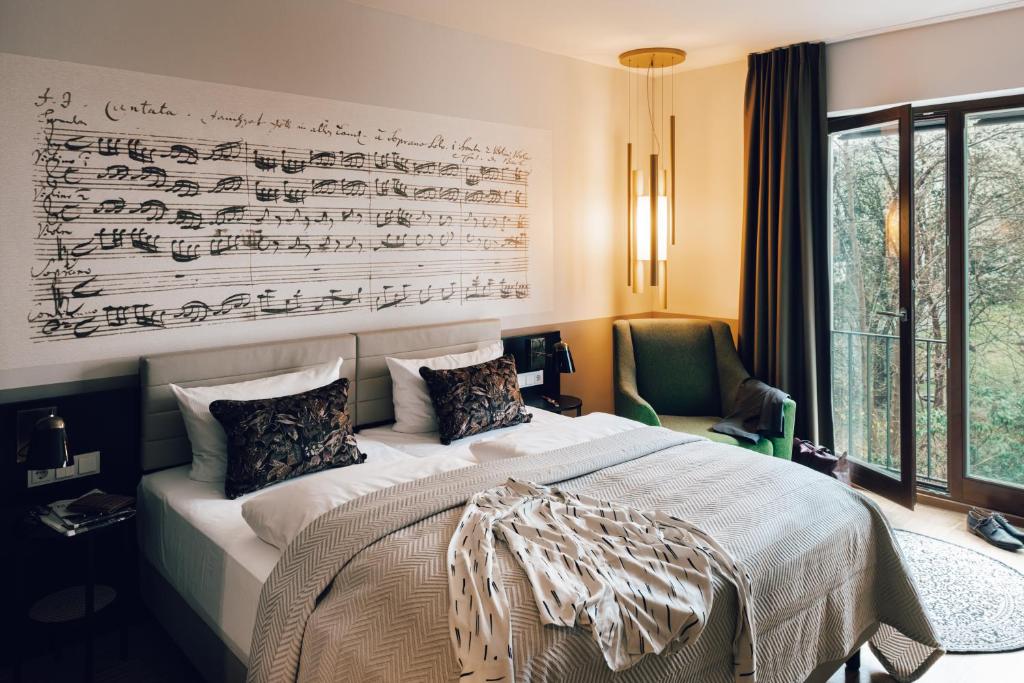
Leipzig Hotel Tips
Budget: Wombat’s City Hostel
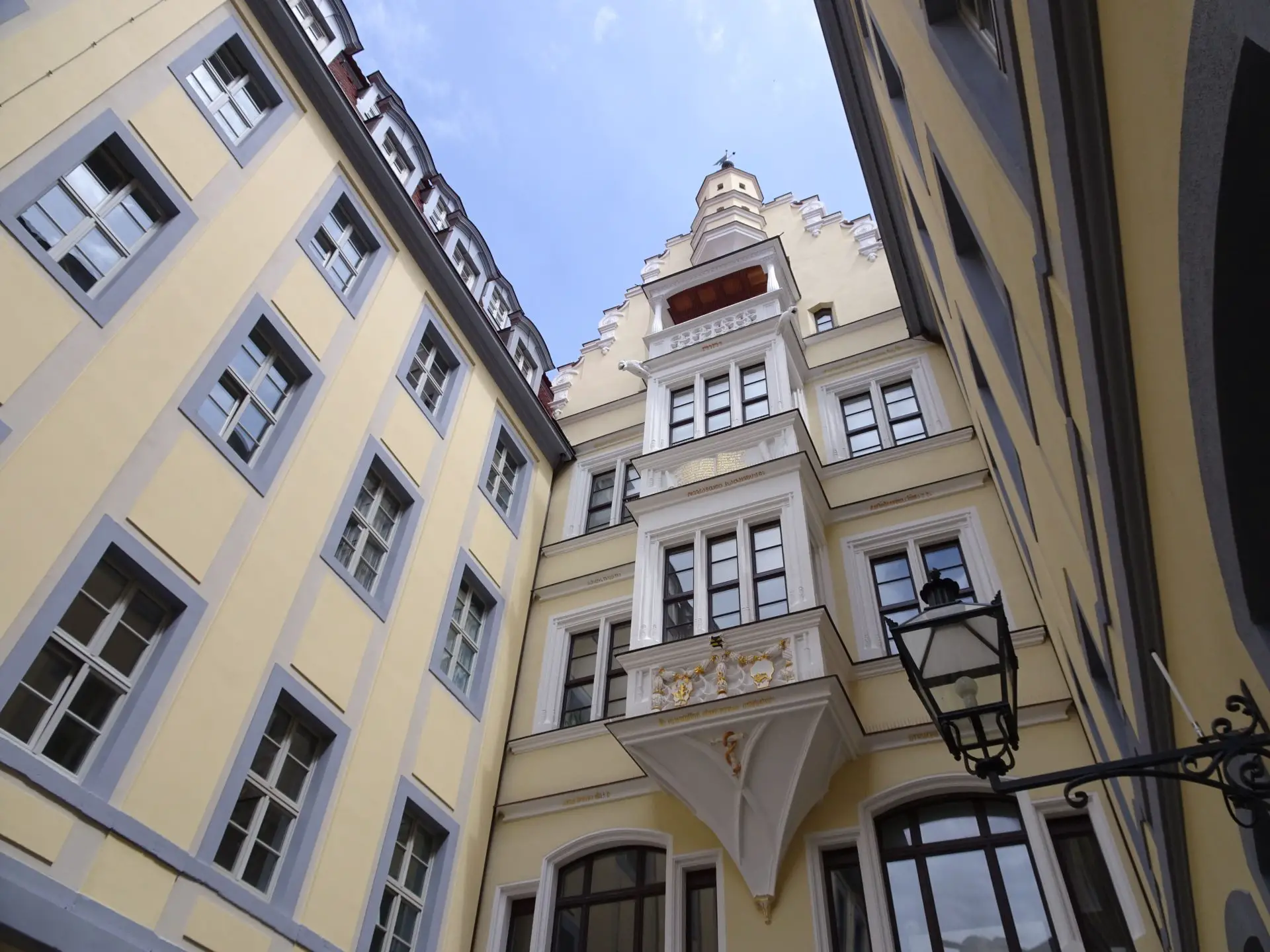
Midrange: Town House Leipzig (pictured)
Luxury: Steigenberger Hotel Leipzig
.
Nikolaikirche
Central Leipzig’s largest church was originally built in 1165 in a Romanesque style and expanded several times over the following centuries. It’s well-known all over Germany for its historical role in the late GDR era, when the weekly peace demonstrations were held on the square in front (usually after prayer meetings in the church).
I also like the inside of the church, which is decorated in a classicist style with the most famous features being the columns with palm-leaf-shaped capitals.
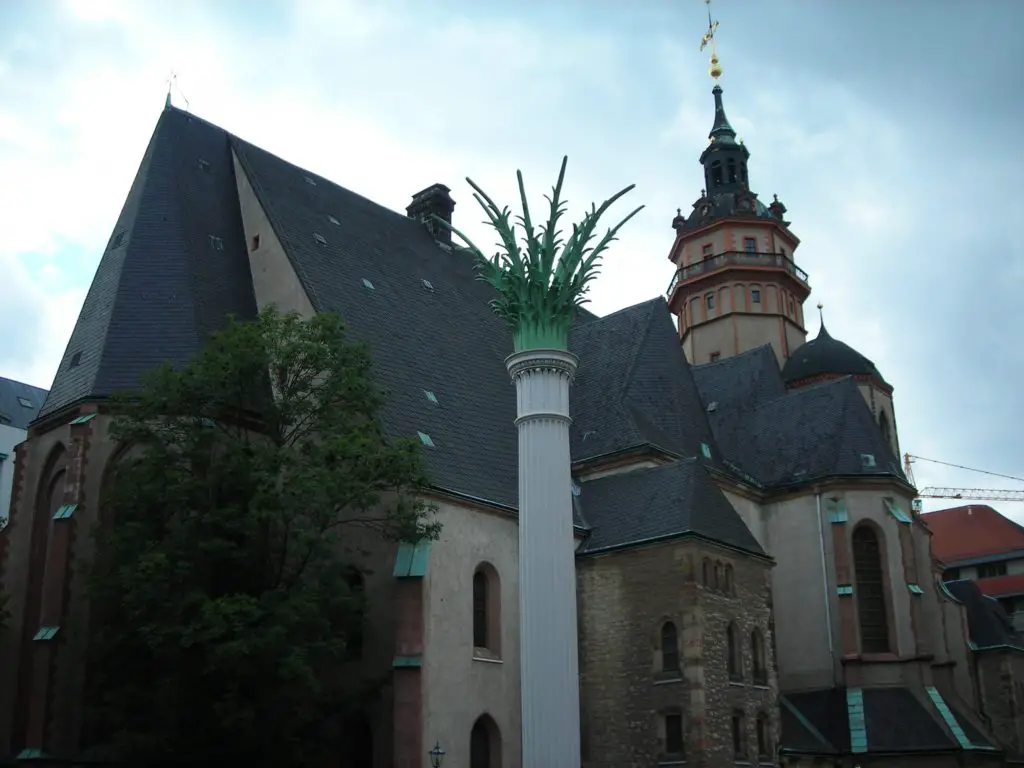
The former school building, which lies directly to the north of the church is home to the University’s Museum of Antiquities, which has a small, but interesting exhibition of statues, vases and other artefacts from the Roman, Greek and Etruscan civilizations.
Augustusplatz
If you continue south until you meet the pedestrian Grimmaische Straße and then turn east, you’ll reach Augustusplatz, a square dominated by two important buildings that are both related to Leipzig’s long musical history.
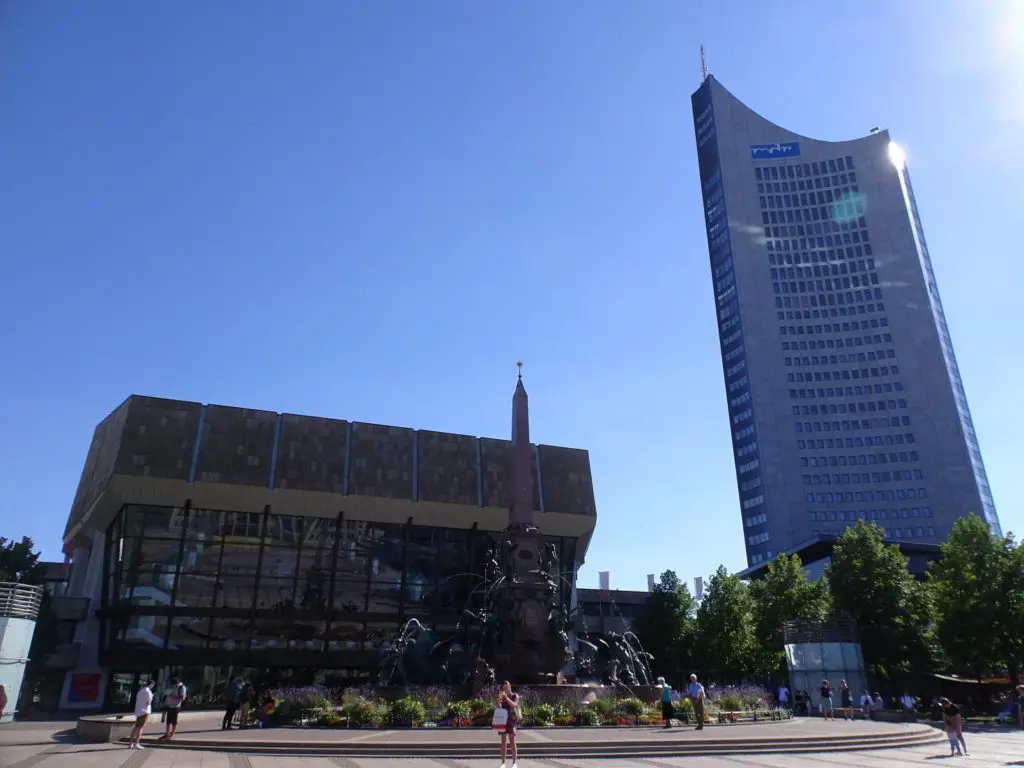
To the north is the Opera House, which was built in 1960, and at the southern end of the square sits the Gewandhaus, which is a concert hall opened in 1981. It’s the third and current home of the city’s famous Orchestra of the same name, which was once led by Felix Mendelssohn Bartholdy.
MDR Tower Viewing Platform
The large glass-and-concrete tower to the southeast used to belong to the University, which is why a lot of people from Leipzig still call it Weisheitszahn (i.e. Wisdom Tooth – Get It?). Nowadays, it holds offices for central Germany’s public broadcaster MDR.
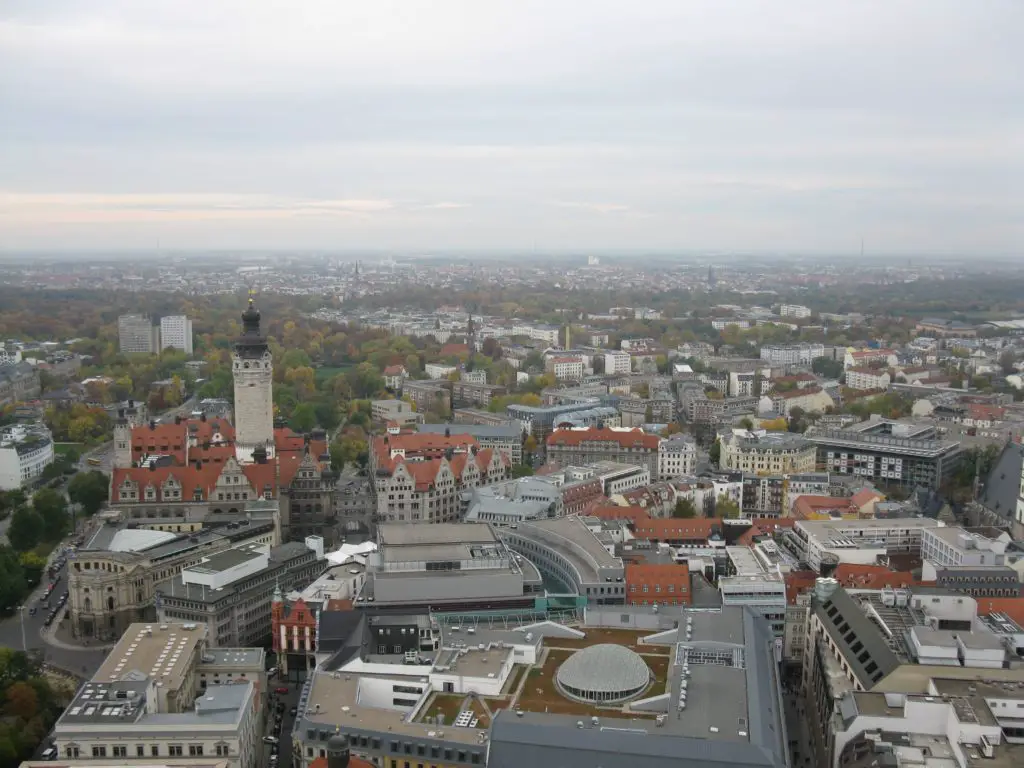
Bad puns aside, there’s a viewing platform on the top floor, which is my favourite viewpoint in the city. You can see all over the old town and far to the northern, western and southern suburbs.
Something you’ll notice from up here, is how many green spaces Leipzig has, including large patches of Auwald, which is one of the largest remaining lowland riparian forests in Europe. The entrance fee for the viewing platform is 5€, which you need to pay in cash. It’s normally open from 11am to 10.30pm.
Market and Old Town Hall
If you backtrack to Augustusplatz and continue west along Grimmaische Straße, you’ll eventually reach Leipzig’s central market square.
It’s dominated by the beautiful Old Town Hall, which was originally constructed in the 13th century, but rebuilt in the Saxon Renaissance style in 1557 by the famous local architect (and city mayor) Hieronymus Lotter.
If it seems particularly aesthetically pleasing to you, it might be because they used the conventions of the Golden Ratio to figure out where the clock tower should be placed on the façade.
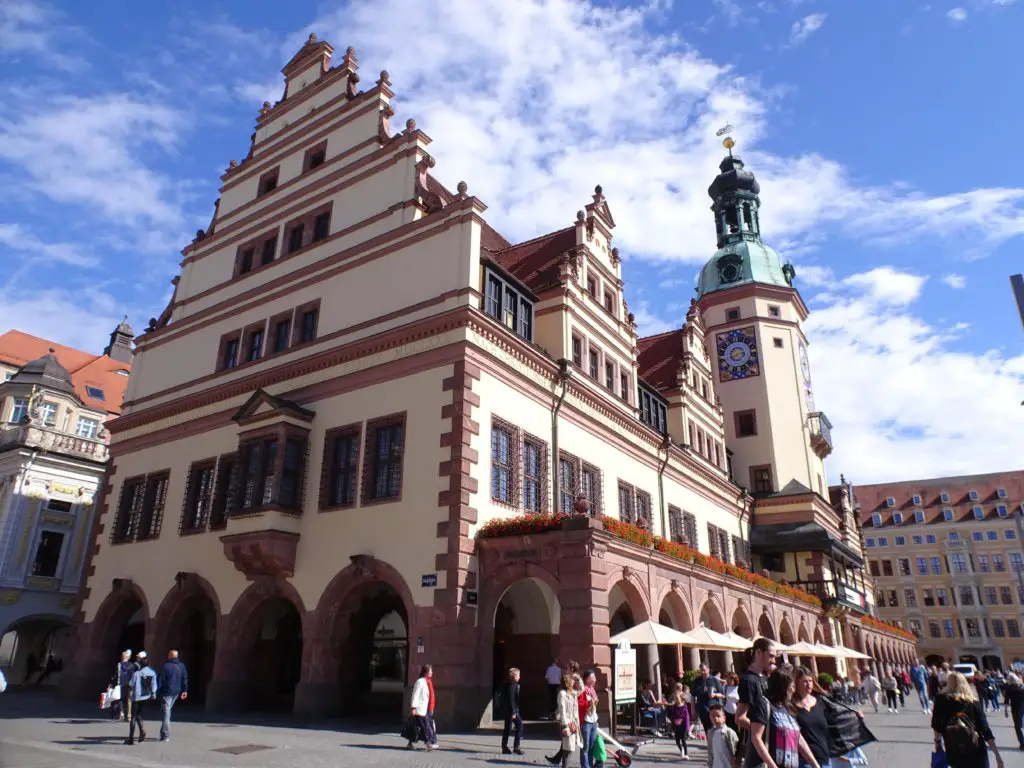
Since the city’s administration moved to a new building in the early 20th century, the old town hall is home to Leipzig’s interesting Museum of City History, which deals with the city’s history and culture over the last 900 years.
If you’re interested in more contemporary history, you could also check out the exhibition at Zeitgeschichtliches Forum, facing the southern end of the town hall, which focuses on the GDR era of German history and is free to visit.
Something you definitely shouldn’t miss is the pretty baroque-era Old Stock Exchange building on the small square behind the Town Hall (to the east), which is my favourite building in Leipzig’s old town. The statue in front shows the famous German playwright, poet and novelist Johann Wolfgang Goethe.
Lunch Break: Barfußgässchen or Auerbachs Keller
If you need a food break before continuing on, Barfußgässchen, which leads west from the northern half of the market square, has Central Leipzig’s highest concentration of bars and restaurants.
Alternatively, you could grab a bite at Auerbachs Keller, which is the city’s most famous (but also most touristy) restaurant, which even appears as a location in Goethe’s play Faust.
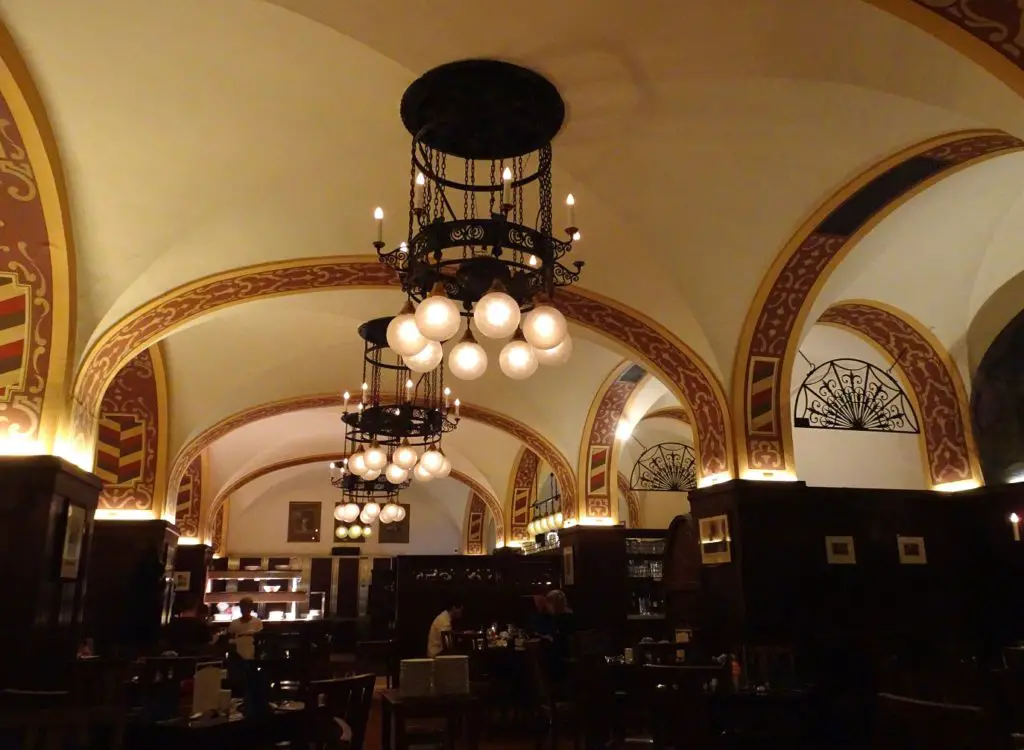
After living in the city for over ten years, Stefanie and I finally decided to have a meal here for the first time and actually quite liked the atmosphere of the underground restaurant. That said, you can obviously find cheaper food nearby, as you’re definitely paying for the name here, but it’s still affordable.
Faust and his enabler Mephistopheles appear as statues at the stairs that lead to the restaurant, and on the opposite side are three university students that they’re starting a beef with in the play. You can find the restaurant directly south of the town hall, inside the Mädlerpassage arcade.
Thomaskirche and Bach Memorial
If you continue west from the southern edge of the market square, you’ll encounter Leipzig’s other famous church. The beautiful Thomaskirche is where the famous baroque-era composer Johann Sebastian Bach worked as a cantor in the early 18th century.
You can find his grave under a stone slab in the altar area and you can also see his face in one of the detailed stained glass windows along the southern wall of the church. My favourite architectural feature inside is the beautifully intricate rib-vaulted ceiling.
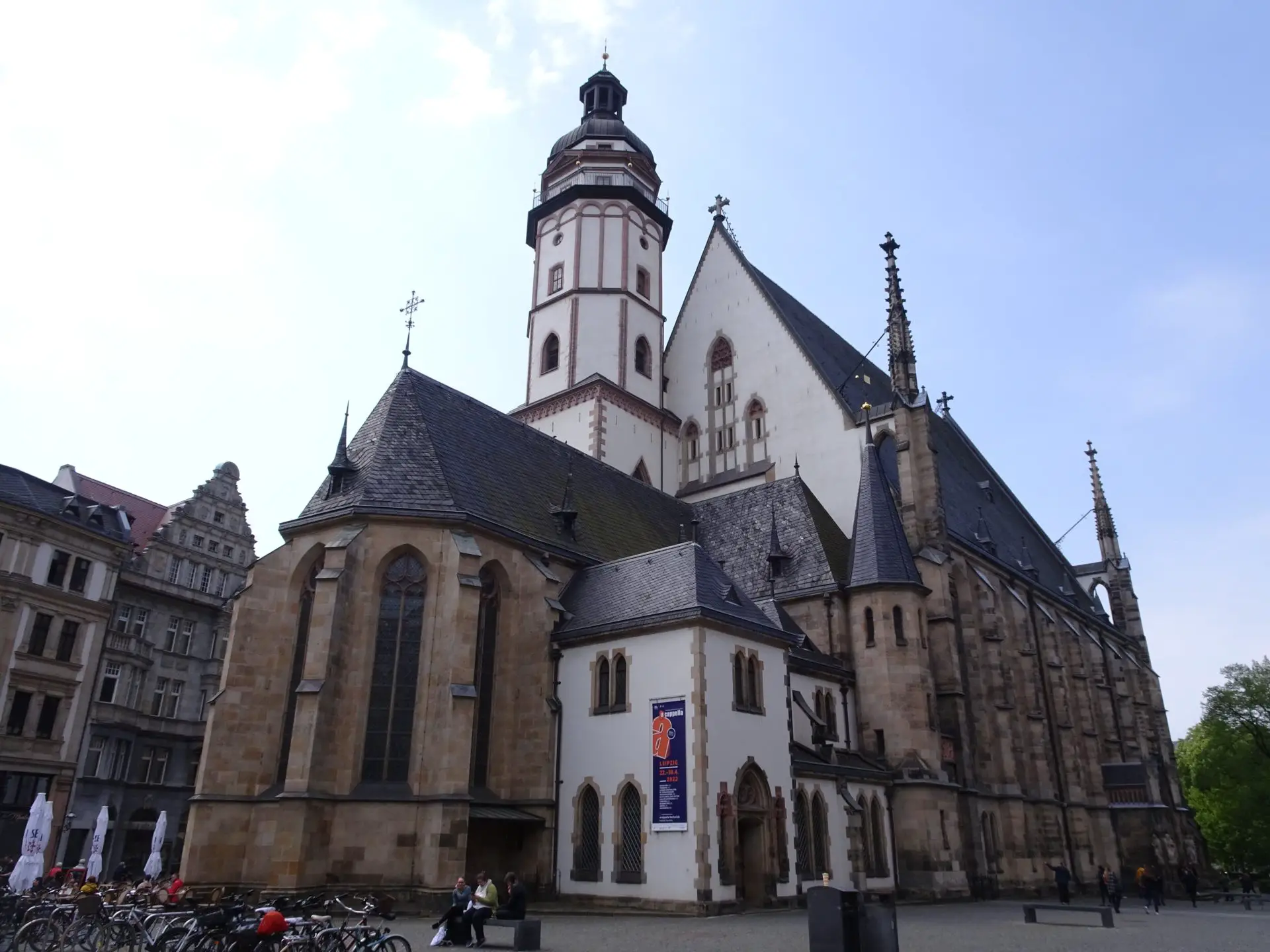
On the little square directly south of the church you’ll find a statue of Bach, and on the opposite side of the road is the Bach Museum, where you can learn about the life and works of the composer (with lots of little terminals, where you can listen to his compositions).
New Town Hall
If you continue south along Burgstraße, you’ll reach Leipzig’s imposing New Town Hall. It was built at the turn of the 20th century and has been the seat of the city’s administration since 1905, when it replaced the Old Town Hall on the market square.
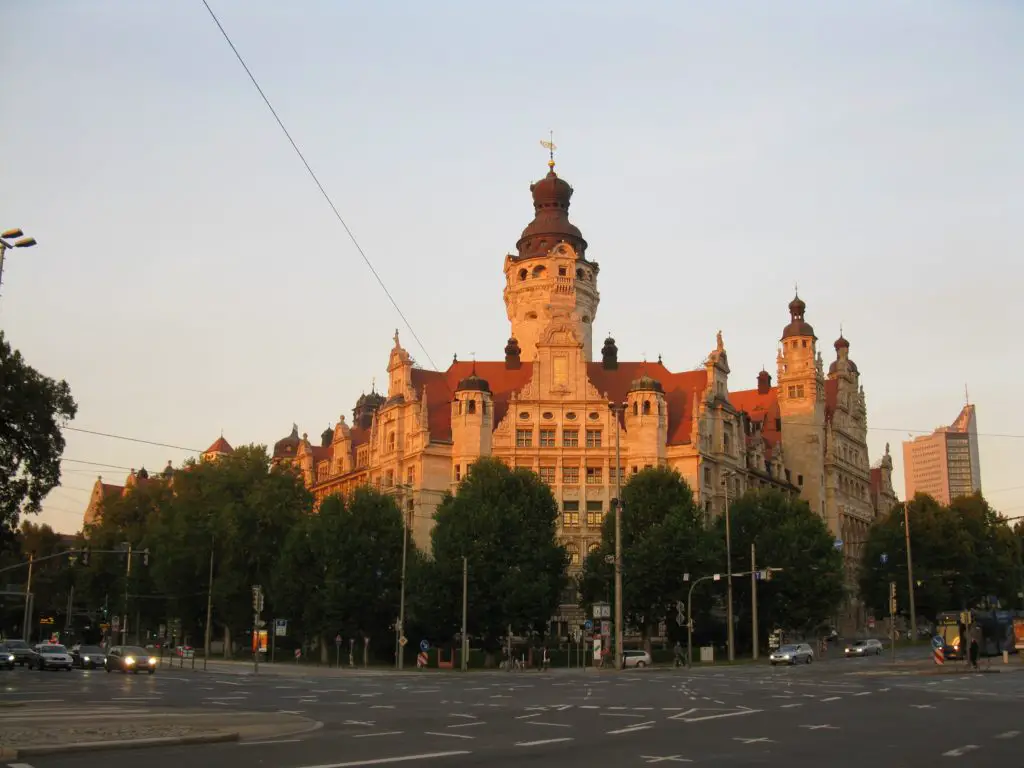
The impressive building was designed by local architect Hugo Licht and stands at the location of the former Pleißenburg fortress. Licht used some stylistic elements from the previous building, which explains why the city hall looks a bit martial. Well, at least to my eyes (I definitely prefer the old town hall).
Völkerschlachtdenkmal
Now that you’ve thoroughly explored central Leipzig, you could walk east to the subterranean Wilhelm-Leuschner-Platz train station and take the S-Bahn Train S1 or S2 to the towering Völkerschlachtdenkmal (Monument of the Battle of Nations), which sits south-east of the centre.
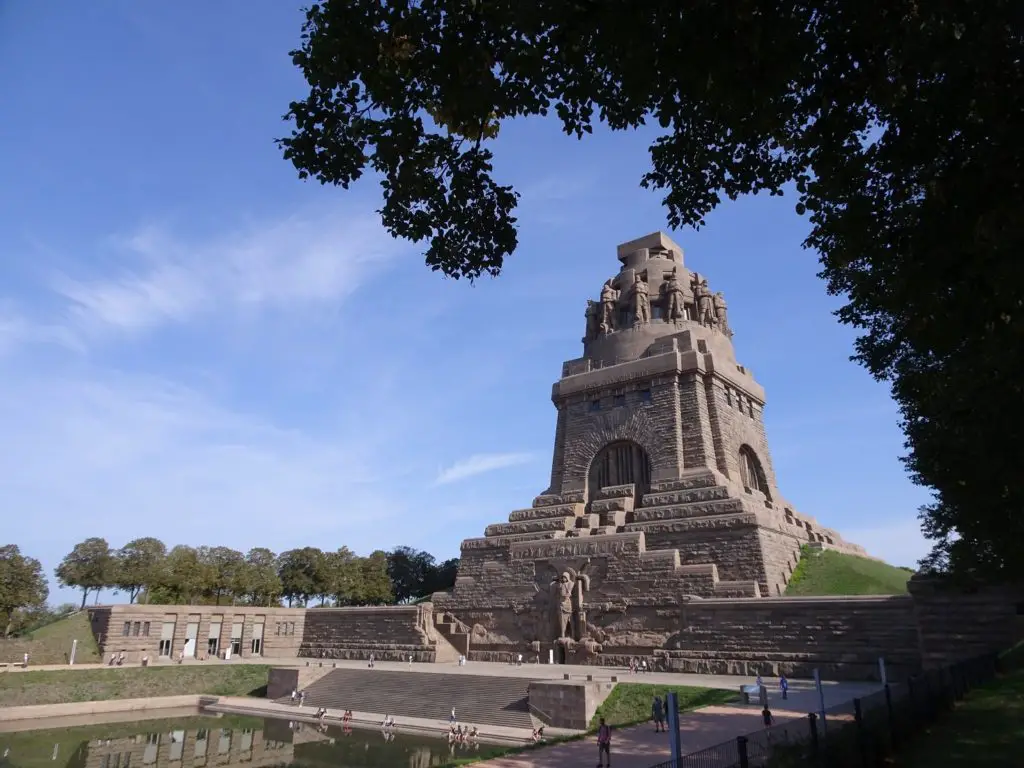
It was built one hundred years after the Battle of Leipzig, which was fought here in 1813 between Napoleon’s France and a coalition of Prussia, Austria, Russia and Sweden. It’s Europe‘s largest monument and from the top there are some good views of the surrounding area and back to the city centre.
You can read all about visiting this unique site in my guide here.
Karl-Liebknecht-Straße
The Karl-Liebknecht-Straße (or “Karli” as we locals call it) south of the city centre is where you’ll find the highest number of restaurants and bars in Leipzig, as well as lots and lots of cool examples of street art and some architectural leftovers from the GDR era.
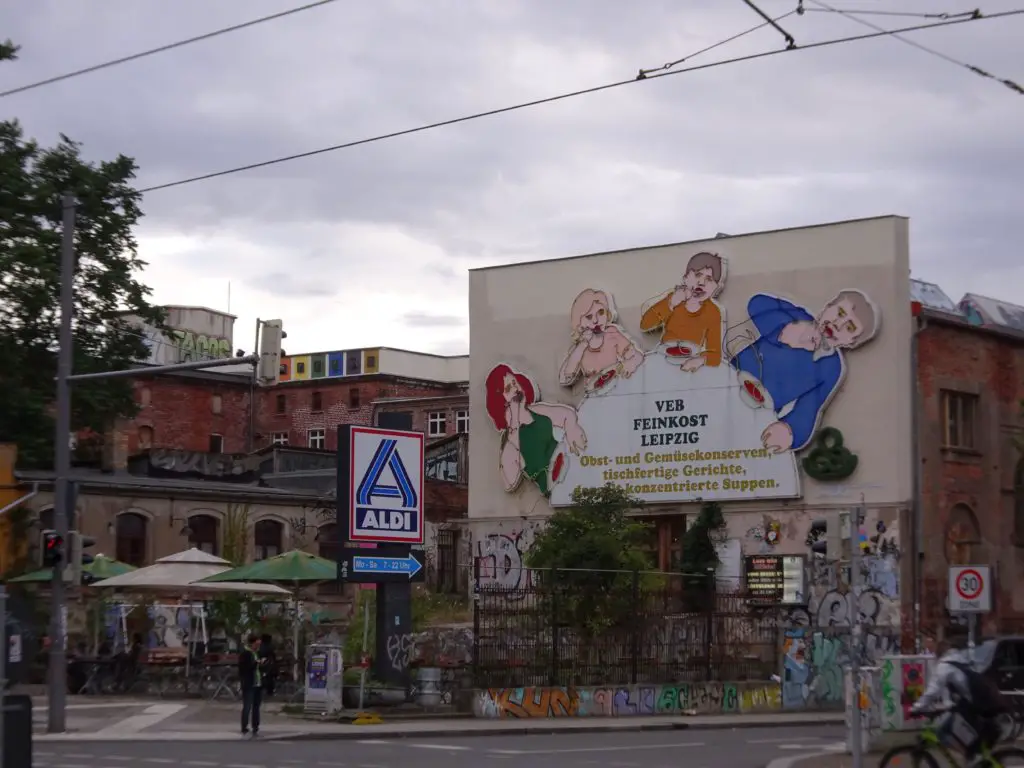
To get there, take the S-Bahn to the MDR Stop and walk west along Kurt-Eisner-Straße until you reach the big avenue running in a north-south direction.
When it comes to places to eat, you’ll be spoiled for choice. One of our all-time favourites is the Spanish restaurant Pata Negra, but if you want something truly local, you could also go to Gaststätte Kollektiv, which serves lots of food that was popular in the GDR.
Leipzig Itinerary Map
You can find all the sights that I mentioned above in this map of the city.
Where to Stay in Leipzig
As you would expect, most places to stay can be found in central Leipzig, and close to the train station, including several cheap hostels, like Wombat’s City Hostel or Five Elements Hostel. A midrange option would be Town House Leipzig and Steigenberger Hotel Leipzig is the most luxurious place around.
There are plenty of other options around, so I wrote a dedicated guide to The Best Hotels, Hostels and Guesthouses in Leipzig. You can also have a look below at some more options.
See Also
Visiting the Monument to the Battle of the Nations in Leipzig
What to Know About Visiting Colditz Castle, Germany
Having lived in Leipzig for almost 16 years, I can fully support that list as a great way to spend a day (better yet, a weekend) in this remarkable town.
As an alternative to the history-heavy sights in the city center, and as a great way to catch some air, I’d like to suggest a walk through the green heart of the town – the riparian forest of Leipzig, biggest of its kind in all of Europe and situated just 10 minutes east of the New Town Hall (itself actually holding the world record for biggest Town Hall by floor area and number of rooms and its tower can be visited for another view atop the city).
There you’d also find the Horseracing ground ‘Scheibenholz’ with its main building, the Clara-Zetkin-Park (home to the Saxo-Thuringian Industry- and Tradefair in 1897), remnants of the Palmengarten (devasteted in 1940 to prepair for the – ultimately cancelled – giant Richard-Wagner-Monument) and, if sport history is among your interests, the former Zentralstadion, which used to be THE biggest stadium in both West- and East-Germany, having once hosted 110.000 people at once before its renovation for the Football Worldcup in 2006.
From there, you could walk through the Waldstraßenviertel, an almost completely intact quarter of buildings from the Gründerzeit, and via the Rosental (planned by August the Strong to be the building ground for a pleasure castle à la Versailles, but prevented by the townspeople, claiming all sorts of issues with the soil, nasty insects and such^^), taking a glimpse into the famous Zoo and re-entering the city center from the north.
Hi Tony,
thanks for your thoughtful and comprehensive suggestions! You’re right in that Leipzig has many more things to see than can easily be squeezed in a One-day itinerary. I’ll definitely add some more Leipzig content in the future and will include some of your suggestions.