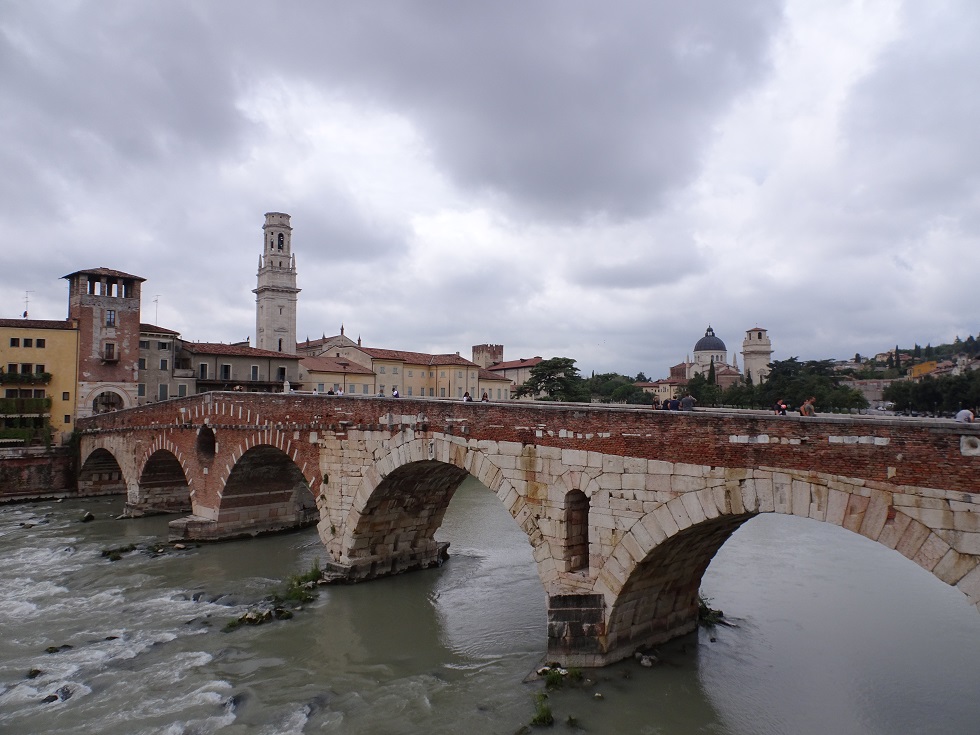
Verona is one of my favourite cities in Northern Italy’s Veneto Region, mostly because of its beautifully preserved medieval city core and the many remains of Roman architecture. Still, most people probably know it as the setting of William Shakespeare’s 1597 play Romeo and Juliet.
It’s clear that the source material that Shakespeare borrowed from is mostly fictional, but this doesn’t stop millions of people from visiting the city each year to follow the footsteps of the star-crossed lovers, and there are plenty of sites in town that are connected to the play.
As we’re both big Shakespeare fans, Stefanie and I checked out most of these on our recent visit to Verona, and in this guide, I’ll show you both the famous must-visit spots and some lesser-known locations where you can escape the crowds.

This post may contain affiliate links, and I might earn a small commission at no additional cost to you. For more info, click here.



Guided Tours of Verona’s Romeo and Juliet Sites
If you want a local guide showing you the locations from the play, there are a number of Romeo and Juliet tours available. You can have a look at some options below.
The Romeo and Juliet Sites in Verona
Juliet’s House and the Famous Balcony
Oh, Casa di Giulietta, wherefore art thou so crowded? This palace in the city centre is the obvious number one spot in Verona connected to the play, and everybody else seems to know that.
We checked it out once when we arrived in the city in the afternoon, when the courtyard was anything but romantically deserted. When we dropped by again around 8.30am the next day, it was much quieter and nicer.
As the former home of the Cappelletti Family, on which the Capulets are based, this is supposed to be the place Romeo and his friends sneak into to visit the rival family’s ball and where the lovers first set eyes on each other.
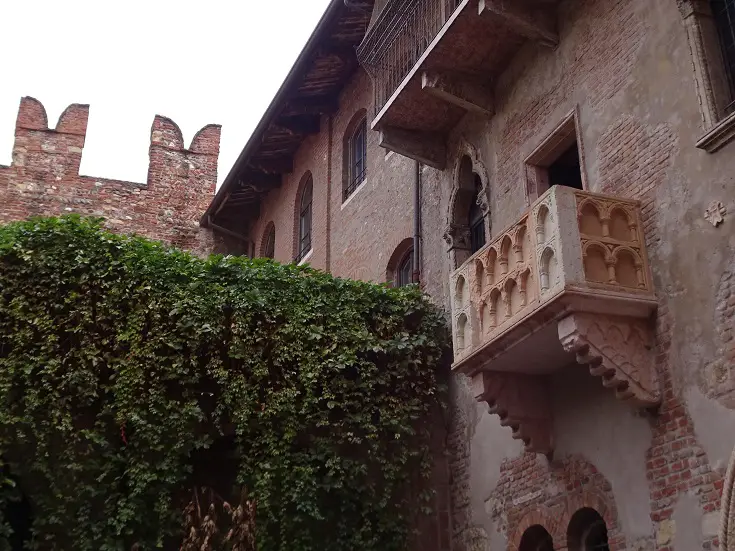
Today, the vine-covered courtyard contains a statue of Juliet (which, judging by the shiny surfaces, seems to be copiously groped-at by international perverts) and the balcony that Romeo climbed onto in the play’s most famous scene.
Unfortunately, I have to burst everyone’s bubble here, because while the building itself indeed dates to the 14th century, the balcony is actually a 20th-century addition, despite its throwback look.
The house itself contains a small museum, which displays for instance, some costumes from the 1968 Franco Zeffirelli film adaptation. It also gives you the chance to step on the balcony and mess up everyone’s picture (you know you want to).
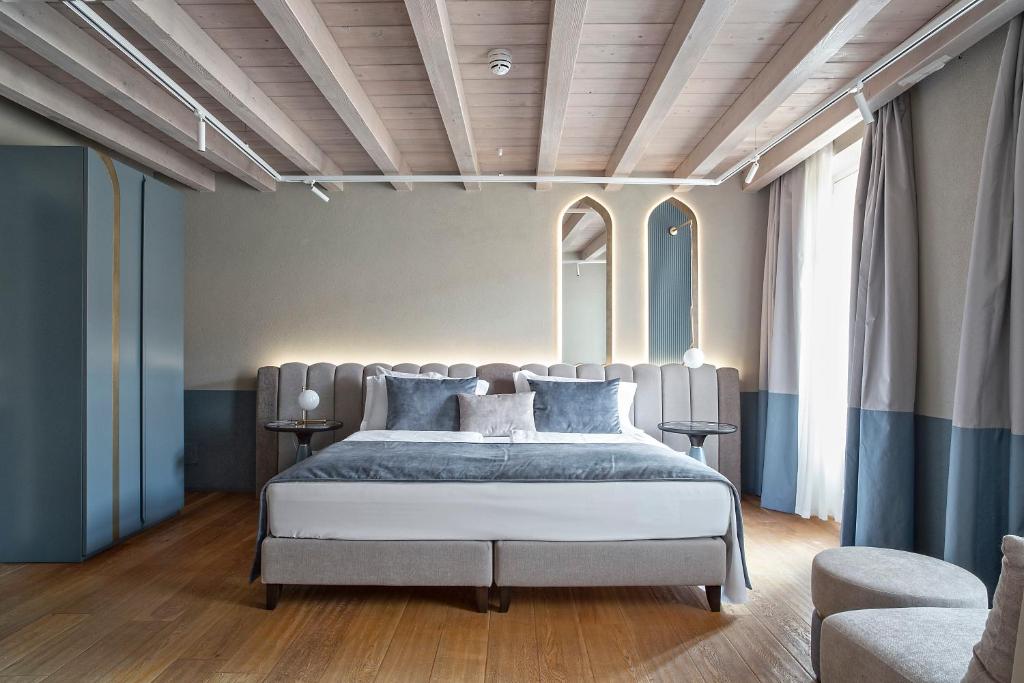
Verona Hotel Tips
Budget: StraVagante Hostel & Rooms
Midrange: Relais Balcone di Giulietta (pictured)
Luxury: Palazzo Monga Boutique Guesthouse
.
The entrance fee to the house is 12€, but the courtyard is free to visit, so you can get a glimpse of the balcony and statue without paying. If you plan to visit a few sites in the city, it’s a good idea to get a Verona Card, as the prices can add up quickly.
The house itself is open from 9am to 7pm (double-check the current times here) and the courtyard usually opens half an hour earlier. The Casa di Giulietta sits off Via Capello, which runs southeast from the southern end of Piazza delle Erbe.
Romeo’s House
The former palace of the Montecchi Family, which the Montagues are based on, sits just a couple of minutes from Juliet’s House. Here, you can only check out the fortress-like exterior of the building, which seemed rather oppressive to us in the small alleyway that it’s located in.
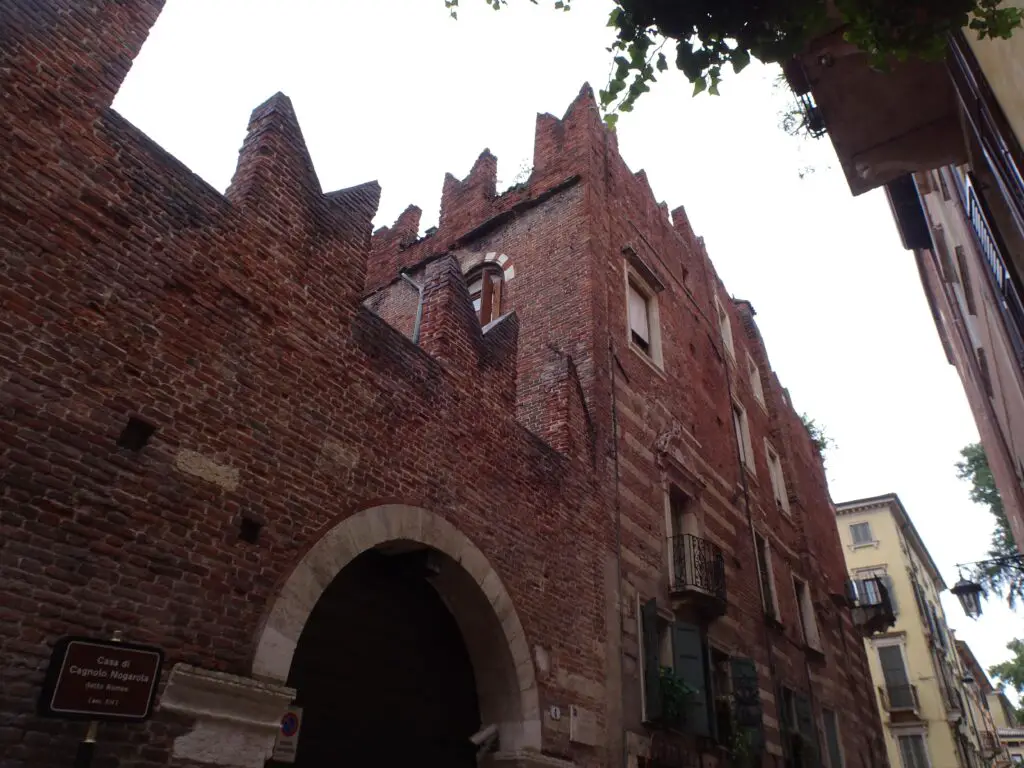
Apparently, the reason that no one is allowed inside its walls is that the owners didn’t want their building defaced by mindless tourists who scratch their names into the walls, which is exactly what happened in Casa di Giulietta. This is why we can’t have nice things, guys.
It can be found in Via Arche Scaligere directly east of the Scaliger Tombs (which are also worth a look, while you’re in the area).
Site of the Duel Between Tybalt and Mercutio
The historic well in Via Mazzanti, which sits right next to Verona’s impressive main square is said to be where that douchebag Tybalt kills off everyone’s favourite character.
The choice of location isn’t completely arbitrary, as the alleyway is said to have been a place of common clashes between Cappelletti and Montecchi families, so the scene might as well have played out here.
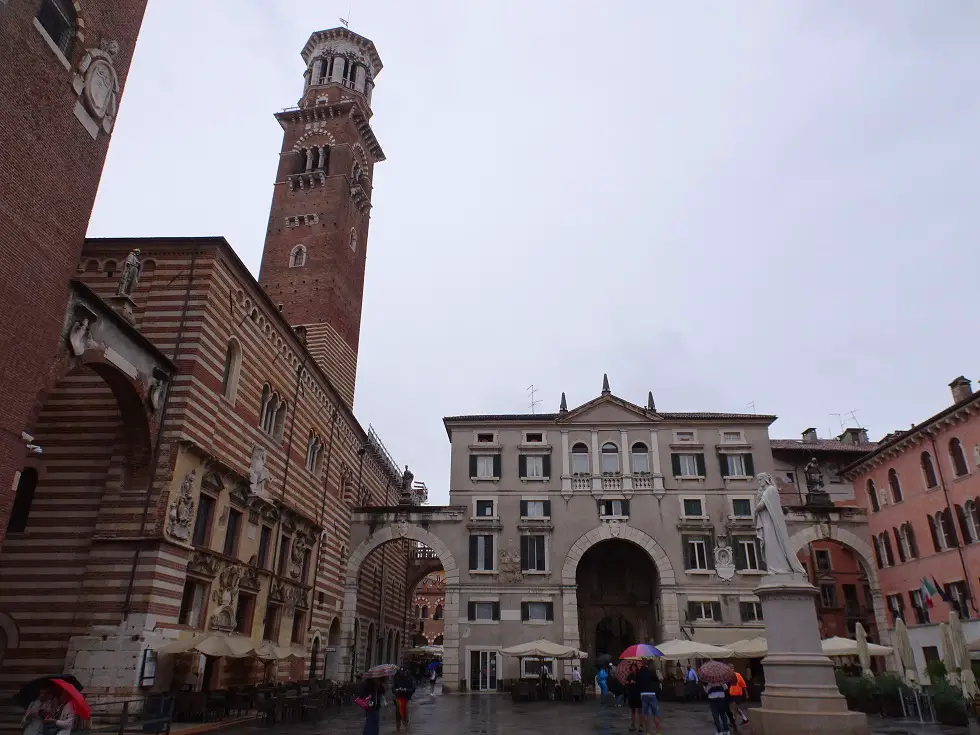
The alleyway can be found near the western corner of Piazza dei Signori, which was our favourite square in the city, because of its beautiful medieval architecture.
If you’re not just a Shakespeare fan, but a general literature nerd like myself, you might also want to check out the statue of Dante Alighieri, who contemplatively overlooks the square. Verona is where Dante settled after he was exiled from Florence.
Site of the Duel Between Romeo and Tybalt
Romeo is said to have taken his revenge on Tybalt next to Palazzo Carlotti near the well-preserved Roman Borsari Gate. There seems to have been a lot of chasing involved, as this spot is quite far from Via Mazzanti. There’s a small plaque that shows the scene on the wall of Palazzo Carlotti.
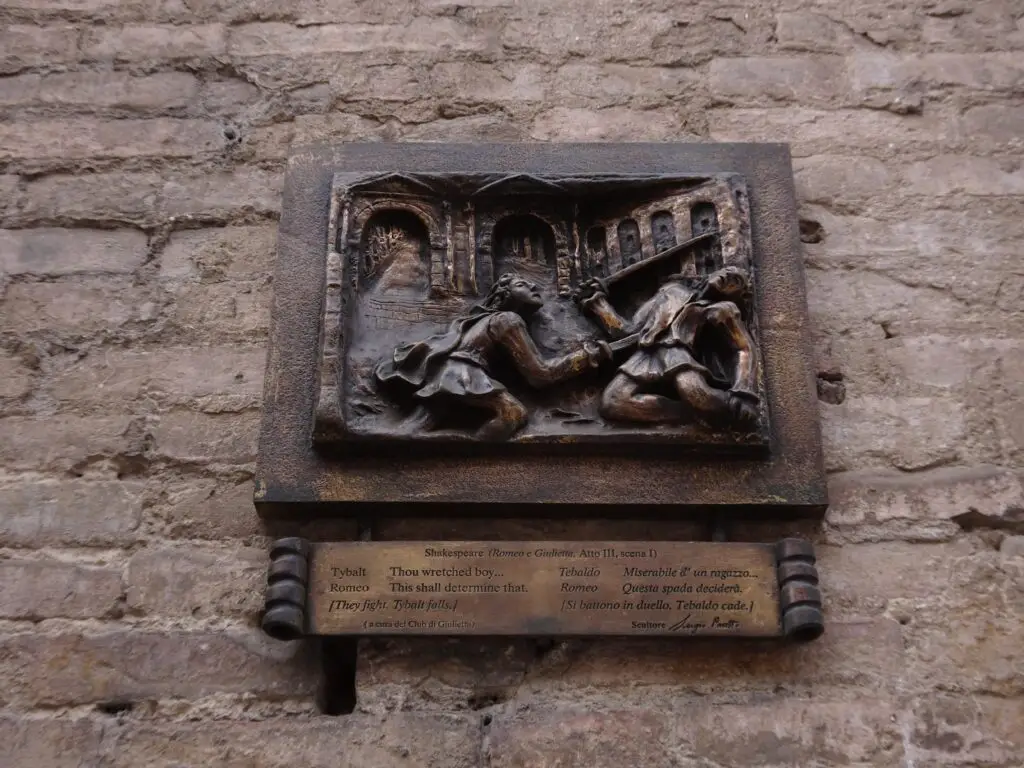
Look for it between the two westernmost windows on the southern façade of the building at Corso Cavour 2.
Juliet’s Tomb
The tragic ending of the play is said to have taken place in the San Francesco al Corso Convent, south of the city centre. Again, the location was carefully chosen, as this was the only Franciscan monastery during the time the play is set in, so it might as well have happened here.
We certainly found the small subterranean crypt with its open stone coffin very atmospheric and thought that it would have been a fitting setting for the tragic scene.
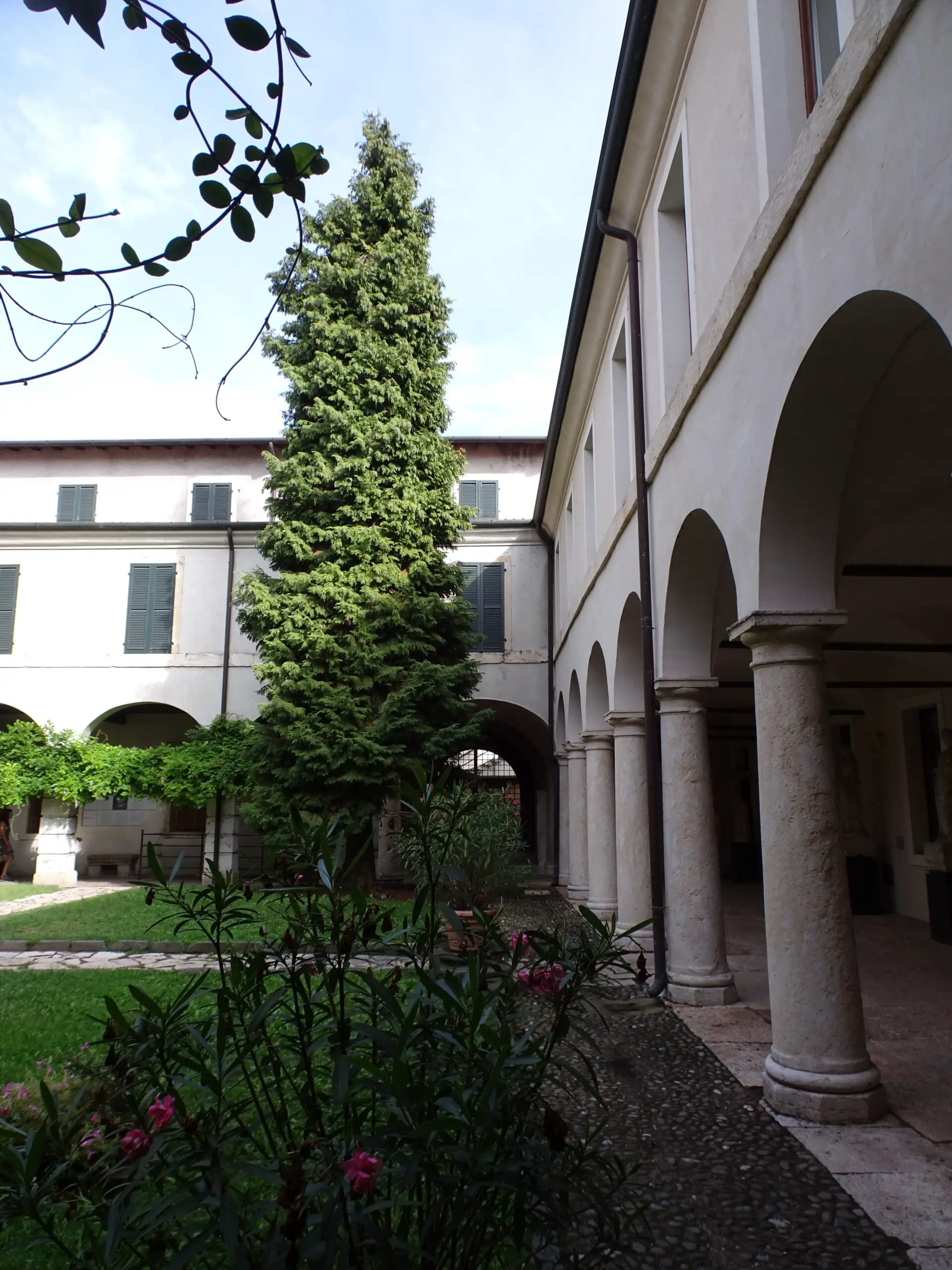
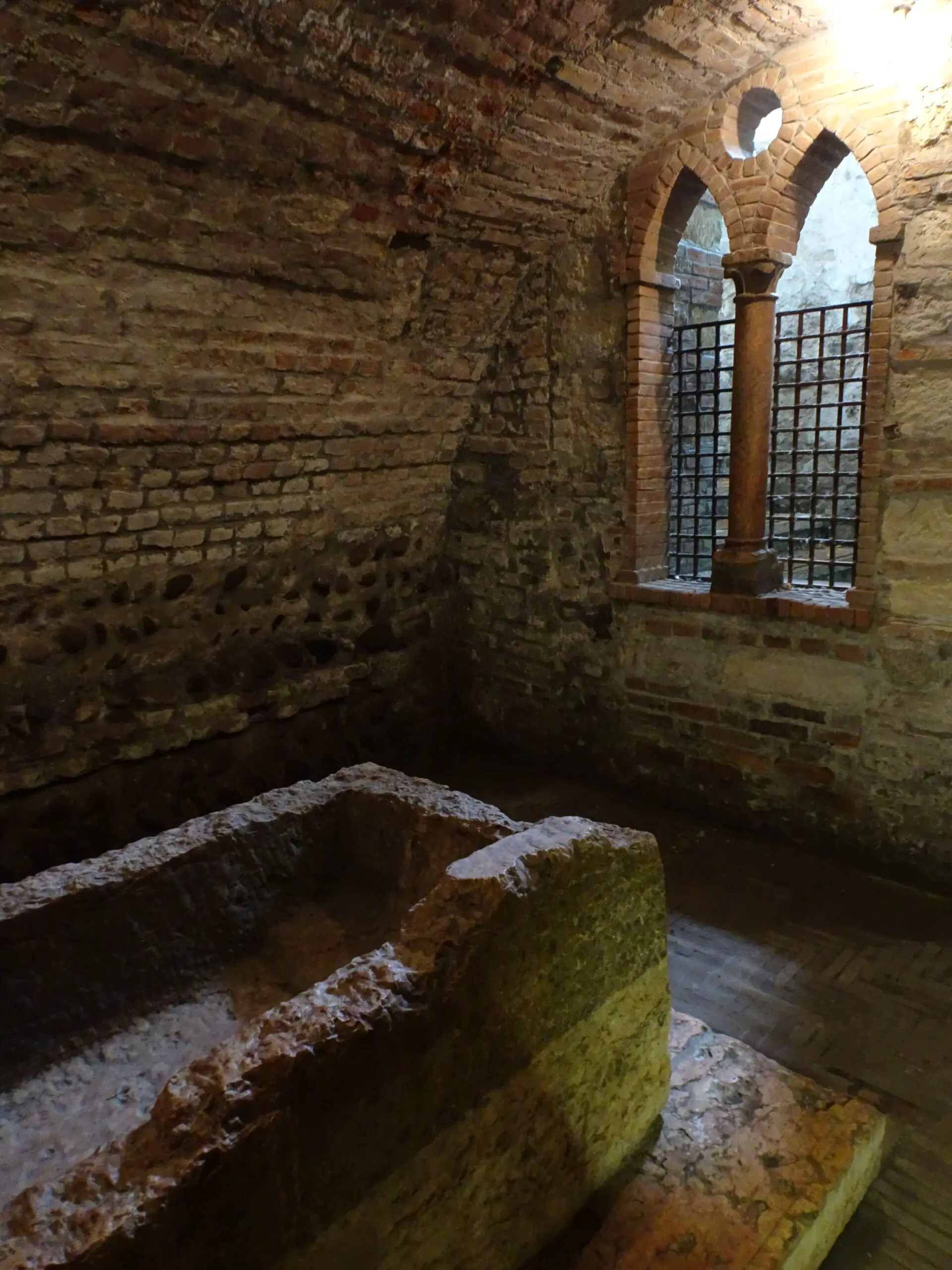
The entrance fee is 4.50€ and also includes access to the interesting Museo degli Affreschi, which shows some beautiful medieval frescoes. It’s open from 10am to 6pm (double-check the times here).
I suggest you come here in the morning or late afternoon, so that you can enjoy the peaceful atmosphere in the small courtyard without too many other people around. We were there shortly before closing time and had the place almost to ourselves.
Map of the Romeo and Juliet Locations in Verona
I’ve compiled all of the sites from the play that I described above in this map of Verona.
Practicalities
How to Get to Verona
As the second-largest city of the Veneto Region, there are frequent train connections to Verona from big cities all over the region, like Venice (about 1.5 hours), Padua (about 1 hour) or Vicenza (about 40 minutes). You can also reach the city from Rome in a little over 3 hours.
The main train station is Verona Porta Nuova, which is located about 25 minutes south of the city centre.
Where to Stay in Verona
We stayed in a cheap Airbnb that doesn’t seem to exist anymore, but there are some other budget options in the city, like StraVagante Hostel & Rooms near the Porta Nuova train station.
Otherwise, there are plenty of midrange places, like Relais Balcone di Giulietta. Finally, Palazzo Monga Boutique Guesthouse would be a well-rated luxury choice. Especially in the summer, it’s best to book a little in advance, as prices tend to skyrocket.
Other Things to Do in Verona
The 4 Must-See Churches in the UNESCO-listed Centre of Verona, Italy
A Driving Tour Through the Valpolicella Region – A Fun Day Trip from Verona