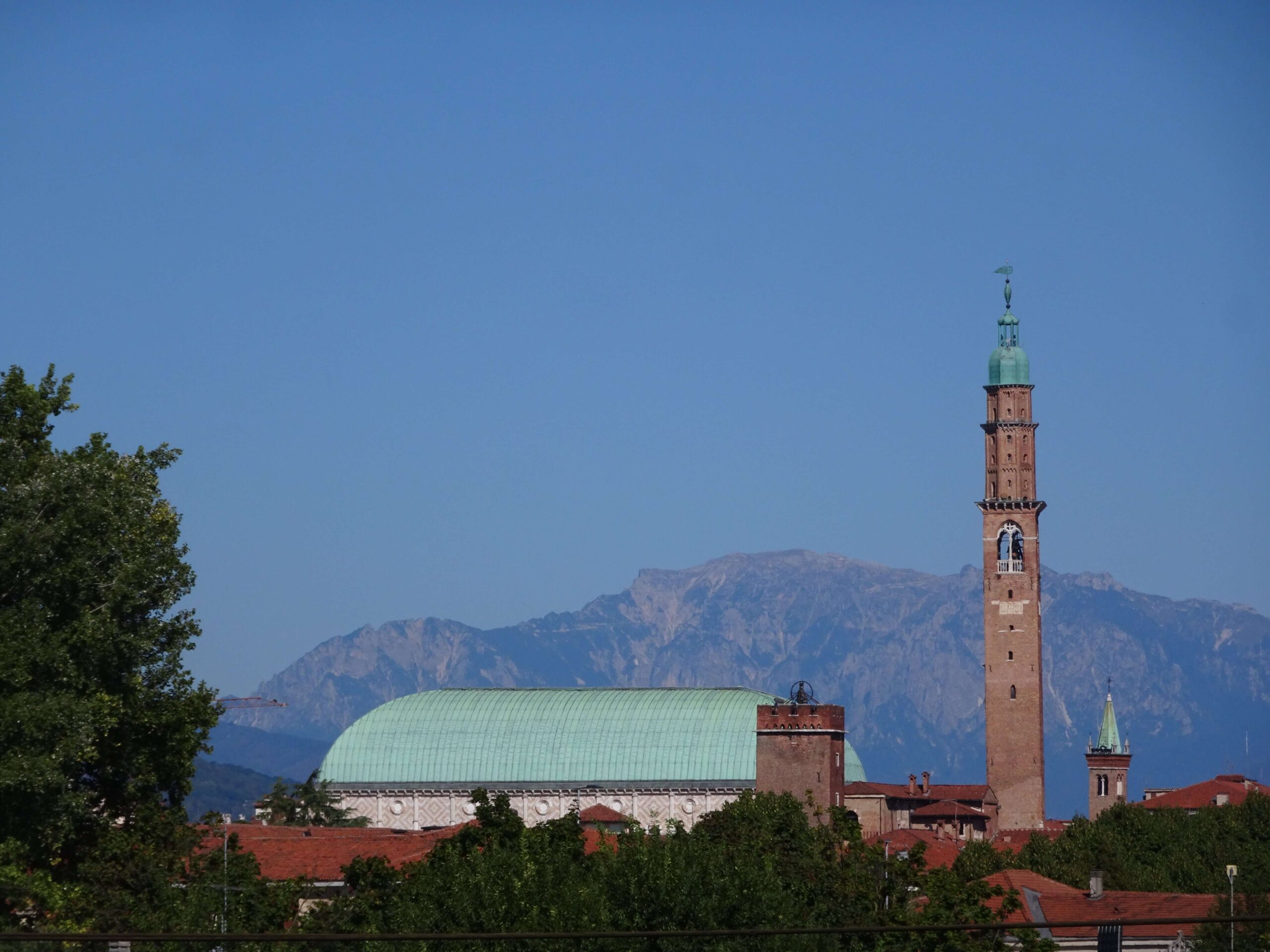
We spent several weeks exploring Italy’s Veneto Region and were constantly surprised by how few international visitors we came across almost everywhere outside of the huge tourist destinations, like Verona or Venice.
In Vicenza, it felt especially strange, because the city has so much going for it with its pretty squares, impressive churches, and endless examples of beautiful historic architecture. The city is closely associated with the influential Renaissance architect Andrea Palladio.
Palladio was inspired by classical Greek and Roman temple buildings and wanted to create the ideal city. Going by the impressive historic centre (which is now a UNESCO World Heritage Site thanks to his work), I’d say he mostly succeeded. Here’s my one-day itinerary to this amazing city.

This post may contain affiliate links, and I might earn a small commission at no additional cost to you. For more info, click here.

Guided Tours of Vicenza
If you’re short on time, you might want to consider taking a guided tour of the city. You can have a look at some well-rated options below.
The Perfect One-Day Itinerary for Vicenza
In 1994, a total of 23 Palladian Monuments were added to the UNESCO World Heritage List as “Vicenza, City of Palladio”. I’m an incurable completist and Stefanie is thankfully indulgent, so we actually visited them all during our stay.
Out of these 23 places, I’ve included all the Palladian buildings that we enjoyed the most in this itinerary, along with some other worthwhile sights. There’s a combination entrance ticket for lots of the sites, which is worth getting if you follow this itinerary (see the “practicalities” section below).
Vicenza Hotel Tips
Budget: Ostello di Vicenza
Midrange: Key Hotel
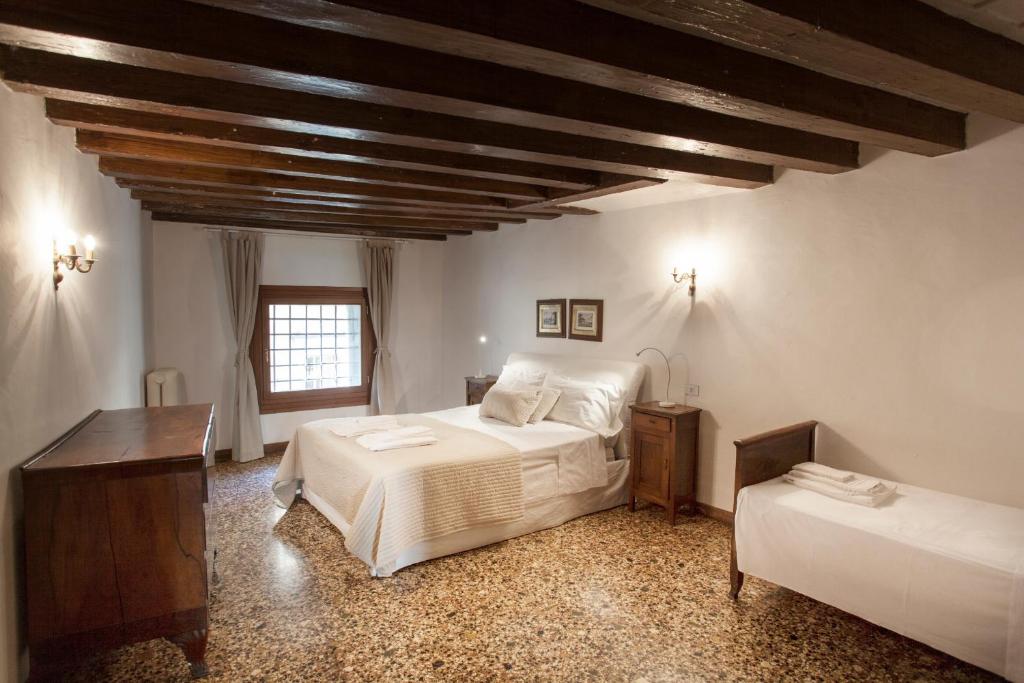
Luxury: Palazzo Valmarana Braga (pictured)
.
Teatro Olimpico
After getting some breakfast, I recommend heading straight to the city’s top sight as soon as it opens, so it will be as quiet as possible. We came right when it opened and had most of the place still to ourselves.
The Teatro Olimpico was Palladio’s final project and has the world’s oldest surviving indoor stage set. Construction began in 1580, shortly before the architect’s death, and is heavily inspired by Ancient Roman theatre stages.
The way to the entrance leads through a gate in the Palazzo del Territorio (where you’ll also find Vicenza’s tourist information) and through a pretty courtyard full of allegorical sculptures. The outside of the building is rather understated, but we found the inside all the more impressive by contrast.

First, you walk through some vestibules with interesting wall reliefs and a corridor, which has some signboards about the history of the building and the theatre troupe, before entering the stage area.
To us, this was by far the most impressive part of the building, and we were surprised to learn that the stage scenery isn’t a reconstruction at all. Most of what you see is original and has been there since the late 16th century.
The callbacks to Roman theatres are very easy to make out when you look at the many columns and marble statues of Vicenza’s Renaissance nobility. The theatre was opened with a performance of Sophocles’ Oedipus Rex, so the stage scenery is supposed to stand in for the ancient Greek city of Thebes.
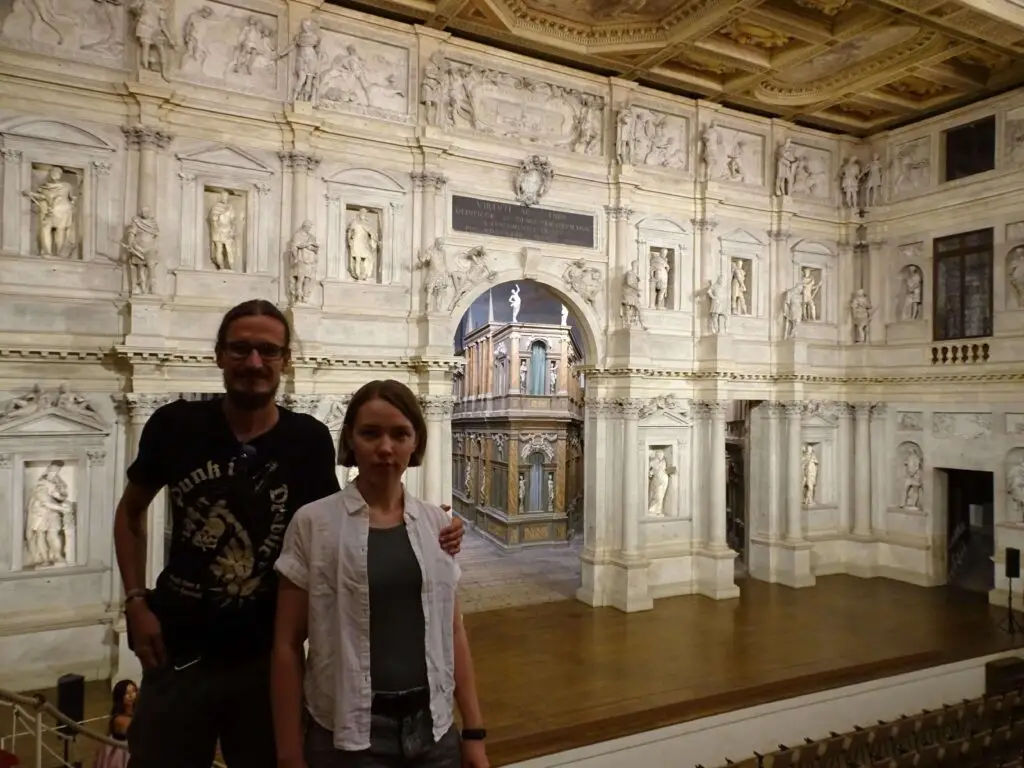
What we found most interesting was the elaborate three-dimensional background scenery, which creates the illusion of streets disappearing into the distance with a trick of false perspective.
Every couple of minutes there’s a light-and-sound show, which I highly recommend sticking around for, as it shows the unusual illumination of the scenery that they also came up with back in the 16th century.
The opening times of the Teatro differ by season. You can check the current ones here. The individual entrance fee is 12€.
Palazzo Chiericati and the Museo Civico
Close to the Teatro Olimpico is this impressive Renaissance-era city palace, which also was designed by Palladio and contains Vicenza’s biggest art collection.
Once again, the outside of the building resembles an Ancient Greek or Roman temple, and inside are tons of paintings from medieval times up to the 18th century, including some beautiful works by Tintoretto, Giambattista Tiepolo and Jacopo Sansovino.
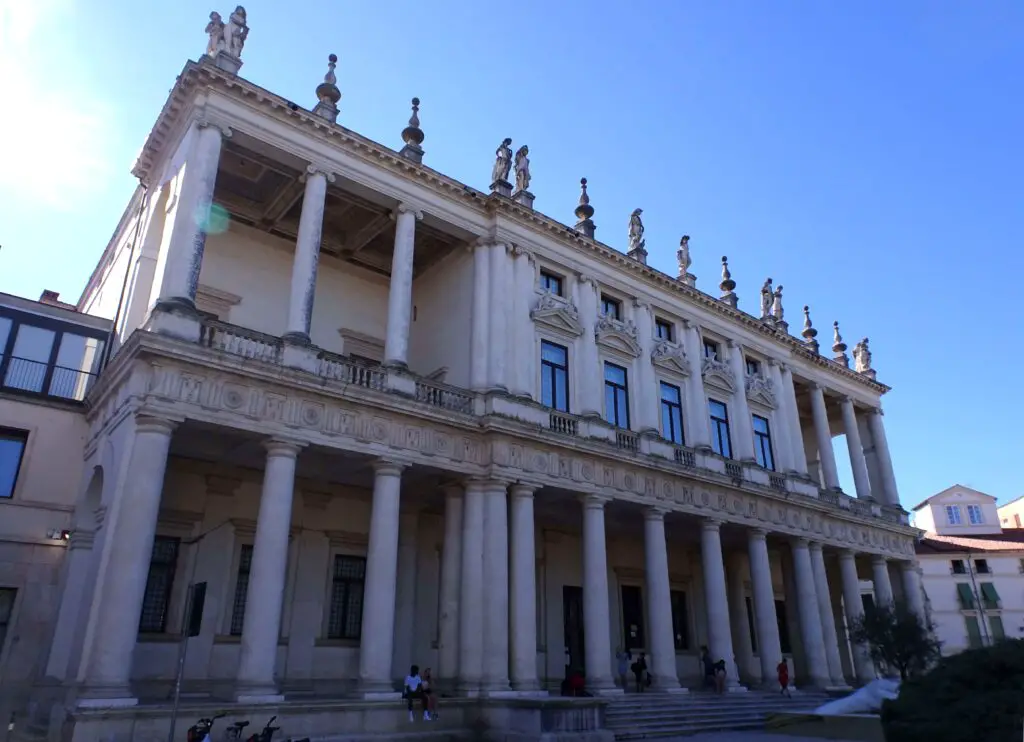
That said, while we enjoyed the collection itself, the building often stole our attention, as there are lots of beautiful frescoes and stucco decorations in the rooms and hallways.
Something else we liked was that we could have a look at the recently excavated original foundations of the building as well as the former servant’s quarters of the palace in the basement.
When we visited, the entrance fee was 8€ and the museum was open from 10am to 6pm everyday except Monday. You can double-check the current opening times here.
Parco Querini
The pretty Parco Querini is slightly north of the Teatro Olimpico. You can get there by following Contrà dei Torretti north along the eastern bank of the Bacchiglione River and turning west at the end.

The park is a nice place to kick back for a bit and we also liked checking out the unusual “wildlife”. We saw dozens of turtles and some nutrias (coypus) swimming around the small pond, with its faux-Greek temple on an island in the middle.
Apart from that, we also spotted lots of rabbits hobbling around and even some wild chickens. What a cool, strange place. The park is open from 8am to 6:30pm from January to October and from 8am to 5pm in November and December.
Museo Palladio in the Palazzo Barbaran da Porto
This city palace holds a museum about the life and works of the famous architect. To get there from Parco Querini, follow Viale Marioano Rumor west, then turn south, cross the river and keep following Contrà Pusterla/Contrá Porti south.
Once again, the Palazzo Barbaran da Porto was designed by Palladio himself and there are some super impressive decorations inside, including lots of stucco decorations and coffered ceilings with paintings of monumental battle scenes.

Apart from that, there are models of various local buildings that Palladio designed and some interactive displays about his ideas of architecture and aesthetics.
When we visited, the entrance fee was 8€ and the museum was open from 10am to 6pm from Wednesday to Sunday. You can double-check the current opening times here.
Piazza dei Signori
Next, continue south to the Piazza dei Signori, which has been the heart of Vicenza for centuries. The square was once the political and commercial centre of the city and is still surrounded by some of its most important buildings (seriously, there are beautiful facades in almost every direction).
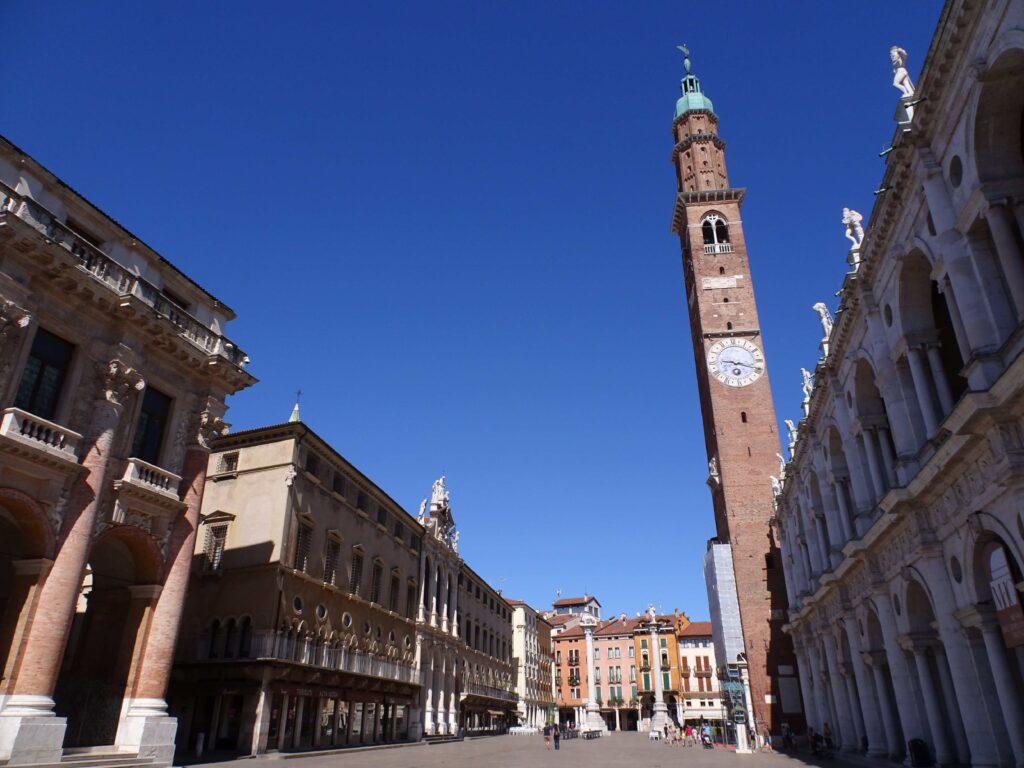
For instance, there’s Palladio’s Palazzo del Capitaniato, which is home to the city council and has an impressive loggia, or the baroque façade of the Chiesa di San Vicenzo church.
The Torre Bissara is one of Italy’s tallest clock towers and plays a special melody twice a day at the unusual times of 11:53 AM and 5:53 PM (we managed to catch it while passing by here again in the evening).
Basilica Palladiana
The most famous building on the main square is Palladio’s impressive basilica. Before we came, we were expecting a church, but turns out that this is a Basilica of the classical Roman terminology, which means a market hall and public meeting place.
In the 16th century, Andrea Palladio was commissioned to redesign it after parts of the structure had become unstable. The elegant white marble loggias that surround the older Gothic core became one of Palladio’s defining works and were so influential that the so-called “Palladian window” later spread throughout Europe and North America.

The lower porticoes of the hall are still filled with traditional shops and cafés, which make for a good pit stop. Inside, we liked the vast hall on the upper floor, which we found surprisingly austere, but still rather elegant.
We also spotted a somewhat lost looking golden Venetian Lion halfway up to the lofty carved ceiling. The arcaded walkway that runs around the hall has some of the best views of the other historic buildings around the square.
When we visited, entrance to the Basilica was 6€ and, once again, it was open from 10am to 6pm everyday except Monday. You can double-check the current opening times here.
Vicenza Cathedral
Santa Maria Maggiore might not be quite as impressive as the cathedrals we had visited in Venice or Verona, but we still found it worth checking out for its airy interior with some impressive paintings by Veneziano and Andrea Mantegna.
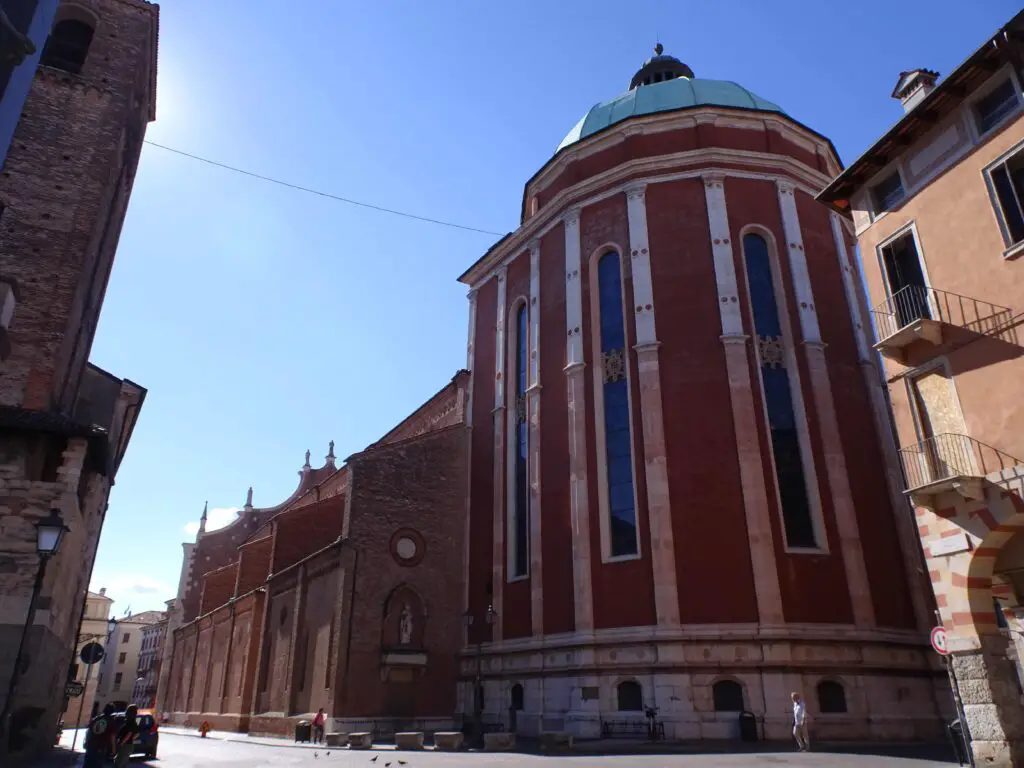
The apse and dome really don’t seem to fit the rest of the building, which is because they were added in the 16th century, while the rest of the building dates to the 13th century. Once again, Palladio was at least partly involved, as he designed the cupola and the northern portal into the cathedral.
To get there, you’ll just have to follow Contrà Muschieria west from the Basilica. When we visited, the cathedral was open from 10.30am to noon and from 3.30pm to 7.30pm.
Palazzo Valmarana Braga and the UNESCO Centre
If you follow the road east of the cathedral north, you’ll come to this unassuming palace, which is home to the UNESCO Centre, where you can get information about Vicenza’s heritage sites. They also let us have a look into the small office in the back, which has a beautifully ornate painted ceiling.
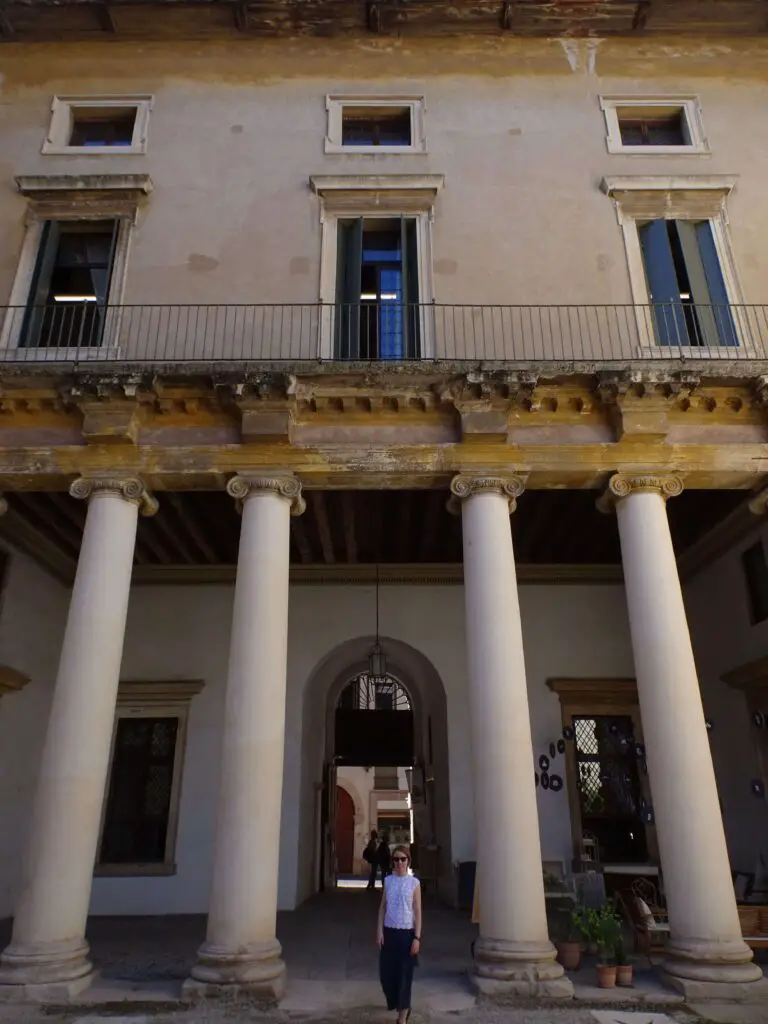

If you’re looking for a unique place to stay at, Palazzo Valmarana Braga also has luxury apartments for rent, but they were far above our budget. Still, how many people can claim that they actually spent a night in a UNESCO-listed property?
Corso Palladio
By now, you should have crossed the Corso Palladio a few times. This is Vicenza’s pedestrian-only main road, which runs runs from the Teatro Olimpico in the East to the Piazza Castello in the West.
There are lots and lots of interesting buildings along the Corso, including the Palladio-designed Palazzo Thiene, Casa Cogollo and Cà d’Oro, which has a beautiful vine-covered courtyard.

Piazza Castello at the western end is home to the impressive medieval tower Torrione de Porta Castello, which got its current appearance in the 14th century under the Scaligeri. Directly west are the Giardino Salvi Gardens with the pretty Loggia Valmarana that looks out over a small canal.
La Rotonda (Villa Almerico Capra)
La Rotonda is another one of Palladio’s most famous buildings and we think it’s worth making the trip out here, even though it’s on the outskirts of town. We drove there with our rental car, but you can also get there by bus. For instance, you could take Bus 8 from the train station to Via Riviera Berica 70, from where it’s a 5-minute walk south to the Rotonda.
The building began construction in the 1570s and looks like a classical Greek Temple. It was built with a completely symmetrical layout, which goes back to Palladio’s appreciation of the teachings of Ancient Roman architect Vitruvius.

Our favourite detail here was the inside of the cupola, which is completely covered in frescoes of mythological figures. The rooms that lead off the central part all have really beautiful stucco decorations and coffered ceilings. Something else we liked, was the pretty garden around the villa.
The individual entrance fee is 15€. The Rotonda is only open from Friday to Sunday from 10am to 1pm and from 3pm to 6pm. You can double-check the opening times here. If you’re in Vicenza on another day, the guided Vicenza 1 Day Experience lets you access La Rotonda even outside of the opening times.
Try Baccalà alla Vicentina for Dinner
By now it should be evening and time to end a busy day of sightseeing at one of Vicenza’s traditional Osterias. The most famous dish in the city is Baccalà alla Vicentina, which consists of air-dried cod cooked with onions, sardines, milk and cheese and is usually served with polenta.
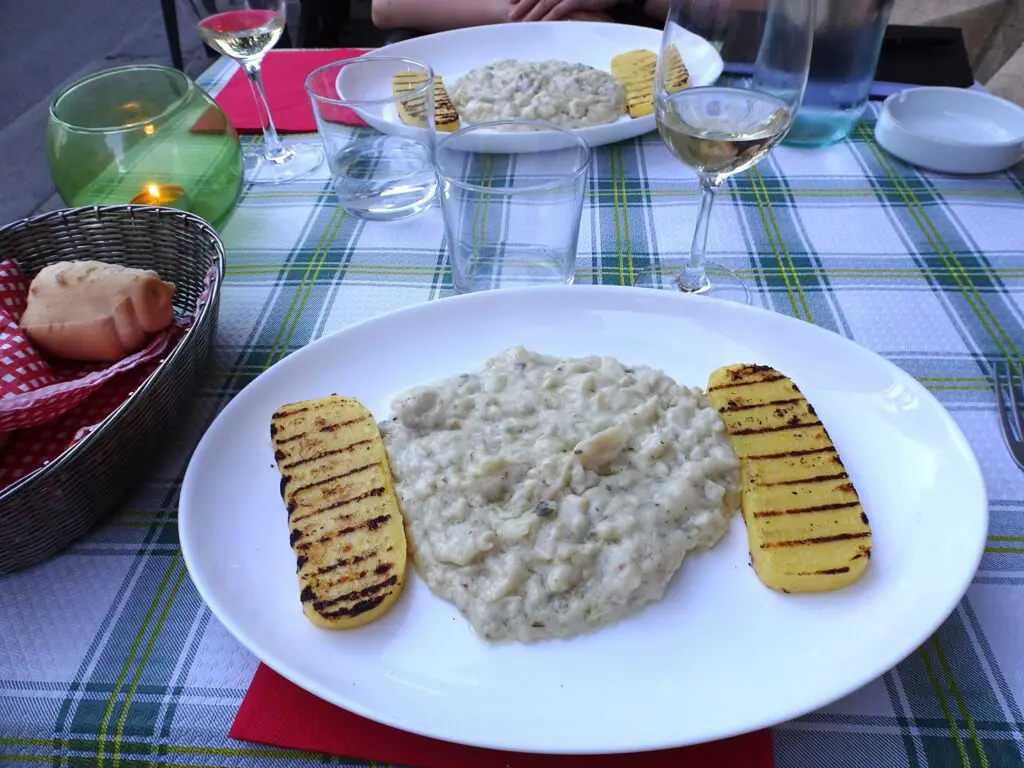
We saw it on menus all over the Veneto Region, but Vicenza is its hometown. We tried it at Il Cursore, a cozy Osteria slightly south of the centre, and really liked it.
Vicenza Itinerary Map
You can find all the sights from my itinerary in this map of Vicenza.
Exploring the Surroundings of Vicenza
If you have some more time in the area, the surroundings of Vicenza are also worth exploring. The towns and villages of the Vicenza-Region are dotted with a ton of palazzos and villas, many of which were also designed by Palladio and part of the UNESCO Property.
We took a half day trip to get out in the beautiful countryside and visit a few of them. Another super cool place to explore is Villa Zileri near Monteviale. You can have a look at my dedicated guide: Exploring Villa Zileri near Vicenza, Italy – One of the Veneto Region’s prettiest Villas.
Practicalities
How to Get to Vicenza
Vicenza is located along the Verona – Venice train line and you can easily get there by train from both cities (Verona about 40 minutes; Venice about 1h 15 minutes) as well as Padua (about 30 minutes). The city’s main train station is at the southwestern edge of the city centre.
Where to Stay in Vicenza
We stayed at Key Hotel Vicenza, which is slightly outside of the centre but has nice rooms for pretty low prices. The only real budget option would be Ostello di Vicenza, which is located in the city centre and has both private rooms and dorm-style accommodation.

At the upper end of the spectrum, the luxury apartments in the UNESCO-listed Palazzo Valmarana Braga are certainly the most unique place to stay. You can have a look at the map below for some more options.
Where to Eat in Vicenza
Vicenza’s centre is chock-full of Osterias and Trattorias, so we didn’t have any trouble finding places to try some regional dishes. Apart from Osteria Il Cursore, which I mentioned above, we tried Righetti near the Cathedral, which has plenty of traditional Veneto dishes at very fair prices.
If you need a refuel in between sightseeing, we can really recommend the Antico Caffè Nazionale in the small passage directly south of the Museo Palladio. They have great coffee and snacks (try the Crostatini).
Vicenza Card and Other Combination Tickets
There are several combination tickets to the museums, which are totally worth getting, if you plan to visit a few. We got the Vicenza Gold Card, which was 22€ and let us visit a total of 11 sites. With the Vicenza Silver Card for 16€ you can pick and choose four of those sites.
The individual entrance fees of the sites are super different, so check them for the places you want to visit, before you decide. The Teatro Olimpico should be the most expensive site included in any of the cards.
We bought our card at the tourist information near the Teatro Olimpico, but you can also get them at a lot of the sites. Check the website for more infos.
Where to Go Next
Verona, city of Romeo and Juliet
The Beautiful Valpolicella Valley, the Veneto’s Top Wine-Growing Region
Padua, Home to the oldest Botanical Garden in the World and some beautiful 14th Century Frescoes