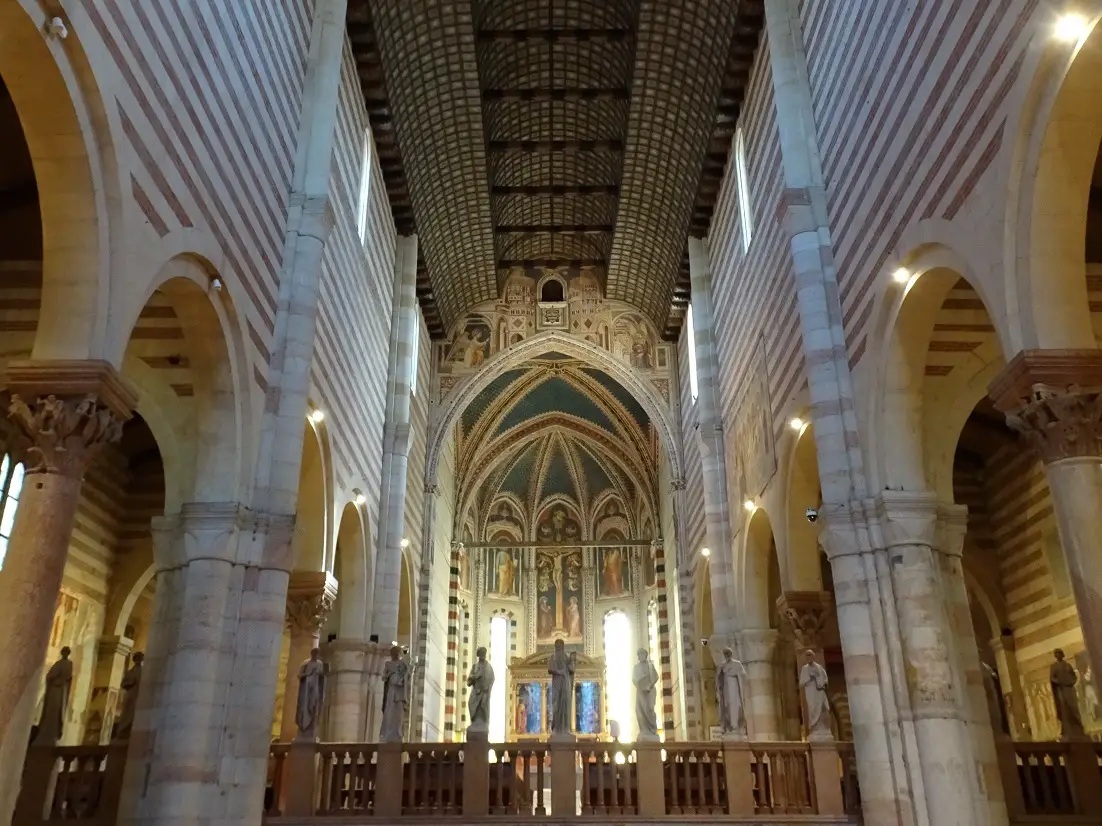
Verona might be best known for its Romeo and Juliet locations, but after spending a couple of days exploring the city, we mostly fell in love with the many beautiful examples of medieval architecture.
The entire historic centre was designated a UNESCO World Heritage Site in 2000, including the city’s many medieval churches. There are quite a few of them scattered around the centre, and all of them were quite unique.
For instance, one is built on top of an older church and another is one of the best-preserved examples of Romanesque architecture in northern Italy. In this post, I’m describing the four churches in the city that we found most interesting.

This post may contain affiliate links, and I might earn a small commission at no additional cost to you. For more info, click here.




The 4 Must-See Churches of Verona
San Fermo Maggiore
For me this is the most impressive church in the city, which is partly because of the fact that it’s really two separate basilicas constructed on top of one another. Well, kind of… The crypt holding the bones of the namesake saint used to be a church in its own right until the 11th century.
At that time, the Benedictine monks decided to construct a new basilica atop the old one. Ostensibly, this was done so the dead wouldn’t be disturbed by all this fervent preaching and praying but my personal theory is that they really just wanted a cool two-story church so all the other monks in the city would be jealous.
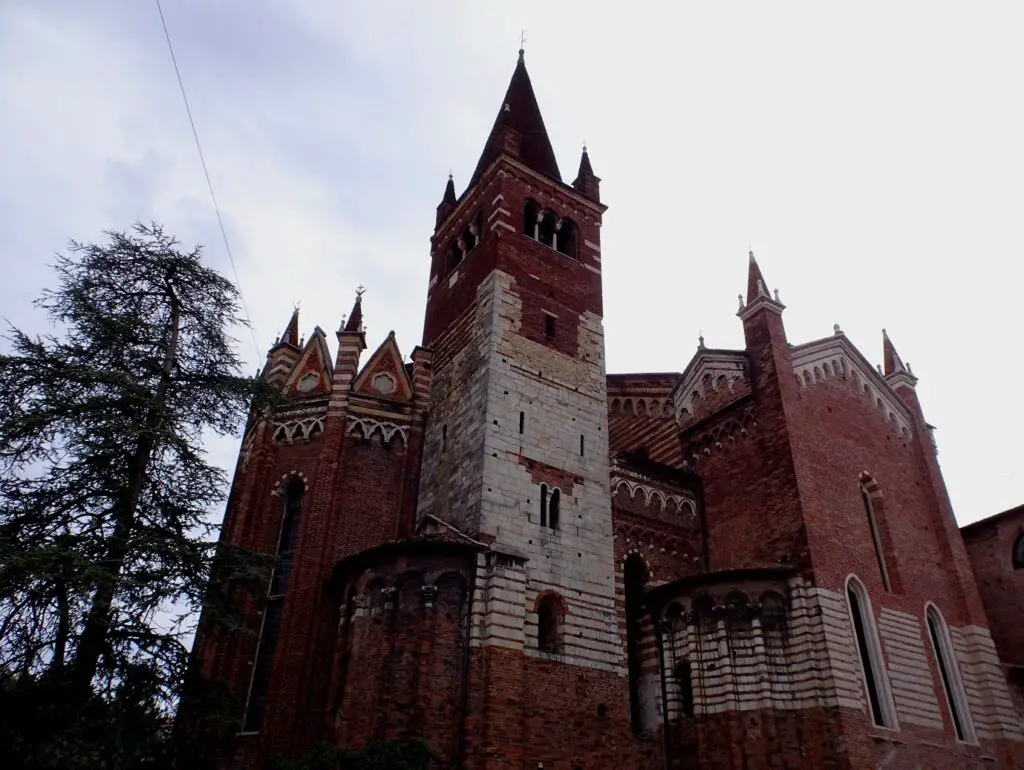
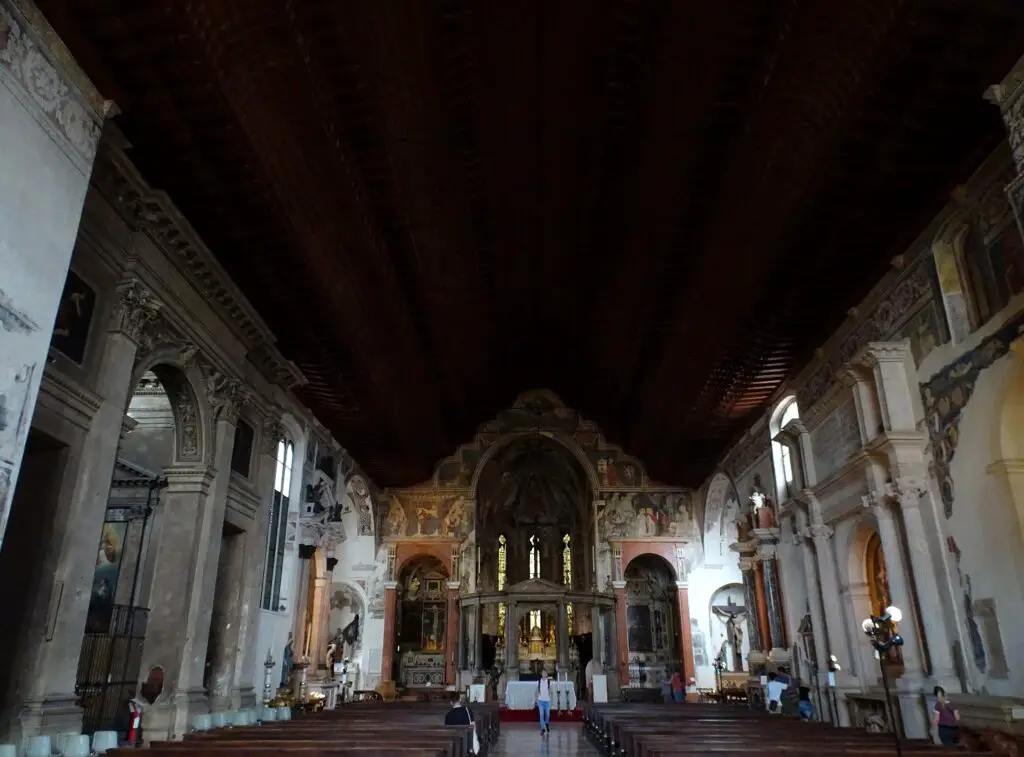
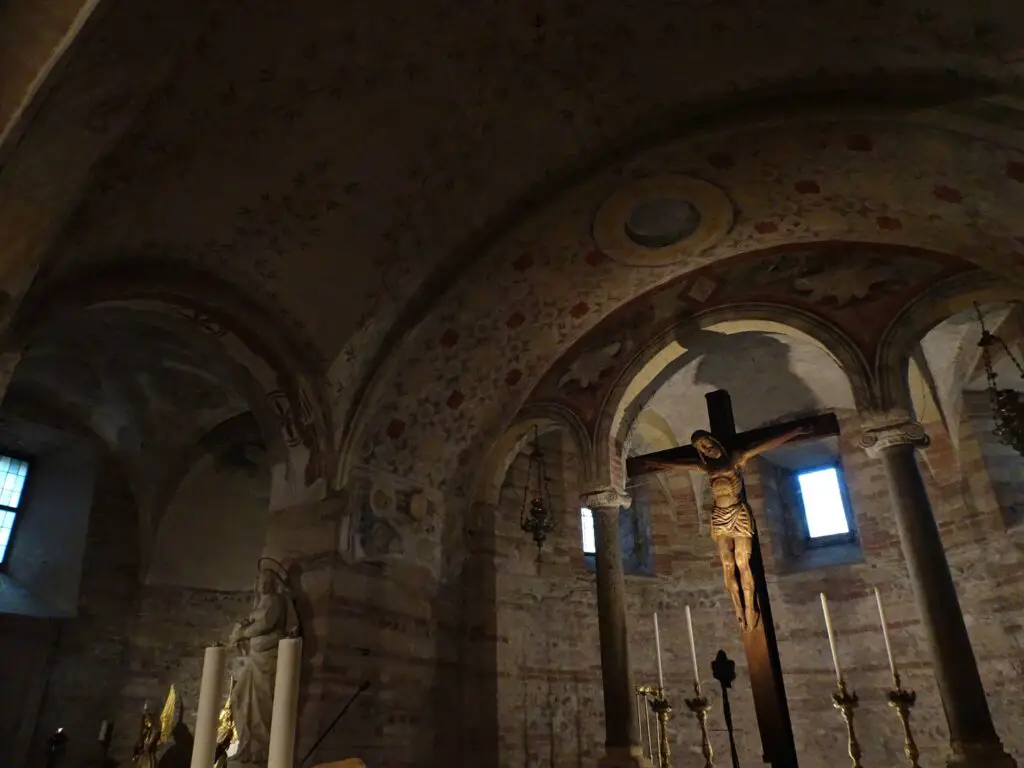
The difference between the two levels is very clear. The lower church is fairly dark and moody, with thick stone pillars and some old frescoes (as befits a crypt). Upstairs everything opens up into a bright nave with lots of small side chapels that felt like a different building altogether to us.
In the upper church, we probably spent the longest looking at the ceiling. It’s built to resemble the upside-down hull of a ship and is covered with painted portraits of hundreds of saints. We’re suckers for unintentionally funny religious art and the longer we looked, the more little details we noticed.
San Fermo is only a few minutes from Ponte delle Navi on the eastern side of the historic centre, so it’s easy to combine it with Piazza delle Erbe or Juliet’s House.
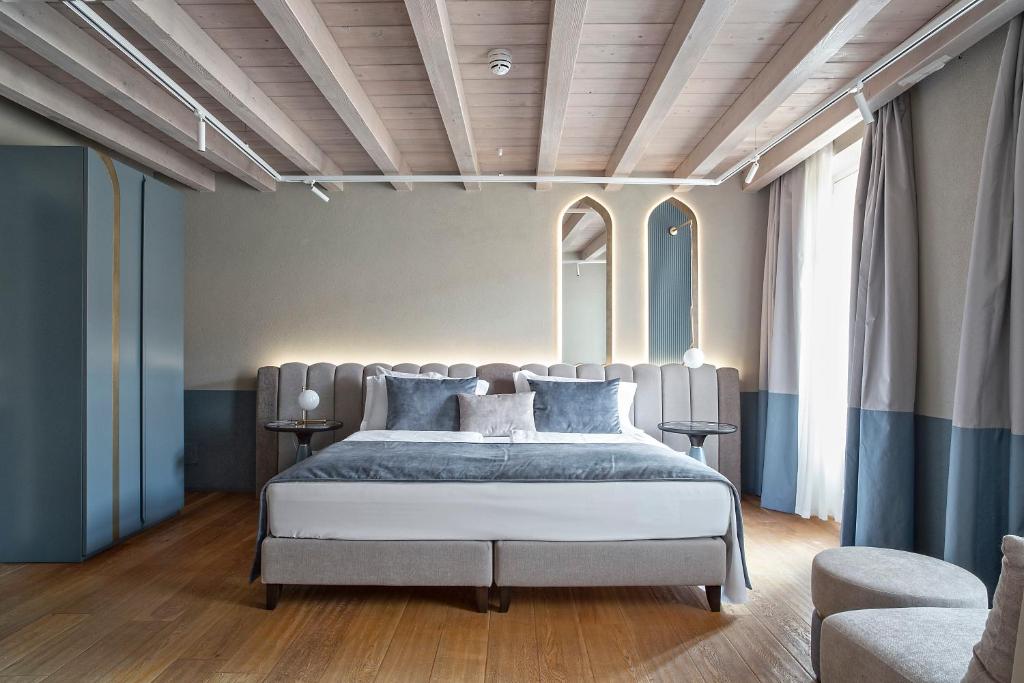
Verona Hotel Tips
Budget: StraVagante Hostel & Rooms
Midrange: Relais Balcone di Giulietta (pictured)
Luxury: Palazzo Monga Boutique Guesthouse
.
San Zeno Maggiore
San Zeno is a bit further from the centre than the other churches, but we thought the walk was well worth it, plus we were almost alone when we visited.
The church is dedicated to Verona’s patron saint and is said to be one of the best examples of Romanesque churches in Italy. Most of what you see today dates from the 11th and 12th centuries, but some parts of the complex are even older.
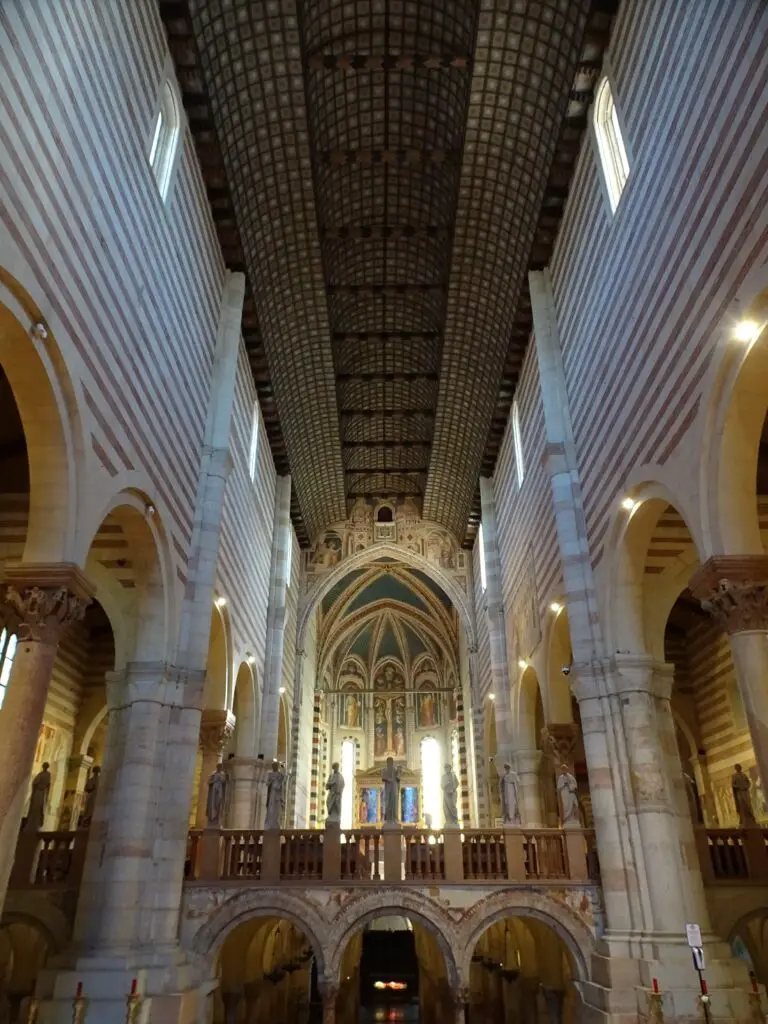
The alternating bands of pale stone and red Verona marble made the huge nave feel much lighter to us than what we were used to from other churches of the size. There are also lots of interesting architectural details, including a barrel-vaulted ceiling that kind of looks like it’s covered in hundreds of stars.
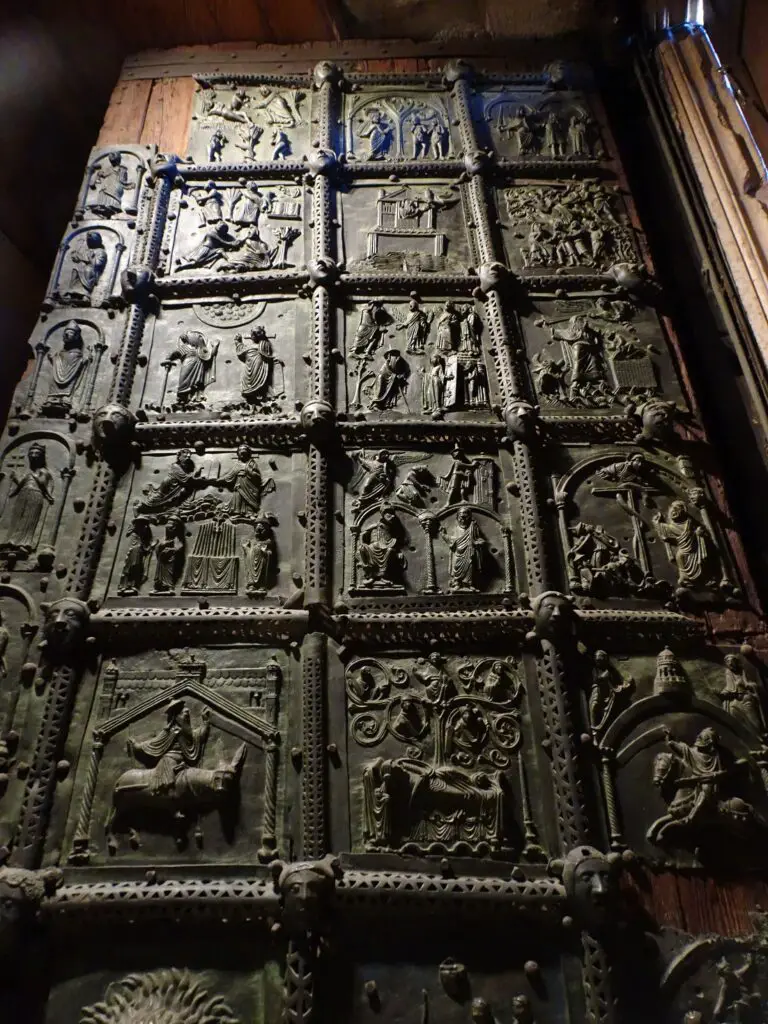
The crypt is said to contain the remains of San Zeno himself and the main doorway consists of 48 bronze relief plates with biblical scenes (plus I’m pretty sure I spotted the first ever depiction of someone stage diving on one of them:).
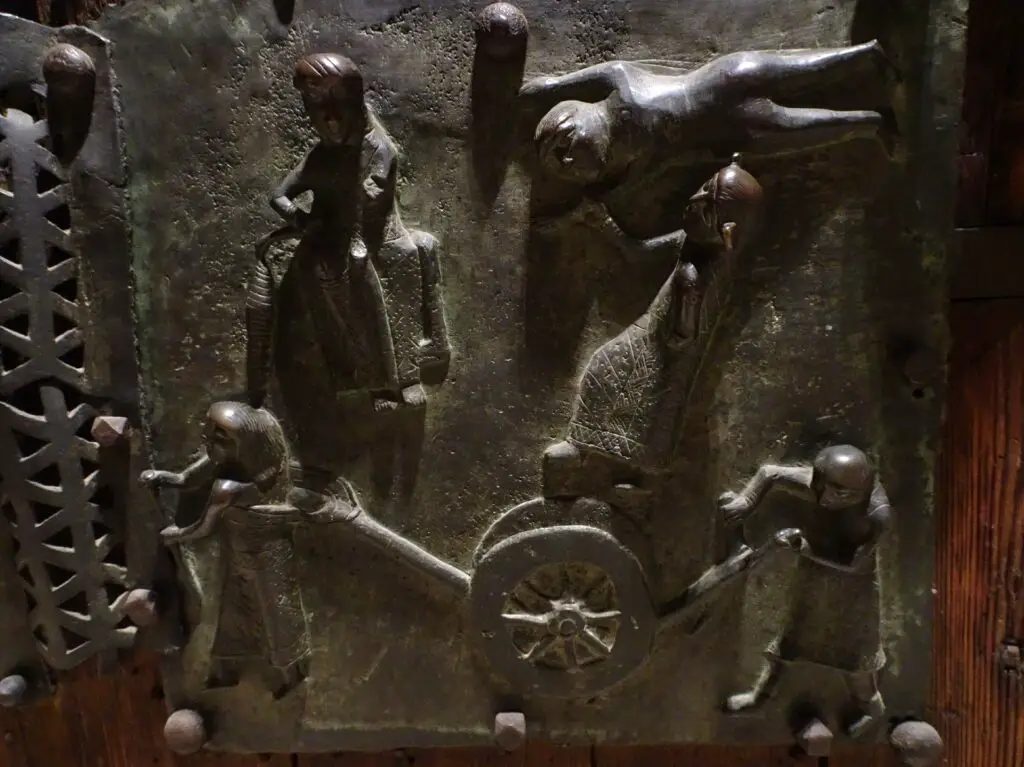
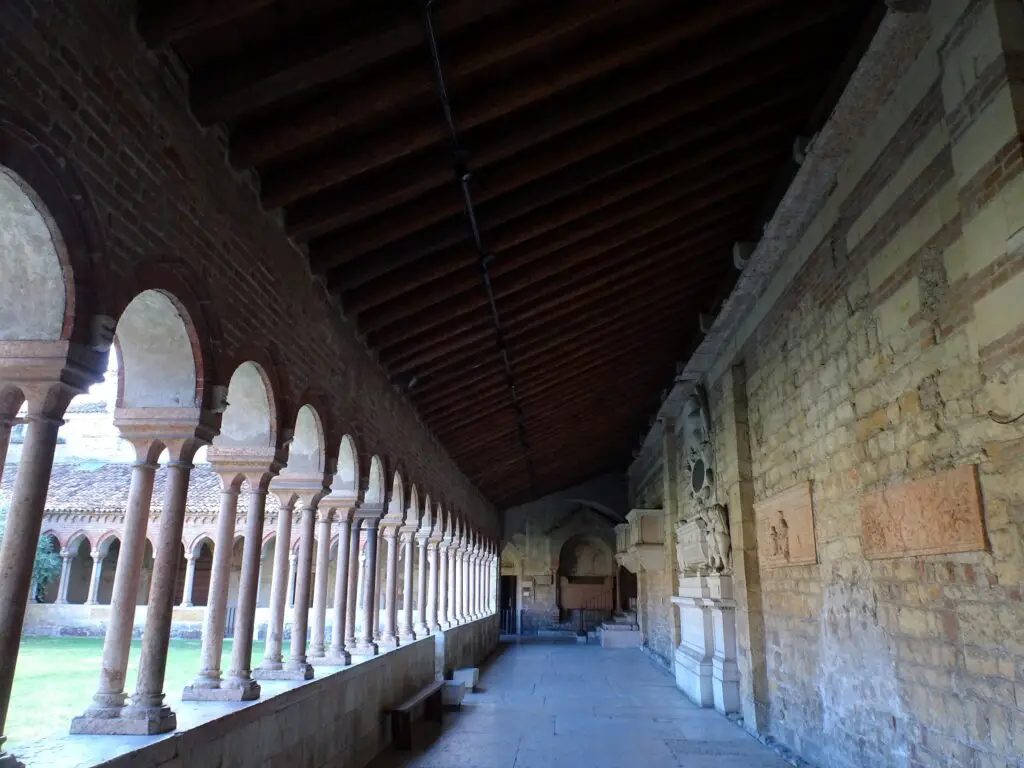
You can only see these from the inside, but it’s also worth having a peek from outside, where there are some pretty marble reliefs in the arches surrounding the doors. Something else we really liked was the pretty Romanesque cloister which you’ll have to walk through before entering the church through a side entrance.
The church is located about 20 minutes on foot northwest of the Arena on a square with the fitting name Piazza San Zeno.
Sant’Anastasia Basilica
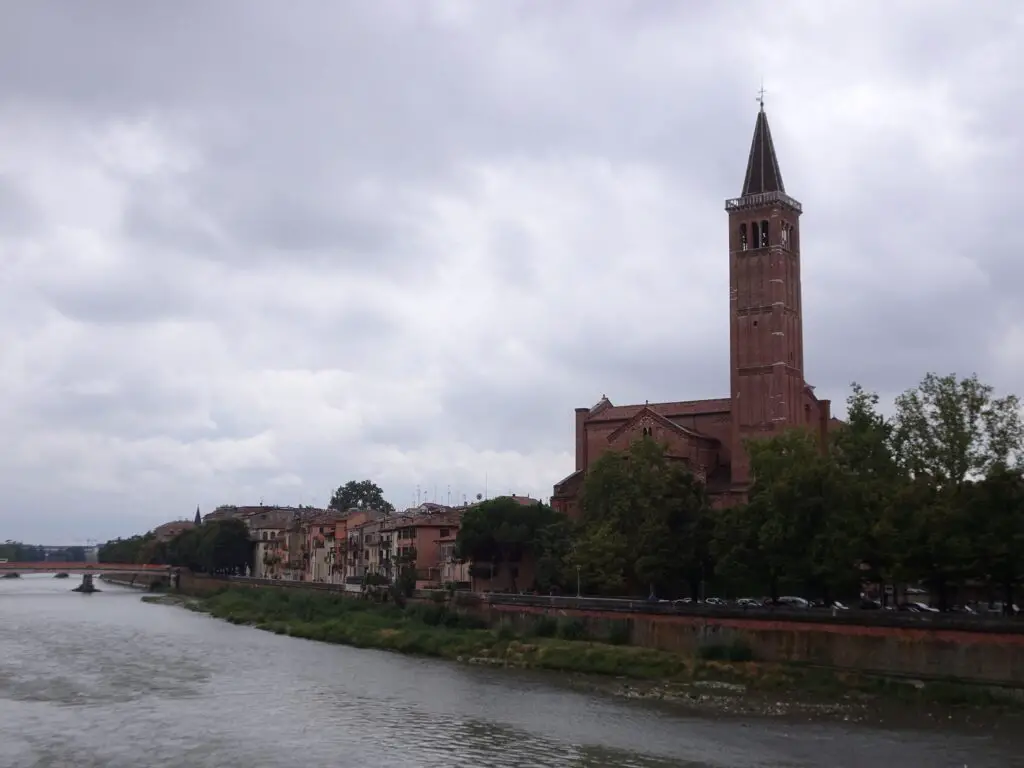
To be honest, we underestimated Sant’Anastasia when we first looked at the façade. Apart from the pretty, colourful marble gateway, the outside is mostly unfinished brick, which makes it look much plainer than the other churches on this list.
Once inside, though, it felt completely different with its light-filled nave and floral frescoes on the ceiling. The church was begun by the Dominican Order around the end of the 13th century and is the largest church in Verona.
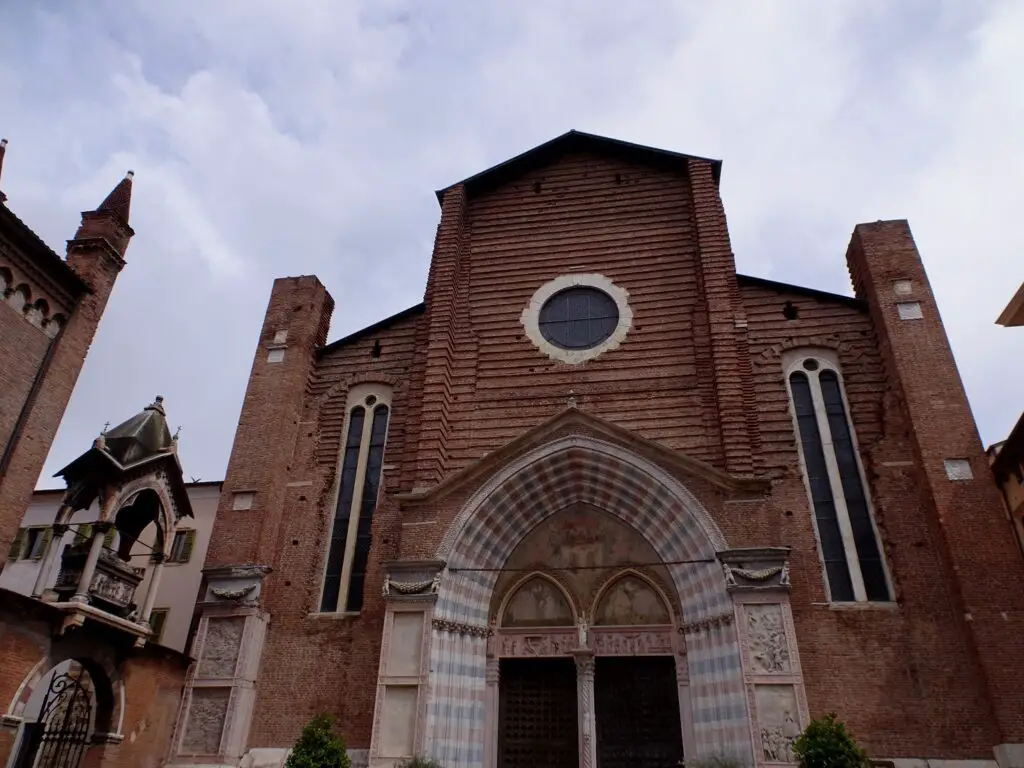
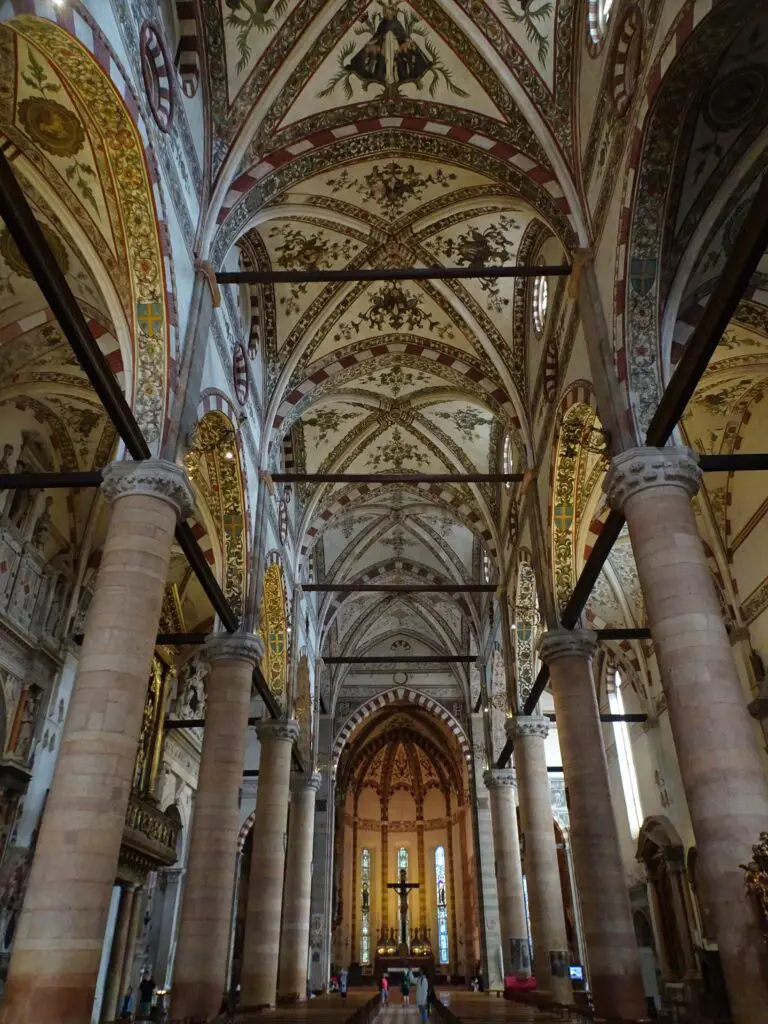
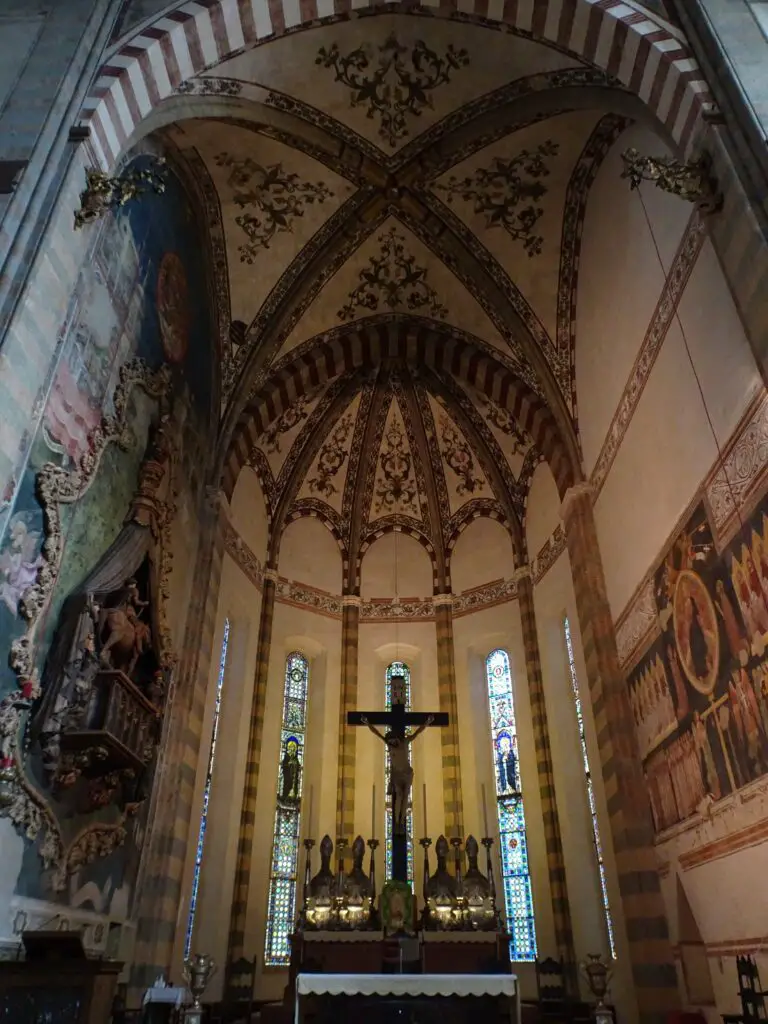
The nave is completely dominated by monumental columns made from red Verona marble and there are some really pretty chapels along the walls. Our favourites were the Cappella Cavalli and the Cappella Pellegrini, which are both to the right of the main altar.
The latter has Pisanello’s beautiful fresco of Saint George and the Princess (San Giorgio e la principessa). Something else we liked were the two holy water basins near the entrance. They’re supported by the Gobbi di Sant’Anastasia, two hunched marble figures that look rather annoyed with their job of carrying them.
The basilica is located directly south of the Adige river near the northern end of the city centre. While you’re in the area, it’s also worth checking out the Ponte Pietra bridge a little northwest of the Basilica, which dates to the late Roman Republic.
Verona Cathedral aka. Santa Maria Matricolare
From the outside, Verona’s Cathedral was the most impressive of the four churches to us. It mainly dates from the 12th century, but it stands on the site of several earlier churches that were damaged by earthquakes over the centuries (you can still see parts of them inside).
The front portal has some impressive marble reliefs and two griffons, which, just like the Gobbi di Sant’Anastasia, look supremely unhappy with their job of carrying the columns. I seem to recognize a pattern here.
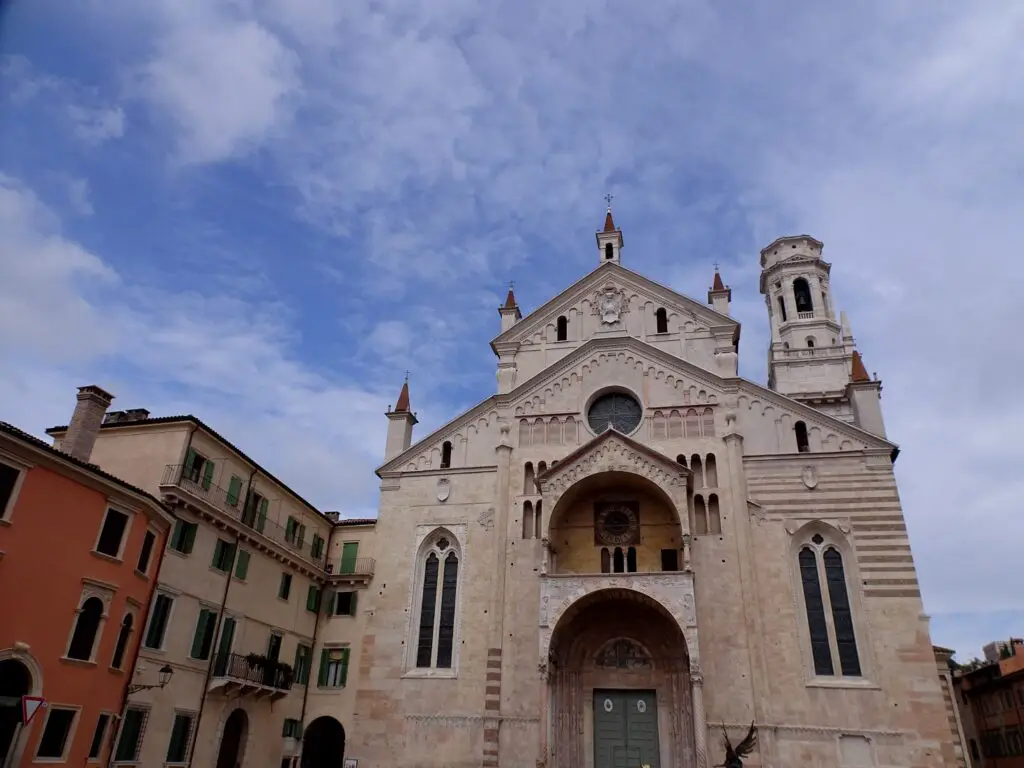
Before entering the cathedral itself, you’ll pass through the Baptistery of San Giovanni in Fonte. We really liked the enormous octagonal baptismal font here, which was carved from a single block of marble and has some interesting religious scenes on its outside.
Nearby, there’s a small subsidiary chapel with some openings in the ground where we could glimpse the foundations of an earlier church, which is something that I, as an archaeologist, am always a big fan of.
Inside the church proper, the most interesting elements for us were the marble choir screen and the two large gilded organs on either side of the altar. Apart from that, we found the cathedral’s main nave pretty enough, but less unique than that of the other three churches.
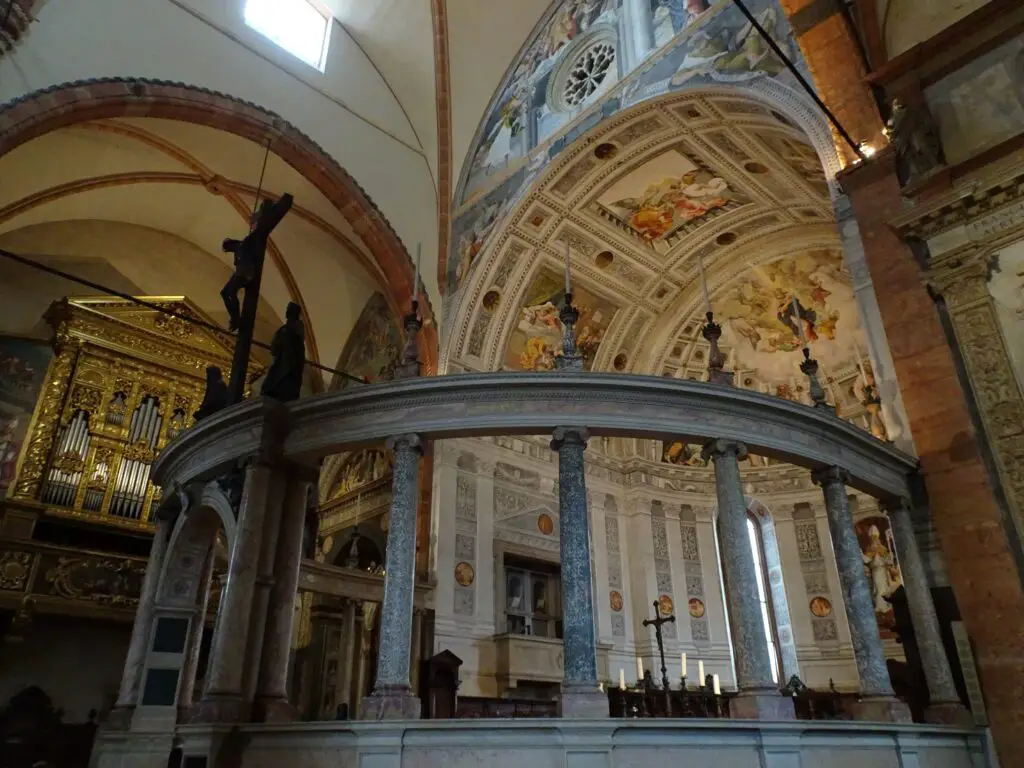
Something else that you shouldn’t miss is Titian’s Assumption of the Virgin (L’assunzione) in the Cartolari-Nichesola chapel to the right of the (closed) main entrance doors, which is one of the most important Renaissance paintings in Verona.
The cathedral can be found in the northernmost part of the city centre, just south of the Adige river.
Which is the Most Interesting Church in Verona?
We found all four churches worth visiting, but if you only have time for one, I recommend either checking out San Fermo or San Zeno, which are both unique in their own way.
San Fermo is closer to the city centre, so you can easily combine it with other nearby sights like the House of Juliet or the Roman Arena.
Map of the Churches
All four churches are inside Verona’s historical centre (i.e. inside the medieval city walls), although San Zeno is a bit further afield. You can have a look at this map to see where exactly they are located.
Practicalities
Opening Times and When to Visit
All of the churches are open daily, but they have different opening times (especially on weekends). You can check them on this site. They’re all pretty big and none of them was crowded when we visited, but I’d still recommend coming in the morning or shortly before they close.
How Much is the Entrance Fee?
The entrance fee to a single church is 4€ and there’s a combined ticket for all four for 8€ (which is what we got). You can buy a combination ticket at each of the four churches.
How to Get to Verona
As the second-largest city of the Veneto Region, there are frequent train connections to Verona from big cities all over the region, like Venice (about 1.5 hours), Padua (about 1 hour) or Vicenza (about 40 minutes). You can also reach the city from Rome in a little over 3 hours.
The main train station is Verona Porta Nuova, which is located about 25 minutes south of the city centre.
Where to Stay in Verona
We stayed in a cheap Airbnb that doesn’t seem to exist anymore, but there are some other budget options in the city, like StraVagante Hostel & Rooms near the Porta Nuova train station.
Otherwise, there are plenty of midrange places, like Relais Balcone di Giulietta. Finally, Palazzo Monga Boutique Guesthouse would be a well-rated luxury choice. Especially in the summer, it’s best to book a little in advance, as prices tend to skyrocket.
Other Things to Do in Verona
Visiting the Locations from Romeo and Juliet in Verona, Italy
Taking a Driving Tour Through the Valpolicella Region – A Fun Day Trip from Verona