Considering that it’s a pretty small island, we were surprised how many regional specialty dishes Madeira has. Food is always a big part of our travel experience and so we had to make it our goal to try as many of them as possible.
Here’s our list of the most famous Madeiran dishes and drinks that you should try on your trip to the island and where we found the best version of each dish.

This post may contain affiliate links, and I might earn a small commission at no additional cost to you. For more info, click here.






Food Tours on Madeira
There are a number of guided food tours available in Funchal and other places on the island, which are a good option if you’re short on time or just want to find the best local places to grab a bite. You can have a look at some well-rated options below.
Typical Madeiran Food and Drinks
Espada (Scabbardfish)
One of the most iconic dishes on the island is Espada aka. Black scabbardfish. This deep-sea fish is caught in the waters around Madeira and has been part of the local diet for centuries.
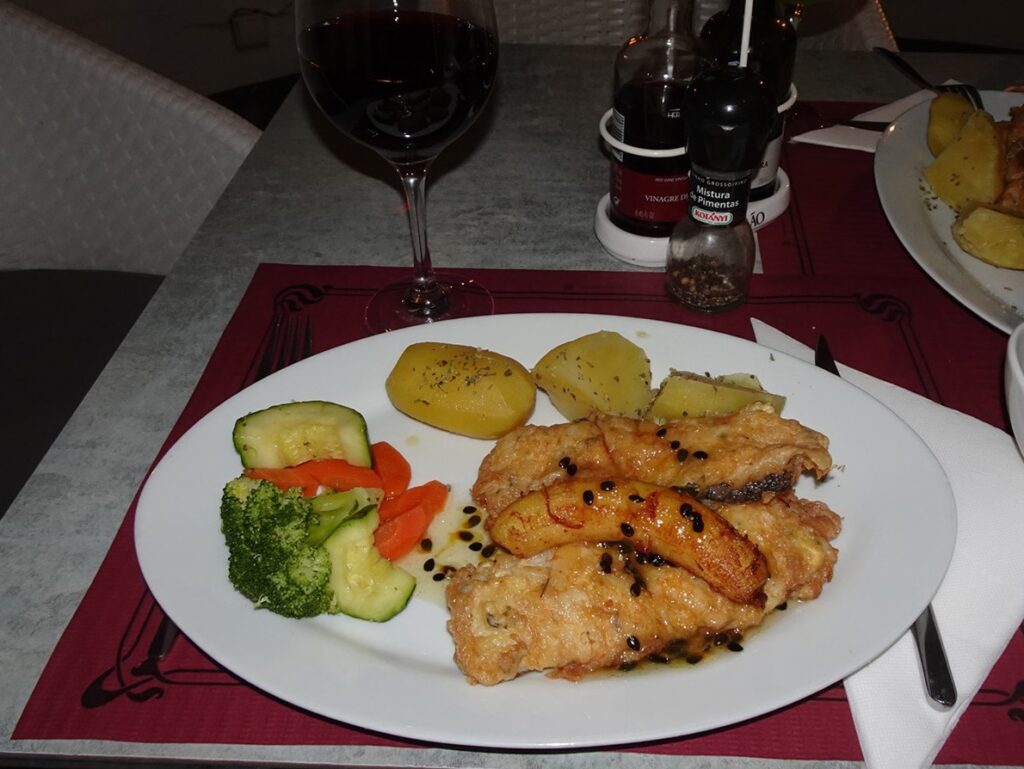
It’s usually served as a long fillet, lightly fried or grilled, and it has a very soft texture. The most common version comes with fried banana and passionfruit sauce, which might sound like an odd combination at first, but we thought it worked really well together.
You won’t have a problem finding this dish, as we saw it on almost every menu on the island (don’t confuse it with the espetada meat skewers, though). We had it at a couple of places, but my favourite was the one at Restaurante Mercado Velho in Machico.
Espetada
Espetada is Madeira’s take on a meat skewer. It’s traditionally made with chunks of beef seasoned with garlic, salt and bay leaves, which are then grilled over an open fire. The skewers are often made from laurel wood, which is said to add a subtle flavour, although I have to admit that I couldn’t taste a difference.
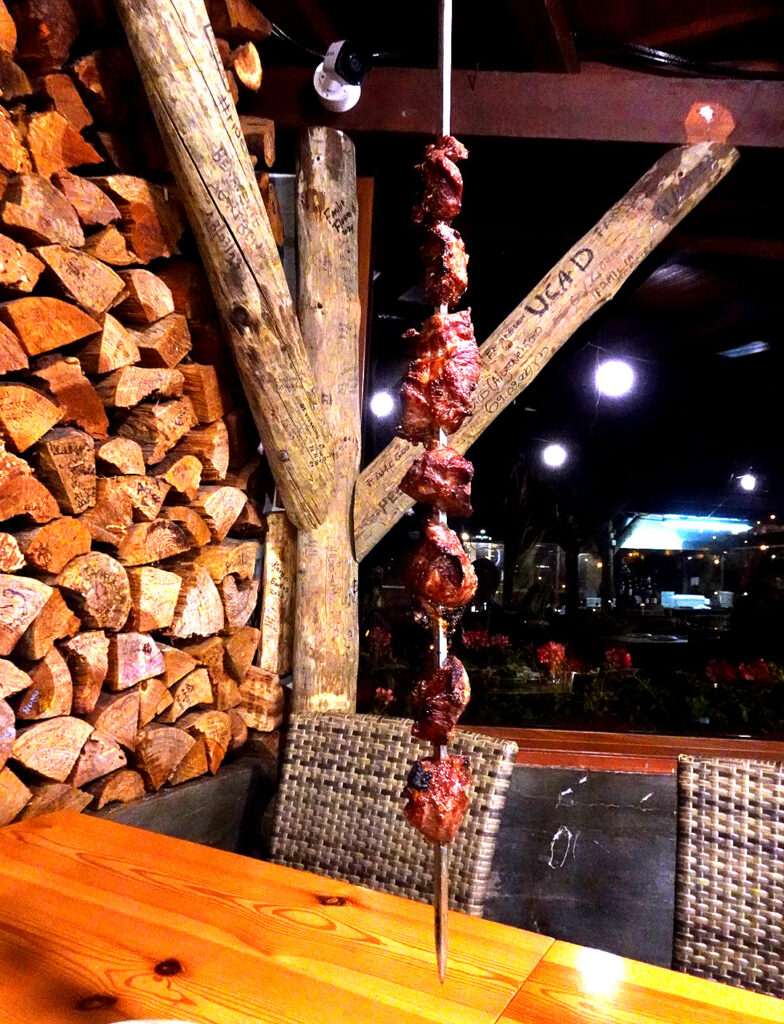
Half of the fun is the way it’s served, which is hanging vertically on a wire above the table (or sometimes a small metal stand), although getting the meat off the skewer without making a mess took me a few tries.
Again, you can find it in many restaurants across the island, but the best places are probably the specialist BBQ restaurants called churrascarias. I especially liked the one I had at Restaurante La Parreira in the mountains near Ribeira Brava.
Bolo do Caco
Bolo do Caco is another staple that we came across everywhere on the island. It’s a round, flat bread made with sweet potato flour, which is traditionally baked on a hot stone slab (the “caco”). This gives it a chewy crust, while the inside stays pretty soft.
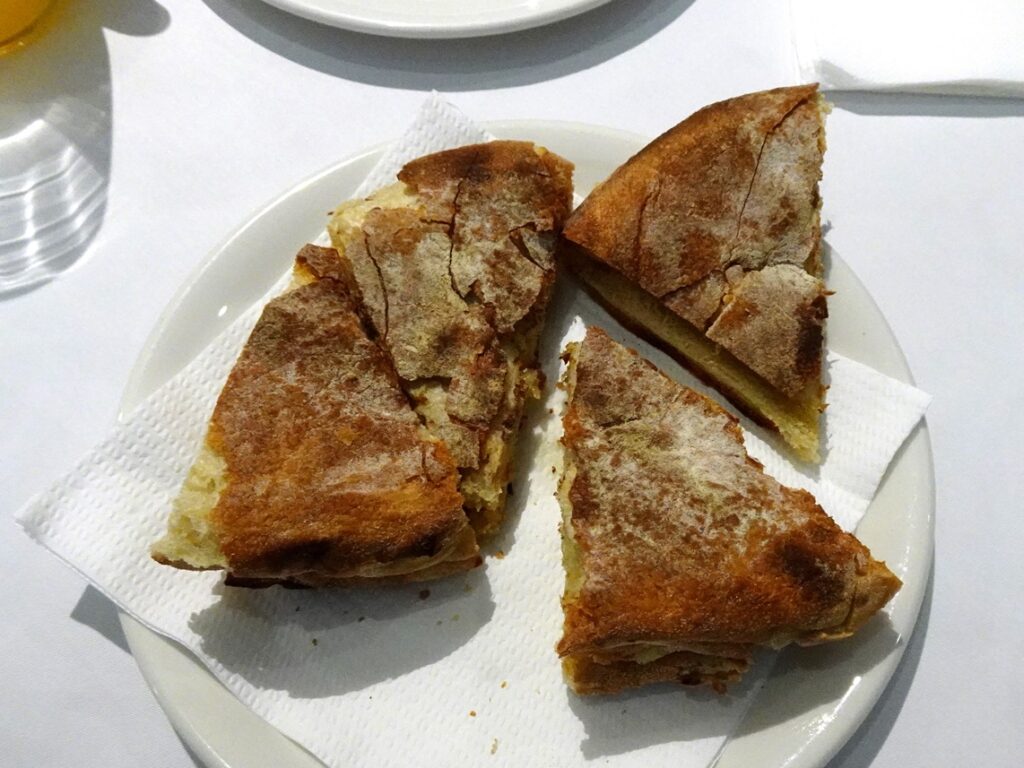
It’s often served warm with garlic butter as an appetizer and we got a bit addicted to it. I don’t think we had a single dinner on the island that we didn’t start of with a bolo do caco. You’ll get it in basically every restaurant and bar on the island.
Prego no Bolo do Caco
Another good way to eat bolo do caco is as a sandwich. There are different fillings, but the most common version contains a thin, tenderized beef steak. This is known as Prego no Bolo do Caco, and it’s one of the more popular snacks on the island.
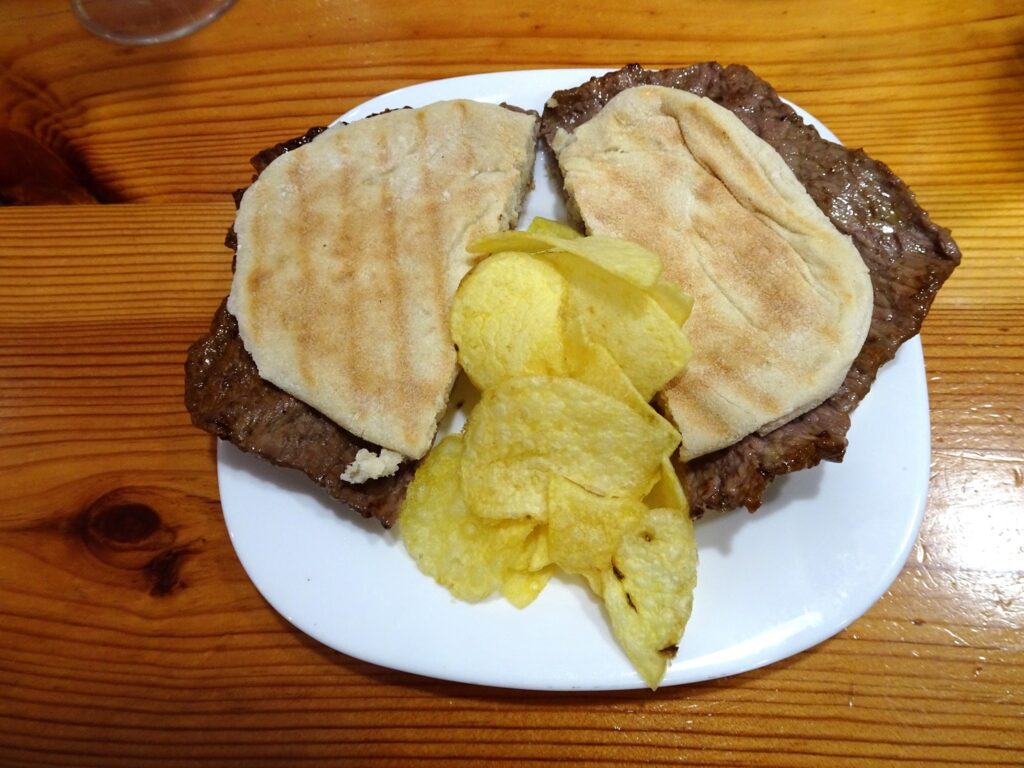
The steak is typically seasoned with garlic and sometimes served with cheese, ham or a fried egg. We saw it mainly on the menus of bars and smaller fast food places. We tried it at the Casa do Bolo do Caco in Funchal’s Mercado dos Lavradores.
Picadinho
Picadinho is a dish made from small pieces of beef sautéed with garlic, white wine and herbs. Sometimes there are mushrooms mixed in and it’s usually topped with a large portion of fries.
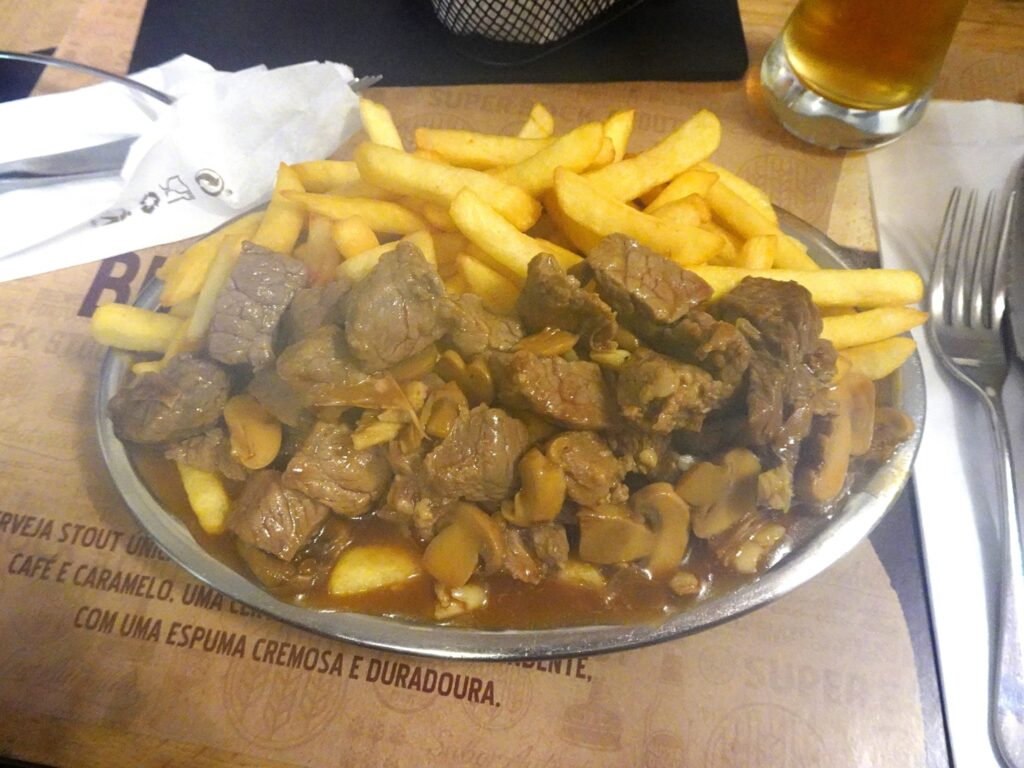
It reminded me a lot of Carne Fiesta, which is a similar dish that we had a few times on the nearby Canary Islands. Once again, we saw it on quite a few menus on Madeira, albeit not as often as espada and espetada. We tried it at the Snack Bar Amazonia near Porto Moniz.
Milho Frito
Milho frito is a side dish made from cornmeal that’s cooked, set into a block, then cut into cubes and fried. It ends up crispy on the outside and soft on the inside, with what I thought was a slightly nutty flavour. You can order it with meat or fish dishes or as an appetizer.
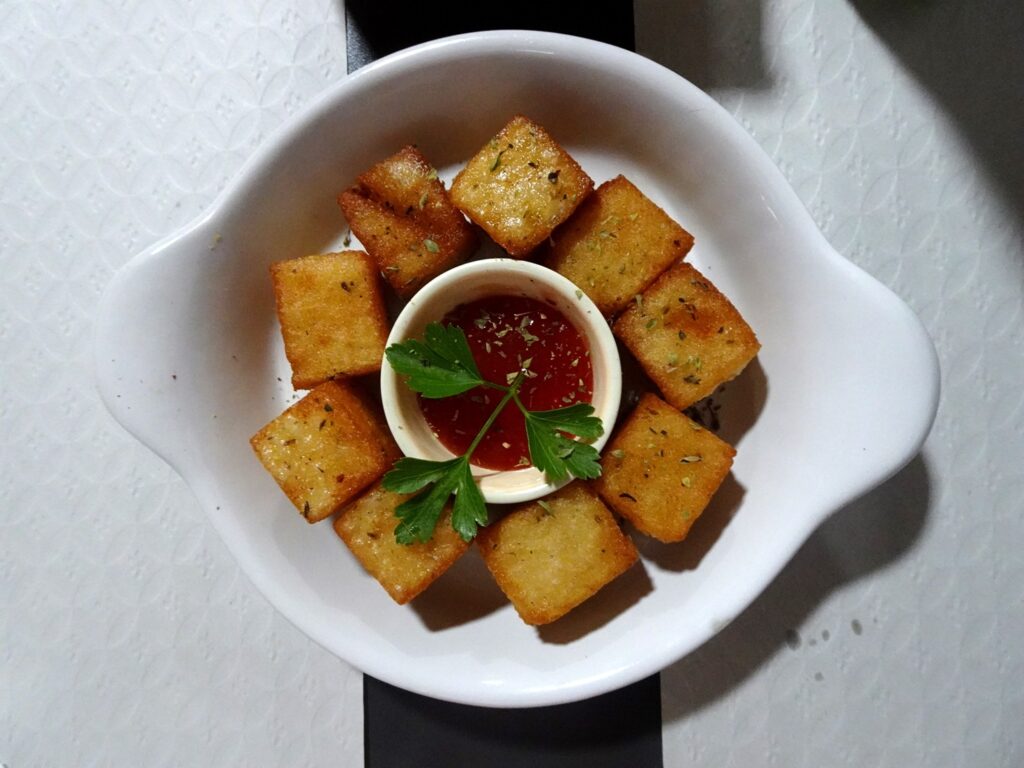
The quality varied a bit from place to place and sometimes it was a bit too soft for my taste. We had by far the best version at Snack-Bar-Restaurante Pedra Mole near Porto Moniz.
Sopa de Trigo
Sopa de Trigo is a thick, hearty wheat soup (well, really more of a stew), which also contains vegetables, potatoes and pieces of pork. It’s said to be a popular food in the winter, which is when we were on the island, but we only saw it on a few menus during our trip.
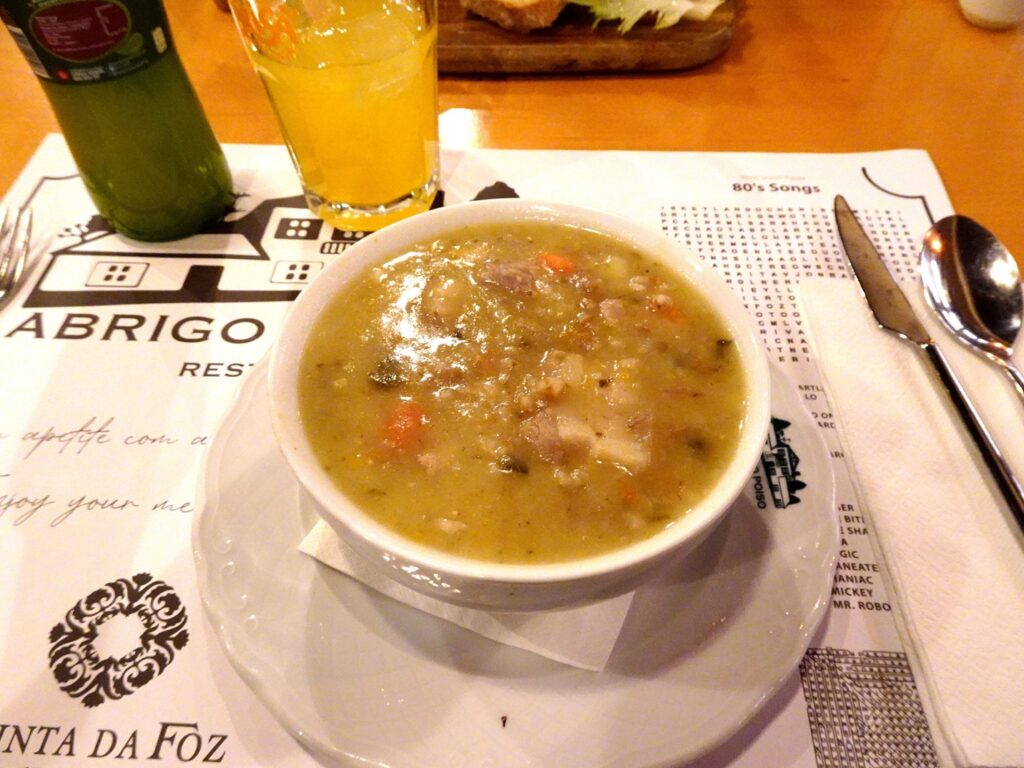
We finally tried it as an appetizer at Abrigo do Poiso on the ER103 and liked it a lot.
Sopa de Tomate e Cebola
Tomato soup might sound fairly standard, but the Madeiran version is a bit different. It’s served with a poached egg and big chunks of onion.
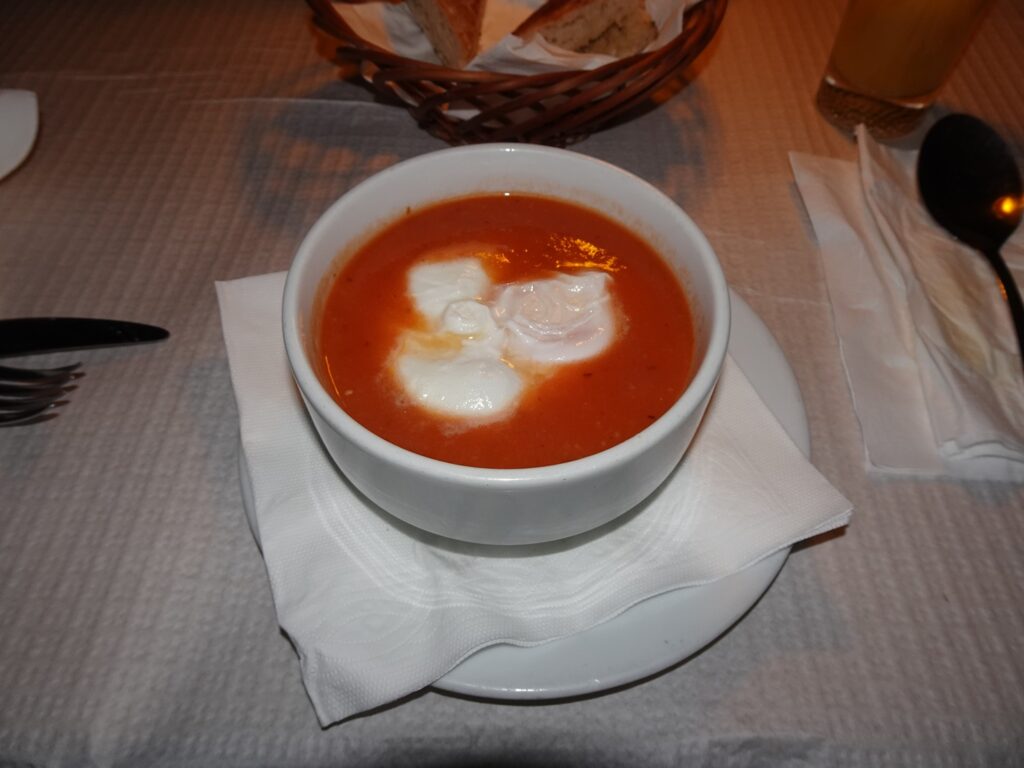
It’s a good option if you’re looking for something lighter or just as an appetizer. We saw it in a lot of restaurants, but we had the best one at Restaurante Praça do Engenho in Porto da Cruz.
Açorda à Madeirense (Bread Soup)
To complete the trilogy of soups, we have Açorda à Madeirense, which is made by soaking pieces of bread in a broth flavoured with garlic, olive oil and herbs.
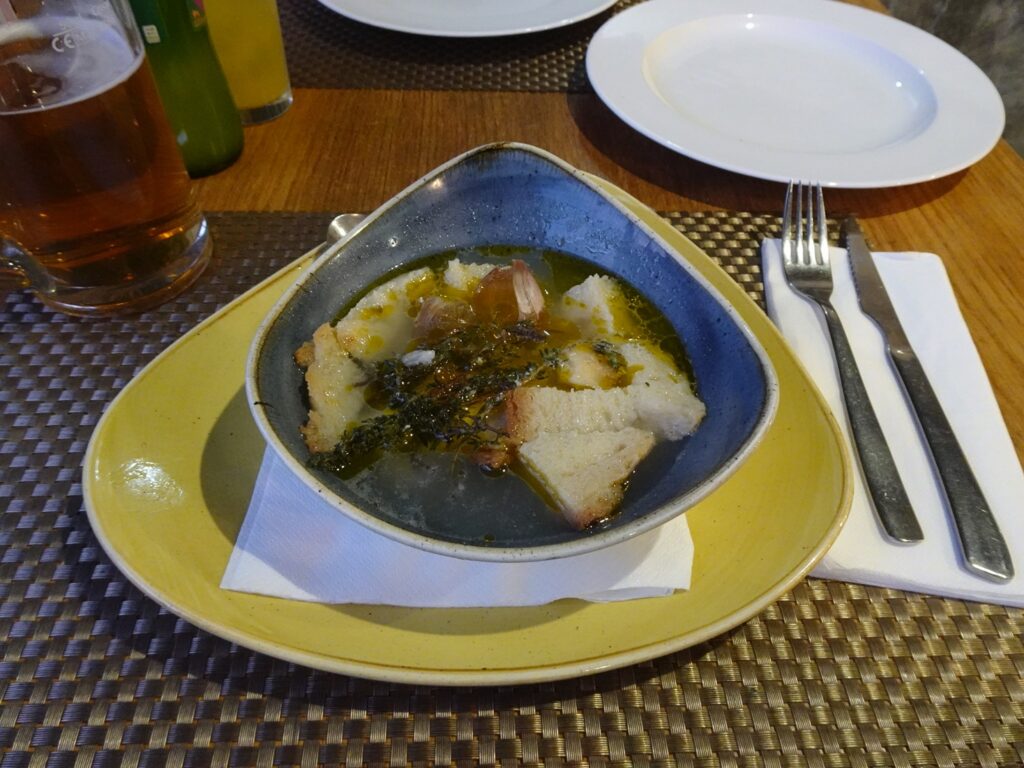
It’s a simple dish, which was traditionally a way to use up stale bread and turn it into something filling, but we found it really tasty. We had it as an appetizer at Taberna Madeira in Funchal’s Tv. João Caetano.
Lapas
Lapas are a classic seafood dish that’s not limited to Madeira. For instance, we had it many times on the neighbouring Canary Islands. They’re aquatic snails, which are grilled in their shells and served sizzling hot with garlic butter and lemon.
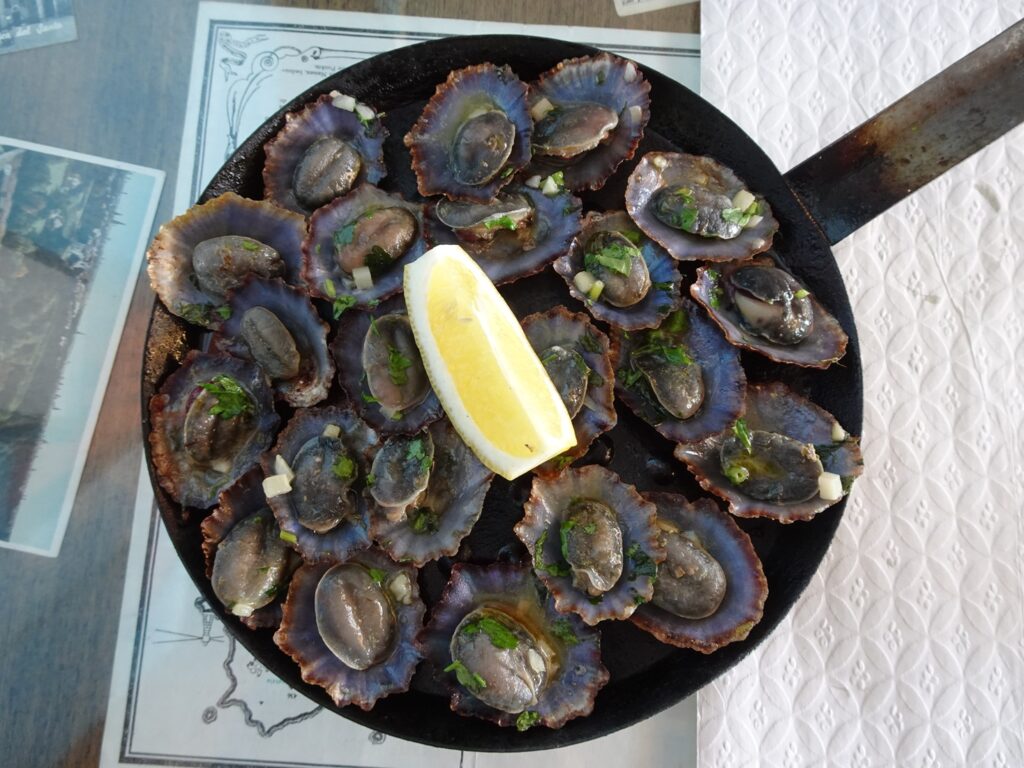
The texture is a bit chewy, similar to mussels but slightly firmer. You’ll find lapas in many seaside restaurants on the island. We really liked the ones we had at A Taberna in Madalena do Mar.
Camacha Grilled Chicken (Porto Santo)
If you make it over to Porto Santo, you can take a trip to the small village of Camacha, which is famous for its chicken, which is grilled over charcoal and served with fries and vegetables.
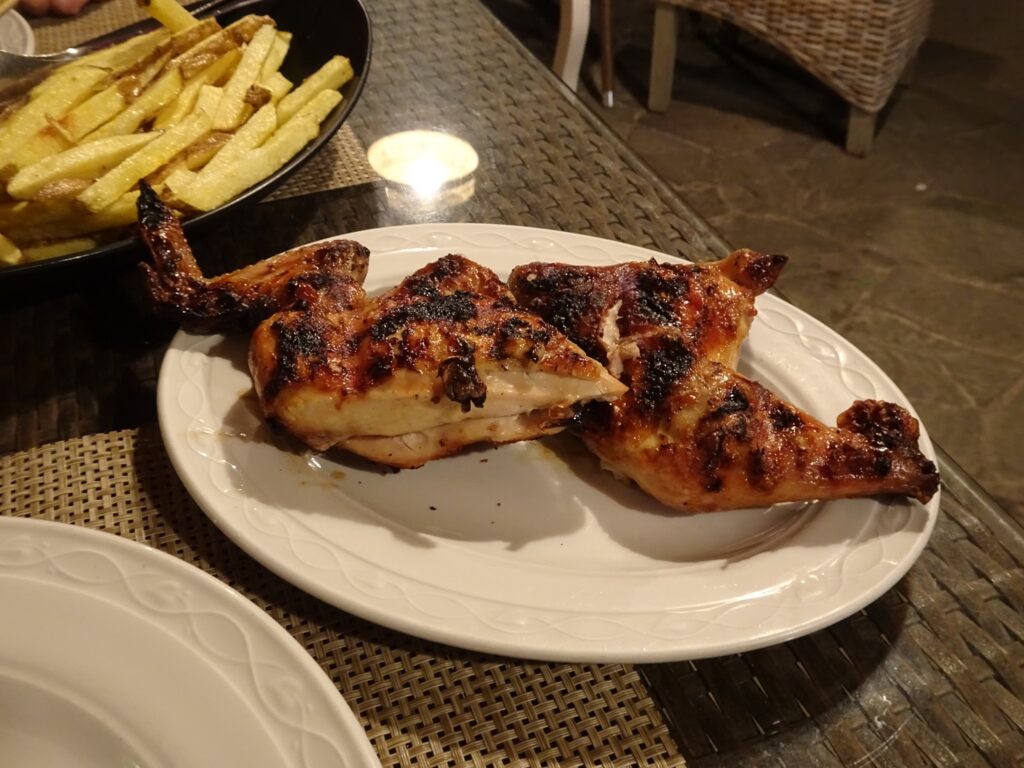
I couldn’t really make out a difference to grilled chicken from other places, but I still found it tasty. There are only a handful of restaurants in Camacha and we tried it at Restaurante Grill Torres.
Bolo de Mel
Another bolo, but this time it’s a sweet one. Bolo de Mel is Madeira’s traditional honey cake, although it’s actually made with molasses rather than honey in most modern versions. It dates back to at least the 15th century and apparently, it was first baked by nuns in the Convent of Santa Clara in Funchal.
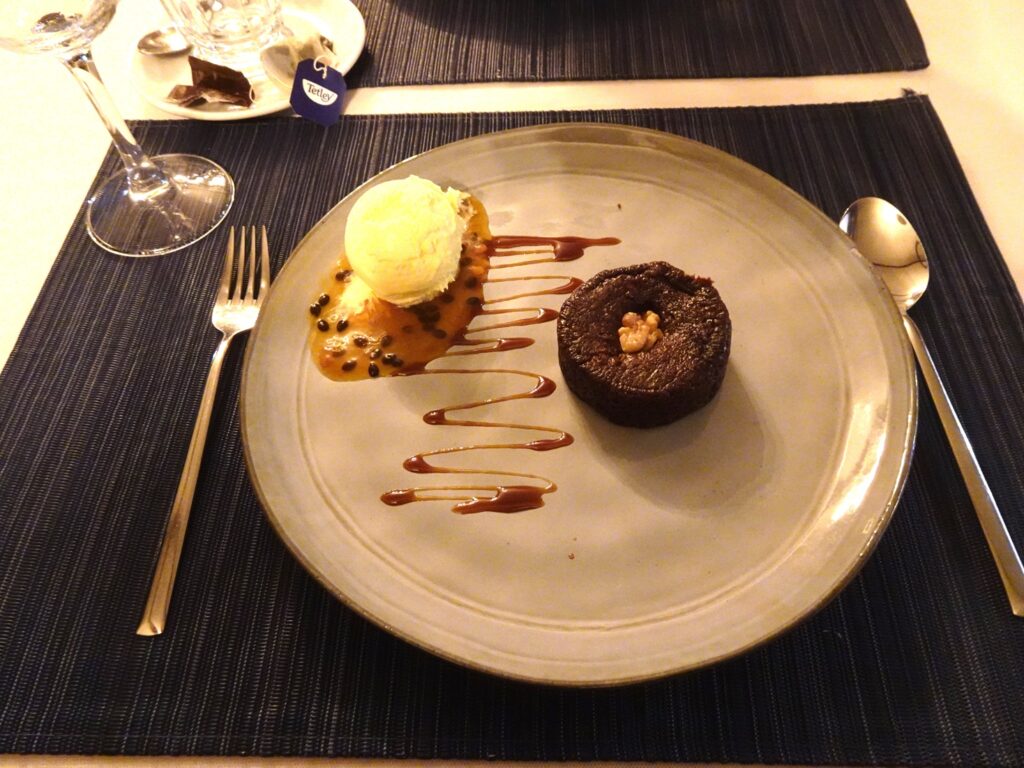
The cake is super dense and very sweet. You can find it both in bakeries and as a dessert in some restaurants. We tried it at Restaurante Baía do Bago in Porto da Cruz.
Roasted Chestnuts
The area around Curral das Freiras (The Valley of the Nuns) is known for its long history of chestnut cultivation and in the tiny village you can try lots of foods and drinks that contain chestnuts in some way, shape or form.
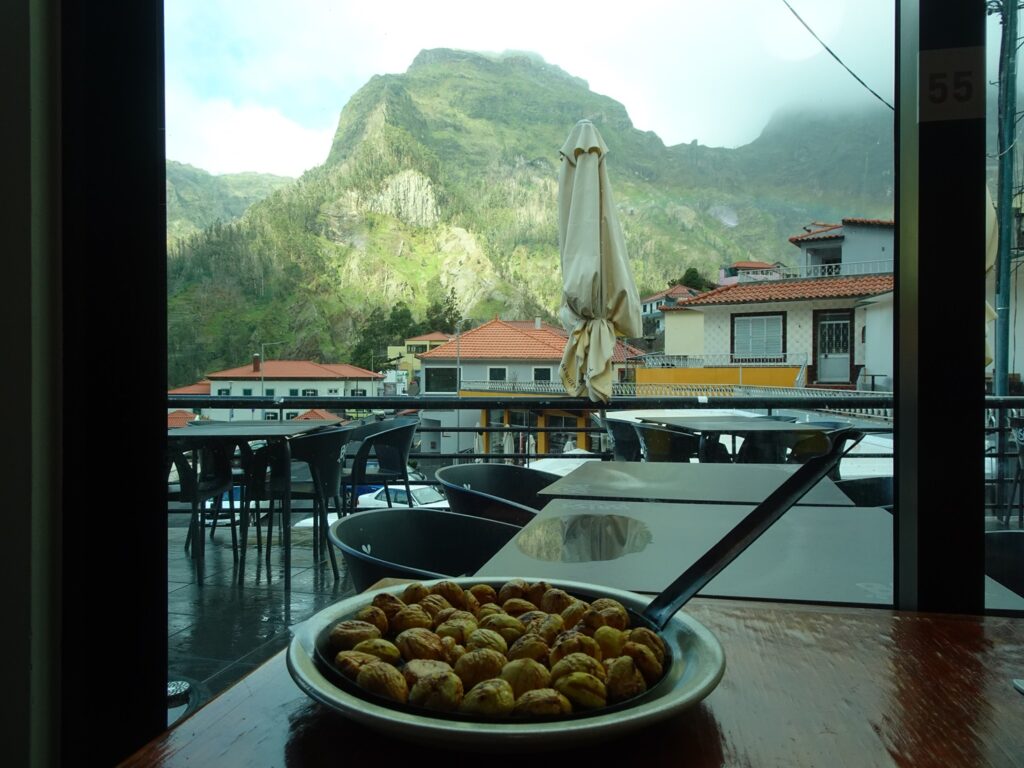
Our personal favourite was the basic plate of roasted and slightly salted chestnuts, which we ate at Vale das Freiras Restaurant in Curral das Freiras.
Anona (Custard Apples)
Madeira is also known for its custard apples, which are locally called anona. The fruit has a soft, creamy texture and a sweetish flavour that is hard to describe (it didn’t exactly remind us of custard). To be honest, we weren’t the biggest fans. Maybe it’s an acquired taste.
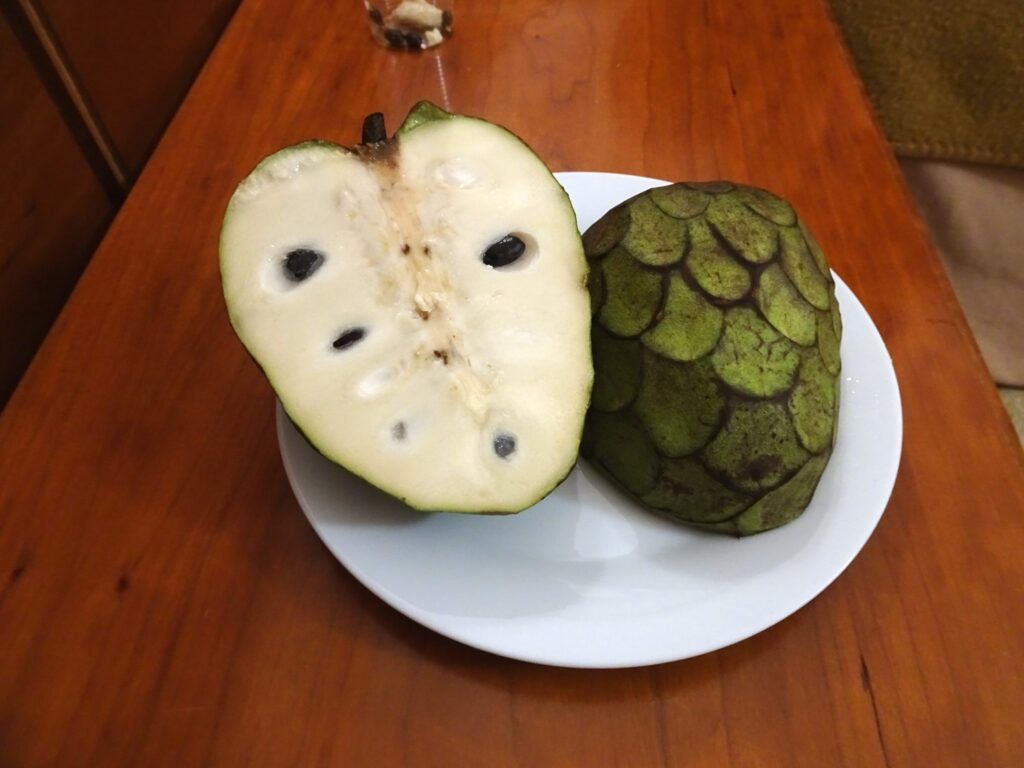
You can either get it at any fruit and vegetable market on the island or just in the supermarket, where it should be slightly cheaper and which is where we bought it.
Various Banana Products
Bananas are grown extensively on Madeira, often on steep terraces along the southern coast. They’re a bit smaller and sweeter than the ones we’re normally used to, and they show up in a lot of dishes, including the famous espada with banana and passion fruit sauce (see above).
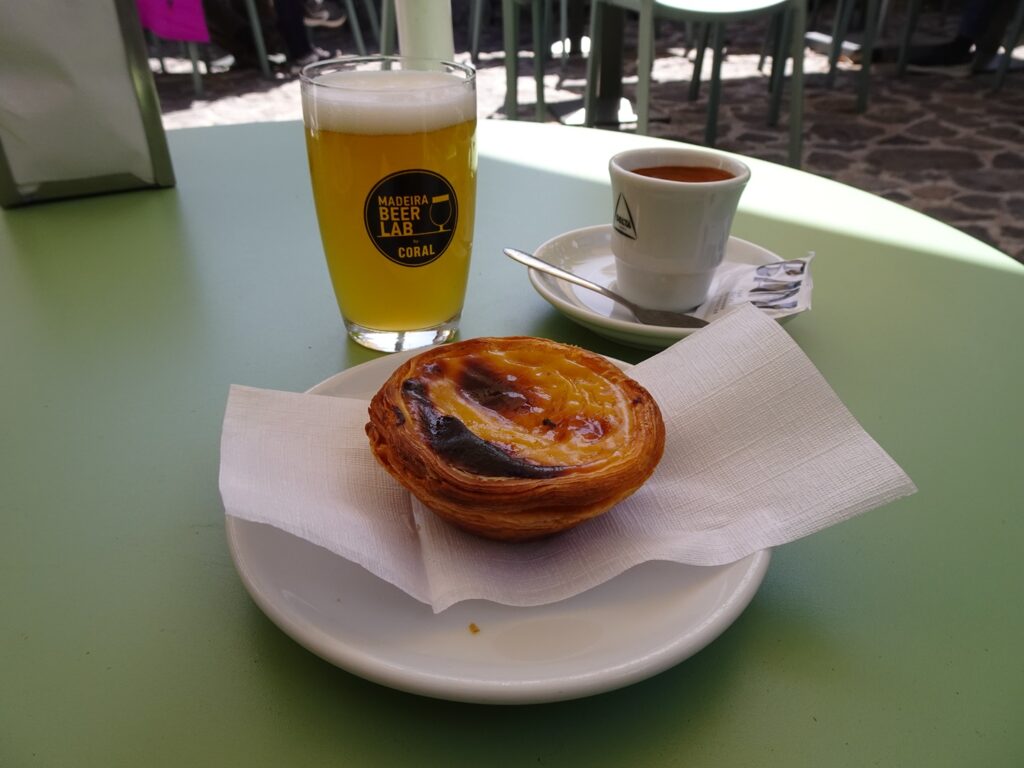
You can get the bananas in shops and markets all over the island and if you visit the surprisingly good Banana Museum in Ponta do Sol, you can try various banana products in their café, from cakes and Pastels de Nata to banana beer.
Poncha
Apart from Madeira Wine, Poncha is by far the most famous drink on Madeira. The drink goes back to fishermen who originally drank it as a way to keep warm and ward off illness while they went out to sea at night to catch scabbard fish.
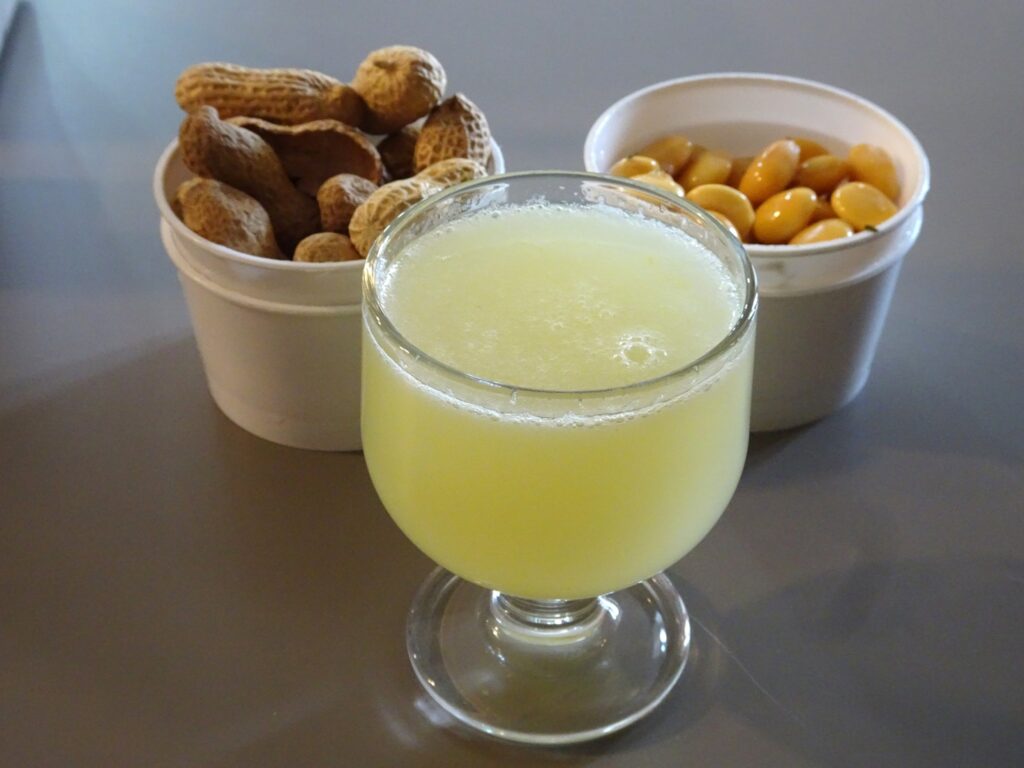
The original version (Poncha à Pescador) is made from sugar cane rum, honey and lemon juice, but there are also variations where orange juice is added (Poncha Regional) or lemon juice is replaced by passionfruit juice (Poncha Maracuja).
I liked the first two variations best. It usually comes with a bowl or two of peanuts and tremoços (marinated lupin beans) to nibble on. You can find poncha bars all over the island, but the place where it originated is Câmara de Lobos, where we ordered it at Bar Filhos d’Mar.
Madeira Wines
Madeira wine has a long history dating back to the Age of Exploration, when it was shipped across the world and became popular in places like the United States and England.
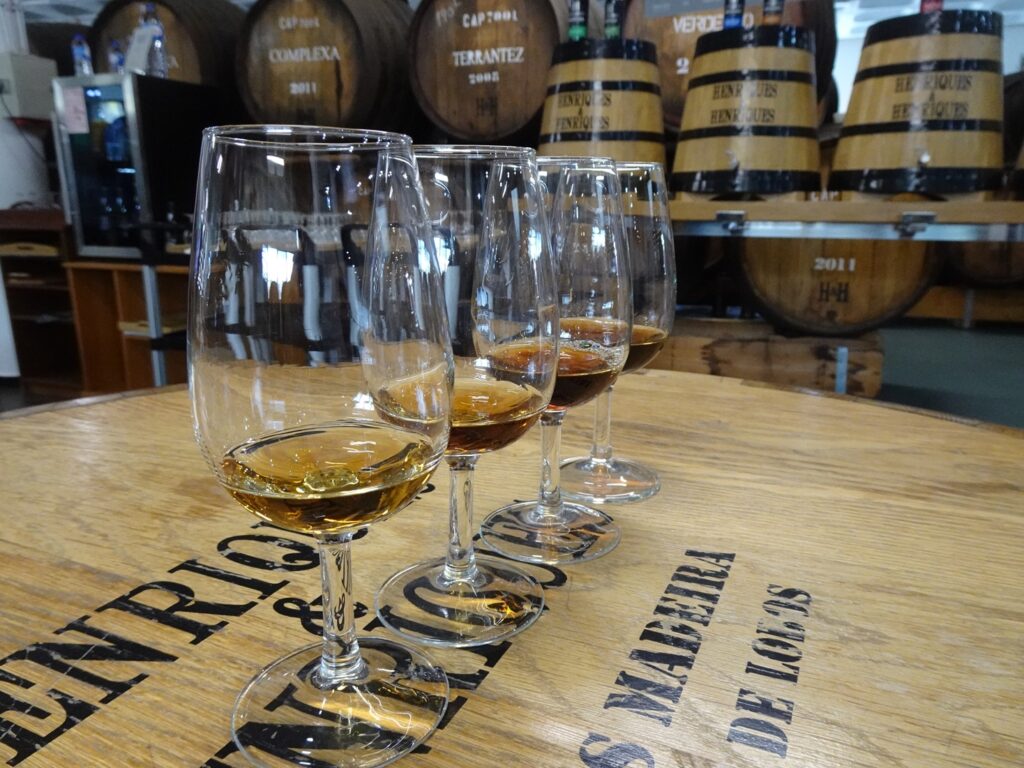
It’s a fortified wine that’s intentionally heated during production, which gives it a distinct flavour and makes it very durable. There are different styles (dry, half-dry, half-sweet and sweet), but I found even the dry one to be pretty sweet already.
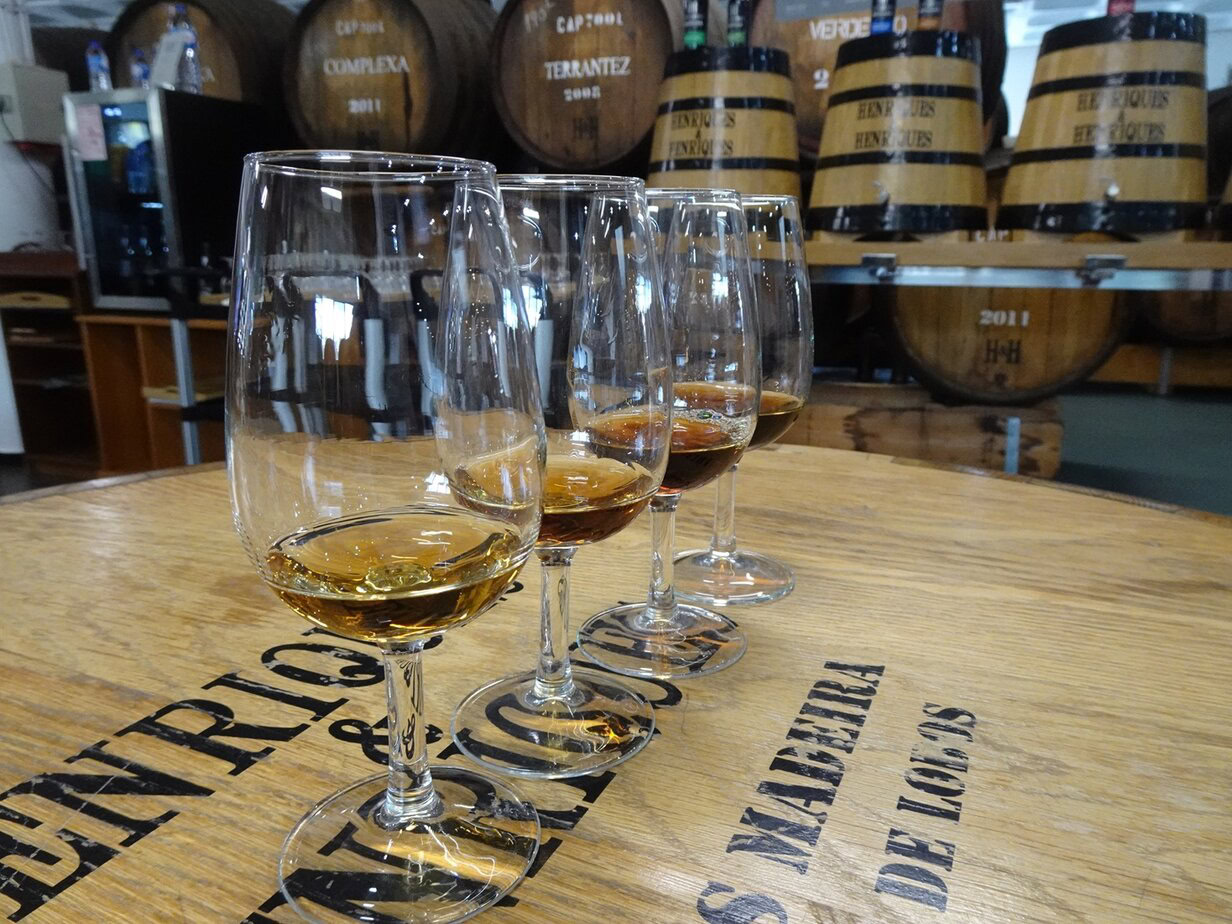
For that reason, you usually drink it as a dessert wine after dinner instead of pairing it with a meal. You can have it in lots of restaurants or try it at wine lodges around Funchal. We did a small tasting at Henriques & Henriques Winery in Câmara de Lobos.
Nikita
Nikita is a more modern drink, which was invented in 1985 once again in Câmara de Lobos (people really seem to like their drinks there). It’s made with beer, vanilla ice cream and pineapple juice. Writing it down, it sounds terrible, but we found it actually quite tasty.
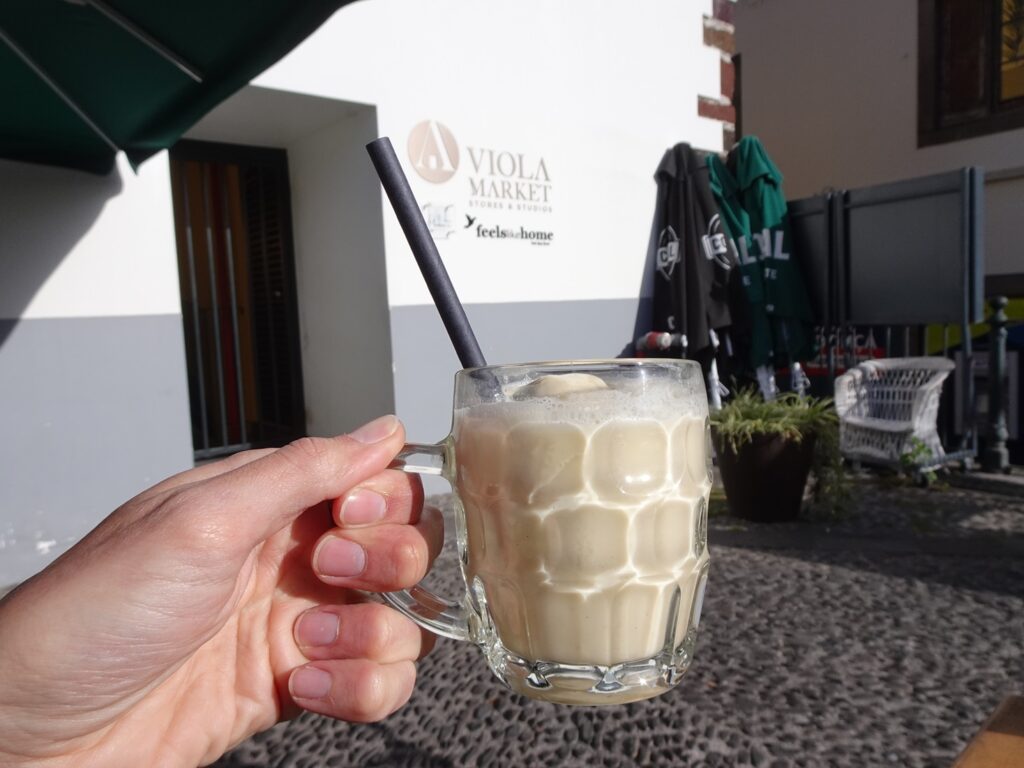
We had it once at Bar Filhos d’Mar in Câmara de Lobos and another time in a bar near Funchal’s Mercado dos Lavradores, whose name I unfortunately can’t recall (or find online). You’ll find it in lots of bars, though, and there are also non-alcoholic versions available.
Madeiran Rum
Rum has been part of Madeira’s story for centuries, going all the way back to the island’s early sugar cane industry in the 15th and 16th centuries. When sugar production declined, rum stuck around and became a defining part of local culture instead.
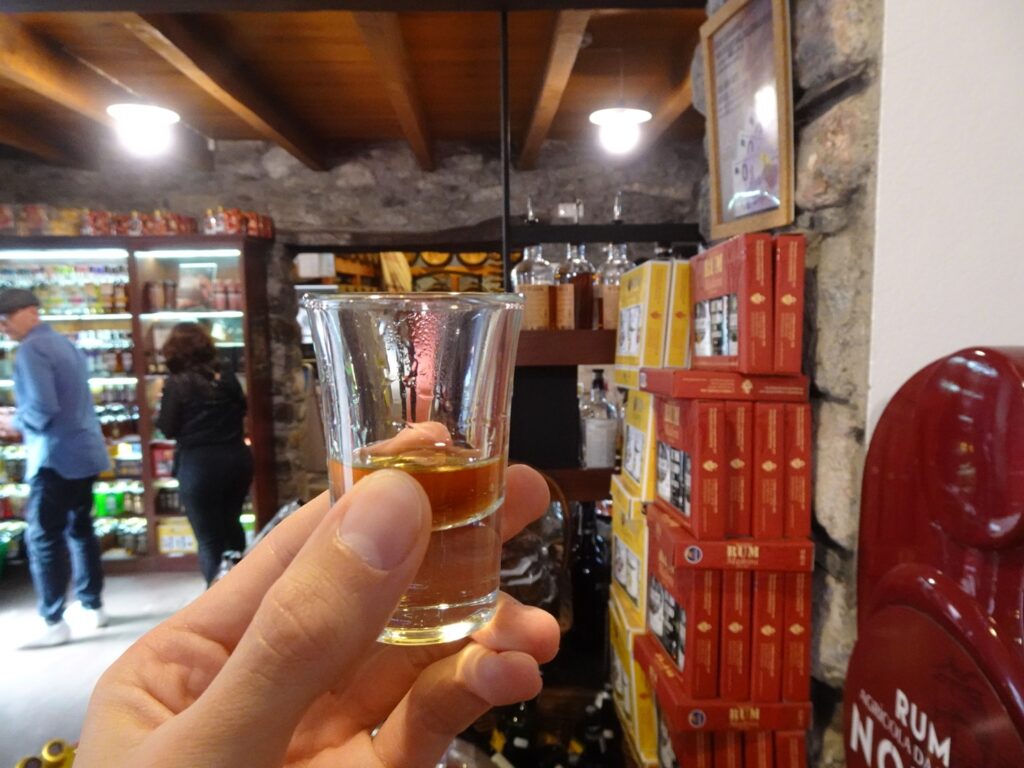
The version you’ll find on Madeira is usually made from fresh sugar cane juice rather than molasses, which gives it a slightly more raw, grassy flavour compared to Caribbean styles. There are a few working distilleries on the island, where you can try it at the source.
We had a shot at Engenhos do Norte in Porto da Cruz, which also contains a small, free rum museum.
Apple Cider in Prazeres
This isn’t something we necessarily associated with Madeira, but in the hills around Prazeres a local priest, Father Rui Sousa, began producing cider from regional apple varieties in the 1990s.
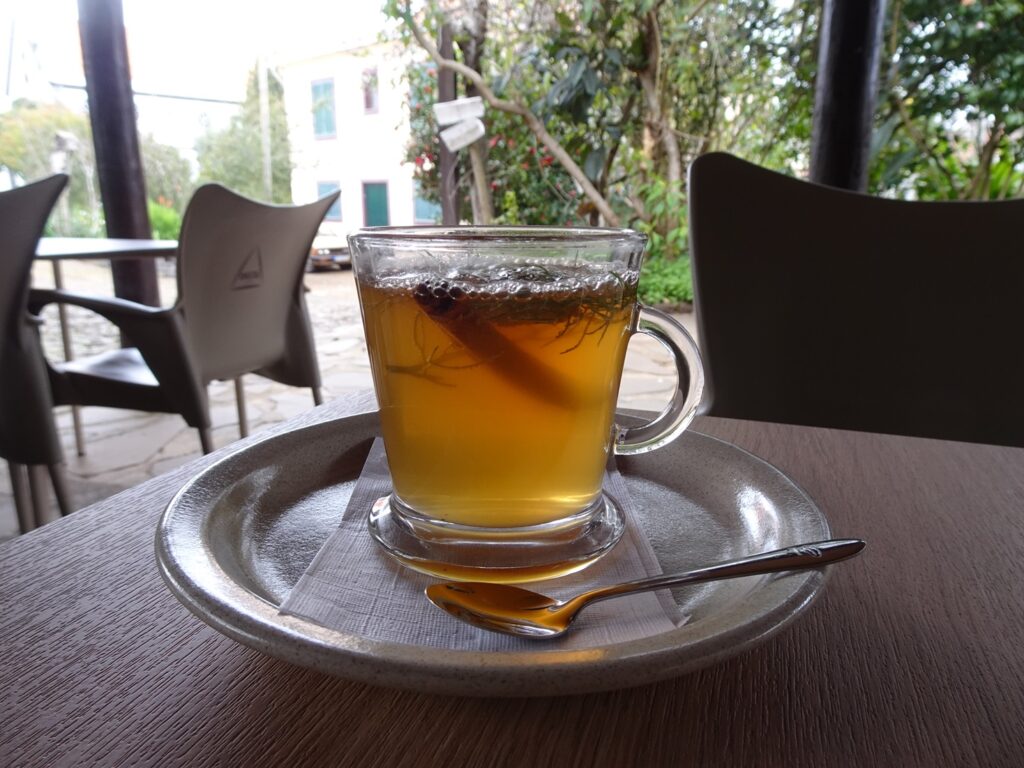
If you’re passing through town, it’s worth stopping by the Casa de Chá behind the church to try some. They have cold and warm varieties. We chose the latter version, which was served with a piece of cinnamon and some fennel.