We stopped in Kobe while we were making our way from western Honshu toward Kyoto and almost immediately had the feeling that the city somehow flies under the radar compared to a lot of other places we visited in Japan.
Even around the main sights, things generally felt less crowded than in cities like Osaka or Kyoto, which made exploring the place a lot more enjoyable to us. That’s not to say that there aren’t lots of things to do here (and I’m not just talking about trying the famous Kobe Beef).
There’s the old foreign settlement of Kitano-cho with its 19th-century merchant houses, some pretty shrines that are hidden between office buildings, a few interesting museums around the harbour and some beautiful waterfalls in the hills directly behind the city centre.
We spent two busy days exploring this cool city, and if you want to do more than scratch the surface, I highly recommend you do the same. Here are our recommendations to make the best of your time in Kobe.

This post may contain affiliate links, and I might earn a small commission at no additional cost to you. For more info, click here.



Guided Tours of Kobe
If you If you’re short on time or want the company of a local guide while you’re exploring the city, there are lots of guided tours to Kobe available. Have a look below for some of the best-rated options.
The Best Things to Do in Kobe in Two Days
Kobe is fairly young and was only officially founded in 1889, so it doesn’t have the same amount of historic neighbourhoods and buildings that fascinated us in other Japanese cities.
What made the city interesting to us was its role during the Meiji Era (1868-1912), when Japan slowly began opening itself up to the outside world after centuries of relative isolation. Because of its deep natural harbour, Kobe became one of the country’s first international port cities, and foreign traders and diplomats started settling here in large numbers.
This means that the city is pretty cosmopolitan by Japanese standards (with one of the biggest Chinatowns in the country) and that there are lots of traces of these early foreign settlers around, especially in the Kitano-Cho neighbourhood.
Kobe Hotel Tips
Budget: Hostel Yume-Nomad
Midrange: Hotel Crowne Plaza
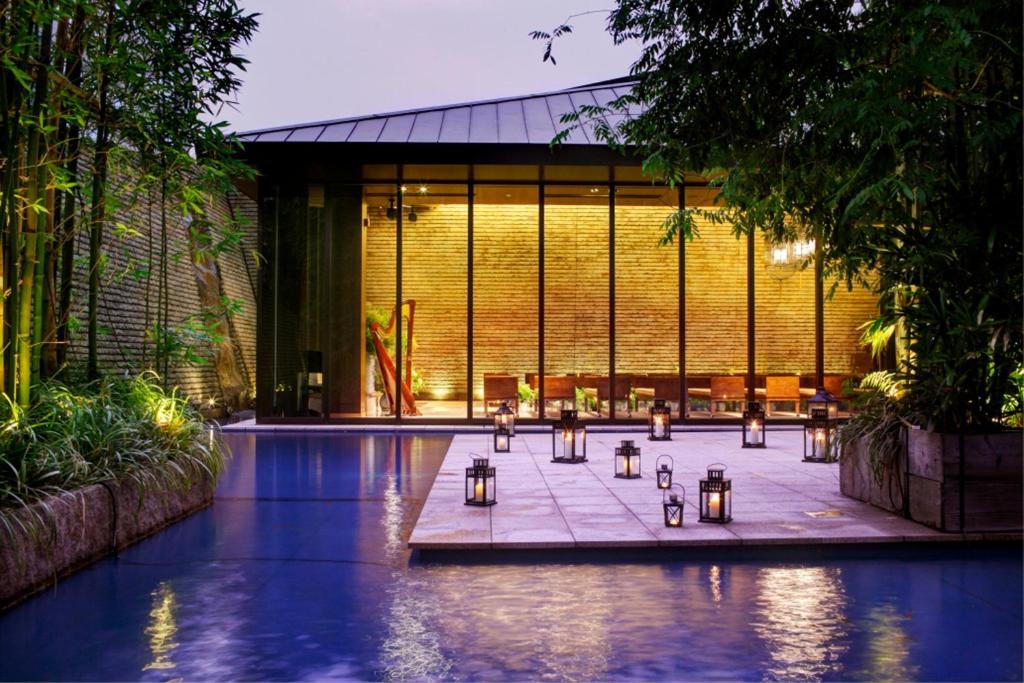
Luxury: The Orient (pictured)
.
Day 1
Nunobiki Waterfall
I recommend starting your first morning in the city with a place that you probably wouldn’t expect to find in a metropolis like Kobe (we certainly didn’t). The pretty Nunobiki Falls are just a ten-minute walk from Shin-Kobe Station along a steepish forest trail.
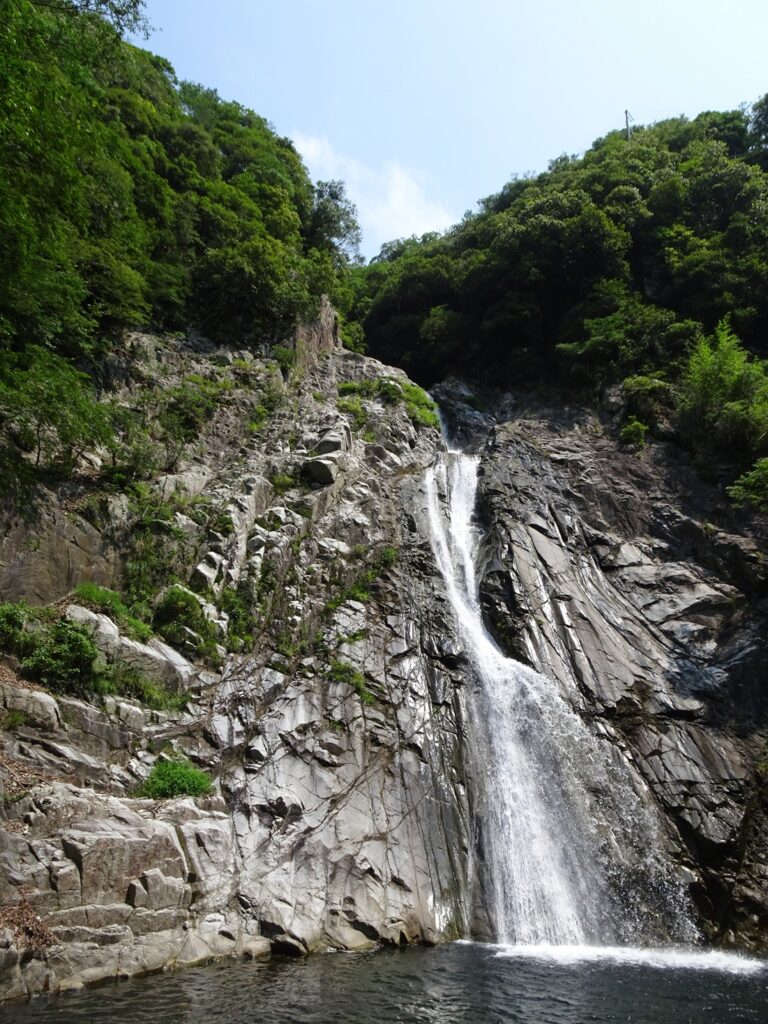
There are four cascades flowing down from the Rokko Mountains, of which we found the uppermost Ontaki Falls with its 43m tall cascade the most impressive. The falls have been famous in Japan for centuries, and are for example described in the 10th century poetry collection Ise Monogatari (Tales of Ise).
It’s a good idea to come early to enjoy the place in peace. We were here in the late morning and there were already a few people around, although it still wasn’t too bad. As often is the case, the earlier you come, the better it will be.
To get there, you’ll have to exit Shin-Kobe Station to the north and follow the trail north for about 400m until you reach the viewing platform at Ontaki Falls. There’s no entrance fee and the area is open at all times, although morning is definitely the nicest time to visit.
Kitano-Cho
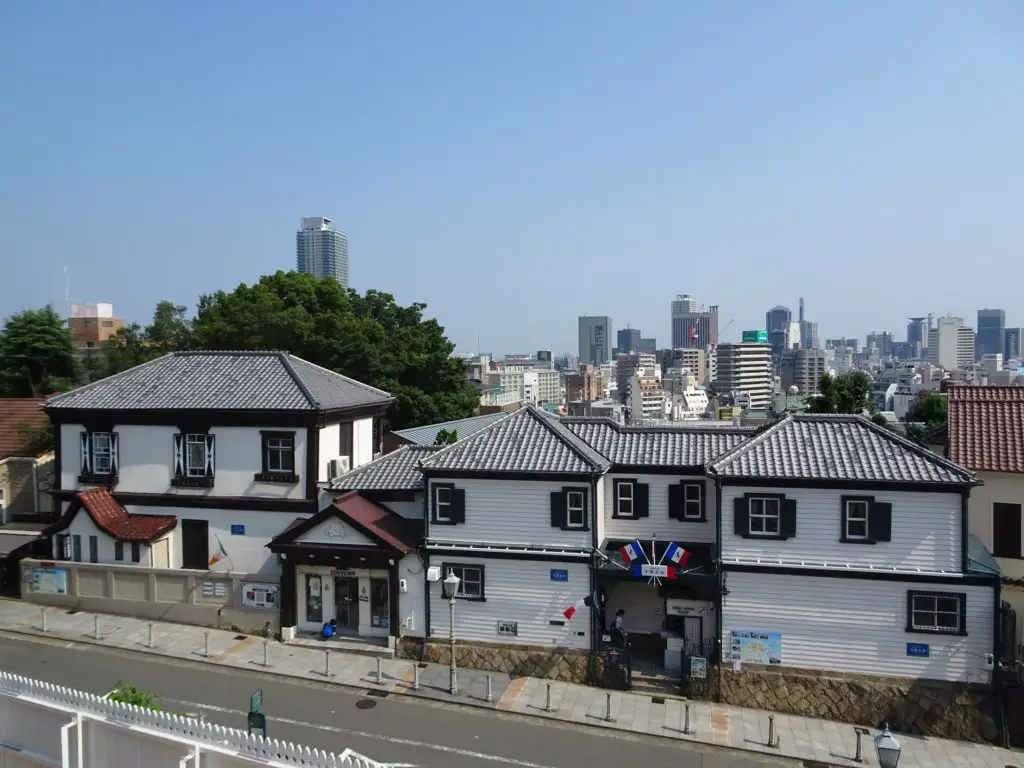
From the waterfalls, I’d recommend heading downhill into Kitano-cho, which is by far Kobe’s most distinctive neighbourhood. After Japan opened up to international trade in the late 19th century, many foreign merchants and diplomats settled here on the hillside overlooking the port and many of their old residences (called Ijinkan) are still around today.
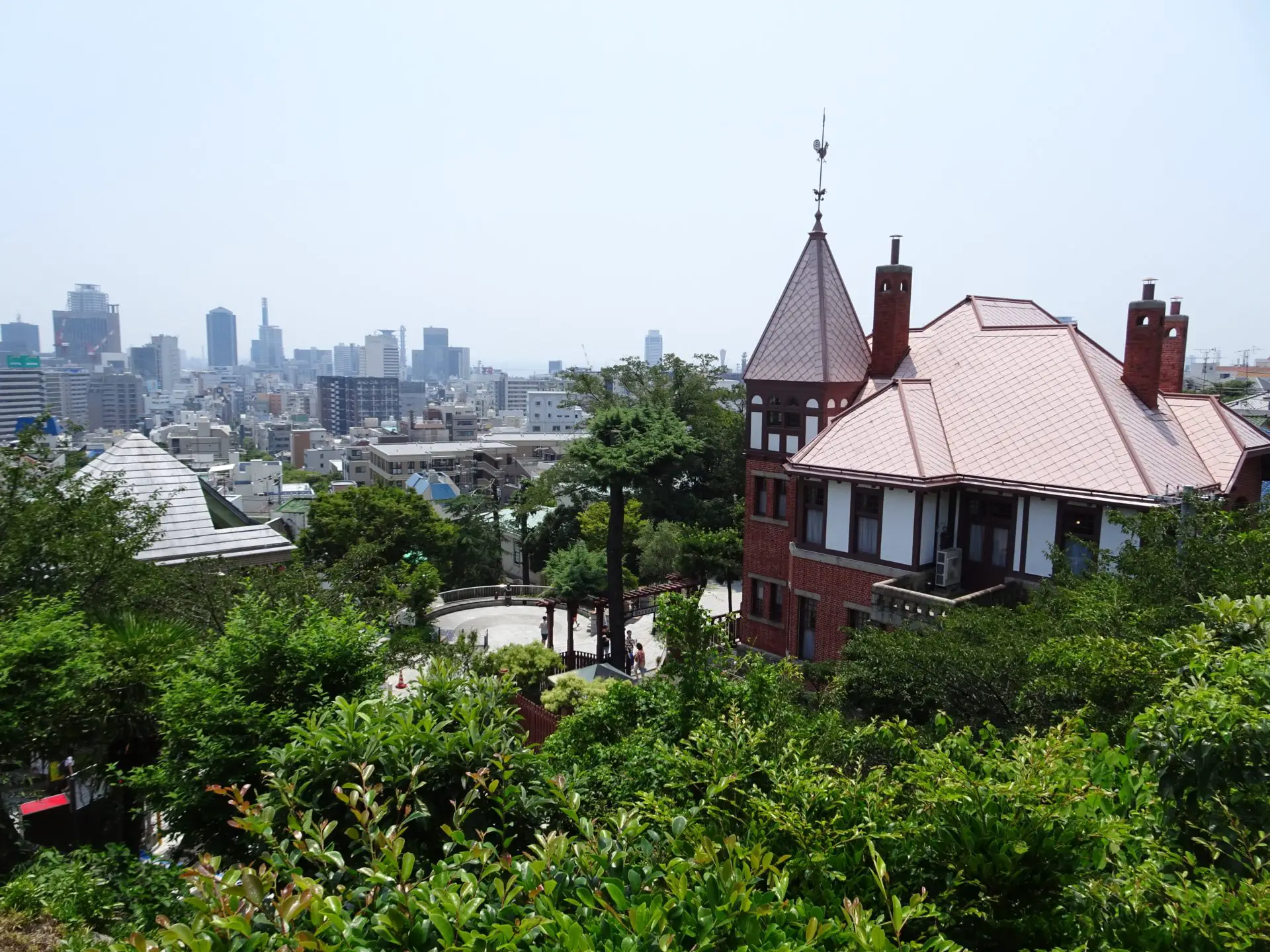
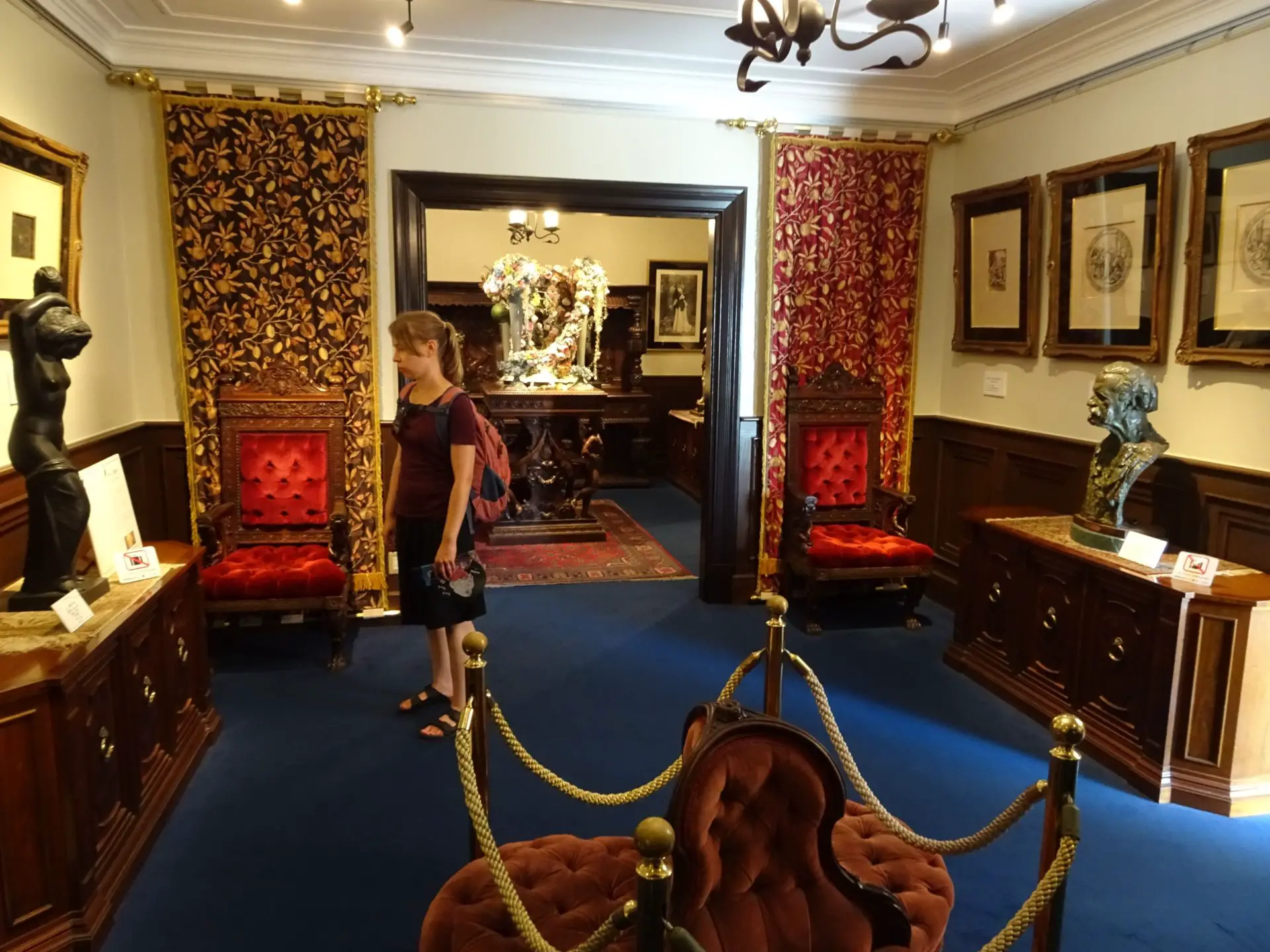
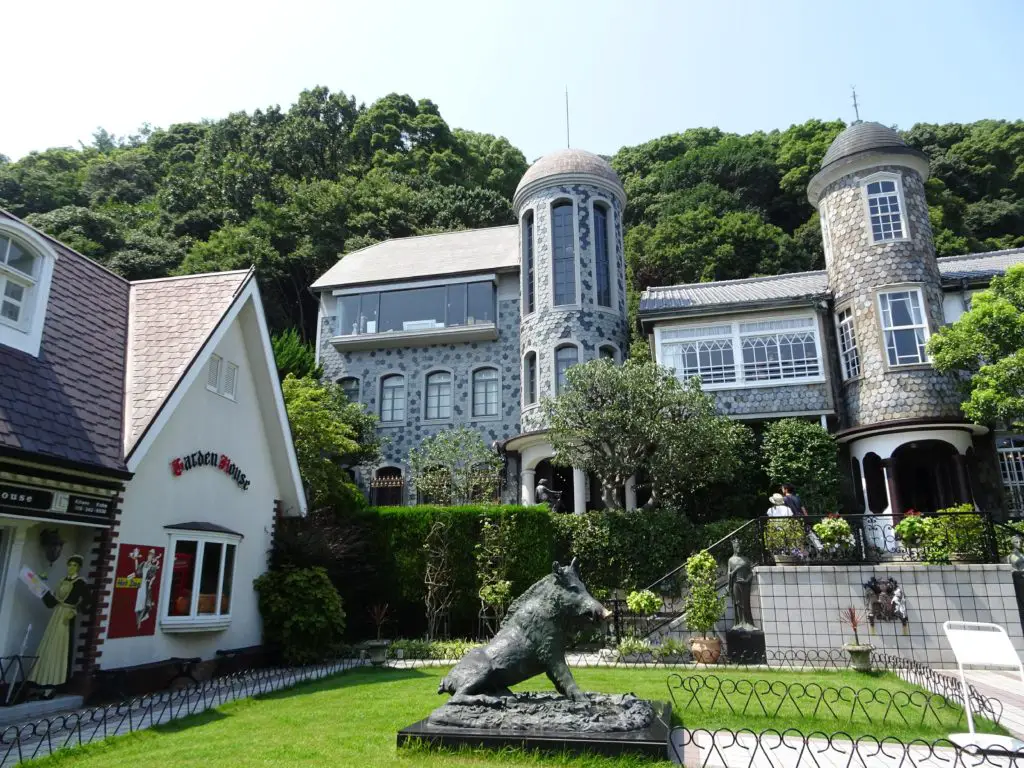
Because the houses belonged to people from different countries, they’re all built in distinct architectural styles and the neighbourhood felt a bit like Europe in miniature to us. You can also visit the insides of a lot of the houses and there are both single tickets and different combination tickets available.
We visited eight houses in total, and while we found most of them worth checking out, there were a few we could have skipped, too. If you just want to visit one or two, I recommend either the House of the Weathercock or the Moegi House, which gave us the best idea of the domestic life of these foreigners.
The houses all have slightly different opening times. You can check them on this site.
See Also: Exploring Fascinating Kitano-Cho, the Foreign Merchant Quarter of Kobe, Japan
Kitano Starbucks
Normally, I wouldn’t recommend a Starbucks in a travel guide (especially one to a Japanese City), but this one is kind of unique. True to Kitano’s style, it’s located inside a beautiful wooden Ijinkan, which was built in 1907 for an American resident.
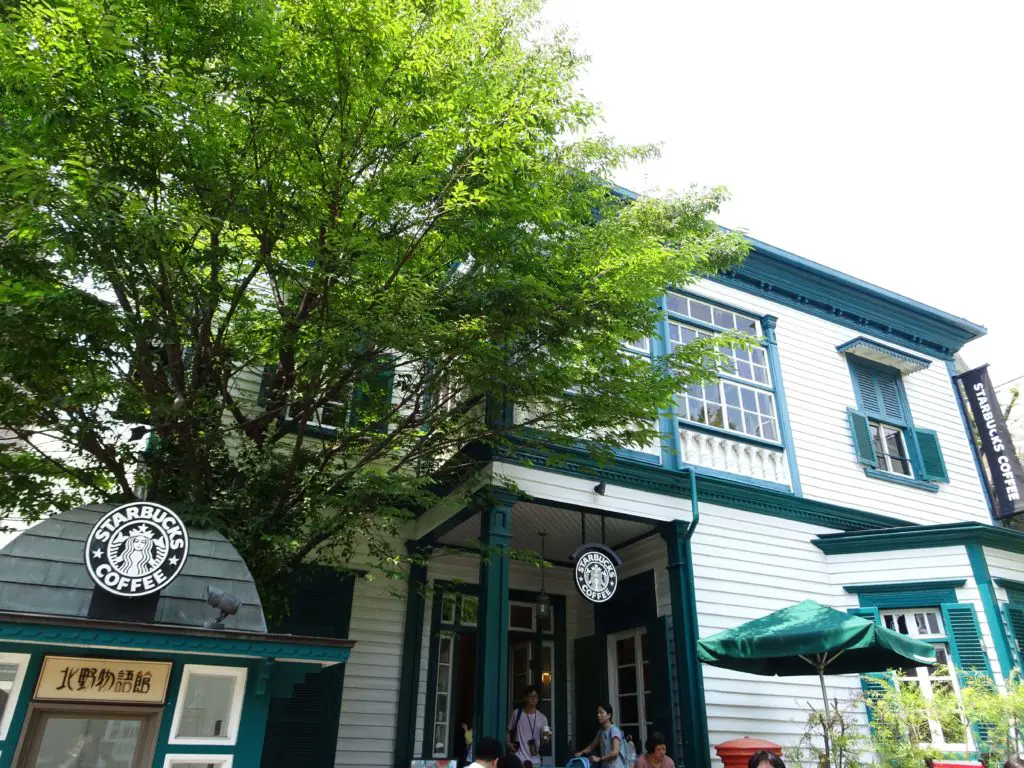
The historical rooms inside the house are still preserved and have been integrated into the store. As the tables are in different rooms of the house, it felt more like having coffee in someone’s private home than in an actual coffee shop to us.
There are quite a few pieces of old-timey furniture and we also liked the grand fireplace with it’s carved wooden frame. The coffee shop is at the southern edge of Kitano on Kitanozaka Street. You can check the current opening times here.
Ikuta Shrine
From Kitano, it’s an easy walk down into the centre of Kobe and toward Ikuta Shrine, one of the city’s oldest religious sites, which sits a bit north-west of Sannomiya Station. According to tradition, the shinto shrine was founded nearly 2,000 years ago by Empress Jingū, long before Kobe even existed as a city.
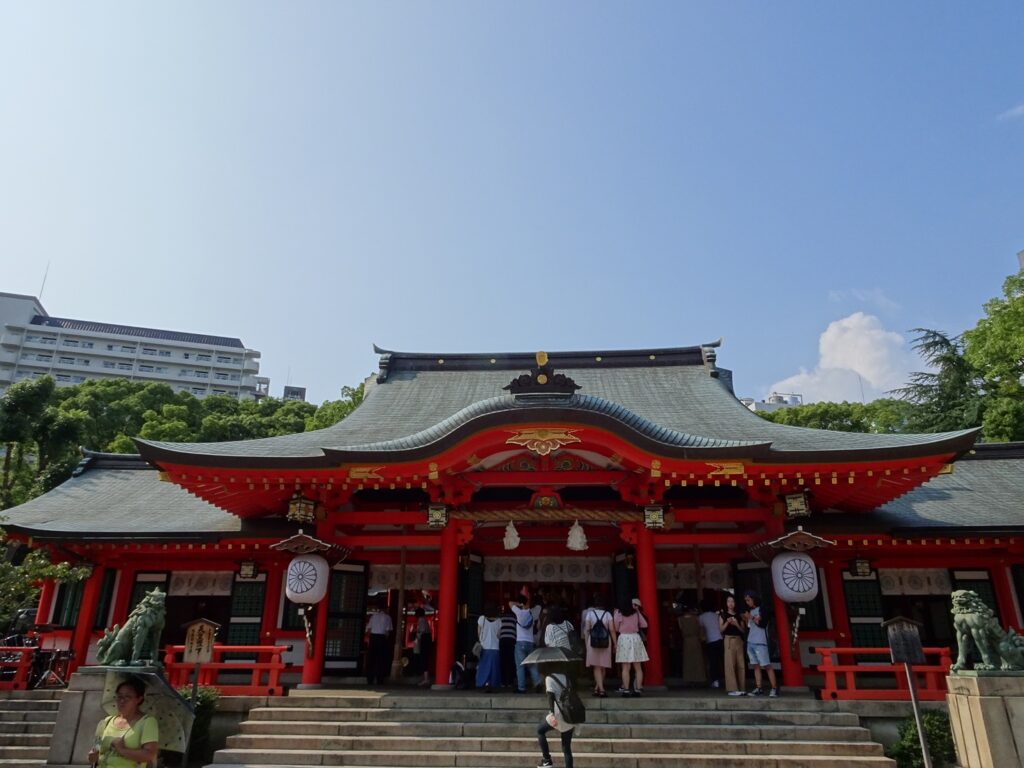
As we found with many shrines in large Japanese cities, there’s a nice contrast between the busy surrounding streets and the calm shrine area with its little gravel paths running in between the red-painted wooden buildings.
The shrine is dedicated to Wakahirume, a goddess that is associated with the rising sun. Over time, Ikuta Shrine also became connected with relationships and matchmaking, and there were quite a few couples buying marriage fortune papers when we visited.
We also liked the small forested area with its tiny stream behind the main shrine buildings, which is something else that we wouldn’t have expected to find in the busy Kobe city centre. The shrine buildings are open during daylight hours and there’s no entrance fee.
Kobe City Hall Observation Deck
Not far from the shrine is Kobe City Hall, which has the best free viewpoint in the city. The observation deck sits on the 24th floor and gives you a really good overview of how Kobe is squeezed in between the sea and the mountains.
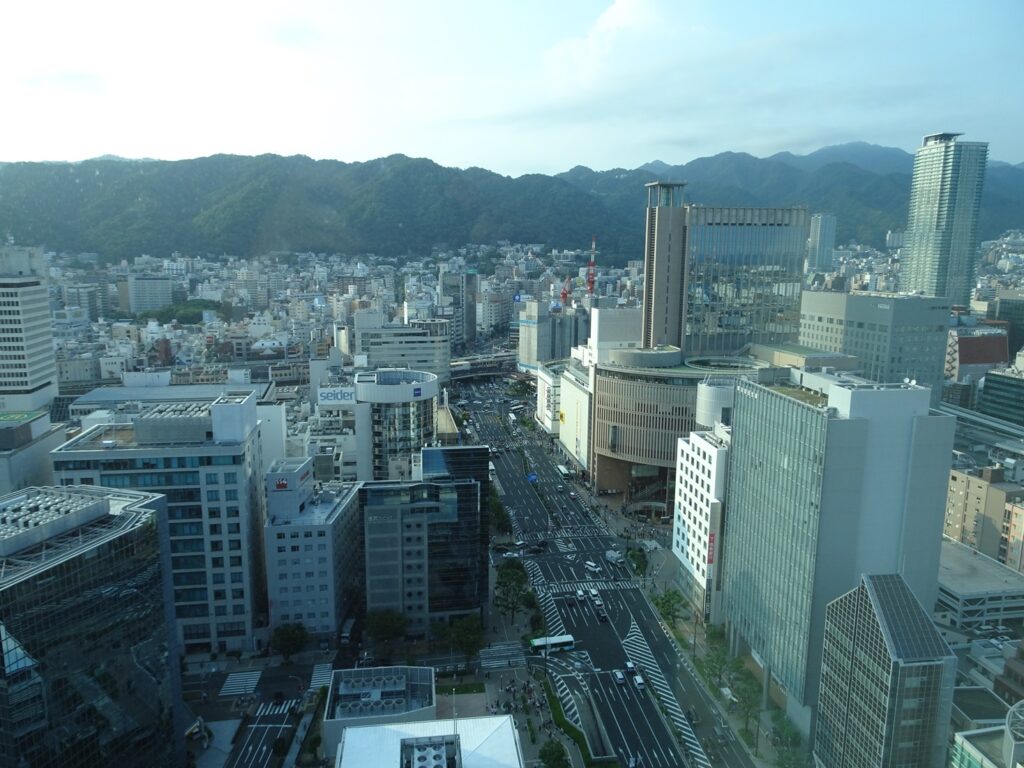
Looking south, you can see the harbour and Osaka Bay with its small islands, while to the north the green slopes of the Rokko Mountains rise almost immediately behind the city centre. The observation deck is free to visit. You can check the current opening times here.
Nankinmachi (Kobe Chinatown) and Dinner
In the evening, I’d recommend heading over to Nankinmachi, Kobe’s Chinatown, which lies close Motomachi Station. Kobe has had a Chinese community ever since the port opened to foreign trade in the 19th century, and this neighbourhood developed as the centre of that community.
In between little pagodas, Chinese lanterns and stone gates, the district is packed with brightly coloured shopfronts, little food stalls and bigger restaurants. We tried some sweet steamed buns (shaped like pigs) and some baobing (shaved ice dessert) while we were walking around the busy streets.
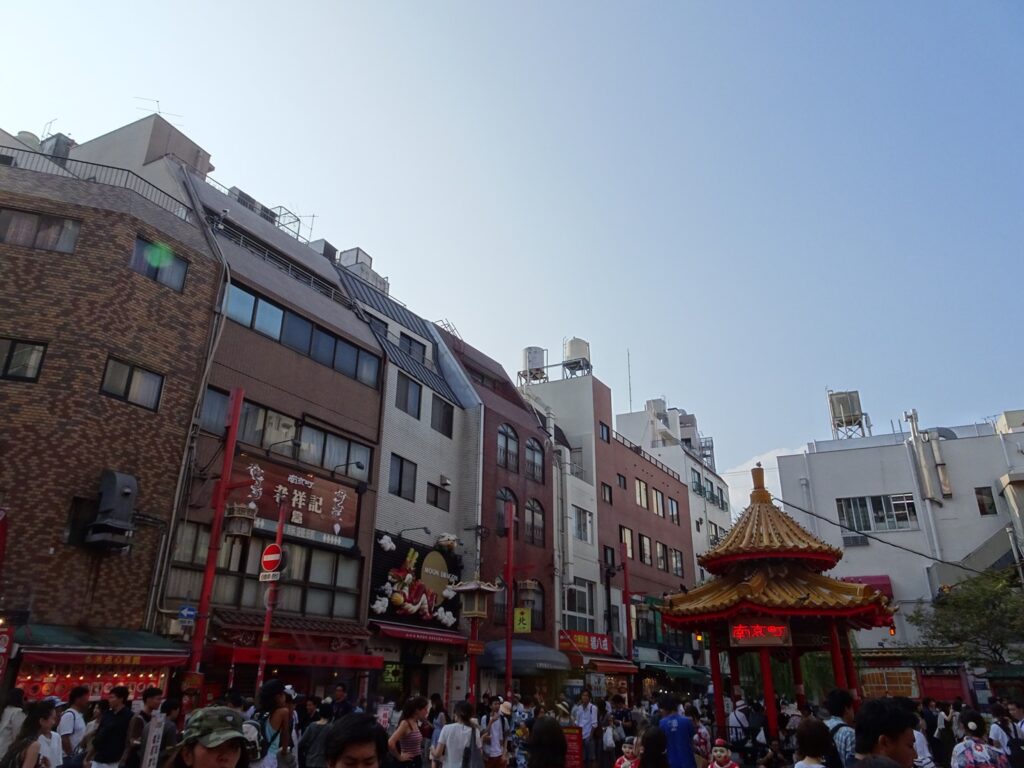
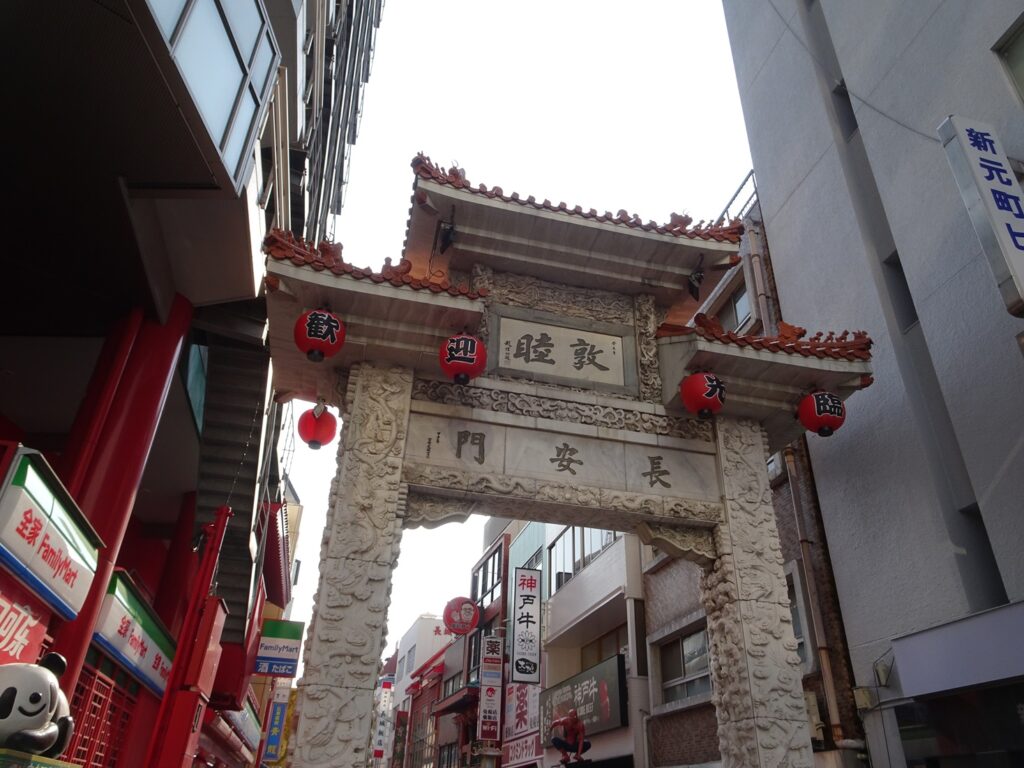
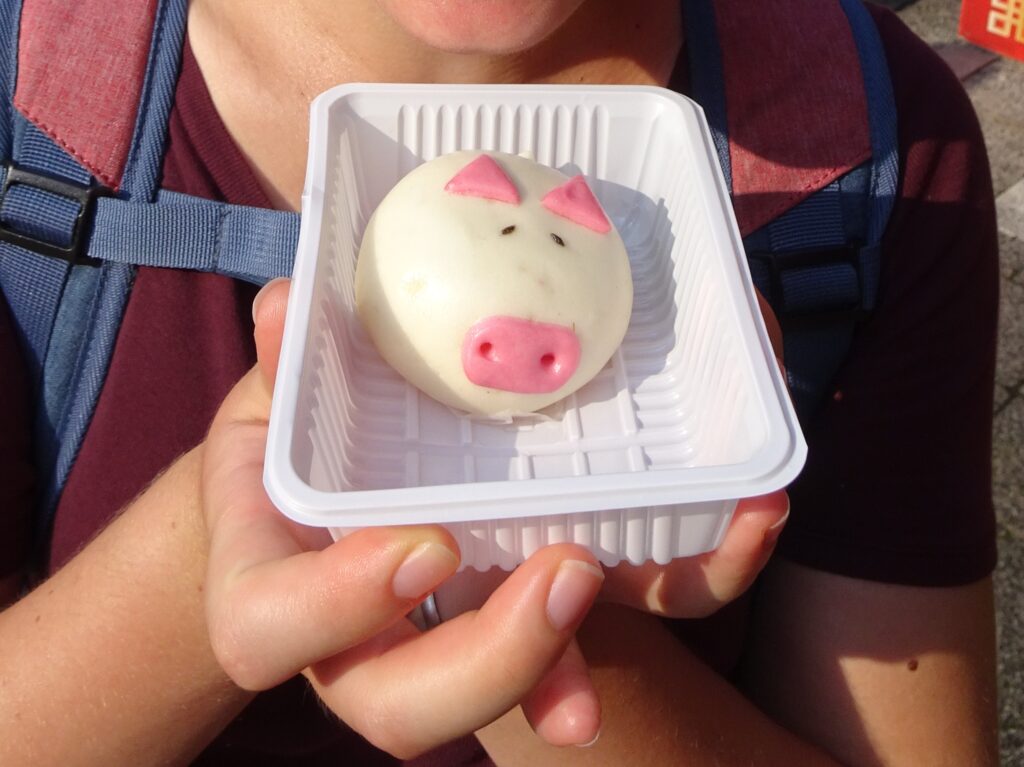
Similar to Kitano-cho, Nankinmachi was another interesting reminder of Kobe’s cosmopolitan history to us. When you feel like you’ve done enough walking for the day, I suggest you pick a restaurant and have some Chinese dinner while you’re in the area.
Day 2
While the first day was focused on activities in Kobe’s centre, I recommend exploring the city’s outskirts on your second day.
The port, museums and factories tell a lot of the story of how Kobe became one of Japan’s most international cities, and there’s also a nice mix of modern architecture, food culture and pretty waterfront areas.
Isuzu Bakery
Kobe has a surprisingly strong bread culture for Japan, which once again goes back to the foreign merchants who introduced European-style baking to the city in the late 19th century.
The city is still known for its bread and French-style pastries today and Isuzu Bakery near Sannomiya Station, which was founded in 1946, is one of the most famous bakeries in town.
As we had a busy day planned, we found picking up some of their specialities a nice alternative to sitting down in a café for a big breakfast.
Kobe Port Tower
In the Meriken Park area near the harbour stands the bright red Kobe Port Tower, which is probably the city’s best-known landmark. It was completed in 1963 during a period when Kobe was expanding rapidly as a modern international port city, and the unusual shape makes it one of Kobe’s symbols.
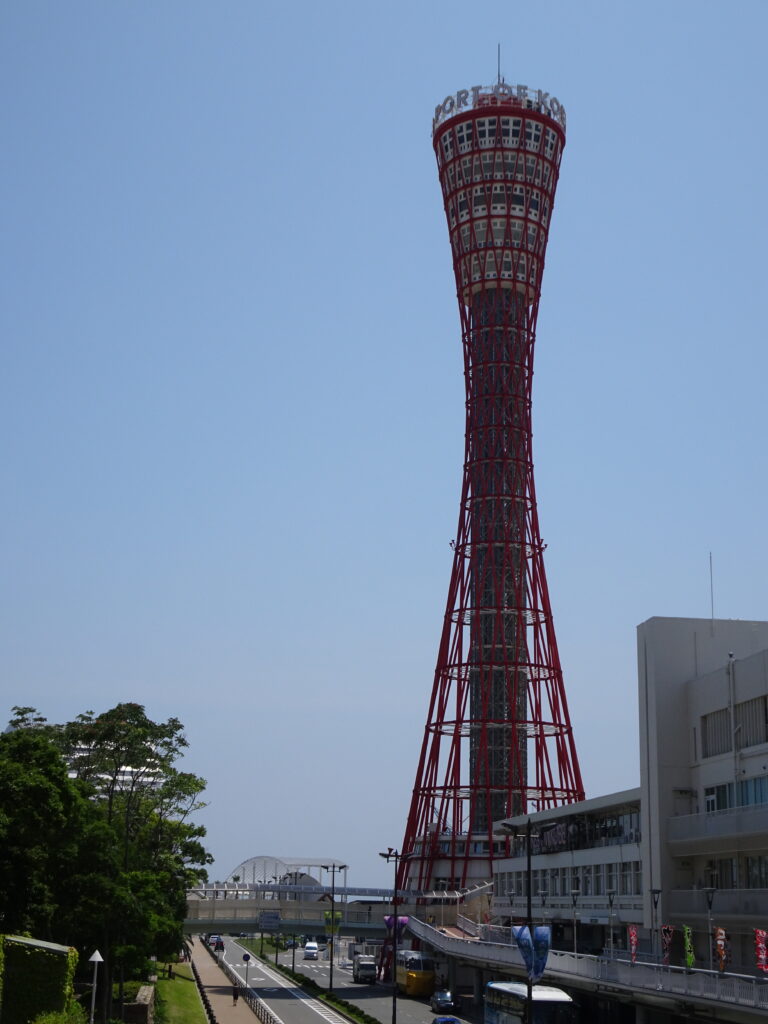
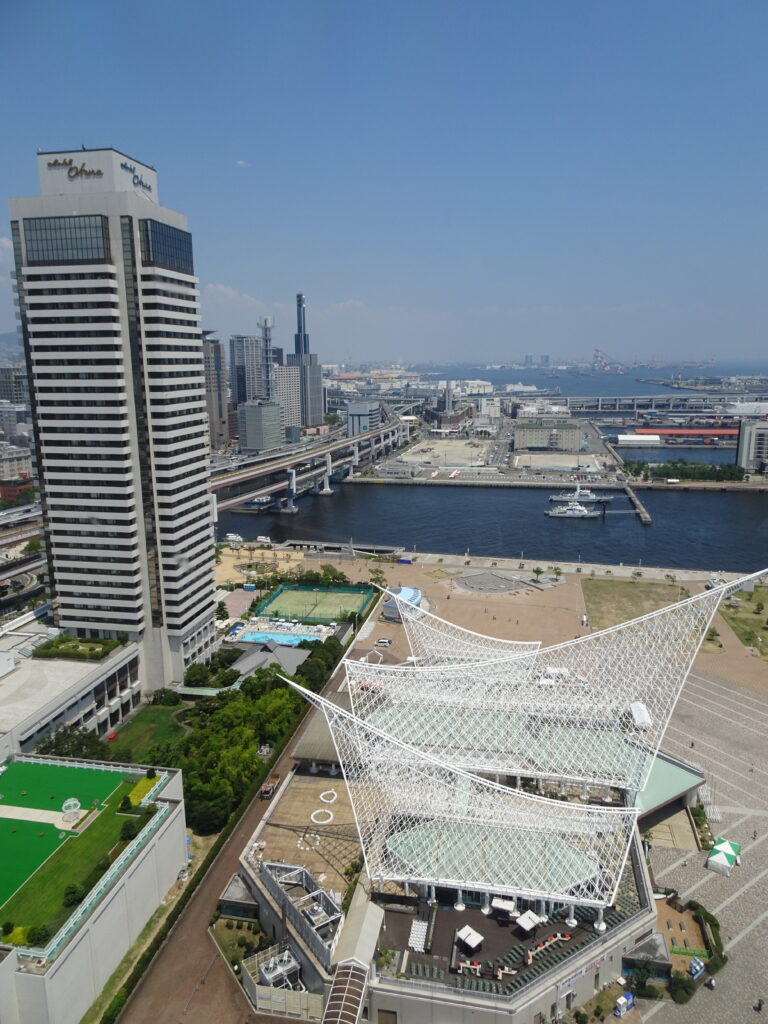
The tower recently reopened after renovations, and the observation decks have really nice views over the harbour and the city. It was very clear when we were there, so we could not only see the waterfront and the Rokko Mountains behind Kobe, but also quite far along the coast and across the bay to Osaka.
There’s also a small glass floor section, which I liked, while Stefanie decided to steer clear. We paid 1,000¥ and you can check the current opening times here.
Kobe Maritime Museum
Kobe’s identity has always been closely tied to the sea, and the Kobe Maritime Museum, which sits directly east of Kobe Tower, gives a pretty good overview of how the city developed into one of Japan’s major ports.
We already thought the building itself was worth seeing, with its white steel framework above the roof which resembles sails (or maybe waves?). The exhibitions focus on the history of Kobe Port and Japanese sea trade in general.
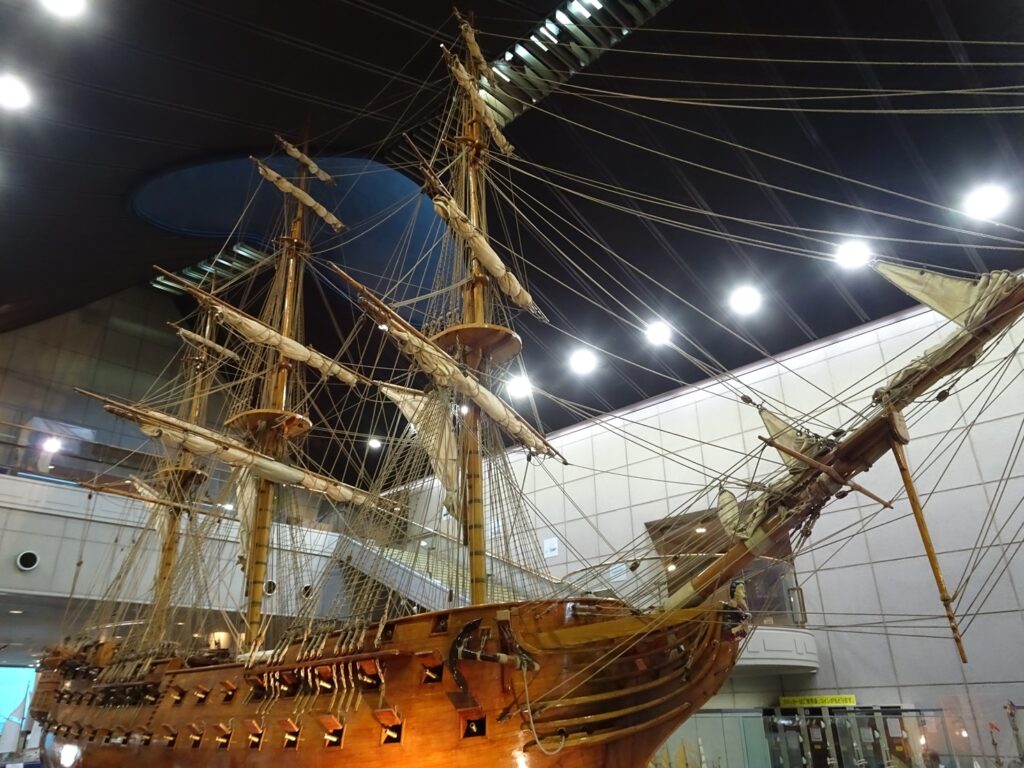
There are historic maps and documents, but also some full-size ship models, of which we found a large sailing boat from the Edo Period (1603 to 1868) most impressive. The entrance fee was 720¥ and you can check the opening times here.
Kawasaki Good Times World
Attached to the Maritime Museum is Kawasaki Good Times World, which is also worth checking out. Kawasaki Heavy Industries originally started out in Kobe as a shipbuilding company in the late 19th century.

Today, they’re probably best known for their motorcycles, but Kawasaki also builds trains, aircraft and industrial robots, and the museum reflects that variety. Inside, there are displays on the company’s history alongside full-sized vehicles, and some fun hands-on exhibits and simulators.
You can also check out the inside of the very first Shinkansen train from the early 1960s, and learn a little bit about the development of Japan’s bullet trains in general. There’s also a large motorcycle area that a lot of people seemed really excited about.
The entrance fee was 900¥ and you can check the current opening times here.
Kobe Earthquake Memorial Park
Just a few minutes north-east of the museums is one of the city’s most important memorial sites. The Great Hanshin Earthquake struck Kobe in January 1995 and killed more than 6,000 people. It was one of the deadliest earthquakes to hit Japan and it destroyed large parts of the city and waterfront.
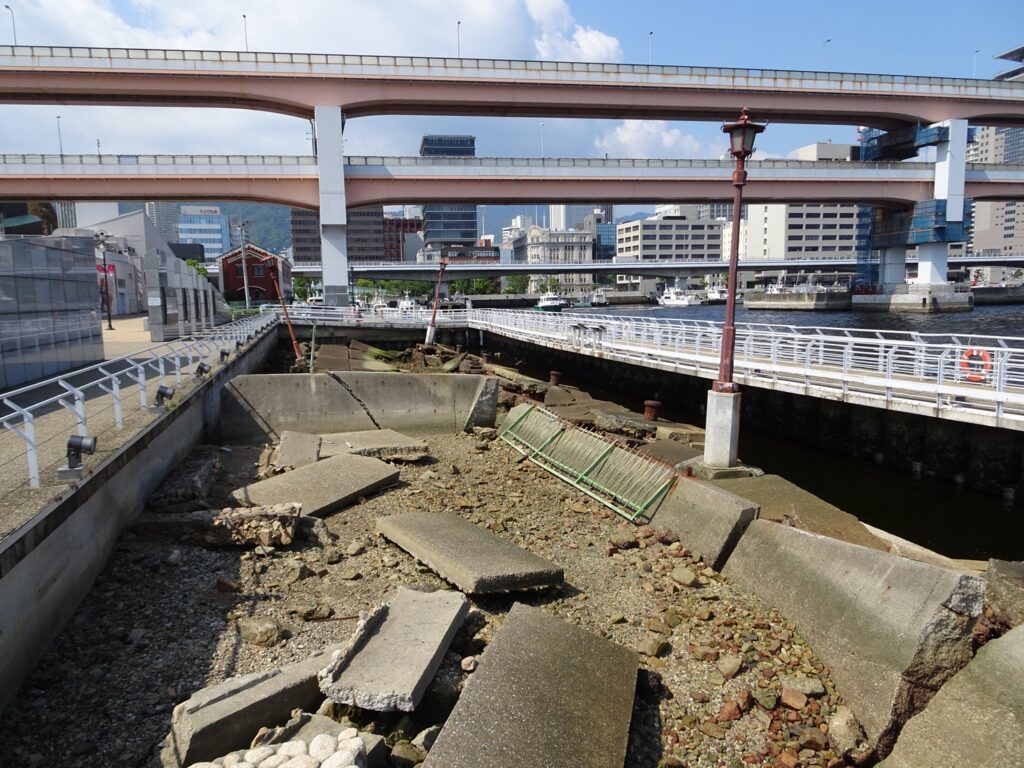
At the Earthquake Memorial Park, there are some information boards with photographs of the aftermath. What illustrated the destruction much clearer to us, however, was a preserved section of the damaged harbour, which was left exactly as it looked after the earthquake.
Kobe Beef Lunch Deal
Trying Kobe beef while you’re actually in Kobe is pretty much obligatory. Kobe beef comes from Tajima cattle raised in Hyogo Prefecture and is famous for its heavy marbling and very soft texture. The strict certification rules are also part of why it became so internationally famous.
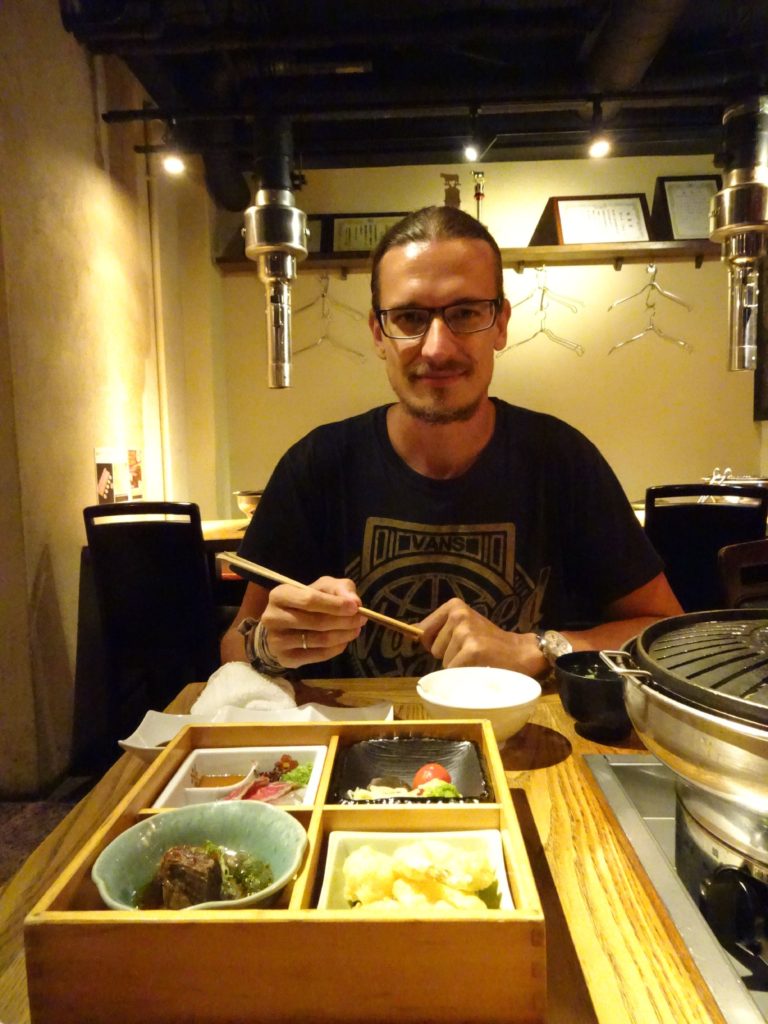
Dinner menus can get extremely expensive. A good compromise is going for a lunch set instead, which many restaurants offer at much more reasonable prices. There are lots of places around the Sannomiya and Motomachi neighbourhoods, offering lunch deals.
We tried it at Kobe Beef Yazawa Hankyu Sannomiya, and were happy with our experience. You can have a look at my guide to finding cheap Kobe beef in Kobe for more tips on how to save some money without missing out.
Hakutsuru Sake Brewery Museum
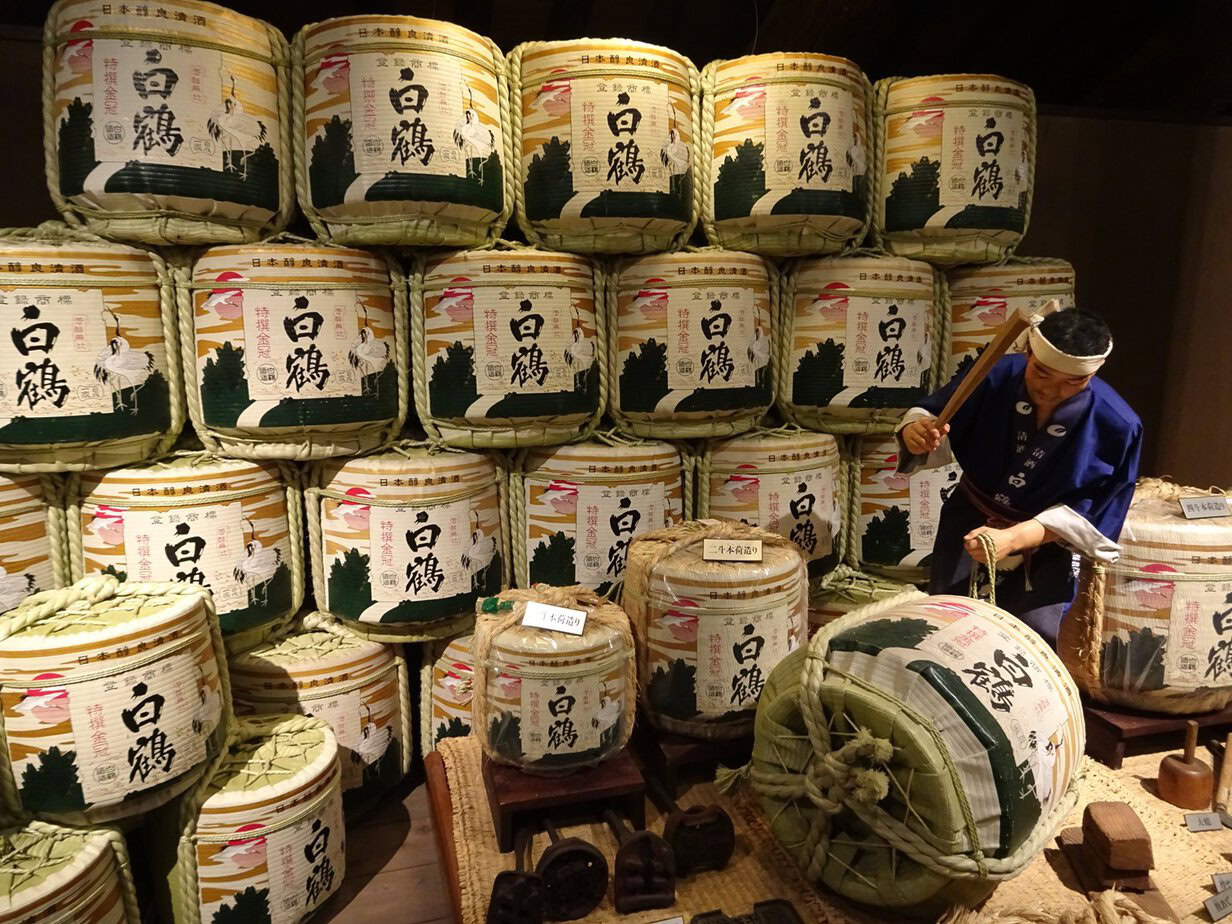
In the afternoon, I’d recommend heading east towards the Nada district, which is one of Japan’s most famous sake-producing regions. The Hakutsuru Brewery Museum is housed inside a former brewery building and explains the steps of the traditional brewing process.
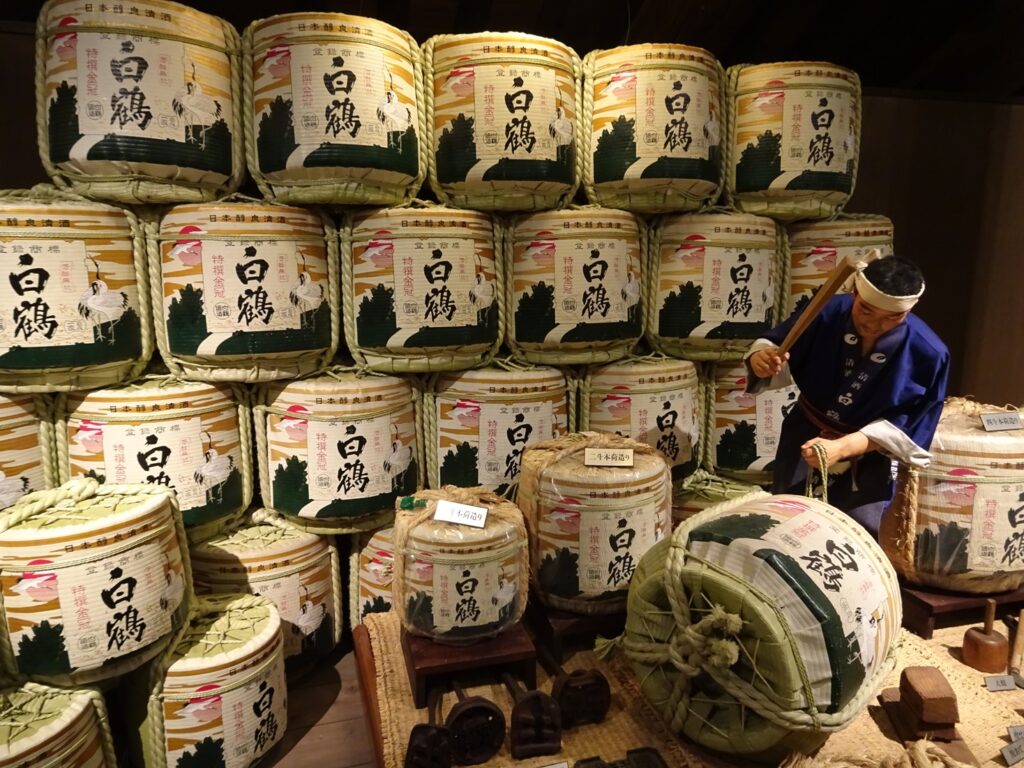
We thought the museum did a really good job of making the process understandable in a very engaging way by using life-sized dioramas of the single production steps. There’s no entrance fee and you can check the current opening times here.
The easiest way to get there from the port is by taking the Hanshin Railway Line from Nishi-Motomachi Station east to Sumiyoshi Stop (not to be confused with the Sumiyoshi JR Station further north), then walk south along Sumiyoshi Minamimachi Street for about 5 minutes.
Akashi Kaikyō Bridge Museum
The Akashi Kaikyō Bridge was completed in 1998 and connects Kobe with Awaji Island. For a long time it was the longest suspension bridge in the world with a length of 1,991m or 6,552ft., until it was surpassed in 2022 by the 1915 Çanakkale Bridge in Turkey.
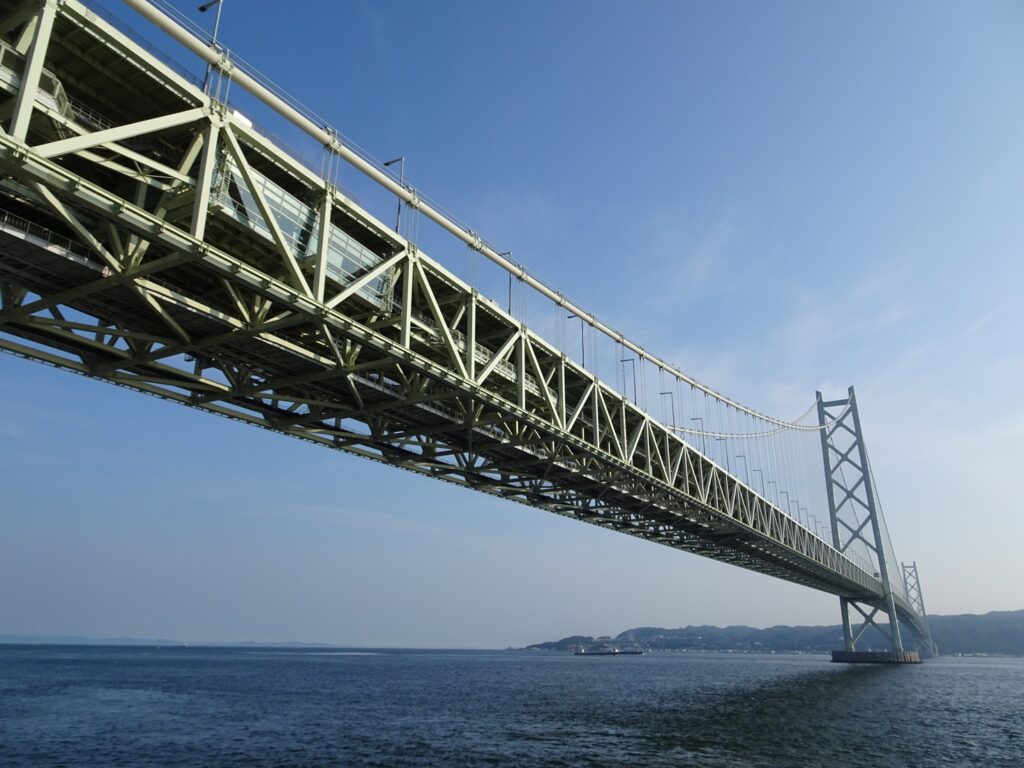
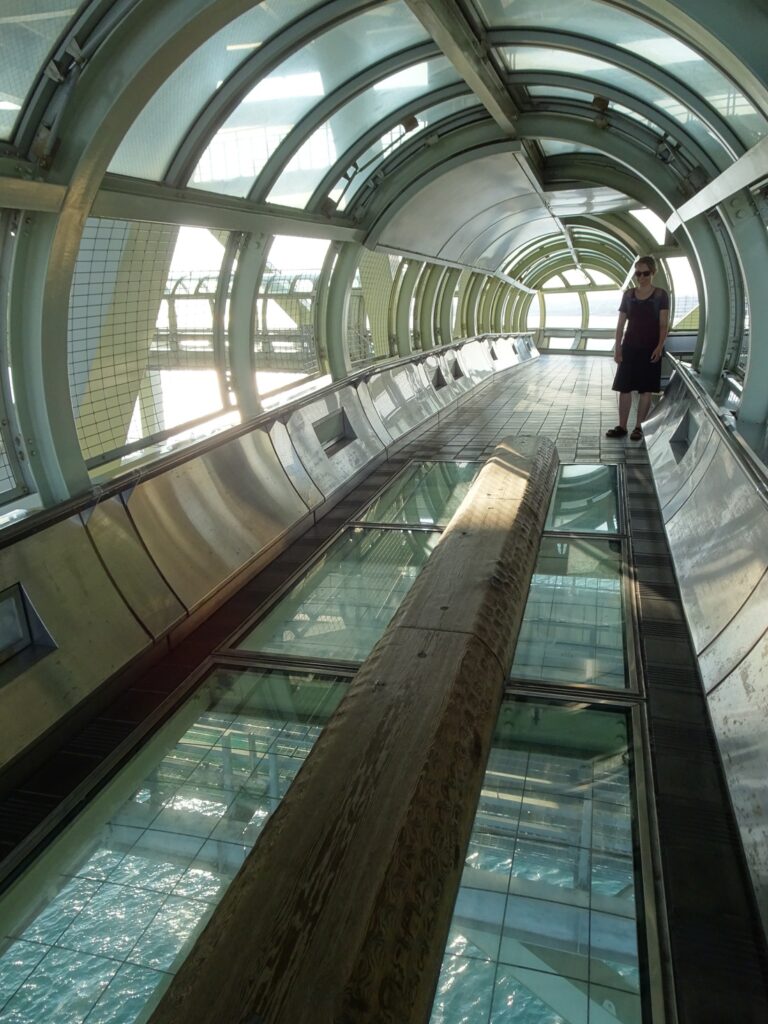
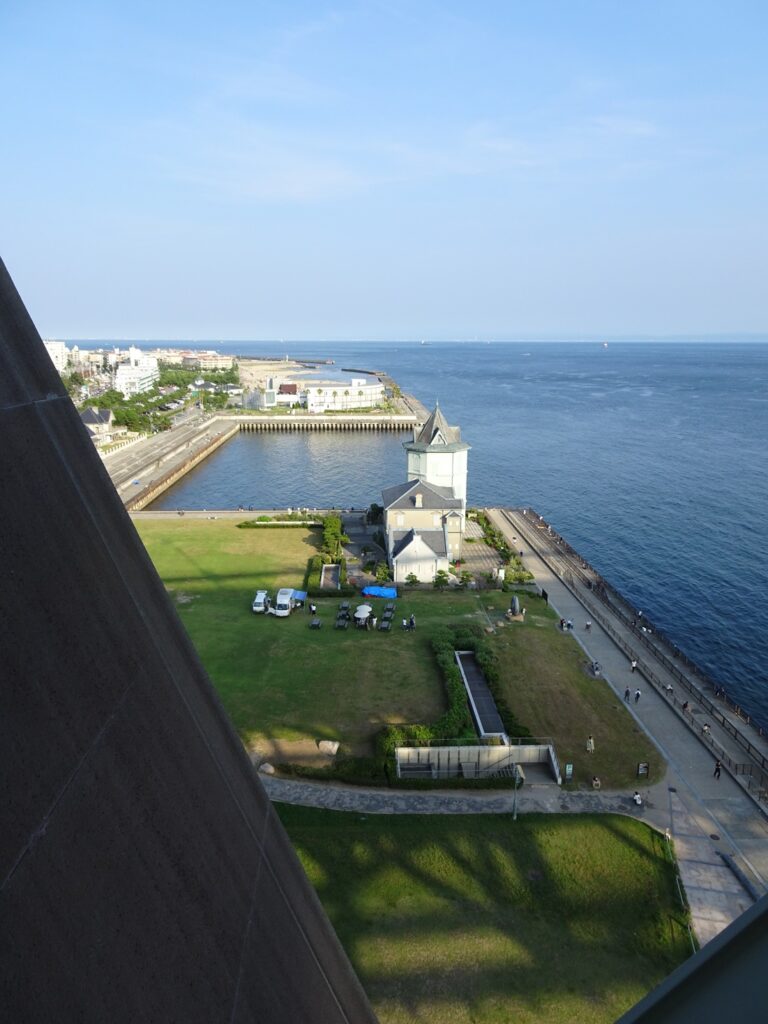
The scale of it is honestly hard to appreciate until you’re standing nearby. The towers are enormous, and watching ships pass underneath gives you a much better sense of the proportions.
There’s also a small exhibition centre with some historical and technical information and you can also walk along a tunnel inside the bridge, with some glass-floor sections. The entrance fee was 300¥ and you can check the current opening times here.
The easiest way to get there would be to take the JR Tokaido-Sanyo Line West to Maiko Station. If you’re at the Hakatsuru Sake Museum, you can catch the train at the Sumiyoshi JR Station (not the Sumiyoshi Hanshin Railway stop), which is a 20 minute walk north of the museum.
I know that it’s a bit weird to first travel east to the Nada district and then suddenly continue to the western suburbs, but it’s how we did it and it still makes the most sense for this itinerary (there would always be some backtracking involved).
Kobe Itinerary Map
You can find all the stops on my itinerary on this map of Kobe. I used red pins for Day 1 and green pins for Day 2.
Practicalities
How to Get to Kobe and Away
We were traveling long-distance on the Shinkansen, so we arrived at Shin-Kobe Station, which sits a little north of the city centre. It’s only one stop on the subway from Sannomiya, Kobe’s main downtown district, and if you’re following this itinerary, it’s actually a great place to start since Nunobiki Waterfall is only about a ten-minute walk from the station.
For most regional journeys Sannomiya Station is better, however. It’s the city’s main transport hub and is served by JR, Hankyu, Hanshin and the subway. There are frequent trains to Osaka (around 25 minutes), Kyoto (around 50 minutes) and Himeji (around 40 minutes).
How to Get Around Kobe
Kobe’s centre is fairly compact and many of the places we visited, like Kitano-cho, Ikuta Shrine, Chinatown and the harbour were within walking distance of each other.
For longer journeys, like the one to the Hakutsuru Sake Brewery Museum and the Akashi Kaikyō Bridge, we used local trains. The JR, Hankyu and Hanshin railway lines all run east-west through the city and make it fairly easy to travel between the main neighbourhoods along the coast.
If you’re planning to follow this itinerary, I’d recommend getting an IC card, like the JR West ICOCA card, if you don’t already have one. That way, you can simply tap in and out instead of buying individual tickets each time.
We found that much more convenient than trying to figure out the correct fare for every journey. When we visited, we could of course use them on local JR trains (no Shinkansen!), but also on the private train lines and the subway (but obviously check the current usage area beforehand).
Where to Stay in Kobe
We stayed in the good-value Hostel Yume-Nomad a little west of Downtown Kobe. Otherwise, there are plenty of midrange hotels (like Hotel Kitano Plaza Rokkoso or Hotel Crowne Plaza Kobe) around. A well-rated luxury choice would be The Orient.
See Also
Exploring Fascinating Kitano-Cho, the Foreign Merchant Quarter of Kobe, Japan
The Ultimate Guide to Finding Cheap Kobe Beef in Kobe, Japan