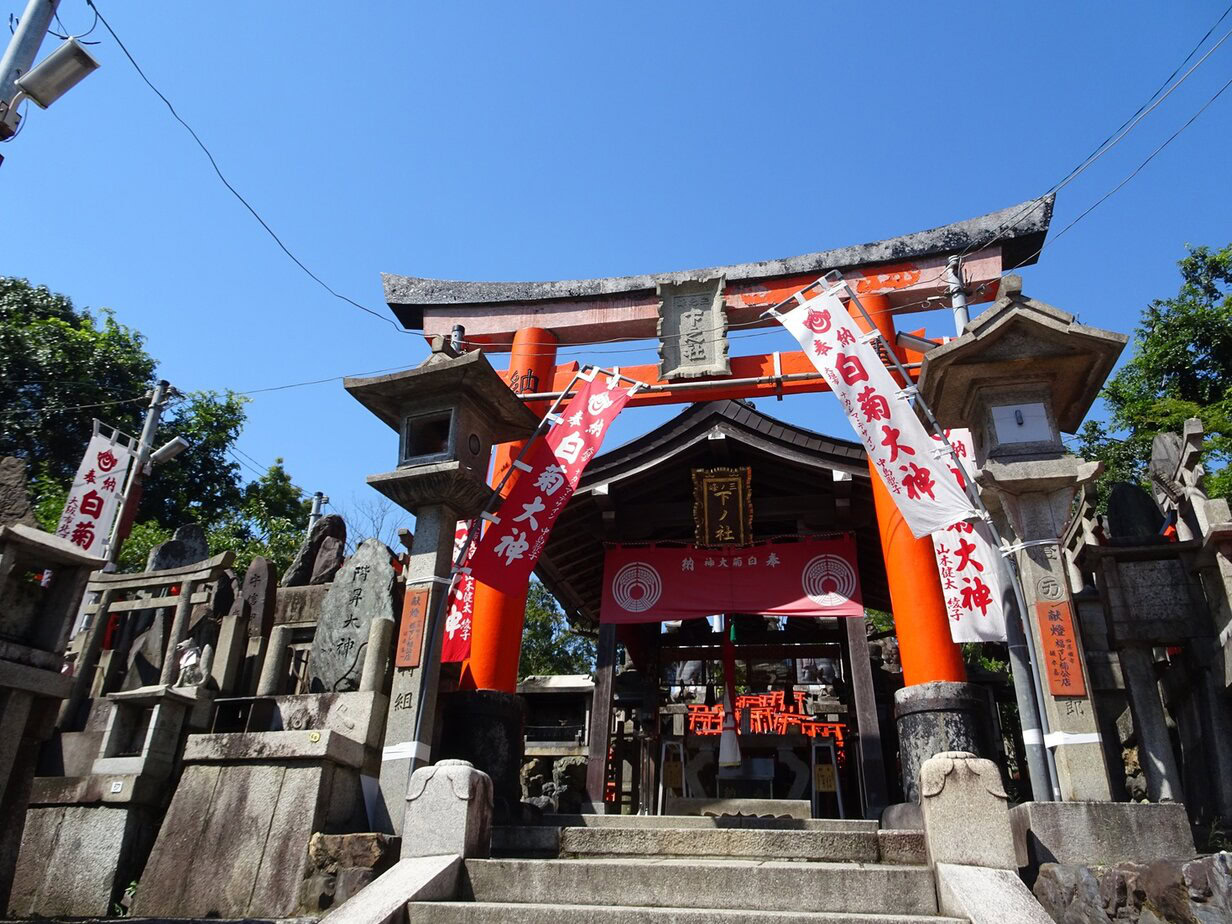
Kyoto is hands-down one of my favourite cities in the world, but that also seems to be the case for a lot of other people, so some of its more famous temples and shrines can get really crowded. After our off-the-beaten-path adventures on Shikoku, that took some getting used to.
The seemingly endless rows of red gateways at the beautiful Fushimi Inari Shinto Shrine are one of the most popular places in the city, but with a little planning, we still managed to avoid the worst of the crowds and could enjoy the amazing atmosphere of this place in peace.
Here’s everything you need to know about visiting this unique shrine.

This post may contain affiliate links, and I might earn a small commission at no additional cost to you. For more info, click here.






What Is Fushimi Inari Taisha?
This is the head shrine of Inari Ōkami, a Shinto deity, which is associated with rice, prosperity and business success. Inari shrines are pretty common all over Japan, and we came across lots of them on our trip, but this 8th-century shrine in South Kyoto is the main one, and by far the most elaborate.
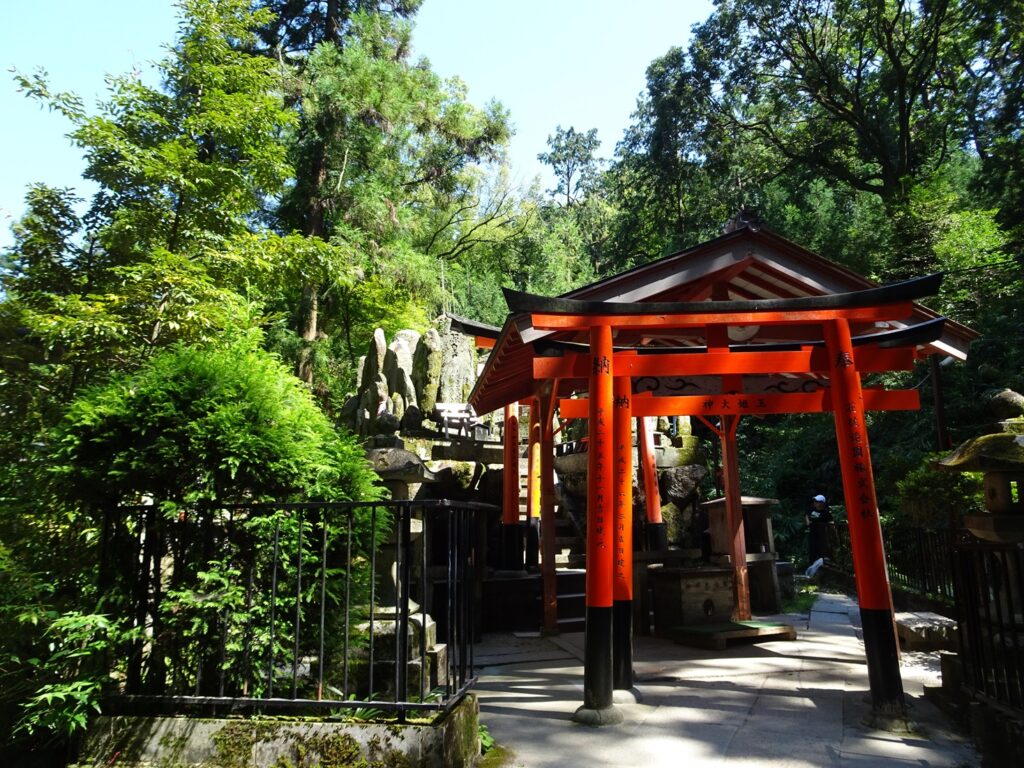
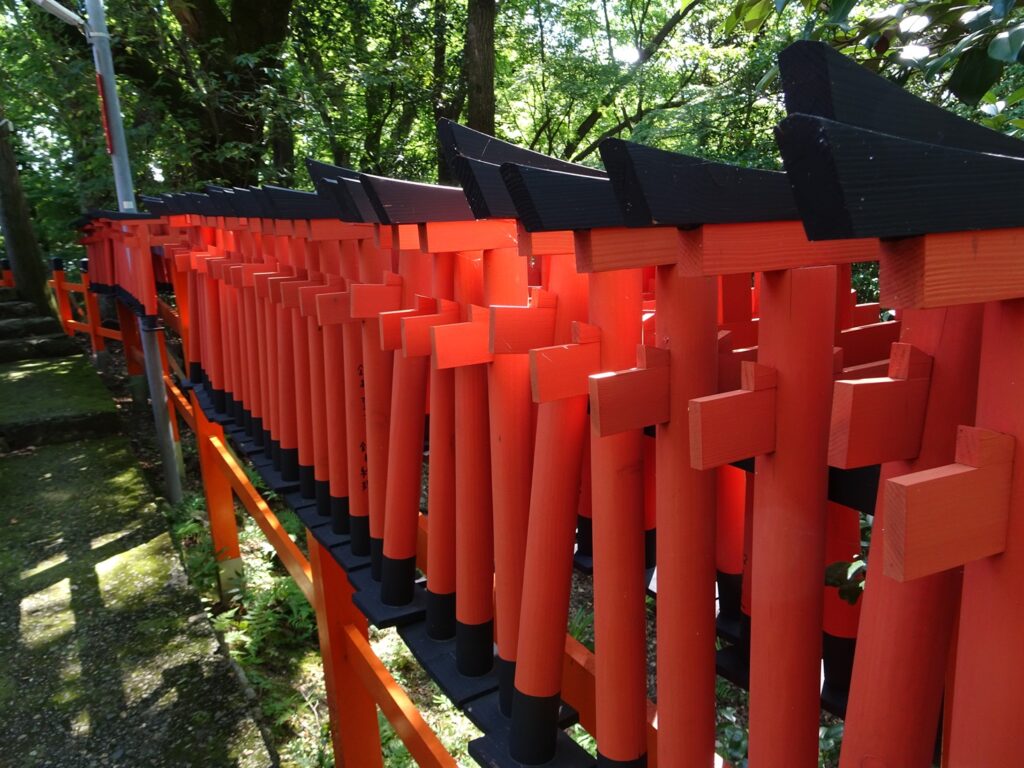
What sets Fushimi Inari Taisha apart from other Inari Shrines, are the thousands of vermilion torii (gates) that run up the wooded slopes of Mount Inari forming tunnels that just go on and on. It’s said that there are more than 10,000 torii, but that number also includes the many small model gateways on the summit.
The gates (both the big and small ones) are donations to the shrine by both businesses and sometimesbig individuals. They’ve been donated over the past 400 years, either as a thanks for past successes or to ask for future ones. The writing on the back of each torii is the name of the person who donated it.
Best Hotels in Fushimi for an Early Start
Budget: Urban Hotel Kyoto
Midrange: Rakuyado Kyotofushimi II
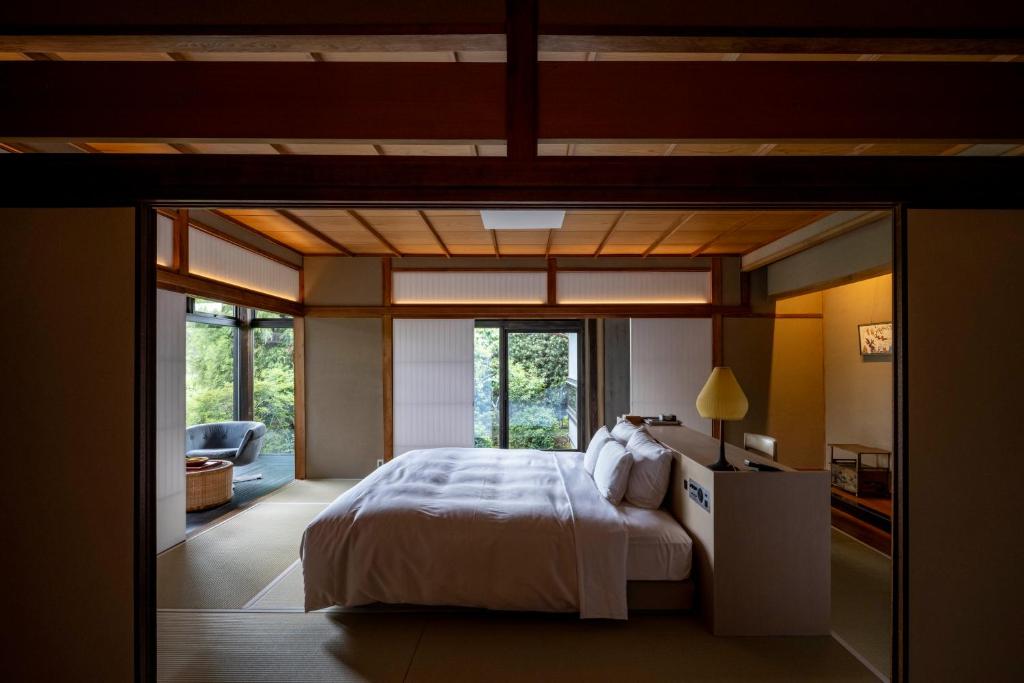
Luxury: Momoyama Onsen Tsukimikan (pictured)
.
Guided Tours of Fushimi Inari Shrine
If you want to learn a bit more about the place or just want the company of a good local guide, there are tons of guided tours of the Shrine and its torii available. You can have a look below at some well-rated options.
What to See at the Shrine
The Main Shrine
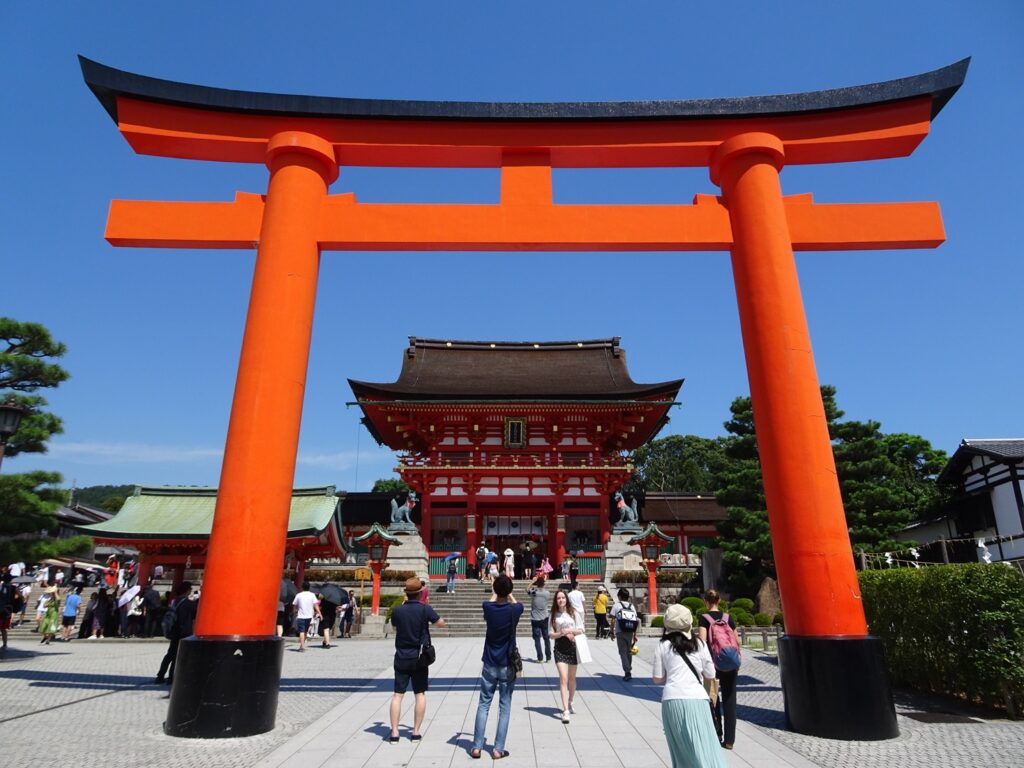
Coming from the JR Station, the main shrine is the first part of Fushimi Inari Taisha you’ll see. Even if you’re mainly here for the famous torii gates, I recommend spending at least a few minutes checking out the pretty shrine itself.
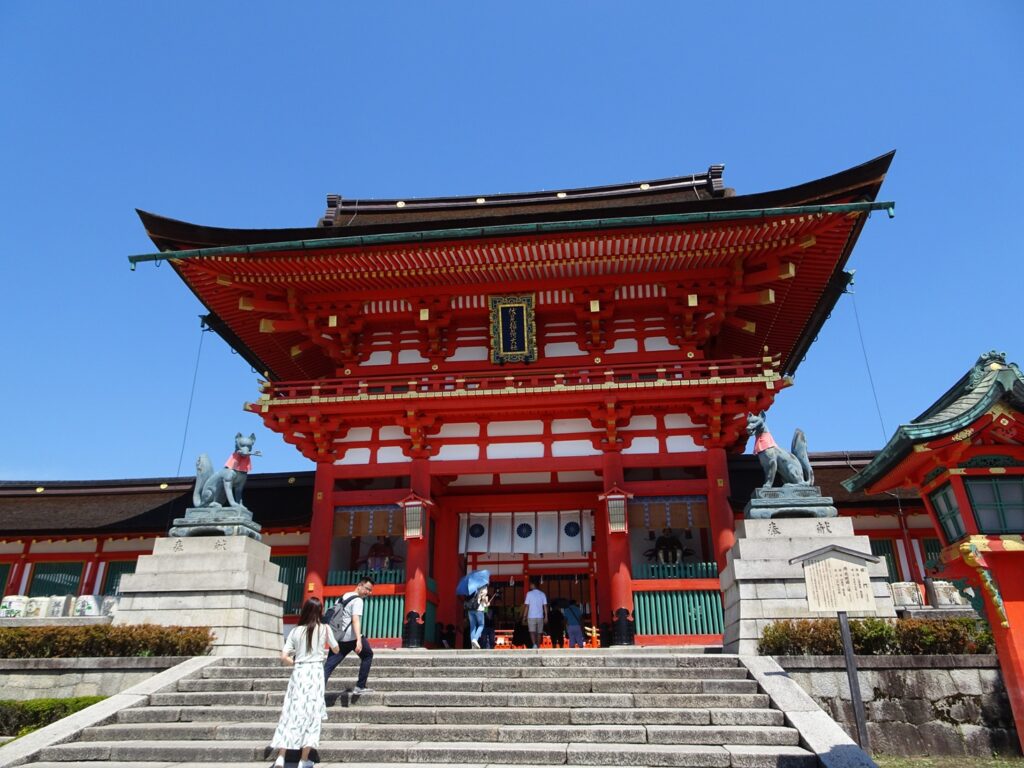
For me, the most impressive buildings here are the Haiden (prayer hall) and the Rōmon (the main entry gate). The 16th-century Honden (main shrine building) is also pretty, but a lot more modest than some of the other structures, which was actually the case for many Shinto shrines we visited in Japan.
The shrine is still an active place of worship, and most people we met here were actually praying or writing wishes on little wooden plaques. When we arrived it was quite peaceful, but when we left in the late morning it was already very crowded.
Senbon Torii and the Hike up the Mountain
If you’re visiting early in the morning to beat the crowds, it’s probably best to press on to the torii and check out the shrine afterwards. Directly east of the main shrine, the path leads up some stairs and straight into the first tunnel of red gates, which winds its way up the wooded slope of Mount Inari.
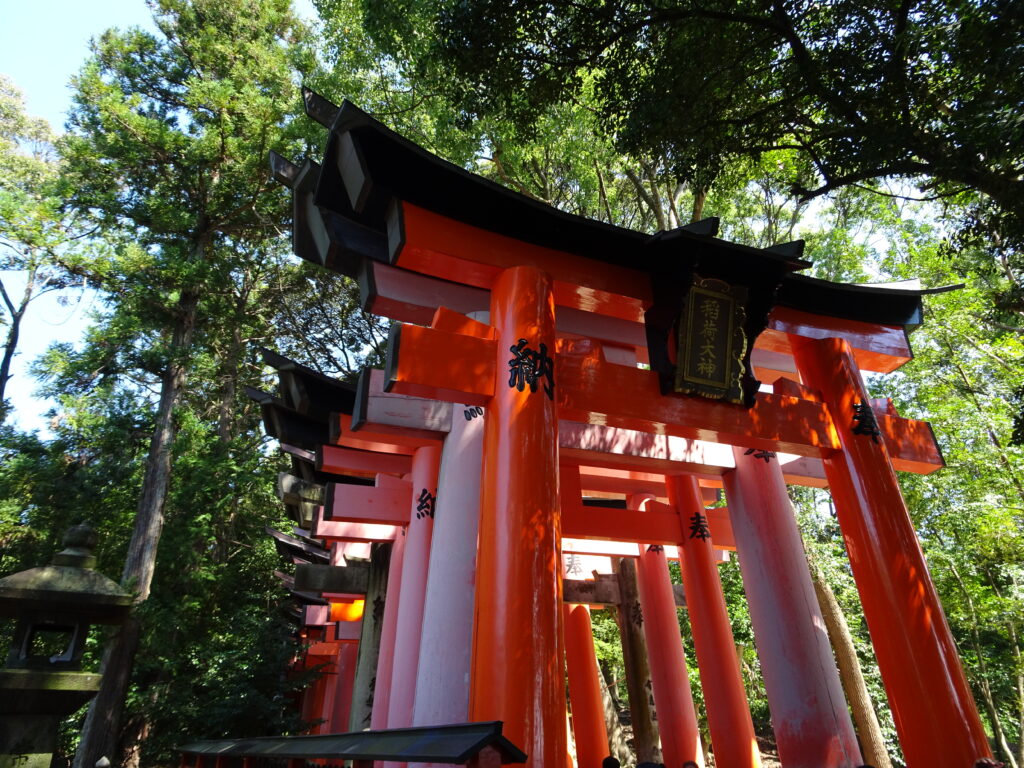
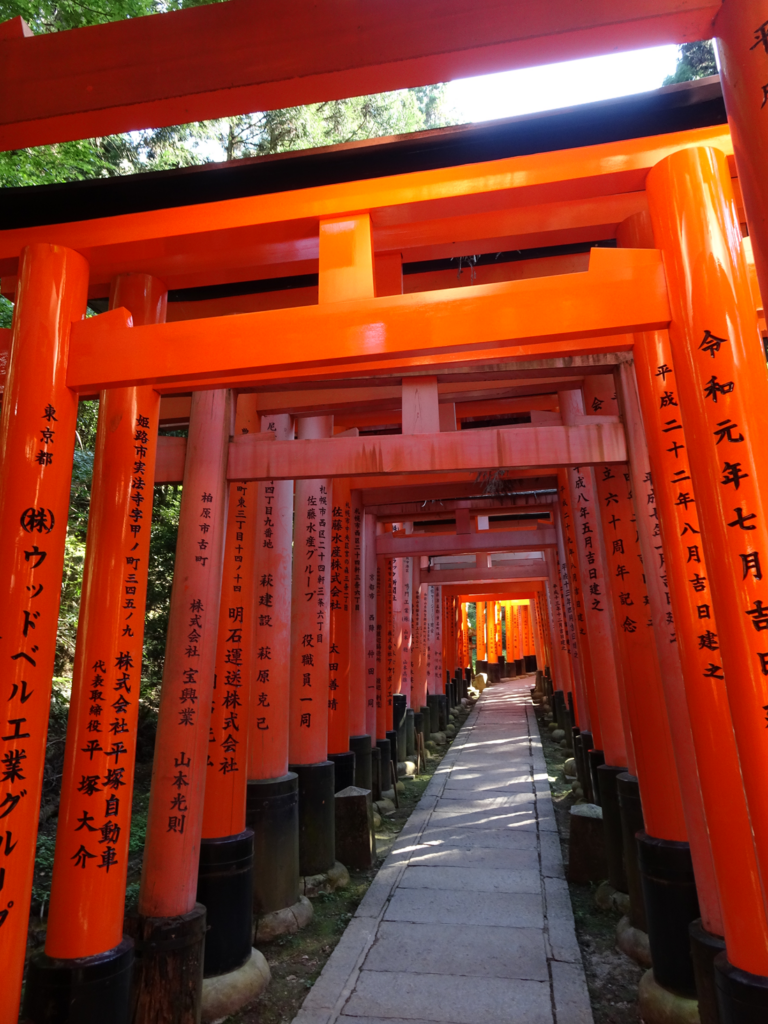
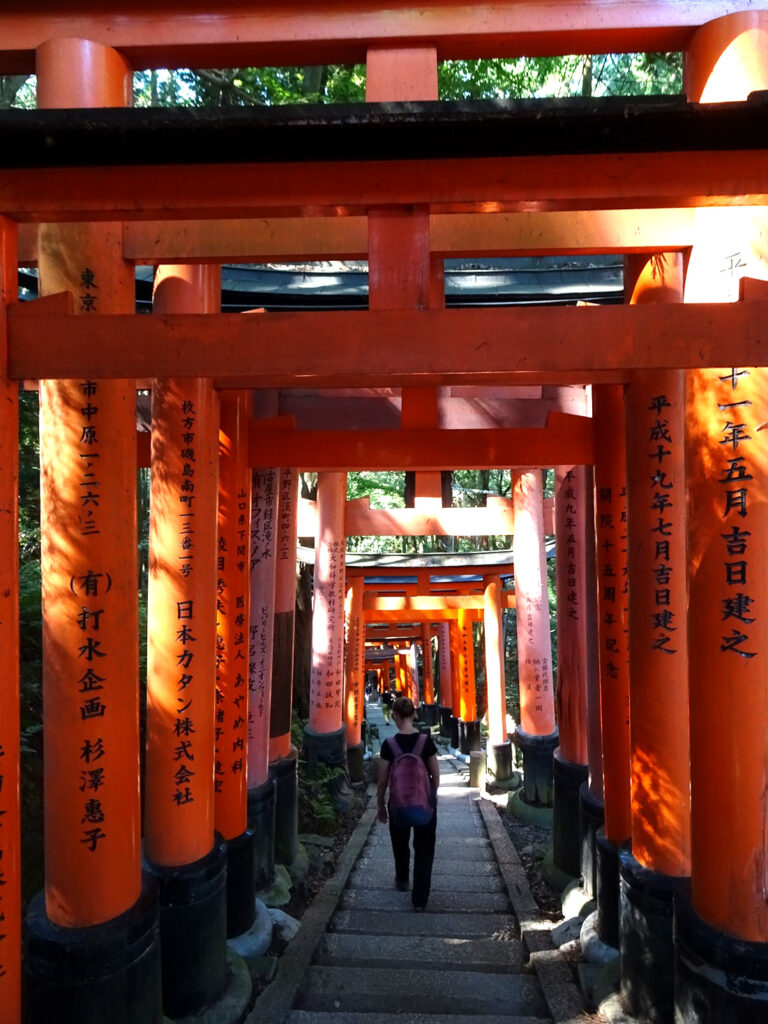
At the beginning of the Senbon Torii section, there were already quite a few people crowding the area and taking pictures, but the higher we climbed, the fewer they became and after a while we had some parts to ourselves, especially after we passed the small Okuno-In Prayer Building at the end of the first tunnel.
After another much quieter climb of 10 minutes or so, we reached the pretty Kodamagaike Pond, which is connected to an interesting legend. It’s said if you’re looking for someone who is lost, you’re supposed to clap your hands in front of the pond, and you’ll find the person in the direction the echo is coming from.
Shortly thereafter, you’ll come to an intersection, where you have to turn right to continue climbing to the summit. There are lots of small shrines with nice forest backdrop along the way, and the torii walkways were so much more peaceful here than further down the mountain.
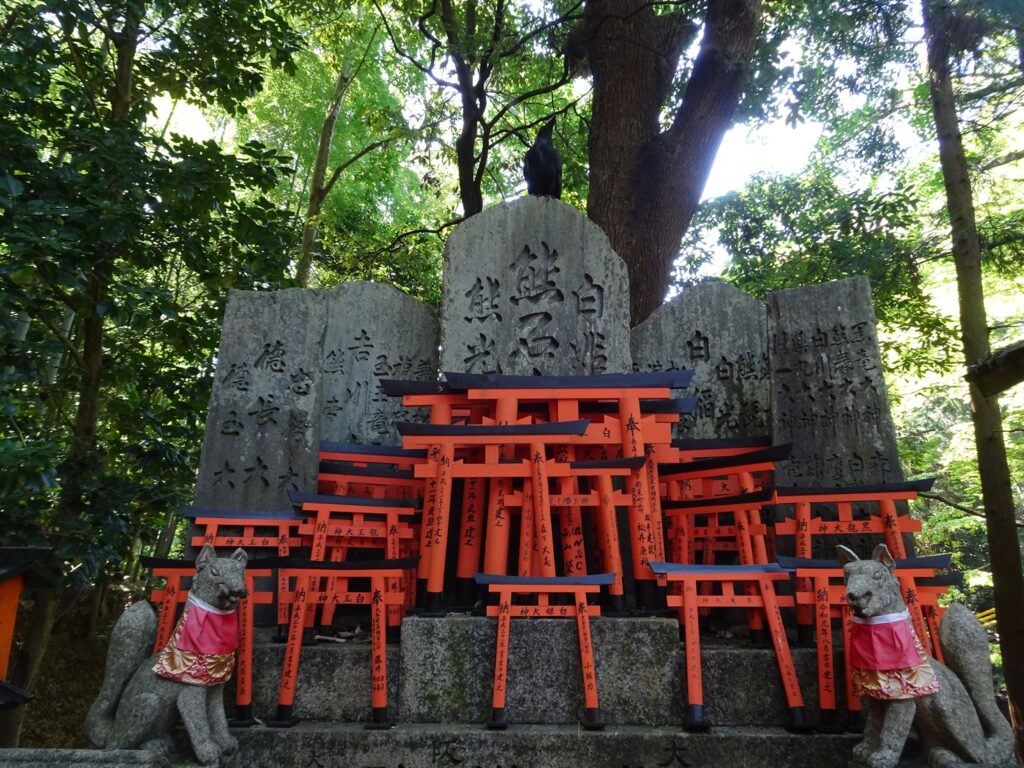
Something else we noticed basically everywhere in the complex were the little stone statues of foxes. Foxes (Kitsune) are considered the sacred messengers of Inari. Some of them hold little keys in their mouth, which are associated with unlocking rice storehouses, which in turn are considered a symbol of prosperity.
The Shrines Atop Mount Inari
The next intersection has a great view over southern Kyoto. We met some other people here who continued straight, so we turned right and started circling the summit of Mount Inari counter-clockwise instead. That way, we were completely alone for the most part of the loop.
Again, there are lots of shrines along the way, which are bigger and much more frequent than in the lower part of the climb. If you also go counter-clockwise, you’ll pass Sannomine at the lowest of Inari’s three summits first.
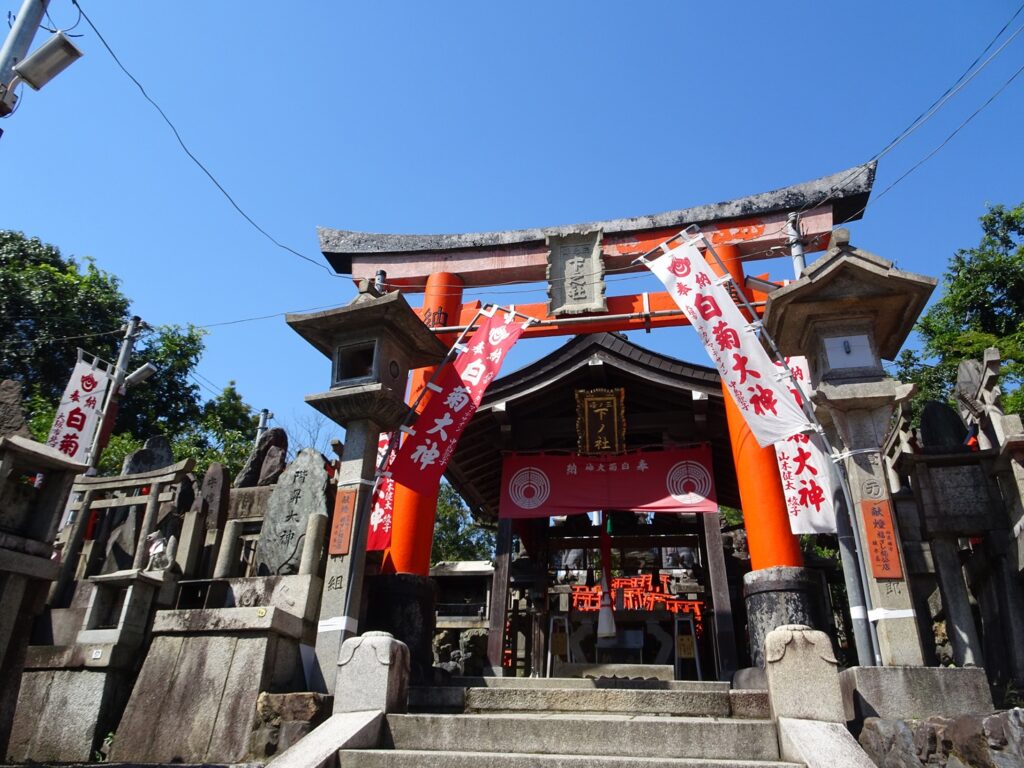
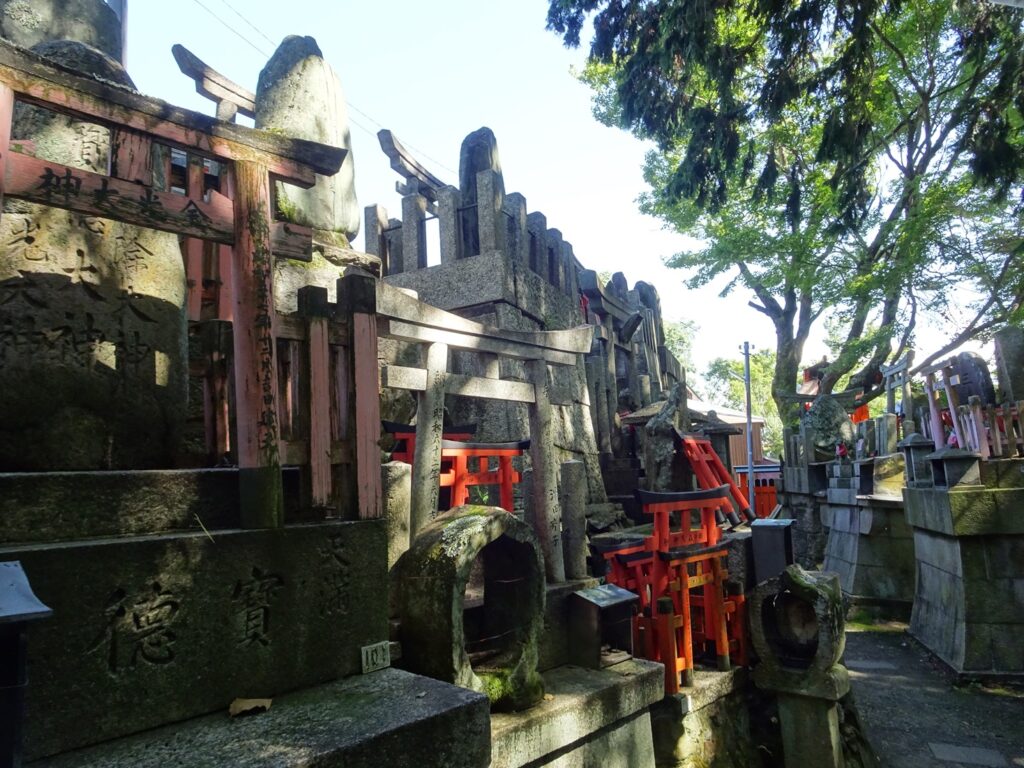
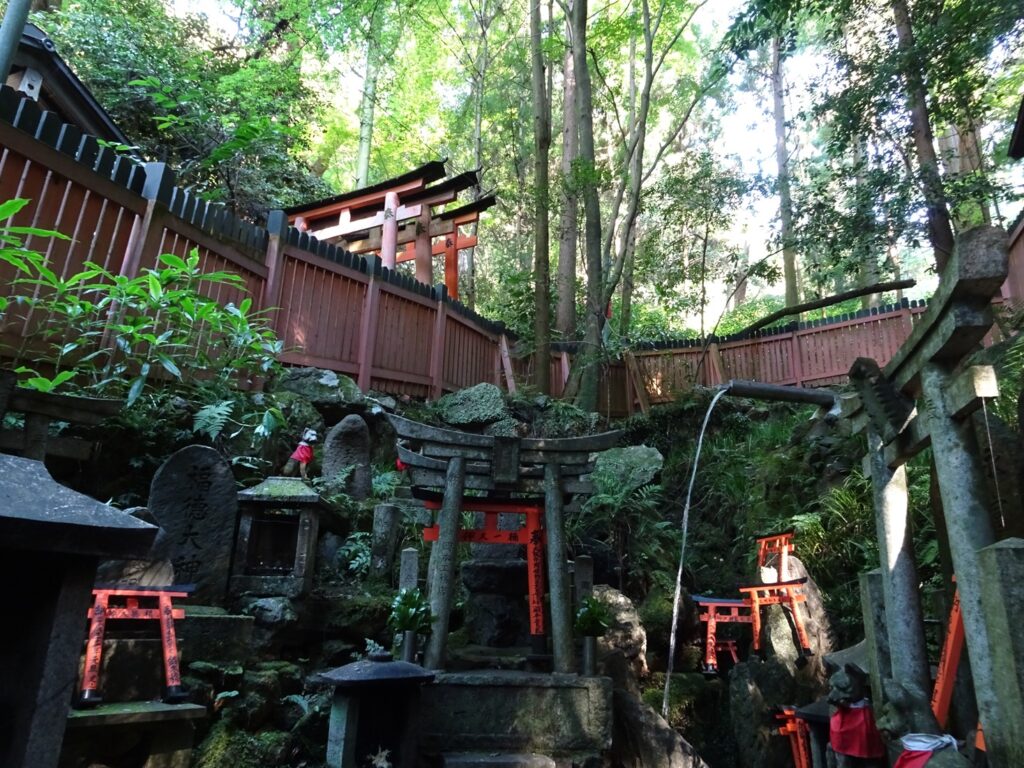
Afterwards, you’ll come to Ainomine Shrine, which is dedicated to the deity Ise no Okami and has an interesting torii with a decoration of two hands in prayer. The third shrine on the loop is Ninomine, which sits at the middle summit.
Finally, you’ll reach Ichinomine, which is the shrine at the highest summit of Mount Inari (233m or 765ft.). This place had an even larger amount of both wooden and stone torii of all sizes than we had seen anywhere else in the entire complex.
Afterwards, you’ll have to stick to the left to continue the loop via the cute Mitsurugi Shrine. Here we especially liked the small Yakiba no Mizu Well, which once again was surrounded by lots of small gateways and fox statues.
The Way Back Down
After passing the pretty Gozendani Hohaisho prayer area, you’ll come to the intersection where you started the loop. After descending the way you came for a bit, you can continue straight instead of turning left, to walk a different way down the mountain.
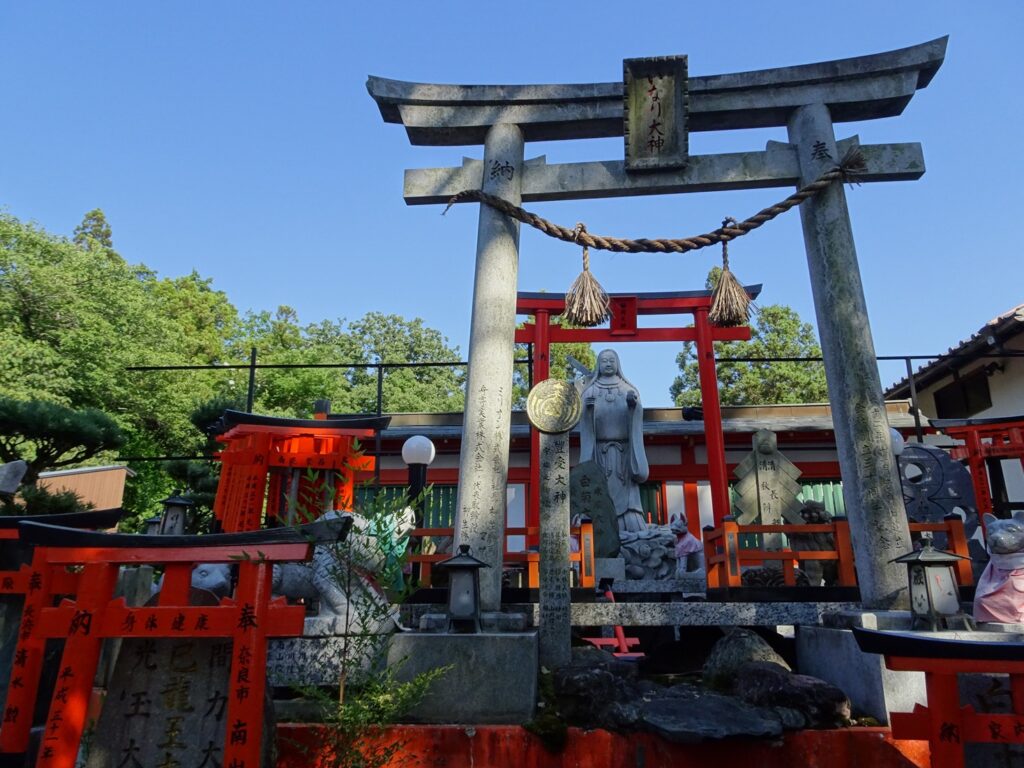
At the very foot of the hill we came across another pretty shrine. The Hachirei Shrine has a statue of the kami Ukanomitama on an octagonal pedestal, which is surrounded by the animals of the zodiac sdeitigns. Here, you can turn south to enter the main shrine again or head back to the JR Inari Station.
Fushimi Inari Hike Map
You can find all the places I’ve described above and the track of the hike we did in this map of Mount Inari.
How to Avoid the Crowds
When to Go
This is one of Kyoto’s main tourist attractions so it can get very busy. That said, we managed to avoid the worst of the crowds with a bit of planning and some good timing. First of all, it’s best to come either early in the morning (around sunrise) or late in the afternoon to avoid the biggest rush.
Don’t worry if the timing doesn’t work out perfectly, or if you don’t want to rise too early. We came a little later in the morning and were still fine (although the main shrine area was very full when we passed it again on our way back).
Another good idea is to go mid-week and to avoid Fridays and weekends, where it’s bound to be more busy. Avoiding Japan’s main school holidays also helps.
Visiting Fushimi Inari After Dark
It’s also worth noting that the shrine is open 24/7 and at least the lower parts of the walkways are illuminated. Night photos of the torii walkways look super atmospheric, and it’s definitely something I’d like to do on my next visit to Kyoto.
Lesser Visited Parts of the Shrine
Even if it’s a little busier at the main shrine or at the lower part of the walkways (which was the case for us) you shouldn’t be discouraged, as there are still lots of quieter parts of the shrine area. Basically, it got less and less crowded the higher we climbed.
Finally, we were glad to have walked the loop around the upper shrines in a counter-clockwise direction. Just watch the direction that most people choose and pick the opposite one (which is a rule we tend to follow whenever possible and which almost always helps us escape the crowds).
Practicalities
Is There an Entrance Fee?
No, visiting Fushimi Inari Taisha is completely free.
How Long is the Mount Inari Hike?
The loop we walked and which I’ve described above is 4km or 2.5 miles.
How Much Time Do You Need?
This really depends on how thoroughly you want to explore the area. A short visit to the main shrine and the lower parts of the torii pathway shouldn’t take more than 20 to 30 minutes.
That said, if you want to leave the crowds behind or see more of the temple complex, you need to plan more time. We spent almost two hours exploring the shrine buildings and walking the loop.
How to Get to Fushimi Inari Taisha
The shrine is very easy to reach from central Kyoto. From the main station, you just hop on the JR Nara Line and get off one stop later at Inari Station. The whole trip only takes about 5 minutes. The shrine entrance is right across the road from Inari Station. The connection is covered by the JR Pass.
Where to Stay Near the Shrine
Picking a hotel near the shrine is a good idea if you want to get a really early start to beat the crowds, or if you want to visit at night without a long way back to your hotel. Have a look at some choices below.
Best Hotels near the Shrine for an early Start
Budget: Urban Hotel Kyoto
Midrange: Rakuyado Kyotofushimi II
Luxury: Momoyama Onsen Tsukimikan (pictured)
.
Are there Restaurants in the Area?
There are plenty of restaurants and cafés along the Mount Inari loop. We didn’t stop at any of them, as we just had had breakfast, but there’s no chance you’ll go hungry when you’re visiting the shrine.
See Also