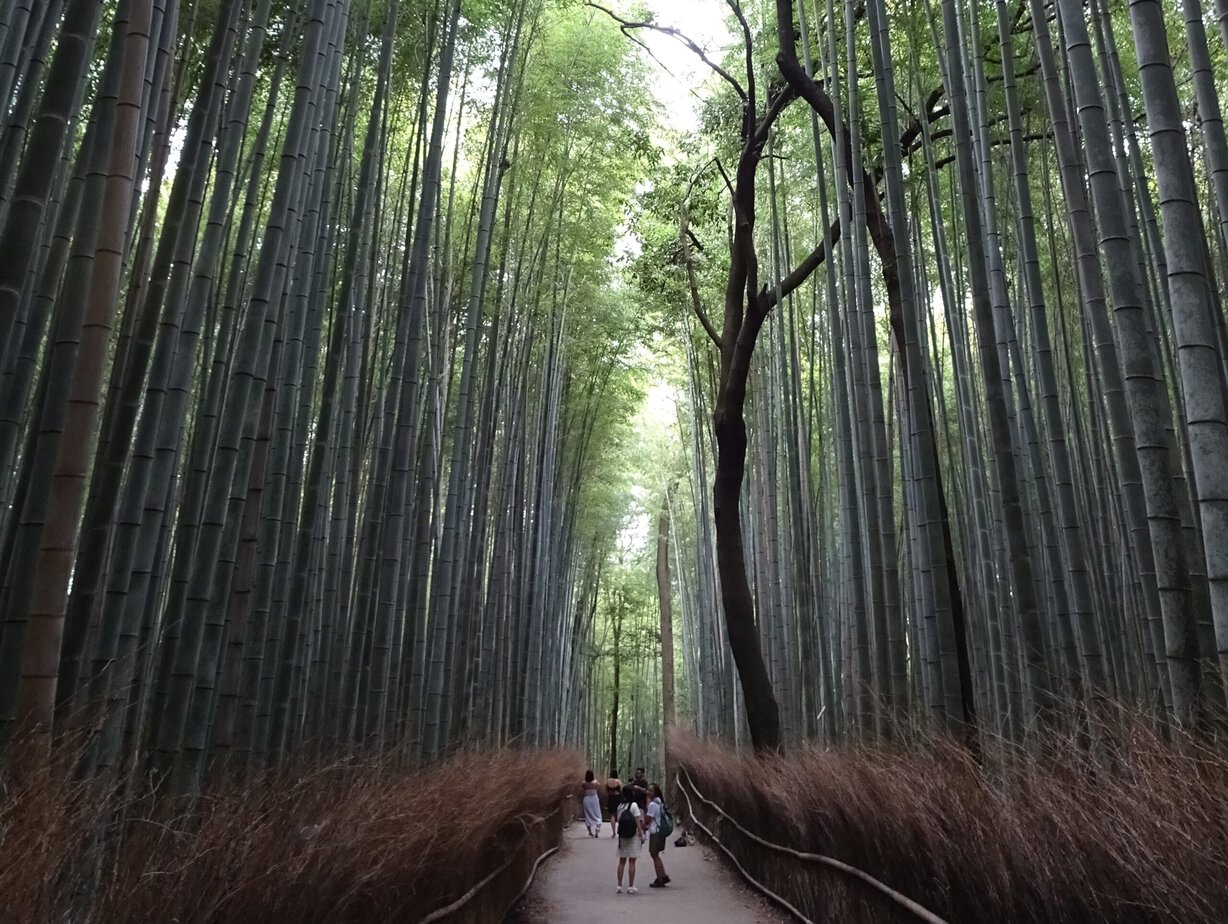
Arashiyama district sits right at the foot of Kyoto’s western mountains, and the combination of old wooden houses and pretty temples on the forested slopes makes it one of my favourite districts in Kyoto.
Granted, it can get a bit crowded, but mainly because of the famous Bamboo Grove. Outside of that very small area, the neighbourhood is much more laid-back and we met significantly fewer foreigners here than we did in Higashiyama or Shimogyō.
Here’s everything you need to know about visiting this pretty district by the Katsura River.

This post may contain affiliate links, and I might earn a small commission at no additional cost to you. For more info, click here.



Guided Tours of Arashiyama
If you want to learn a bit more about the place or just want the company of a local guide, there are tons of guided tours of the Arashiyama and the bamboo forest available. You can have a look below at some well-rated options.
What to See and Do in Arashiyama
The district was already a popular getaway for nobles during the Heian Period (794 to 1185), when Kyoto was still the imperial capital of Japan.
Hardly any buildings from that time still survive, but the majority of historic machiya (town houses) in this neighbourhood date to the Meiji Period (1868 to 1912).
Best Hotels in Arashiyama for an Early Start
Budget: Mulan Hostel
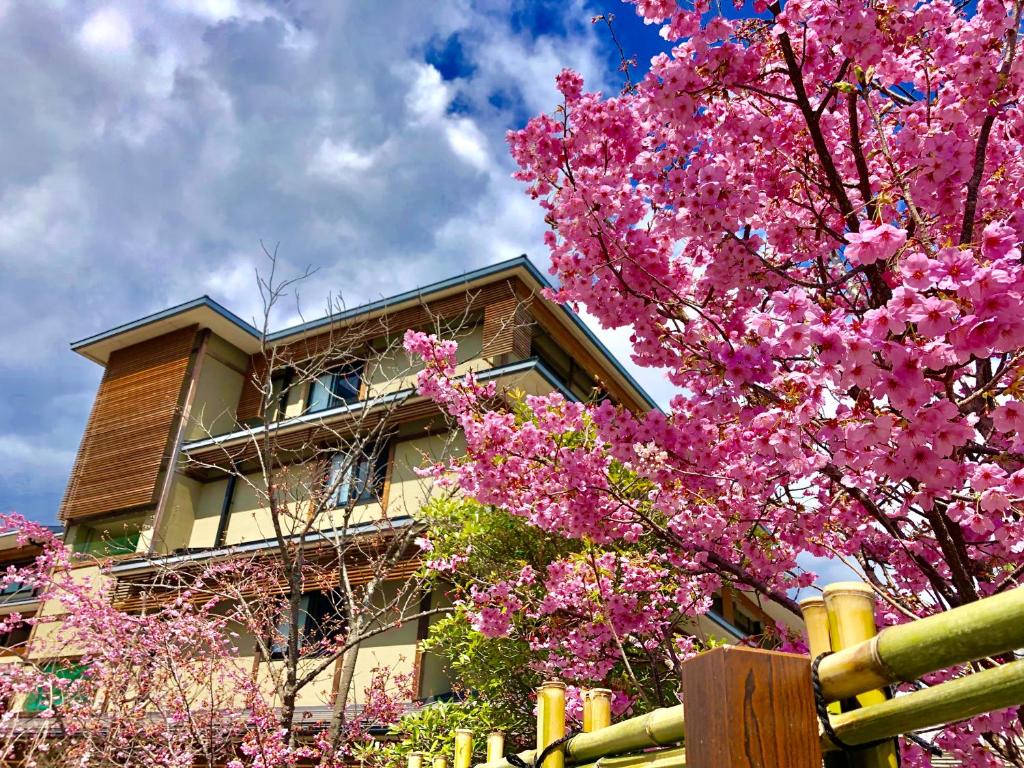
Midrange: Kadensho Arashiyama Onsen (pictured)
Luxury: Arashiyama Onsen Ryokan Togetsutei
.
Arashiyama Bamboo Grove
This bamboo grove is easily the most famous sight in Arashiyama, which also means that it’s the busiest place in the neighbourhood. To be honest, I think there are bigger and more impressive bamboo forests in the country, which don’t get nearly as crowded.
That said, it’s still a beautiful place and well-worth checking out when you’re in the neighbourhood. It’s most atmospheric when it’s quiet enough to hear the wind bumping the bamboo stalks together. Japanese people love their lists, and this is actually one of the “100 Soundscapes of Japan”, which were selected in 1996 by Japan’s Ministry of the Environment.
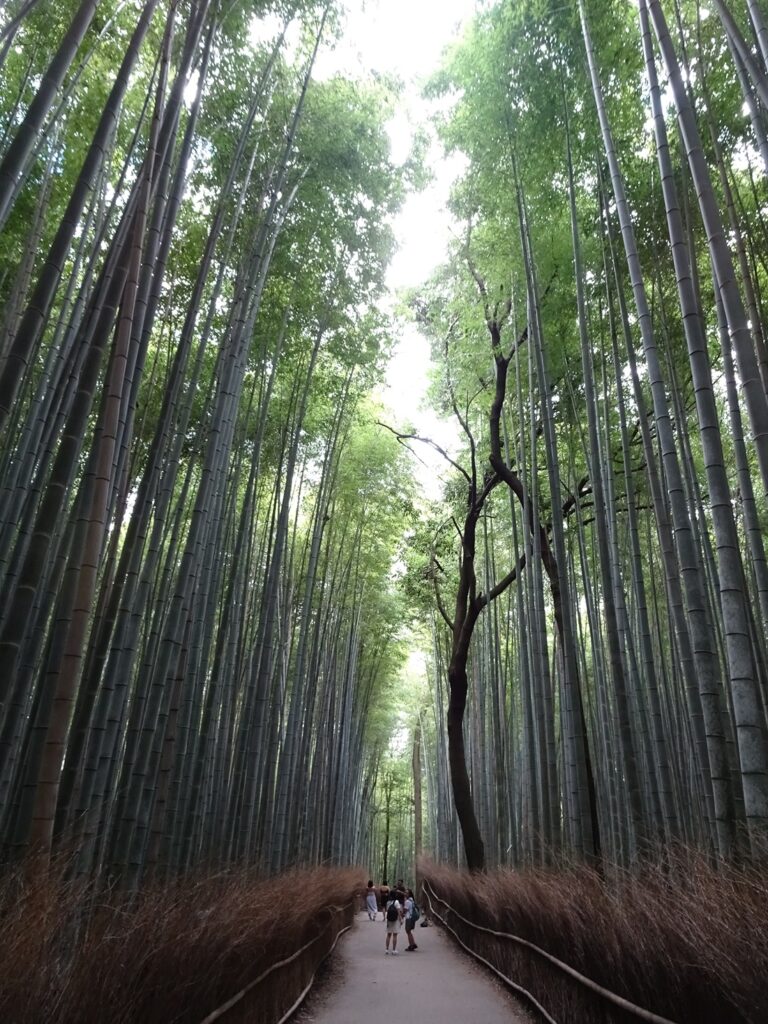
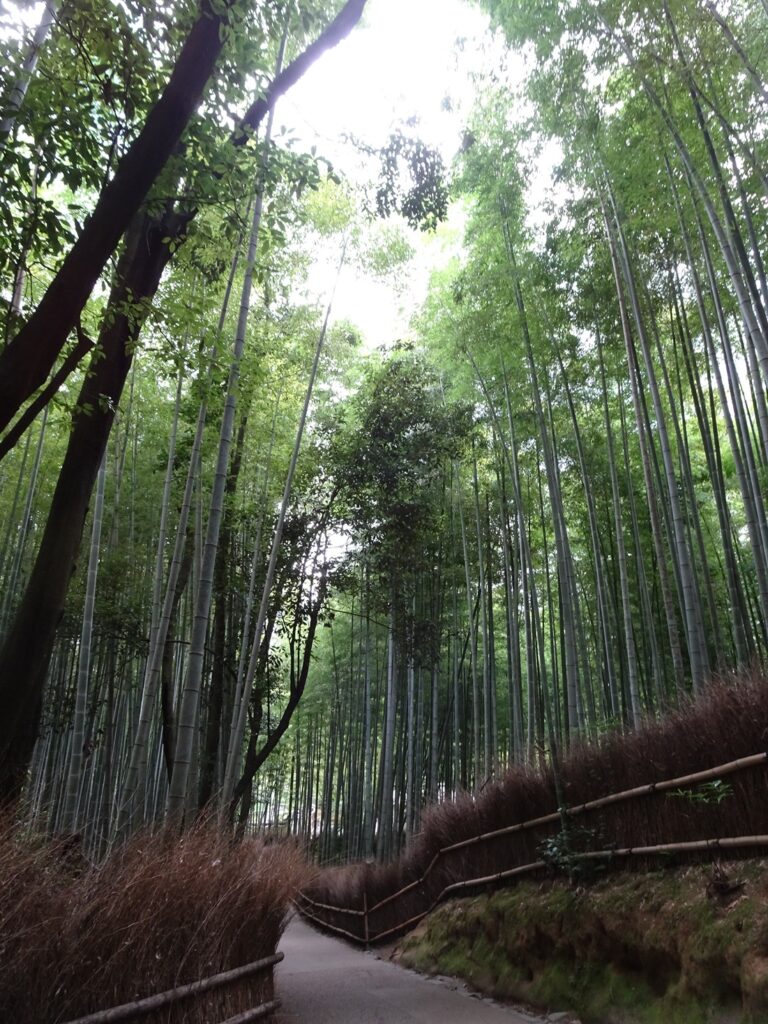
To see the place in peace, you’ll need to come as early as possible. We were here shortly after dawn, and even then we met a few other people. When we passed through again two hours later, every inch of the trail was completely crammed and the serenity was completely gone.
Another advantage of coming early is that the light will be softer and therefore better for photographs. To get to the forest from the Keifuku Railway Station, walk north along Route 29, then turn left behind the Snoopy Chocolate store.
The bamboo forest is free to visit. You don’t have to pay the entrance fee for the nearby Tenryu-ji Temple to get to the forest, if you follow the directions above (although I recommend checking that temple out afterwards).
Ōkōchi Sansō Garden
Right at the western exit of the bamboo grove is Ōkōchi Sansō Garden, which was by far our favourite spot in Arashiyama. The estate once belonged to the Japanese film actor Denjirō Ōkōchi, who played main roles in some Kurosawa films in the 40s, including ‘Sanshiro Sugata’.
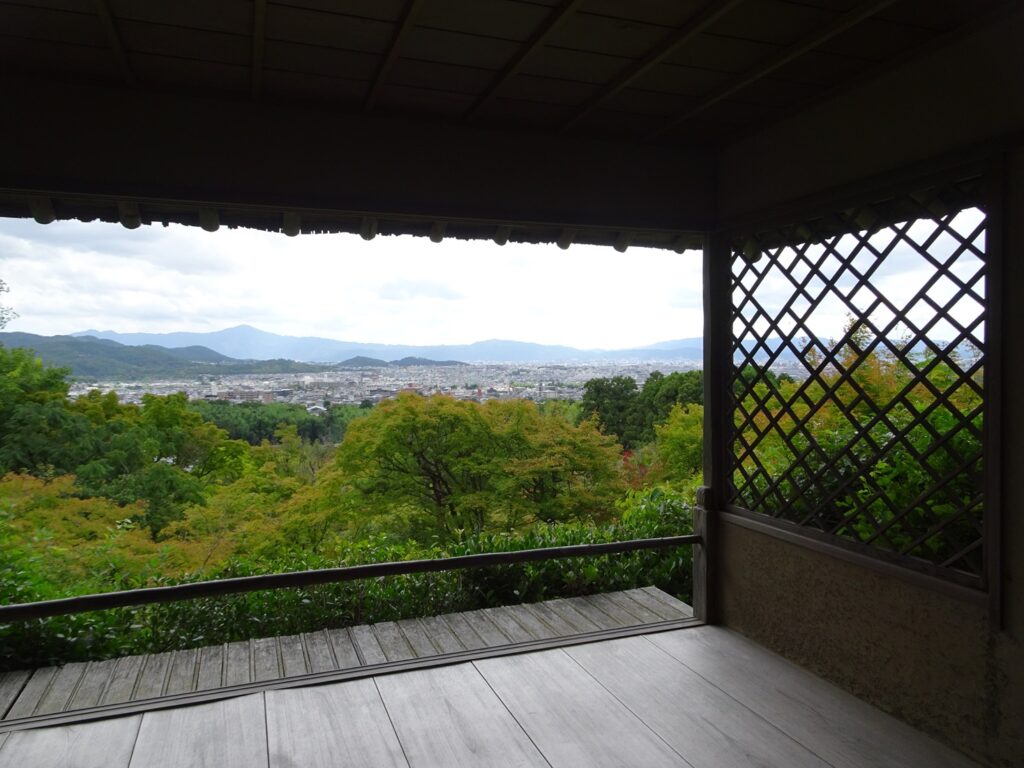
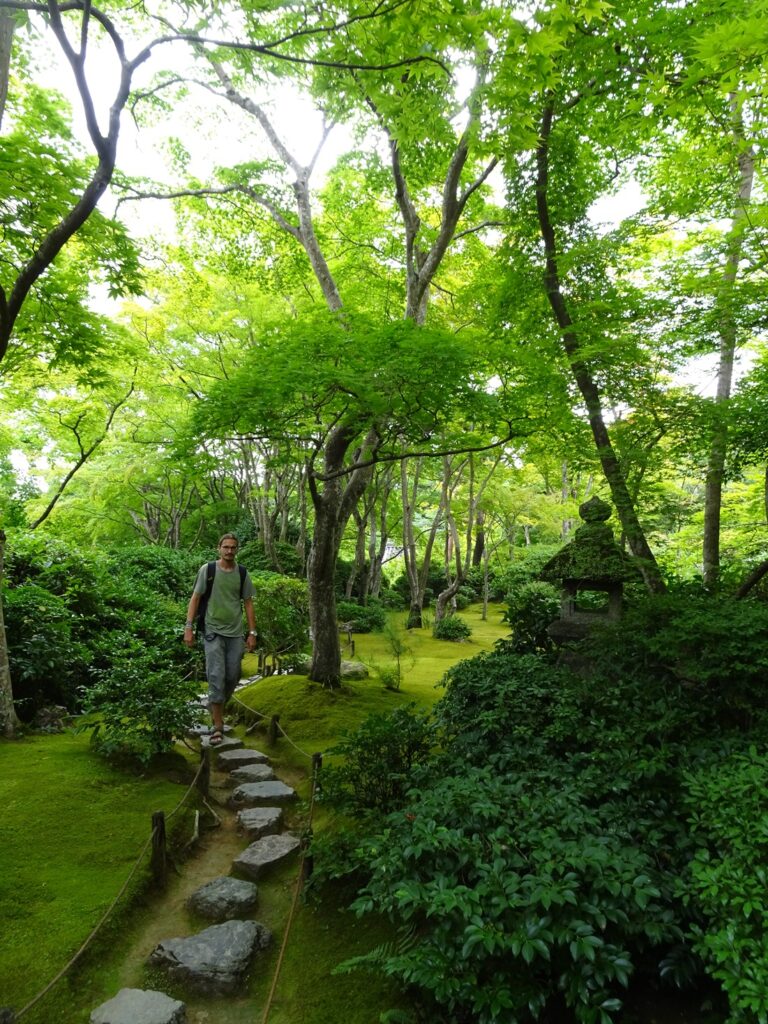
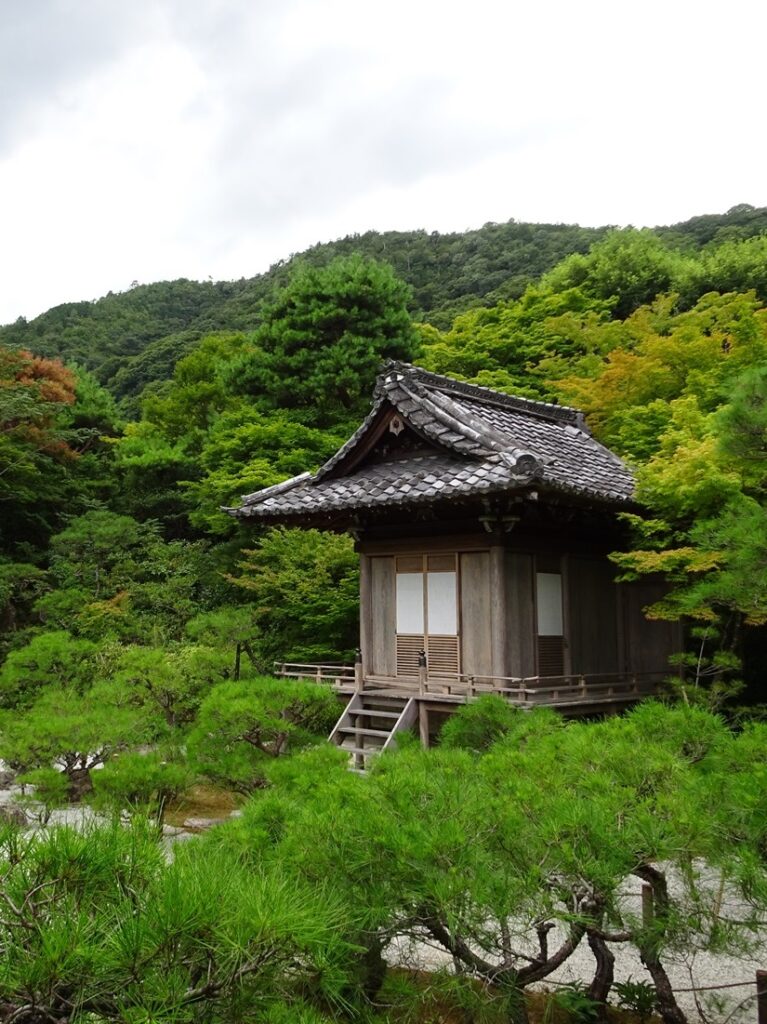
There are lots of small pathways that wind their way through moss gardens and past historical wooden buildings. It’s a very atmospheric place and there was hardly anyone around when we dropped by. There are also some viewpoints with great views over western Kyoto.
We also liked that the entrance ticket included a complimentary bowl of matcha tea and a sweet, which was served in a pretty wooden teahouse in the garden. The entrance fee was 1,000¥ and you can check the current opening times here.
Gio-ji Temple
A 15-minute walk north of Ōkōchi Sansō Garden is Gio-ji, which has another beautiful garden, full of gnarled maple trees and covered in moss. The temple is rather small, but quite old, as it was founded in the Heian Period in the 12th century.
Once again, the main temple building is a more modern reconstruction from the late 19th century, but we probably wouldn’t even have noticed. Meiji Era Japan was really good at recreating historical buildings, it seems.
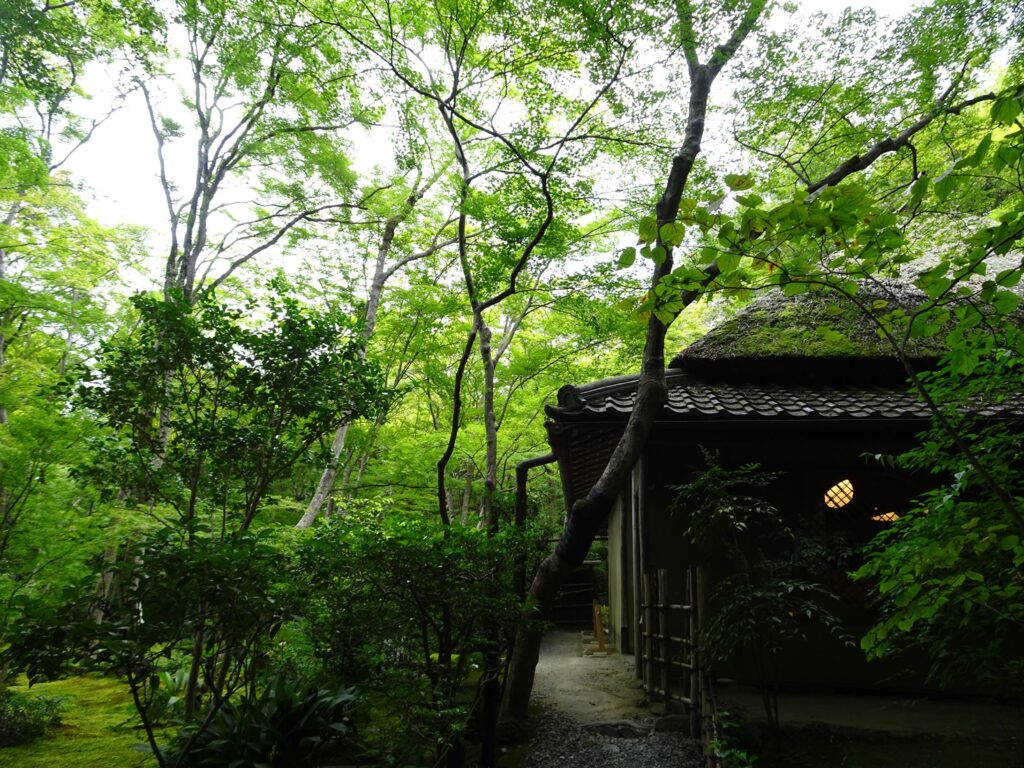
There is an interesting story from the ‘Tale of the Heike’ epic connected to Gio-ji, involving the dancer Gio, who is said to have become a nun here after falling out of favour with the powerful warlord Taira no Kiyomori of the Heike Clan.
We spotted some wooden statues of the warlord and his paramour inside the main hall of the temple and there’s also an interesting statue of the Buddha of Light, who represents the universal life force.
The entrance fee was 300¥ and you can check the current opening times here.
Tenryu-ji Temple
Tenryu-ji is the most important temple in Arashiyama. It was founded in the 14th century by the shogun Ashikaga Takauji, but as it burned down several times, most buildings are actually reconstructions from the late 19th century.
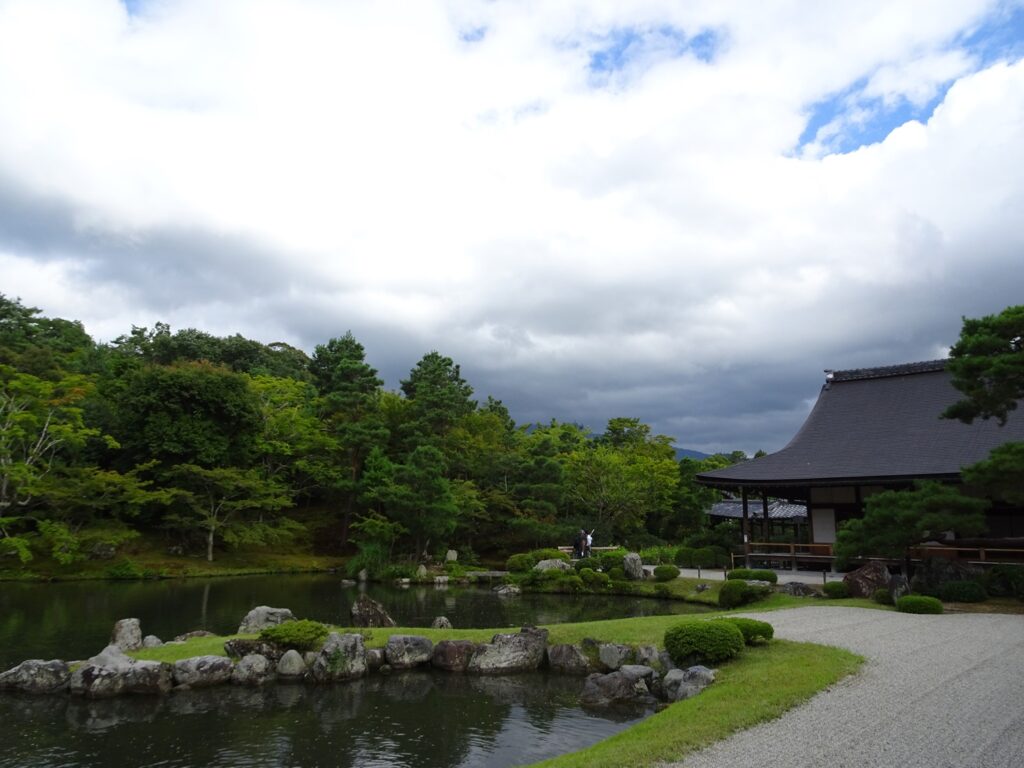
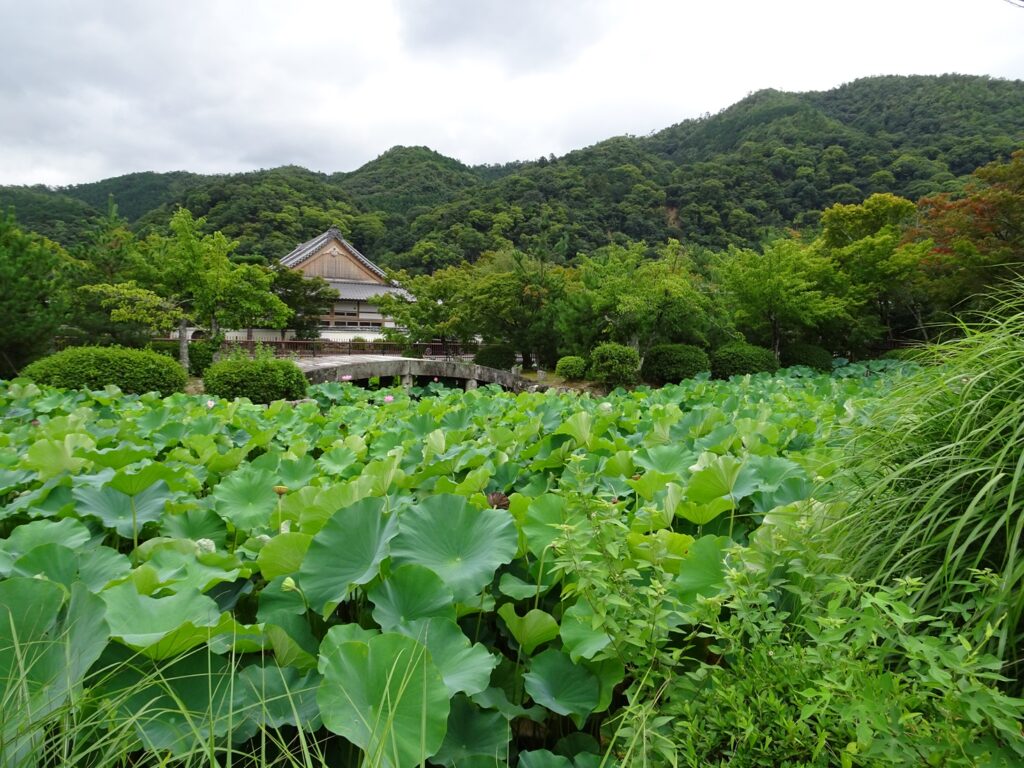
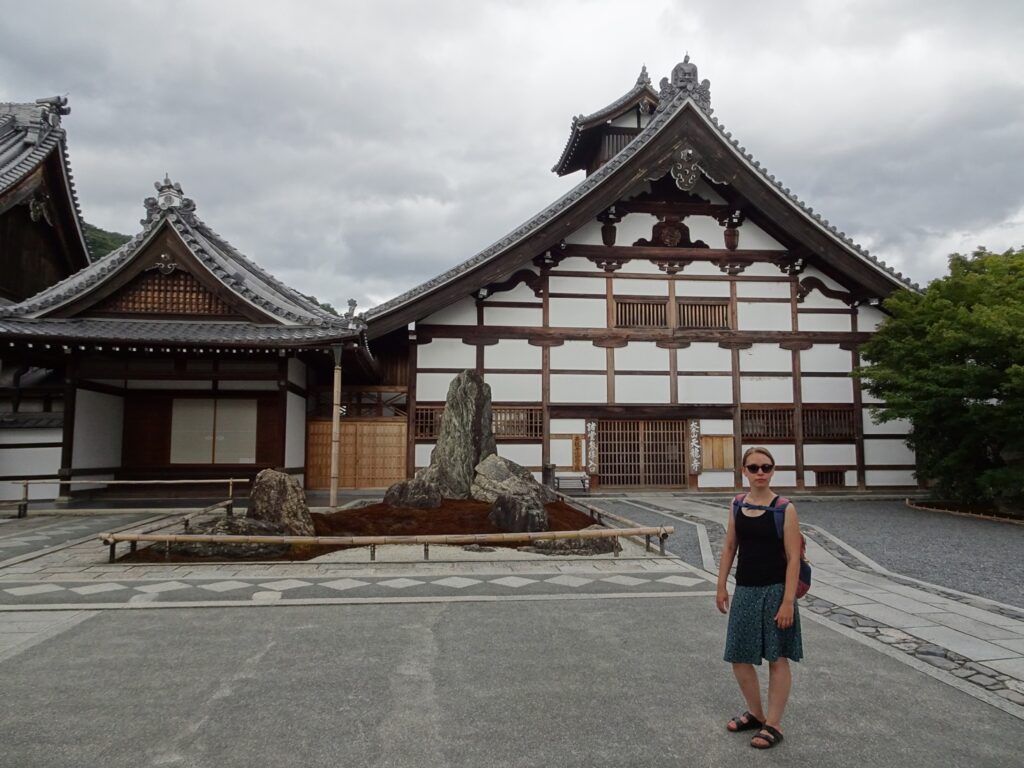
The temple buildings are still impressive, but for us the real highlight was the Sogenchi Garden behind the main hall, which was designed in the 14th century by Zen Monk Musō Soseki and is laid out around the pretty Sogen Pond behind the Large Abbey (ōhōjō) building.
Tenryu-ji is the head temple of the Rinzai sect of Zen Buddhism, which are known for their extensive use of kōans (paradoxical riddles or stories) to achieve enlightenment. Since 1994, it’s been part of Kyoto’s multi-property UNESCO World Heritage Site, which includes important historical buildings all over the city.
The temple is directly opposite the Keifuku Railway Station. The combined entrance fee for the garden and buildings was 800¥ when we visited. You can check the opening times here.
Togetsu-kyo Bridge
The wooden Togetsu-kyo Bridge is another symbol of Arashiyama. The first bridge in the area dates to the early 9th century, but the current one was built in the 1930s.
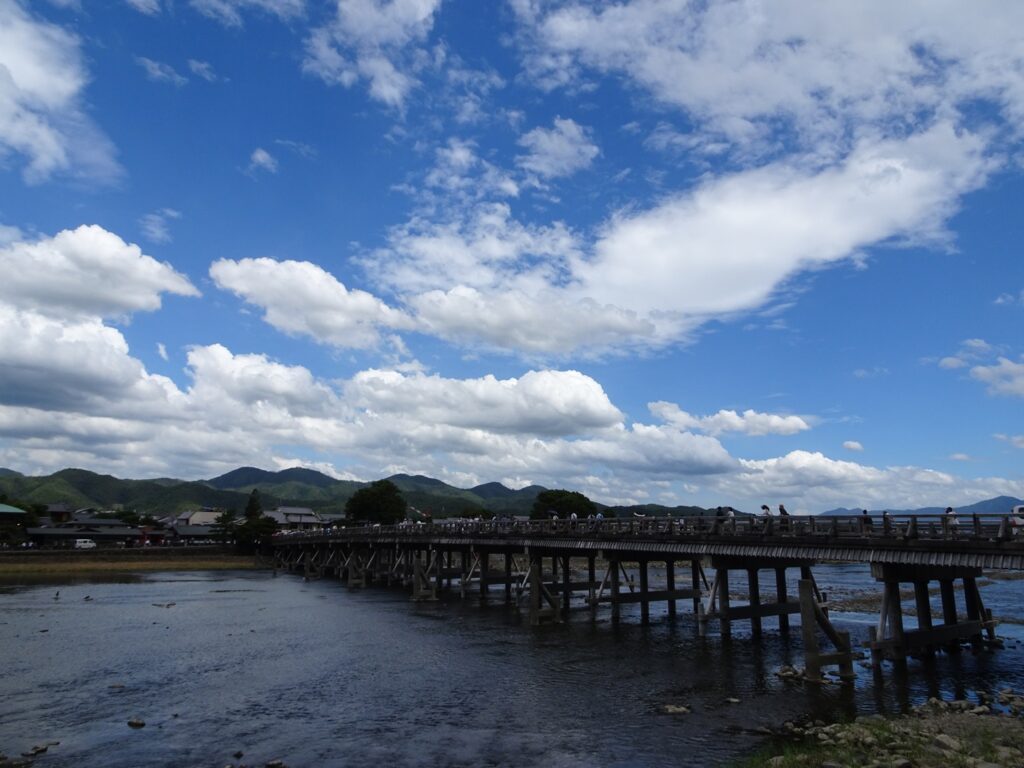
The name means “Moon Crossing Bridge”, and comes from a poem that was written by the former Emperor Kameyama, who later became a Buddhist Monk and who compared the bridge to the moon crossing a cloudless night sky.
More prosaically, we liked the views of the Katsura River from the bridge and currently it’s also still the only way to cross to the south side of the river for a few kilometers in each direction.
Iwatayama Monkey Park
Across the river from the main sightseeing district is Iwatayama Monkey Park, which sits on a hillside above the city and is home to a large troop of Japanese Macaques that you’re allowed to feed with apple slices and peanuts.
To be honest, I’m always a bit sceptical when it comes to feeding supposedly wild animals, but in this case the practice has been established since 1957, and the monkeys have so gotten used to being fed that it’s not seen as harmful, plus it’s all supervised by caretakers and researchers.
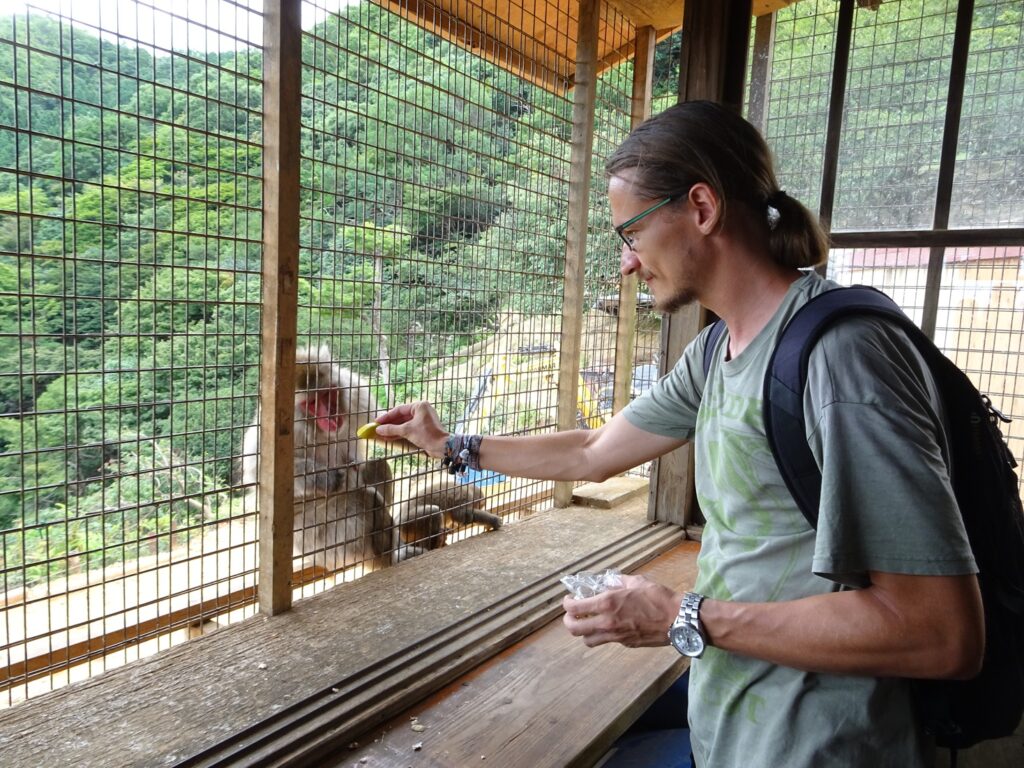
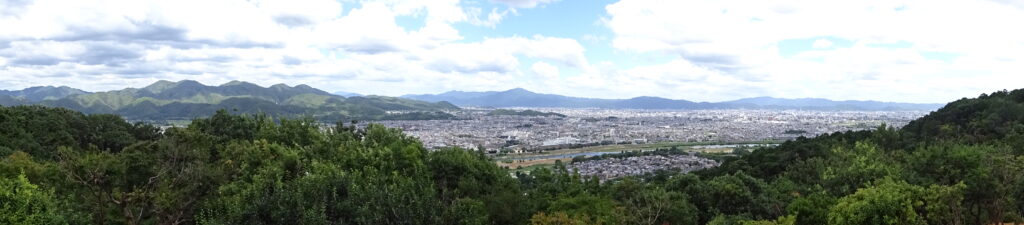
It’s definitely better than a zoo, as the monkeys are completely free to roam around and actually it’s you as a human visitor who’s inside a cage, when you’re feeding them. The panorama over Kyoto from the summit was another thing we really liked and I’d even say it’s one of the best ones we came across in the city.
The trail to the park starts at the southern end of Togetsu-kyo Bridge and the hike up the hill took us about 15 minutes. The entrance fee was 800¥ and you can check the current opening times here. The monkey food is sold inside the park for 100¥ per bag.
Arashiyama Station Foot Onsen
Right inside the Arashiyama Tram Station, there’s a little footbath area, which uses natural hot spring water (so, it’s basically an Onsen).
After walking around the neighbourhood all morning, we found it really nice to sit at the edge of the pool and soak our feet in the warm water for a bit (plus, we also got a small towel with the entrance fee of 250¥).
The station itself is also worth a quick look because of the unusual “Kimono Forest” installation nearby, where lots of illuminated pillars decorated with kimono fabrics line the platforms and walkways.
Arashiyama Map
This map of the Arashiyama neighbourhood shows all the spots I’ve described above.
Practicalities
How to Get to Arashiyama
Getting to Arashiyama is fairly straightforward, and you’ve got a few different options depending on where you’re staying in Kyoto.
One option is to take the JR train. From Kyoto Main Station, for instance, you can take the JR San-In Line directly to Saga-Arashiyama Station. The ride takes around 15 minutes, and from there it’s about a 10 minute walk south into the main Arashiyama area.
Another option is to take the private Keifuku Railway, also known as the Randen Line, which is what we did. This runs from central Kyoto (Shijō-Ōmiya Station) out to Arashiyama Station. It’s only slightly slower than the JR line, and it drops you almost right in the middle of the sightseeing area, very close to Tenryu-ji and Togetsu-kyo Bridge.
If you’re already in western Kyoto, buses are also an option, but they tend to be slower and more affected by traffic, so if you take one of the train lines, it’s much more straightforward. If you’re planning on taking the bus, you can check for connections and timetables on this site.
Where to Stay in Arashiyama
We stayed in central Kyoto and only visited the neighbourhood on a day trip. That said, if you want a really early start, staying in Arashiyama would probably be a good idea. There aren’t many budget options in the area, except for Mulan Hostel south of the river.
There are much more choices, when it comes to midrange places. A well-rated one would be Kadensho Arashiyama Onsen. On the luxury end of the spectrum, Arashiyama Onsen Ryokan Togetsutei seems to be the top place to stay.
See Also
The Ultimate Guide to Kyoto’s Fushimi Inari Taisha – Including How to Avoid the Crowds