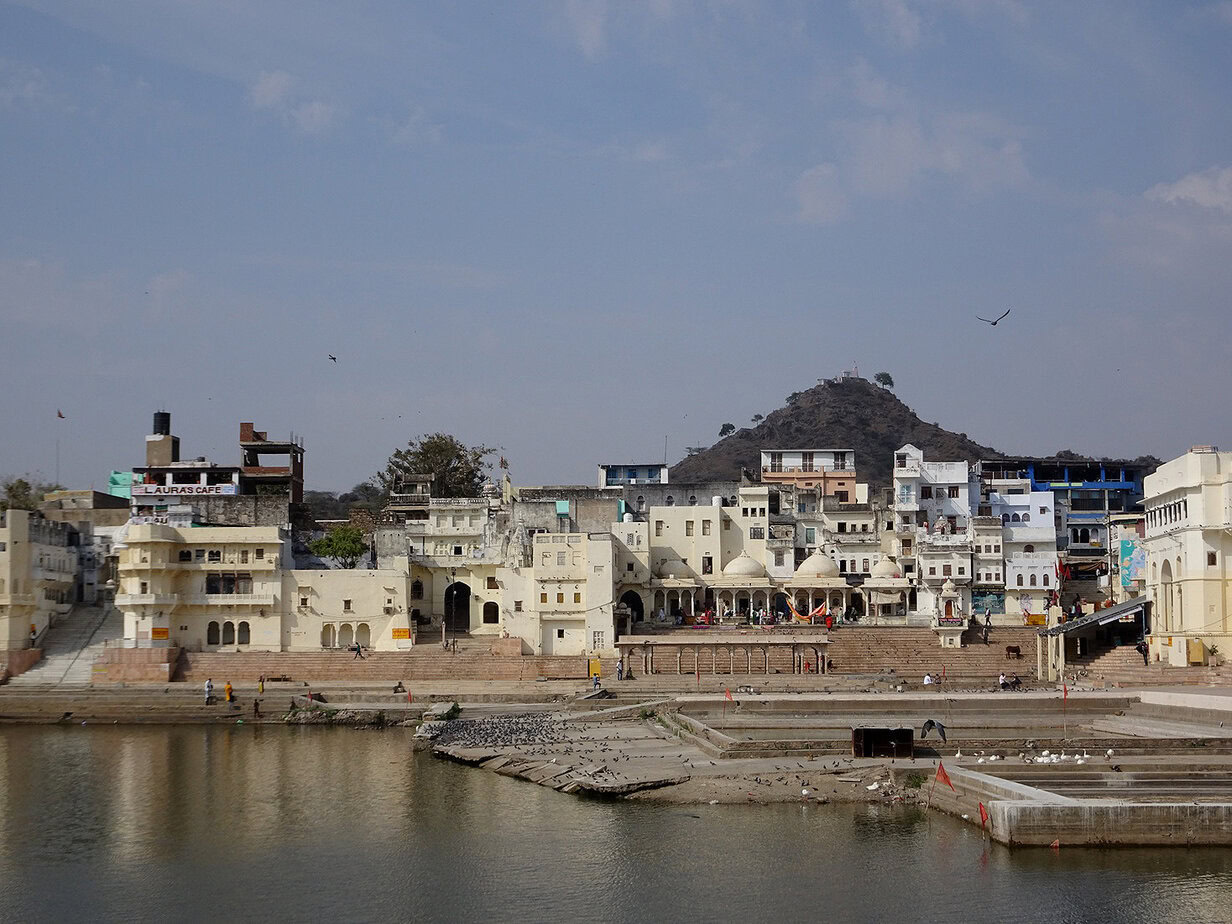
Pretty Pushkar is set around a sacred lake on the edge of the Thar Desert and is one of India’s most important Hindu pilgrimage sites. It’s also home to the country’s only temple dedicated to Brahma, the creator god.
We liked the somewhat relaxed atmosphere here, but lots of places in Pushkar are also very much geared towards foreign visitors, so the historical flair sometimes got a little buried under all the faux-hippie gimmicks aimed at Western tourists.
That said, we didn’t find it hard to see the religious importance, once we started wandering around the ghats and saw the pilgrims bathing in the holy waters of the lake. Here’s my personal one-day itinerary for Pushkar.
This post may contain affiliate links, and I might earn a small commission at no additional cost to you. For more info, click here.
Guided Tours of Pushkar
If you’d like to know more about the history and religious significance of Pushkar, there are a number of guided tours available. You can have a look at some options below.
The Religious Importance of Pushkar
Pushkar is considered one of the holiest places in Hinduism and is one of very few places that have a temple to Brahma, the creator god. According to Hindu tradition, Brahma dropped a lotus flower to the earth while searching for a suitable place to perform a yajna, or ritual sacrifice.
The petals are said to have fallen in three different locations, where they formed small lakes in the desert. One of them is thought to be Pushkar Lake and the town’s name actually comes from the Sanskrit words pushpa (flower) and kara (hand).
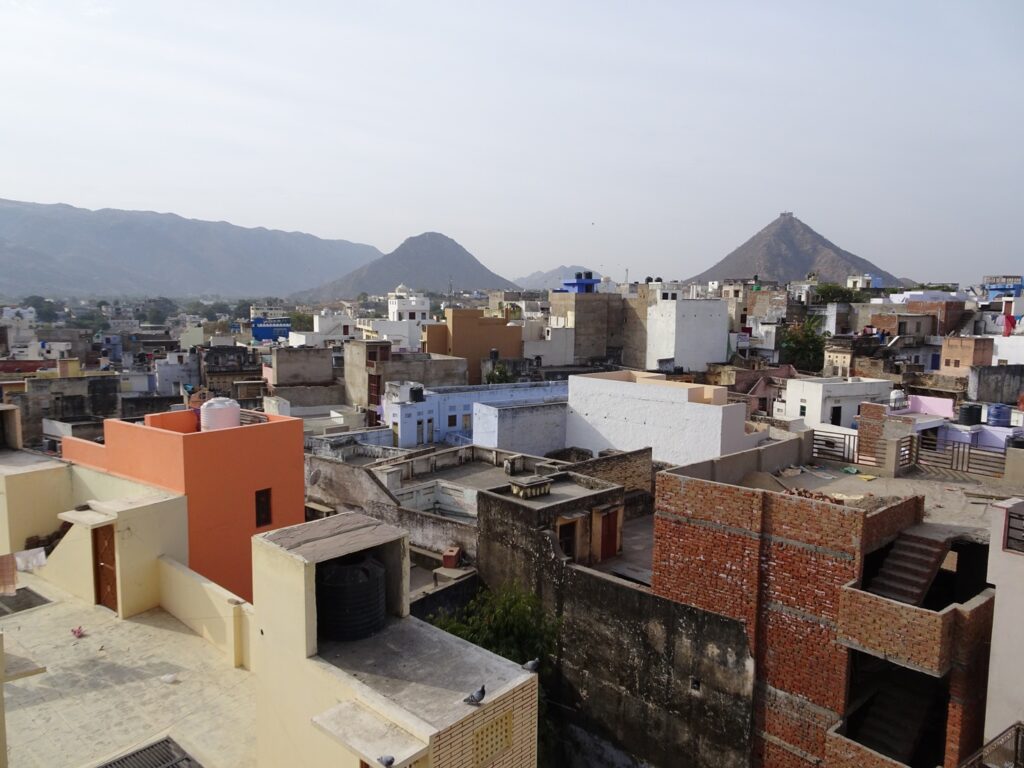
The town has been an important Hindu pilgrimage site for well over a thousand years, as well as an important stop on trade routes that linked the desert regions of western India with the more fertile Ganges and Yamuna Plains further east.
Despite all that, the religious buildings in town are still rather new, as the older ones were destroyed in the 18th century by the armies of Mughal Emperor Aurangzeb, who was a bit of a Muslim hardliner.
Nowadays, Pushkar is a bit of a backpacker hangout and we saw more Western tourists here than in most other parts of India we had visited, but there are still traces of its important history all around.
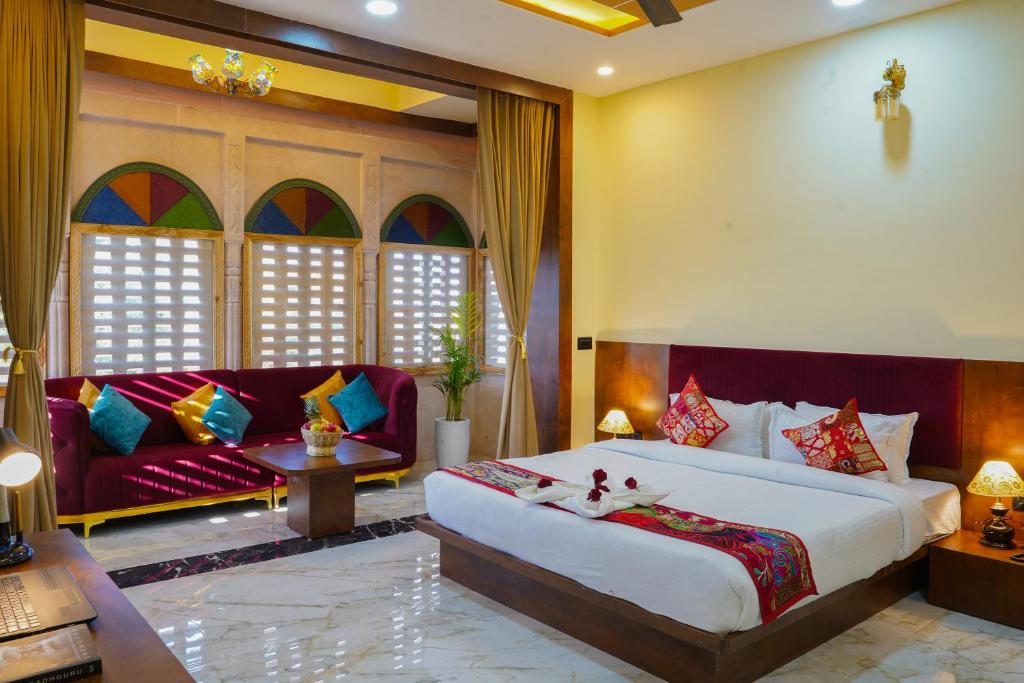
The Best Hotels in the Area
Budget: Hotel Everest
Midrange: Hotel Pushkar Legacy (pictured)
Luxury: Ananda Resort
.
The Perfect One-Day Pushkar Itinerary
With one full day in town, you should be able to see the most important religious sites, check out a couple of good viewpoints and try some local food along the way.
Sunrise at Pap Mochani (Gayatri) Temple
If you don’t mind an early start, I recommend beginning your day before sunrise at Pap Mochani Temple, which is also known as Gayatri Temple. The temple sits on a hill to the north of the centre and is associated with Brahma’s second consort Gayatri.
According to the legend, Brahma became a bit impatient when his wife-to-be Savitri was late for their wedding, so he decided to marry the local shepherdess Gayatri instead. Savitri got slightly angry at that (I wonder why), cursed basically everyone around and made her temple on the higher hill on the opposite side of the town.
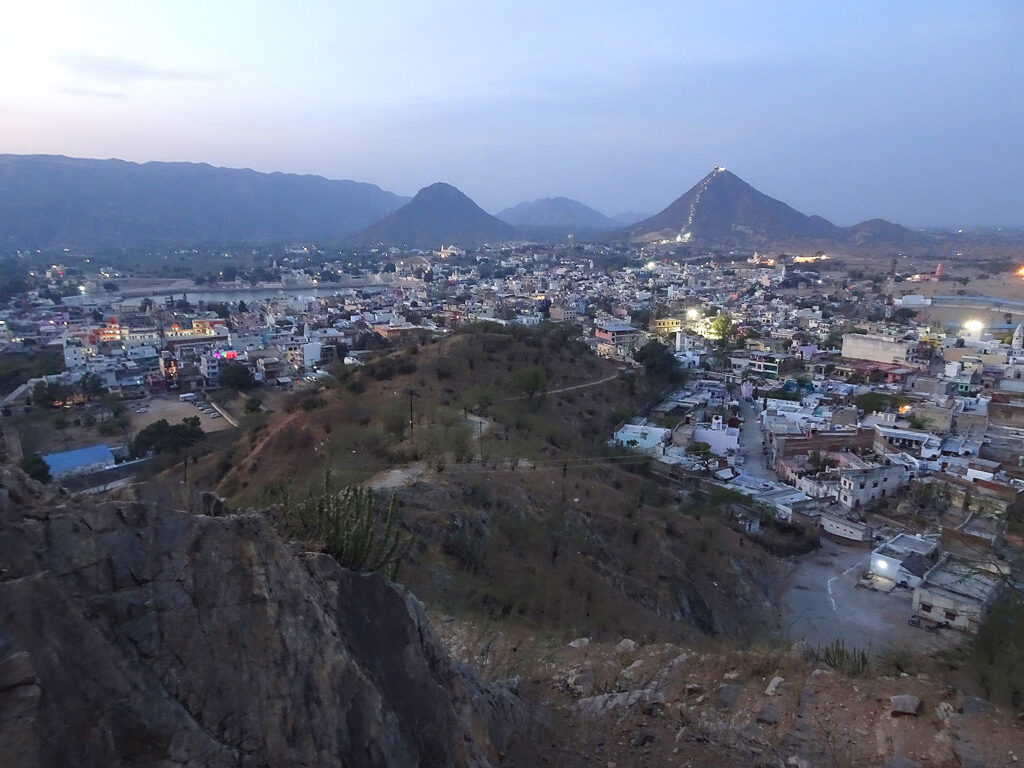
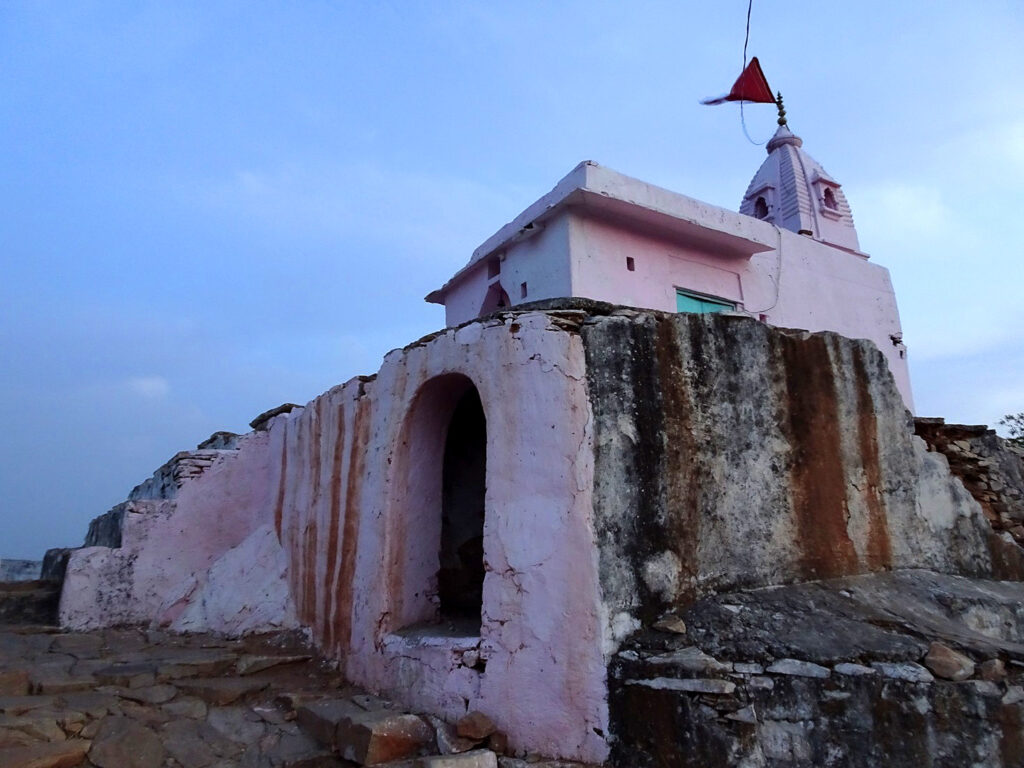
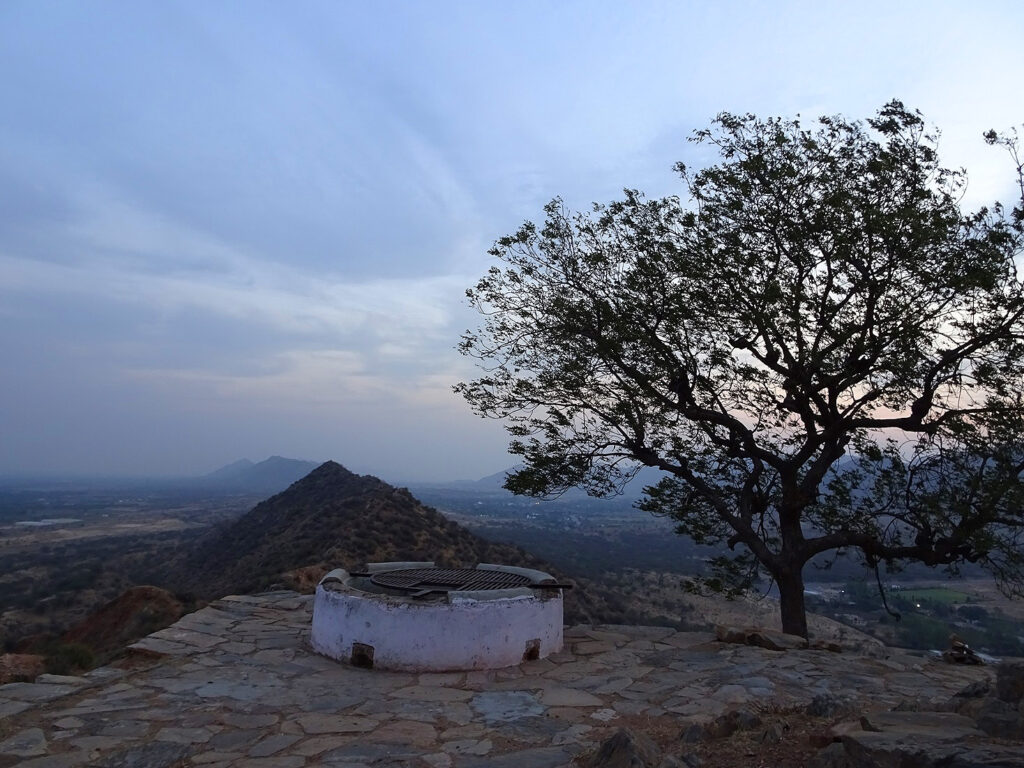
The guilt motive is strong here, and many Hindu Pilgrims come to Gayatri’s temple to seek forgiveness for past sins, which is where the name “Pap Mochani” comes from, which roughly translates to “remover of sins”.
We arrived at the temple shortly before dawn, and while it was a bit too cloudy for a ‘proper’ sunrise, the view of the city from up here was still pretty spectacular. It was also really quiet and the only person we met was a British girl, who was also out to see the sunrise.
The trail to the temple starts near Pushkar’s Marwad bus stop. Follow the road at its western end (next to the tiny green Noorani Mosque) north for a couple of minutes and climb the first set of stairs to the east. Climbing the hill shouldn’t take longer than 10 minutes.
Breakfast at Narayan Café
Afterwards, you can make your way back towards the centre for some breakfast. We went to Narayan Café, which opens early and has both Indian and western food plus some pretty good coffee. It’s on the main market road near the northeastern edge of the lake.
Old Rangji Temple
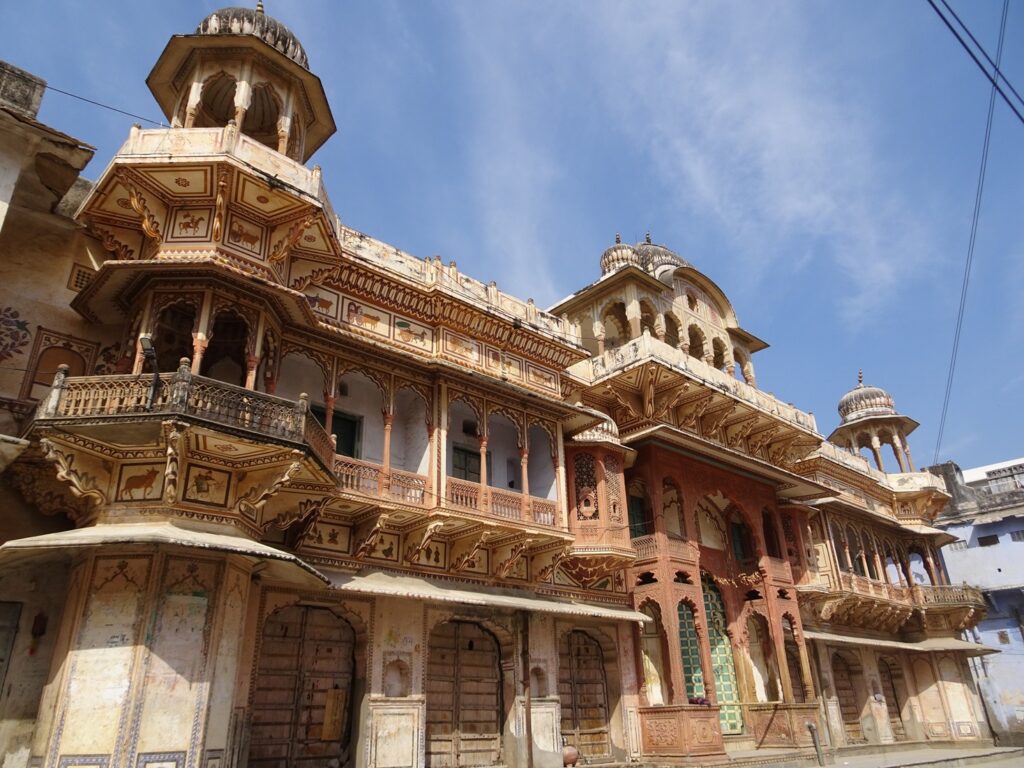
A short walk northwest from the café sits the Old Rangji Temple, which to us was Pushkar’s most impressive-looking temple. The temple was built in 1823 and is dedicated to Lord Rangji, which is one of Vishnu’s incarnations.
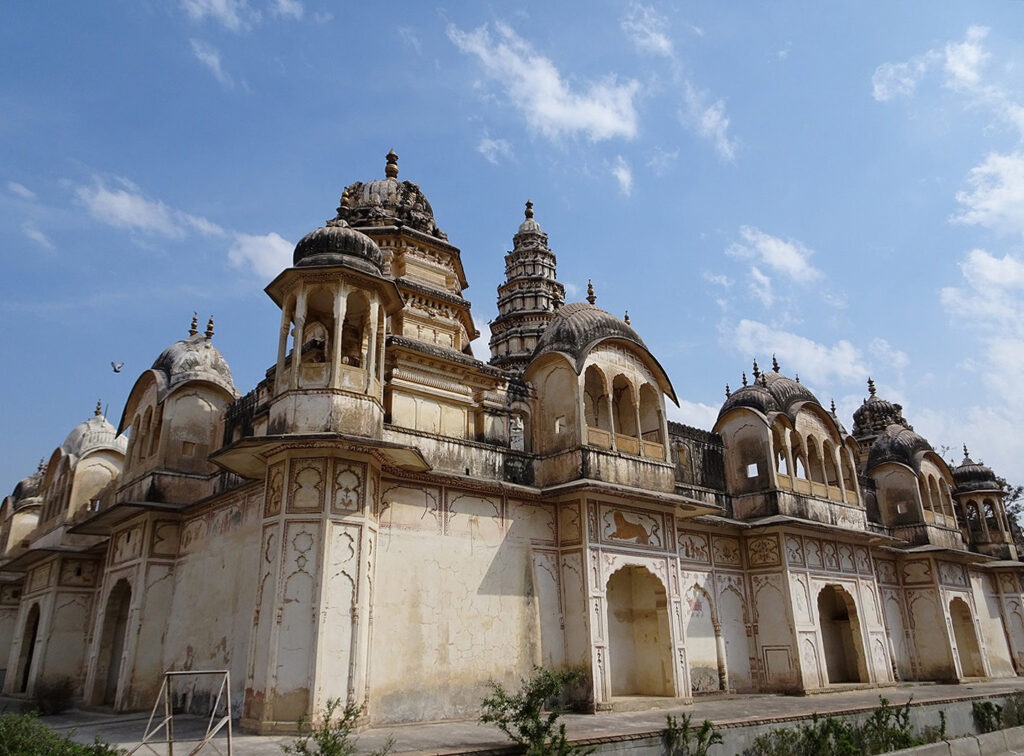
The architectural style is super eclectic and combines elements of different cultures, which is why it looks so unusual. For instance, the little pavilions and balconies around the outer walls are in the style of Rajput or Mughal architecture, but the tall gopuram tower over the gateway is more typical for southern Indian temples.
Unfortunately, you can’t enter the temple unless you’re a Hindu (but we were at least allowed in the courtyard). It’s a block north of the lake.
Pushkar Lake and the Ghats
If you walk south from the temple you’ll reach the shore of Pushkar Lake, which is the spiritual centre and arguably the most important sight in town. The lake is surrounded by 52 ghats (places for ritual bathing) and lots of tiny temples.
The ghats were all built by the different maharajas of Rajasthan, who came here as pilgrims. Even today, this is still one of India’s most important pilgrimage sites and we saw lots of people bathing themselves in the waters, which is said to cleanse sins and help break the cycle of rebirth.
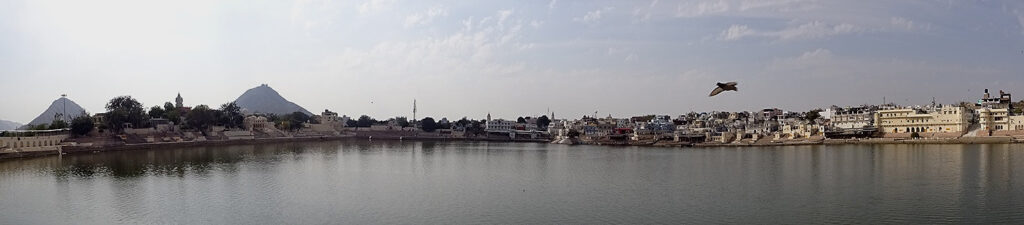
We walked once around the entire lake to see the different ghats. If you’re doing the same, you’ll have to take off your shoes when walking through them and you’re also not allowed to take photos in the temples or ghat areas (although it’s okay to take pictures from other parts of the lakeshore).
At the northeastern corner of the lake is Varaha Ghat, which is named after Vishnu’s boar incarnation, which is said to have appeared here once. A little further west is Gau Ghat, which is also called Gandhi Ghat, as some of Mahatma Gandhi’s ashes were scattered here after his assassination in 1948.
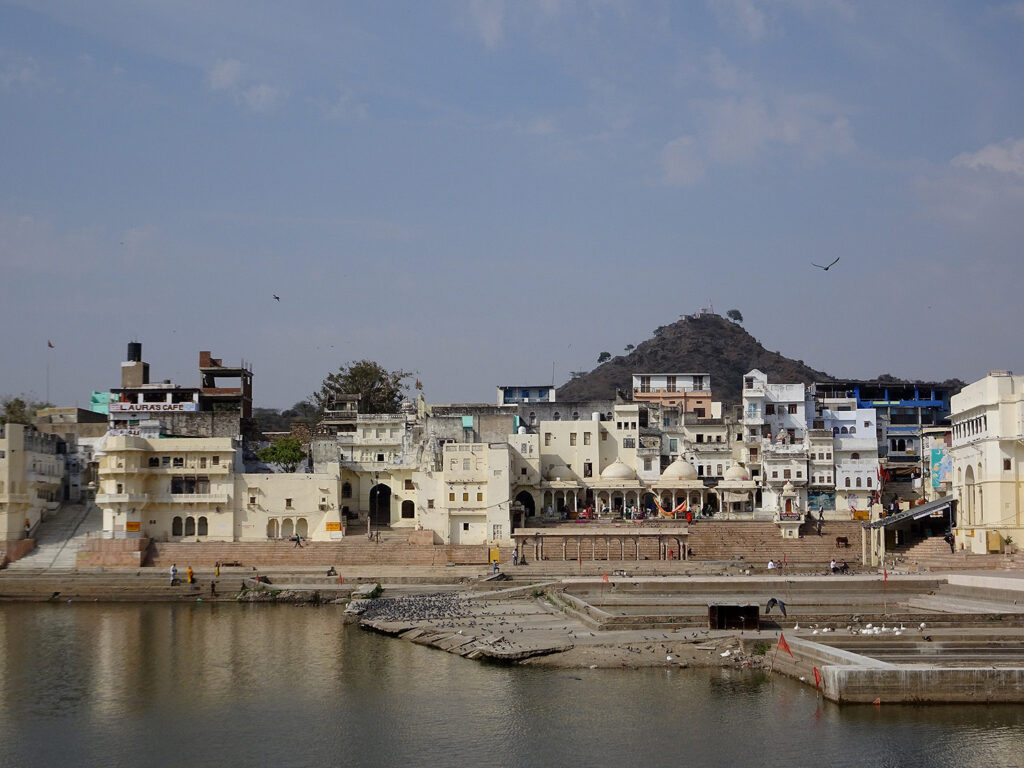
A little further on is Brahma Ghat, which is the holiest of the lake’s ghats, as Brahma himself is said to have bathed here. Unsurprisingly, this was also the busiest place around the lake when we dropped by.
When you’re exploring the area, you’ll very likely be approached by priests who want to say a blessing for you in exchange for a donation. When you do that, you get a small red wristband (also called the ‘Pushkar Passport’) that shows other priests that you have done that and they’ll leave you alone (at least that was the case for us)
For that reason, I think it’s actually worth to pay once in the beginning and then have a more hassle-free time. We gave a donation of 100₹ per person and weren’t approached afterwards.
Brahma Temple
Just a bit northwest of Brahma Ghat is the only Brahma Temple in India. Once again, this fact seems to go back to the legend that I described earlier. When Brahma broke his promise to Savitri by marrying Gayatri, his spurned fiancée is said to have cursed him to only be worshipped in Pushkar.
The temple is very colourful with its blue pillars and red shikara (spire), but it kind of looked similar to lots of other temples that we had visited in the country, so the uniqueness of the worshipped god, who’s represented by a four-faced statue in a silver altar, was the most interesting part for us here.
Once again, the temple is open from sunrise to sunset and there’s no entrance fee.
Savitri Mata Temple and Viewpoint
A little later in the afternoon, when it isn’t too hot, you can make your way up Ratnagiri Hill west of the centre to Savitri Mata Temple. According to the legend, this is the place where Savitri withdrew to after Brahma’s betrayal.
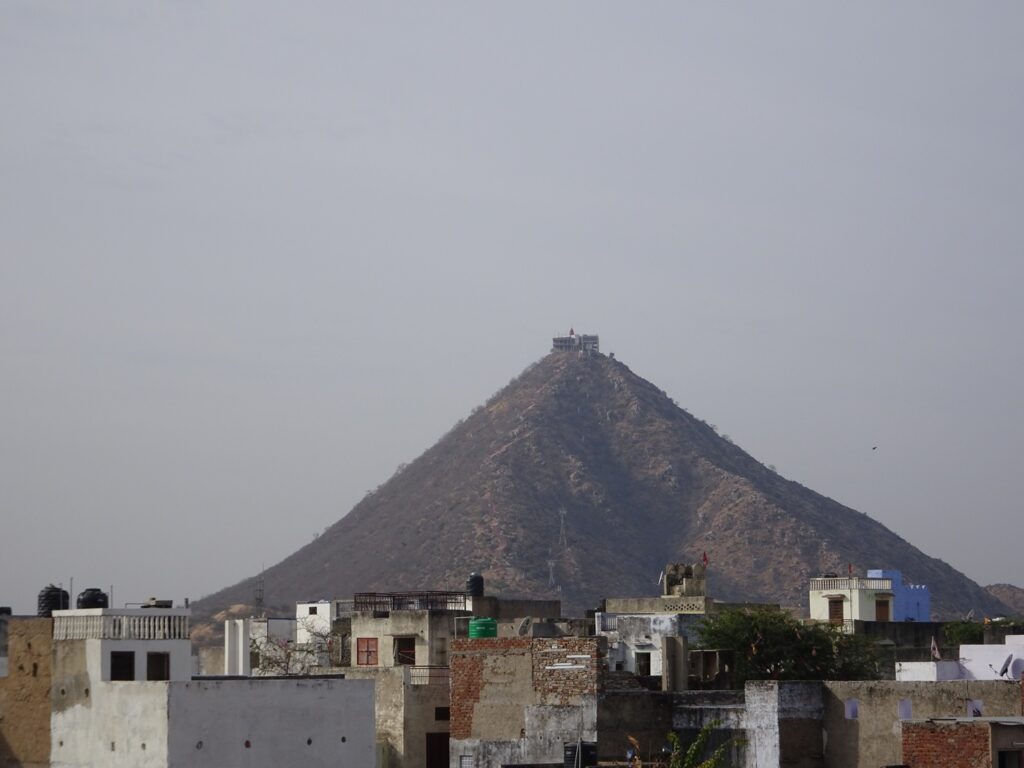
To appease her, it was decided that people should pay their respects to her first, and only later visit the Gayatri Temple, which is what pilgrims still do to this day. I switched both temples around for this itinerary, so the places won’t be as crowded (and because Gayatri Temple is better for sunrise).
There are two ways to reach the temple: you can either use the ropeway or climb up via a steep stone staircase. We walked up and took the ropeway back down, but if this sounds too exhausting, you can switch it around or just take the ropeway both ways.
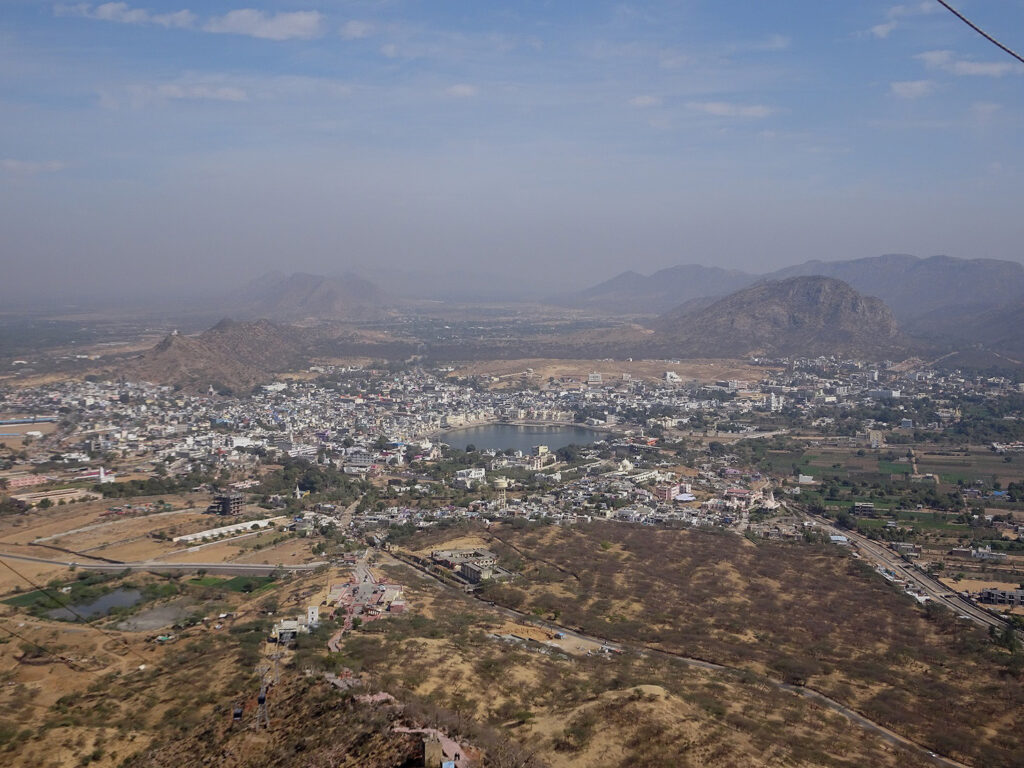
The climb took us a little under 30 minutes, although we took it slowly, as it was pretty hot when we were there. From the top, there are some awesome views over Pushkar Lake, the maze of white buildings surrounding it and the arid countryside beyond.
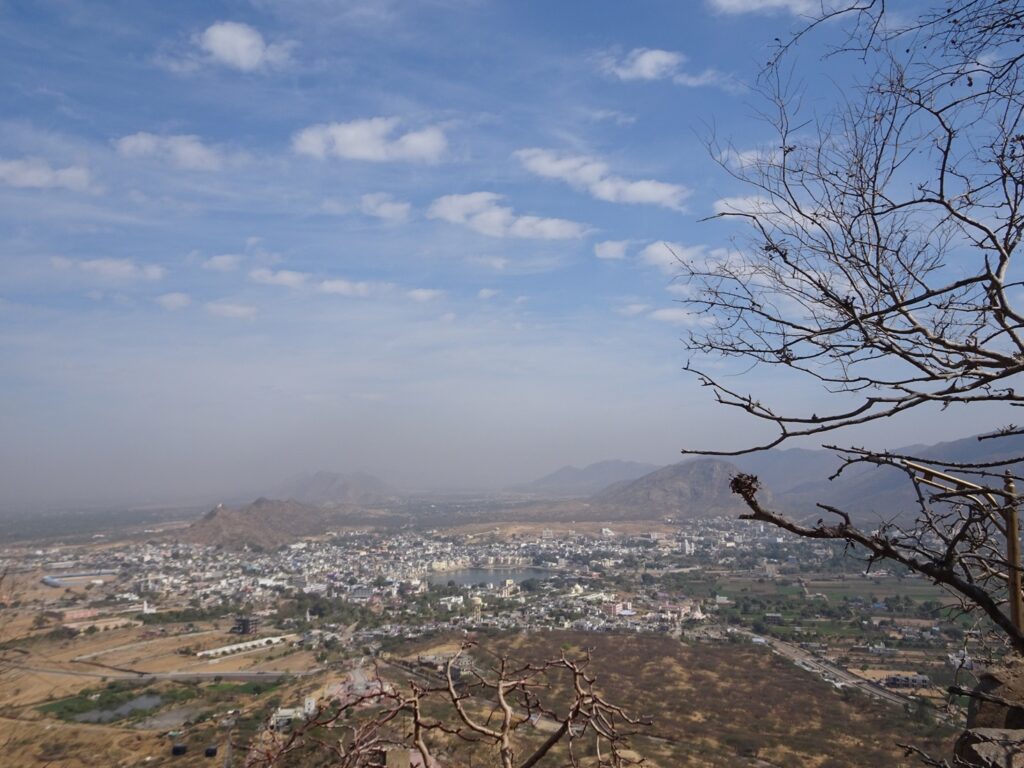
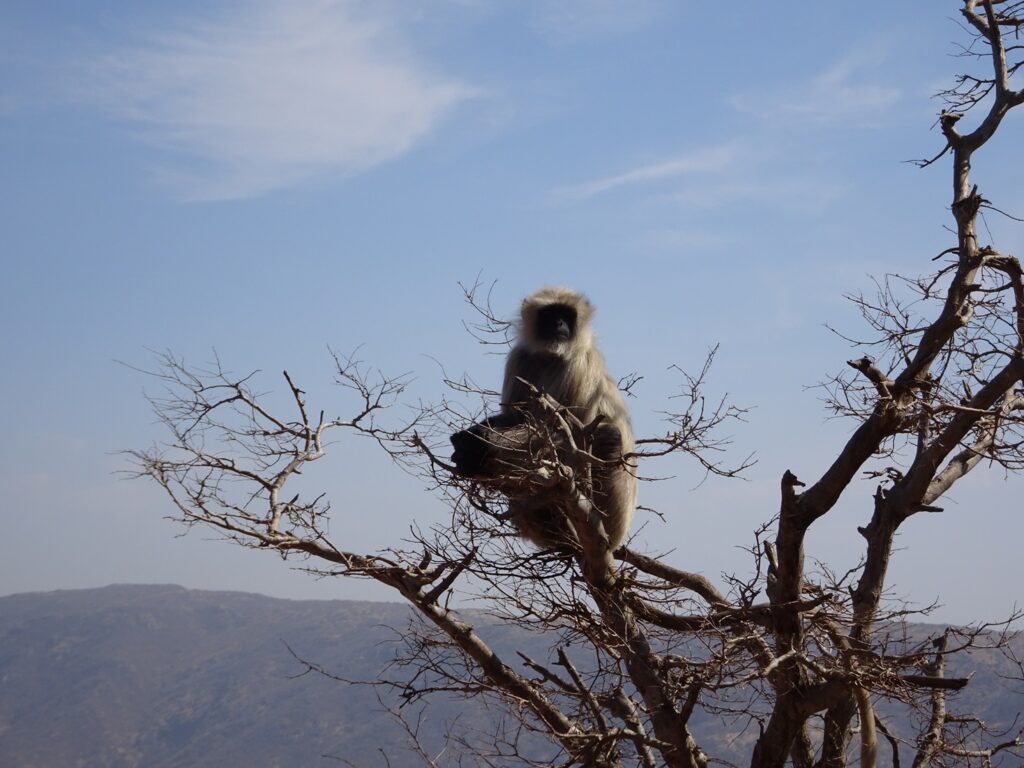
We also watched a group of langur monkeys raising hell up here. When we were there, the temple itself was open in the morning and late afternoon, but closed between noon and 4pm.
The ropeway was 110₹ one-way and 180₹ return when we visited and it operated from 8am to 7pm. You can check the current times here.
Dinner in the Centre
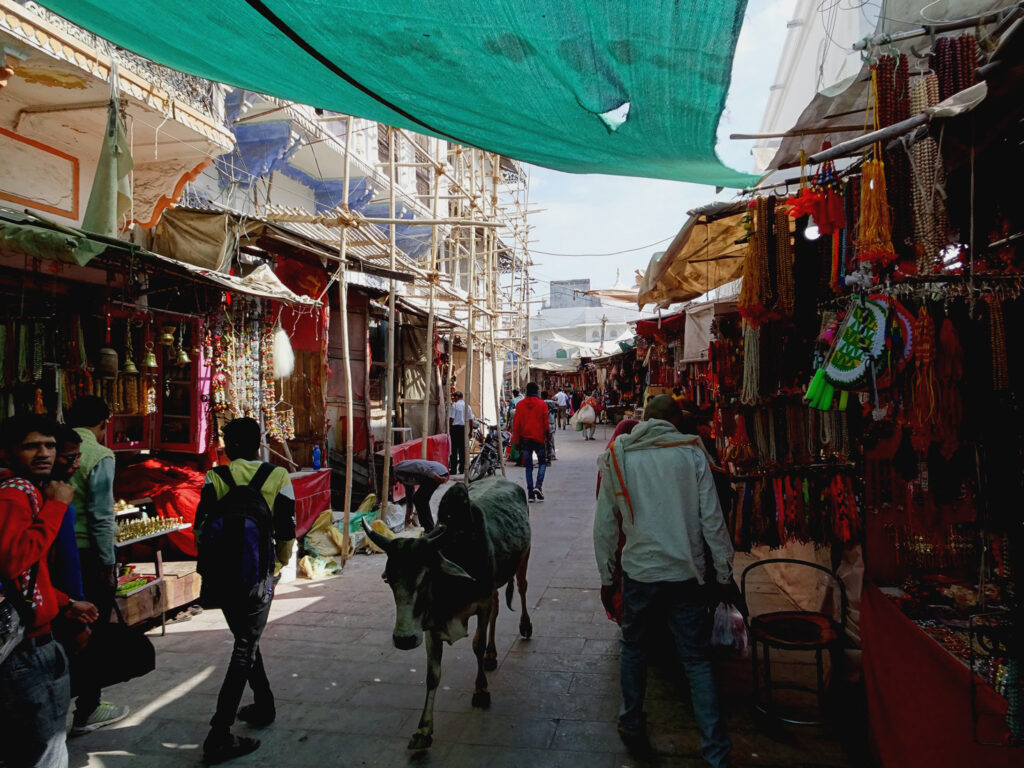
After making your way back down Ratnagiri Hill, it’s probably time for dinner. It’s worth noting that Pushkar is a sacred town, so all restaurants are vegetarian and there’s no alcohol served. There’s lots of restaurants along the main market road and Hanuman Gali, which is the street directly to the north.
We went to Out of the Blue Restaurant on the Market Road, which had some great vegetarian curries (I really liked their mushroom curry), but I’m sure there are plenty of places of a similar quality around.
If you still have some energy left afterwards, I recommend taking another stroll along the lakeshore, which naturally was much quieter and had a completely different atmosphere after dark.
Pushkar Itinerary Map
You can find all the stops in my one-day itinerary on this map of Pushkar.
Practicalities
How to Get to Pushkar and Away
Pushkar has a small railway station, but connections seem to be few and far between. If you’re traveling by train, it’s best to go to Ajmer Junction Station instead, which is about 15 km or 9 mi. to the southeast and then take a minibus or autorickshaw to Pushkar proper.
Ajmer is worth checking out in its own right and has direct connections to bigger Rajasthani cities like Jaipur, Jodhpur and Udaipur, but also further afield to Delhi and Mumbai. We were traveling from Jaipur and decided to take a long-distance bus all the way to Pushkar, which worked out pretty well.
We arrived at the Naya bus stand at the northeastern end of town, where most long-distance buses start. The Marwad bus stand at the foot of Gayatri Hill north of the centre also has a few connections, but it was less busy than the other one, when we passed it.
Pushkar itself is super compact, and we explored everything on foot once we were there.
Where to Stay in Pushkar
We stayed at the budget Hotel Everest, which sits a few minutes north of the lake. The owners were very friendly and there’s a cool rooftop terrace with good views over the surrounding area.
Otherwise, there are a few midrange choices around, like Hotel Pushkar Legacy. Ananda Resort would be more of a luxury choice.