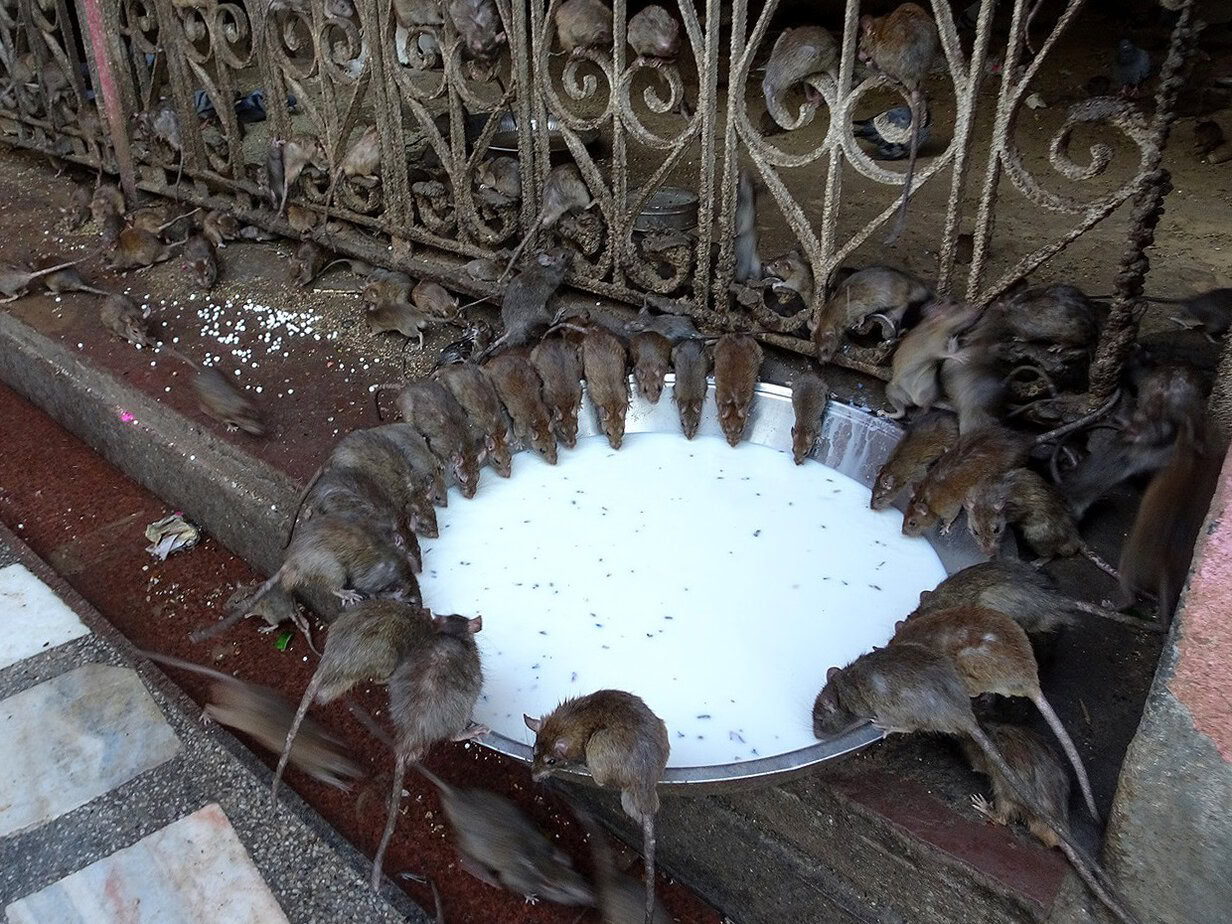
We came across plenty of extraordinary sights in Rajasthan, but the Karni Mata Temple in the small desert town of Deshnoke certainly took the cake. It’s also known as the “Rat Temple” because thousands of rats roam freely through the complex.
We’re always fans of checking out unusual places, especially unusual religious sites, so we knew right away that we had to drop by the temple. To be honest, what we found was actually quite different from the chaotic place that we had imagined before.
Karni Mata is an important pilgrimage site and the rats are considered sacred, so they’re carefully looked after by the temple staff and devotees. Here’s everything you need to know about visiting one of India’s most unusual temples.
This post may contain affiliate links, and I might earn a small commission at no additional cost to you. For more info, click here.
Guided Tours of the Temple
If you don’t want to sort out your transportation yourself, there are a few guided tours of the area available that also include Karni Mata Temple. You can have a look at some well-rated options below.
The Story Behind Karni Mata Temple
The temple is dedicated to Karni Mata, a revered Hindu mystic and warrior sage who is said to have lived in western Rajasthan during the 14th and 15th centuries. She’s sometimes also regarded as an avatar of the goddess Durga.
According to local legend, the story of the temple’s famous rats began when Karni Mata’s nephew Lakhan drowned. She appealed to Yama, the Hindu god of death, asking him to bring him back to life, but he refused, so the cycle of rebirth wouldn’t be broken.
Because of that, Karni Mata decreed that her followers would no longer pass through the realm of death. Instead, they would be reborn as rats (kābā) and live in Karni Mata’s temple before returning to human form.
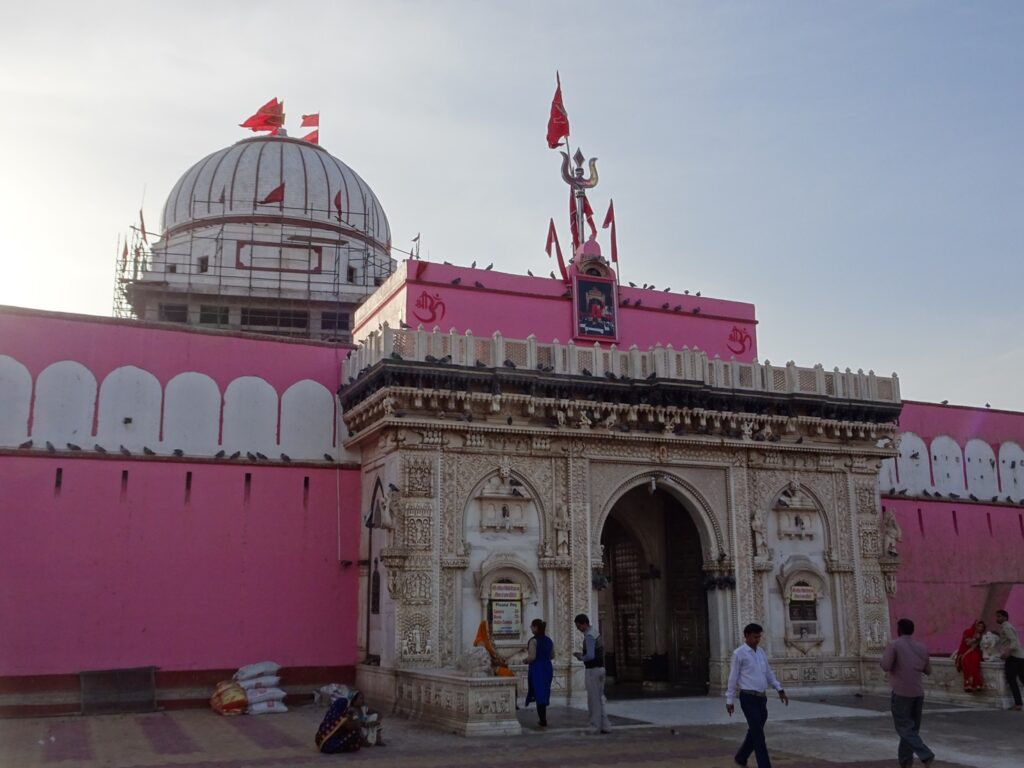
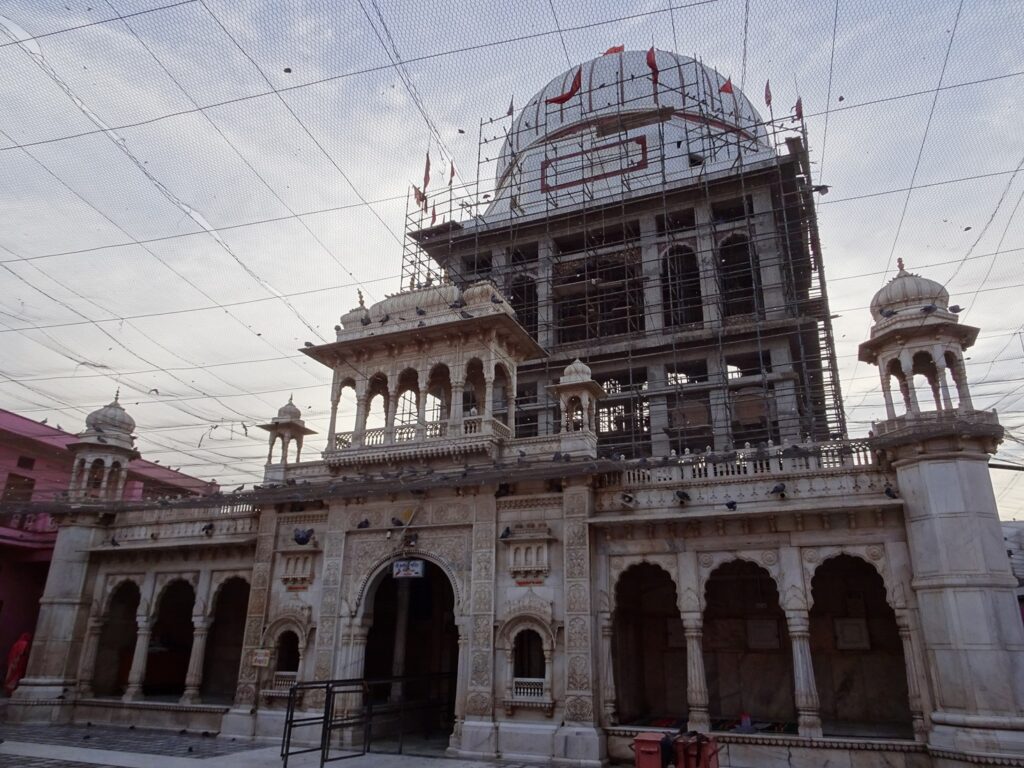
The original shrine dates back to the early 16th century and was expanded over the centuries as the temple’s importance grew. Today, the temple is housed in an impressive marble structure, which was completed during the early 20th century under the patronage of Maharaja Ganga Singh of Bikaner.
The Best Hotels in the Area
Budget: Rose Merry Guesthouse
Midrange: Sankhu Niwas
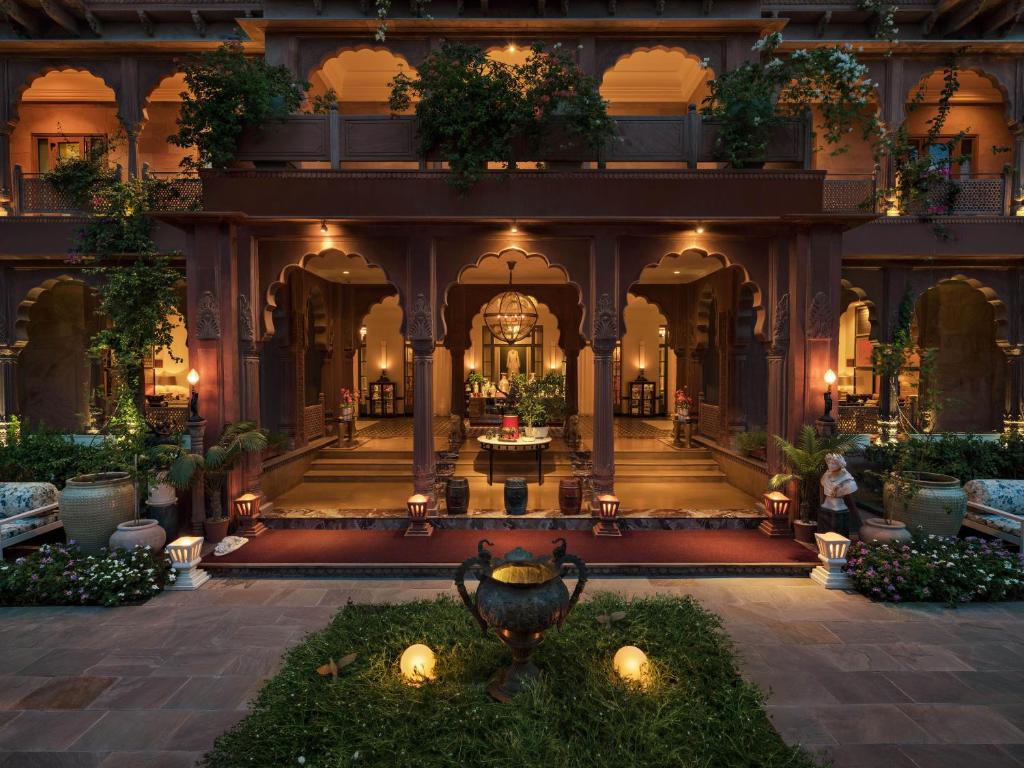
Luxury: Narendra Bhawan (pictured)
.
Exploring Karni Mata Temple
Even without all the rats, the temple already seemed quite different from others we had visited in the country. For instance, the massive pink-painted outside walls look more like they belong to a fortress than a temple.
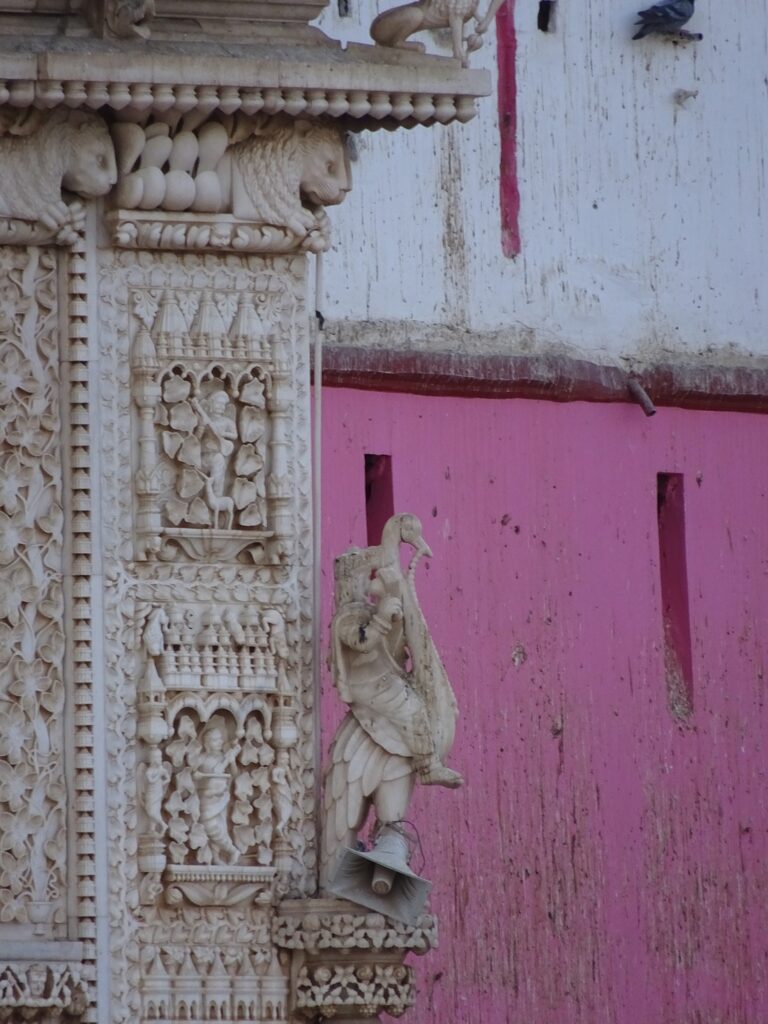
We also liked the impressive white marble gateway, which is decorated by lots of pretty carvings, while the large silver doors show scenes from the legends surrounding Karni Mata, including of course lots of small rat figures.
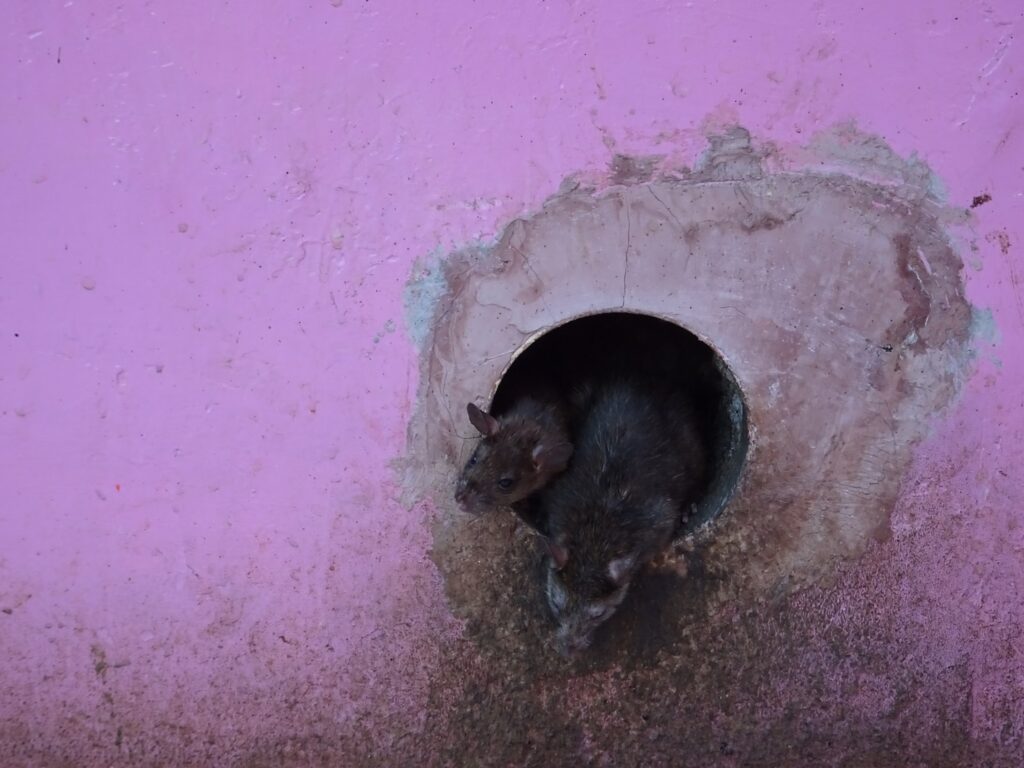
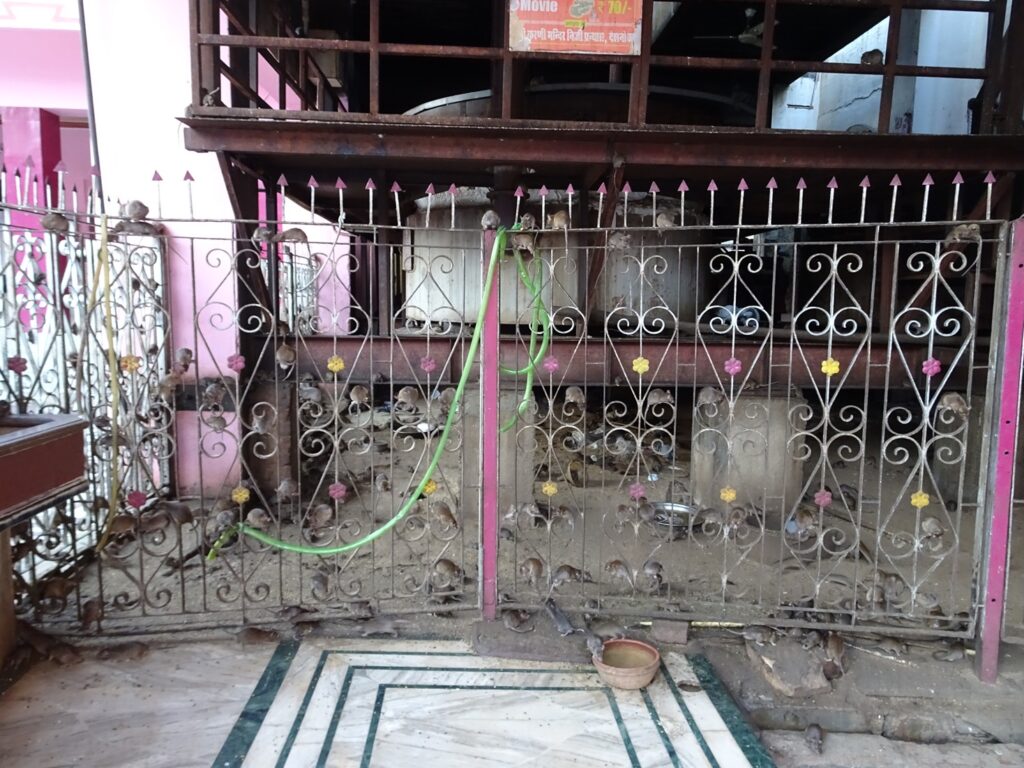
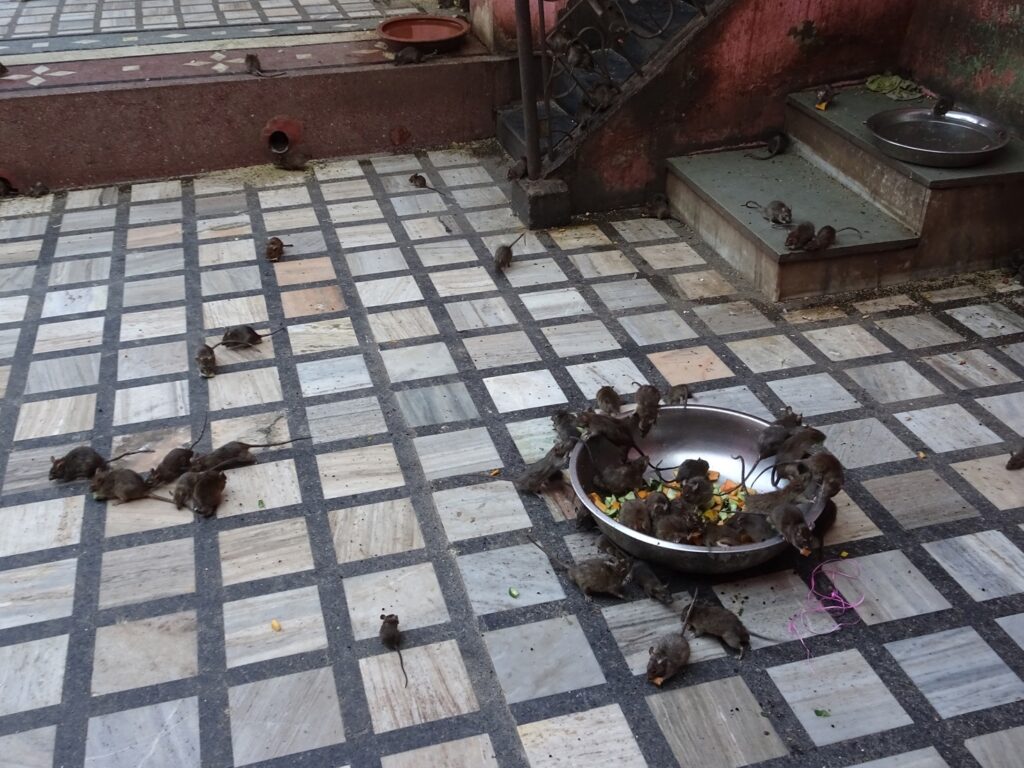
Despite all that, the moment we stepped through the gate, our attention was immediately drawn elsewhere. The rats were everywhere, darting across the rooms and corridors, sleeping in clusters beneath railings, sitting on marble ledges and looking out of holes in the wall.
The sight was definitely surreal at first, but we also noticed how important the kābās are in the religious ceremonies and I found it interesting to watch the interaction between the pilgrims and the rats.
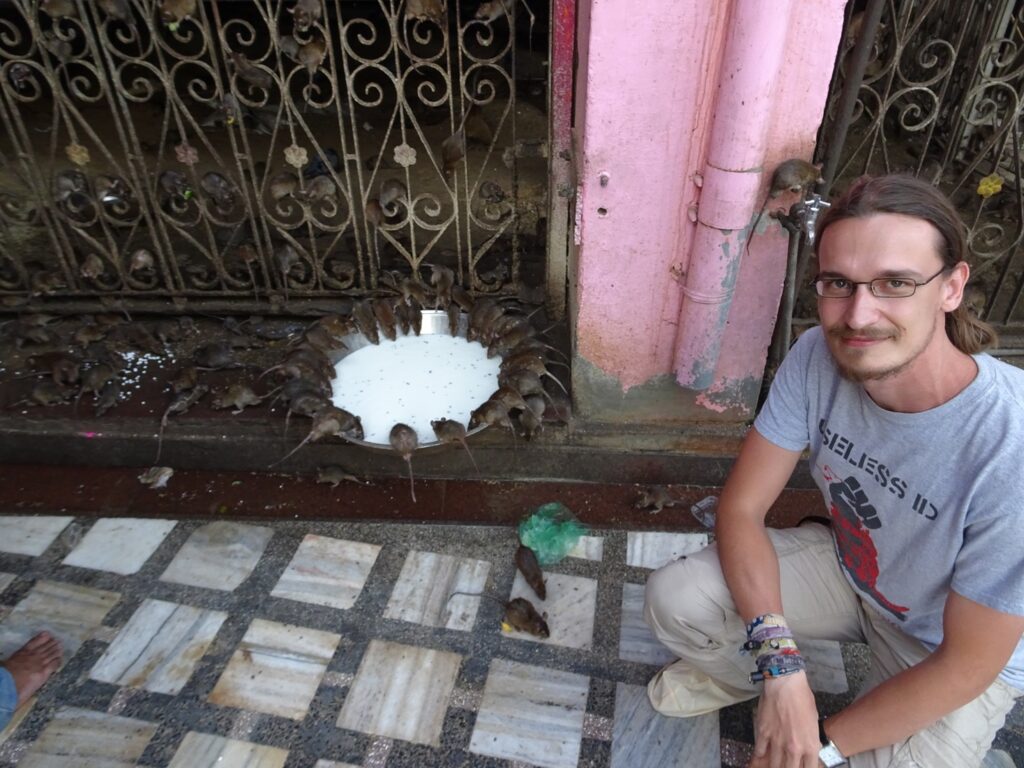
There are bowls of milk and sweets set up all around the temple, and many people actively tried to attract the rats because sharing food with them is considered auspicious (same as a rat running over your foot, by the way).
Something else that is supposed to bring luck is spotting a white rat among the thousands of black ones, which apparently are believed to be reincarnations of Karni Mata herself or members of her family. We only saw black rats during our visit, though.
I’m usually always interested in historical architecture, but in this temple I kind of had to force myself to have a look at anything other than the inhabitants. For instance, there are some pretty carved marble arches and a series of orange-painted stones with reliefs of riders.
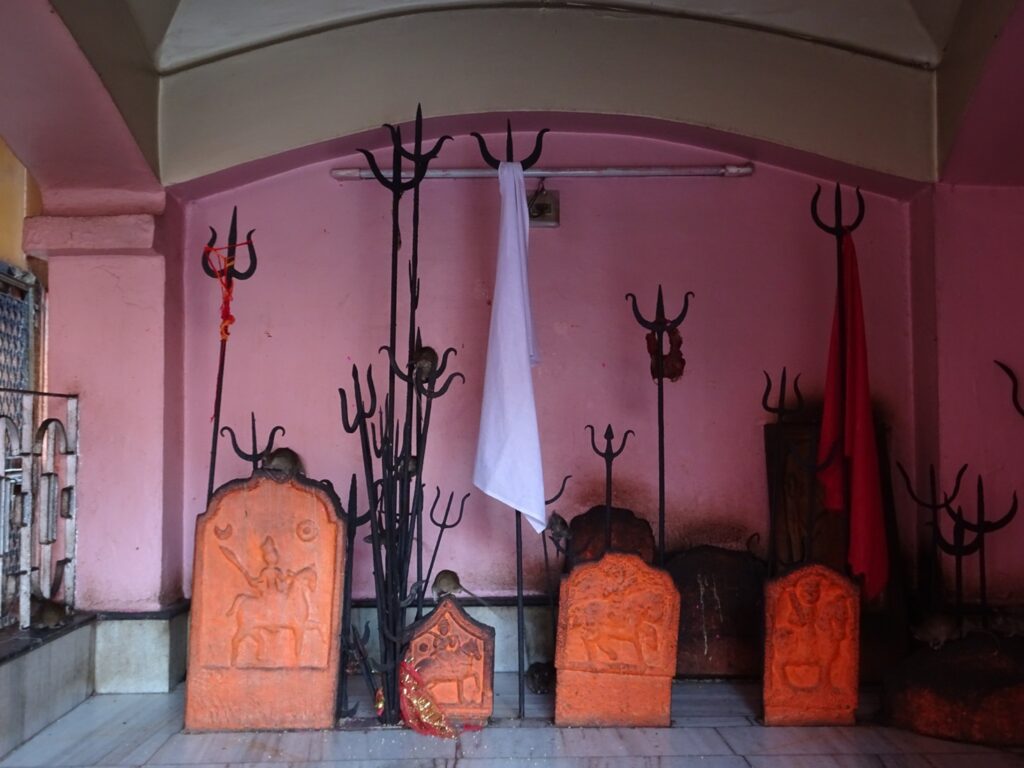
The innermost sanctum has the image of Karni Mata, which is surrounded by an elaborate silver frame with even more pretty silver reliefs of deities and lions.
What to Know About Visiting the Rat Temple
What Is The Visit Like?
The question that most of our friends asked us afterwards was whether the temple felt very unsanitary. Honestly, it’s not as bad as you might think. The rats are clearly well taken care of and seem healthy, plus we didn’t see any dead ones during our visit.
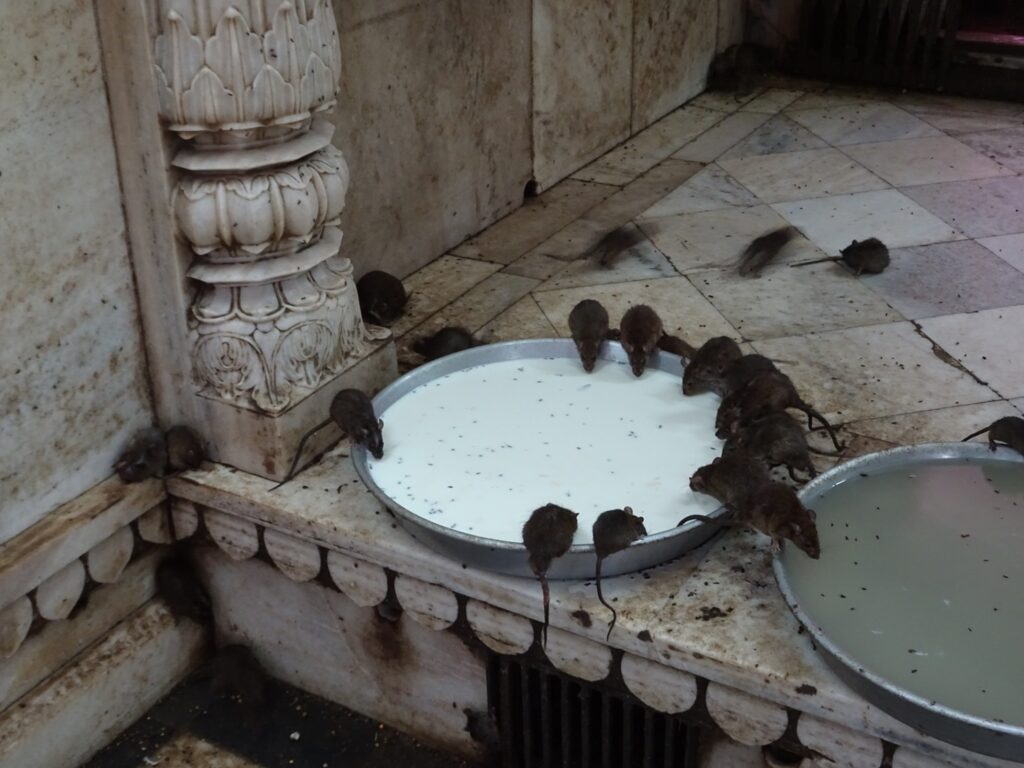
That said, it’s still a small temple full of rats, so it won’t ever be clean. There were people constantly sweeping the temple floor, but there were still lots of droppings around. If you have a problem with that, it might be best to skip it.
Do You Have to Take off Your Shoes?
Yes, as this is a Hindu temple, you’ll have to take your shoes off and leave them outside the door. You can, however, rent some cloth slippers outside, which is what we did. They’re technically free, but it’s still a good idea to give a little donation (we gave them 50₹, each).
Also, you might still want to bring some socks to wear inside the slippers, as they just give them from person to person. We also saw lots of domestic visitors who just kept on their socks (which is allowed) and some who threw them into the trash after coming out of the temple.
How Many Rats Live in the Temple?
It’s said that there are between 20,000 and 25,000 rats at Karni Mata temple. I can only assume that they have lots of hiding places, because while we saw a lot, we definitely didn’t see more than a thousand during our visit.
Should You Buy Rat Food?
There are a few stalls outside the main entrance selling rat food. We didn’t buy any for two reasons. For one, the rats are very used to humans, but they can also be quite feisty and apparently it’s not unheard of for them to bite people. Luring them in with food sounded like tempting fate.
More importantly, though, the food is mostly aimed at the religious pilgrims, because feeding the rats and sharing food with them is seen as an auspicious act. Doing the same as a foreign tourist that has no spiritual connection to the temple would have felt somehow disrespectful to us.
That said, this was just our personal notion and maybe nobody would be offended. The merchants certainly did try to get us to buy the food, so they at least don’t care. I’d say just make up your own mind once you’re there.
Practicalities
Opening Hours and When to Visit
The Temple is open daily from 4am to 10pm. If you want to see the biggest numbers of rats, it’s best to not come around noon, when most of them are sleeping.
They are said to be most active around sunrise and in the evening. We were there around 6pm and there were lots of them running around or feeding.
Entrance Fee
There is generally no entrance fee to visit the temple, but we had to pay 50₹ to be allowed to take photos inside.
How to Get There
Karni Mata Temple is located in the small town of Deshnoke, which is about 30km south of Bikaner.
We stayed in Bikaner and organized an auto-rickshaw trip to the temple and the National Research Centre on Camels, for which we paid 800₹. If you’re short on time and want to visit several places, it’s the way to go. It’s best to ask staff at your hotel or guesthouse to help you organize a tour, which makes it less likely to get ripped off.
Otherwise, you can take a bus to Deshnoke from the Roadways Bus Stand on Sri Ganganagar Road north of the centre. It takes about one hour, costs only 35₹ and should be able to drop you off right in front of the temple. You can check the schedule and availability on the RSRTC Website (choose ‘Use As Guest ‘ when searching for connections).
Finally, you can also take a train along the Bikaner–Jodhpur line from Bikaner Junction Station. You can look for connections on the Indian Railways Site. The Karni Mata temple is directly to the east of Deshnoke’s train station.
What’s the Dress Code?
As with most Hindu temples, you should wear clothes that cover your shoulders and knees, apart from taking off your shoes (see above).
How Much Time Do You Need?
We spent about half an hour here, but you can get a good impression in 5 to 10 minutes, if you’re feeling an urge to flee.
Should You Visit Karni Mata Temple?
I totally get that visiting the temple isn’t for everyone. If you have a problem with rats or unclean places, then you 100% shouldn’t go. No rat touched us, but you’ll definitely step into rat droppings at some point (which isn’t too bad with the shoe covers).
If you can handle it, however, it’s bound to be one of the most memorable places you’ll ever see. It’s completely unique and you won’t find anything like it anywhere else on earth, so I highly recommend dropping by.