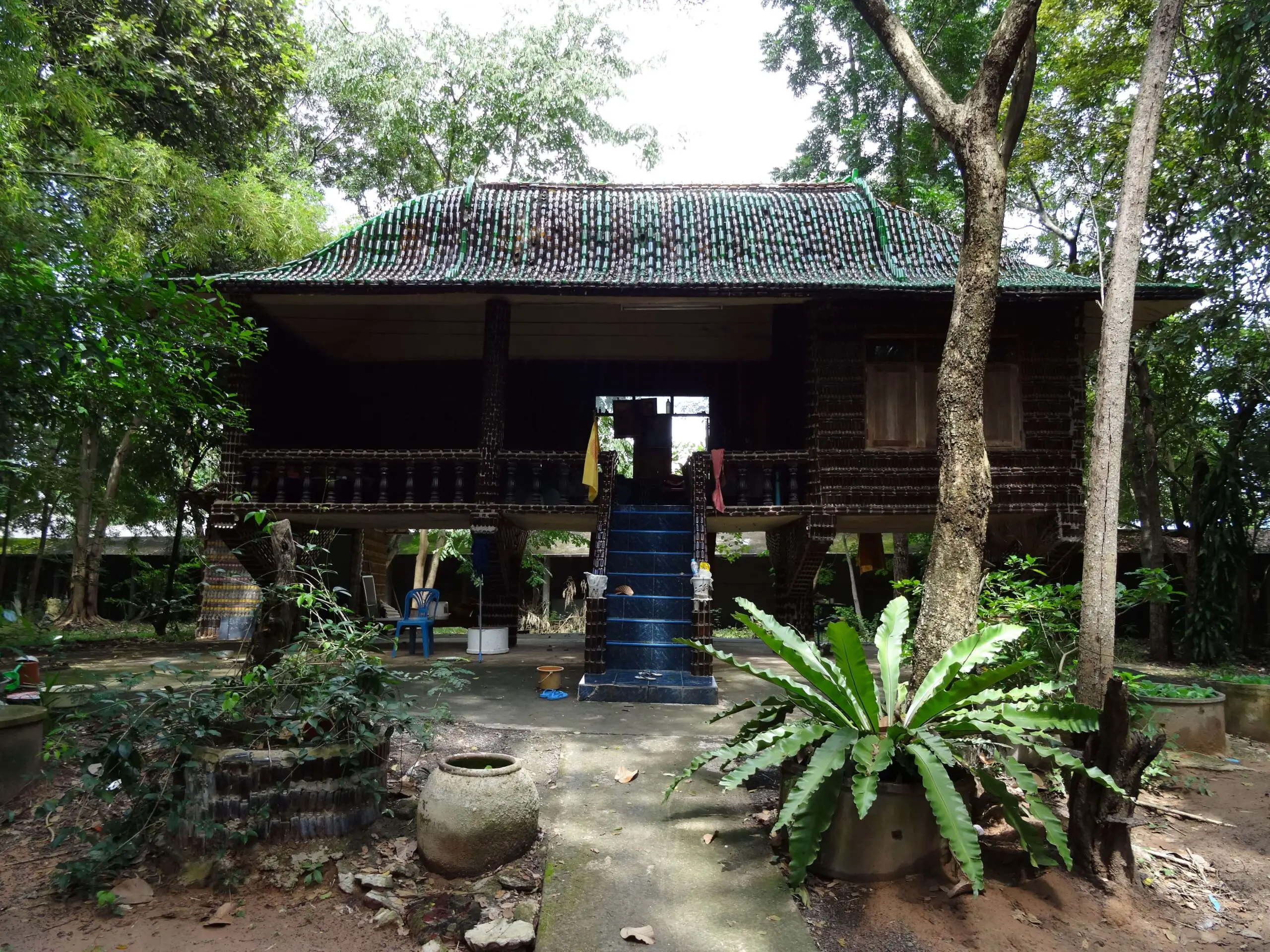
I came across lots of quirky attractions in northeastern Thailand’s seldom-visited Isan region, but the strangest one was definitely Wat Pa Maha Chedi near Si Saket, which is a Buddhist temple that is constructed from an insane amount of recycled beer bottles.
Wat Lahn Kuat (Million Bottle Temple), as it’s also known, was founded in 1984 by a group of Buddhist monks led by Abbot Luang Pu Buddha Isara and is located near the small town of Khun Han in Si Saket Province. Here’s everything you need to know about visiting this wacky attraction.

This post may contain affiliate links, and I might earn a small commission at no additional cost to you. For more info, click here.
What is the Story Behind the Million Bottle Temple?
The unique temple is said to be the result of an abbot’s dream about a heavenly temple covered in diamonds and other gemstones. The abbot took this as a hint to recreate the building on Earth, and as gemstones probably were in short supply, he decided to use the next best thing: beer bottles.
More prosaic sources say that the monks at the temple were concerned about the increasing amount of waste that were polluting the local surroundings, and wanted to find a way to encourage recycling and raise awareness about the issue.
They began collecting discarded bottles from local communities and decorating the buildings, until nearly all surfaces of the temple complex were covered in glass bottles.
Visiting the Million Bottle Temple
When I was exploring the temple complex, I quickly realized that the name is far from an overstatement. Almost every surface of every building (inside and out) is completely covered in bottles, which are neatly arranged in repeating patterns.
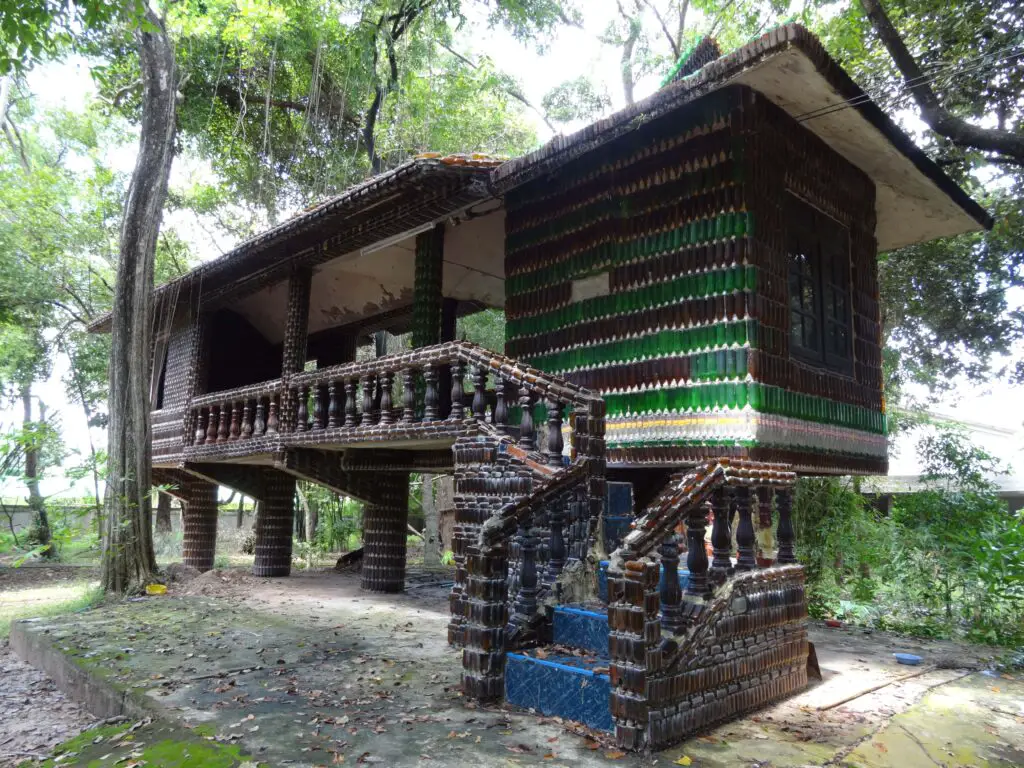
The walls, pillars and even the buttresses of the temple buildings are covered in brown Chang and green Heineken beer bottles. I found the overall effect surprisingly beautiful, and spent quite a while checking out every nook and cranny of the temple complex.
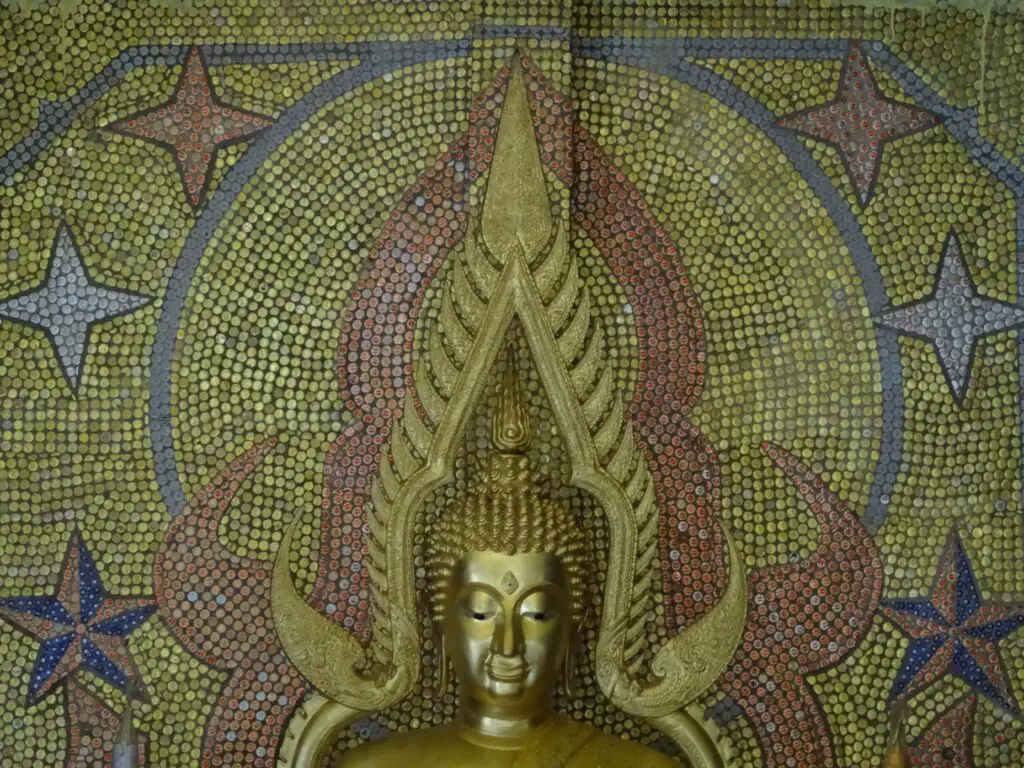
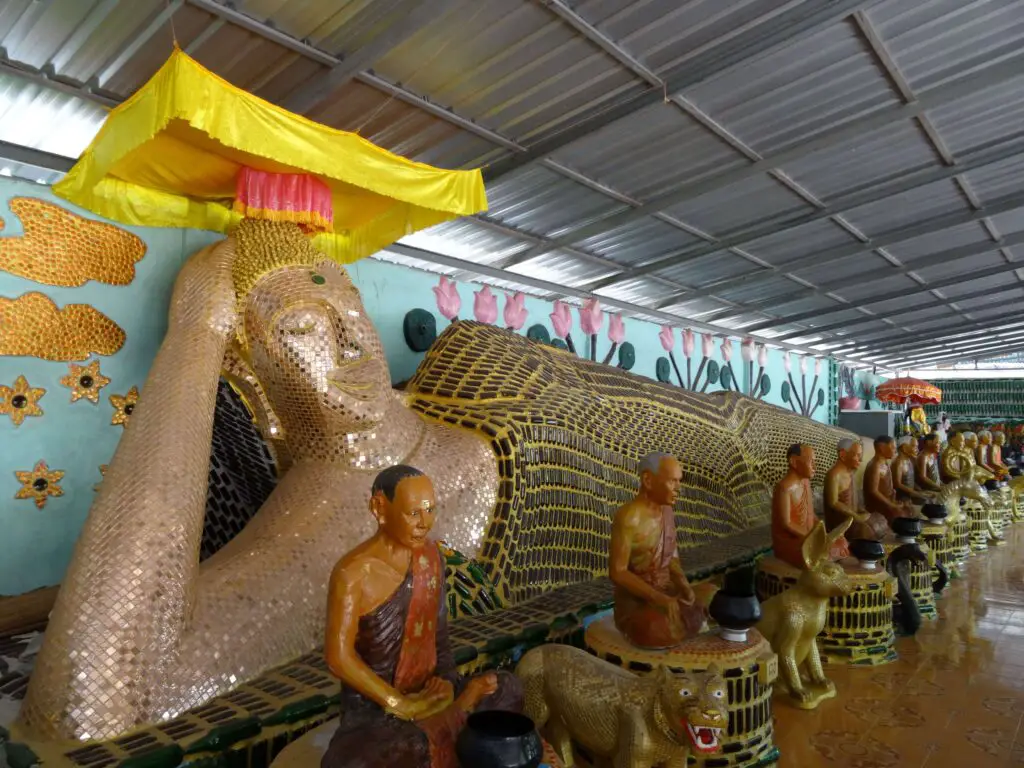
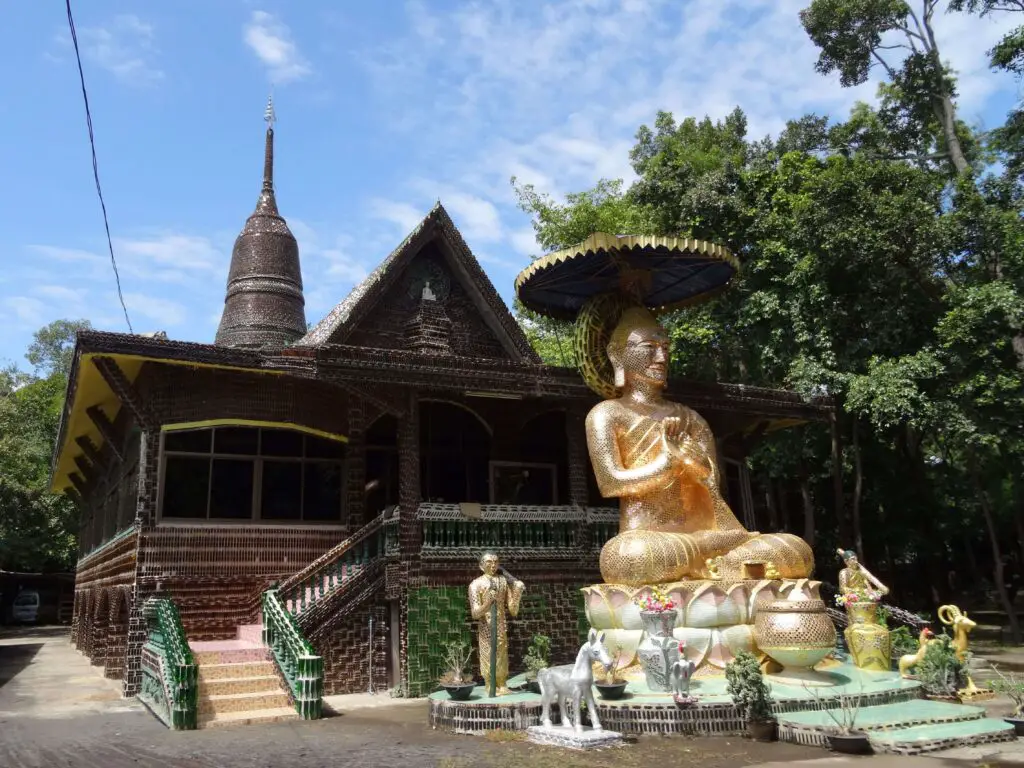
On the grounds there are a giant chedi (stupa), a crematorium, scripture hall and big reclining Buddha that are all decorated in the same way. Something else that I found cool was that some of the mosaics surrounding the Buddha images inside the buildings were made of bottle caps.
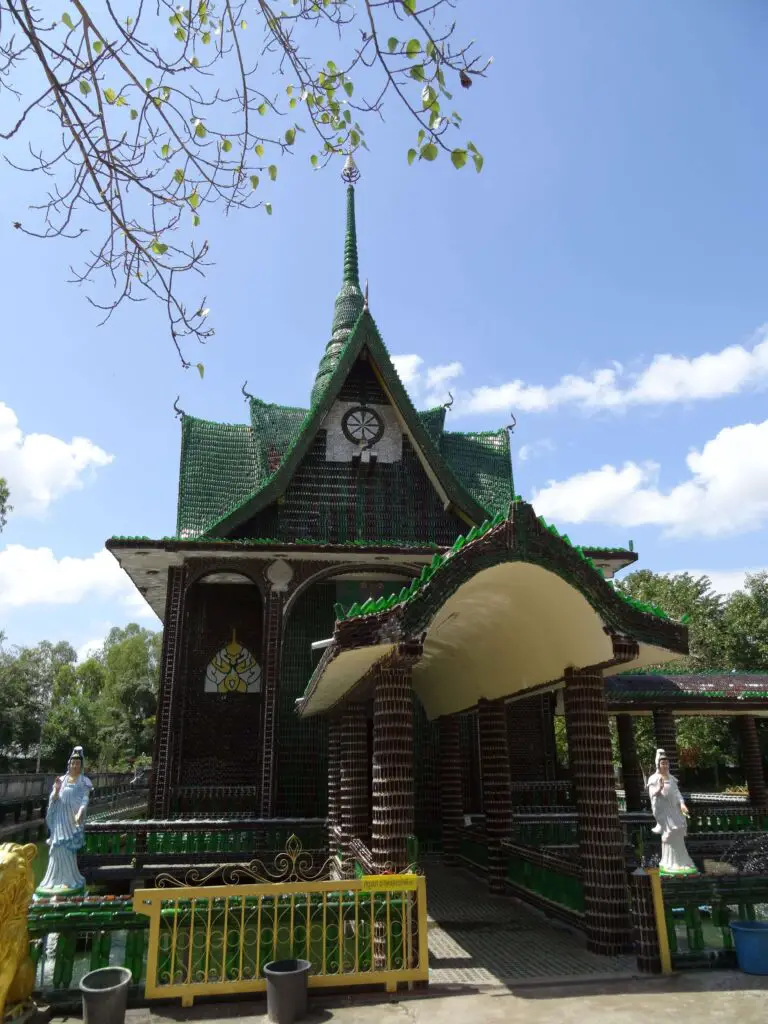
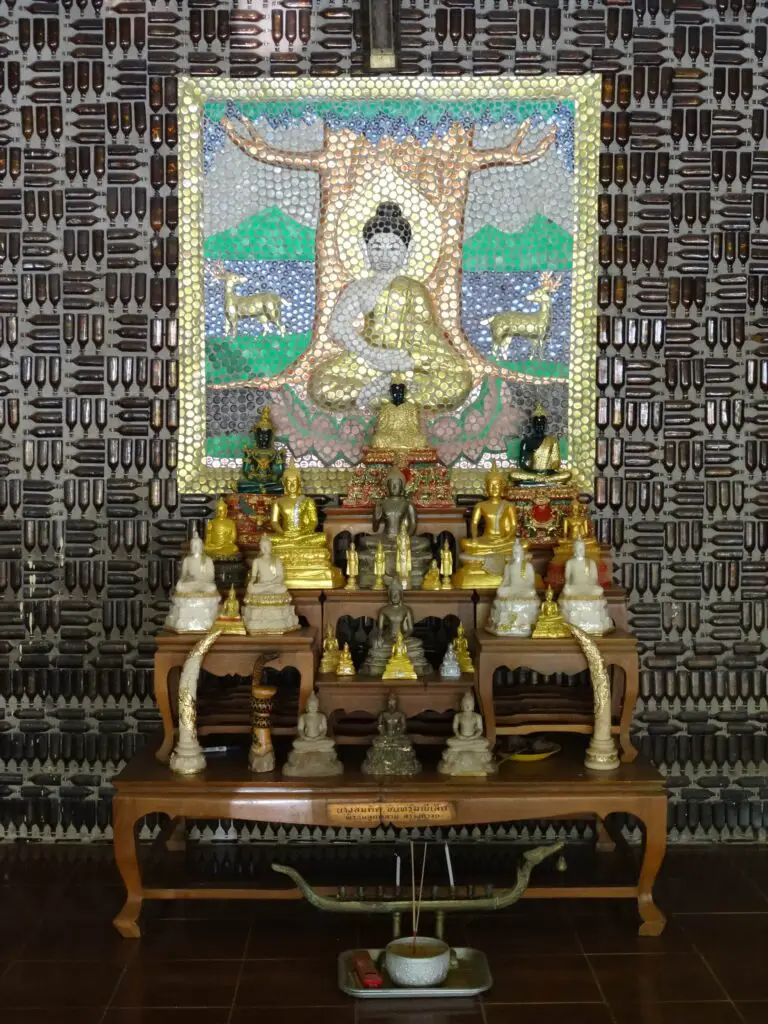
The unique decoration is also said to help insulate the temple’s interior from the heat of the sun and indeed, I noticed that the temple was surprisingly cool, even on the pretty hot day I visited.
Something else I was surprised by was the fact that the decoration even continues to the monks’ quarters behind the main temple complex – talk about some real dedication to a design concept.
How to Get There
The temple is located near the village of Khun Han in southern Si Saket Province. The nearest bigger town is Si Saket and while I was unsuccessful finding a place hiring scooters there, I managed to reach the temple by public transport.
There are infrequent buses running to Khun Han from Si Saket’s main bus terminal, which is located about 1km (0.6mi) south of the city’s train station.
Just ask around at the terminal and people will show you where the right buses leave. They take about an hour to reach Khun Han. Once there, the temple can be found to the west of the big roundabout at the southern end of town (near the northern edge of the Nong Si Reservoir).
Where to Go Next
Ubon Ratchathani, Thailand’s ‘Royal Lotus City’
Prasat Phimai, one of the biggest Khmer temples in Thailand
Nakhon Ratchasima aka. Khorat, the gateway to the Isan Region