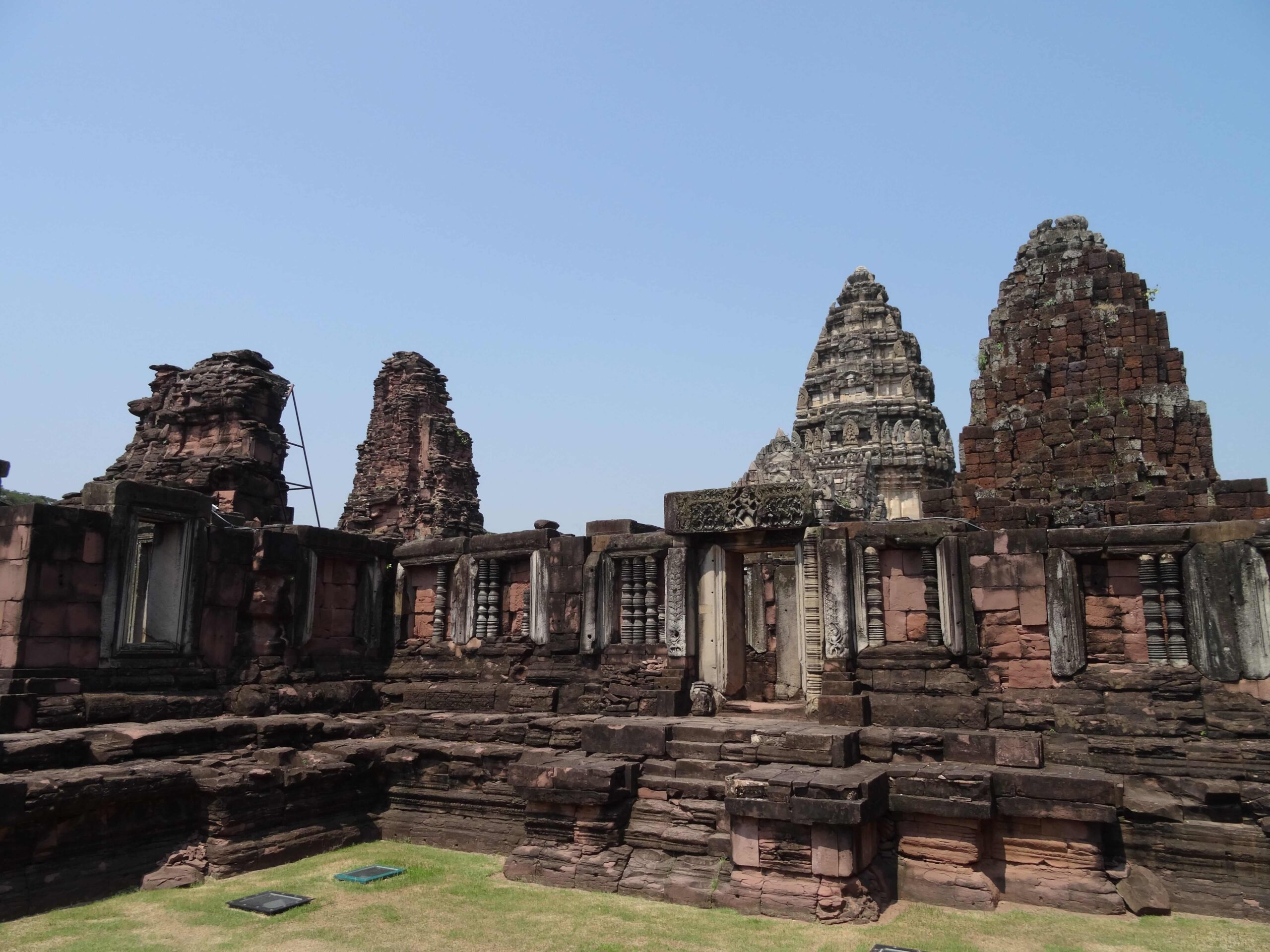
When you’re taking a look at the beautiful carved stone towers of Phimai’s central temple, you’d be forgiven for thinking you had accidentally crossed borders to nearby Cambodia. To be honest, before visiting, I wasn’t aware that eastern Thailand had its own array of well-preserved Khmer temples.
Apart from the equally impressive Phanom Rung Temple, the complex at Prasat Phimai was my favourite among these. As it’s easy to reach by public transport, I took a day trip while I was staying in nearby Nakhon Ratchasima (Khorat).
Here’s everything you need to know about exploring Prasat Phimai Temple and the surrounding Phimai Historical Park.

This post may contain affiliate links, and I might earn a small commission at no additional cost to you. For more info, click here.
Guided Tours of Phimai
If you’d like to learn a little bit more about Phimai, there are some guided tours available, which include the archaeological park. You can have a look at some options below.
The History of Phimai
Phimai town was once part of the Khmer Empire (9th to 15th century), and Prasat Phimai was one of its most important temples in what is now northeastern Thailand. The ancient town was surrounded by walls and moats and occupied a strategic spot in the fertile Mun River basin.
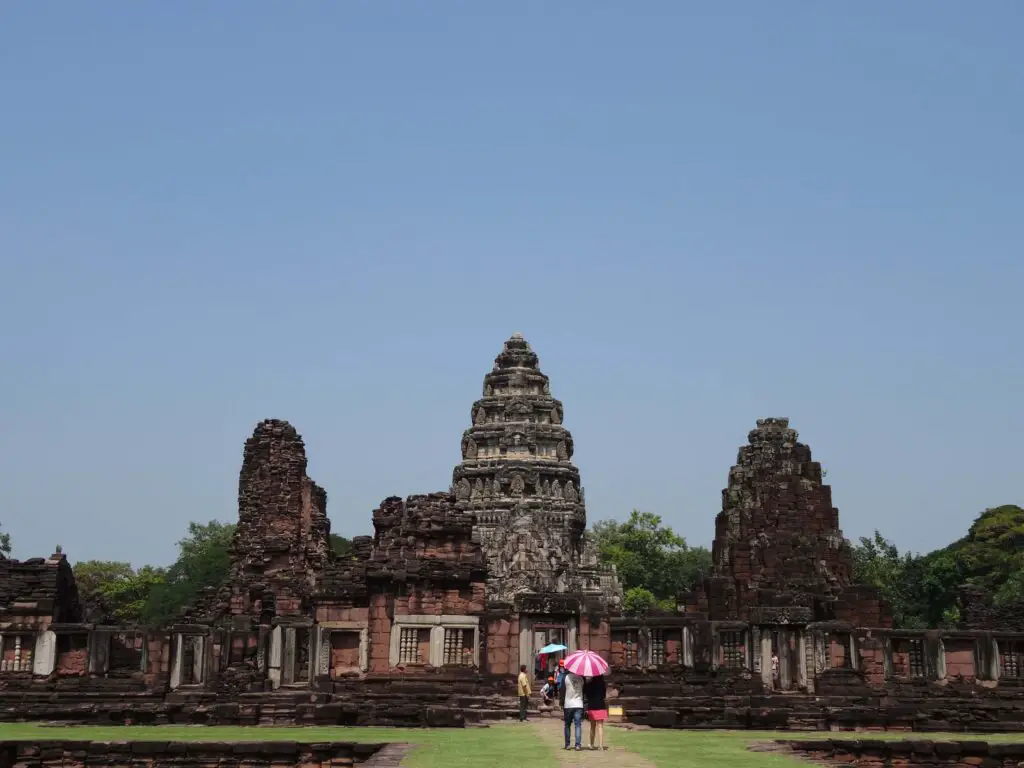
Most of the buildings you see today date to the 11th and 12th centuries, although archaeologists have found evidence of even older structures underneath the present complex. Phimai was primarily a Mahayana Buddhist sanctuary, which I found interesting considering just how much Hindu imagery you’ll find carved into the temple.
The elaborate sandstone towers and lintels show figures and scenes from Hindu mythology alongside Buddhist elements, and reflect the rather complicated mix of religious traditions that existed within the Khmer Empire.
The temple was also closely connected to Angkor, the Khmer capital in present-day Cambodia. In fact, Prasat Phimai faces south rather than east, probably because of its connection to the ancient road leading towards Angkor.
During the reign of Jayavarman VII in the late 12th and early 13th centuries, this connection became particularly important, with rest houses and arogayasala, or houses of healing, established along the routes between Angkor and Phimai.
After the decline of the Khmer Empire, Phimai gradually lost its importance and the temple eventually fell into disrepair. Fortunately, a major restoration project was carried out in the 1960s by Thailand’s Fine Arts Department with French assistance and led to the current appearance of the temple.
.
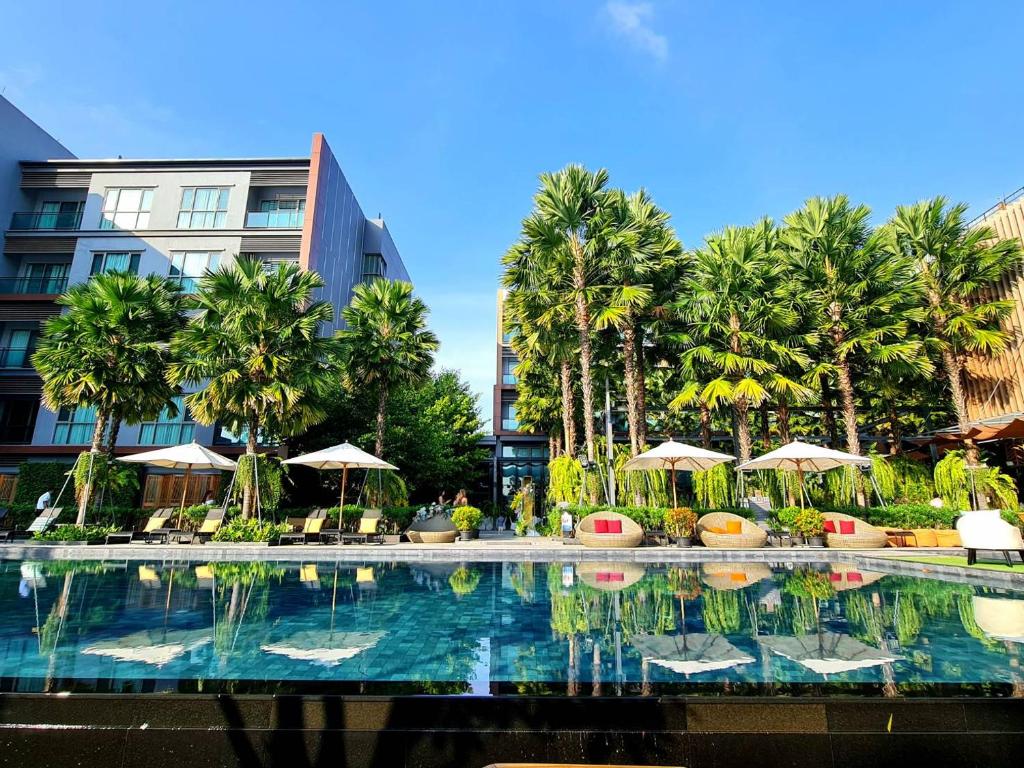
Top 3 Places to Stay in Nakhon Ratchasima
Budget Option: Sansabai House
Midrange: Romyen Garden Palace
Luxury: AisanA Hotel Korat (pictured)
.
Exploring Prasat Phimai Historical Park
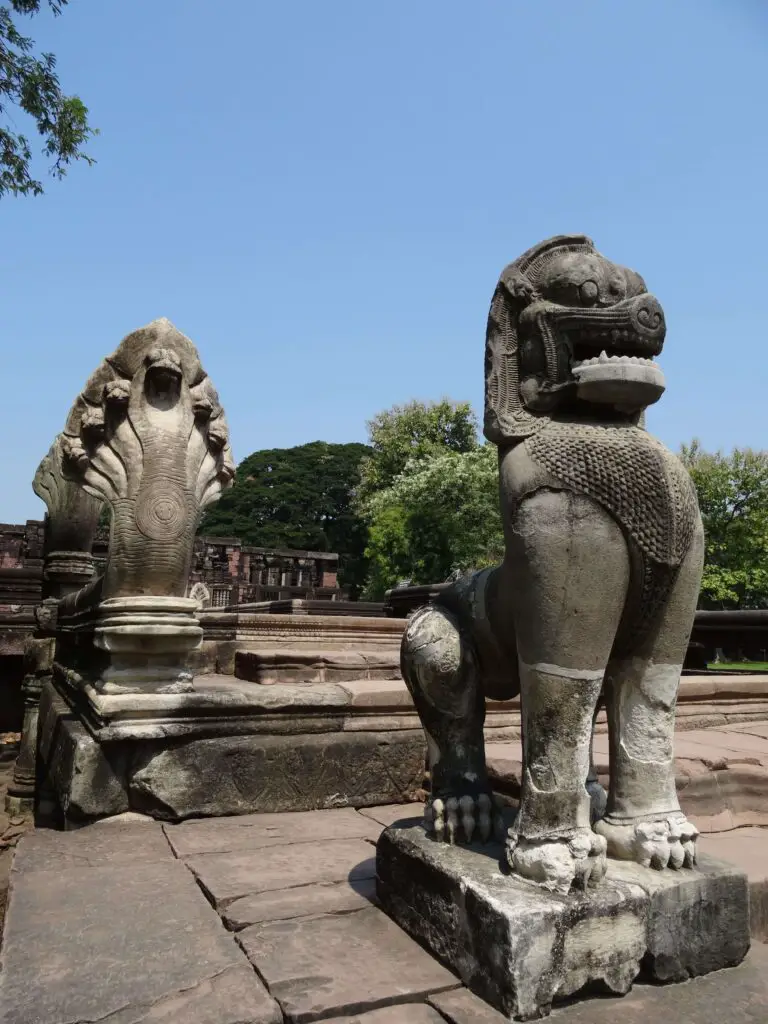
You enter the complex from the south, crossing the Naga Bridge, which is named for the statues of the snake-like mythological beings that stand guard on all corners of the terrace.
The large building to the west is called Khlang Ngoen, which translates to treasury. Despite that, it’s rather thought to have been a rest house that was used by the king in preparation for religious ceremonies.
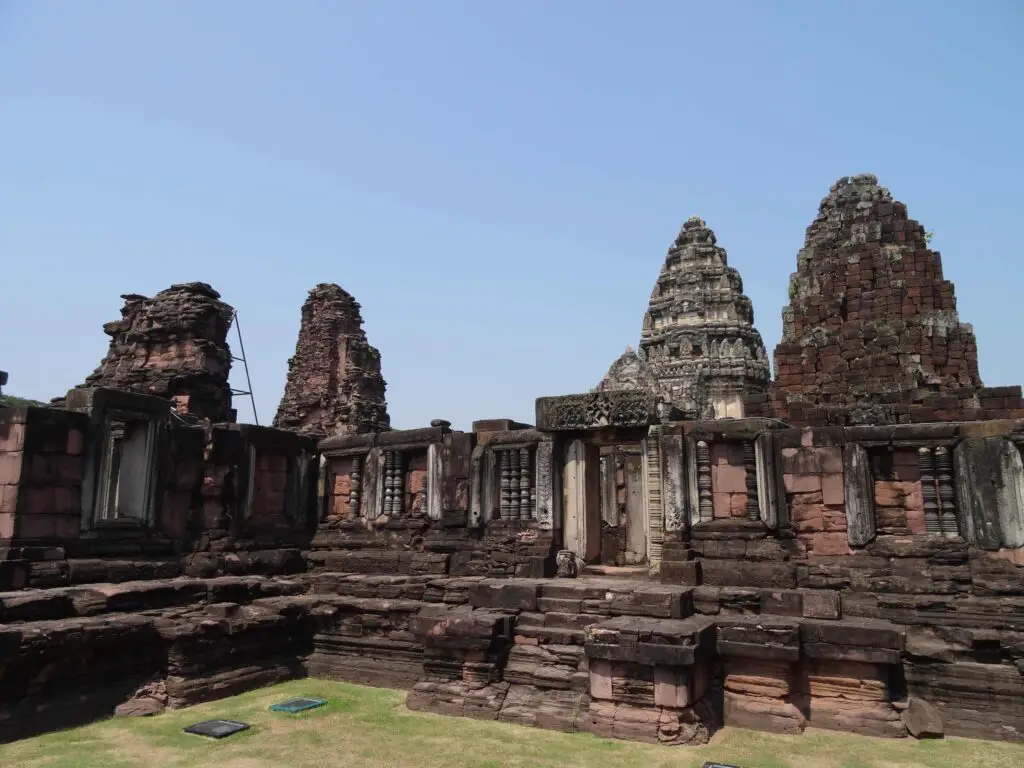
After crossing the bridge, you’ll pass through the Southern Gopura, which is the biggest remaining gate of the complex, and into the courtyard of the temple.
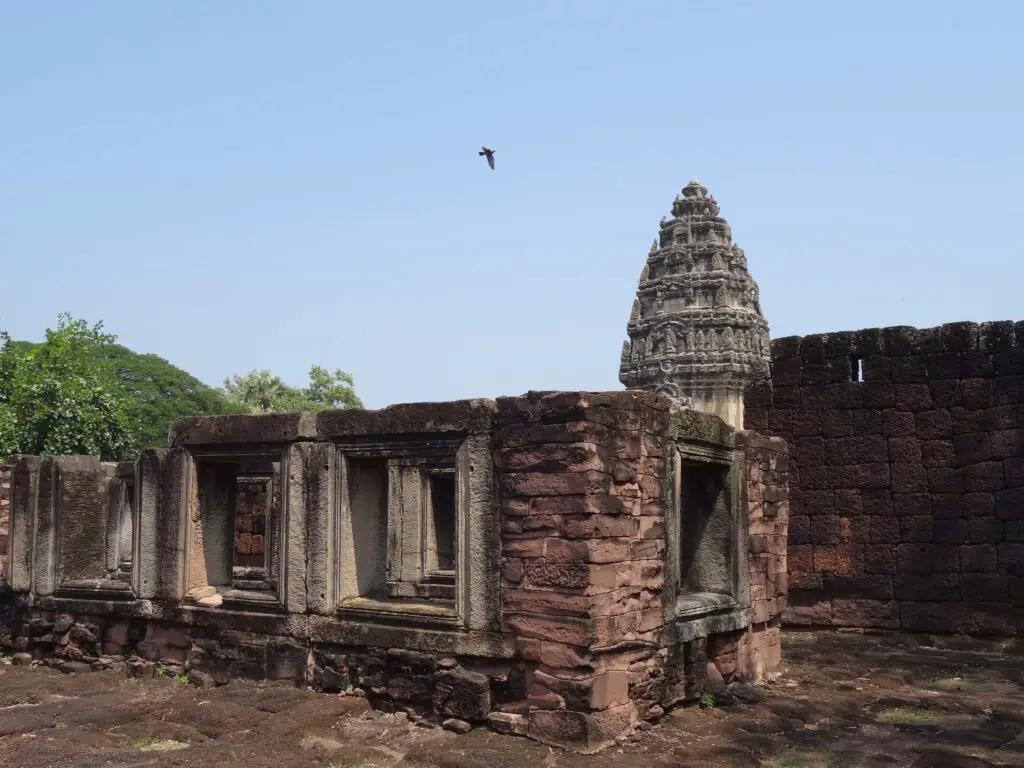
If you follow the causeway north you’ll come to the inner gallery, which surrounds the central sanctuary of the temple. To me, this was the most impressive part of the complex (as I’m sure it is to many other people).
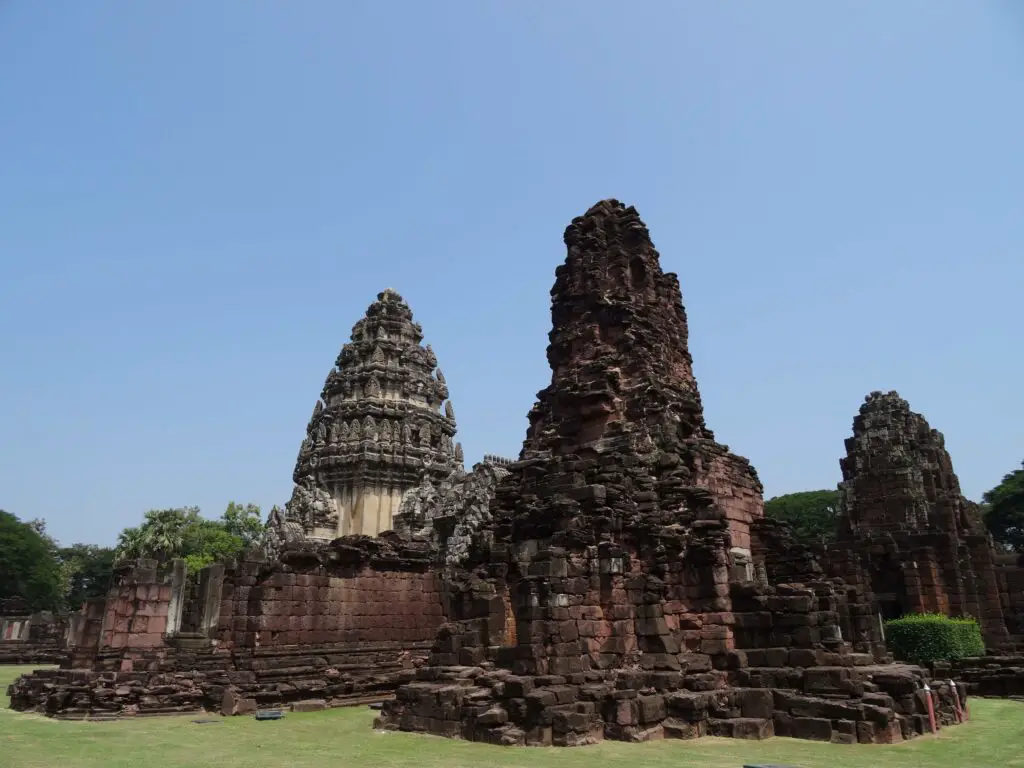
The central prang (tower-like spire) is carved from sandstone and generally thought to be the oldest remaining structure of the temple, perhaps even older than Angkor Wat. The two towers to the south-west and south-east of the central prang were built a little later.
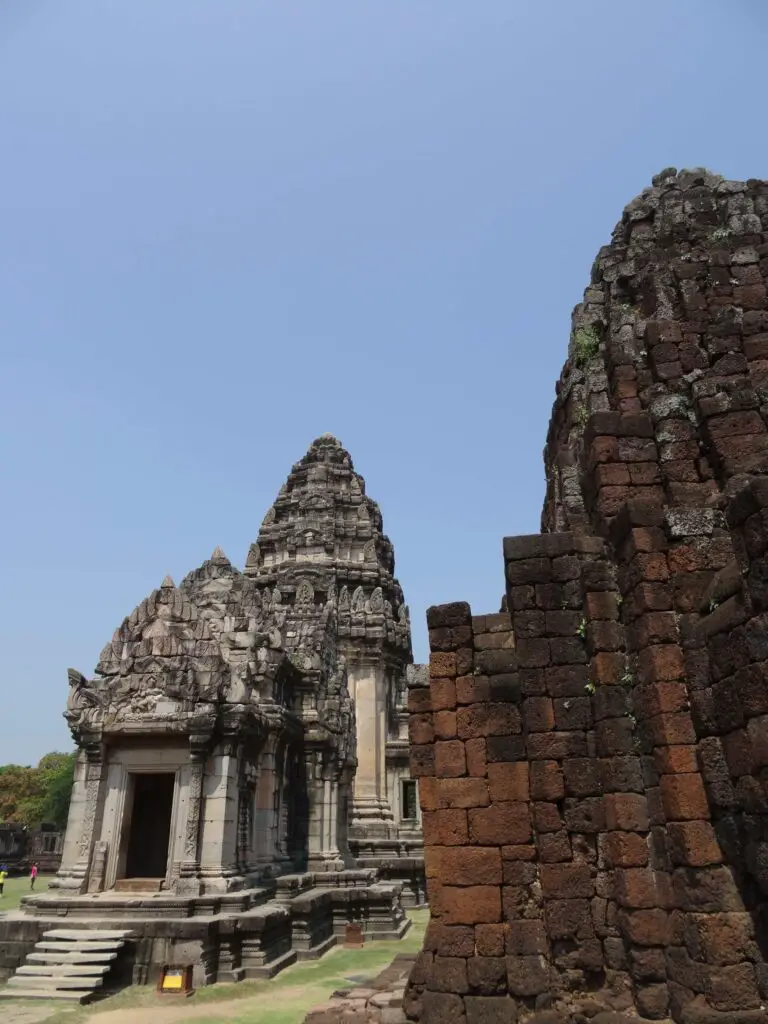
The beautifully layered spire of the central prang has lots of figural sculptures and is crowned by a lotus bud. The lintel over the southern entrance shows a detailed image of Shiva dancing.
If you know your Hindu mythology, you also know this spells bad news, as he destroys the Universe in the process (and you thought it was bad to step on your dancing partner’s toes, this guy takes it to a whole new level!).
The temple is open daily from 7.30am to 5.30pm (You can check the current times on their facebook page). The entrance fee is 100฿ for foreigners and 20฿ for Thai residents.
Other Sights in Phimai
Phimai National Museum
If you’re a fan of Khmer history (or an archaeology nut like me), you shouldn’t miss this interesting museum, which has plenty of statues and architectural elements both from Prasat Phimai and lots of other Khmer sites in eastern Thailand.
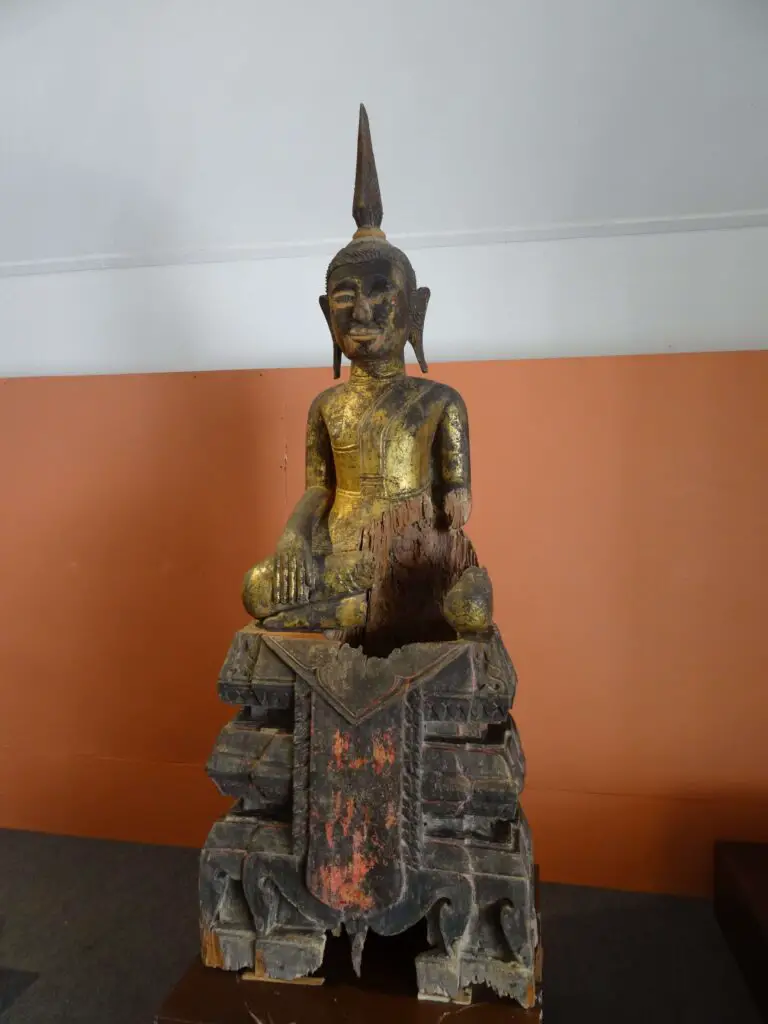
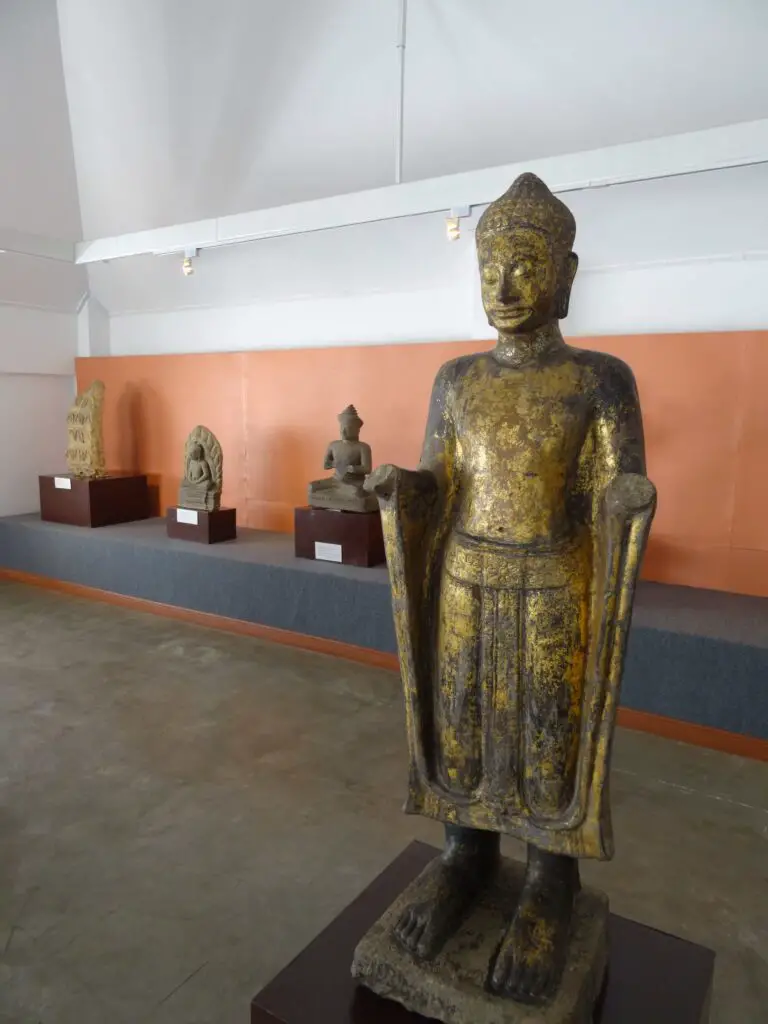
There are some interesting gilded Buddha statues, as well as an entire hall full of beautifully carved stone fragments of doorways and column capitals.
The museum can be found a block northeast of the temple on the shores of a small rectangular reservoir (which also dates to Khmer times). It’s open from Wednesday to Sunday from 9am to 4pm (double-check the current times here) and the entrance fee is 100฿ for foreigners and 20฿ for Thai residents.
Sai Ngam Banyan Tree
The country’s biggest Banyan Tree can be found about 1.5km or 1mi. east of the centre past the large Sa Phleng Reservoir. The 350-year-old tree is so huge that it kind of forms its own little forest. It’s pretty cool and definitely worth checking out if you have an hour or so to spare.
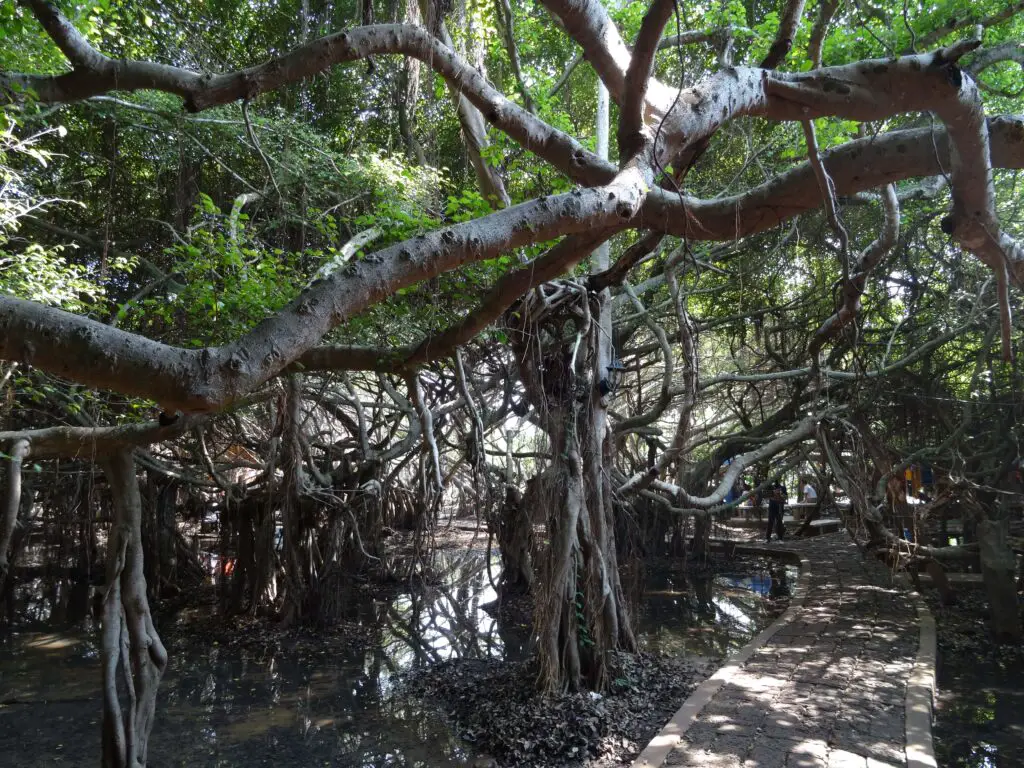
Walking there took me about 15 minutes, or you could also take a motorcycle taxi. There are a few drivers who hang around near the entrance to Prasat Phimai.
Smaller Archaeological Sites in the City Centre
As an archaeologist, I never get enough of exploring ancient ruins and if you’re the same, you can check out several smaller architectural remains around the town centre.
For instance, three city gates of the former town are still left standing, of which I found Pratu Chai, which used to guard the important road to Angkor, to be the most impressive. Just follow the road south from Prasat Phimai for a few blocks to find it. The ruins of the Eastern Gate are just a block east of the temple.
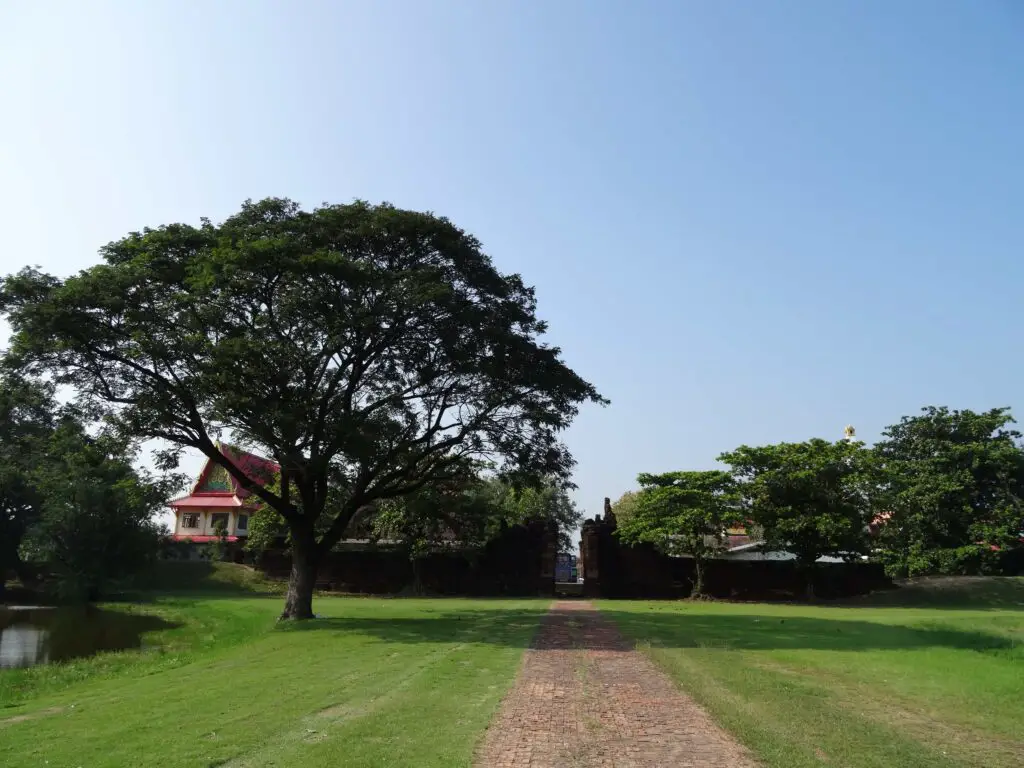
A few hundred meters further south is Kuti Ruesi Noi, which are the remains of a 13th-century doctor’s office (Well, it’s referred to as an arogayasala or house of healing, but this is basically what it boils down to). Directly northeast is a small sacred pond.
About one kilometer south of the southern gate sits Tha Nang Sa Phom, which is a former boat landing pier from around the same time. I thought the cross-shaped platform looked a little forlorn in the middle of the meadow where it stands now, but this is where the harbour basin used to be. Just follow the road south until it bends to the west to find it.
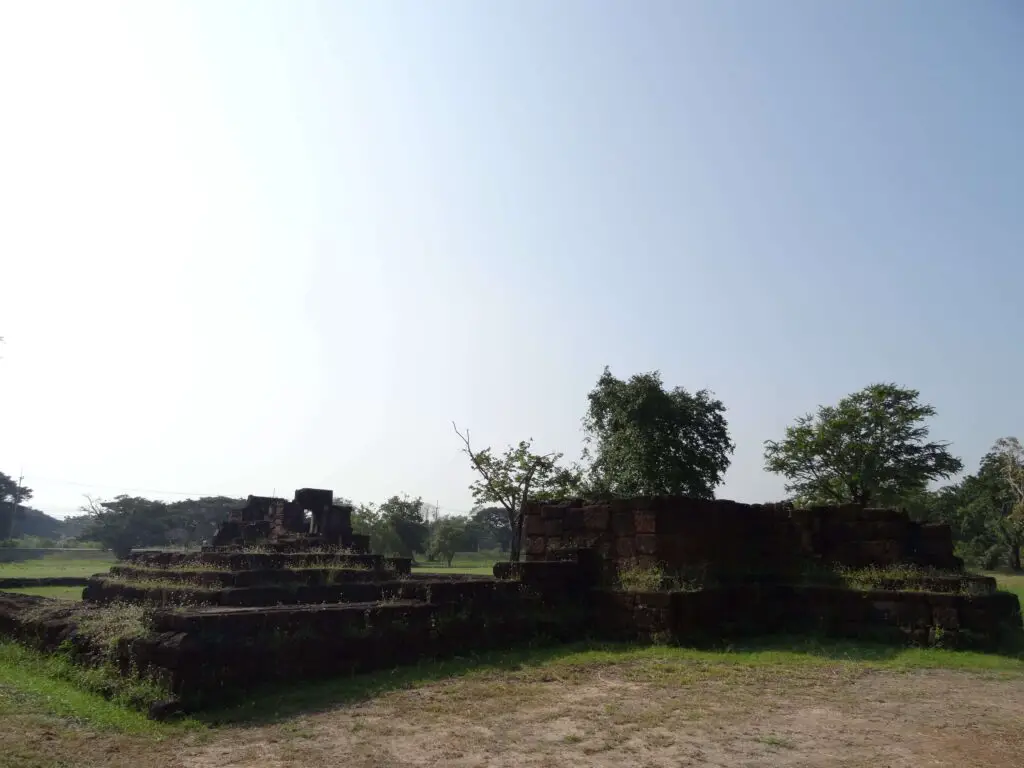
Finally, southeast of Prasat Phimai and slightly south of the clock tower, you’ll find the remains of Meru Brahmathat, which is a brick chedi (stupa) from the 18th-century Ayutthaya Kingdom. It’s little more than a partially collapsed mound of bricks, however.
Map of Phimai
This map of Phimai shows the locations of all the spots I described above.
Practicalities
How to Get to Phimai
Phimai Temple is located in the centre of Phimai, a small town in the Isan Region’s Nakhon Ratchasima Province.
To get here from the capital Nakhon Ratchasima (aka. Khorat), just hop a bus at the New Bus Terminal west of the town centre, which should take about 1.5 hours and cost about 50฿. The buses stop close to the entrance to the Archaeological Park.
Where to Stay in Phimai
I visited Phimai on a day trip from Khorat, but if you want to soak up the small town atmosphere or check out the place after the (admittedly few) day tourists have left, there are a couple of places to stay in town, too.
The centrally located Benya Guesthouse seems to be the pick among the budget places. You’ll find it across the road from Prasat Phimai. Moon River Resort Phimai would be a slightly more upscale but still very affordable option. You can have a look at the map for some more options.
Where to Go Next
Nakhon Ratchasima, the laid-back gateway to the Isan Region
Phanom Rung and other Khmer temples near Nang Rong
Surin, a pretty small town with a long history of elephant-handling
Wow how cool. I immediately pictured Cambodia the moment I spied your featured image. Reminds me of our Angkor Wat visit many years ago. Neat spot.
Ryan
Hello Ryan,
I can see why you thought of Cambodia – the Khmer Style is very distinctive. The Thai Area near the border (southern Isan-Region) is full of amazing Khmer Temples.
Another cool example is Phanom Rung a little further to the east. Plus, there are significantly fewer tourists than in Angkor Wat;-)
Reinhard