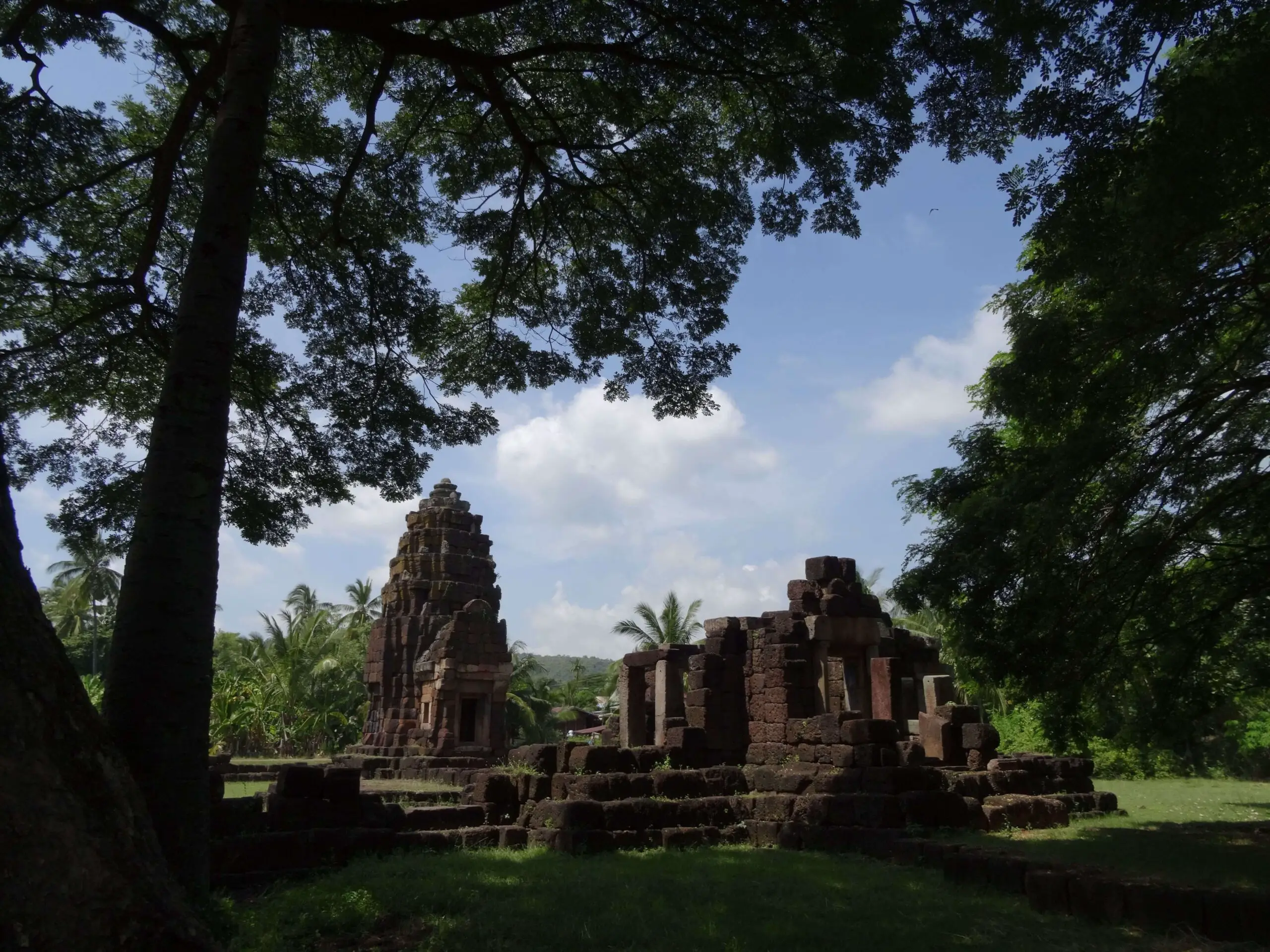
Phanom Rung in northeastern Thailand’s Isan Region was the most impressive Khmer temple that I came across in the country, even surpassing nearby Prasat Phimai. I really recommend checking it out if you have just the slightest interest in archaeology or historical architecture.
If you make it here, it’s worth sticking around a little longer, as Phanom Rung is just one of many historical traces in the beautiful landscape around the small town of Nang Rong.
I explored the area by scooter and came across tons of other Khmer temples and shrines, most of which I had completely to myself. Here are my recommendations on what not to miss in the area.

This post may contain affiliate links, and I might earn a small commission at no additional cost to you. For more info, click here.
What to See Around Nang Rong
In my opinion, the area around Nang Rong is one of the best places in Thailand to see the regional legacy of the Khmer Empire. From around the 10th to 13th centuries, this part of what is now northeastern Thailand was closely connected to the Khmer world centred on Angkor in modern-day Cambodia
They built a network of roads, temples, reservoirs, rest houses, hospitals and other structures across the landscape, which connected the region with other important Khmer centres, like Preah Vihear and Prasat Phimai.
It’s clear that the builders made extensive use of the natural landscape. Phanom Rung and the other sanctuaries are positioned around the volcanic hills and large baray reservoirs that held water for the surrounding settlements and agricultural land.
All of the places in the countryside near Nang Rong that I’m describing below are part of that former cultural landscape. Phanom Rung and Prasat Muang Tam are the obvious highlights, but there are plenty of smaller and much less visited ruins that I found fun to explore.
I’ve sorted the sights by how worthwhile I think they are rather than by geographical location.
.
Top 3 Places to Stay in the Area
Budget: P. California Inter Hostel
Midrange: Phanomrungpuri Hotel
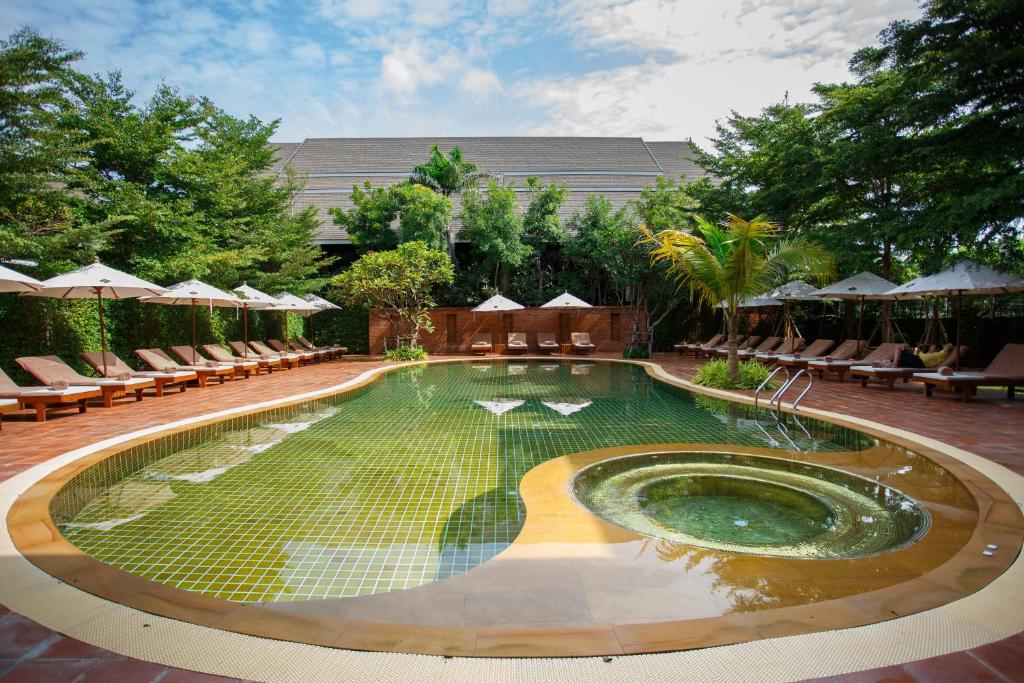
Luxury: Hotel de l’Amour (pictured)
.
Phanom Rung Historical Park
Judging by the number of other people that I met here, Phanom Rung seems to be the region’s star attraction. It’s not too surprising, as it’s by far the biggest and best-preserved Khmer temple in the area.
It mainly dates to the 11th and 12th century and is meant to symbolize Mount Kailash, the sacred residence of the god Shiva.
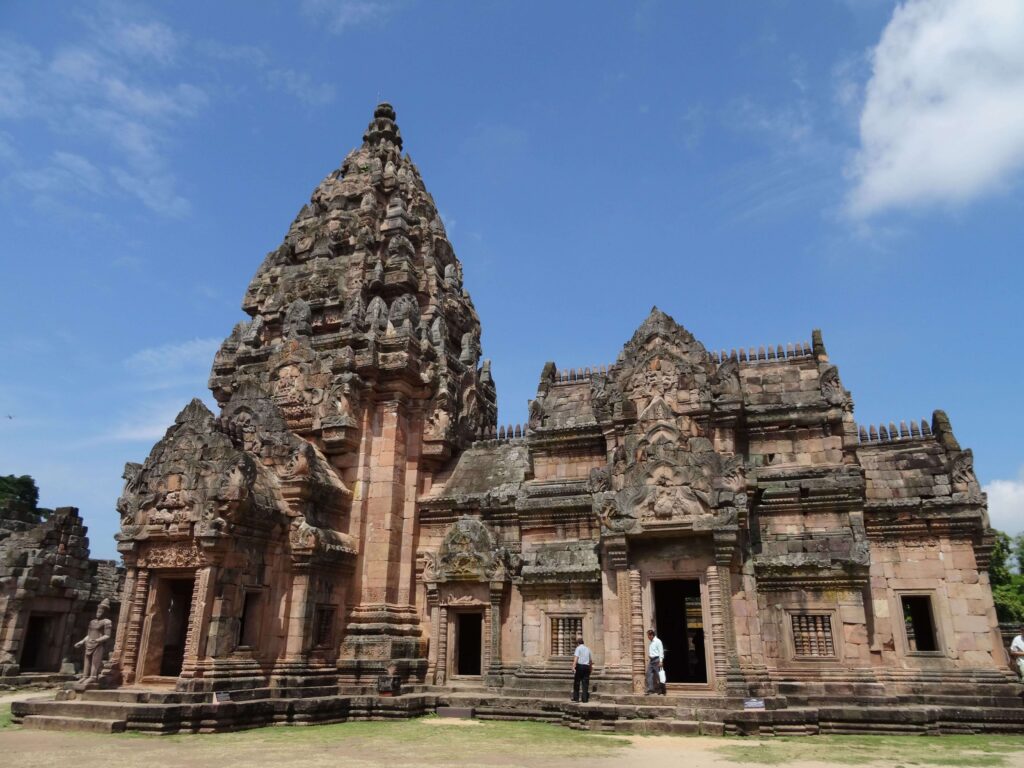
The temple complex sits atop a volcanic hill, and to get there, you’ll have to follow a causeway and climb a series of stone staircases and terraces that are flanked by sculptures of Nagas (divine snake creatures).
After passing through the pretty east gallery, you’ll reach the main sanctuary in the centre of the complex. There’s a really well-preserved sandstone temple with some impressive carvings and bas-reliefs of Hindu gods.
As in nearby Phimai, there’s a scene of Shiva dancing (known as nataraja) on the east portico of the mandapa (antechamber), which symbolizes the constant cycle of cosmic destruction and renewal.
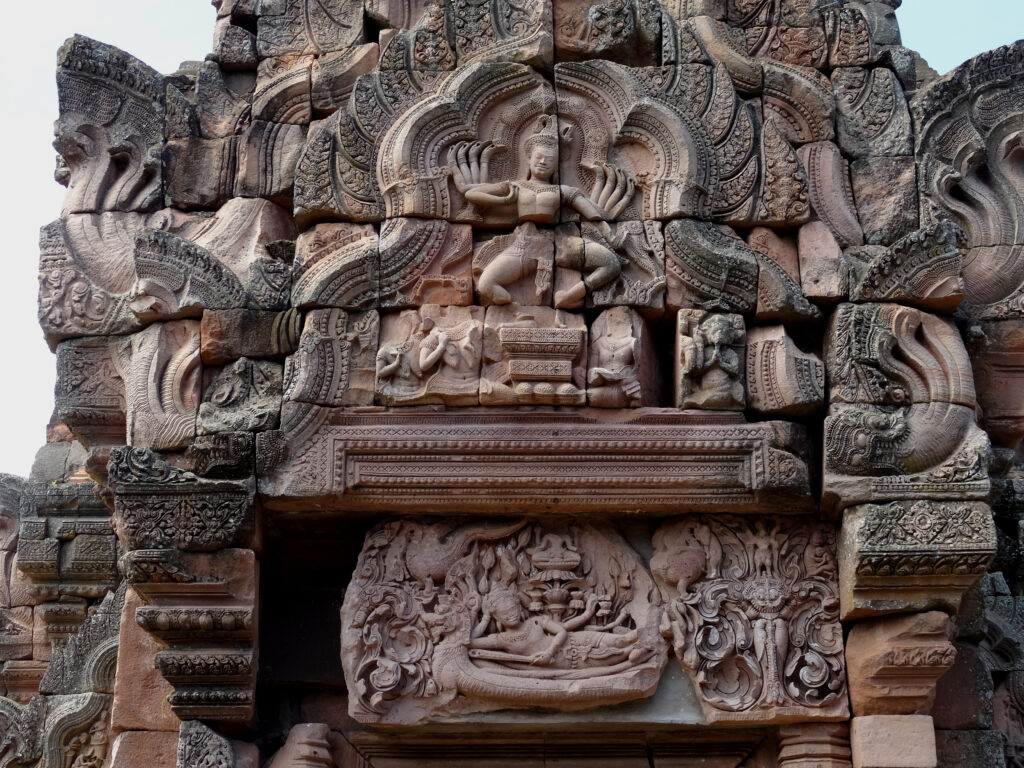
All over the complex are also a number of smaller buildings, which all have their own unique architectural styles. Near the visitor centre, there is a small but interesting museum, which has more impressive carvings and pieces of architecture.
Phanom Rung is open daily from 7am to 6pm (double-check the times here), but I recommend getting here as early as possible to beat the crowds. I was there around 8am and it was still pretty quiet. The entrance fee is ฿200.
Prasat Muang Tam
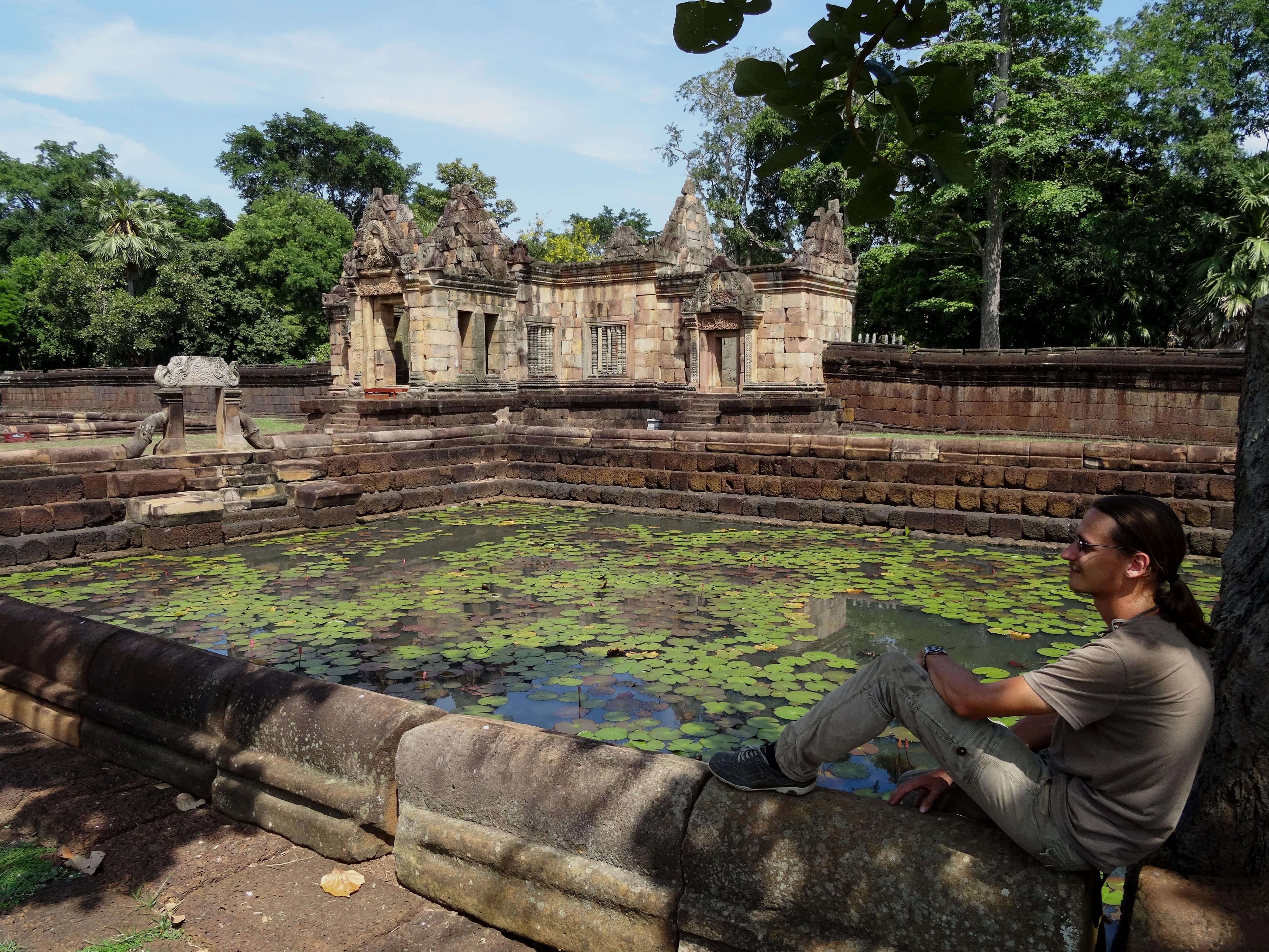
This beautiful temple was by far my favourite in the area in terms of atmosphere and location. Like Phanom Rung, it’s dedicated to Shiva, but it dates to the 10th century, which makes it older than most buildings at Phanom Rung.
There are four remaining prangs (temple towers) that stand on a central stone platform, which is surrounded by a pretty courtyard full of trees. I especially liked the four lotus-covered ponds in the corners of the complex, which are said to symbolize cosmic oceans.
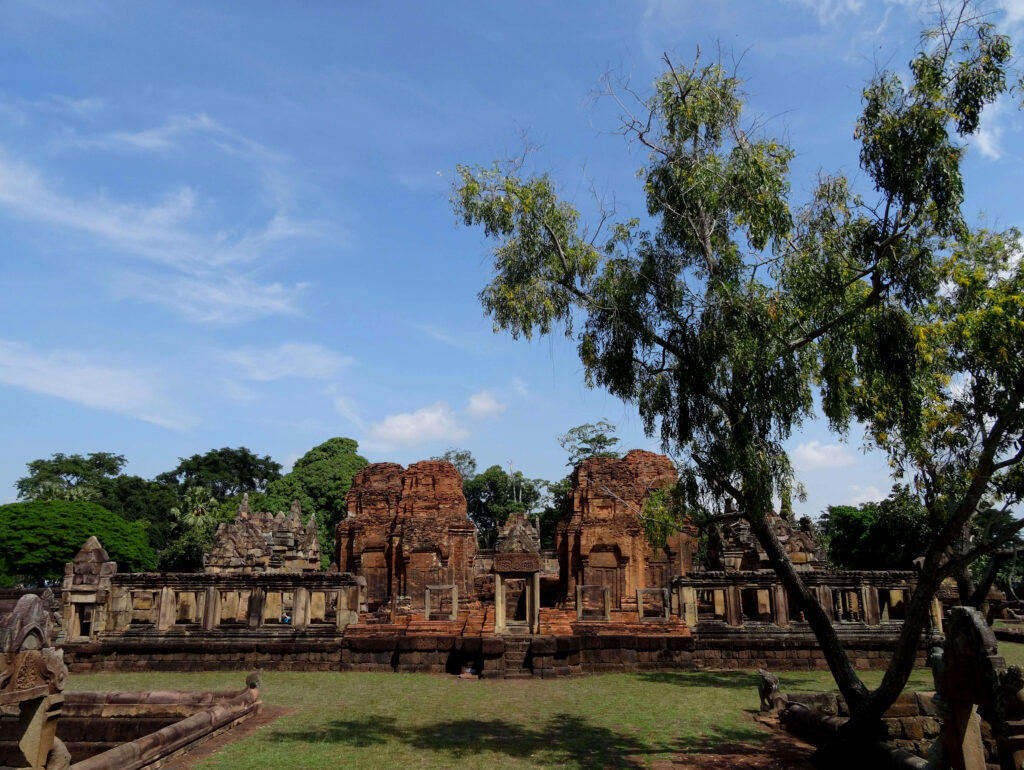
It’s a beautiful and very atmospheric place, and it blows my mind that everyone flocks to the bigger Phanom Rung, but completely ignores this temple.
It’s open daily from 8am to 6pm (double-check the current times here) and the entrance fee is ฿100. It’s about 8km (5mi) southeast of Phanom Rung near the big Barai Muang Tam reservoir.
Wat Khao Angkhan
This is a cool little hilltop temple with an interesting combination of ancient and new elements. It originally dates to the Dvaravati Era (7th to 11th century), but I only saw a few traces of the old structures in between the more modern temple buildings.
The newer ones are still very pretty, and are clearly inspired by the nearby Khmer temples. They have prang-like roofs, and lots of small spires, sculptures and wall reliefs as decorations.
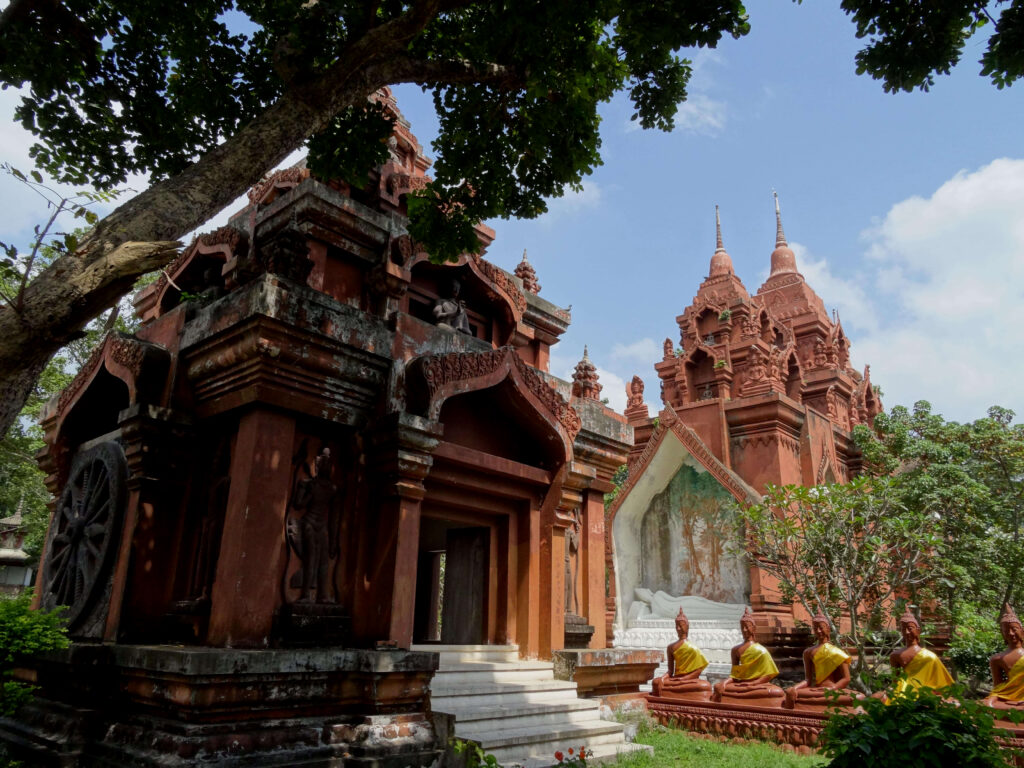
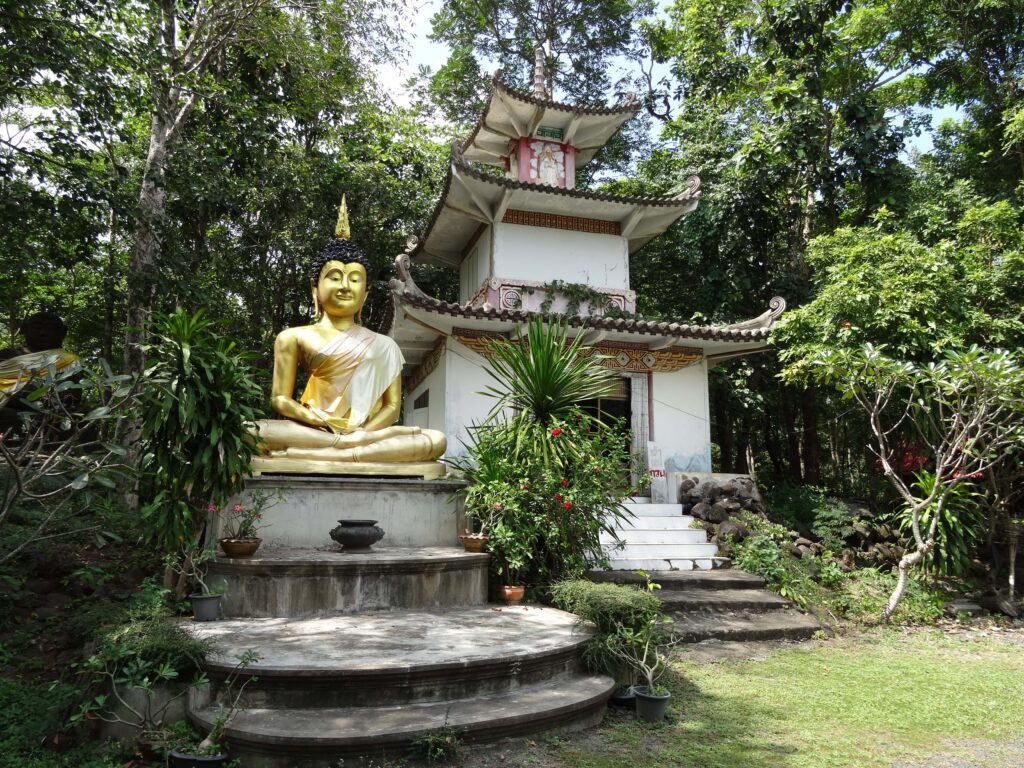
I spotted lots of interesting details on the grounds, including long rows of sitting Buddha statues, a small Chinese-style pagoda and a big golden reclining Buddha.
To get there, you’ll have to drive southeast from Nang Rong to Ban Charoen Suk village and then southwest past a quarry and into the hills. The temple is open daily from 8am to 5pm and there’s no entrance fee.
Prasat Khao Plaibat
Prasat Khao Plaibat is located on a small hilltop to the west of Prasat Muang Tam, and I found it a little more complicated to get to.
There’s a ruin of a small temple, which is in dire need of some restoration work (lots of loose bricks held together by metal supports), but there are some really good views of the surrounding plains.
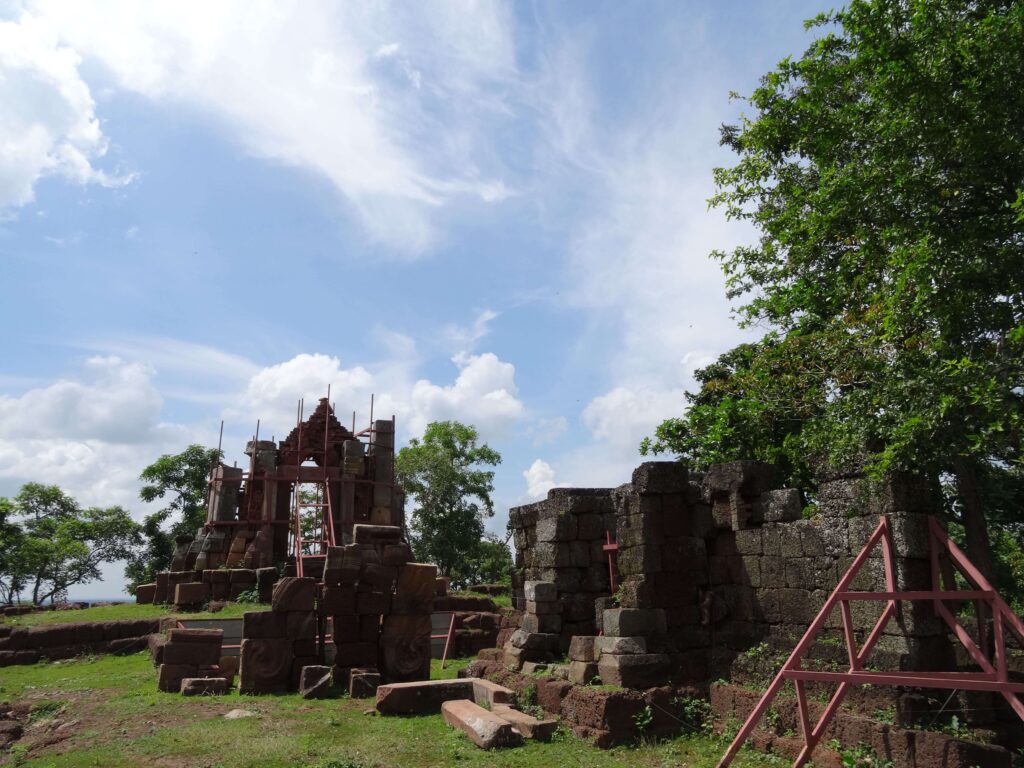
You can get there from the active Wat Khao Plaibat temple, which is about 2.5km (1.5mi) southeast from Prasat Muang Tam. You’ll have to follow a small trail marked with pieces of orange cloth up the hill.
The trail starts near the monks’ quarters. I just asked around and the monks pointed me in the right direction. There are no opening times and no entrance fee.
Prasat Wat Khok Ngio
Prasat Wat Khok Ngio is a small, overgrown hermitage with a tall central tower made of laterite blocks. As an archaeologist, I found it worth checking out, but there’s less to see here than at the other sites around Phanom Rung.
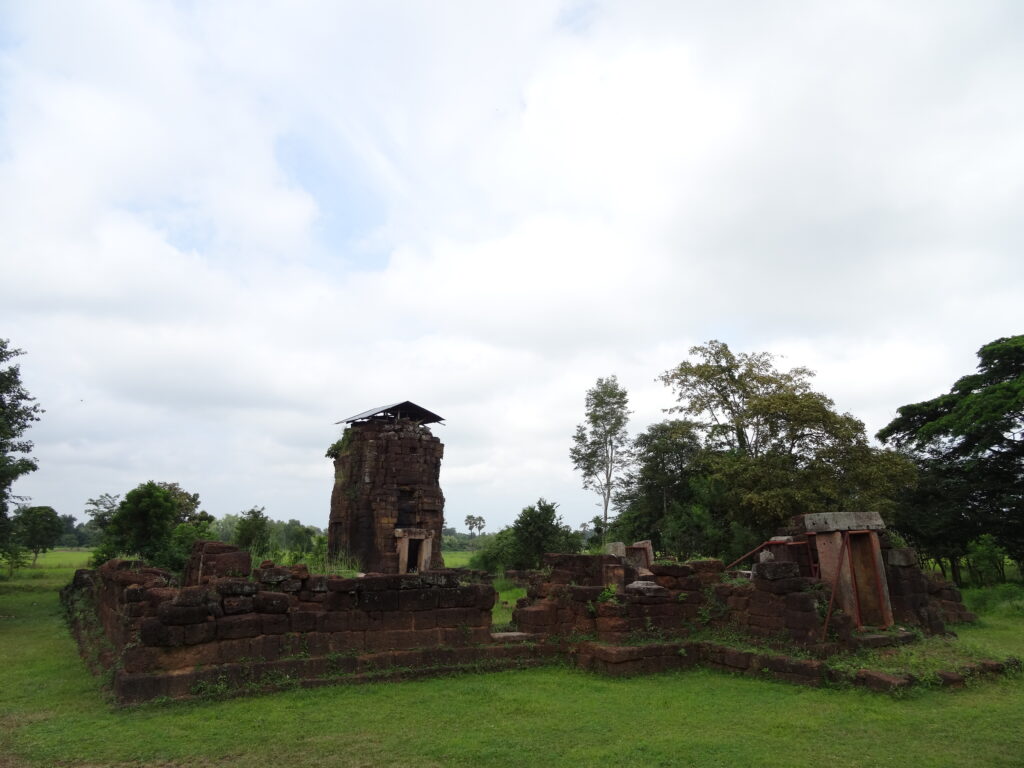
It’s a bit north of Pakham village on the road that leads south from Nang Rong. It’s completely open and there’s no entrance fee.
Kuti Ruesi Ban Khok Meuang
Close to Prasat Muang Tam is Kuti Ruesi Ban Khok Meuang, a small, well-preserved arogayasala (healing sanctuary).
It consists of a central tower that’s surrounded by an enclosure with a small sacred pond nearby. Once again, there’s not a lot to see, but it’s easy to check it out on the way to Prasat Muang Tam.
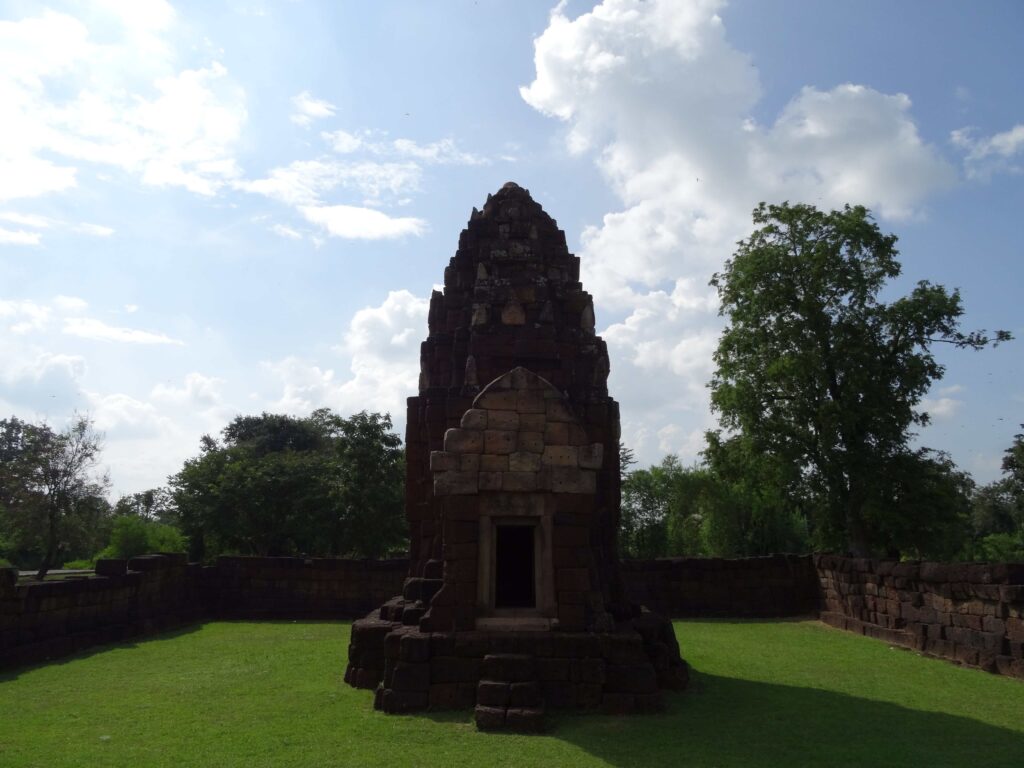
To find it, you’ll have to follow the western edge of the big Barai Muang Tam reservoir north until you see a smaller reservoir to your left. The hermitage is at the western edge of that small one. Once again, there’s no entrance fee.
Kuti Ruesi Nong Bua Rai
Close to Phanom Rung (near the south-western corner of the reservoir to its east) sits Kuti Ruesi Nong Bua Rai, which is another pretty healing sanctuary. There are a few more remaining pieces of architecture than at Kuti Ruesi Ban Khok Meuang and I found the surroundings very pretty.
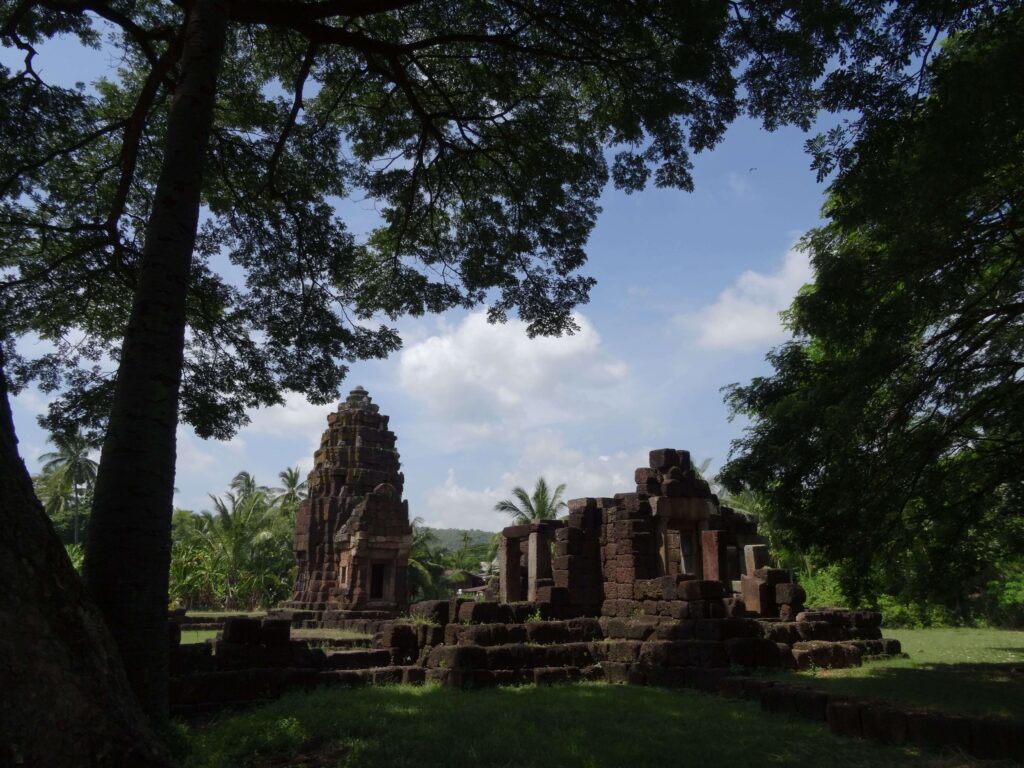
As with the other hermitage, there are no opening times and no entrance fee.
Smaller Archaeological Sites Around Ban Khuan Village
There are a few smaller archaeological sites in the surrounding area. None of them are super impressive, so I just recommend them if you’re an archaeology geek like me or want to explore some tiny villages, where it’s clear that hardly any travelers ever set foot.
East of Phanom Rung, in Ban Khuan village, sits Prasat Thong, which is a small temple ruin that’s mainly reconstructed from modern bricks. The only original bits that I could find were the laterite bases and maybe some of the sandstone lintels. It’s a bit south of the big intersection in the centre of the village, close to the market.
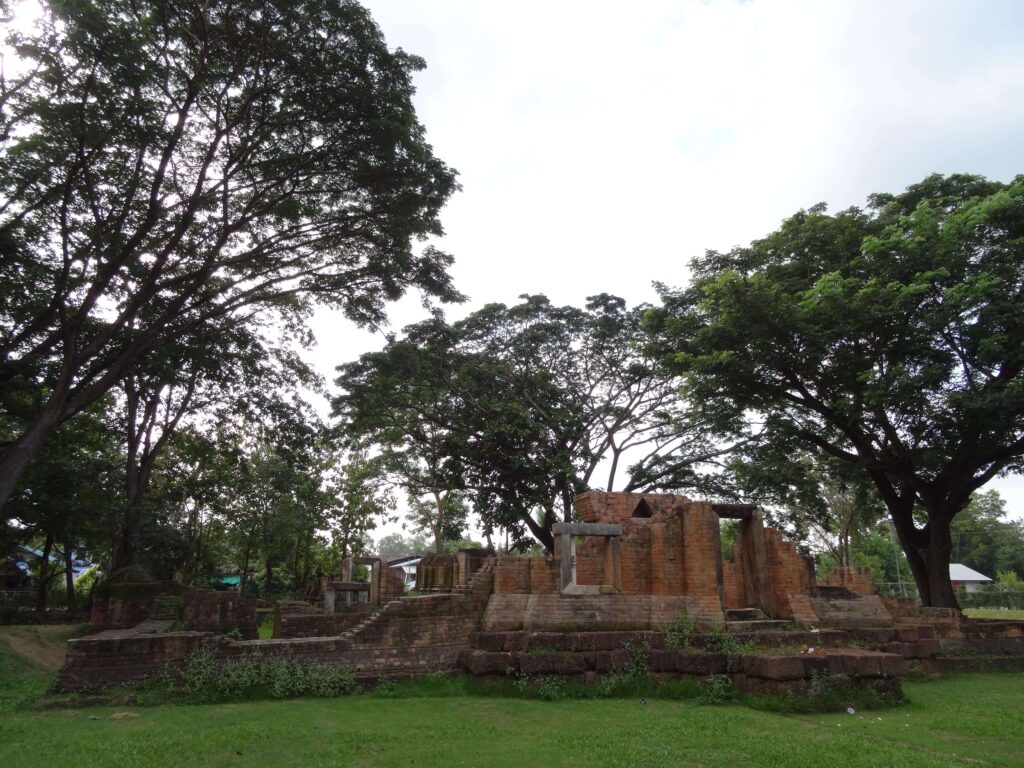
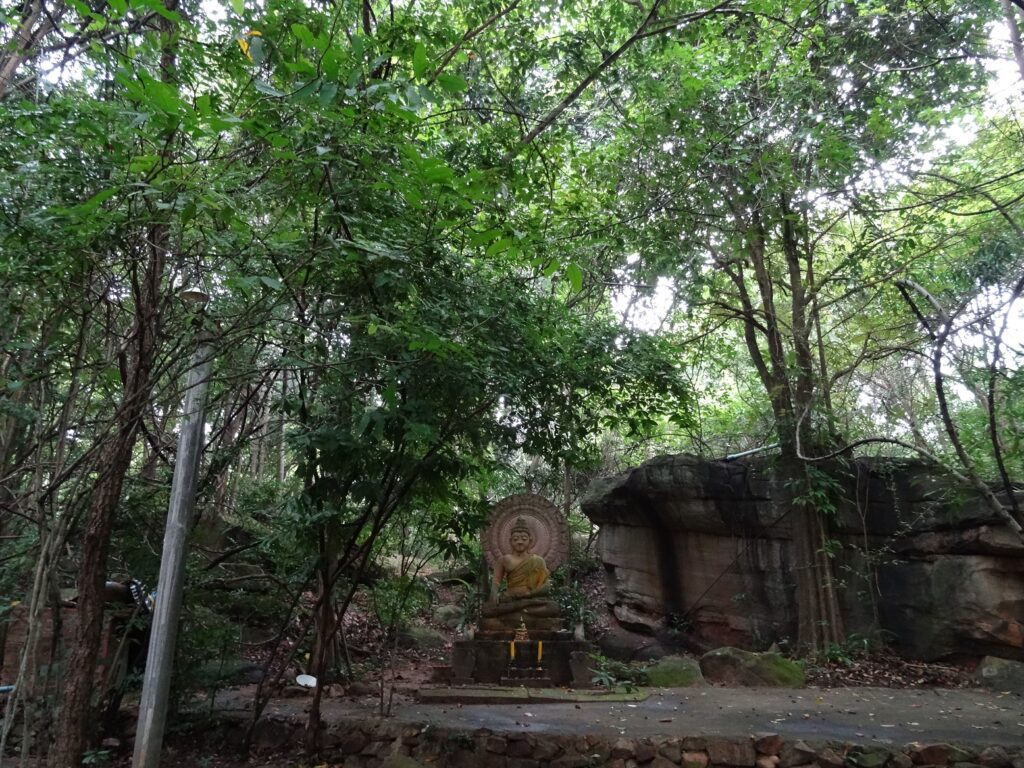
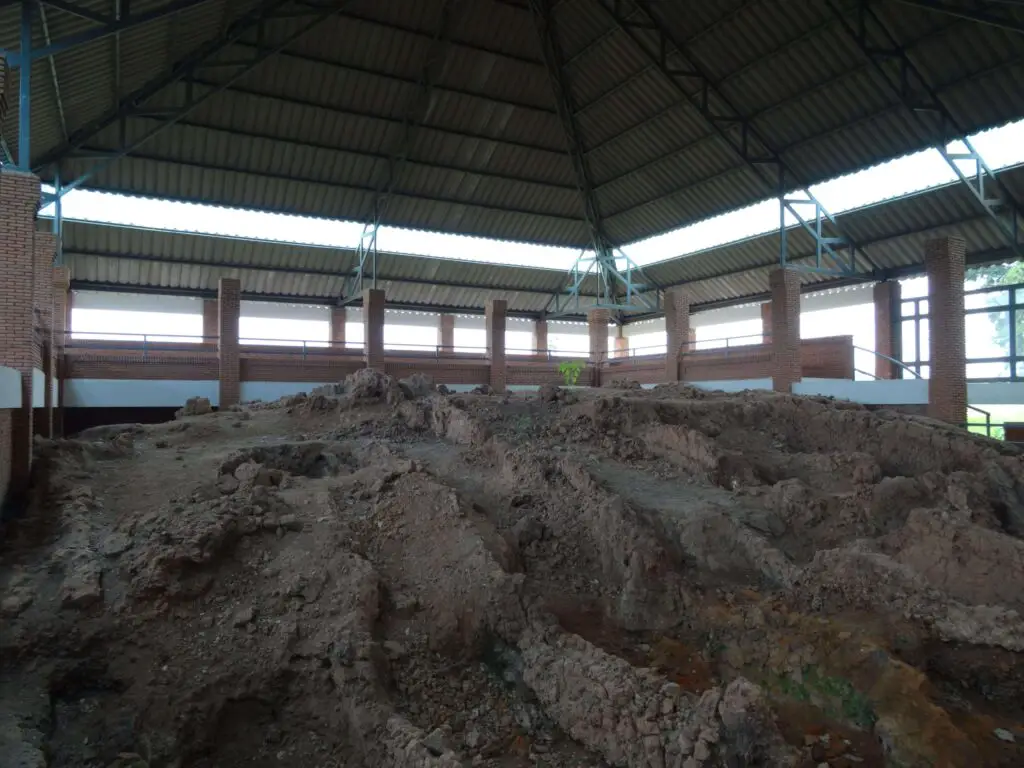
The area around Ban Khuan Village is also home to some places that were of economic rather than religious importance. One of them is Ban Kruat quarry south of the village, where people took some of the sandstone for the nearby temples.
Tao Sawai and Tao Nai Chian to the east of Ban Khuan are the remains of two huge pottery kilns that were used for burning glazed pottery vessels between the 9th and 13th centuries.
Map of Phanom Rung and the Surroundings
You can find all of the places that I mentioned above in this map of the area around Nang Rong and Phanom Rung.
Practicalities
Getting to Nang Rong and Getting Around
Nang Rong has bus and minibus connections to most bigger cities in the area, including Ubon Ratchathani, Nakhon Ratchasima (Khorat) and Surin from the bus terminal in the western part of town.
There are no direct minibus connections to Phanom Rung, but you could take one to Ban Ta Pek Village and continue to the temple by motorcycle taxi. Minibuses to Ban Ta Pek leave from the old market in Nang Rong.
Getting around the area is easiest if you rent a scooter. I got one at P California Inter Hostel, where I stayed. It came with a handy hand-drawn map of the area with all the sights. If riding a scooter isn’t for you, they also rent out mountain bikes.
The Best Hotels Near Phanom Rung
I stayed at P. California Inter Hostel, which is located in a nice leafy area at the eastern end of Nang Rong town. The owner knows a lot about the surrounding sights, and you can rent scooters and mountain bikes to explore the area.
Phanomrungpuri Hotel, which is also located in Nang Rong, would be a slightly more upscale option, but is still in the very affordable range. If you prefer a bit of luxury, Hotel de l’Amour in nearby Prakhon Chai town has very good reviews.
You can have a look at the map for some other options.
Where to Go Next
Prasat Phimai, One of the biggest Khmer temples in Thailand
Nakhon Ratchasima, the gateway to the Isan Region
Surin, a pretty small town with a long history of elephant-handling