If you’re looking for a place in Thailand that’s off the tourist trail, but still lively, Nakhon Ratchasima (or Khorat as people usually call it) is the place to go. It’s one of the gateways to Thailand’s beautiful laid-back Isan Region, and I found it to be a great base for exploring this little-visited part of the country.
The popular Khao Yai National Park isn’t far away, and the fascinating Khmer Ruins at Phimai and Phanom Rung are also worth checking out. I even dropped by Thailand’s oldest reclining Buddha image near Sung Noen.
That said, Khorat isn’t just a good base for explorations in the surrounding countryside, but has some interesting, low-key sights of its own. Read on for the things you shouldn’t miss in Nakhon Ratchasima and its surroundings.

This post may contain affiliate links, and I might earn a small commission at no additional cost to you. For more info, click here.
Guided Tours of Nakhon Ratchasima
If you’d like to explore Khorat in the company of a local, there are some guided tours of the city and surroundings available. You can have a look at some options below.
10 Cool Things to Do in Nakhon Ratchasima
Khorat has a long settlement history and I found it easy to its traces in the city and the surrounding area. The nearby ancient city of Mueang Sema was an important settlement during the Dvaravati period (6th to 11th century), and later the Khmer Empire left its mark on the region with temples such as Phimai.
The modern city of Nakhon Ratchasima was established in the 17th century during the reign of King Narai, as part of the Ayutthaya Kingdom’s efforts to strengthen its control over the northeastern frontier. The city was built as a fortified outpost and became an important link between central Thailand and the settlements further east.
Khorat’s most famous historical episode came in 1826, when the city was occupied by Lao forces during a conflict between Siam and the Kingdom of Vientiane. According to the local stories, Thao Suranari (Grandma Mo) played a key role in resisting the occupation and helping to defeat the Lao forces. I came across lots of references to the local heroine, while I was exploring the city.
.
Top 3 Places to Stay in Nakhon Ratchasima
Budget Option: Sansabai House
Midrange: Romyen Garden Palace
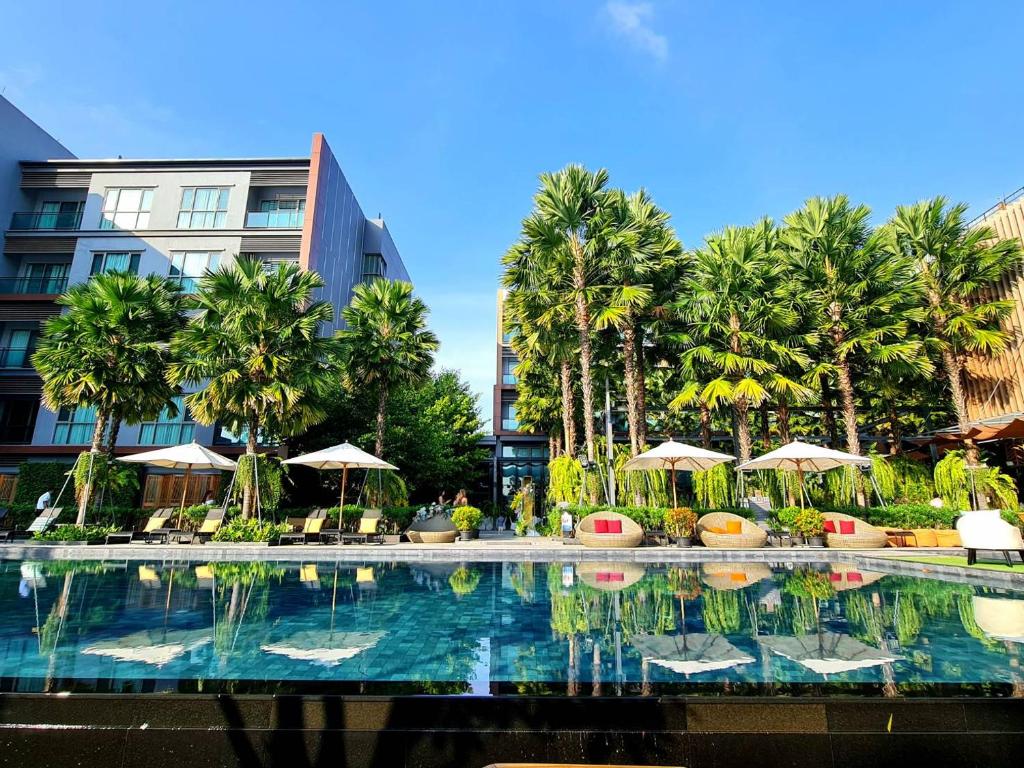
Luxury: AisanA Hotel Korat (pictured)
.
Chumphon Gate and the Thao Suranari Monument
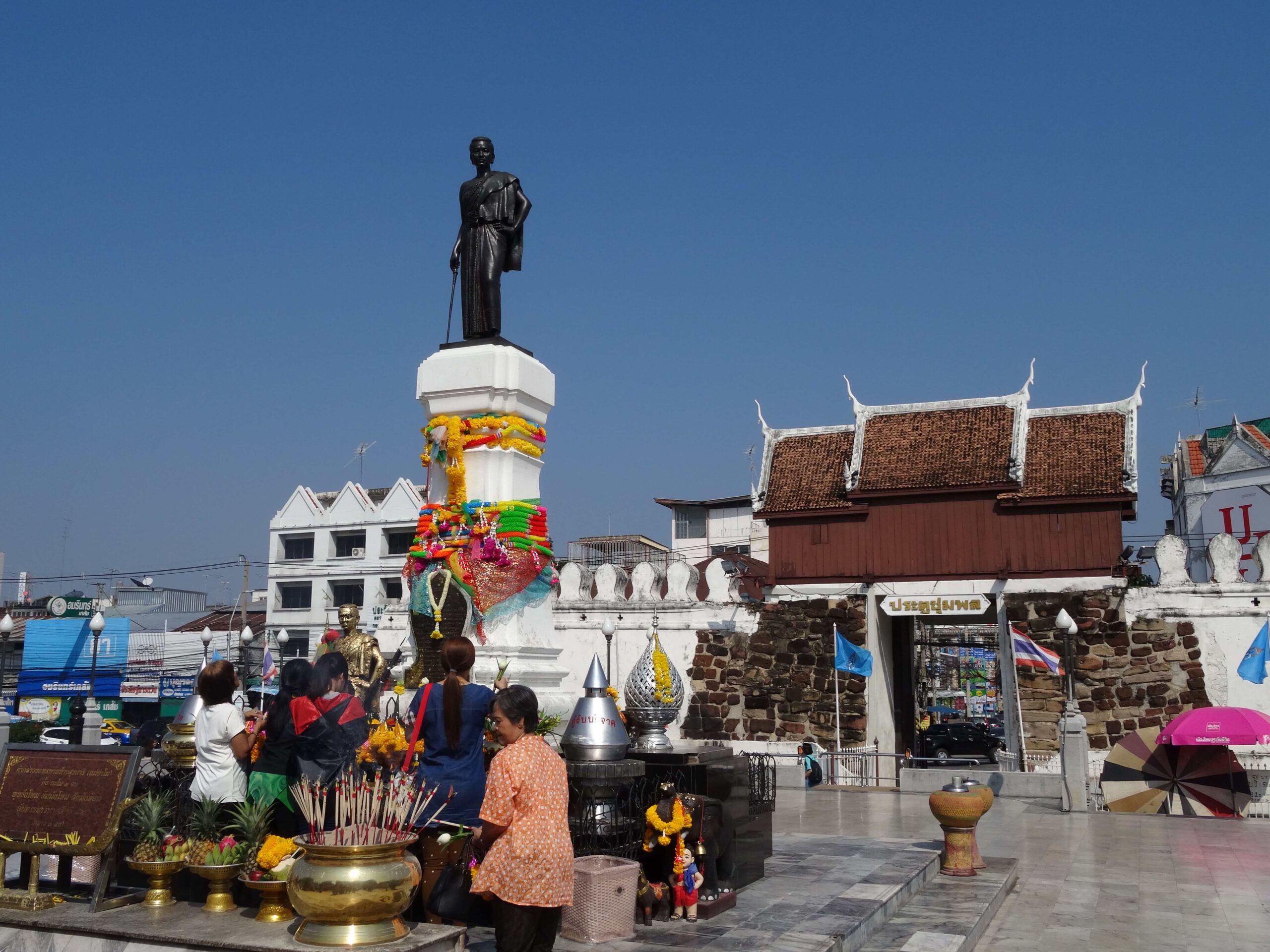
The wood-and-stone Chumphon Gate is Khorat’s only remaining city gate and dates back to the mid-17th century. The statue directly to the west of the gate shows Thao Suranari or Grandma Mo, who successfully started a revolt against the Lao soldiers that occupied Khorat in 1826.
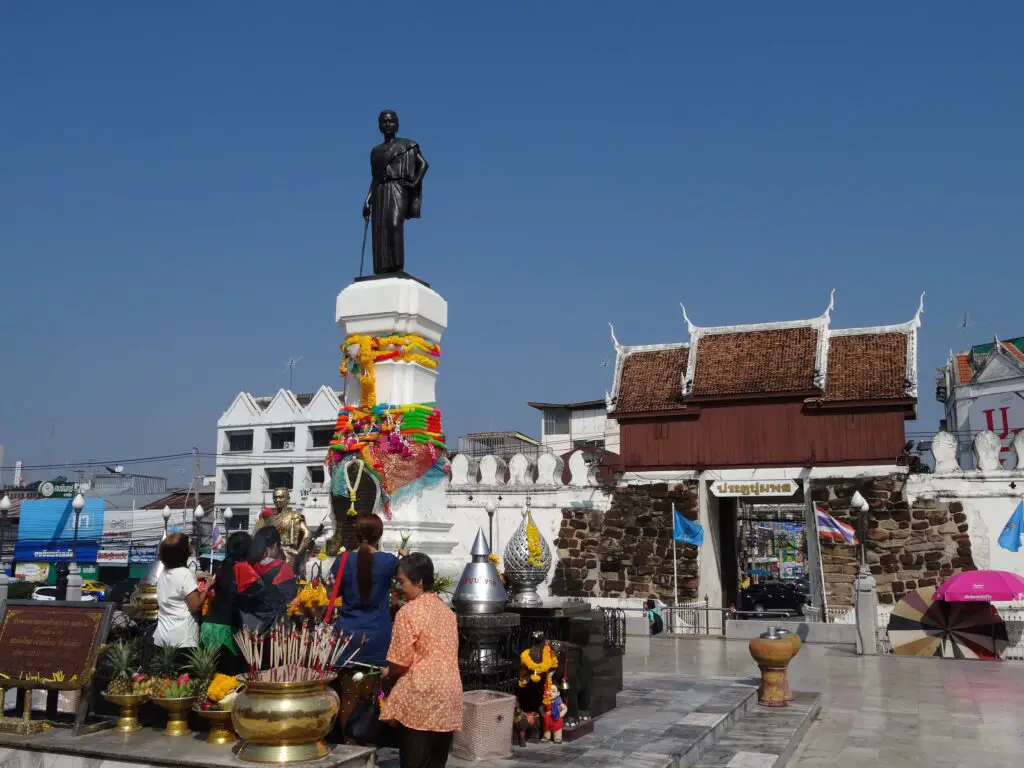
She’s very popular locally, and when I was there, people were praying and placing flowers and incense at the foot of the statue. There’s a cute small pedestrian zone around the gate that stretches north and south along the city’s former moat.
Thao Suranari Building and Victory Gate
If you follow the small park along the former moat to the north from the monument, you’ll come across the Thao Suranari Victory Building.
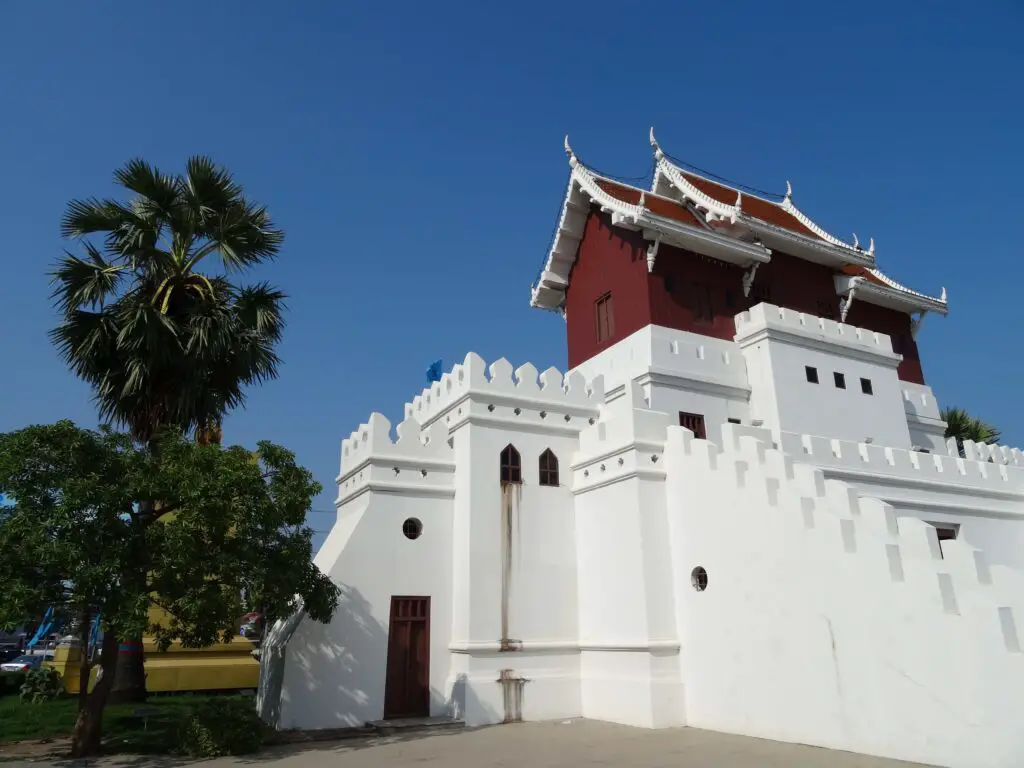
Inside there’s a big relief and a graphic diorama that show the revolt which was instigated by Thao Suranari (lots of bodies with spears sticking out of the back). I also liked the historic photos of the city that hang from the pillars inside.
The building is open Tuesday to Sunday from 9am to 6pm (double-check the current times here) and there’s no entrance fee. If you continue north, past the reflecting pool, you’ll reach the Victory Gate, another remnant of the old city wall.
Maha Weerawong Museum
This smallish museum at the southwestern edge of the old town displays a huge number of historical sculptures (perhaps unsurprisingly, most of these are images of the Buddha in various forms).
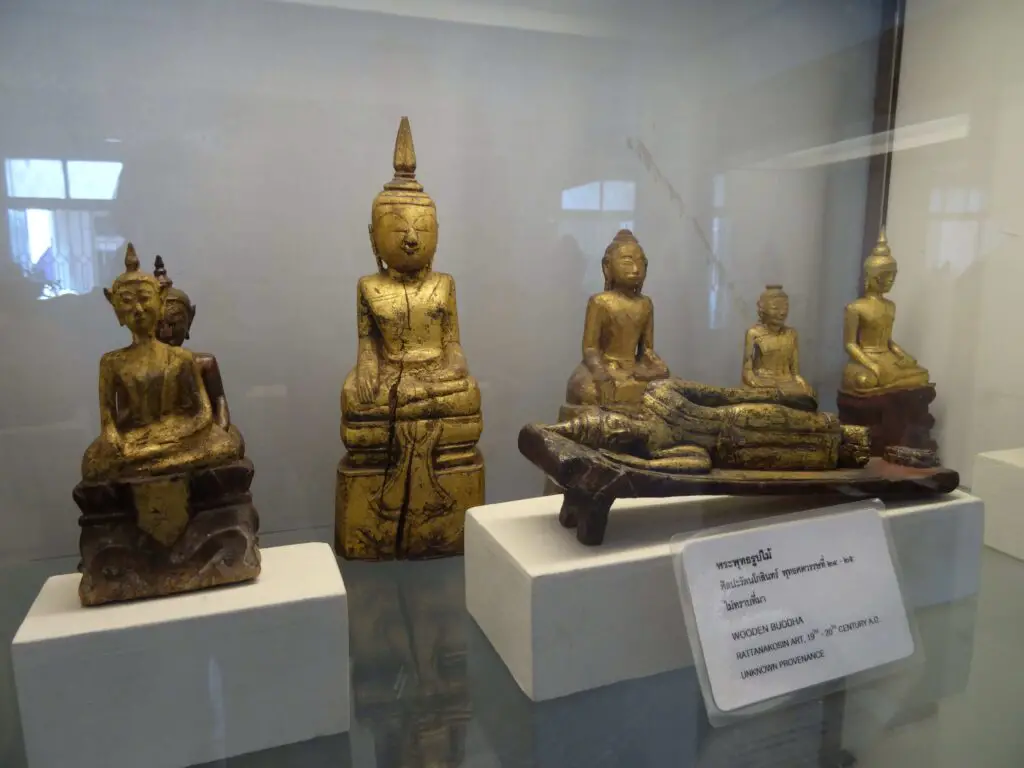
Apart from that, there are lots of paintings, traditional textiles and prehistoric pottery. There are also some artifacts from Wat Thammachak Semaram in nearby Sung Noen (see below). The museum is open Wednesday until Sunday from 9am to 4pm (double-check the current times here). The entrance fee is 80฿ for foreigners and 10฿ for Thai citizens.
Wat Phra Narai Maharat
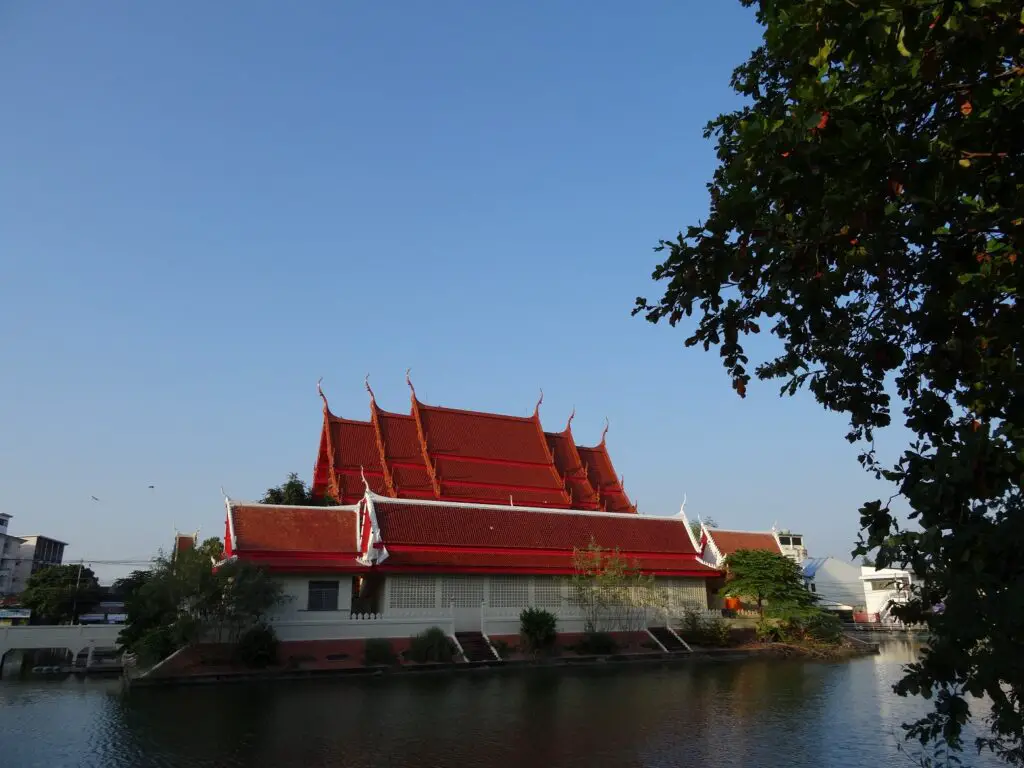
This temple complex in the centre of the old town sits on an island in a small lake that’s populated by huge monitor lizards. The buildings follow the architecture of the Ayutthaya period (1351–1767) and the temple is most famous for an ancient Khmer-style statue of Narayana (a form of Vishnu).
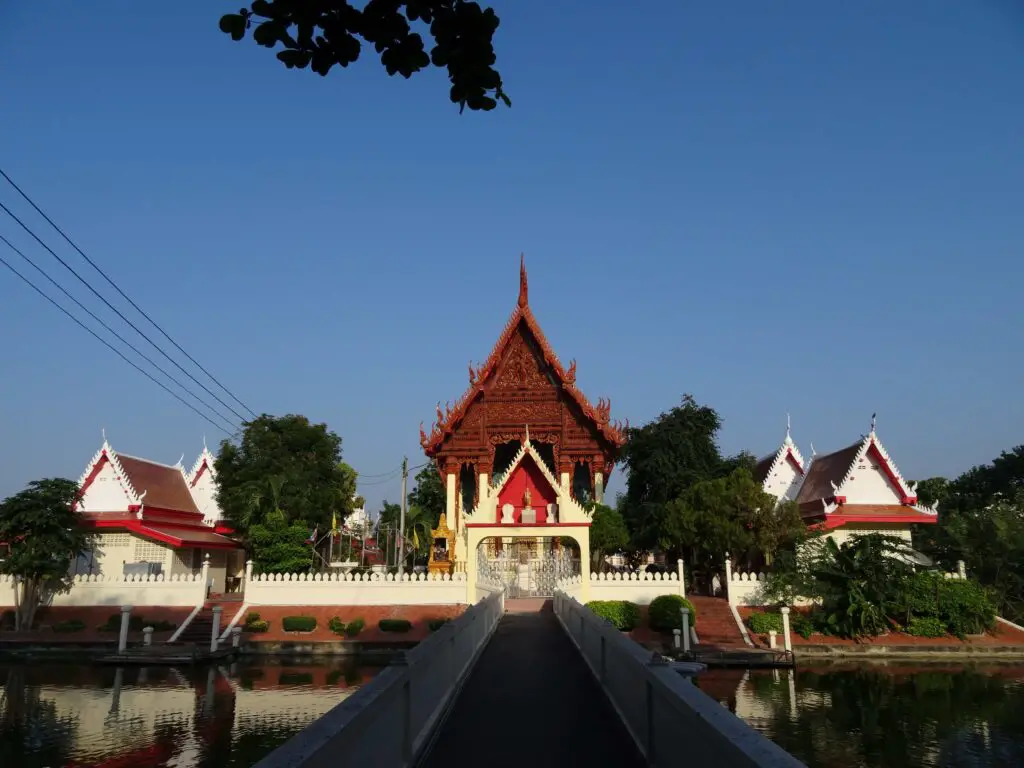
I had a nice chat with the monks here, who seemed super excited to talk to a foreigner. Travelers really are in short supply in this corner of Thailand, I guess. The temple is open from 8am to 4pm (double-check the times here) and there’s no entrance fee.
Wat Sala Loi
This big temple complex can be found to the north-east of the city centre and has a slender, modern ubosot (ordination hall). The walls are decorated by clay tiles from nearby Dan Kwian village (see below), which tell the life story of the Buddha.
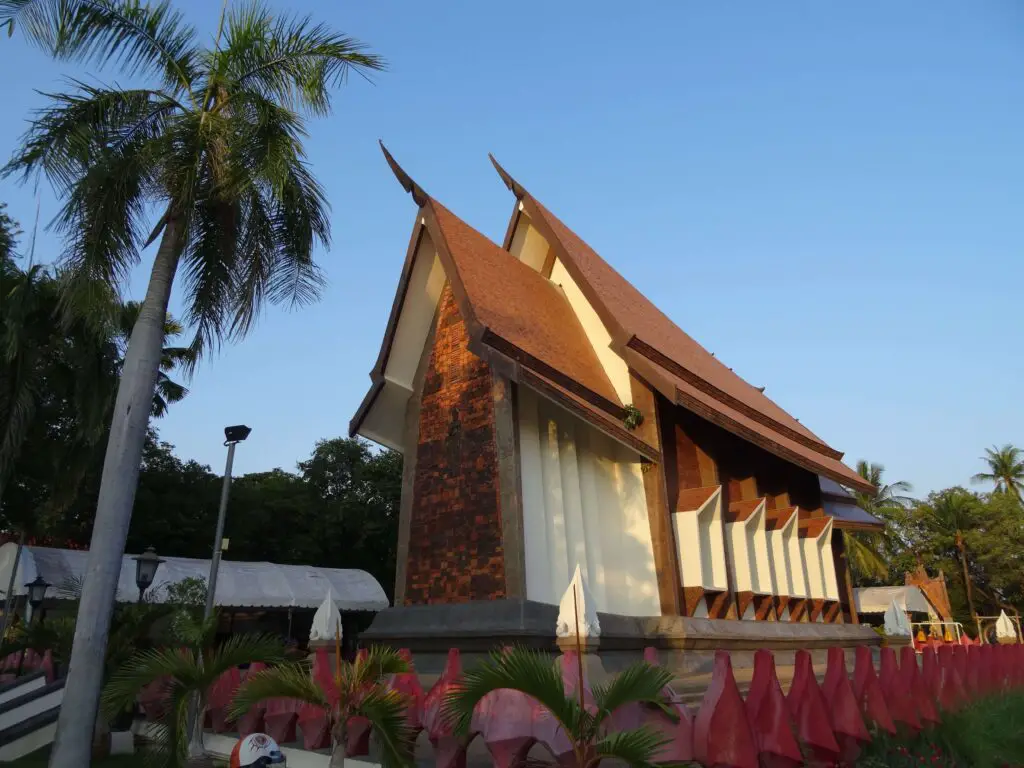
The complex was supposedly built by Thao Suranari and her husband in the first half of the 19th century, and on the grounds I spotted both a small chedi (stupa), which is said to contain the local heroine’s ashes, and a gilded statue of Thao Suranari kneeling in prayer.
Wat Phayap
This unusual temple contains a room under the abbots residen that is completely covered in stalactites, which were apparently taken from the remains of a destroyed nearby cave. Many Buddha images are squeezed in the nooks and crannies in between the reassembled rocks.
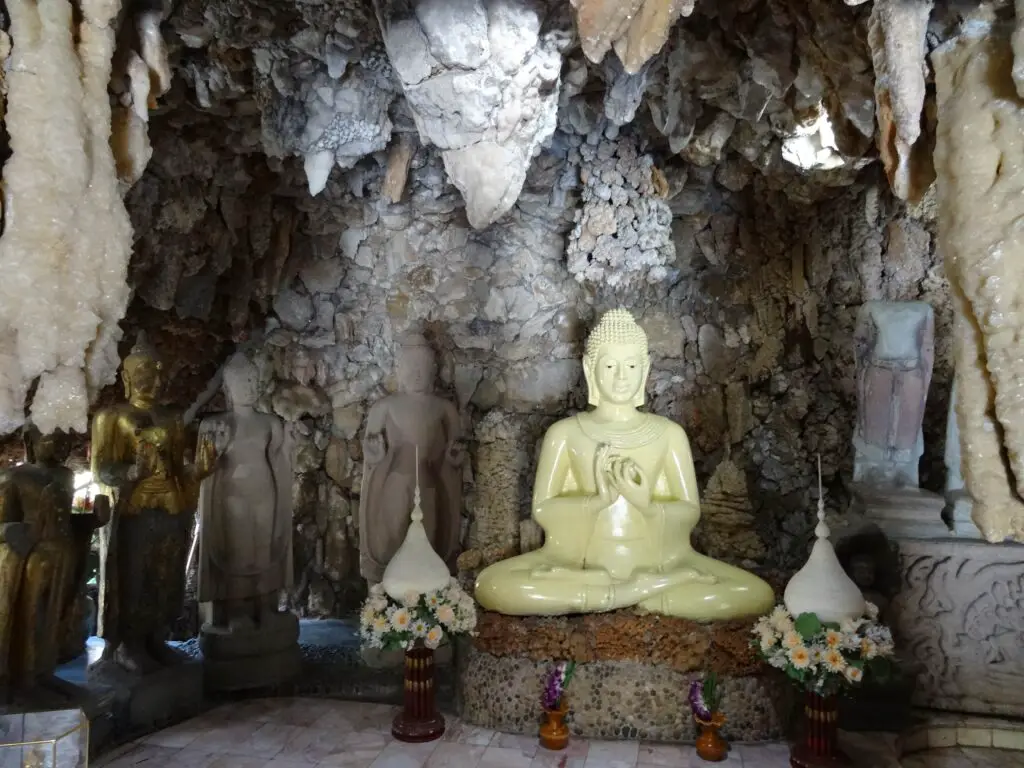
Even if you’ve got a bit of temple fatigue, I found Wat Phayap worth checking out just because of the bizarre artificial cave. The temple is in the northwestern corner of the old town. It’s open from 8am to 4.30pm and there’s no entrance fee.
Try Pat Mee Khorat
The Khorat Province has its very own regional version of pad thai. It’s based on a different type of noodles which are mixed with black soy sauce, garlic, lots of chili and topped with a fried egg.
As much as I like pad thai, I have to say that I found pat mee khorat to be superior. It’s certainly spicier. I tried it at one of the many restaurants on Chumphon Road, but you can get it in lots of restaurants in the city.
Visit the Khmer Ruins at Phimai
The town of Phimai near Nakhon Ratchasima is home to a beautiful temple from the 11th and 12th centuries. It’s an example of classical Khmer architecture, and has some intricately carved architectural elements, with lots of images of Hindu and Buddhist deities decorating the walls.
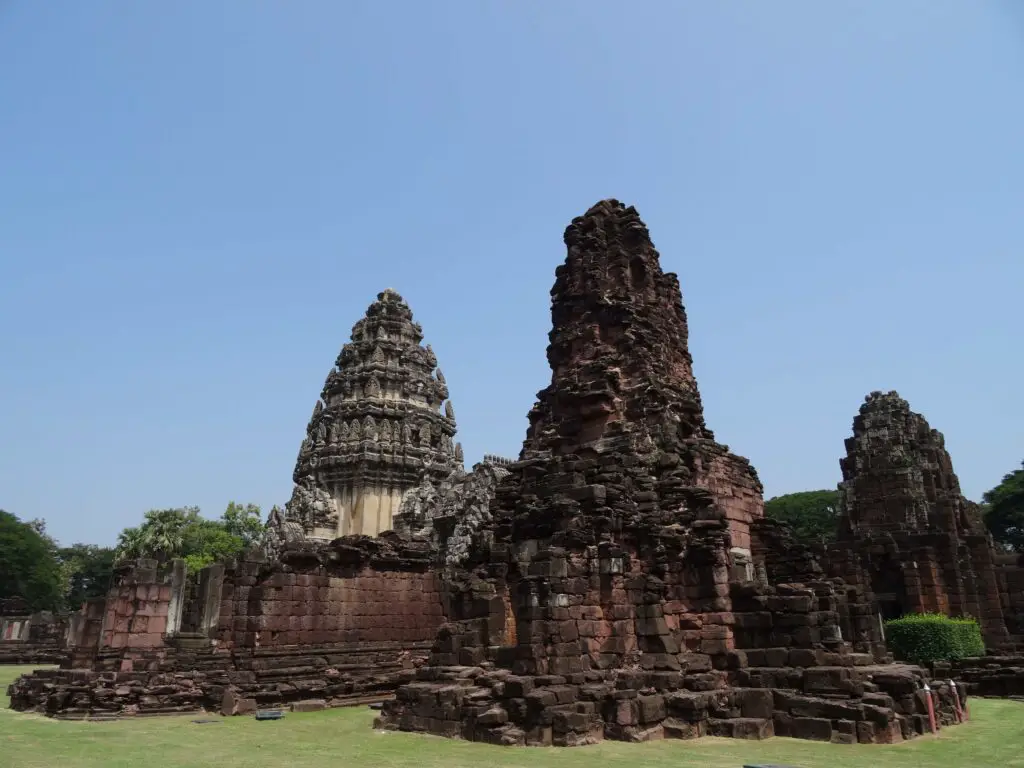
You can get to Phimai by catching a bus from Khorat’s New Bus Terminal in about 1.5 hours. The temple is open daily from 7.30am to 5.30pm (You can check the current times on their facebook page). The entrance fee is 100฿ for foreigners and 20฿ for Thai residents.
You can also check out my dedicated guide to visiting Phimai here.
Check out the Reclining Buddha in Sung Noen
At Wat Thammachak Semaram in Sung Noen village, you’ll find a reclining Buddha image that is said to date to the Dvaravati Era in the 7th century, which would make it the oldest reclining Buddha in Thailand.
The nearby archaeological site of Mueang Sema still has a number of stone platforms and walled foundations of various temples that date to the same time.
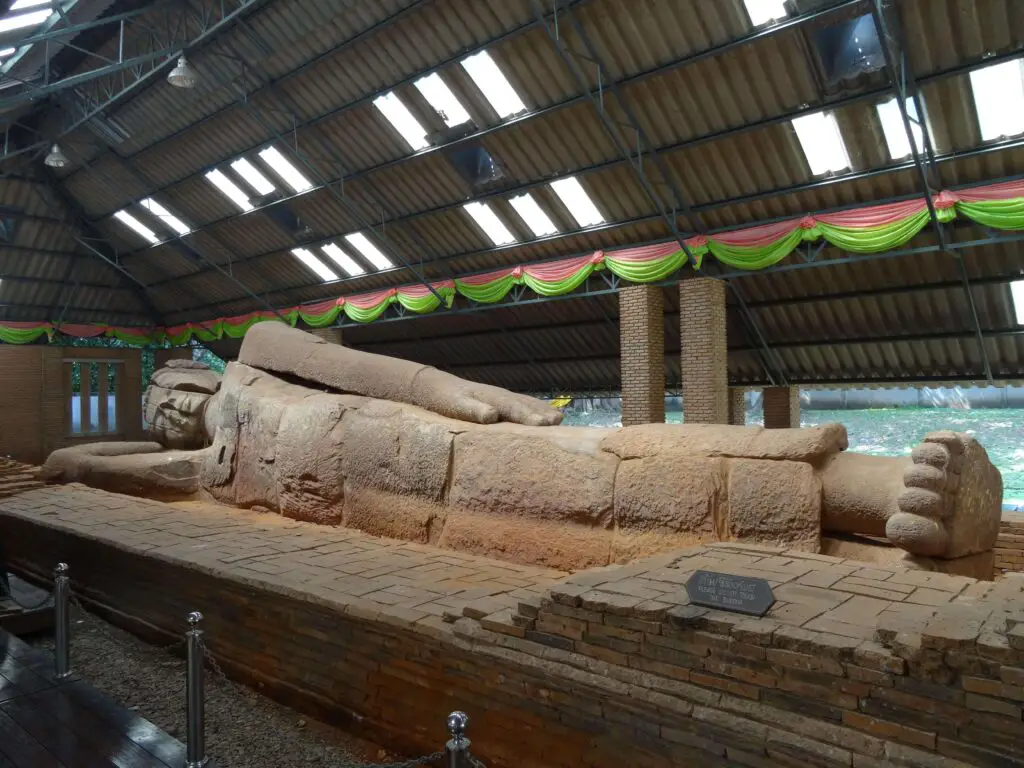
Regional buses from the Old Bus Terminal stop in Sung Noen, from where it’s still about 5 km or 3 miles to the temple and archaeological site (roughly to the northwest). There doesn’t seem to be any public transport and taxis are in short supply, too.
Your best bet might be hitchhiking. I managed to get a ride on a motorcycle both ways. Walking would take about an hour.
Visit Dan Kwian Pottery Village
If you’re interested in traditional handicrafts, I can recommend a trip to Dan Kwian in Chok Chai District. You shouldn’t be deterred by the tacky sculptures along the highway, because once you turn into the little alleyways of the village you will find the artisans at work.
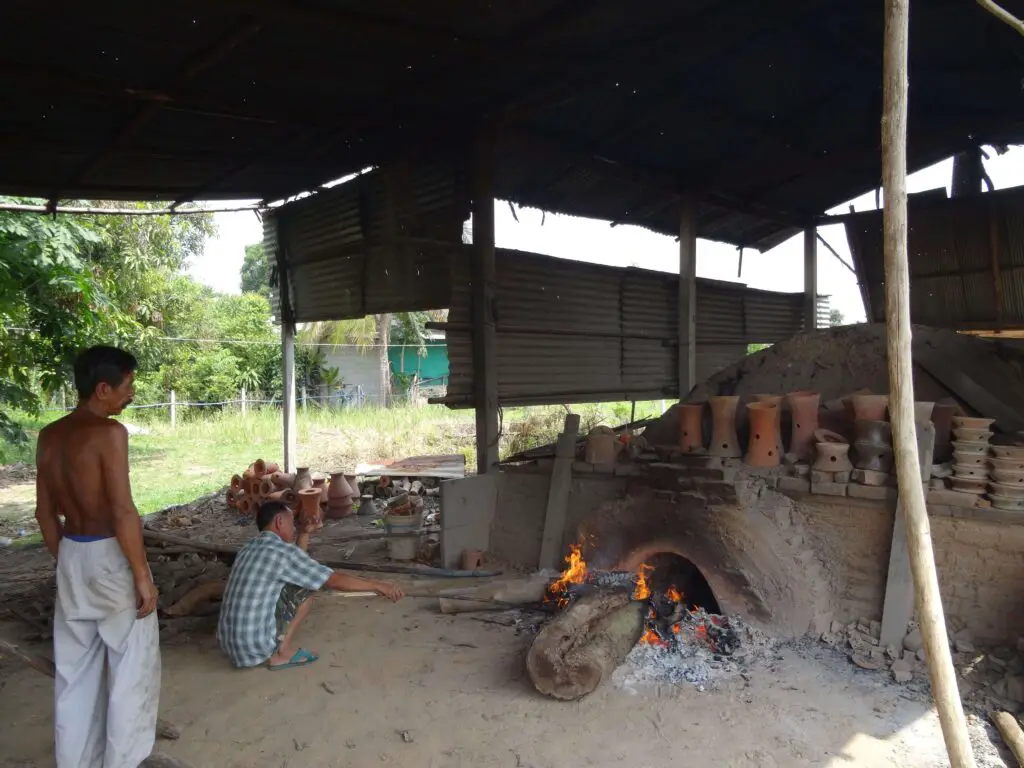
I had a chat with a few of them, watched them form pottery vessels and statues (using casts) and fire the forms in huge kilns. It’s quite interesting, even if you’re not planning to buy anything (I didn’t either). You can reach Dan Kwian in about 20 minutes by minibus from the southern gate in Khorat.
Map of Nakhon Ratchasima
You can find all the sights that I’ve mentioned above in this map of the city.
Practicalities
How to Get to Nakhon Ratchasima
As the gateway between the Isan Region and the central part of Thailand, Khorat is a bit of a traffic hub with two bus stations and two train stations. The Old Bus Terminal west of the city centre is the place to go for local buses around Nakhon Ratchasima Province and first class buses to Bangkok.
The New Terminal is a bit further afield north of the centre along Mittraphap Road and has buses to Bangkok (approx. 250฿/3.5 hours) and many other destinations all over the country (including direct connections to Chiang Mai, Ayutthaya and many places in the Isan Region). You can walk to the terminal or take a tuk-tuk or motorcycle taxi from the centre.
The main train station sits about 1.5 km or 1 mile west of the centre and has slower connections to Bangkok, Ayutthaya and some other places in the area, like Ubon Ratchathani.
Trains are cheaper (starting at 50฿ to Bangkok) and more scenic, but also take a lot longer (about 6 hours to Bangkok), so I’d only recommend them if you have time to spare. Some trains also stop at the city train station at the south-western corner of the old town.
Where to Stay in Nakhon Ratchasima
I stayed at Sansabai House west of the centre near the old bus terminal, which I found to be excellent value for the comparatively low prices.
There are plenty of other cheapish options around as well as some mid-range places. Among the latter, Romyen Garden Palace has a good reputation. Take a peek at the map below for more options.
Where to Eat in Nakhon Ratchasima
If you’re on a tight budget, there are some places selling gai yang (the popular Isan-style grilled chicken) along Thanon Rajadamnern near the Chumphon Gate.
I tried it at Gai Yang Saang Thai, but that’s just one place of many. Otherwise, just try any small restaurant for inexpensive pat mee khorat and the like.
Where to Go next
Bangkok, Thailand’s exciting Capital
Chanthaburi, Eastern Thailand’s City of Gems
Surin, a pretty small town with a long history of elephant-handling