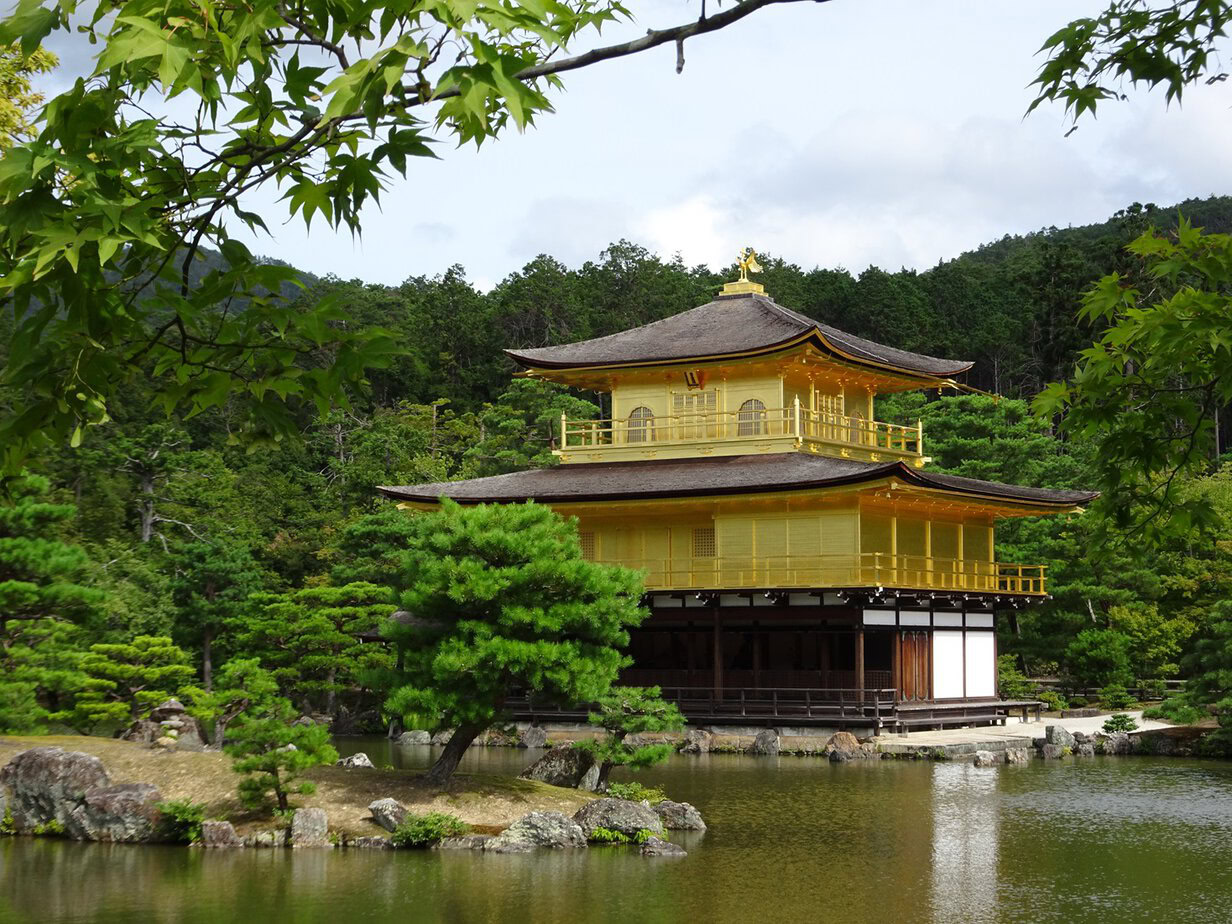
Kyoto is full of famous temples, but very few of them are as instantly recognizable as Kinkaku-ji, or the Golden Pavilion in the city’s Kita-ku District. It’s one of my favourite temples in the city (or even the country, to be honest), so I knew that Stefanie and I had to drop by again on our most recent trip to Japan.
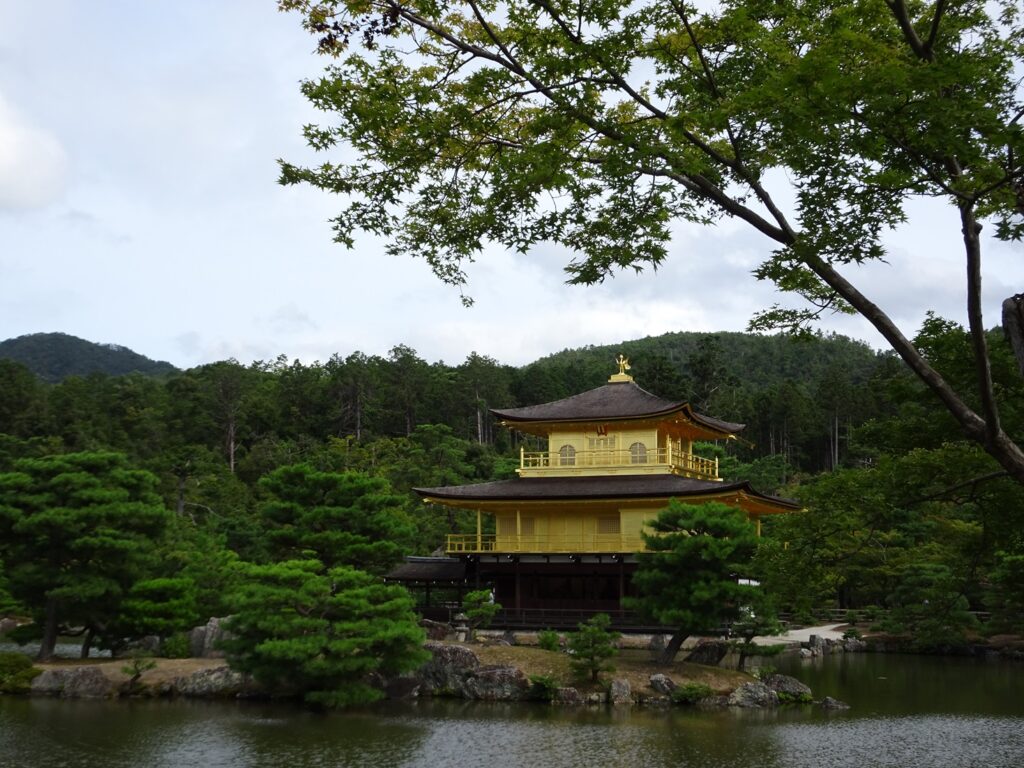
To me, the pavilion almost looks unreal when it first appears between the trees, with its upper floors completely covered in gold leaf, and reflected in the water of the pond below, which in turn is dotted by tiny islands full of crooked pine trees.
I’m not alone in my appreciation for the place, however, and together with Arashiyama Bamboo Grove and the red gateways of Fushimi Inari Taishō, this is Kyoto’s busiest sight, so it’s best to do a bit of pre-planning before your visit. Here’s everything you need to know about exploring the unique Golden Pavilion.

This post may contain affiliate links, and I might earn a small commission at no additional cost to you. For more info, click here.





Guided Tours of Kinkaku-ji
If you’d like a bit more context about the temple’s history, symbolism and garden design, there are plenty of guided tours available that combine Kinkaku-ji with other nearby sights in north-western Kyoto. You can have a look below at some well-rated options.
The History of the Golden Pavilion
The pavilion was originally built in the late 14th century as the retirement villa of the shōgun Ashikaga Yoshimitsu, who was one of the most powerful political figures of the Muromachi Period (like most shōguns, he basically ruled the country instead of the Emperor).
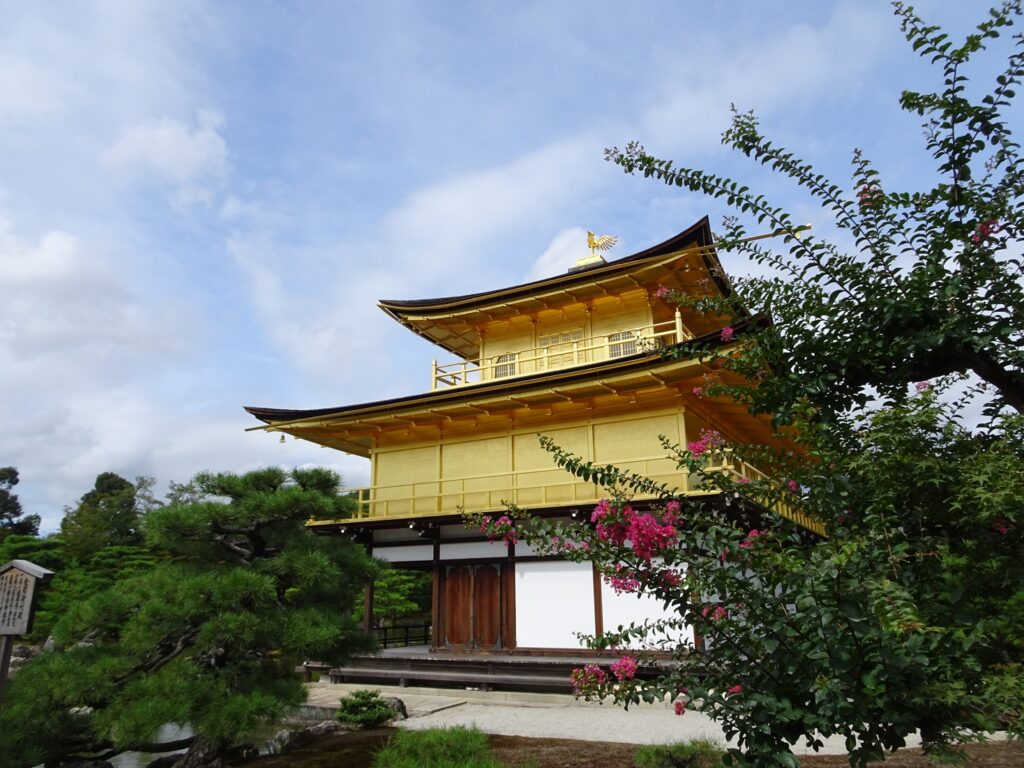
At the time Kyoto was the centre of political and cultural life in Japan, and it’s pretty clear that the pavilion was meant to show off the shōgun’s wealth and prestige. After Yoshimitsu’s death in 1408, the villa was converted into a Zen temple by his own orders.
The structure standing here today is technically a reconstruction. The original building survived for centuries (including all kinds of wars and political upheavals), but in 1950 it was burned down by a mentally ill Buddhist monk.
This was the basis for Yukio Mishima’s famous novel The Temple of the Golden Pavilion, by the way. The current pavilion was rebuilt in 1955 and restored again in the 1980s, when an even thicker layer of gold leaf was added. In 1994, it became part of Kyoto’s multi-property UNESCO World Heritage Site.
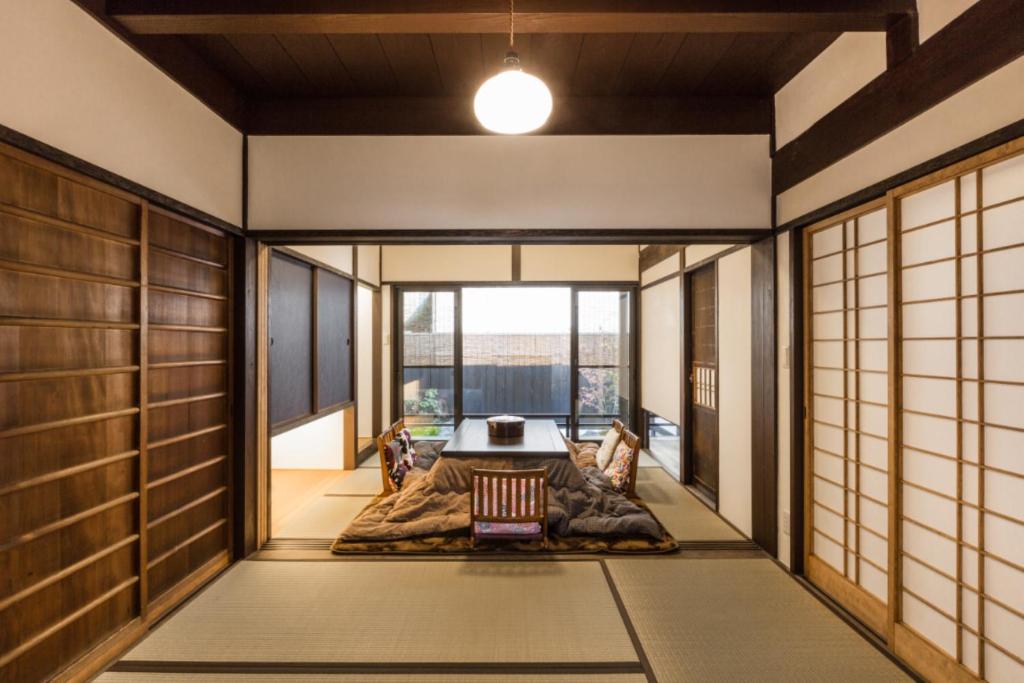
Best Hotels in the Area for an Early Start
Budget: Sakura Komachi
Midrange: Miun Kinkaku-ji
Luxury: Kyoto Machiya Stay En (pictured)
.
The Architecture of the Pavilion
Something we found interesting is that the building combines several different styles of Japanese architecture at once, which we could actually spot after spending some time in the country. For example, the ground floor is designed in the Shinden Style or Palace Style from the Heian Period (794 to 1185).
The second floor is supposed to look more like a samurai residence from the later Kamakura Period (1185 to 1333), and the upper floor with its half-circular windows takes inspiration from Chinese Zen Buddhist architecture, which had a strong influence on Japan during that time.
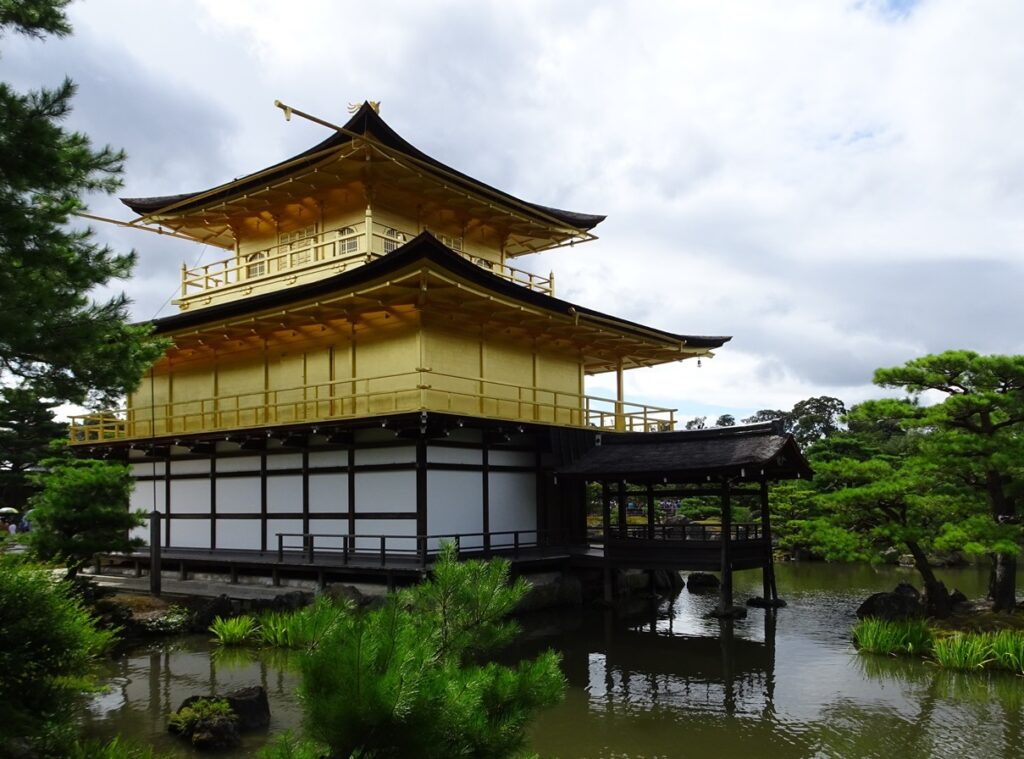
Despite this mix of styles, I think the pavilion still feels super cohesive. Unfortunately, you can’t visit the inside of the pavilion, which holds some sacred sacred relics of the Buddha. In any case, I assume that at least the architecture is much more impressive from the outside.
The surrounding gardens have also been carefully laid out, which probably won’t surprise you, if you’ve spent some time in Japan and have visited a few of the country’s beautiful gardens. They were designed as a “paradise garden”, which is supposed to evoke Buddhist ideas of harmony and paradise.
What to See at the Golden Pavilion
After passing through the rather simple wooden main gate, you’ll first walk between a huge red-bark oak, which has been designated a natural monument, and the Kuri (Temple Living Quarters), which date to around 1500 and which we found quite impressive, although most people seemed to completely ignore them on the rush to the actual Golden Pavilion.
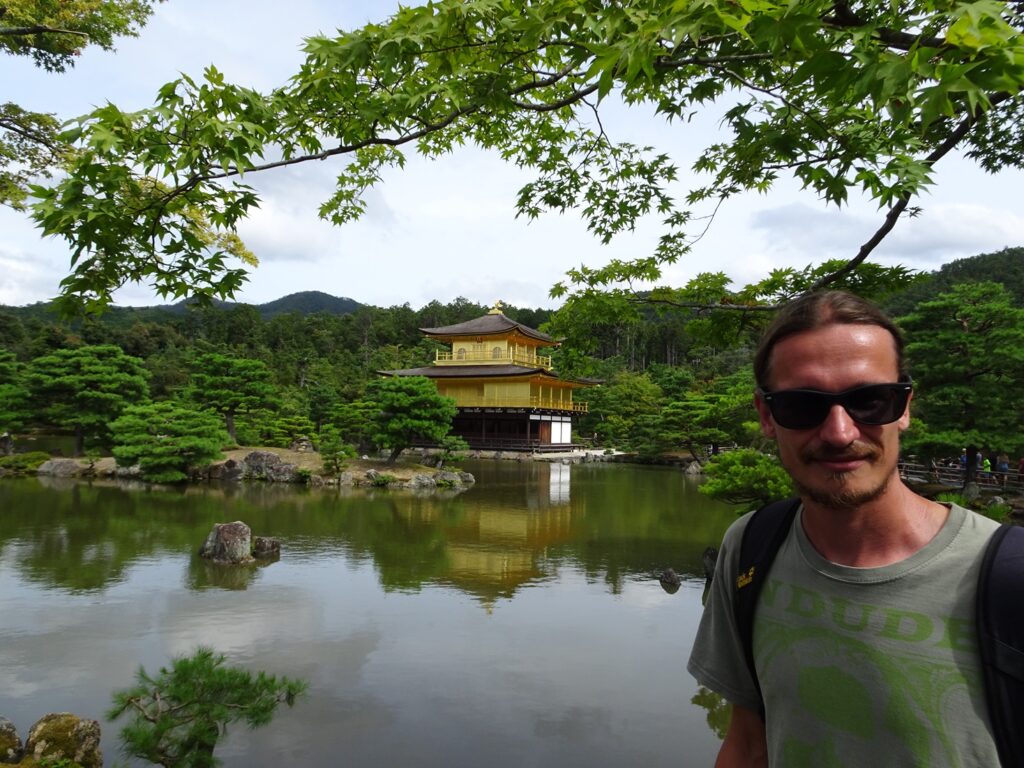
You’ll have to buy your ticket at the counters on the left hand side of a second gate, which has a curved roof that is typical of the Japanese Karamon gate style. The trail curves through the trees for a minute and then suddenly opens up the view over towards the Golden Pavilion.
Kyōko-chi, the large Mirror Pond in front of the pavilion, contains some carefully placed islands, rocks and pine trees that draw heavily on Zen symbolism, including the Crane and Turtle islands, which symbolize good fortune and the longevity of the Ashikaga Dynasty.
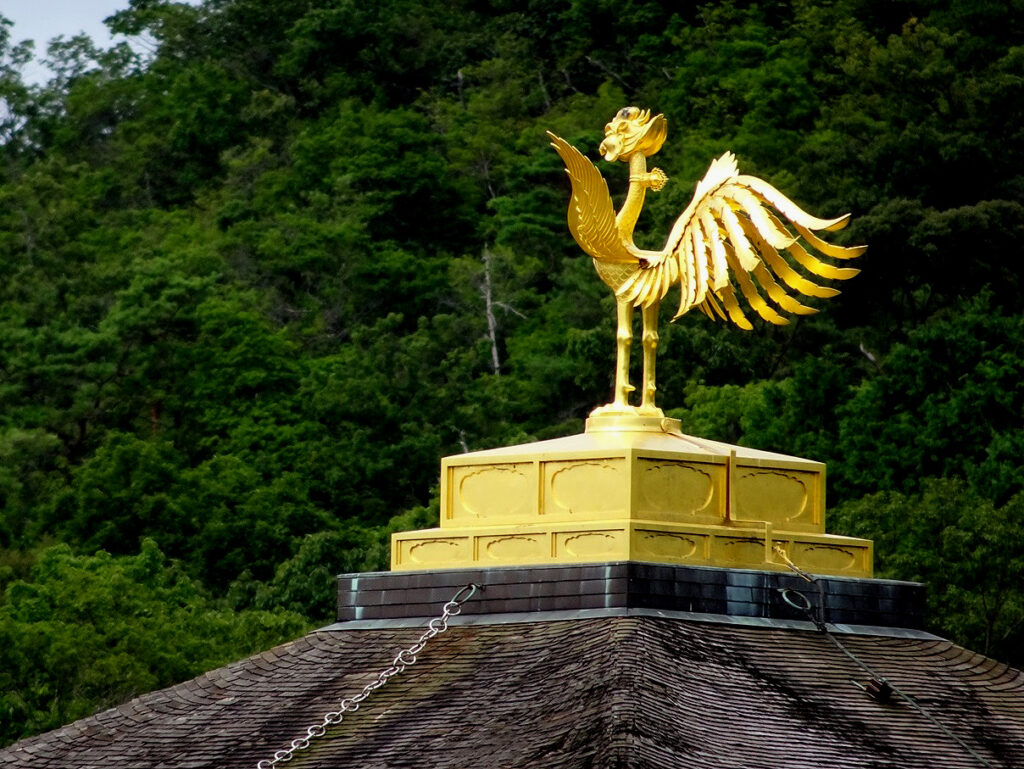
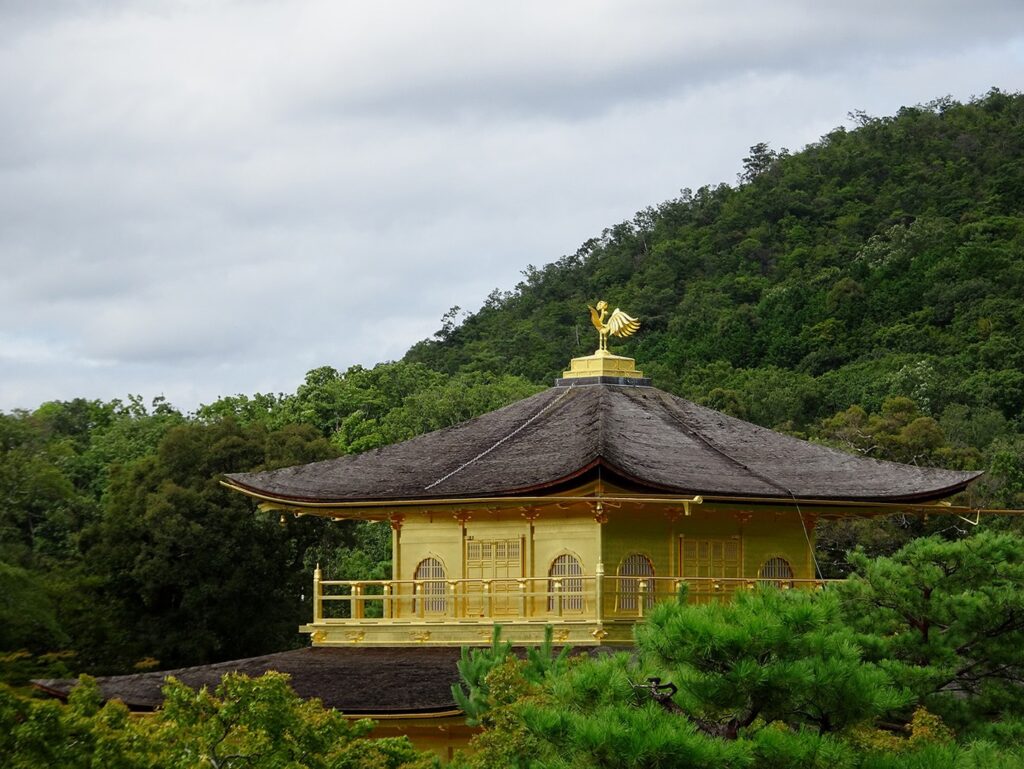
The Golden Pavilion sits right at the edge of the pond with its top two floors completely covered in gold leaf and a curved black roof made from the wood of the local sawara cypress. At the very top sits the famous golden phoenix, which is a traditional symbol of harmony and rebirth.
After the main viewpoint, the route continues along the pond, past the temple’s Hojo (Main Hall) and around the back of the Golden Pavilion. When we visited, the wooded northern part of the garden was much quieter and less crowded than the area around the pavilion itself.
There are some features worth checking out here, as well, like the small wooden Shin-un shrine to the guardian deity Kasuga Myojin, and the Ginga Spring, where Ashikaga Yoshimitsu is said to have gotten the water for his tea.
There are also the Ryumon Falls, a tiny waterfall, which is topped by a rock in the shape of a fish. This is inspired by a Chinese legend, in which a carp swims upstream and transforms into a dragon. One of our favourite parts in this part of the garden was the area around Anmin-taku, another pretty pond.
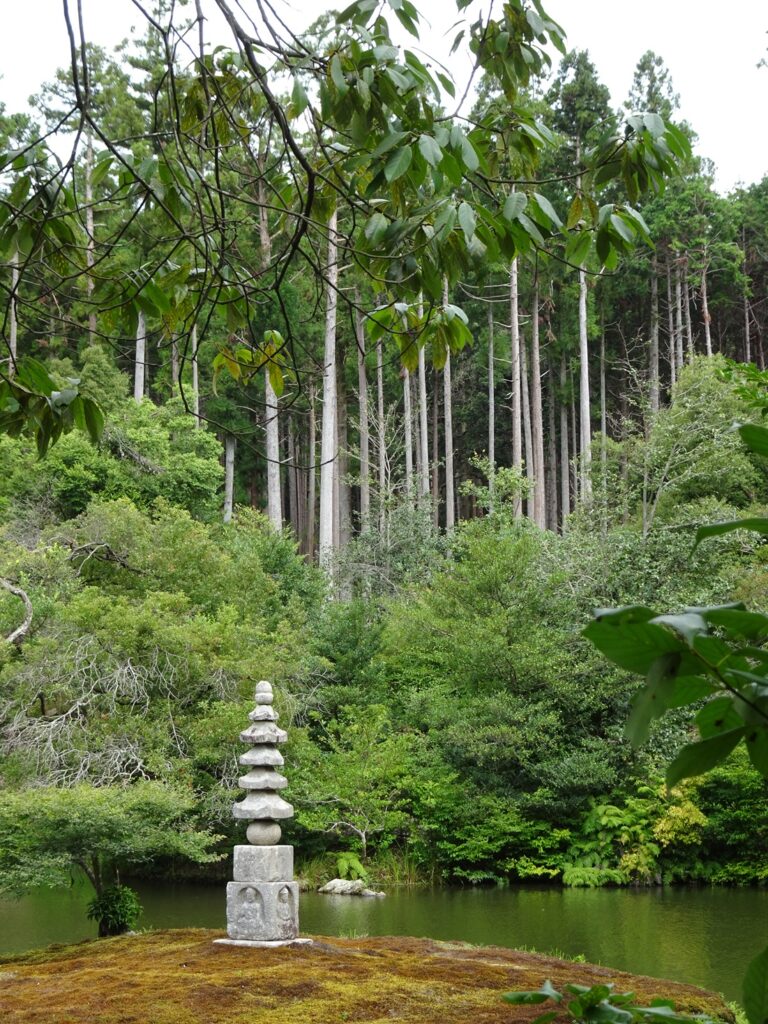
On a small island in the pond stands a five-ringed stone pagoda, which is known as Hakuja-chō (White Snake Mound). It is said to be the home of the family deity of the Saionji family, who owned the land before the shōgun bought it from them to build the Golden Pavilion.
Another place we really liked was the small thatched-roofed teahouse from the Edo Period (1603 to 1868) directly to the east. Before leaving the grounds, you’ll pass the Fudo-do Hall, which contains an image of the Buddhist guardian deity Fudo Myoo, which is hidden from public view, but is thought to be able to perform miracles.
How to Avoid the Crowds
Kinkaku-ji is one of Kyoto’s most visited sights, and it can really get busy. I have no super secret tips on how to avoid the crowds – as with many places, it’s all about timing. I’d strongly recommend coming either right when the temple opens or in the early evening, shortly before it closes.
We visited right when it opened at 9am, but even then there were quite a few other people around. When we left half an hour later, it was much more crowded, however, so we were still glad that we came early.
Something else to consider would be the day of the week. We were there on a Monday, but visiting mid-week would probably be even better. Avoiding cherry blossom season and Japan’s main school holidays also helps.
Finally, don’t despair if it gets a bit crowded. Most people seemed to only gather around the main viewpoint directly in front of the pavilion and then move on fairly quickly. Once we continued farther along the garden path, things became noticeably calmer.
The Golden Pavilion only opens at 9am, but if you’re getting up early anyway, I highly recommend dropping by the peaceful Ryōan-ji Zen Temple a bit to the West, which opens at 8am in the summer. We had that one completely to ourselves for the first 5 minutes or so and moved on to Kinkaku-ji when more people started arriving.
Map of the Golden Pavilion Temple
This map shows all the spots that I mentioned above and the route through the temple grounds.
Practicalities
How Much is the Entrance Fee?
We paid 500¥, which we found insanely good value for a place like that.
What Are the Opening Times?
When we visited, the Golden Pavilion was open daily from 9am to 5pm. Double-check the times here before you go.
How Long Do You Need?
The grounds are rather small and the crowds got increasingly bigger after a while, so we didn’t hang around too long. We spent about 30 minutes here, walking fairly slowly around the pond and taking lots of pictures.
How to Get to Kinkaku-ji
Unlike other popular places in the city, such as Fushimi Inari Taishō or Arashiyama, Kinkaku-ji isn’t directly connected to Kyoto’s train or tram network, so it’s easiest to come by bus.
From Kyoto Station, we took the direct Kyoto City Bus 205 to the Kinkaku-ji-michi stop. From there it’s about a 2-minute walk west to the temple entrance. You can check for current bus connections and timetables on this site.
Taxis are another fairly convenient option if you’re combining several sights in north-western Kyoto, but the prices will add up quickly. Finally, you could also take a guided tour that includes private transport, although these are obviously more pricey, as well.
Where to Stay Near The Pavilion
We stayed in central Kyoto and only visited the neighbourhood on a half-day trip. That said, if you want a really early start, staying in Kita-ku district would probably be a good idea.
The only real budget option in the area is Sakura Komachi, while the mid-range Miun Kinkaku-ji is a few blocks to the east. The closest place to stay to the Golden Pavilion is Kyoto Machiya Stay En, which is a more upscale traditional ryokan with very good reviews.
Restaurants in the Area
There is a small tea house on the temple grounds, close to the exit opposite Fudo-do Hall. There are also plenty of restaurants, cafés and snack shops around the bus stop area on Nishi-oji Dori.
See Also
The Ultimate Guide to Kyoto’s Fushimi Inari Taisha – Including How to Avoid the Crowds