As an archaeologist, I was excited to find out that eastern Uganda is not only home to beautiful waterfalls and great hiking opportunities, but also to some of the oldest known rock art in East Africa.
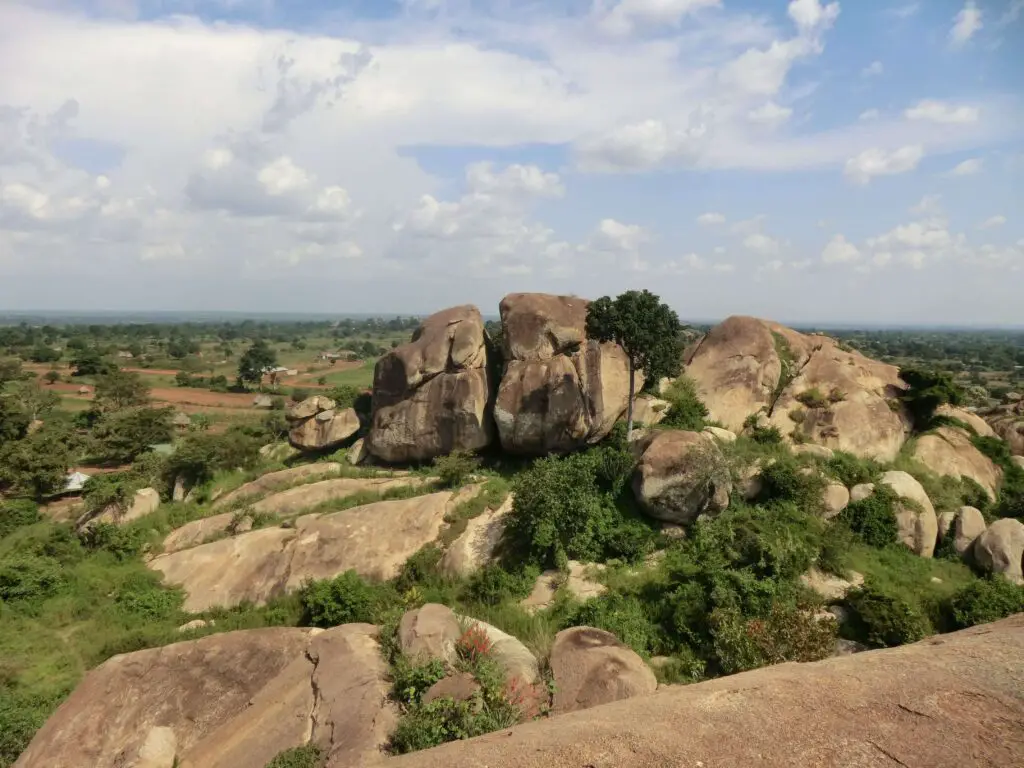
The Nyero Rock Paintings near the small town of Kumi are definitely one of the more impressive examples of prehistoric art that I’ve come across. Apart from that, Stefanie and I loved their amazing location in a pretty savanna landscape that’s dotted by rocky hills.
Here’s everything you need to know about Uganda’s oldest known rock art.

This post may contain affiliate links, and I might earn a small commission at no additional cost to you. For more info, click here.
History and Importance of the Nyero Rock Paintings
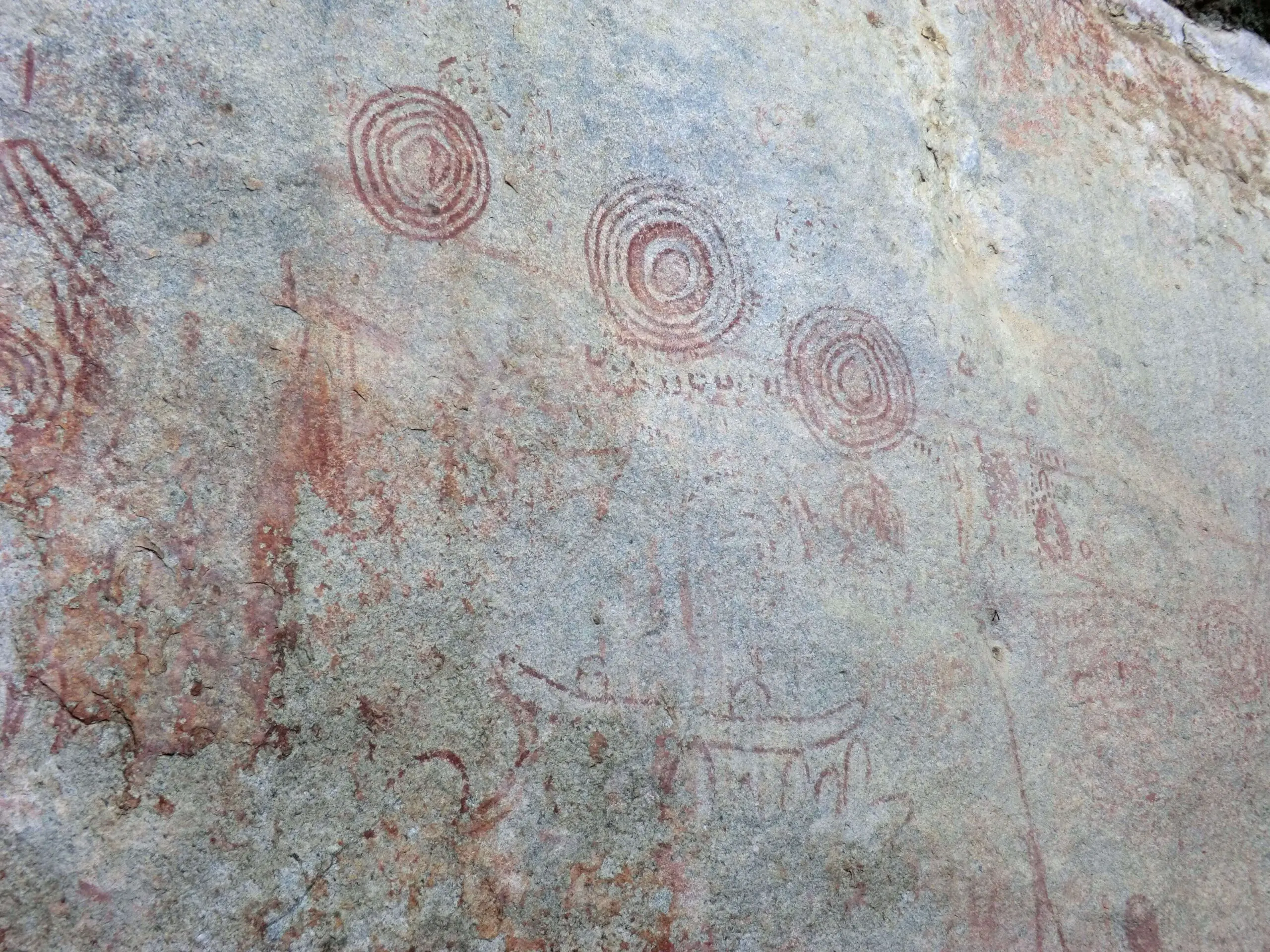
Despite the name of the site, we saw both pictographs (rock paintings) and petroglyphs (rock carvings) in the area. The paintings were created using a mixture of red and white pigments, and they show a variety of different animals, people, and more abstract geometric shapes.
The best-preserved rock paintings in the area are believed to have been created around 1250 AD, but some of the petroglyphs are estimated to be several thousand years old. That said, dating rock art is notoriously difficult, especially the carvings, so it’s best to take these dates with a grain of salt.
The rock art is usually attributed to the indigenous Batwa people of the region, who lived in the area before the arrival of the Bantu-speaking people, who make up the majority of Uganda’s population today.
Officially, the Nyero Rock Paintings were rediscovered by British explorer C.W. Hobley in 1913 (although I’m sure people living in the area knew about them long before that).
There are some efforts by the government to promote them as a tourist site, but we didn’t meet any other mzungus in this entire part of the country.
Visiting the Paintings
The Nyero Rock Paintings are located on a beautiful green plain that’s surrounded by rocky hills and small farms. The site itself is made up of three large granite rocks, each of which is covered in dozens of paintings.
When we arrived, there was a caretaker hanging around who tagged along and showed us the different spots. It was a good thing, because some of the paintings are rather hidden and I’m not sure wwe would have found them on our own.
There are six different rock shelters with paintings in the area, but the most interesting to me were Nyero 2 and 3.
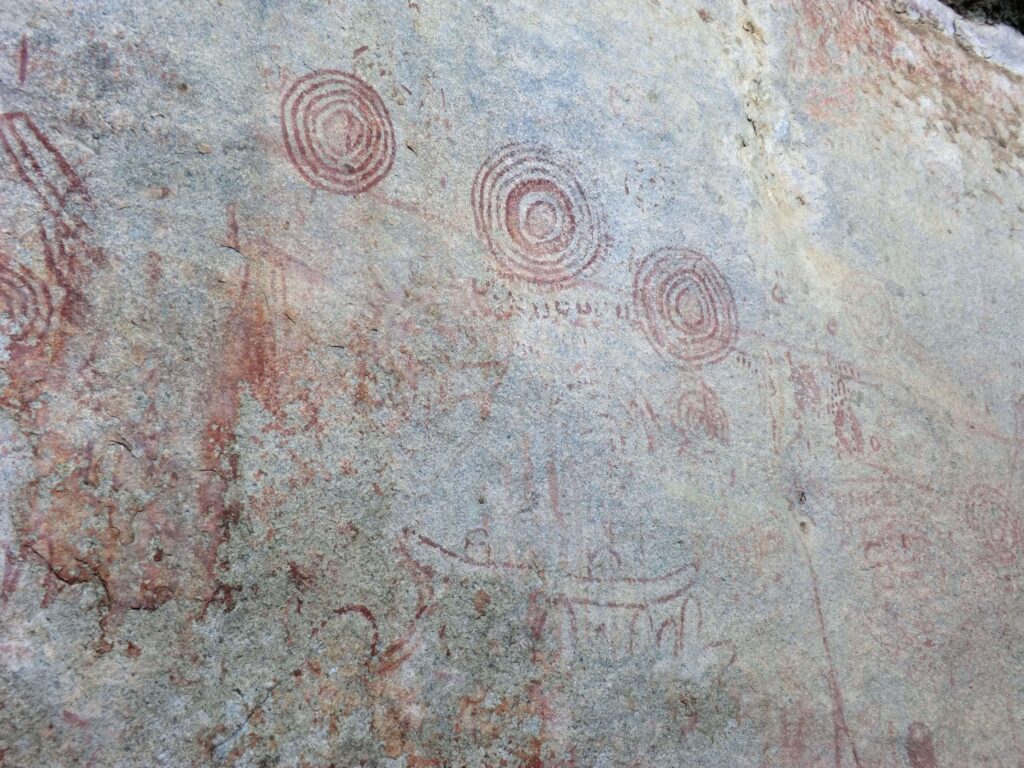
Nyero 2 is the main site and the one you definitely don’t want to miss. There are tons of red-pigment paintings covering a high rock wall. There’s a slight overhang that protects them from the sun and rain, which would explain why they’re so well-preserved.
There are several sets of concentric circles, and possible depictions of humans and various animals. The longish structure that kind of looks like a boat probably depicts an acacia pod. There are however also people who think it actually is a boat, like the ones that might have been used for fishing on nearby Lake Kyoga at the time.
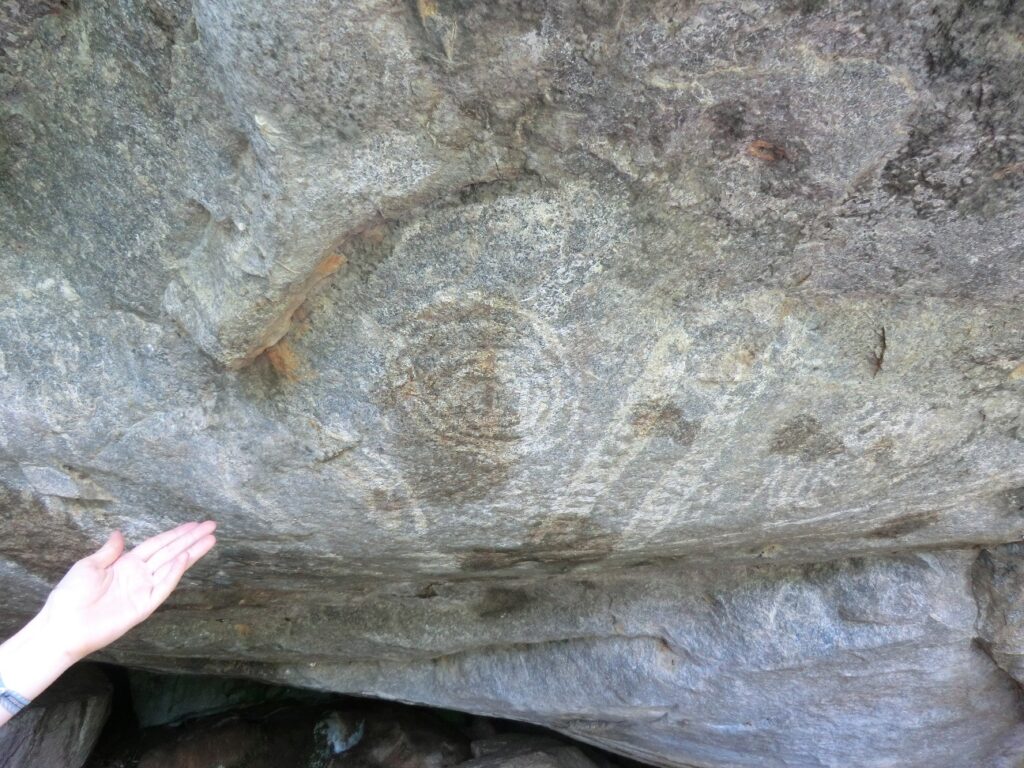
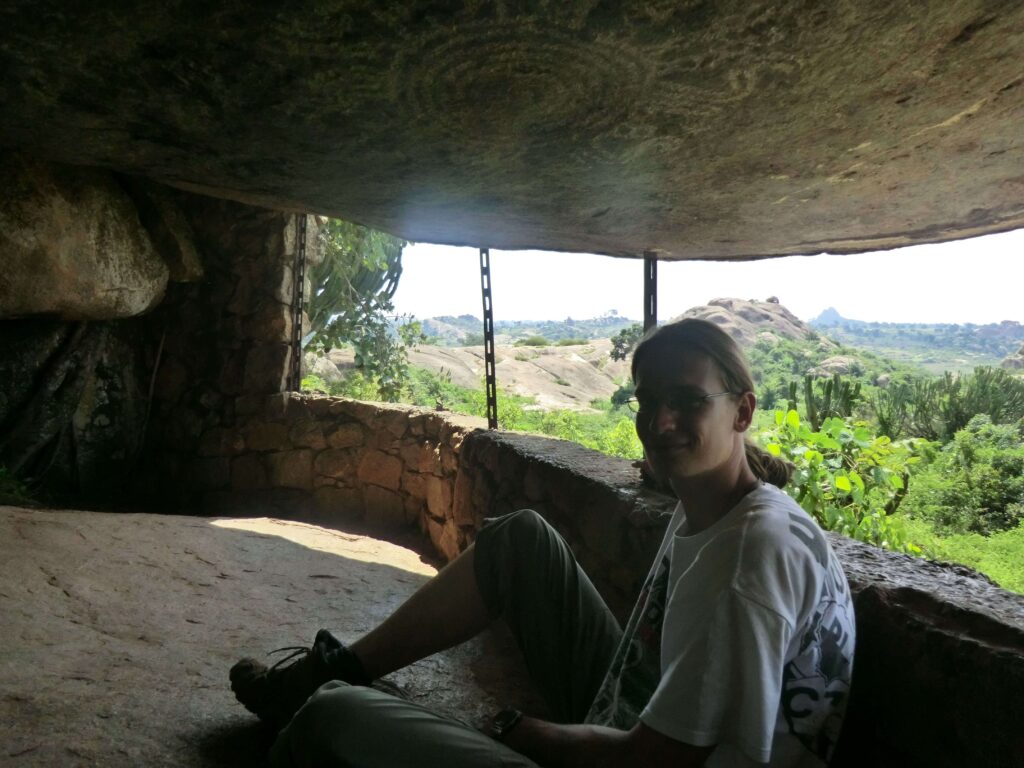
Nyero 3 is a narrow rock shelter that’s a little further to the north. You’ll have to crouch low to enter it, but there is a great view of the surrounding landscape from the end. The main artwork here is a well-preserved sun-like geometric design of white-painted concentric circles that are surrounded by radial lines.
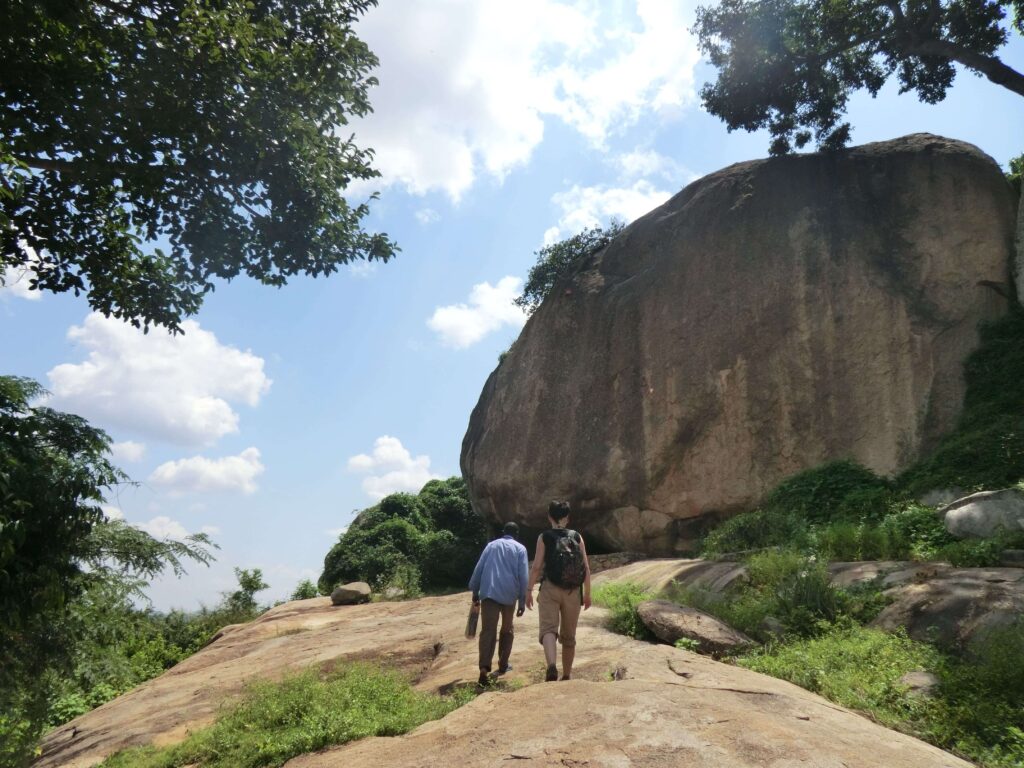
If the artwork looks familiar, you might recognize it from the painting on the 1,000-shilling-note. I also highly recommend climbing to the top of the main rock outcrop for some awesome 360° views over the surrounding landscape.
Practicalities
How Much is a Visit to the Nyero Rock Paintings?
The entrance fee was 15,000 Shillings per person, and we paid another 15,000 for the caretaker to guide us around.
How to Get There
The Paintings are located about 8km (5mi) west of Kumi, which in turn lies about 50km (30mi) northwest of Mbale, the biggest city in eastern Uganda. The easiest way to get there would be by car, but we managed to reach the paintings by a combination of public transport and hitchhiking.
From Mbale’s bus terminal, you’ll have to take a matatu (shared taxi) headed for Soroti (be prepared to wait a while, until it fills up) and get out at Kumi. The trip took us about 1.5 hours. In Kumi, you’ll have to either board a matatu going to Ngora, or take a boda-boda (motorcycle taxi) to the rock art site.
Returning to Kumi is a bit more complicated, unless you take the boda-boda and ask your driver to wait. Otherwise, you’ll have to either wait for an infrequent matatu, try to hitchhike (we managed to get a ride from a friendly priest) or walk back to Kumi along a long, dusty road.
What to Bring
There are no shops in the area, so bring water, food, sunscreen and anything else you might need. There’s a small pit toilet, but no toilet paper or running water.
Where to Go Next
Jinja, home to the source of the Nile and Uganda’s adventure capital
Sipi, a beautiful area for hiking, that’s dotted with impressive waterfalls