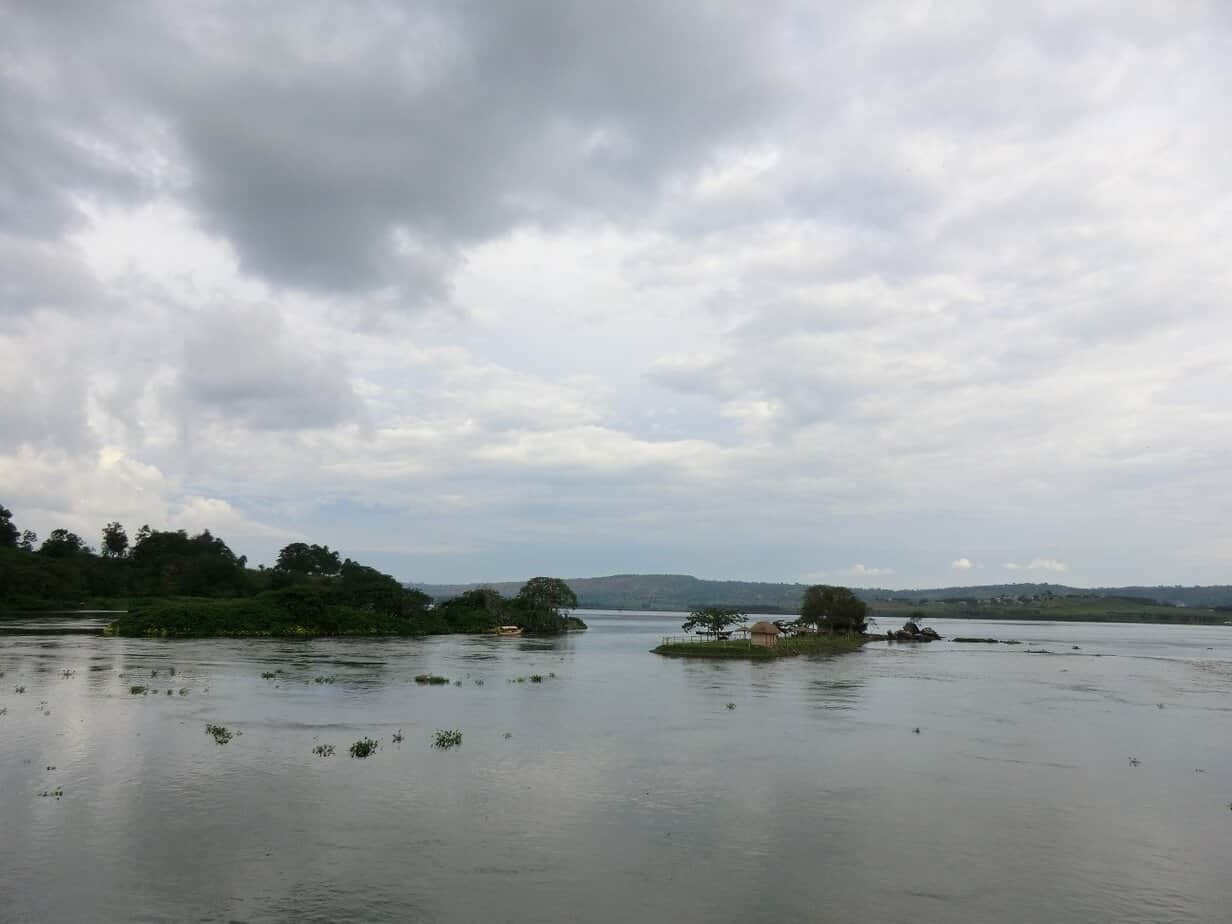
Jinja was introduced to us as Uganda‘s adventure capital, but despite its reputation, we actually found the city (and its activities) to be much more laid-back than we expected.
Sure, if you want to tackle some impressive rapids, you can do some amazing white-water rafting on the Nile (as we did), but you can also opt for a slower boat tour instead.
Otherwise, you can just drop by to check out the source of the longest river in the world. Here’s everything you need to know about visiting Jinja and the Source of the Nile.

This post may contain affiliate links, and I might earn a small commission at no additional cost to you. For more info, click here.
Is the Source of the Nile Actually Located in Jinja?
First things first: Jinja is usually named as the source of the White Nile, but not everyone agrees with that assessment.
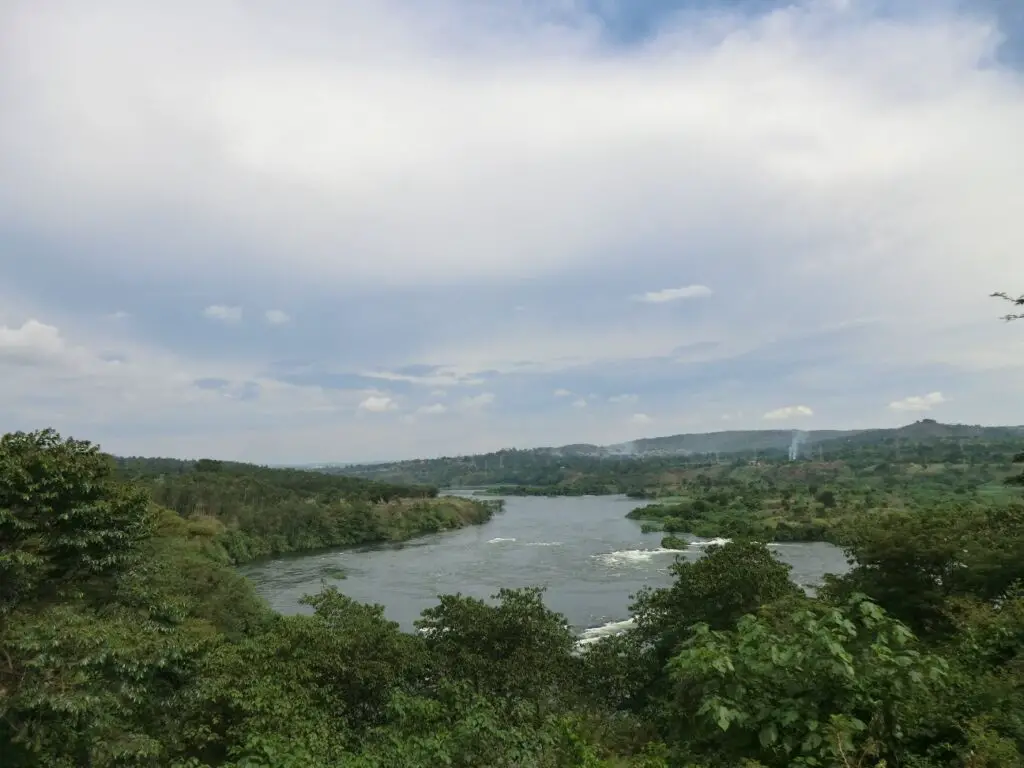
This is the place where the river flows out of Lake Victoria, before it continues north-west towards Murchison Falls and Lake Albert, and eventually to South Sudan and Sudan, where it’s joined by the Blue Nile in Khartoum.
Other people consider the Kagera River, which flows into Lake Victoria, to be the part of the Nile, and the sources of its various tributaries are thought to lie somewhere in the highlands of Rwanda or Burundi.
That said, no definite source of these has yet been identified, so Jinja is still considered the location of the source of the Nile by most people.
Where to Stay in Jinja
Budget: Jinja Backpackers
Midrange: Buutu Nest
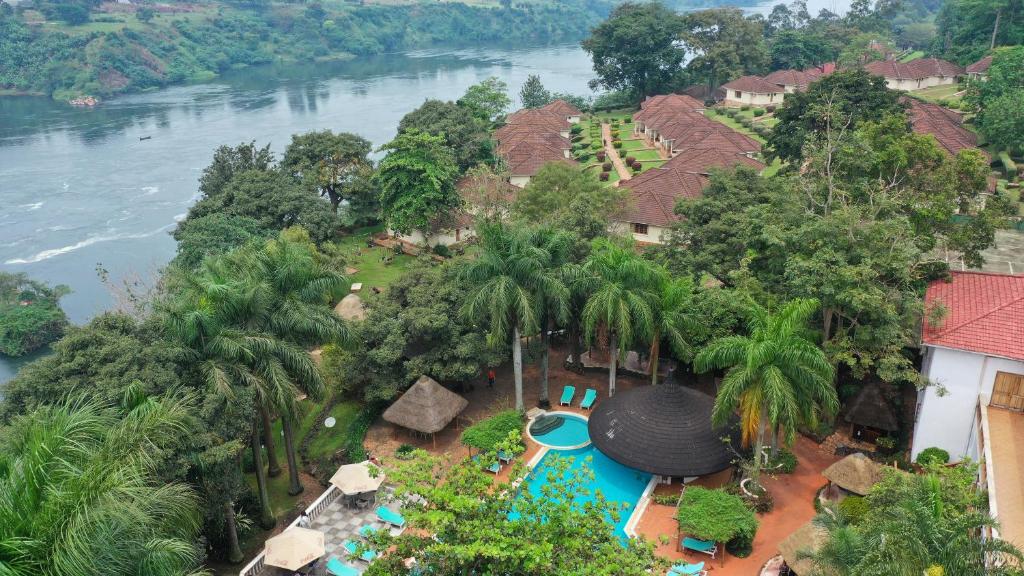
Luxury: Jinja Nile Resort (pictured)
.
Guided Tours of Jinja and the Nile Source
If you don’t want to sort out your own transport, there are also some guided tours of the Nile source available, including sseveral day trips from Kampala or Entebbe. Have a look at some well-rated options below.
Visiting the Source of the Nile
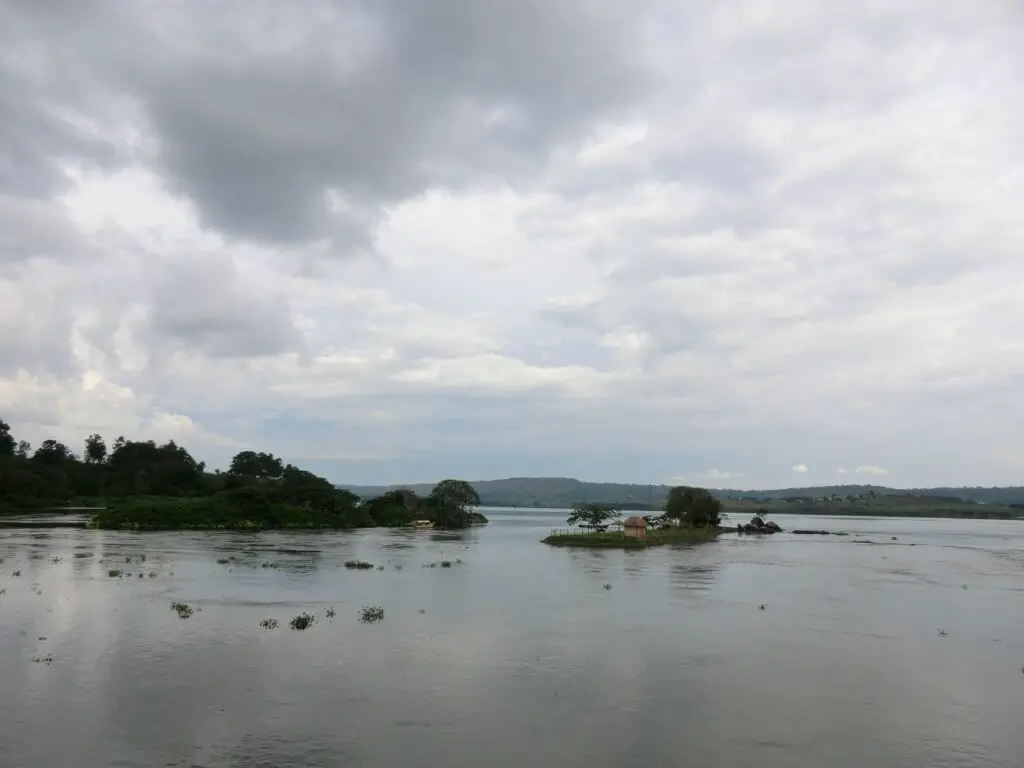
If you’re expecting a small spring trickling out from some rocks you’re in for a surprise. Instead, the river already makes a majestic appearance as it slowly flows out of Lake Victoria.
There are even some small islets here, one of which has some tiny huts and a garden plot sitting on it. We had the best view of the source from the slightly elevated western bank of the river.
There’s a small, walled-in park called Source of the Nile Gardens with an entrance fee of a few thousand shillings here. Otherwise, you can just continue a little further south and have the almost exact same view for free from a grassy hill.
The gardens also have a monument at the spot where John Henning Speke (the first European to “discover” the source) first glimpsed the source during his expedition in 1858. The gardens are open from sunrise to sunset.
We also took a small dugout canoe to the other side of the river for a few thousand shillings. I recommend having a good look at the boats beforehand, however. Ours kept filling up, and we had to frantically scoop out the water while we were being rowed across.
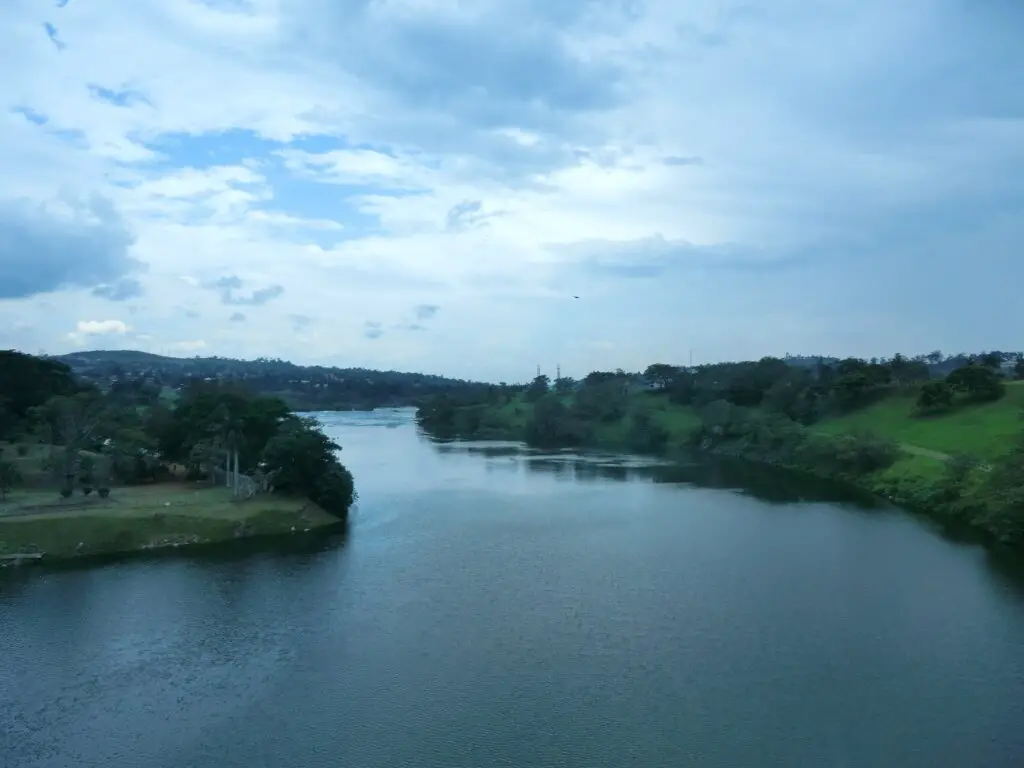
On the eastern shore, there’s a small bust of Mahatma Gandhi, whose ashes were partly scattered here after his death in 1948 (he wanted his ashes to be scattered in the biggest rivers of all continents).
Can You Take a Swim at the Source?
This might sound tempting, but I highly advise against it. The river is till slow-flowing enough at the source to make bilharzia a serious risk (similar to Lake Victoria). Apparently, this isn’t the case in the swifter-flowing sections that are used for white water rafting further downstream.
How to Get There
The easiest way to reach the source from central Jinja is either to walk or to take a boda-boda (motorcycle taxi). If you’re walking, just follow Cliff Road from its intersection with Bridge Street, slightly north of the big Indian Square roundabout.
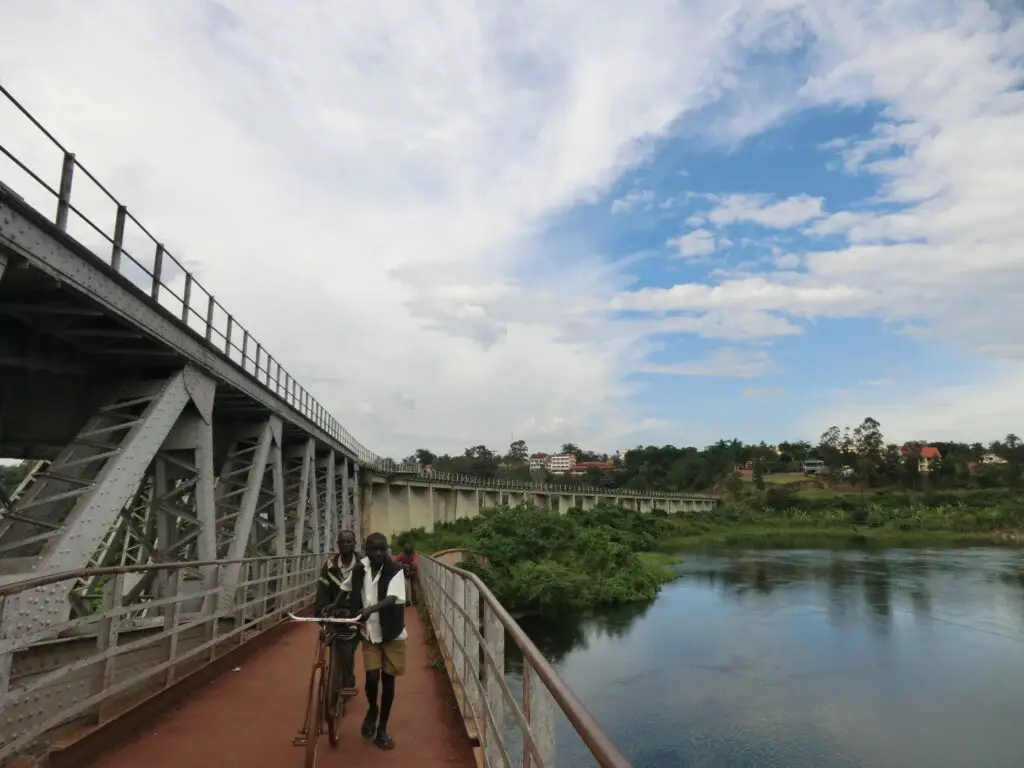
There were a couple of guys with dugout canoes hanging around the source and we hired one to cross to the other side. Otherwise, the nearest place to cross the river is a railway and pedestrian bridge, which is about 1 km (0.6 mi) north of the Source of the Nile Gardens.
Is There an Entrance Fee?
Only for the Source of the Nile Gardens (it was 10,000 shillings for foreigners and 5,000 shillings for Ugandan nationals when we were there), but there are plenty of free spots along the western shore with great views of the source.
Map of the Nile Source
Have a look at the map to get an idea of the source’s location and the surrounding area.
Practicalities
How to Get to Jinja
There are frequent buses and matatus (shared taxis) moving between Kampala and the Kenyan Border or cities in eastern Uganda, like Mbale and Tororo. All of these can drop you off in Jinja. In Kampala, most of these start at the old taxi park or the nearby Kisenyi Bus Terminal.
Where to Stay in Jinja
Jinja has lots of hotels for different travel budgets. We pitched our tent at Explorer’s Campsite, which has a beautiful location near Bujagali Falls (really more a series of rapids than a proper waterfall) in the Nile.
It’s a beautiful and very quiet area to stay (except for the flowing of the Nile, of course, but I found that to be quite soothing, actually).
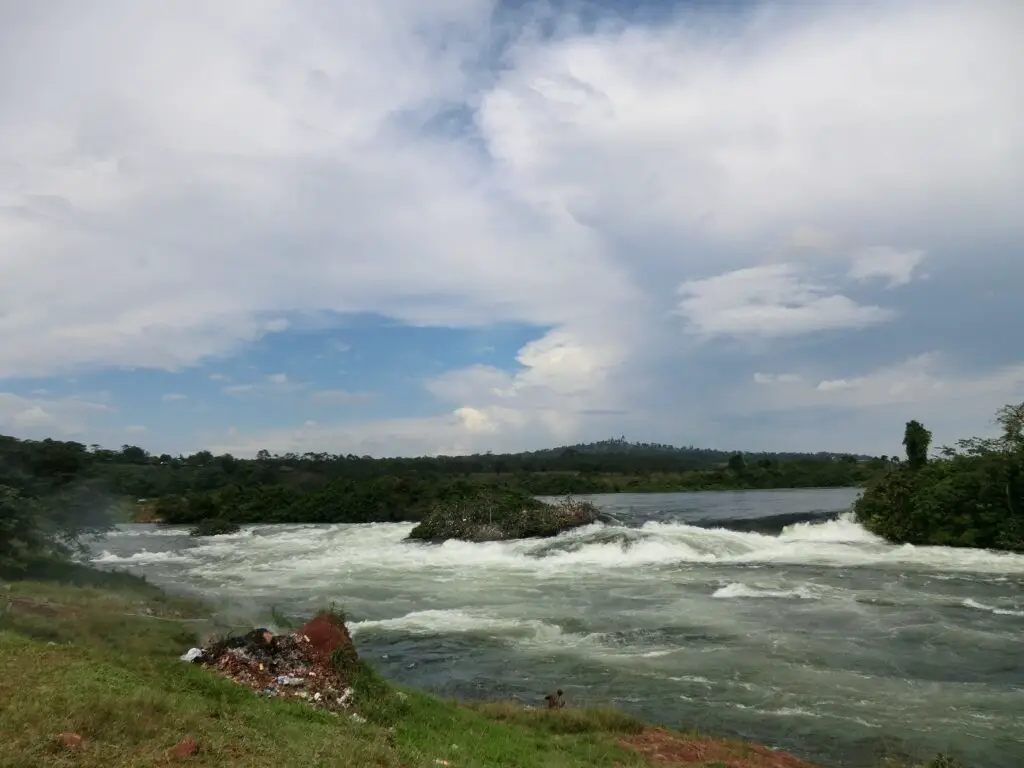
The downside is that it’s 8km (5mi) north of central Jinja and when we were there, there were no matatus running after dark, which meant a long walk back (boda-bodas usually aren’t a good idea after dark either). As Jinja is very close to the Equator, dusk already arrives around 6pm year-round. Definitely make sure to take a flashlight with you if you plan to return after dark.
If you want to stay more centrally, there are lots of options available. Jinja Backpackers is one of the cheapest places and Buutu Nest is a well-rated mid-range option. The Jinja Nile Resort is said to be the best luxury resort in town. You can have a look at the map below for more options.
Where to Eat in Jinja
There are plenty of restaurants in Jinja, mostly around the source of the Nile and in the city centre. We went to All Friends Grill Bar and Restaurant on Jackson Avenue, which had some really tasty Ugandan food (plus some Western food, if you prefer).
Otherwise, there are the usual street stalls selling skewered meat, rolex and other street food at the central market on the east end of town.
Where to Go Next
Kampala, Uganda’s Lively Capital
Sipi, a Beautiful Area for Hiking
Tororo, Home to the impressive Tororo Rock
As always, a very useful and well-written article. However, since calling Jinja the source of the Nile in the disclaimer is rather dated – or at potentially misleading, given that the Kagera with its sources is widely agreed to be the actual source of the Nile. Especially since only by using this as a baseline can the Nile keep his (contested) claim against the Amazon as the longest river on earth.
Fun fact: The folks of of a popular british car show whose name shall not be mentioned once (not at all seriously) attempted to find the source of the Nile, too and, after arriving at Lake Victoria, got corrected as well^^ Thus they first suggested a connection between Lake Edward and Lake Kivu, which would’ve placed the source south of Lake Meru, in close proximity to that of the Congo. If true, this would potentially connect both systems similar to the Amazon and the Orinoco and would have been a real scientific sensation. After failing to prove it, they then posited that the mouth of the Nile is not, as widely agreed, at Alexandria, but rather at Gibraltar, and therefore claimed the Mediterranean Sea to actually be part of the Nile, too. From that, they came to the conclusion that the Grumeti (compared to the Kagera, a rather insignificant contributor of Lake Victoria) must in fact be the true source of the Nile and went on to find search for its origin somewhere in the Eastern Serengeti.
Hi Tony, thanks for your comprehensive commentary (very well-researched, as I would have expected of you;-). Of course, you’re absolutely right, and Jinja as the source of the Nile is contested to say the least. However, I still decided to refer to it as such, as this is where the White Nile flows out of Lake Victoria and there’s an abundance of monuments claiming this to be the source. Thus, while the Kagera may be the actual source, as far as I know it’s not agreed upon, which tributary of that river forms the actual starting point of the Nile. At least Jinja is the point from which the River is referred to as the Nile, so I guess this is as official as it gets going by today’s knowledge;-)
Hi Reinhard,
thank you as well for your reply and I can fully understand your viewpoint 🙂 It is indeed true that the outstream of Lake Victoria is the first part that is referred to as Nile. Yet some would debate that the name White Nile itself refers to only a rather short part in the Sudan and that the parts upstream are the Albert-Nile, Kyoga-Nile and Victoria-Nile, respectively. With the exact source of the Kagera and thus the Nile as a while not quite being confirmed yet.
Which is, even with the current level of technology, still the case for most of the biggest and longest rivers on earth, especially the Amazon, the Mekong, the Yangtse, the Congo and the Brahmaputra – fuelling the debate in the first place.
It also doesn’t help that each of them adopts many different names during its long journey and the most commonly known one often being used for a much shorter part of the river – case in point being Victoria Nile as another name for the stream leaving Lake Victoria and being renamed Albert Nile after having left Lake Albert. While Nile on its own is mostly being used only after merging with the Blue Nile from Ethopia (and, in historc times, with the Yellow Nile from the Chad), i.e. in the sphere of influence of ancient Egypt.
Long story short, trying to locate the true source and coming to a comprehensive conclusion would be an adventure of its very own – one for each of the streams mentioned above. Or, to quote the guys refered to in the previous post: “Let’s do science […]” =D
Until then, most would indeed accept Lake Victoria as the factual source of the Nile – even though this would establish the Amazon as longest river on earth. An outcome I could easily live with, as I, personally, favour the Amazon anyway^^
Hey Tony,
it’s true that there’s a certain disagreement about the terminology of the various sections of the river, in addition to the confusion surrounding the smaller tributaries. I guess we have to accept that we know a lot less about some of the natural wonders of the world than is usually hinted at. Trying to follow a few of the smaller tributaries to their source certainly would be quite an adventure (as well as a giant challenge, I’d venture to guess:).