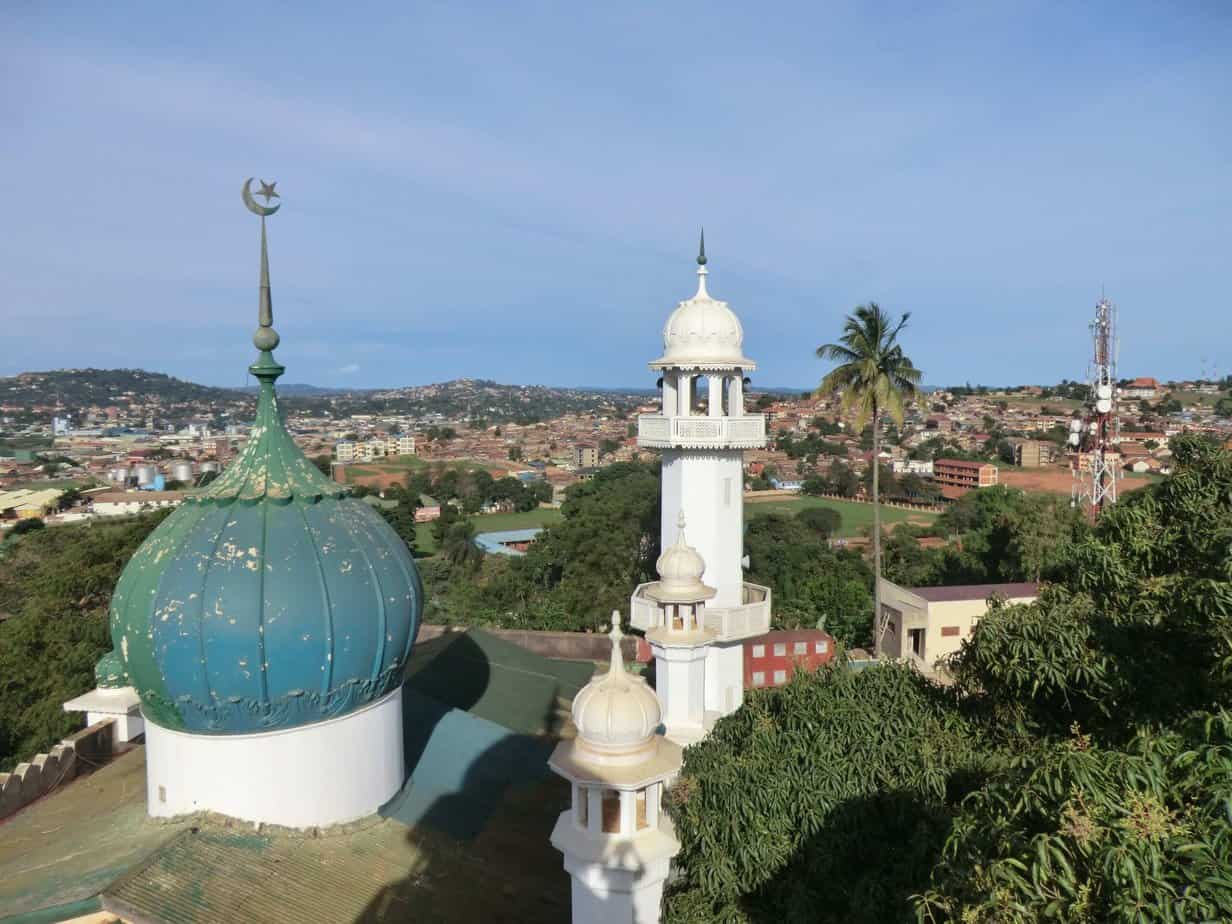
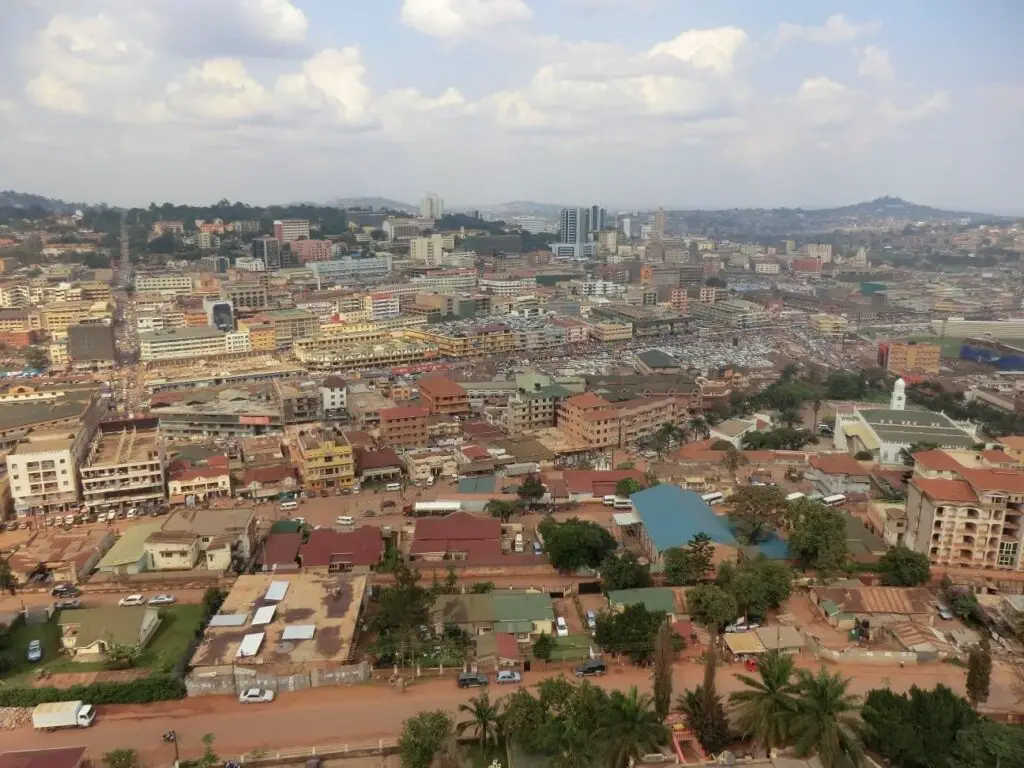
As we expected beforehand, Uganda‘s capital formed a stark contrast to the sleepy towns and beautiful nature that we encountered upcountry. Kampala is loud, dusty, chaotic, and definitely took some getting used to.
However, if you’re able to stand the head-on assault, it’s worth spending a couple of days here. There’s no place in the country where we found so many traces of Uganda’s fascinating and turbulent history.
For instance, there are sites connected to the Buganda Kingdom all over the city, including the UNESCO-listed Kasubi Tombs. We also saw traces of a much darker history with Idi Amin’s notorious torture chambers. Here’s my personal list of the best things to do in Kampala.

This post may contain affiliate links, and I might earn a small commission at no additional cost to you. For more info, click here.
Guided Tours of Kampala
If you want to explore Kampala without the hassle of sorting out your own transport, lots of guided tours of Kampala are available. For instance, this half-day tour of the city includes transport, a private guide and admission to sights like Mengo Palace and the National Museum.
Another option is this tour of the historical sites of Kampala, including the Kasubi and Wamala Tombs. There’s also a nighttime tour of Kampala Street Food by boda-boda. You can check out some other options below.
A Great 2-Day Itinerary for Kampala
I recommend spending one day exploring the top sights in the outskirts of the city, like the Kasubi and Wamala Tombs, the Baháʼí Temple and the National Museum, and another day visiting downtown Kampala, as well as the Mengo and the Namirembe areas.
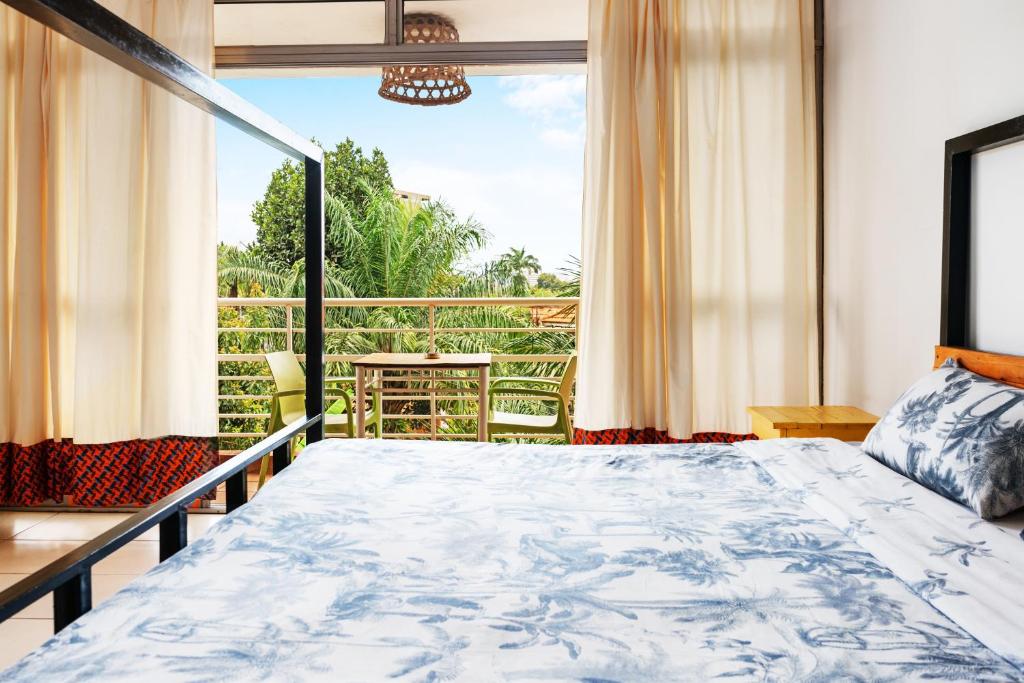
Where to Stay in Kampala
Budget: Bushpig Backpackers (pictured)
Midrange: Koki Hotel
Luxury: Kampala Serena Hotel
.
Day 1
Have some breakfast and then head to the northern suburbs to check out the Baháʼí Temple and the Uganda Museum. I recommend hiring a boda-boda (motorcycle taxi) for this trip, as the temple is a bit isolated.
Just ask them to drive you to the temple, wait for you, then drive you to the museum, from where you can catch a matatu (shared taxi) back to the old taxi park. In the afternoon, you can rely on matatus to visit the Kasubi and Wamala Tombs.
Baháʼí Temple
The city is home to one of only a handful of temples around the world that are dedicated to the Baháʼí Faith, which developed in Iran in the 19th century. The one in Kampala was the first one on the continent and is designated the “Mother Temple of Africa”.
It’s a beautiful building and surrounded by pretty gardens. We also found it worth visiting just to learn more about this fascinating religion, which points out the spiritual unity of all humankind and the oneness of all religions.
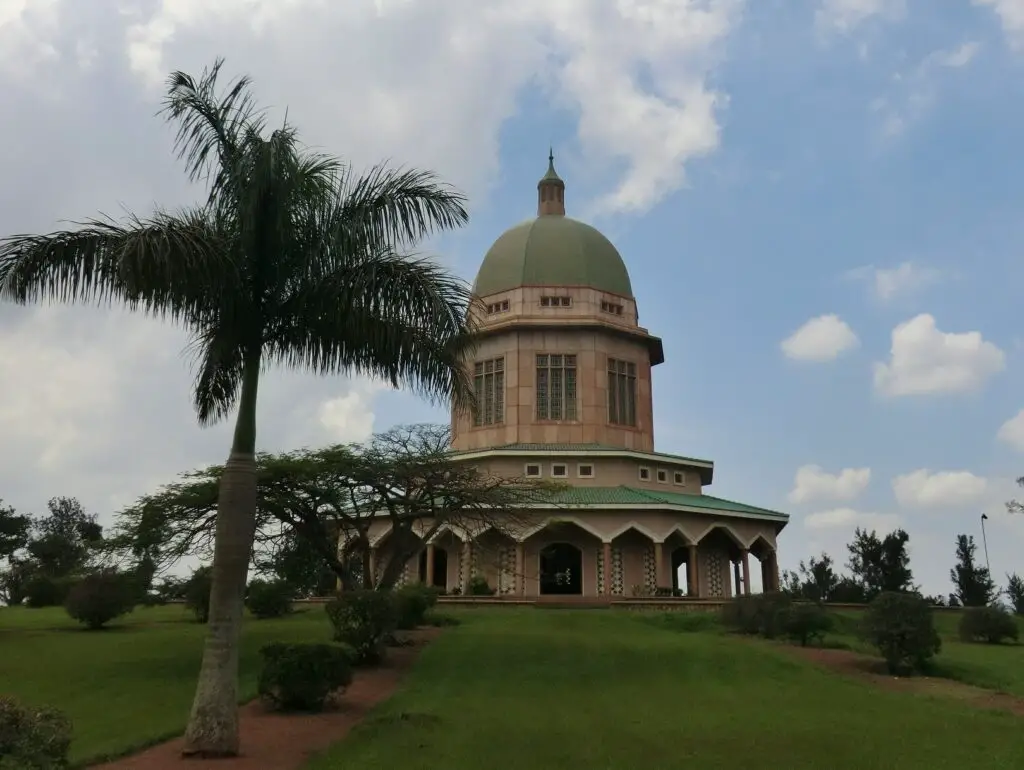
The temple is open from Tuesday to Sunday 8:00am to 6:30pm (double-check the current times here) and there’s no entrance fee.
The easiest way to get there from downtown would be to hire a boda-boda (motorcycle taxi). If you want to visit the Uganda Museum afterwards, you can just ask them to wait for you while you visit the temple and then continue on your way.
Otherwise, you can catch a matatu (shared taxi) heading north at the old taxi park (just ask around and people will point you to the right car). However, they only go to Ntinda, from where it’s still a longish walk to the temple.
Uganda Museum
The country’s biggest museum was opened in 1908 and is said to be the oldest museum in East Africa. It has a mix of displays about Uganda’s nature and culture, with a focus on ethnography.
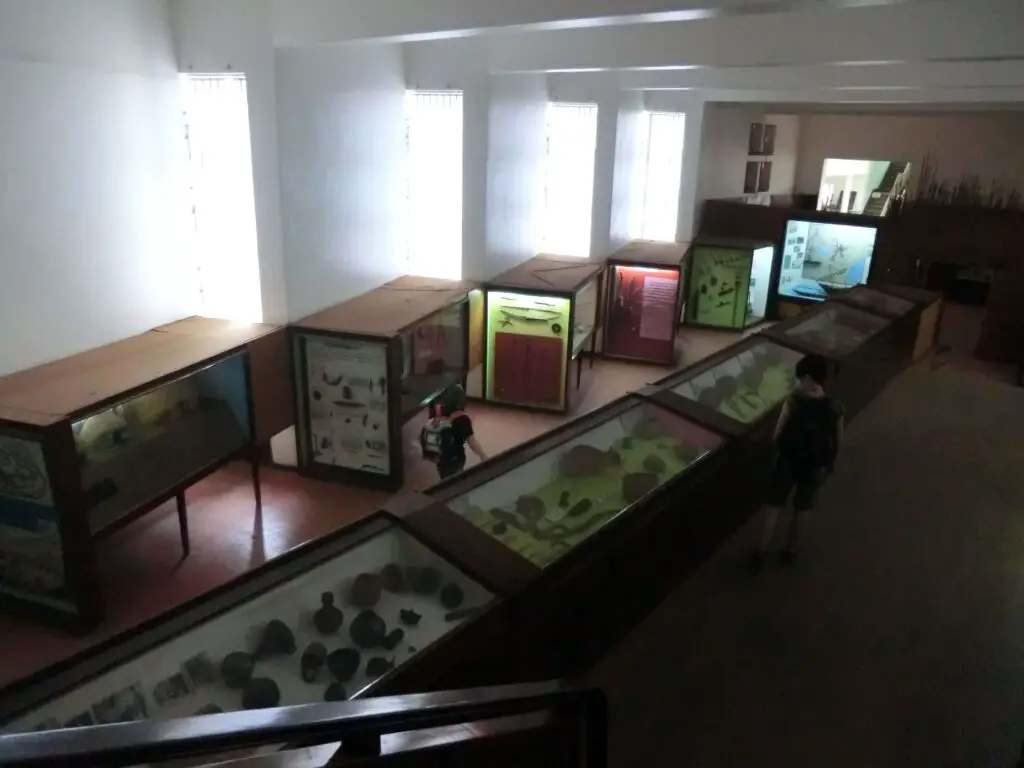
There are tons of traditional tools and handicrafts, dresses and musical instruments, plus some displays about human evolution and the country’s wildlife. The cases were quite dusty, and the lighting is terrible, but we still found the objects and descriptions interesting.
If you need any permits for Uganda’s many national parks (including gorilla trekking permits), it’s worth dropping by the Uganda Wildlife Authority, which is right next door.
The Uganda museum is open from Monday to Saturday 9am to 6pm (double-check the times here). The entrance fee is 10,000 shillings for foreigners and 5,000 shillings for Ugandan residents.
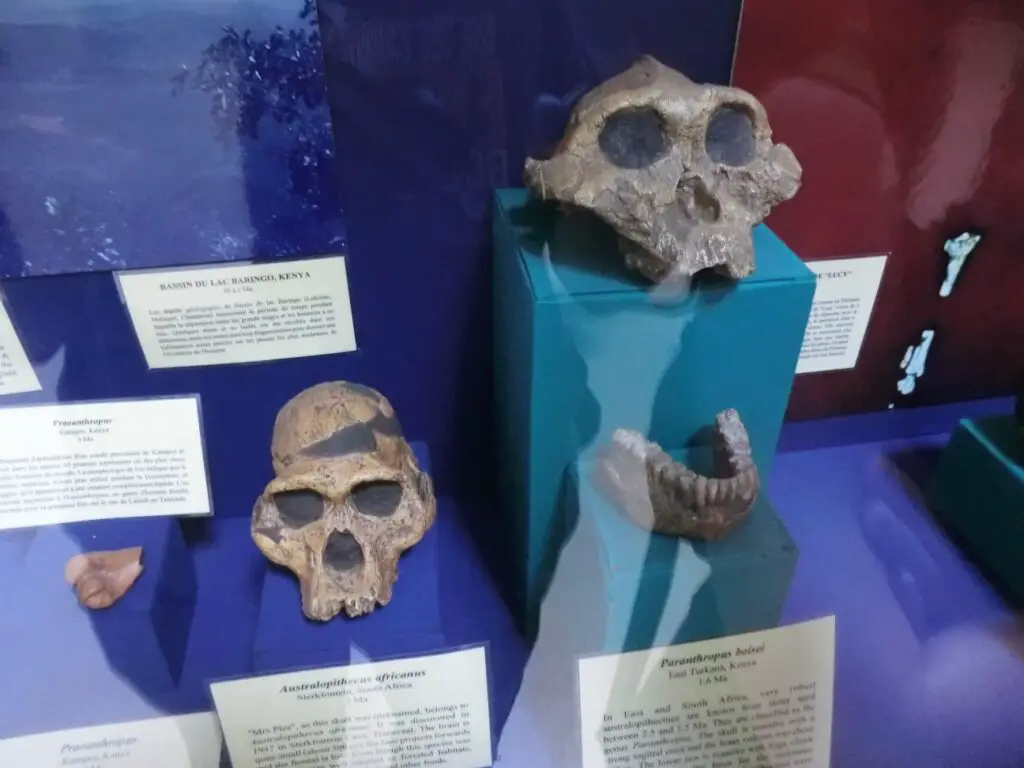
The museum is in the Mulago neighbourhood north of the centre. To get there, you can catch any matatu that’s traveling between the Ntinda neighbourhood and the old taxi park or just use a boda-boda, like I recommended above.
After your visit, you can just catch a matatu back to the old taxi park, maybe grab a bite to eat and then continue to the Kasubi Tombs.
Kasubi Tombs
The 19th-century Kasubi Tombs are the final resting place of four of the Buganda Kingdom’s kabakas (kings). The UNESCO-listed site was Kampala’s star attraction until the main building burned to the ground in 2010.
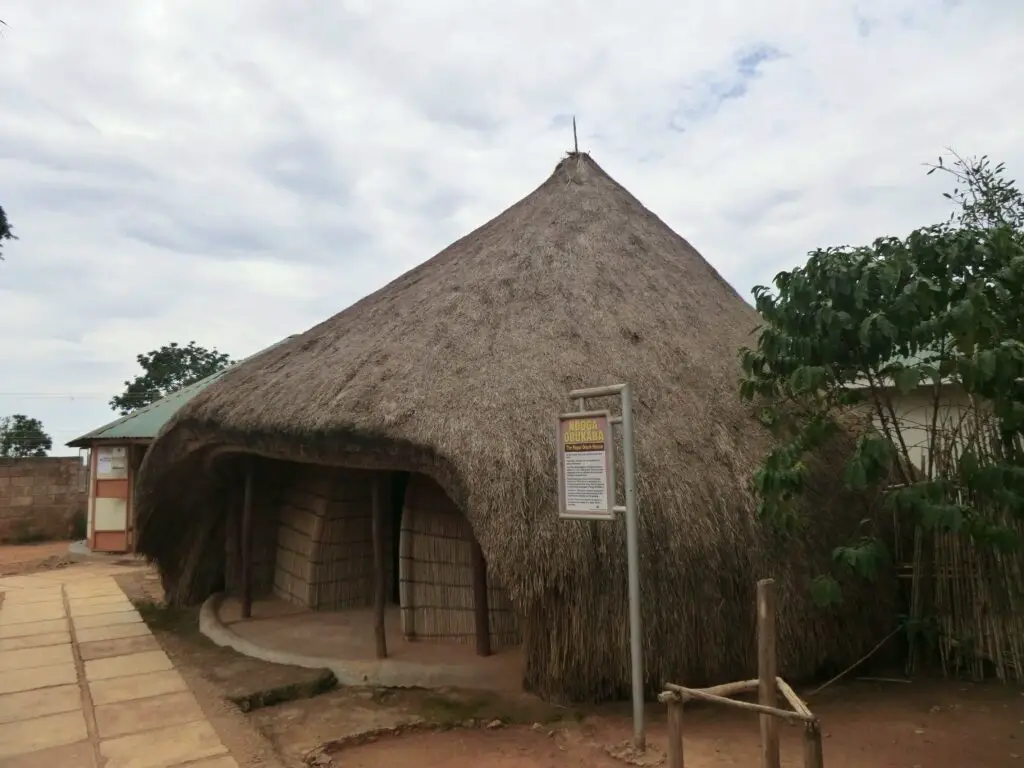
The restoration was finished in 2023, but was still ongoing when we visited. Even so, we found it a super fascinating place to visit and learn about the history of the kingdom. Part of the appeal was that we were accompanied by a very enthusiastic guide, who explained to us the significance of the place in the collective identity of the Buganda people.
There are a few smaller reed-decked buildings that weren’t affected by the fire, including the Royal Drum House and some smaller tombs that contain the graves of the kings’ wives. There are also a few more modern looking huts, where the widowed wives lived after their husbands’ deaths and some smaller graves for other members of the royal family.
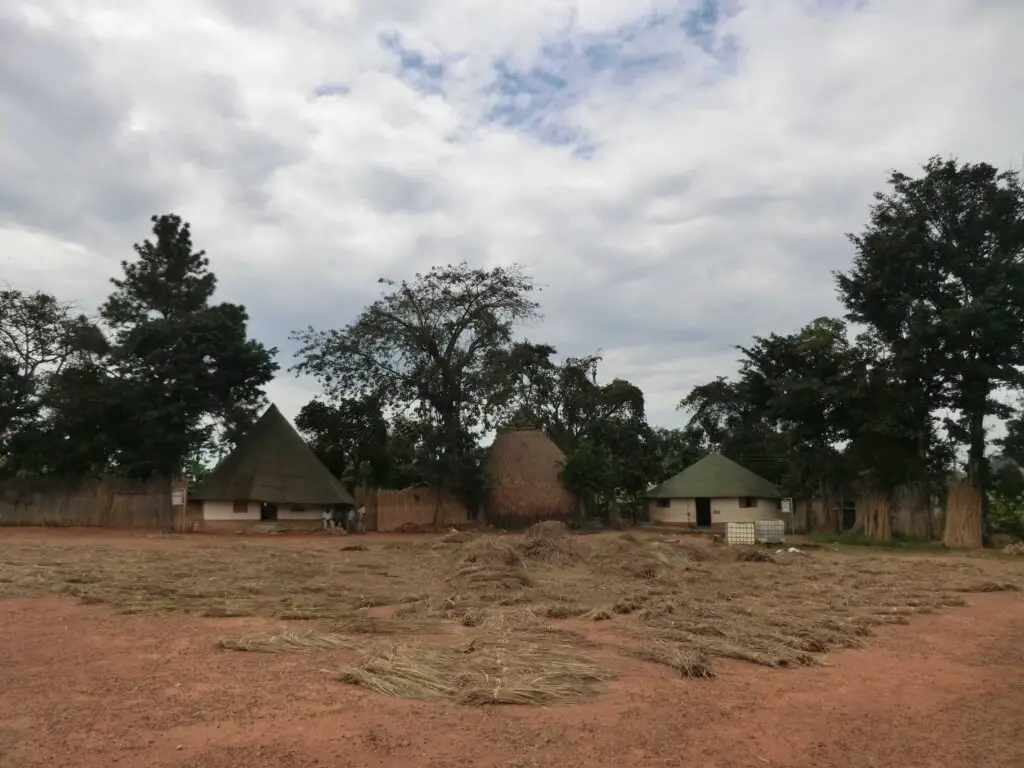
When we visited, the tombs were open daily from 9am to 5pm. The entrance fee was 30,000 shillings for foreigners and 10,000 shillings for Ugandan residents.
To get to the tombs, you can catch a Hoima-bound matatu from Kampala’s old taxi park. There are also some matatus going directly to Kasubi. Alternatively, you can flag down any matatu that’s headed north along the Hoima road.
Wamala Tombs
This is another Buganda king’s grave, but it seems hardly anyone comes here. When we visited, we were completely alone with the friendly keeper Bernadette. The tomb is even older than the one at Kasubi and sits in a beautiful rural area on the outskirts of Kampala.
Inside the small, thatched-roofed building is a shrine that holds the jawbone of 19th-century king Kabaka Ssuuna II, who is said to have had 148 wives and 218 children. The jawbone, in turn, is thought to house the spirit of the king.
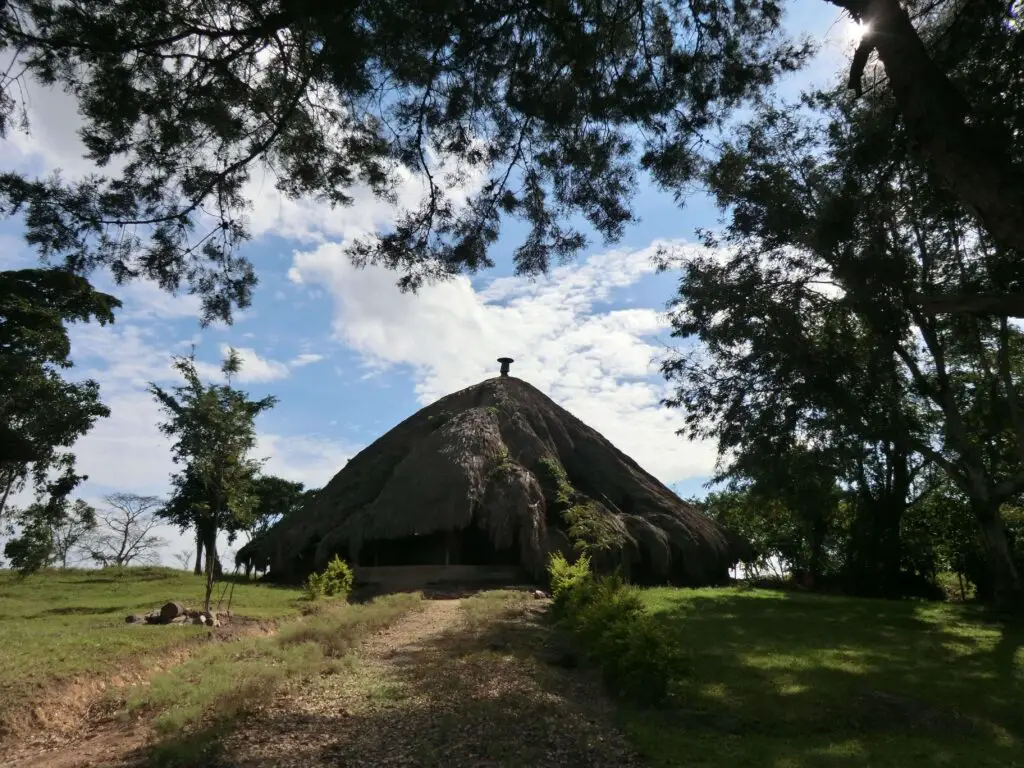
The shrine is decorated with some traditional Buganda spears and shields and still maintained by the king’s descendants. We were told that the site is generally open during daylight hours. The entrance fee/donation was 20,000 shillings (likely less for Ugandan residents).
The Wamala Tomb is located pretty close to the highway leading to Hoima, so matatus and buses going in this direction can drop you off on the main road, from where it took us about 30 minutes to walk to the tomb.
Afterwards, you can catch a matatu back to downtown Kampala for some well-deserved dinner.
Day 2
I suggest having breakfast and then starting your explorations in the Mengo neighbourhood before slowly making your way to the government quarter downtown. The sights are all within walking distance of each other and we didn’t use any public transportation on this day.
Mengo Palace (aka. Lubiri Palace)
This palace atop Mengo Hill in the Lubiri suburb is the residence of King Ronald Muwenda Mutebi II of the Buganda Kingdom. It’s rather new, as the original palace was destroyed in 1966, when Milton Obote took over the country and the Kabaka Mutesa II had to flee.
Nowadays, it’s again actively used by the king, so you can’t visit the interior. We took a guided tour of the grounds, however. The palace looks pretty enough, and it was surrounded by manicured lawns and lots of flowering bushes.
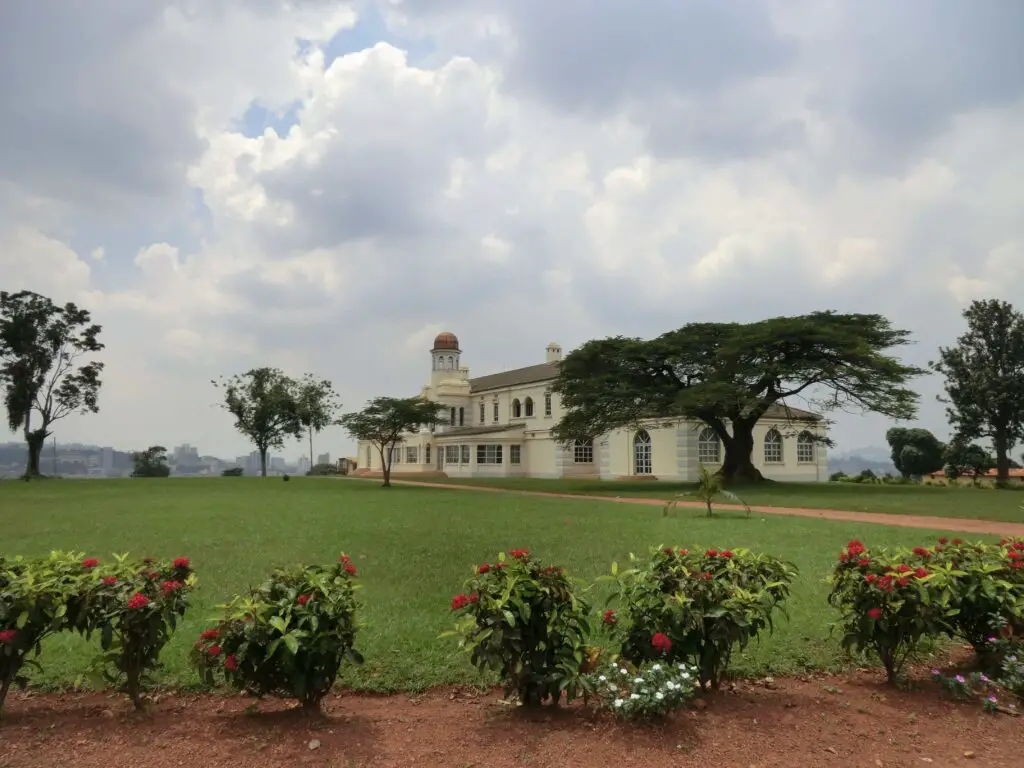
That said, the peaceful atmosphere betrays the palace’s horrifying past, as the old armoury was used to imprison, torture and execute large numbers of innocent people during the Idi Amin years.
Our tour also led into the prison cells, where our guide explained the terrible history and pointed out some messages that were left on the walls by the prisoners. The descriptions were sometimes tough to stomach, but we still thought it was important to learn about this part of the country’s history.
When we were there, the grounds were open from 9am to 5pm and we paid 20,000 shillings per person for our tour. To get there from the old taxi park, you can take a matatu to Mengo or just walk there in about 30 minutes, which is what we did.
Kabaka Mwanga’s Lake
Next to Mengo Palace is an artificial lake, which was dug on orders of King Mwanga II in 1880 to serve as a potential escape route during conflicts with the British Empire. For that reason, there was supposed to be a canal connecting it to Lake Victoira, but that never materialized.
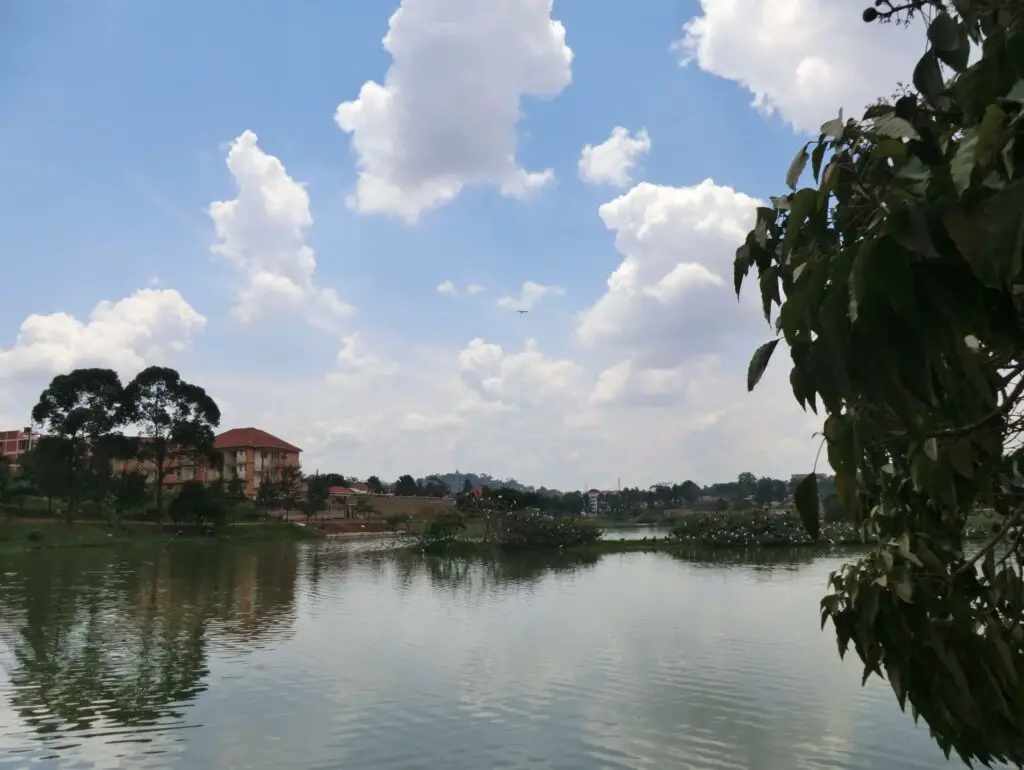
Today, this is Uganda’s largest man-made lake and we thought it was a nice destination for a little stroll along the shore. Compared with the rest of the city, this area felt almots relaxed and we also spotted large numbers of cattle egrets on the little islands in the lake.
The lake sits directly to the south-west of Mengo Hill.
Lubaga Cathedral
This large Roman Catholic cathedral from the 1920s sits about 1km (0.6mi) north-west of the lake. It’s also known as St. Mary’s Cathedral and has a pretty Neo-Gothic façade. We thought the inside was comparatively plain, especially for a catholic church, but it’s pretty nonetheless.
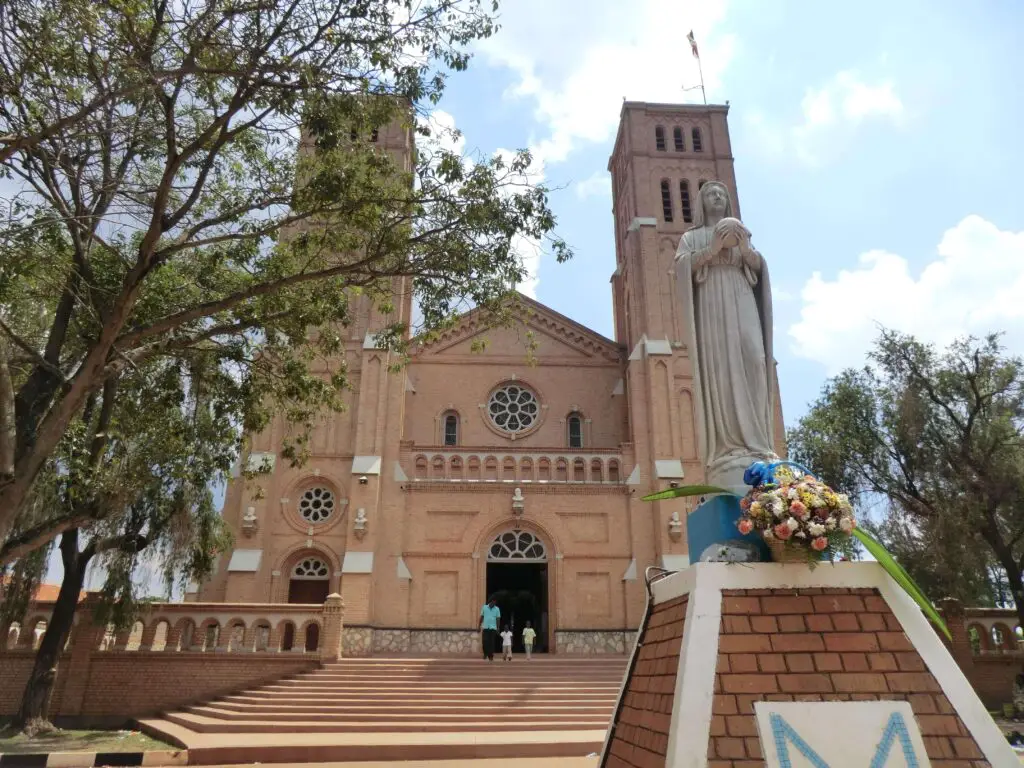
It should be open daily during daylight hours and there’s no entrance fee. To get there from Kabaka Mwanga’s Lake, you’ll just have to follow Stensera Road north for about 15 minutes.
Bulange (Buganda Parliament)
Theis is the still active parliament of the Buganda Kingdom. As with the Mengo Palace grounds, it’s possible to visit the place, but only by guided tour. Once again, our guide was very enthusiastic and gave us lots of information on the continuing importance of the kingdom within today’s national government.
The building dates to the 1950s and was apparently inspired by the parliament buildings in Belfast. The statue in front of the building shows the current Buganda king Kabaka Mutebi II.
When we were there, the Bulange was open for tours from 9am to 5pm and we paid 20,000 shillings per person for our tour.
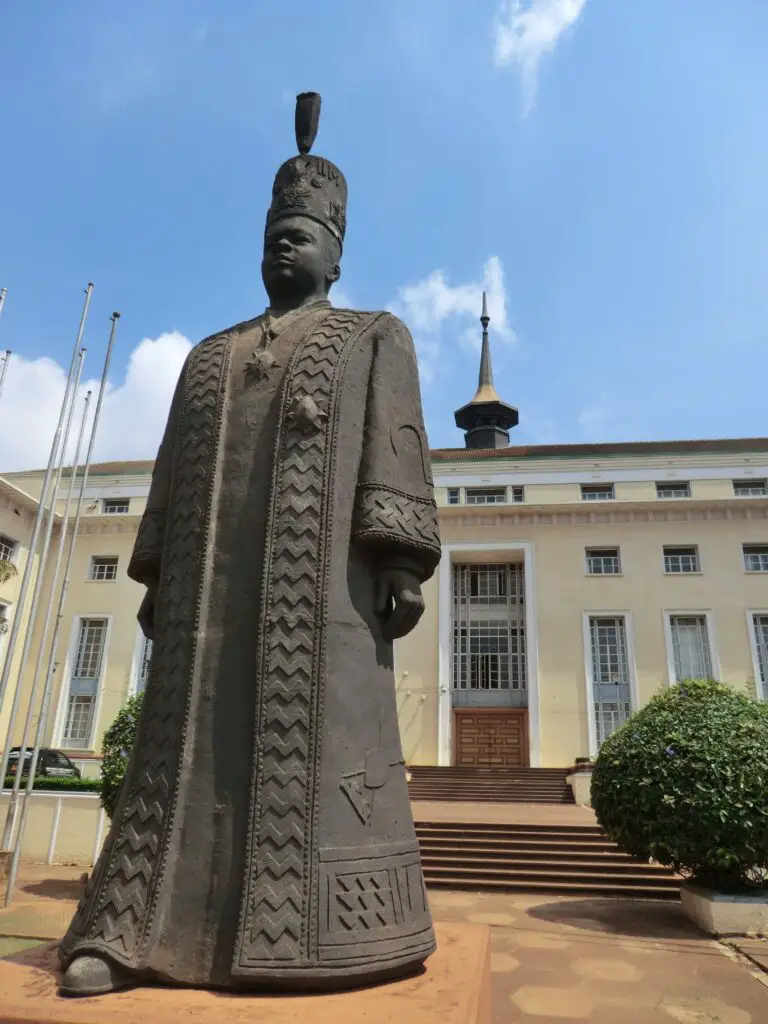
To get to the parliament from Lubaga Cathedral, just walk Lubaga Road east, then turn north once you meet Kabaka Anjagala Road. This road connects the Bulange and Mengo palaces and once served as a processional road between both complexes.
While walking down this “Royal Mile”, we spotted two giant tortoises walking around the lawn of the Supreme Court building. Apparently they were brought to Uganda by a royal retainer from the Seychelles in 1945 and some people claim they are 300 years old.
This would make them the oldest land animals in the world (more than 100 years older than the oldest scientifically verified living tortoise on the Seychelles), and we took that information with a grain of salt. They’re beautiful, however and it was pretty clear to us that they were very old, nonetheless.
Namirembe Cathedral
The Anglican St Paul’s Cathedral aka Namirembe Cathedral is another impressive church building in the neighbourhood. It was finished in 1919, which makes it the oldest cathedral in Uganda.
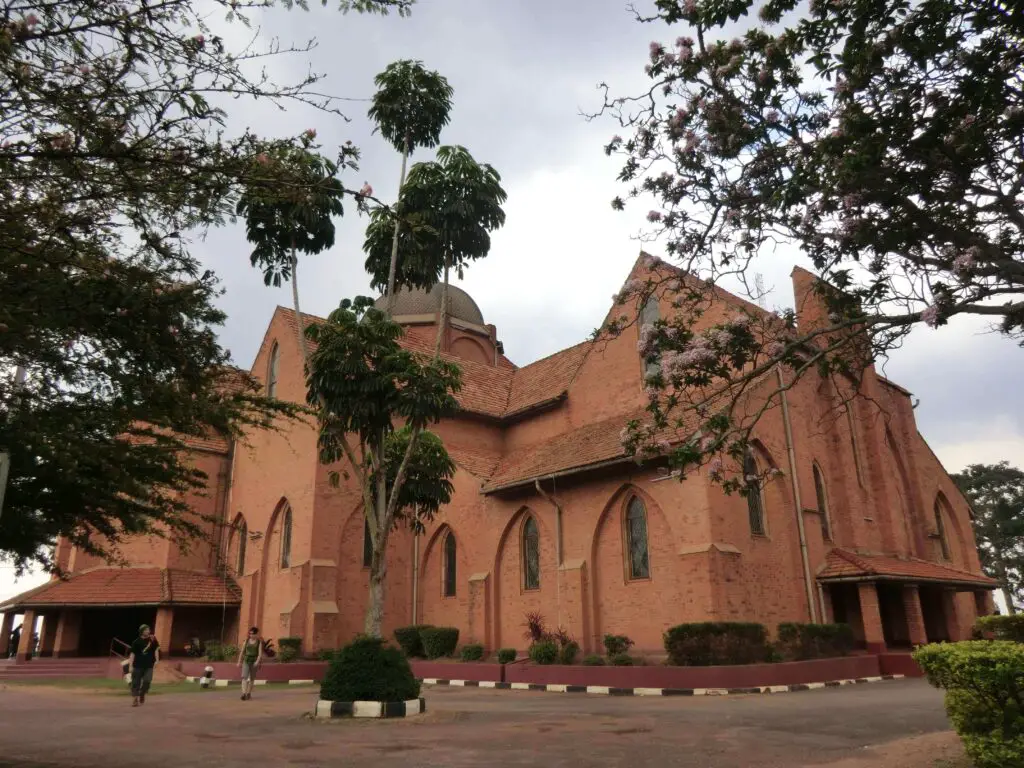
Personally, we found Lubaga Cathedral to be prettier, but the views of central Kampala from Namirembe Hill are pretty awesome.
The cathedral is said to be open daily during daylight hours and there’s no entrance fee. It’s about one kilometre or 0.6 miles north of the parliament. To get there, follow Cathedral Hill Road north from the northern corner of the Bulange.
Gaddafi National Mosque
This mosque at the western edge of the government quarter was funded by the former Libyan dictator Muammar Gaddafi after whom it’s still named. It’s East Africa’s biggest mosque and we found it quite impressive.
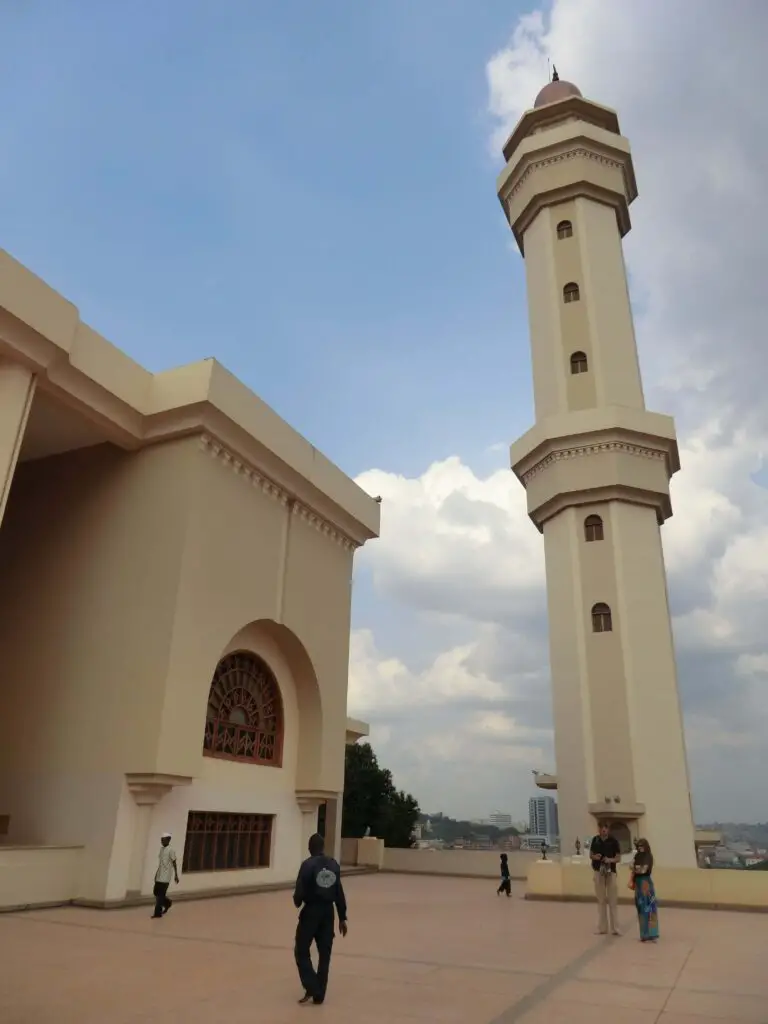
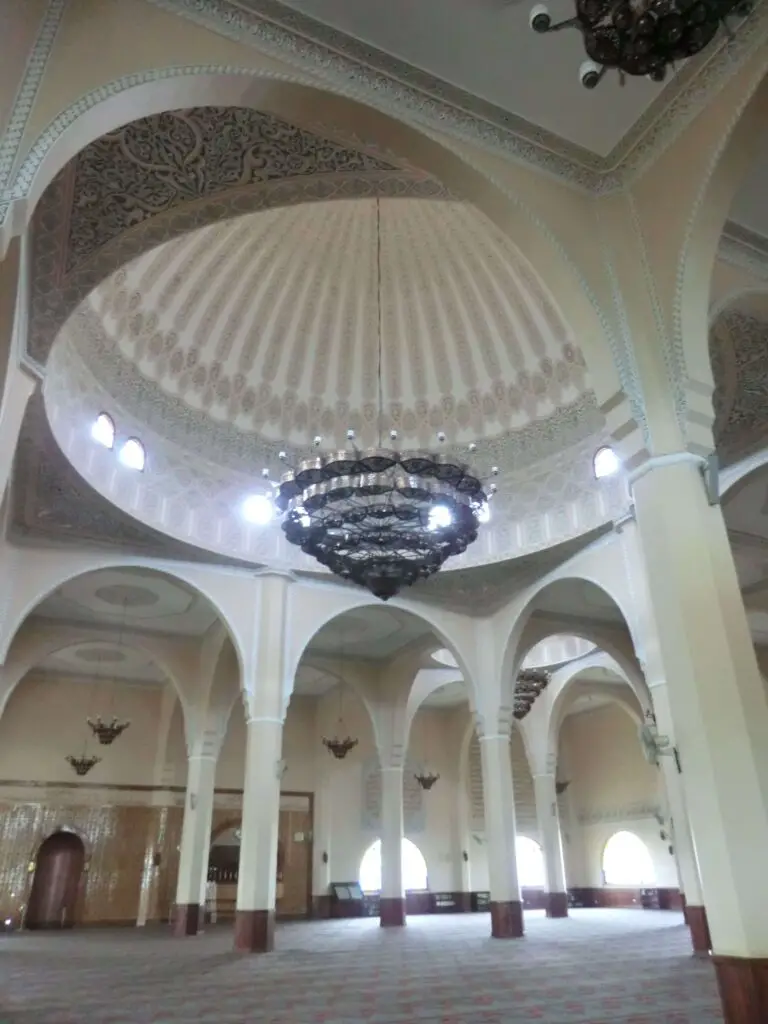
Our favourite part was the climb to the top of the minaret, however, where we had some amazing views over the city. As is often the case in mosques, you’ll need to cover your knees and shoulders and take off your shoes before entering the prayer hall.
Women might want to bring a headscarf to use as a hijab, although Stefanie was able to borrow one at the entrance as we visited quite spontaneously. The mosque is open from 8am to 5pm during the week and from 9am to 4pm on the weekend (double-check the current times here).
There was no entrance fee, but a caretaker showed us around and we gave him a small tip. The mosque sits west of the old taxi park atop Old Kampala Hill. It’s east along Albert Cook Road from Namirembe Cathedral.
The Government Quarter and Dinner
If you walk east from the mosque, you’ll enter Kampala’s government quarter, which felt slightly quieter than the rest of the city (although that’s still relative, here). In this area, we found the Parliament of Uganda, the National Theatre and the Independence Monument worth checking out.
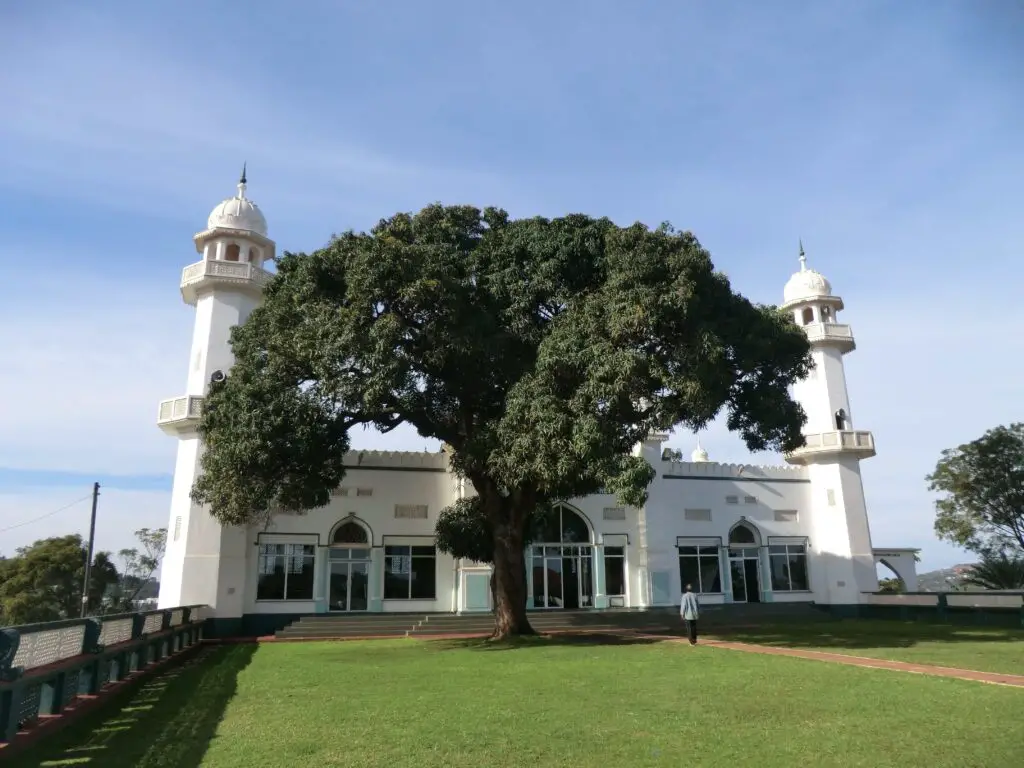
If you’ve still got some energy left, we also found the Shri Sanatan Dharma Mandal Hindu Temple to the east of the new taxi park, and the small white Kibuli Mosque on the hill south-east of the parliament worth checking out.
Otherwise, you can just settle in one of the many restaurants around the taxi park for some Ugandan food, or head to the food court at the Garden City Shopping Mall at the eastern end of the government quarter if you need some comfort food after two busy days of exploring the city.
Map of Kampala
You can find all of the stops in my itinerary on this map of Kampala. The sights from Day 1 have red pins, the ones from Day 2 have green pins. The blue pins show the two taxi parks and Kisenyi Bus Terminal.
Practicalities
How to Get to Kampala
As the country’s capital and biggest city, you can find buses and matatus (shared taxis) going to Kampala from basically every other part of Uganda, and we were constantly asked whether we wanted to go there by entrepreneurial minibus drivers in any number of towns around the country.
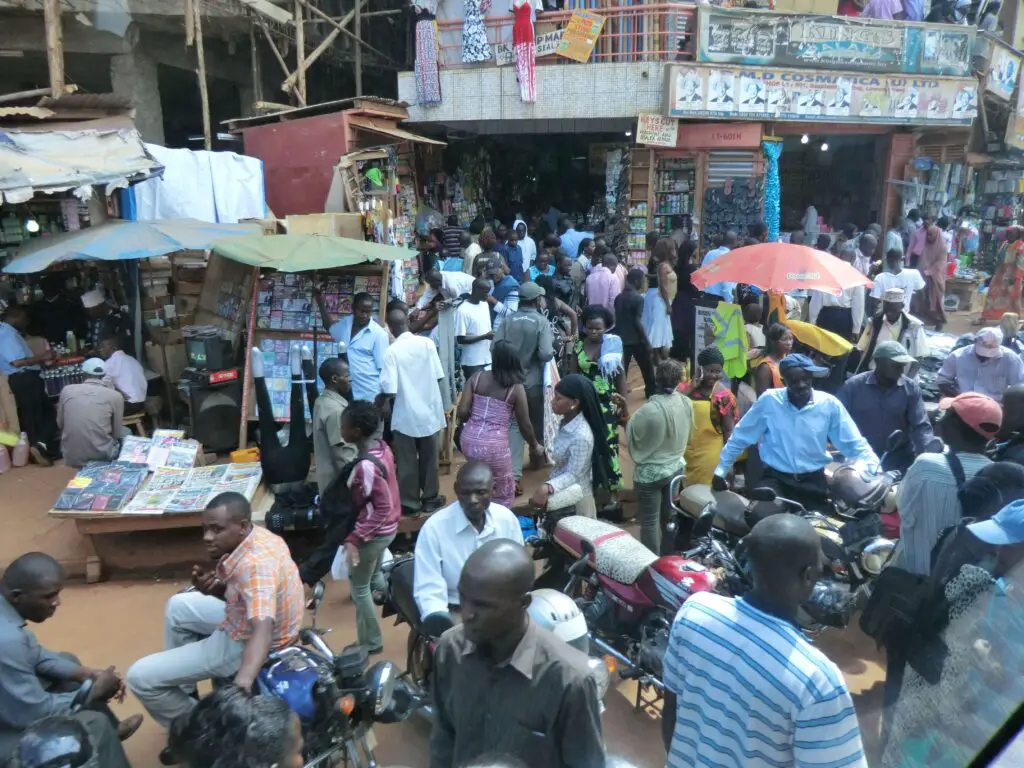
There are two main points of departure for matatus in the city. Minibuses from the old taxi park mainly go to destinations around town and in eastern Uganda, and those from the new taxi park go to cities in the western and northern part of the country.
Both are pretty close to each other about halfway between the government quarter and Old Kampala Hill, which is home to the always visible Gaddafi National Mosque.
For destinations that are further away, bigger buses are the faster and more comfortable option (although they are a bit more expensive than matatus). Depending on the company, these leave from different locations around the city. One of the biggest bus terminals is Kisenyi Bus Terminal, which is directly to the south of the New Taxi Park.
How to Get Around in Kampala
The ubiquitous matatus (shared taxis) are the easiest way to get around Kampala, and you can reach every part of the city from the old taxi park (see the ‘How to get to Kampala’ section).
Just ask around and people will direct you to the right place (likely by grabbing your hand and pulling you to the correct matatu).
For shorter distances, boda-bodas (motorcycle taxis) are always a good option, especially as they can and will weave through the inevitably gridlocked traffic. That said, if you’re not used to them, they might be quite nerve-racking.
Of course, walking is also an option. Just don’t expect any cars to stop for you, even at the few traffic lights in town, and always keep an eye on where you’re stepping, so you don’t drop into one of the open manholes, which have a tendency to suddenly appear in the middle of the sidewalk.
Where to Stay in Kampala
There’s no shortage of places to stay in the city-centre. Bushpig Backpackers is a good option if you’re on a budget, and they have both dormitories and private rooms available.
Koki Hotel is a centrally located midrange hotel and the 5-Star Kampala Serena Hotel is one of the best-rated luxury hotels in the city. You can have a look at the map for more options.
Where to Go Next
Entebbe, the laid-back gateway to the country
Jinja, home to the Source of the Nile