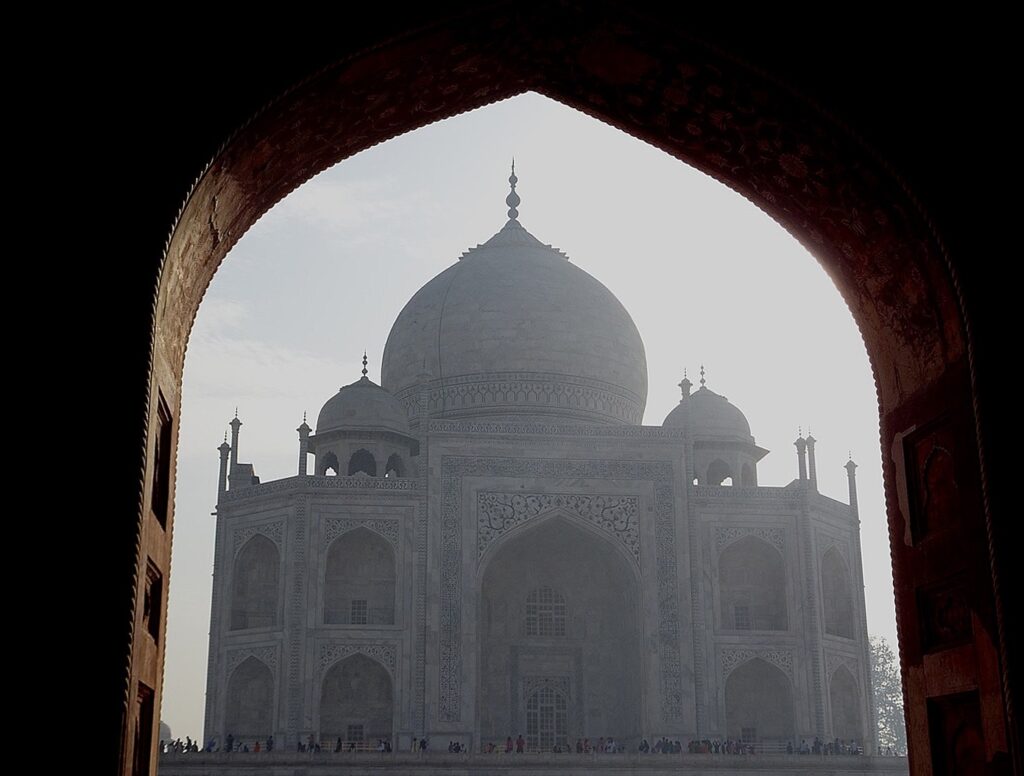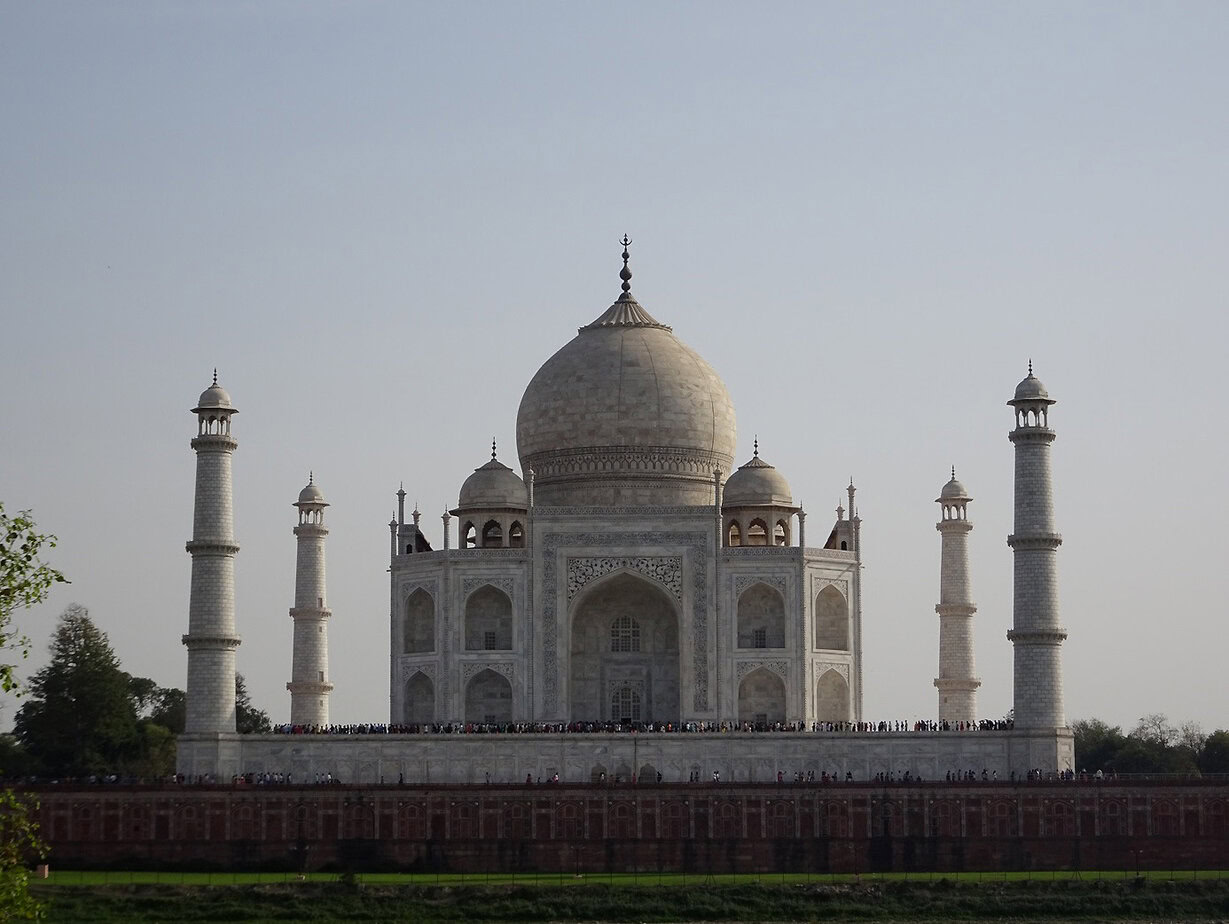
I’m sure I don’t need to introduce Agra to you. It’s one of the most famous cities in India, maybe even the world, because it’s home to two of its most famous building complexes: The Taj Mahal and the Red Fort.
Apparently, lots of people only stop by for a short time to visit these two sights and then quickly move on to other highlights in the country. I’m always a fan of taking it a little more slowly, so I spent a few more days in Agra to really get to know the city.
What I realized is that there are many more places in Agra that are worth checking out. For instance, I’m convinced that Akbar’s Mausoleum and Itimad-ud-Daula would be treated as must-see sights if they weren’t eclipsed by the more famous Taj. Here’s my 2-Day Itinerary to this fascinating city.
This post may contain affiliate links, and I might earn a small commission at no additional cost to you. For more info, click here.
A 2-Day Itinerary for Agra
Agra was one of the great capitals of the Mughal Empire, and traces of that period are scattered all over the city, mostly in the form of beautiful tombs, but there are a few interesting mosques, as well and of course the super impressive Red Fort.
If you spend only one night in town, I recommend leaving the Taj Mahal for the second day, so you can get there as early as possible. In that case, you can use the first day to check out some of the smaller sights, get familiar with the city and visit the Red Fort in the late afternoon, when it’s much quieter.
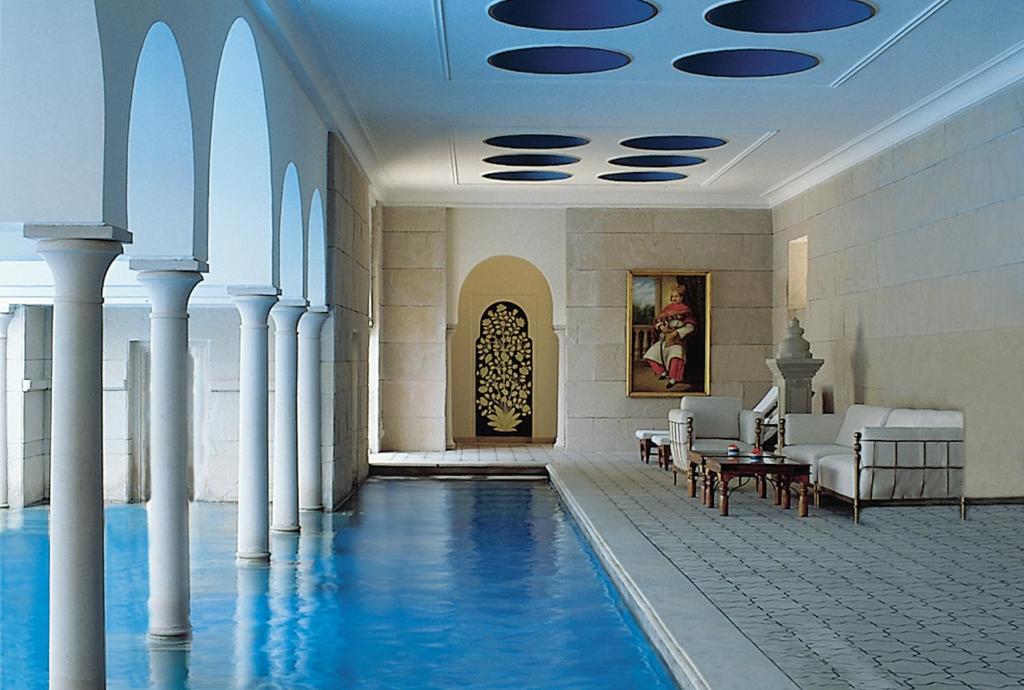
The Best Hotels Agra
Budget: Joey’s Hostel Agra
Midrange: Hotel Ten Square
Luxury: The Oberoi Amarvilas Agra (pictured)
.
Day 1
Itimad-ud-Daulah (Baby Taj)
The eastern bank of the Yamuna River holds a number of smaller tombs that are absolutely worth checking out. In any city without a Taj Mahal, they would be major sights, but here they seem to get ignored by most travelers. We met four other foreigners at the Itimad-ud-Daulah and none at the Chini ka Rauza.
My favourite among the bunch was Itimad-ud-Daulah, which is a tomb that was built in the early 17th century by Empress Nur Jahan for her father Mirza Ghiyas Beg, who had served as a high-ranking official in the Mughal court.
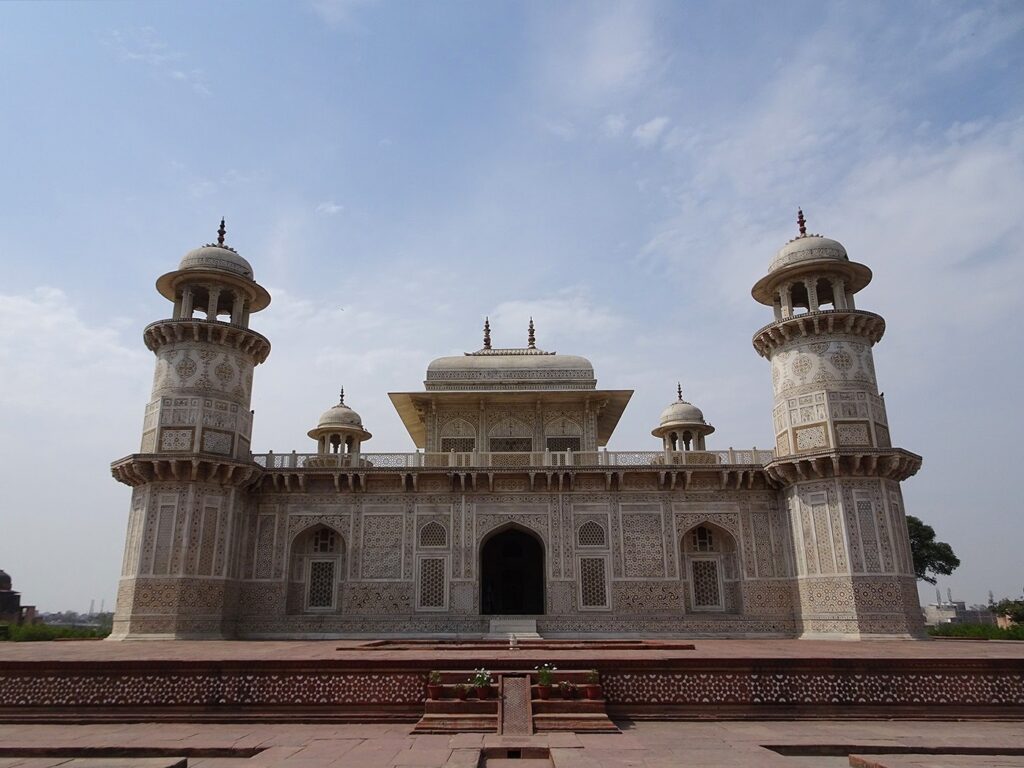
Architecturally, it’s quite important because it marks the transition between earlier Mughal red sandstone architecture, which you can see at Akbar’s Tomb and the white marble style that culminated a little later in the Taj Mahal.
In the city it’s also known as the “Baby Taj”, which I found a bit reductive, as it’s very beautiful in its own right and I didn’t even think that it resembled the Taj very much. Of course, it’s much smaller but the decoration of the walls looked even more intricate than at the Taj Mahal.
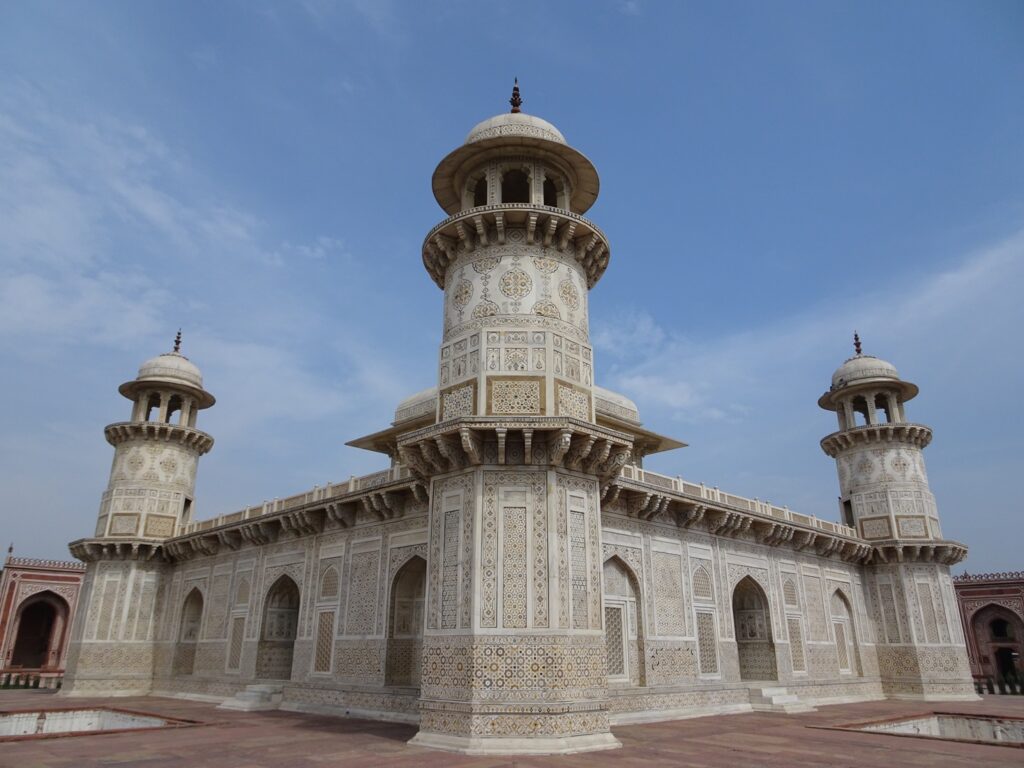
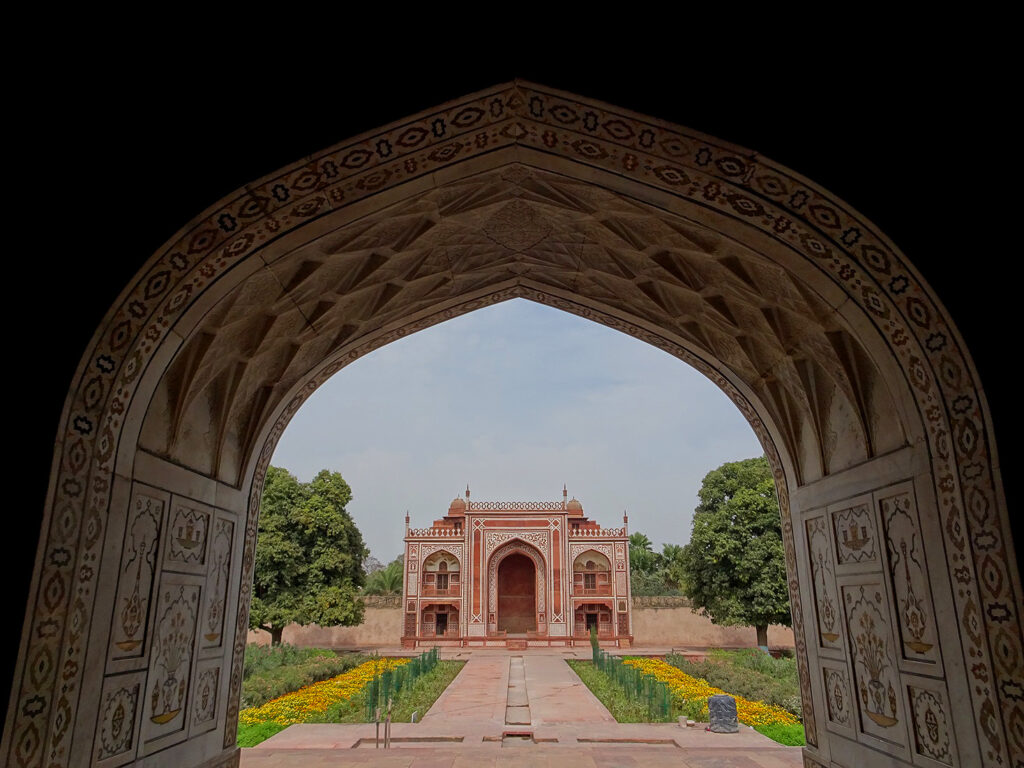
We didn’t meet many people here, so we could also take our time to inspect the details a bit more closely. The entire outside walls are covered with pretty patterns of inlayed marble and inside the tomb there are some really well-preserved paintings of flowers and blooming trees, which are supposed to be symbols for paradise.
Something else I really liked here was the pretty symmetrical garden that surrounds the tomb on all sides. The four gateways at the end of the pathways still built in the earlier red sandstone style. The complex is open daily from sunrise to sunset and we paid 300₹ per Person.
Chini Ka Rauza
Only a little further north along the eastern bank of the Yamuna lies another tomb, called Chini Ka Rauza, which was even quieter when we visited. There was just a bunch of local teens hanging around, otherwise we had the area completely to ourselves.
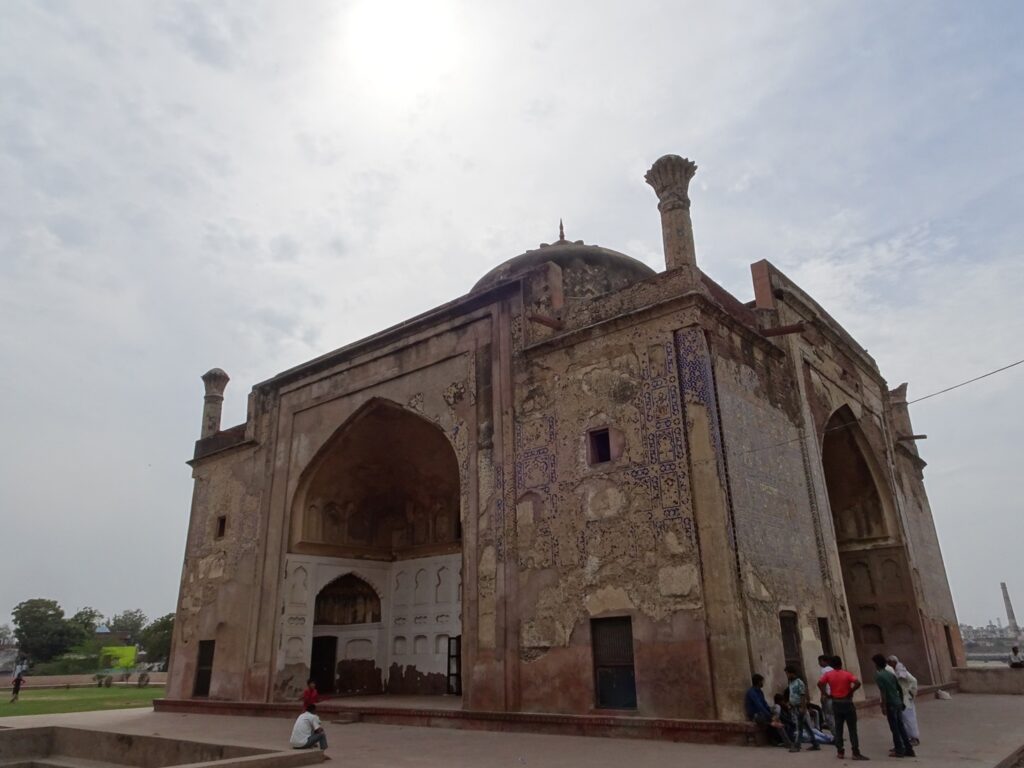
This tomb was built for Afzal Khan, a Persian scholar and poet who served under Shah Jahan (who built the Taj Mahal). Once again, the outside has a decoration consisting of some colourful glazed tiles, which are said to have been produced in Persia.
The tiles aren’t half as well-preserved as the ones at the Itimad-ud-Daulah, but I found that the slightly ruined appearance gave the place part of its charm (although that might just be the archaeologist in me speaking).
The interior is much better preserved, however, and the walls and domed ceiling are covered with patterns of beautiful coloured glazed tiles. Once again, the complex is said to be open from sunrise to sunset and there was no entrance fee when we visited.
Red Mosque (Jama Masjid)
From here it might be a good idea to get a tuk-tuk back south to the fort area if you don’t want to walk back the entire way. Before visiting the fort, I recommend having a look at the beautiful Red Mosque across the train tracks to the northwest.
The mosque was commissioned in the 17th century by Jahanara Begum, the daughter of Shah Jahan, and it’s still one of Agra’s most important religious buildings. Architecturally, it fits in well with the other nearby Mughal monuments.
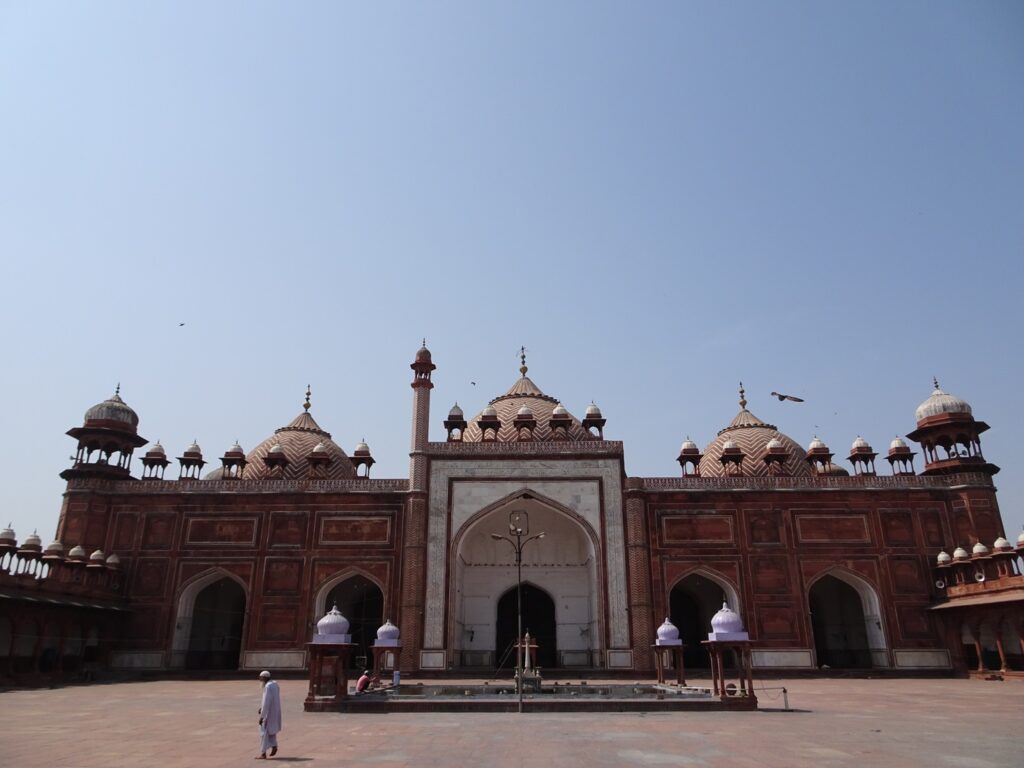
It’s mainly built of red sandstone, so it looks more like Akbar’s Mausoleum or the early palaces in Agra’s Fort, but there are some white marble elements, especially around the impressive main gateway. The large central courtyard and striped bulbous domes are classic elements of later Mughal design.
Interestingly, the mosque was almost empty when we visited, despite its location in the middle of the city centre. It really seems like everyone is just crowding to the Taj Mahal and Agra Fort and ignoring all the other cool sights in the city. There’s no entrance fee.
Agra Fort
After visiting the mosque, I recommend grabbing a bite to eat and then moving on to Agra Fort in the late afternoon or early evening, when there won’t be so many people around.
Agra Fort was the main imperial residence of the Mughal emperors before the capital shifted to Delhi, so there are lots of administration buildings as well as living quarters inside the walls.
Emperor Akbar began building the fort in the 16th century, using mostly red sandstone, but later rulers like Jahangir and Shah Jahan added marble palaces, mosques and audience halls inside the walls
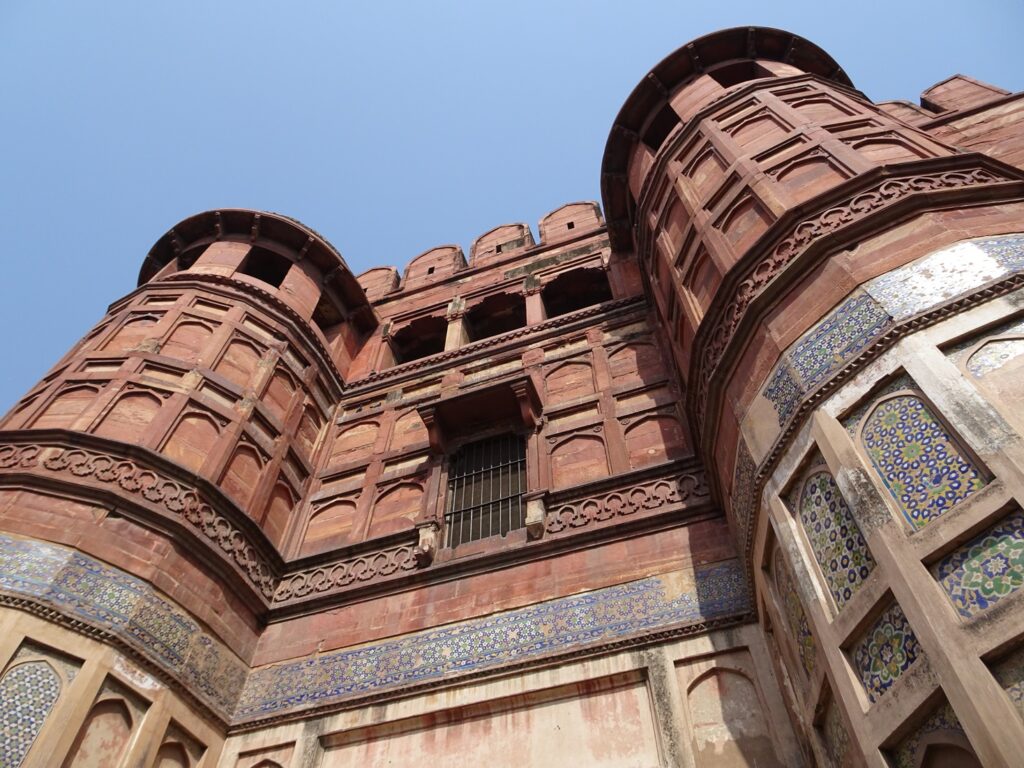
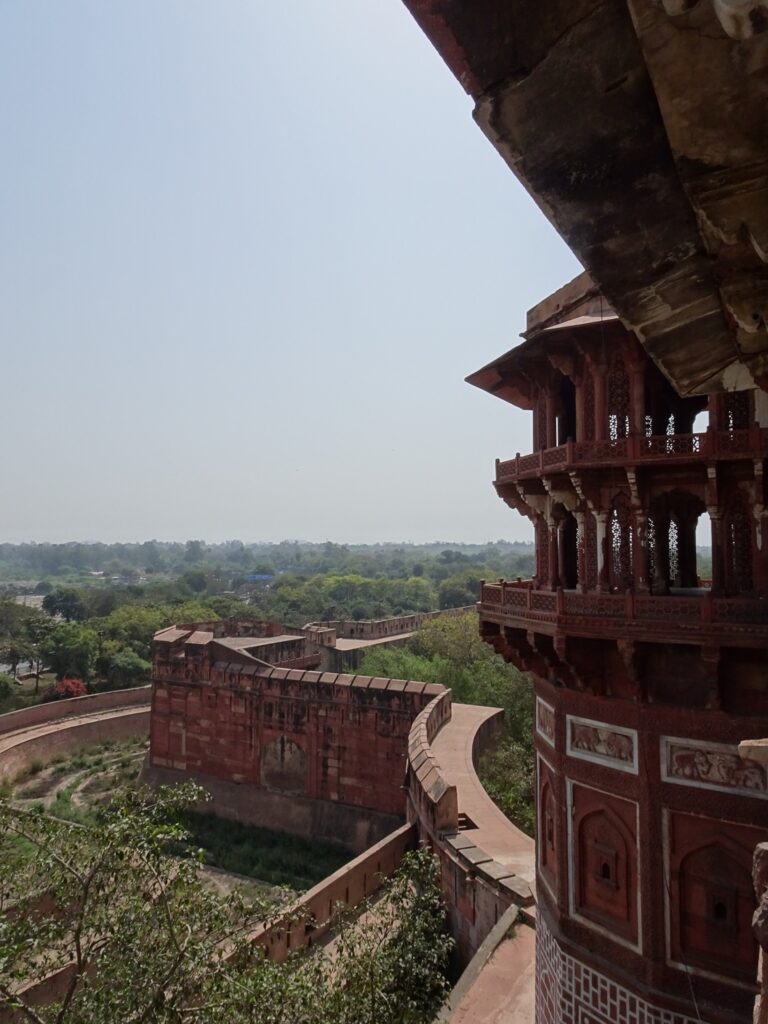
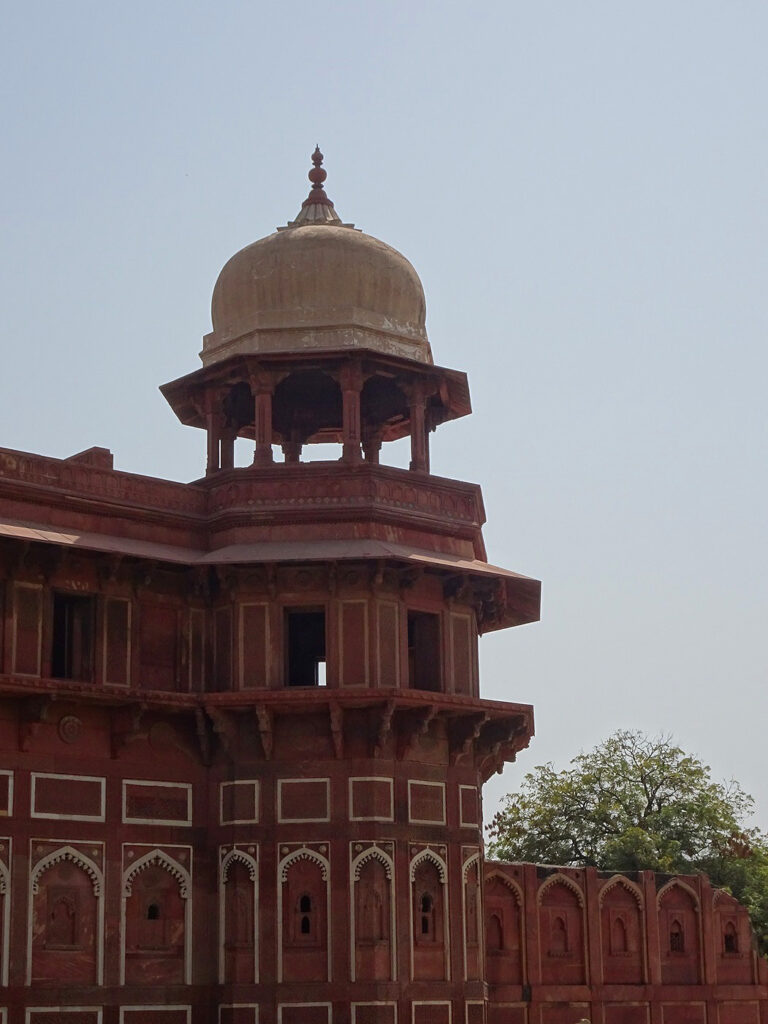
For that reason, the building sometimes feels pretty incongruous. It’s bascially the opposite of the Taj Mahal, where all parts fit together beautifully. I found it interesting to try and discern the different phases of the Fort’s use by looking at the architecture.
For instance, the red sandstone walls around the complex are enormous, as is Amar Singh Gate, which is the main entrance to the fort. The passage curves sharply between the massive walls, which I assume was meant to slow down any potential invaders.
Inside, there are a few impressive living quarters that are also made from red sandstone, of which my favourite was Jahangir Mahal, the palace of Akbar’s son, Emperor Jahangir, which you can see to the right after you enter the fort.
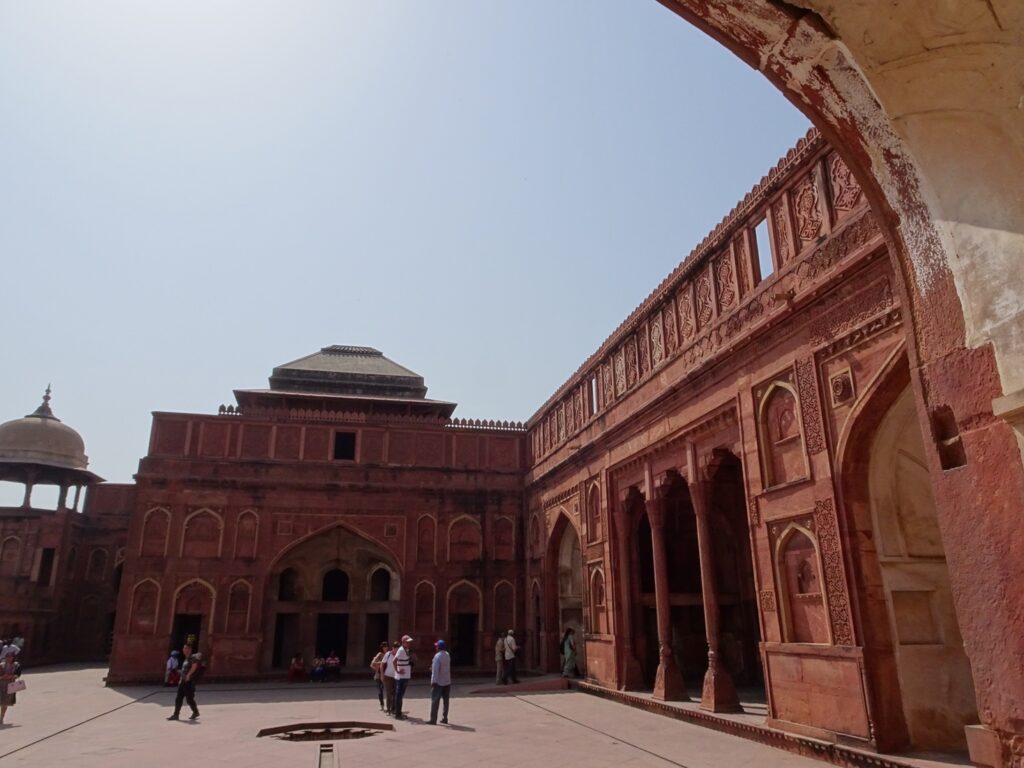
Apart from this and the Akbari Mahal, where the imperial consorts lived, there aren’t many remaining buildings from Akbar’s time, as Shah Jahan had lots of them torn down and replaced by ‘prettier’ white marble counterparts.
One of them is the open Diwan-i-Am Hall, which was used for official ceremonies and meetings with subjects, while the smaller white marble Diwan-i-Khas on the opposite side of the courtyard was as a more private audience hall for diplomats and important guests.
Both have interestingly carved pillars and arches, but I think I preferred Diwan-i-Khas whith its pretty carvings of vines and flowers. Another nice structure is the nearby Nagina Masjid, a small open marble mosque with three cupolas, which was built for the women of the imperial court.
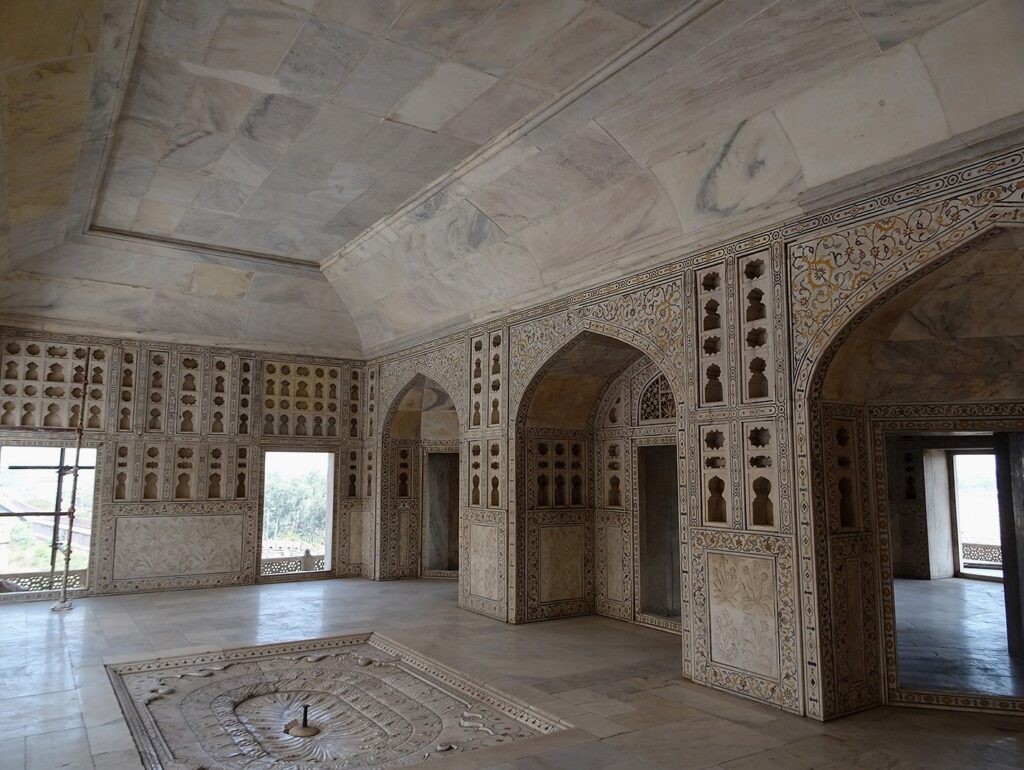
One of my favourite buildings in the fort was the Musamman Burj, which is thean octagonal marble tower where Shah Jahan is said to have been imprisoned by his son Aurangzeb near the end of his life. There are some beautiful carved marble lattices and ornamental niches inside and from the top, there are some great views of the Taj Mahal across the Yamuna floodplains.
There is a lot to see, but the complex is smaller than some other forts we had visited in India (*cough* Chittorgarh *cough*), and I think an hour or 90 minutes should be enough to do the place justice. The fort is open from sunrise to sunset and we paid 650₹.
Day 2
Taj Mahal
The Taj is one of the most famous and popular sights in the world, which means that it can get insanely crowded. If you want only the slightest chance of enjoying the place without tons of other people around, you’ll have to get up before dawn.
We arrived around 6am and there were already quite a few people queing, but we could still find enough quiet spots in the complex. When we left around 8.30am, there were already ten times as many and when we watched the building later in the day from the outside, the platform around the tomb was completely crowded.
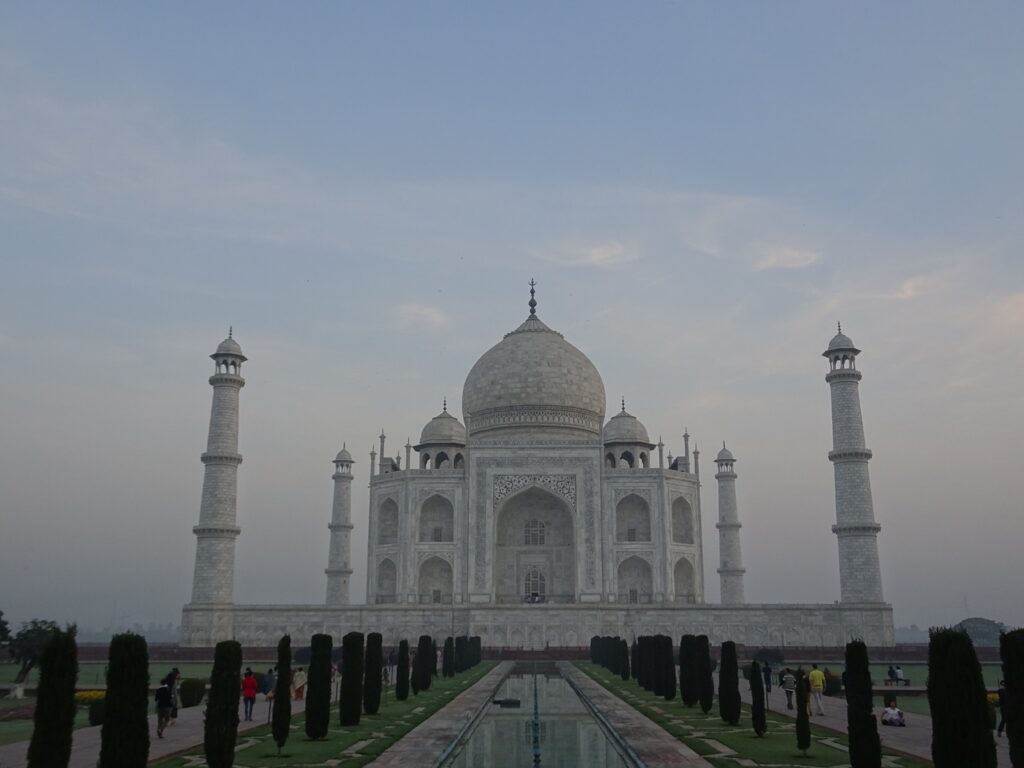
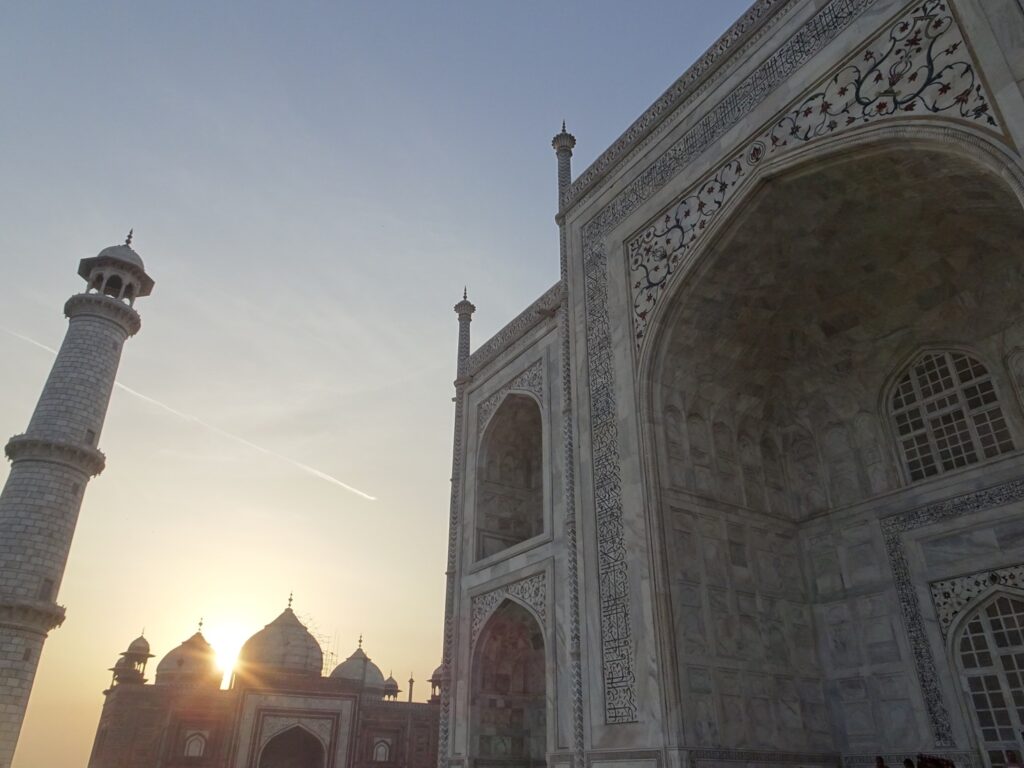
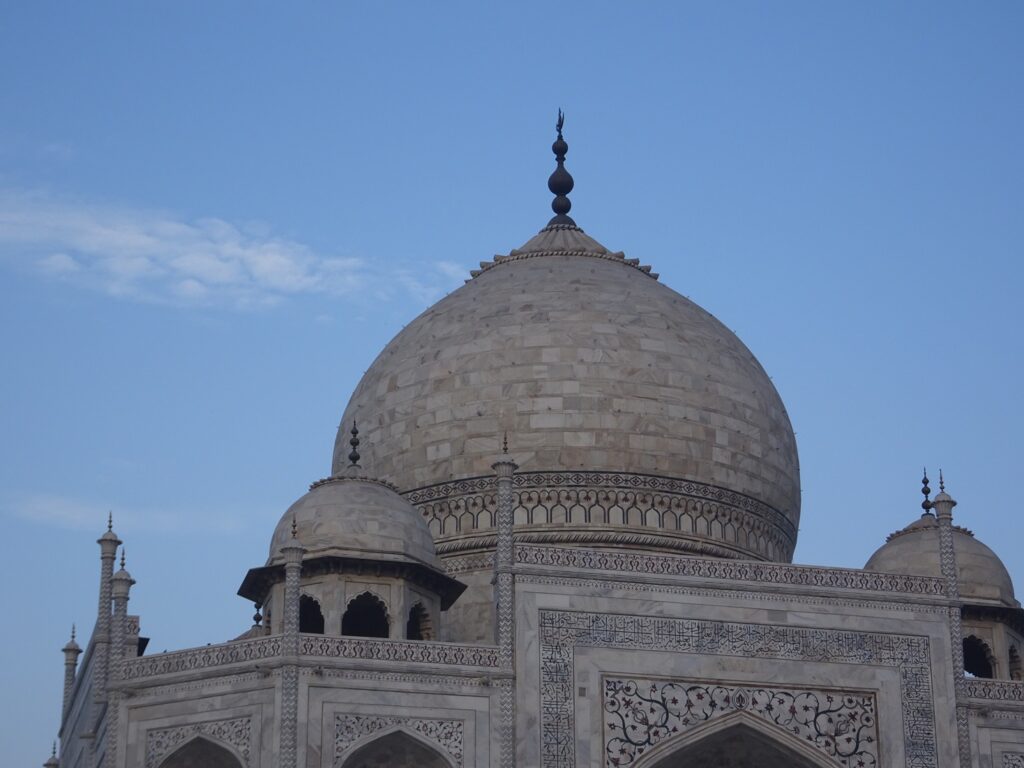
The Taj Mahal was commissioned by Emperor Shah Jahan after the death of his wife Mumtaz Mahal in 1631. It was constructed for over twenty years by specialist craftsmen from all over the Mughal Empire, but also from Persia, Syria and Uzbekistan.
The entire complex was designed around ideas of symmetry and paradise imagery from Islamic architecture. For instance, the partioned formal garden with the reflecting pool in front of the tomb is a Charbagh, which represents the four gardens and four rivers of Paradise from the Quran.
Something we really liked were the beautiful ornaments all over the façade. Like everyone else, we had seen about a billion pictures of the Taj before coming there, but on these, the tomb usually looks smooth and rather simple.
When we got close, we noticed that there are some carved marble screens and loads of Quranic inscriptions around the gates and pishtaqs (arched recesses), as well as flowers that are either carved as reliefs from the marble or created by colourful inlays of precious stones.
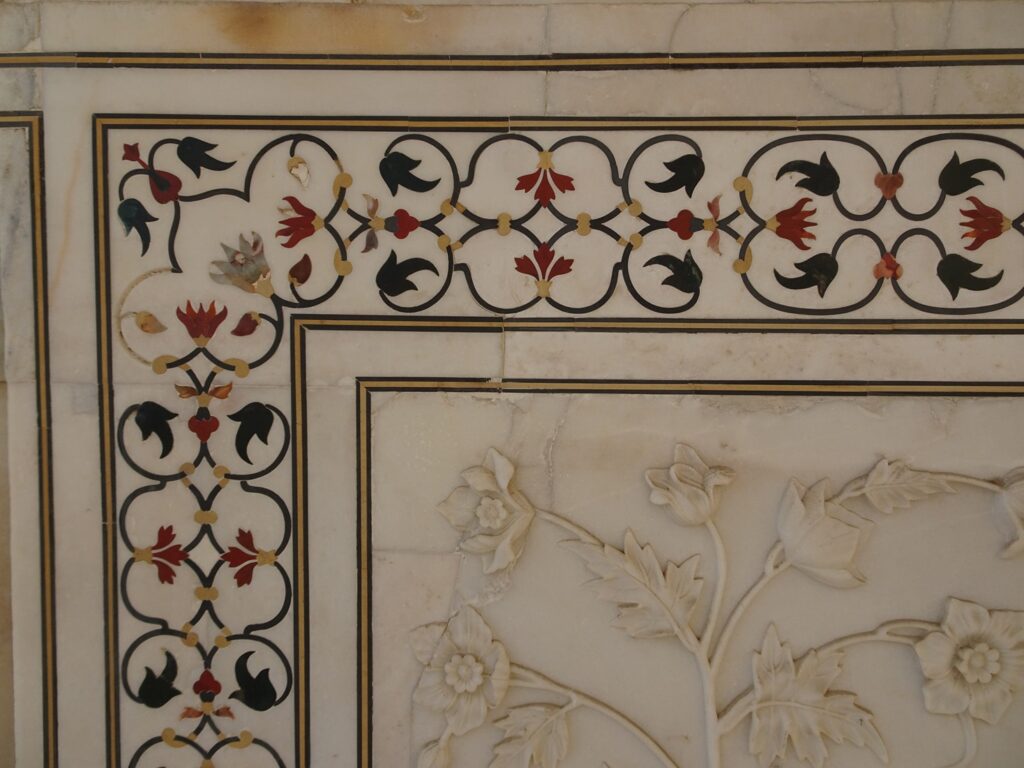
Inside the mausoleum, the central chamber contains the decorative cenotaphs of Mumtaz Mahal and Shah Jahan, surrounded by a super impressive filigree screen, which was carved out of a single piece of marble. The actual tombs lie in the basement and can’t be visited.
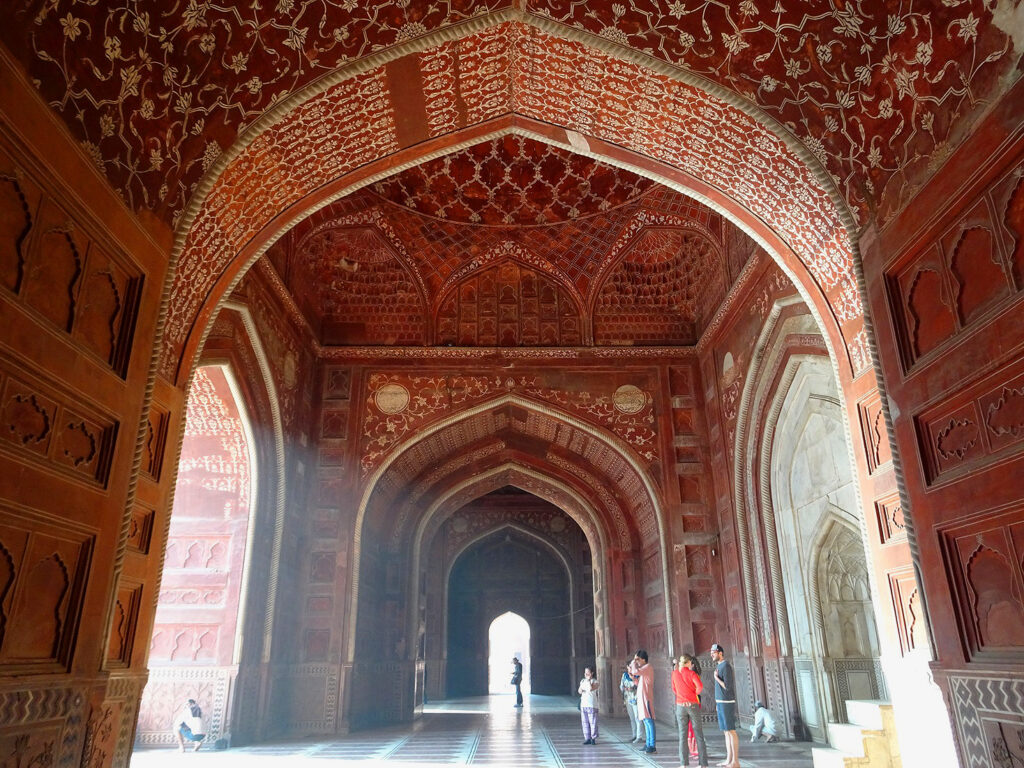
Around the main tomb there are a number of other interesting buildings. The red sandstone mosque to the west and the matching jawab (guest pavilion) to the east create a nice contrast with the white marble centrepiece
I’m also confident that these buildings would be star attractions in their own right anywhere else, with their beautifully painted and carved walls and domes. The same goes for the massive red stone entrance gate to the complex, by the way.
Finally, there’s also a small museum on the grounds.
**Opening Times:** Around sunrise to sunset (closed Fridays)
**Entrance Fee:** Around ₹1,300 for foreign visitors
**Best Entrance:** Eastern Gate usually works well in the morning
**Nearest Area:** Taj Ganj
**Official Website:** Taj Mahal Official Site
Akbar’s Tomb
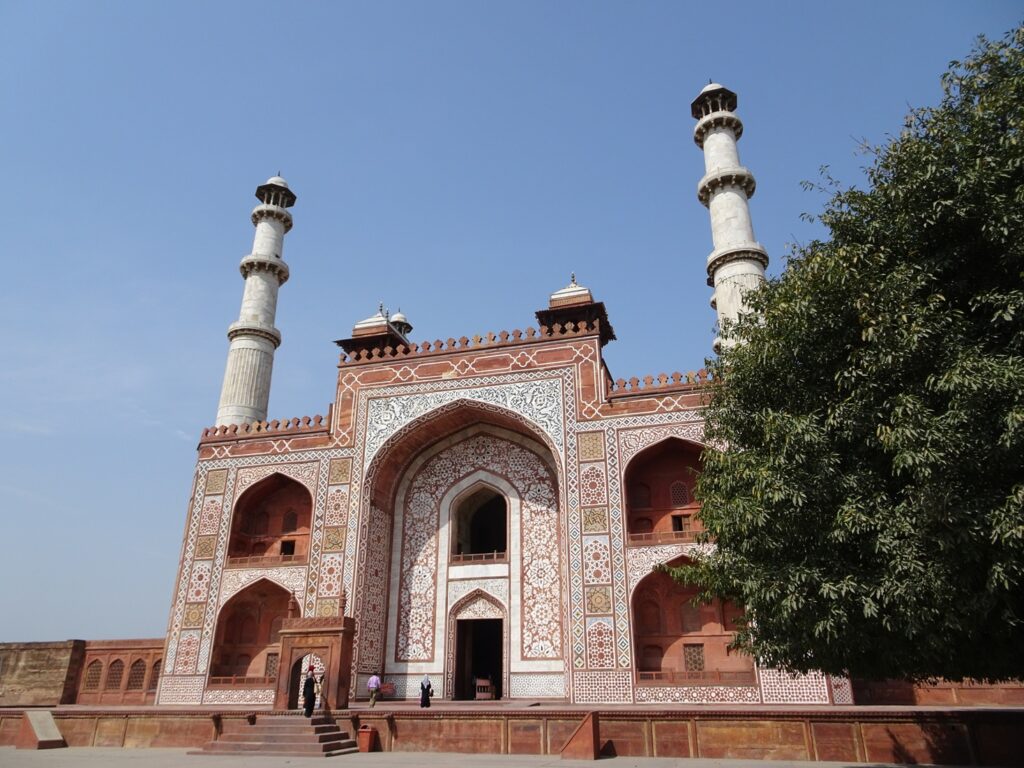
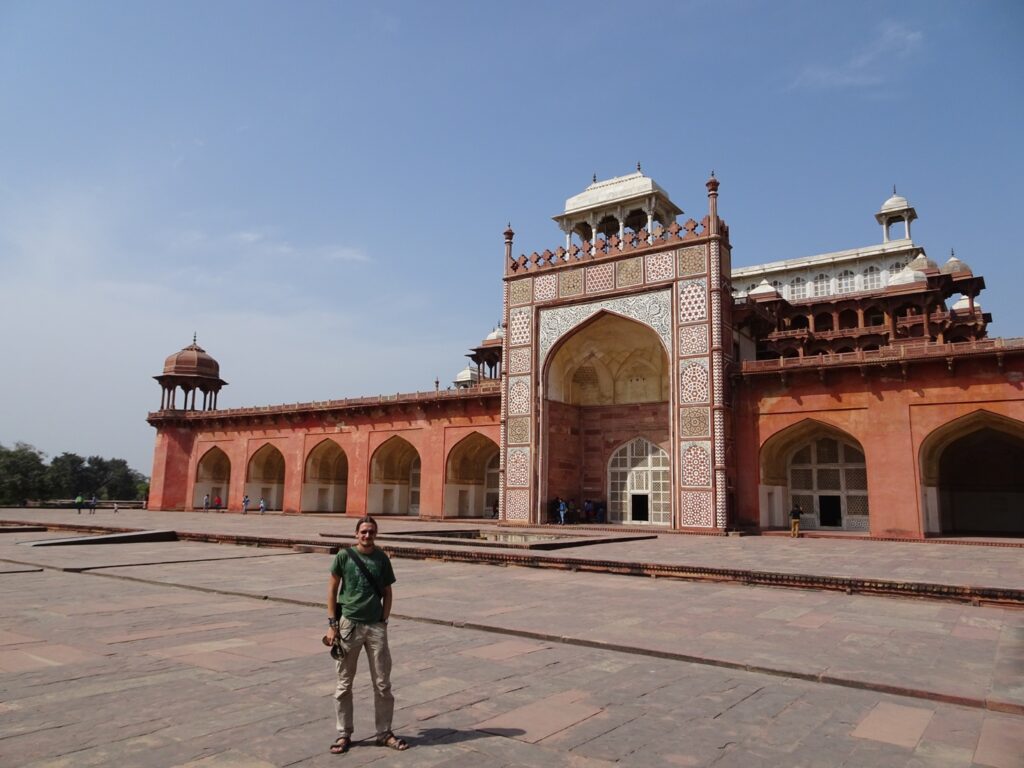
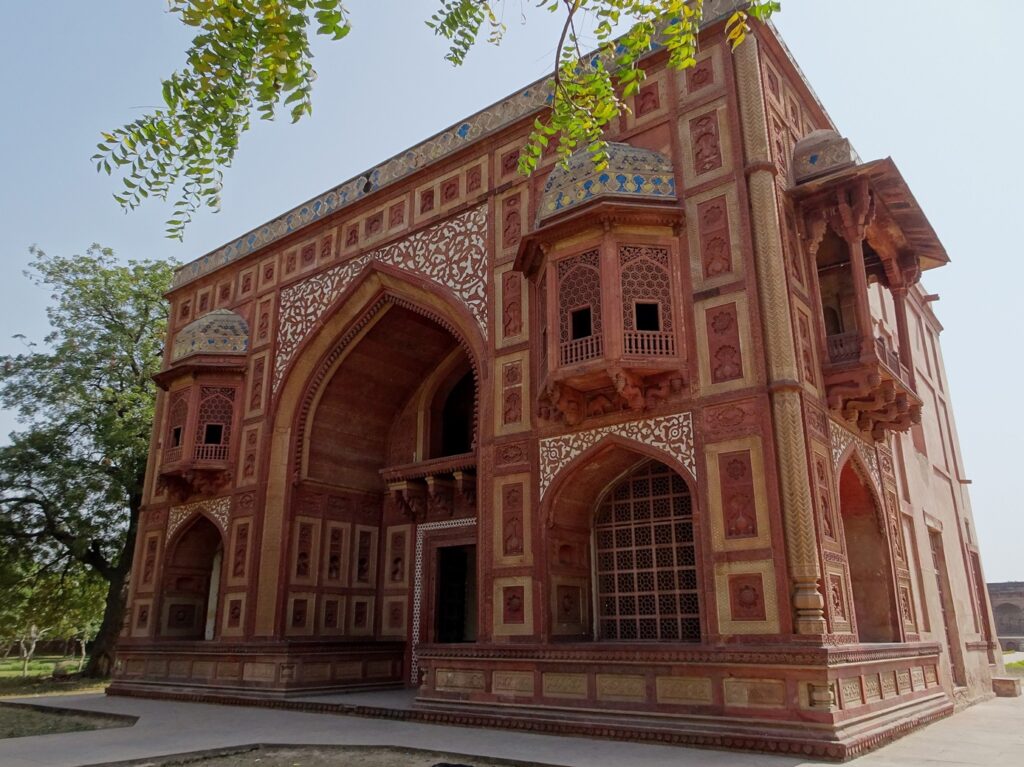
For the final major stop of the itinerary, head northwest to Sikandra and Akbar’s Mausoleum.
The tomb complex was begun by Emperor Akbar himself and completed by his son Jahangir in the early 17th century. Architecturally, it feels very different from the Taj Mahal and even from many later Mughal monuments.
Akbar was known for his relatively eclectic outlook and interest in combining different artistic and religious influences, and the mausoleum reflects that quite clearly. Instead of relying mainly on white marble symmetry like the Taj Mahal, the complex combines red sandstone, geometric decoration, Persian influences, Hindu decorative motifs and experimental architectural elements.
The enormous southern gateway is already impressive on its own. It’s covered in colourful inlay work and topped by four slender marble minarets that are often seen as precursors to those later used at the Taj Mahal.
Beyond the gate lies a huge formal garden divided into geometric sections in the classic charbagh style. Compared to central Agra, the atmosphere here felt much quieter and more spacious. During our visit, there were deer grazing in the gardens alongside monkeys wandering between the pathways, which added to the slightly calmer feel of the whole complex.
The tomb building itself is also unusual. Unlike the Taj Mahal, which rises upward into a huge dome, Akbar’s mausoleum becomes gradually more open and horizontal toward the top. The uppermost marble pavilion almost resembles an open courtyard rather than a conventional tomb chamber.
Inside, the decorative details are beautiful but comparatively restrained. The central chamber contains Akbar’s symbolic tomb, while the actual burial chamber lies beneath it.
What we liked most here was probably how different the place felt from the Taj Mahal earlier in the day. The Taj is almost overwhelmingly polished and symmetrical, while Sikandra feels more experimental and slightly less formal, which somehow makes it easier to explore slowly and notice smaller details.
#### Practicalities
**Opening Times:** Daily, sunrise to sunset
**Entrance Fee:** Around ₹300 for foreign visitors
**Nearest Area:** Sikandra, northwest Agra
**Official Website:** Archaeological Survey of India
Mehtab Bagh Garden (Taj Viewpoint)
Mehtab Bagh Park sits directly opposite the Taj Mahal on the northern side of the Yamuna River.
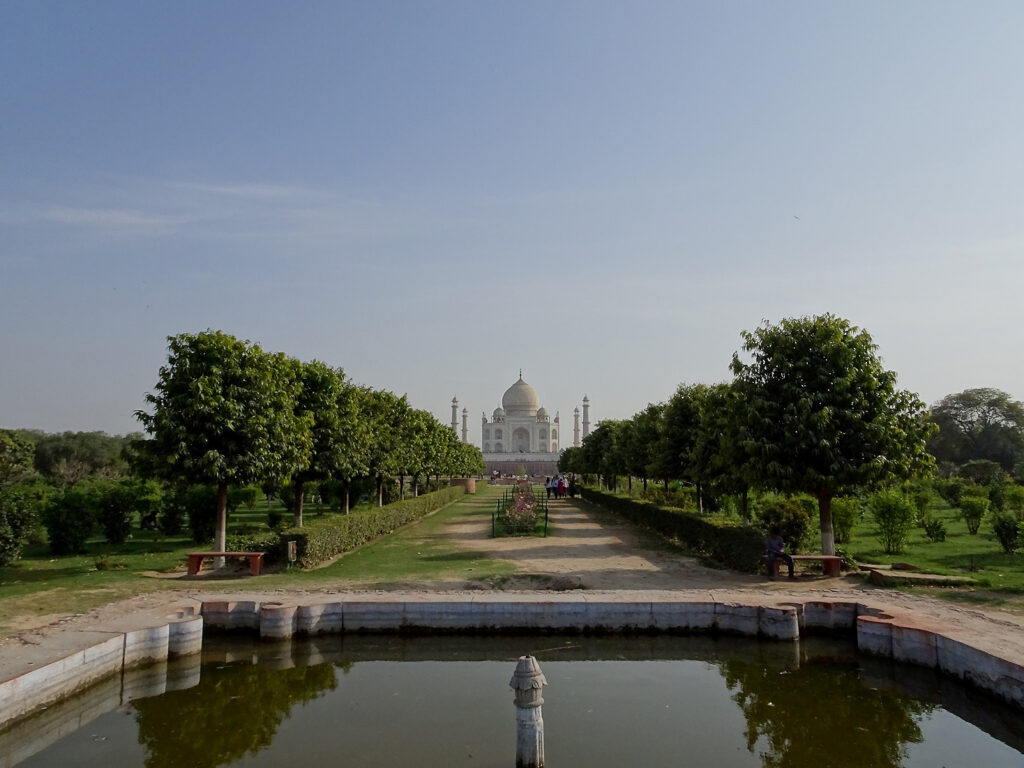
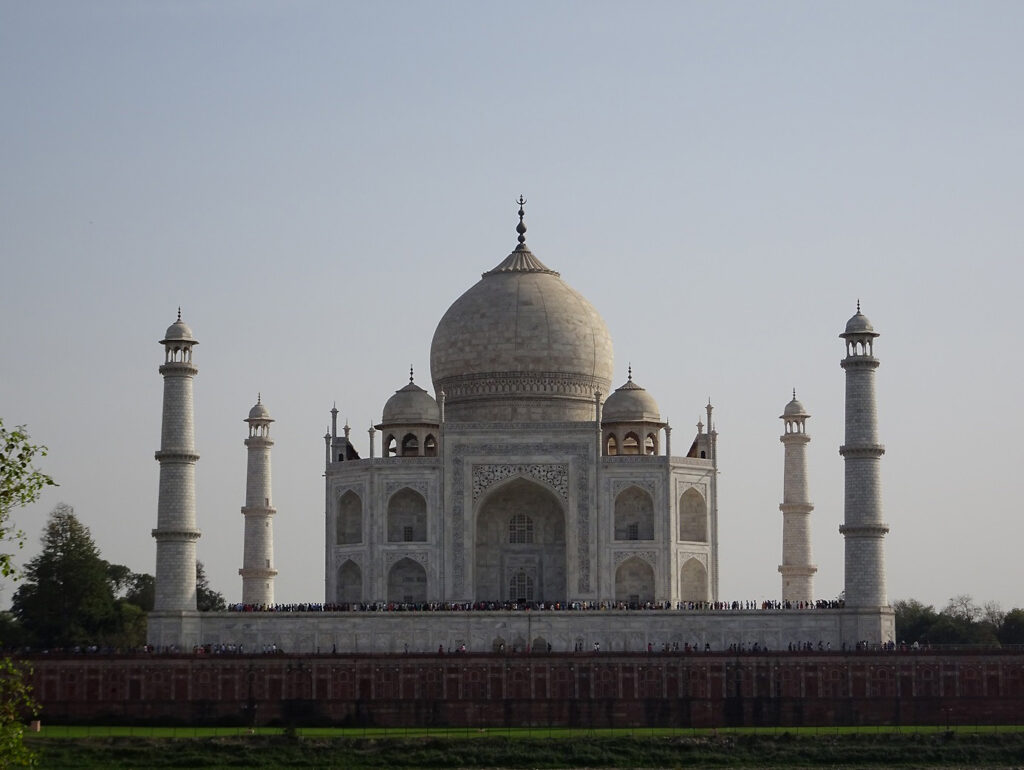
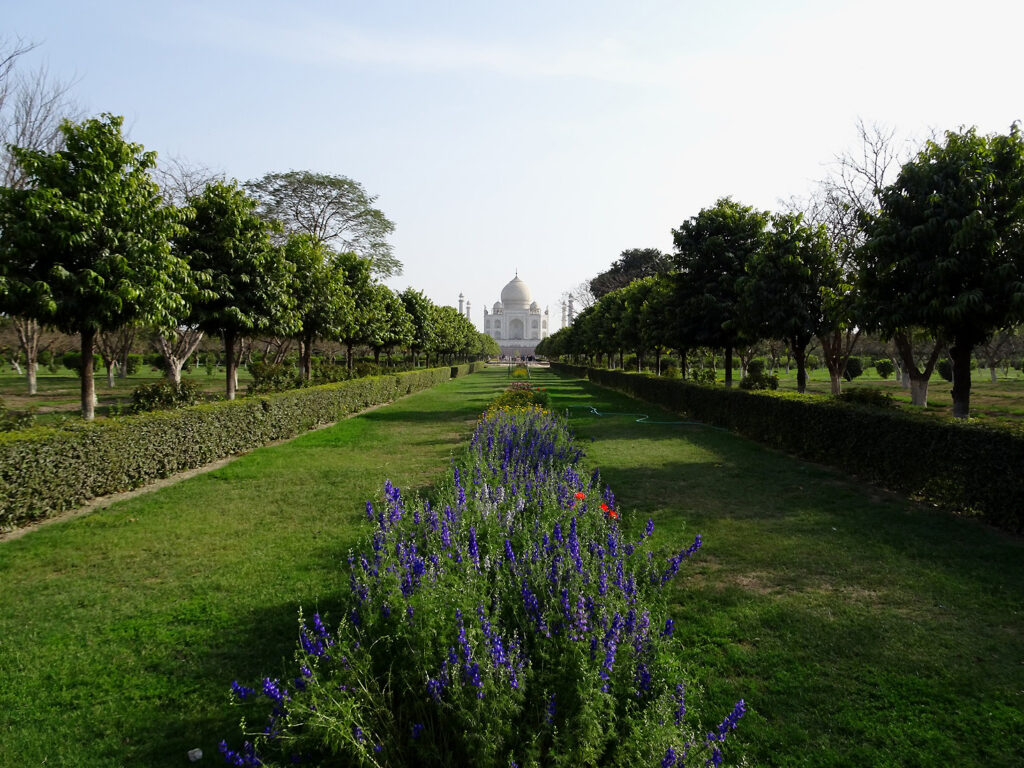
The garden was originally laid out during the Mughal period as part of a larger sequence of riverside gardens that were aligned with the Taj Mahal. From here, you get one of the best symmetrical views back toward the monument itself.
What you see is the backside of the Taj, but as the layout is symmetrical all around, it’s no less impressive than from the front and it has the added bonus that there won’t be lots of people in your photographs if you snap them from here.
The garden is open from sunrise to sunset and we paid an entrance fee of 300₹
Practicalities