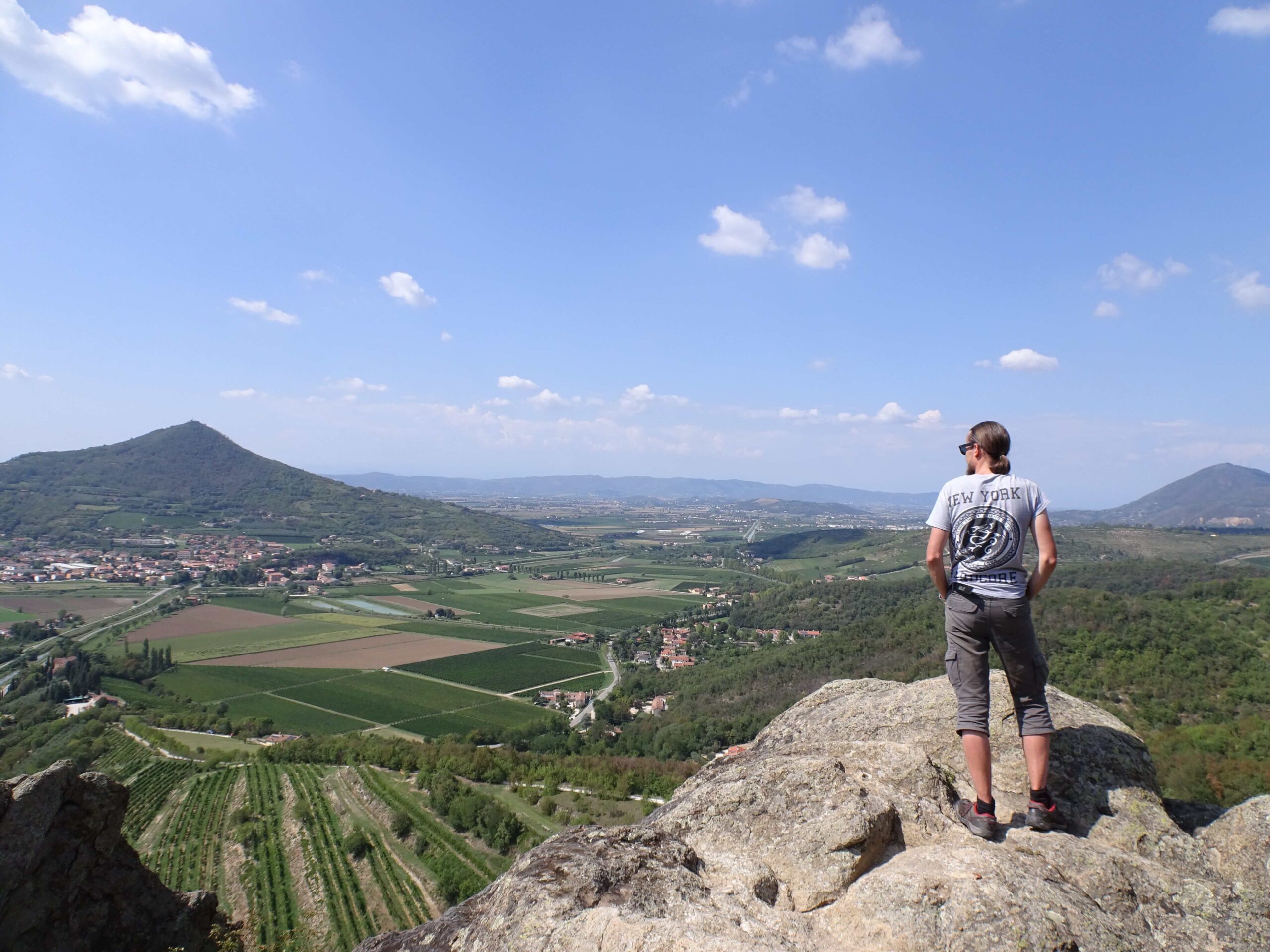
The Euganean Hills unexpectedly rise out of the flat plain of the southern Veneto region just a few kilometers south of pretty Padua. They were formed by volcanic activity about 30 million years ago and have been a popular holiday destination since Roman times.
The most famous person to fall in love with the Euganean Hills was the medieval poet Petrarch, who spent his last years here and is buried in the village of Arquà Petrarca. We thought the hills were the perfect destination for a day trip from Padua.
There are tons of cute villages to explore, some good short hikes and the amazing Villa Barbarigo Garden, which was once voted Italy’s most beautiful garden. Here’s my recommended one-day itinerary for the Euganean Hills.

This post may contain affiliate links, and I might earn a small commission at no additional cost to you. For more info, click here.





Transport in the Euganean Hills
Public transport in the Euganean Hills is a little complicated. Buses to most villages exist, but unfortunately they only go a few times a day.
If you start from Padua, you can likely only make one of the stops from my itinerary on public transport. You can check the network and current timetables of Padua’s suburban buses on this site.
The only real flexibility in this area comes with a car of your own. We rented one and if you decide to rent one, you can have a look below to find the best deals.
Guided Tours of the Euganean Hills
Without your own set of wheels, a guided tour of the area would be the easiest way to explore the Euganean Hills.
For instance, this tour includes entrance to both the beautiful Villa Barbarigo Garden and the famous Villa Vescovi in nearby Luvigliano, transport and a local guide. You can have a look at some other options below.
The Perfect One-Day Itinerary for the Euganean Hills
Villa Barbarigo Garden
I recommend starting your exploration of the area at this beautiful 17th-century Baroque garden near the village of Valsanzibio. You should get there as soon as it opens, to be able to enjoy the place in peace (it started to get really crowded when we left around noon).
The complex was voted Italy’s most beautiful garden in 2003 and is full of weathered statues, small fountains, artificial grottos and all kinds of unusual sights. There is also a rabbit island and a big boxwood labyrinth, in case you ever wanted to feel like Jack or Danny Torrance in The Shining.
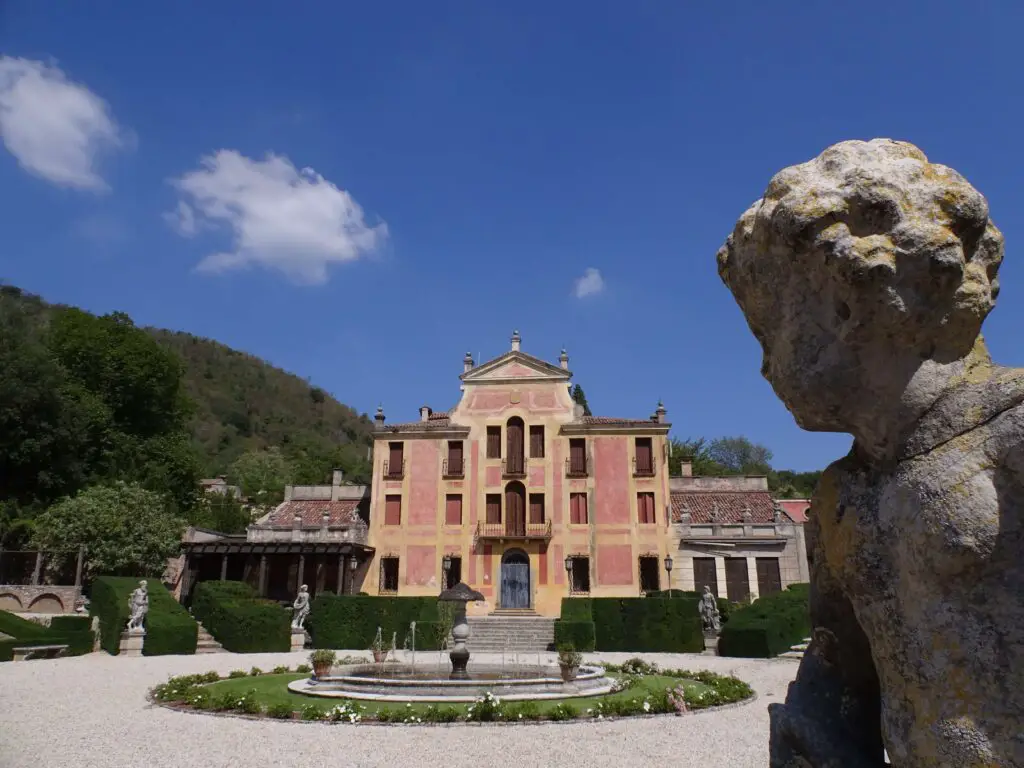
The opening times differ throughout the year and depending on the weekday. You can check the current times here. The entrance fee is 14€ for adults and 7.50€ for children (with an extra 5.90€ for the labyrinth).
You can have a look at my dedicated guide to this unique garden here.
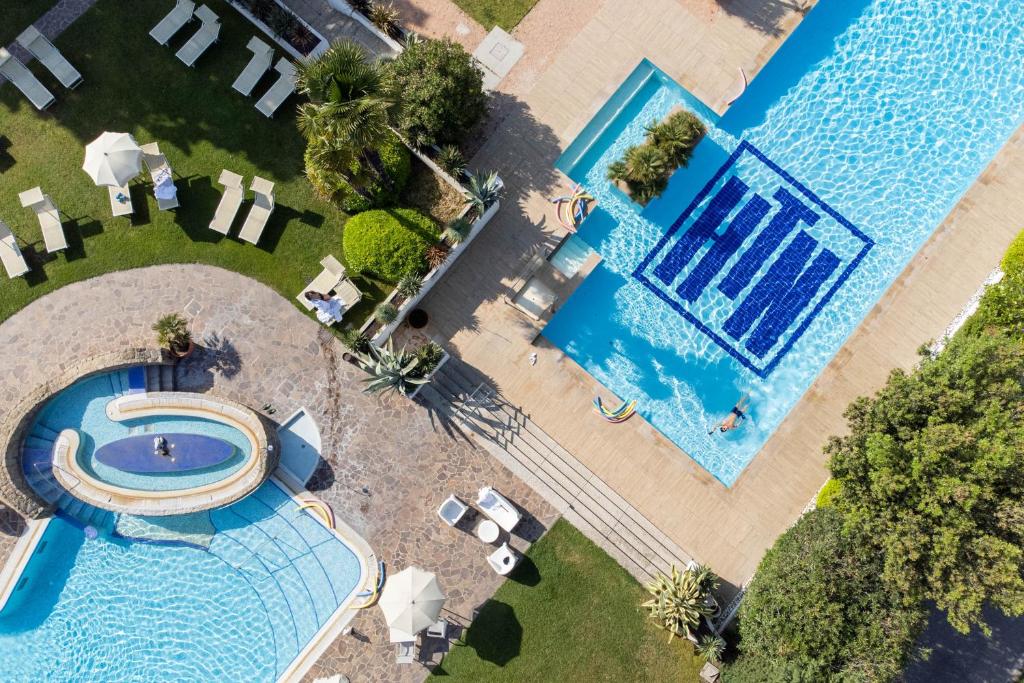
Euganean Hills Hotel Tips
Budget: B&B Contarine
Midrange: Hotel Terme Delle Nazioni (pictured)
Luxury: Hotel Terme Metropole
.
Arquà Petrarca
Next, I suggest heading to the nearby village of Arquà Petrarca, which has a pretty and well-preserved medieval core full of small houses and cute churches. More famously, it is the home and final resting place of one of Italy’s most well-known poets.
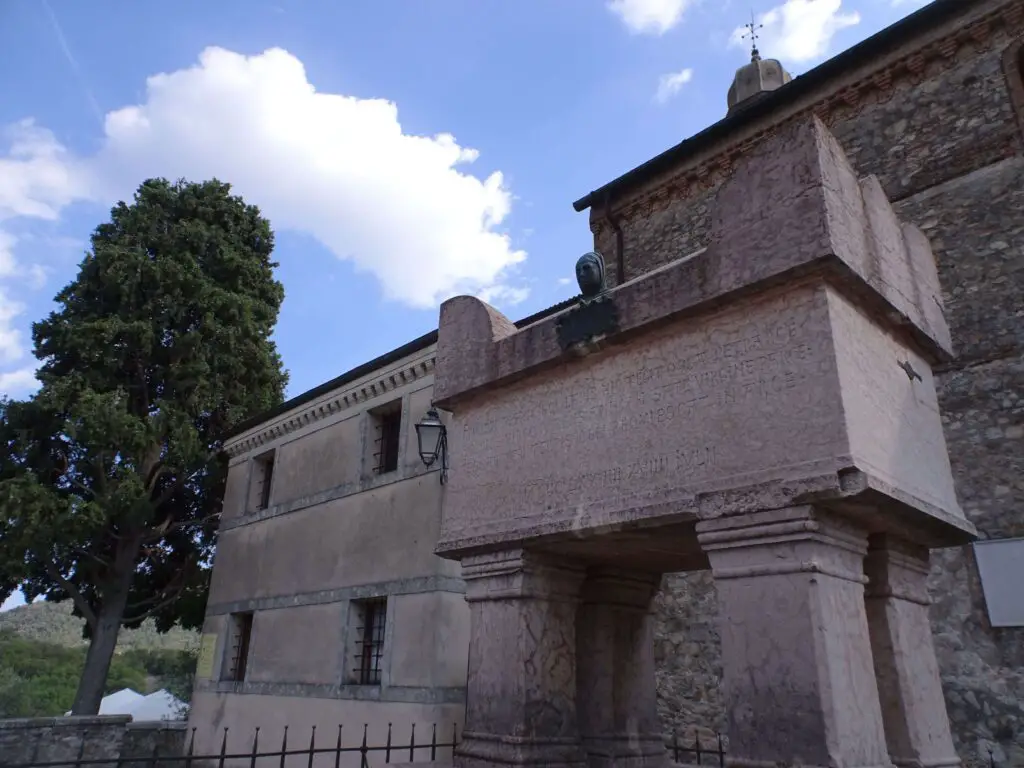
Francesco Petrarca, aka Petrarch, who is best known for his longing love poems to the unattainable Laura, spent his final years in the village and died here in 1374. We dropped by his solemn tomb in the square next to the Chiesa di Santa Maria Assunta at the southern edge of town.
If you climb the hill to the centre of the village and continue west along Via Valleselle, you’ll reach Casa del Petrarca, where the poet used to live. The stone house is surrounded by a pretty little garden and most rooms inside are covered in frescoes.
Most of these were added by a later tenant and show scenes from Petrarch’s life and writings. By far the strangest object to us was a mummified cat, which is said to have belonged to Petrarch and sits behind a glass panel in the room to your left right as you enter the house.
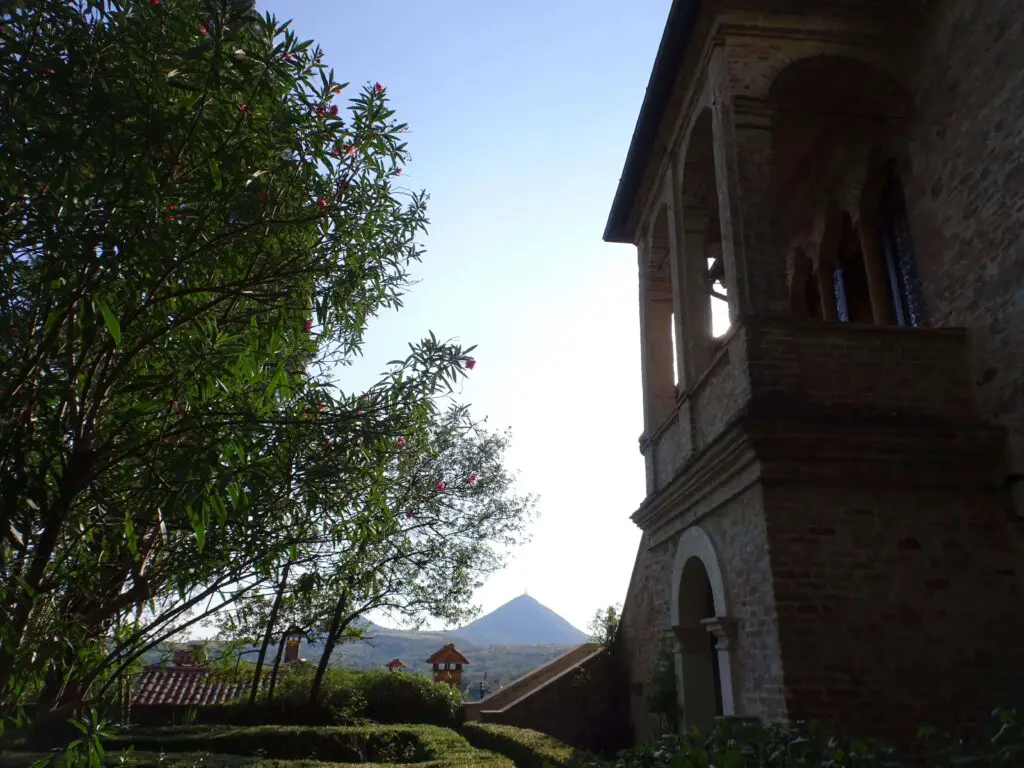
The opening times are different, depending on the season, and you can check them here. The entrance fee is 6€.
If you’re like us and like to try regional specialties, I recommend having a look at the small shop across the road from the house, where you can try liqueur and jam made from giuggiole (jujube berries). There are also tons of other sweets and drinks from the area.
Hike Around Monte Cinto
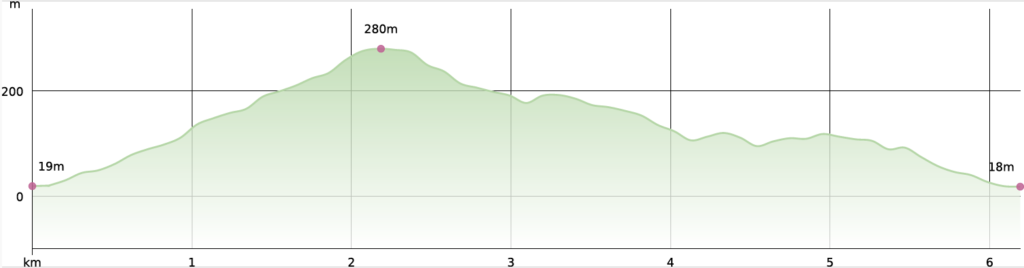
If you continue west to the village of Cinto Euganeo, you can hike around the slopes of the nearby Monte Cinto. The hike is about 6km or 4mi long and pretty easy.
If you’re here on a weekend, you’ll have a chance to check out the Museo Cava Bomba, which deals with the geological and economic history of the region. We had to skip it as we were there on a weekday, but we passed a few somewhat forlorn looking dinosaur sculptures on our way up the mountain, which probably belonged to the museum.
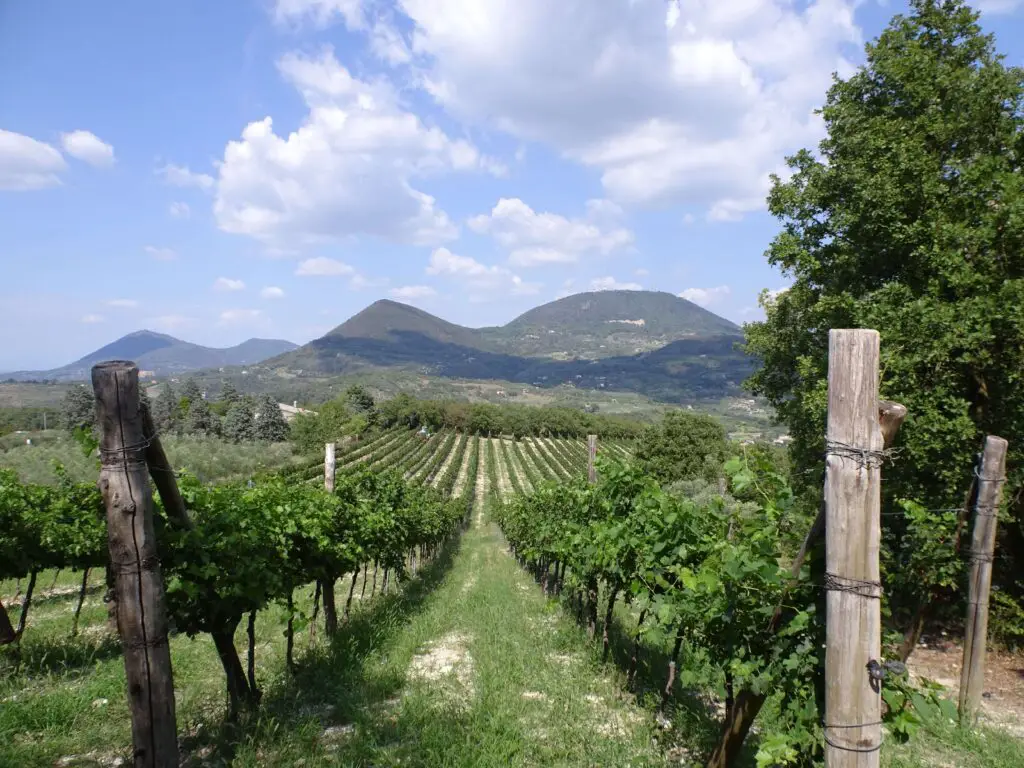
After a walking up a series of switchbacks, the trail leads through a pretty area used for wine-growing before it enters a forest full of chestnut trees. We decided to walk around the mountain in a counterclockwise direction, and soon passed an old quarry, where we encountered hundreds of tiny darting lizards.
As an archaeologist, I decided to take a short detour to the top of the hill, where there are some remaining foundation walls of a small medieval fortification. That said, unless you’re a serious history geek (or a fellow archaeologist), you can probably skip it, as there’s hardly anything left to see and there are basically no views from the top.
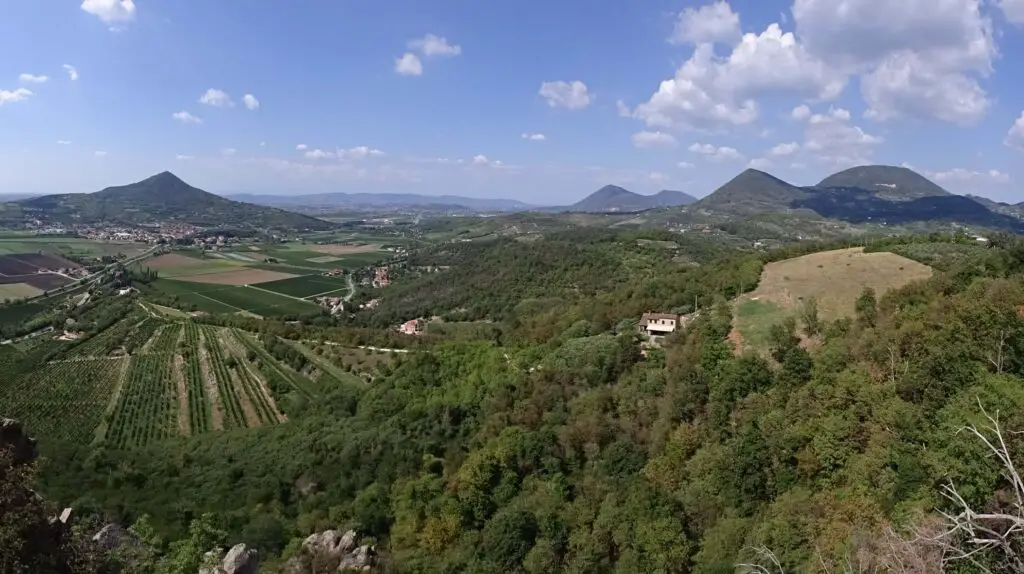
Instead, if you continue around the mountain, you should definitely take the detour to the Buso dei Briganti at the northern end of the slope, which has by far the best viewpoint we came across in the Hills.
The rocky outcrop here is said to have been a former base for a band of robbers and has absolutely amazing views of the surrounding hills and plains to the north. You should definitely be careful, though, as there’s a pretty steep drop right behind the cliff.
Afterwards you can return to the main trail and continue your hike around Monte Cinto until you reach the vineyard you passed in the beginning. From here on out, you can just backtrack the way you came to reach the trailhead.
Dinner in Teolo
On your way back to Padua, I suggest you stop in the village of Teolo in the north-western part of the Euganean Hills. Here you can have a stroll through the pretty medieval village core to find a spot for dinner.
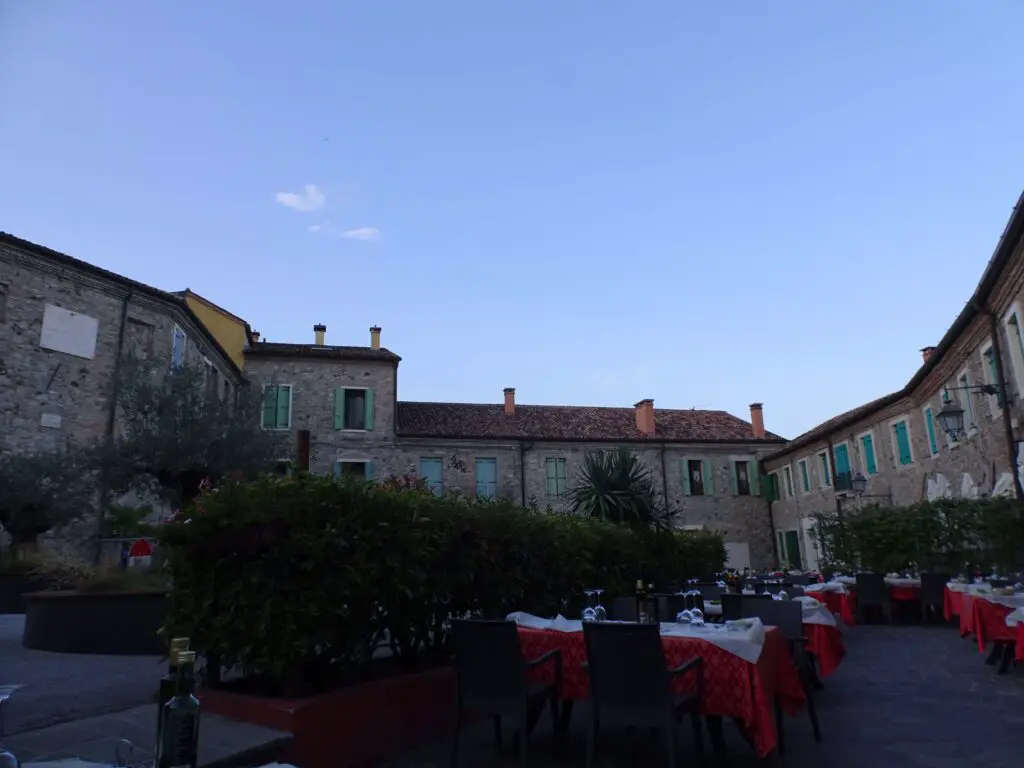
We found Ristorante Pizzeria Quadrifoglio to be a great place, both because of its location on the pretty town square and because of its tasty food, which is made with regional ingredients (we loved the mushrooms). From here, it shouldn’t be more than a 30-minute drive back into Padua.
Map of the Euganean Hills
This map includes all the stops on my itinerary, as well as our route of the Monte Cinto hike.
See Also
The 14th-Century Fresco Cycles of Padua, Italy – Which of the UNESCO Sites Are Worth Visiting?
Exploring Padua Botanical Garden, the Oldest Botanical Garden in the World