Judging by the small number of other foreigners we met (relatively speaking), Padua seems to dwell a bit in the shadows of its more famous neighbours, Venice and Verona, which made exploring the beautiful historical city centre and strolling around the World’s oldest Botanical Garden all the more enjoyable to us.
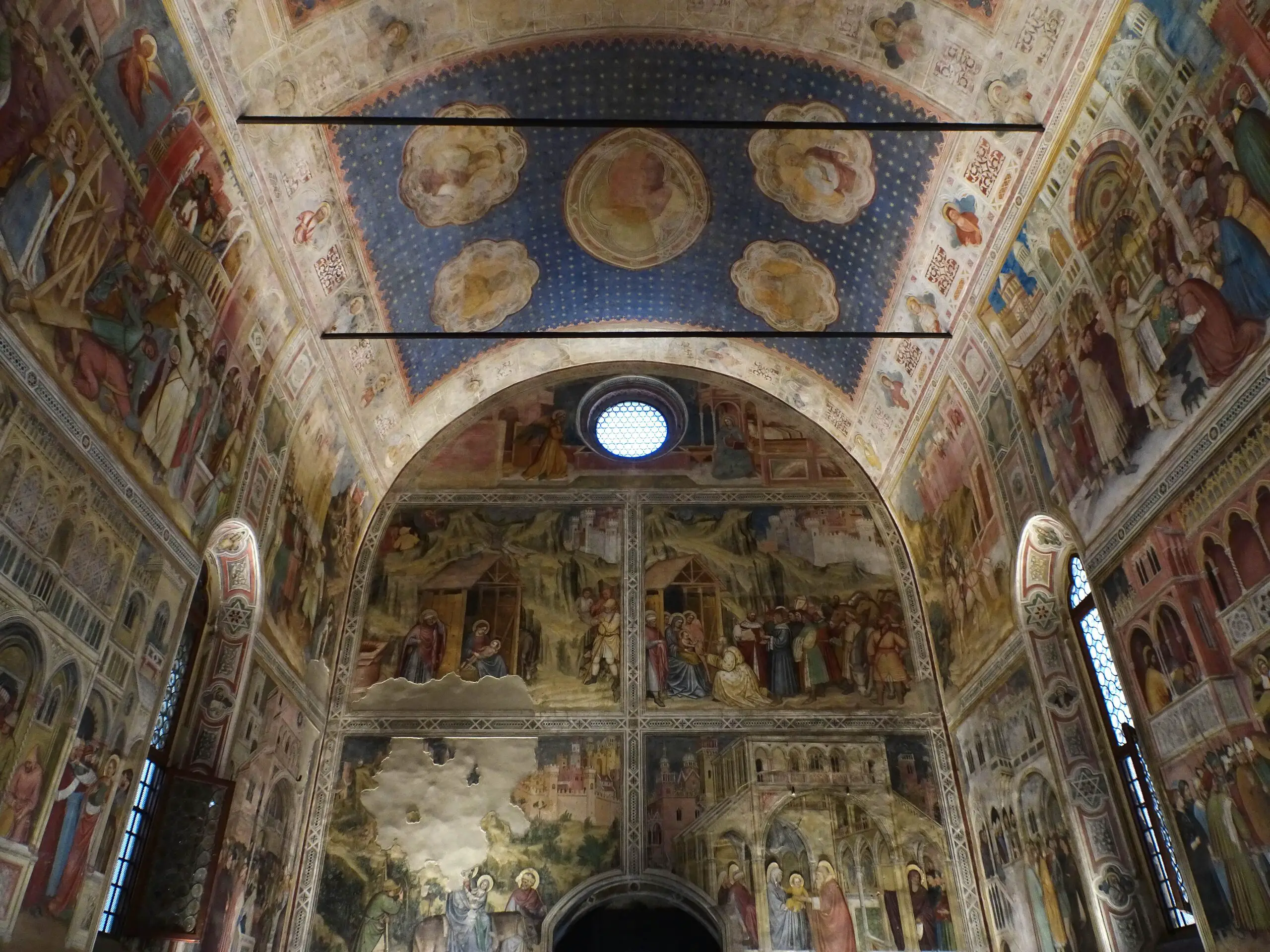
The city’s most famous attraction is a series of beautifully preserved frescoes by famous medieval artists like Giotto di Bondone. The artworks were very influential in shaping European art and in 2021, eight of them were inscribed as a World Heritage Site.
The paintings were commissioned for several churches, chapels, and public buildings by wealthy patrons, and during our stay in Padua, Stefanie and I managed to check out all of them, so we can tell you exactly which of these you definitely shouldn’t miss.

This post may contain affiliate links, and I might earn a small commission at no additional cost to you. For more info, click here.





What’s the Significance of the Frescoes?
The frescoes are historically important because they mark a moment when European art was changing fundamentally. Giotto and the other artists introduced a new sense of realism and gave their figures a less static look and more convincing emotions, which must have made the biblical stories feel much more relatable to the people of that time.
Indeed, we thought that the paintings looked a lot more naturalistic and lively than the religious art we knew from earlier medieval periods. The frescoes were also very influential, as the style helped lay the foundations for Renaissance art, which followed at the beginning of the 15th century.
Padua Hotel Tips
Budget: Albergo Junior
Midrange: Residence Eremitani
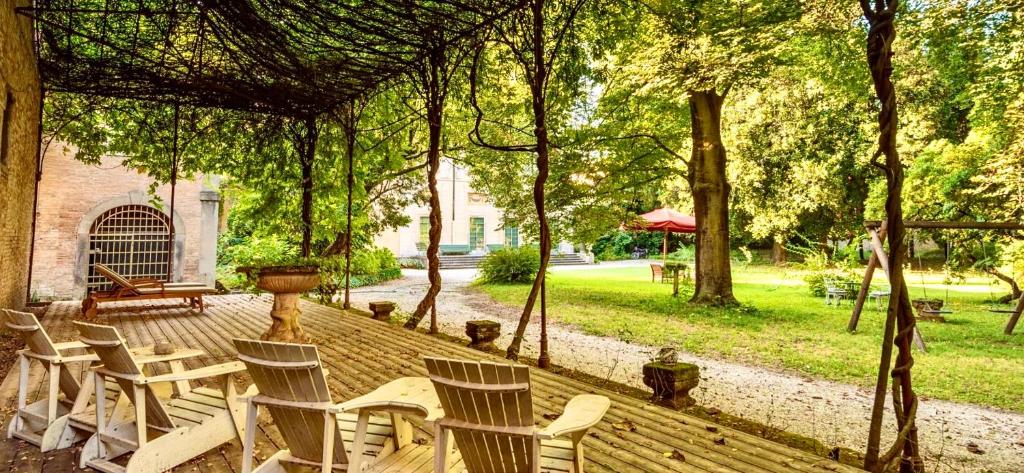
Luxury: Palazzo Mantua (pictured)
.
Guided Tours of Padua’s Fresco Cycles
If you don’t have a lot of time or prefer the company of a knowledgeable guide, there are lots of guided tours of Padua, which include the most important fresco cycles. You can have a look at some well-rated options below.
Exploring Padua’s Fresco Cycles
The eight locations that are inscribed as a World Heritage property are organized in four main zones that group close sites together. I’ve stuck to these zones, as they make sense and you can easily see which of the sites can be combined that way.
That said, some of the frescoes are definitely more impressive than others, and I’ll give you my top picks afterwards. Some of the buildings (Church of the Eremitani and St. Anthony Basilica) have different frescoes at different locations inside, and I’ll do my best to describe where exactly they can be found.
Zone 1 includes the Scrovegni Chapel and the Church of the Eremitani at the northern end of the historical centre. Zone 2 groups together the centrally located Cathedral Baptistery, Palazzo della Ragione and Chapel of the Cararesi.
Zone 3 consists of the Basilica and Monastery of St. Anthony and the Oratory of St. George south of the centre near the Botanical Garden, and Zone 4 only contains the Oratory of St. Michael at the south-western end of the city centre.
You can have a look at my map below to see where exactly the sites are located.
Zone 1
The Scrovegni Chapel
This is the most famous of all the listed sites and we found it easy to see why. The small chapel looks completely unassuming from the outside, but the interior is covered in lots and lots of biblical scenes, whose level of detail is absolutely amazing.
The frescoes were painted by the famous Gothic-era artist Giotto, who had been commissioned by Paduan banker Enrico Scrovegni to paint them in the first decade of the 14th century.
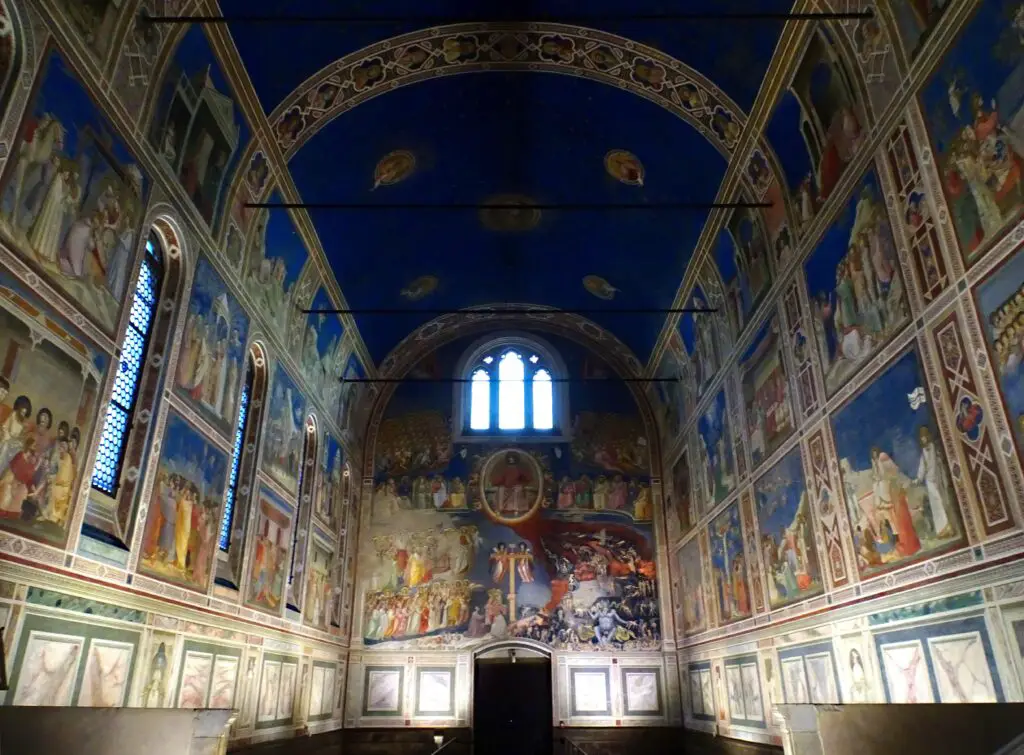
The front wall is decorated with a scene from the last judgment, including a graphic depiction of hell that reminded me a lot of the works of Hieronymus Bosch (nobody can convince me that that guy didn’t secretly travel to Padua to get some inspiration for his Garden of Earthly Delights).
The side walls are covered in a series of scenes (basically a proto-comic book) that retell the life of Christ and the life of the Virgin Mary. Here especially, we noticed the dynamic realism of the figures, which was so ahead of its time and already points to the developments of Renaissance art to come.
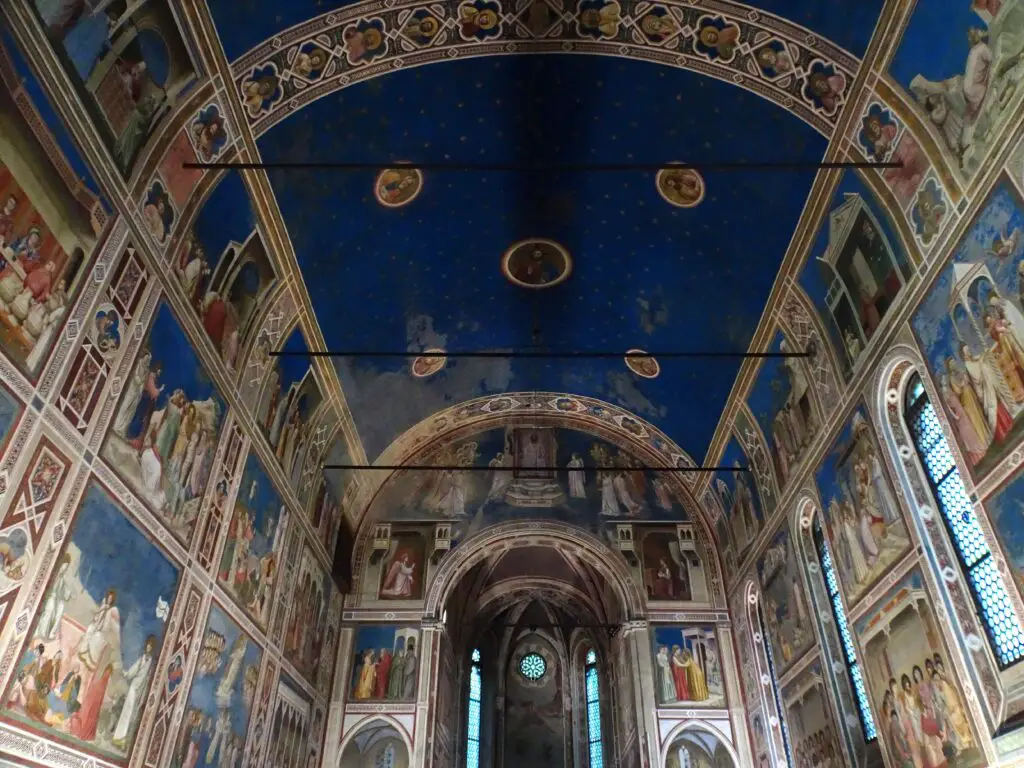
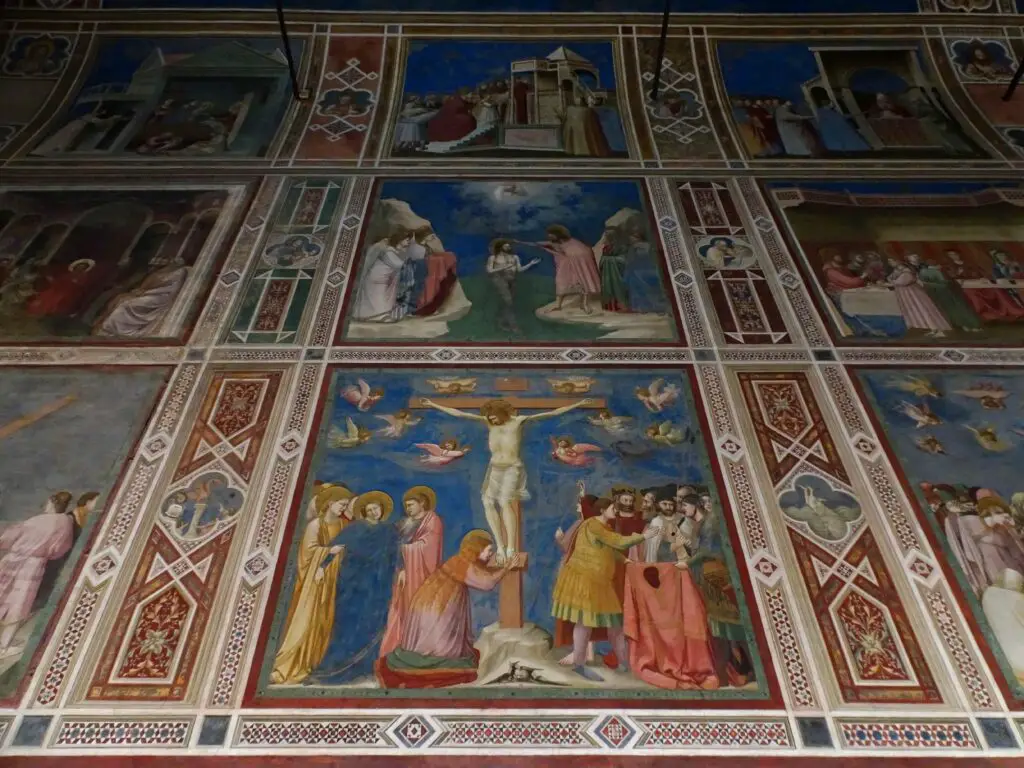
Some of the scenes apparently shocked people at the time, especially the one of Joachim meeting Anna at the Golden Gate, which shows Jesus’s grandparents kissing. I’m sure many a lord and lady fainted from just looking at such a scandalous act. The scene is in the top right corner of the left wall when you’re looking at the Last Judgment.
The Scrovegni Chapel is on the grounds of the Museo Civico, and you’ll need a timed ticket to visit it. Before entering you’ll have to pass through a decontamination chamber, where you can watch a video of the chapel’s history. Afterwards, we had about 15 minutes to check out the artwork before we were ushered out.
Church of the Eremitani
The Church of the Eremitani is right around the corner from the Scrovegni Chapel and has three listed fresco cycles. The most impressive one is a fresco cycle by Guariento on the left wall of the main chapel, which shows the life of Saints Philip, Augustine and James.
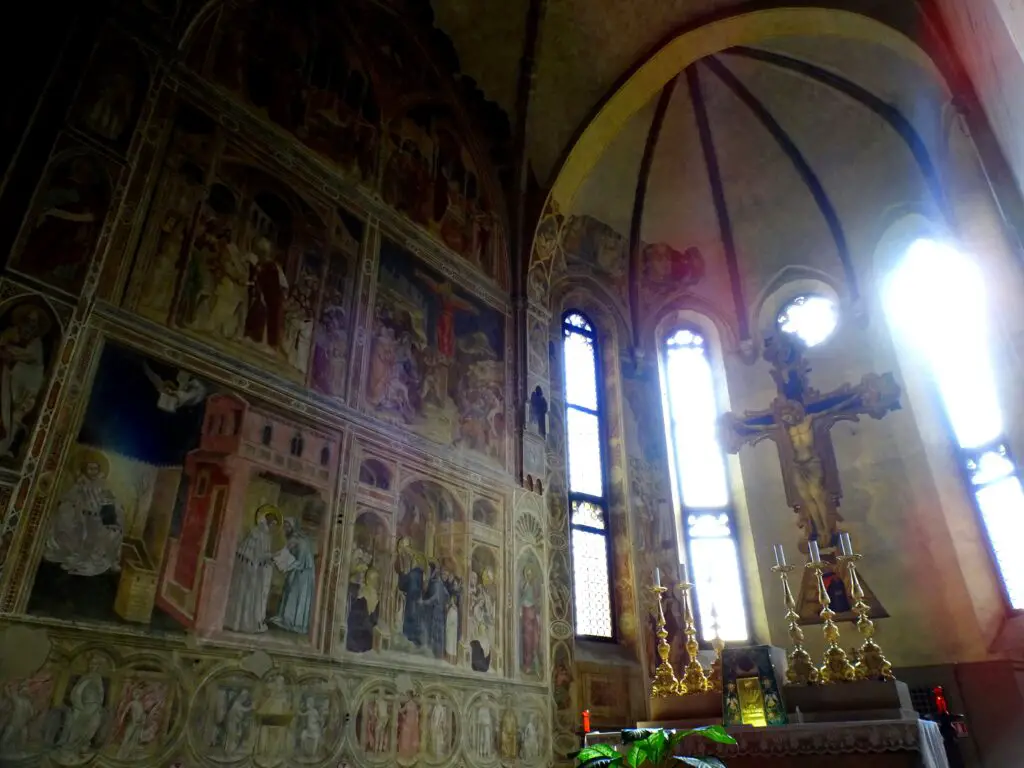
The same artist painted the Cappella di Sant’Antonio, which is the second side chapel on the right coming from the entrance. The Cappella Cortellieri is directly to the right of that one and has a few remaining paintings by Giusto de’ Menabuoi.
The church is directly south of the Museo Civico entrance and there’s no entrance fee.
Zone 2
Cathedral Baptistery
This was my personal favourite of all the fresco cycles. The small baptistery belongs to Padua’s main Cathedral, which itself is kind of bland inside and hasn’t the most attractive outside, either.
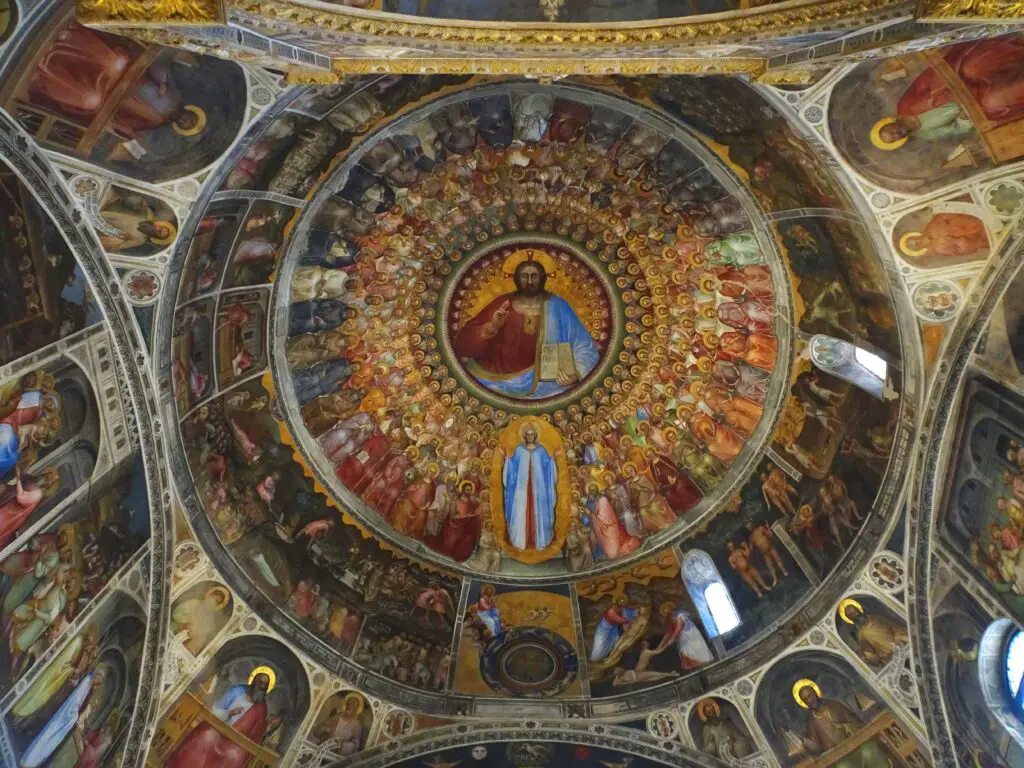
By contrast, the inside of the baptistery with its beautiful scenes painted by Giusto de Menabuoi covering all the walls and the central dome, totally blew us away.
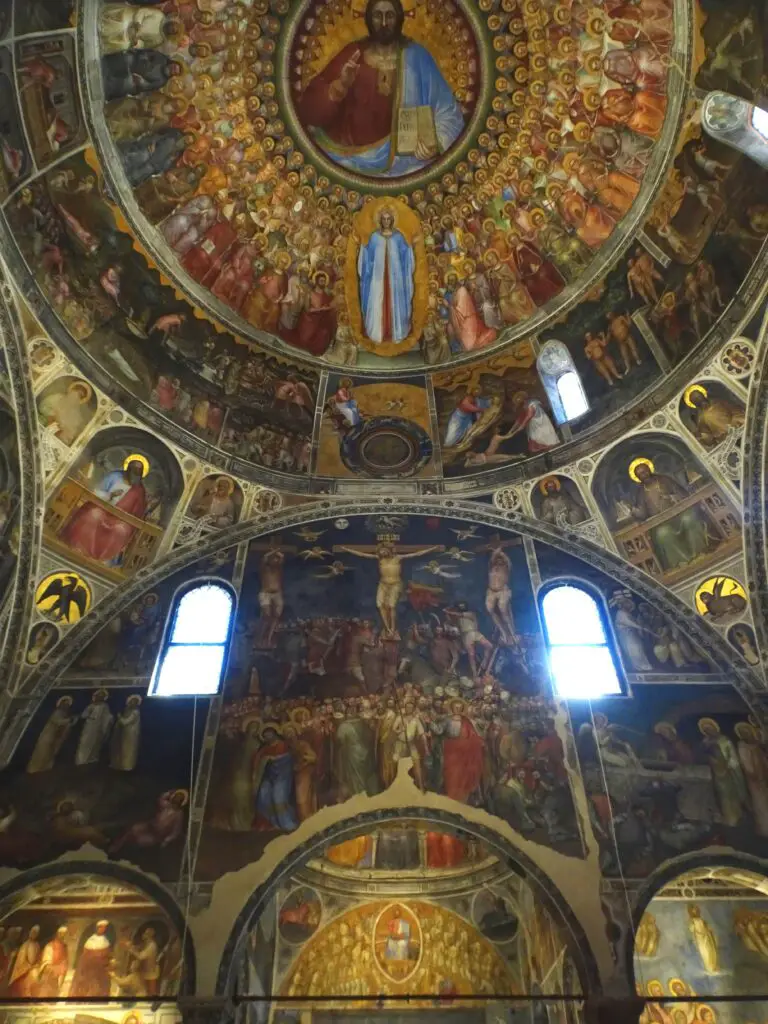
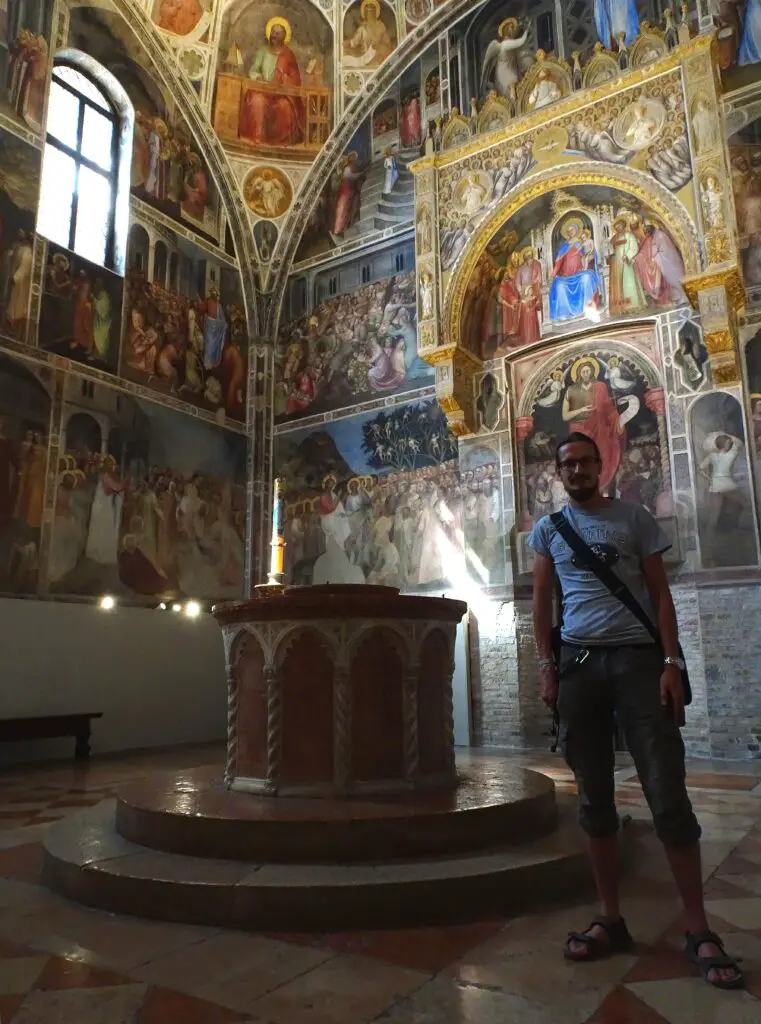
The ceiling has an image of Jesus in the Pantocrator style (as the universal ruler) surrounded by countless angels and saints, which is more common in Eastern Orthodox art. The walls show scenes from the lives of Jesus, Mary and John the Baptist, and the small apse surrounding the altar is decorated with apocalyptic scenes from the Book of Revelation.
Similar to the Scrovegni Chapel, you’ll have to decontaminate while watching a video about the history of the place, before you’re allowed inside. Inside the Baptistery, we got an audio guide which we found super useful, as it explained the meaning of the different scenes.
Palazzo della Ragione
Padua’s former town hall and palace of justice stands on the Piazza dei Frutti, the city’s central market square, and is decorated with frescoes painted by Nicolò Miretto and Stefano da Ferrara.
It’s the only non-religious space in Padua that has fresco cycles, so there aren’t just images of saints, but also of scientific figures of the time and scenes that are connected to Padua’s important role as a medieval trade centre.
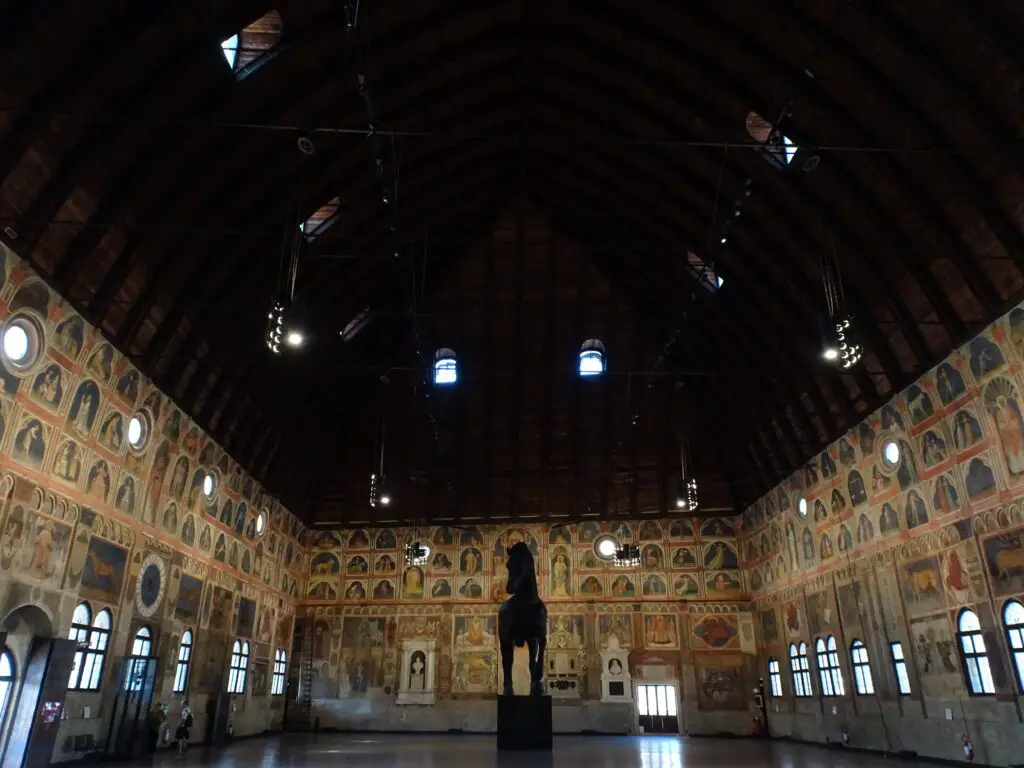
The big hall also has a giant 15th century wooden horse statue, a Foucault Pendulum and the Pietra del Vituperio, which is a medieval stone pedestal, that debtors had to sit on to be publicly shamed (we found the penalty rather tame considering the punishments that used to be dished out at the time).
We also liked the arcaded loggia that runs around the hall, which has some nice views of the surrounding squares and some more frescoes in the vaulted ceiling.
Chapel of the Carraresi Palace
The city palace of the influential Carraresi Family has a room with frescoes by Guariento (the same guy who also painted some scenes in the Eremitani Church).
In the former private chapel of the family, one of the walls is painted with frescoes that show scenes from the lives of Noah, Abraham and other Old Testament stars.
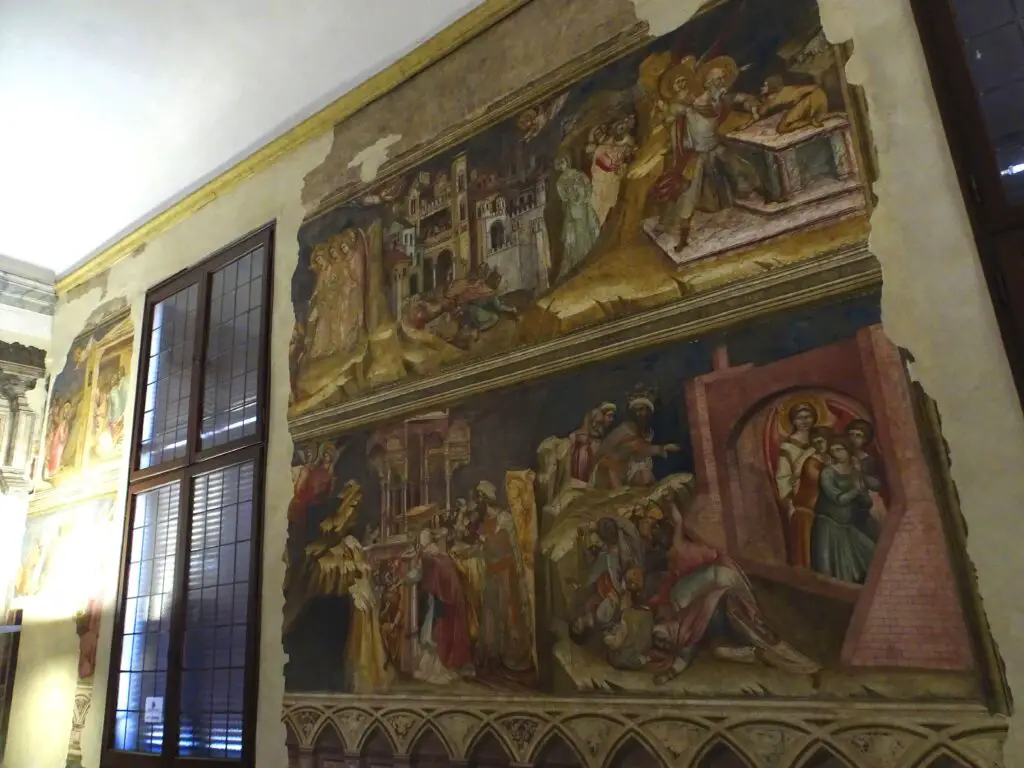
You can only visit the frescoes between 10am and noon (double check the times here) with one of the volunteers from the Accademia Galileiana di Scienze, Lettere ed Arti that is located in the palace (our guide was super enthusiastic, which we found contagious).
Zone 3
Basilica of St. Anthony
This huge pilgrimage church at the southern end of the historic centre is most famous for the relics of St. Anthony’s shriveled tongue and larynx (that kind of look like alien entities in their glass cases), but there are also five of the fresco cycles inside.
They’re a little hard to find among all the religious imagery in the big building, but we managed to locate them all.
The most impressive cycle is in the Cappella di San Giacomo, which is halfway down the nave on the right-hand side opposite the chapel that holds the sarcophagus of St. Anthony. The frescoes were painted by Altichiero da Zevio and show the life of St. James. There’s also a famous crucifixion scene in the centre.
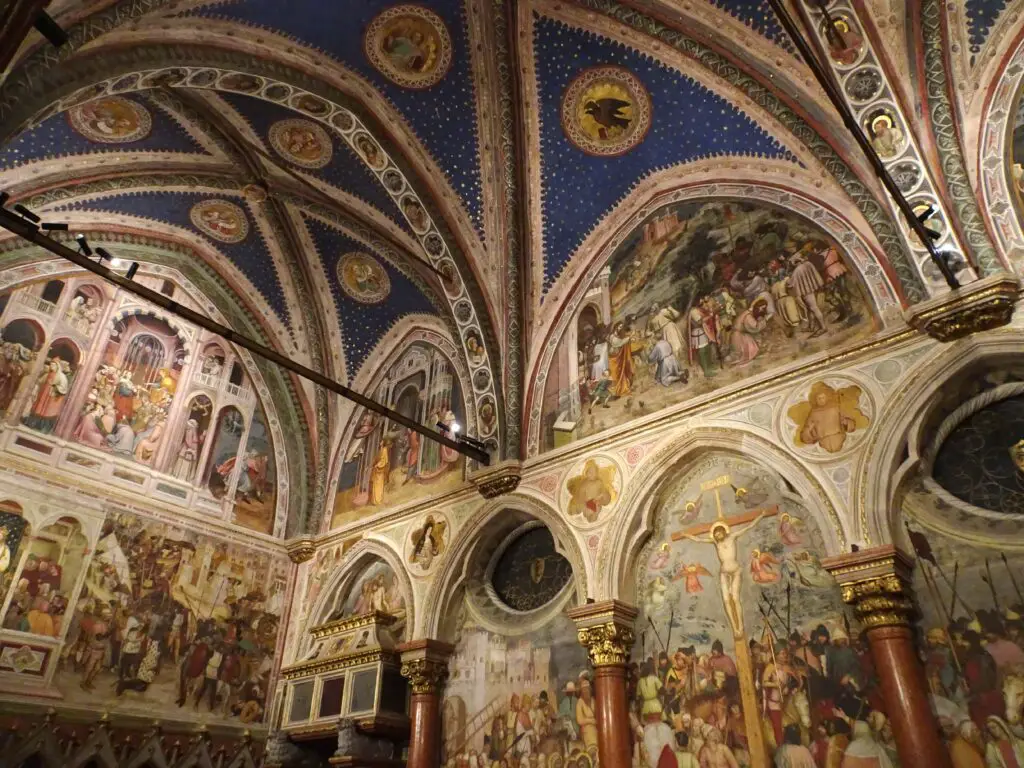
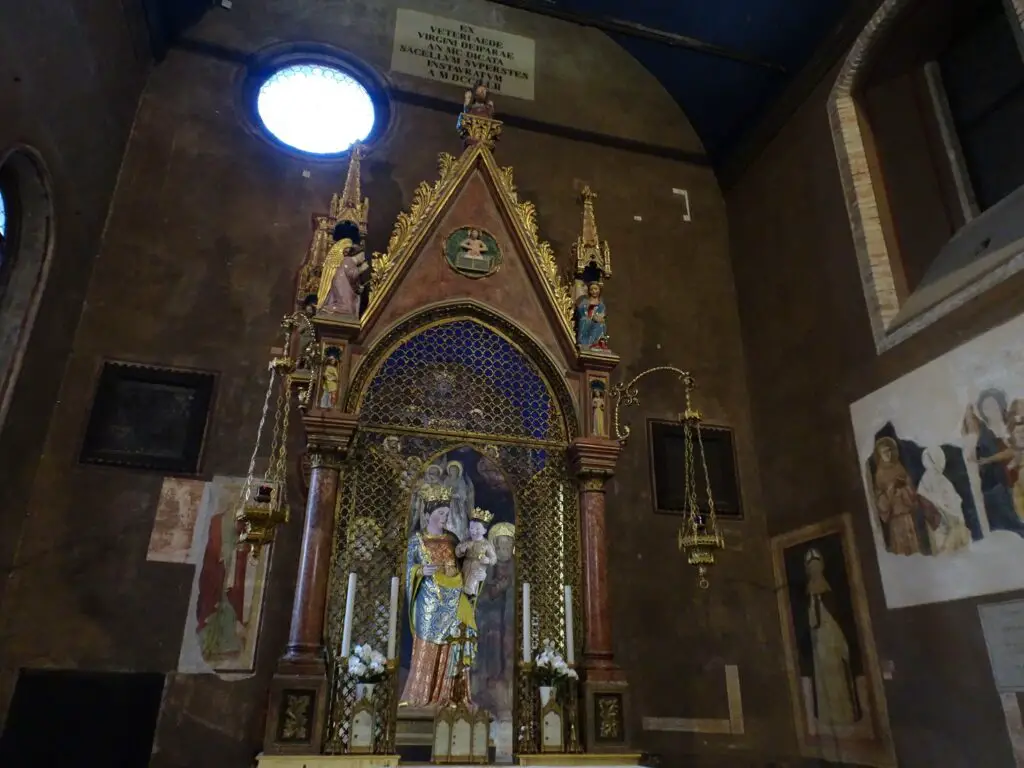
If you walk across the nave and face the Chapel with the tomb of St. Anthony, there’s a small side-room to the right, which contains the Chapel of the Dark Madonna (Cappella della Madonna Mora). It’s named for the darkish hair of the central statue of the Virgin Mary.
The surrounding walls have some small traces of frescoes by Giotto, but there’s not a lot preserved. We also liked the side chapel to the left, which isn’t part of the cycles, but still beautiful.
The Cappella del beato Luca Belludi is located behind the central altar area to the right of the chapel that holds the relics of St. Anthony. The walls have been decorated by Giusto de’ Menabuoi (who also did the Cathedral Baptistery).
The Cappella delle Benedizioni used to belong to the Scrovegni family, who apparently couldn’t get enough when it came to frescoes by Giotto, who is also thought to have painted this one. It’s the first small chapel on the right in the choir area, almost directly to the right of the main altar.
If you’re a serious completionist like myself, you’ll be annoyed to hear that at least one of the cycles can’t be visited by the general public. The chapter house also has some frescoes by Giotto, but is part of the private monk’s quarters.
That leaves you only with the options of either becoming a monk, pretending to be one or sneaking a peek through the occasionally open door (which was the case when we were there around 9.30am on a Friday. I’m not sure whether we were just lucky, though). Otherwise you can have at least a digital look at them here.
Oratory of St. George
Right next door to the Basilica is the small Oratory of St. George, which is covered in frescoes that retell the lives of Saints George, Catherine and Lucy, and (of course) scenes from the life of Jesus and Mary.
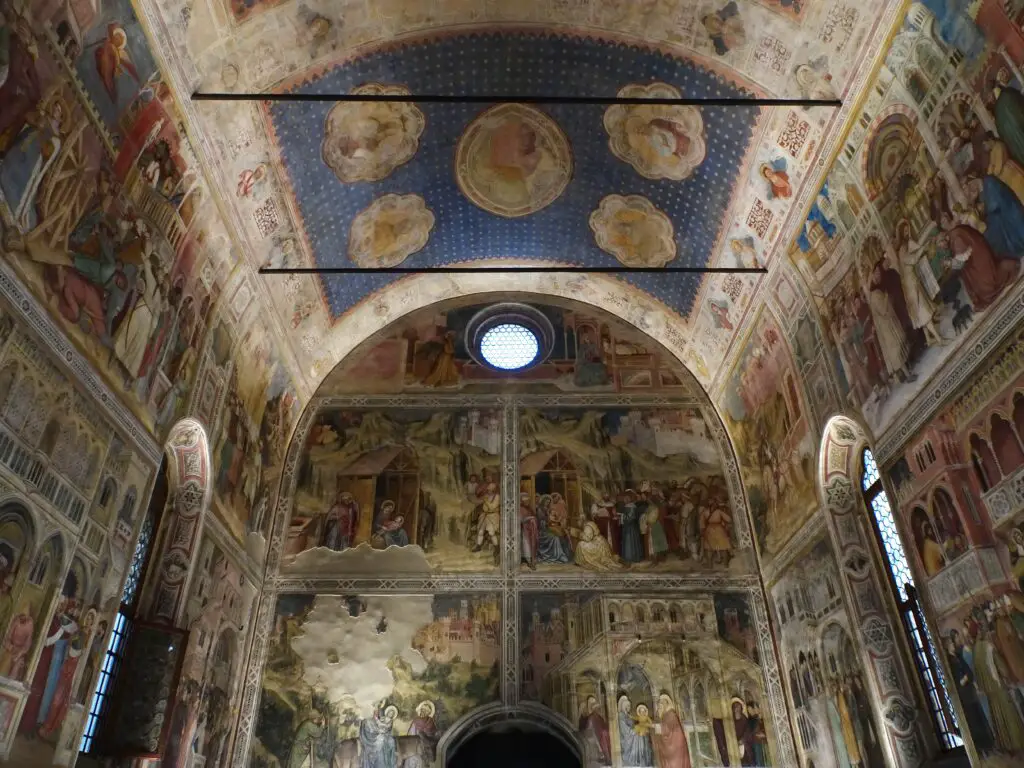
Once again, the entire room is very impressive, especially the crucifixion scene on the wall opposite the entrance. Apart from that, I also liked the starry night sky, which is painted on the pretty barrel vaulted ceiling.
Zone 4
Oratory of St. Michael
The Oratory of St. Michael sits slightly isolated from the other sites on the southwestern edge of the city centre and has a couple of frescoes by Jacopo da Verona.
We found some of them a bit unintentionally funny, including a disembodied hand that drops some liquid on the head of an annoyed-looking angel.
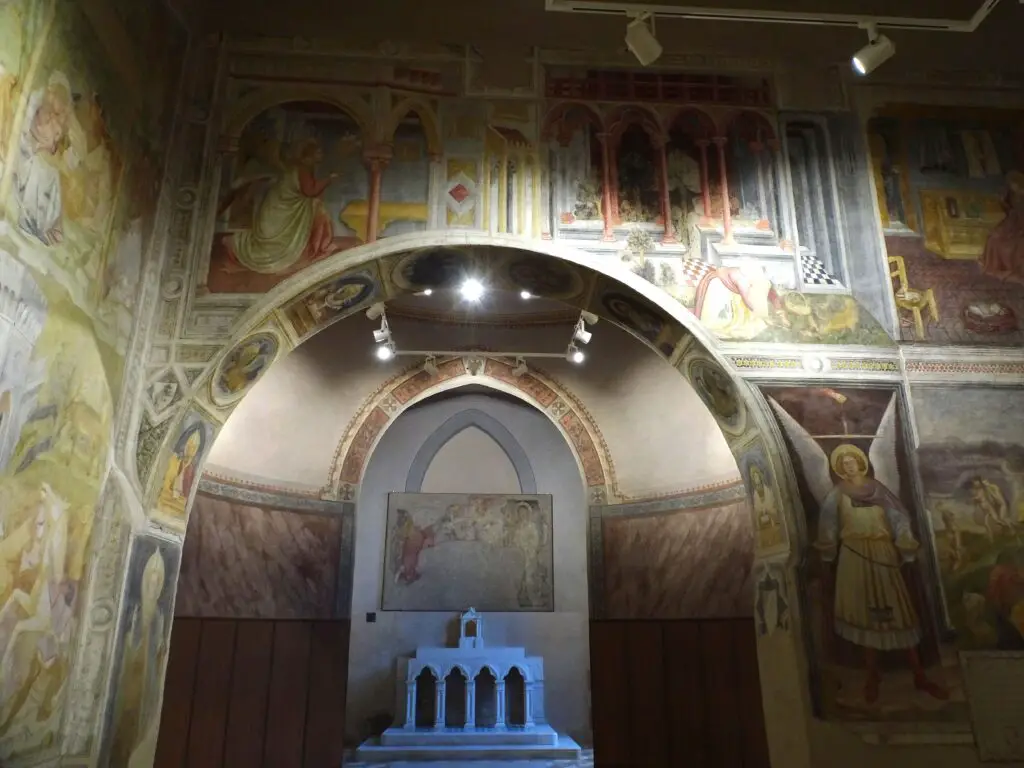
We also noticed that Mary was so startled by the annunciation that she seemingly dropped right out of her chair. Stuff like that is why I love religious art. If you want to visit this site, you’ll need to do a bit of pre-planning, as it’s only open for three hours per day. You can check the current opening times here.
Map of the Fresco Cycles
You can find all of the sites inscribed in the World Heritage Property on this map of Padua.
Which Are the Must-See Fresco Cycles?
If you’re short on time or money or simply not a hardcore art fan, you might not want to check out all of the frescoes. I’d say definitely visit the Scrovegni Chapel and the Cathedral Baptistery, which to me had the most impressive frescoes.
Stefanie also really liked the ones in the Palazzo della Ragione. Otherwise, I’d say just have a look at the pictures above and find your own favourite.
Practicalities
What Are the Opening Times?
The opening times of the different sites are all vastly different. About half of the sites are closed on Monday but the main attractions (i.e. the Scrovegni Chapel, Cathedral Baptistery and Basilica of St. Anthony) are open every day, albeit with differing times.
You can check the current opening times for all of them on this website.
How Much is the Entrance Fee?
All of the sites have different entrance fees, of which the Scrovegni Chapel is the most expensive at 15€. The Basilica of St. Anthony, Eremitani Church, and Chapel of the Carraresi Palace are free to visit.
We bought the Urbs Picta Card, which is a great deal if you want to visit a few more of the sites. It includes all of the sites I described above, plus use of the public transport for either 48 hours (28€) or 72 hours (35€).
The entrance to Padua’s City Museum (Museo Civici) and the Museum of Applied Arts in the Palazzo Zuckermann is also included.
We bought our card at the tourist information near the Café Pedrocchi, but you can also get it at the Museo Civici, where the Scrovegni Chapel is located or online on this site.
How to Get to Padua
You can easily reach Padua by train from lots of places in the Veneto Region, including Venice (about 30 minutes), Verona (about 1 hour) or Vicenza (about 30 minutes). Padua’s main station is located slightly north of the city centre across the Piovego Canal.
Where to Stay in Padua
There are lots of places to stay in Padua, but the cheaper options tend to be a little out of the centre. We stayed at Albergo Junior, which is a few minutes’ walk north of the train station. It’s a cosy and very affordable bed and breakfast that’s run by a friendly elderly couple.
The city centre is full of midrange options with great ratings, like Scrovegni Rooms and Breakfast or Residence Eremitani, which are right next to the Scrovegni Chapel. Palazzo Mantua is one of the best-rated luxury options. You can have a look at the map below for more options.
What Else to Do in Padua
Exploring Padua Botanical Garden, the Oldest Botanical Garden in the World
The Ultimate One-Day Itinerary for Padua