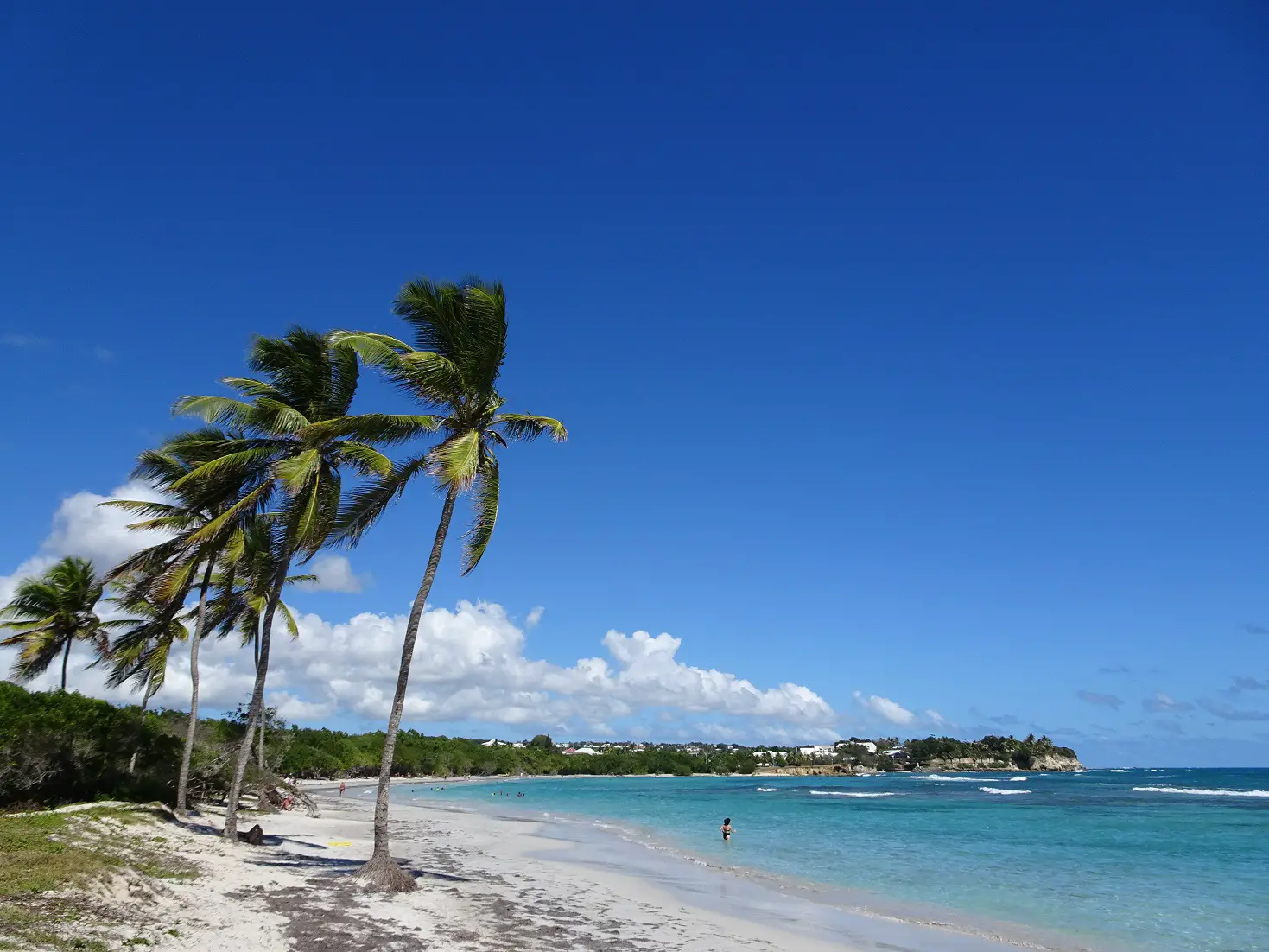
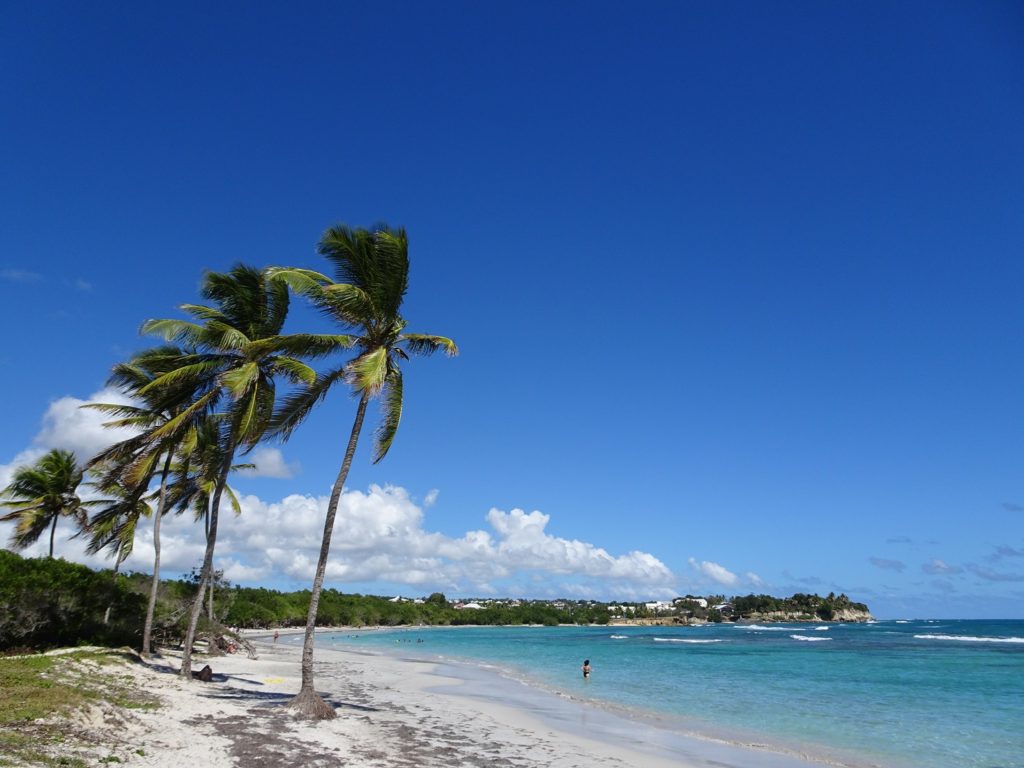
Guadeloupe really ticked all the boxes of what we expected of a tropical dream island, with its sprawling white sand beaches full of coconut palms, tall waterfalls, and great hiking trails in the interior. That said, we found that the island consists of two very different parts.
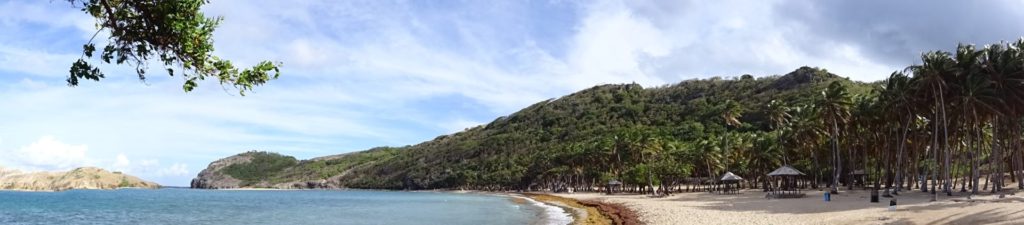
Grand-Terre, the eastern part, is flatter, more urbanized and has mainly cultural attractions, as well as several beach resort towns along its southern coast. For us, it felt like a tropical version of France, which was certainly cool, but we definitely preferred the other part of the island.
Basse-Terre, the western half of the island, is wilder, much more mountainous and an amazing area to go hiking. Apart from that, the outlying islands like La Désirade and the group of the Îles des Saintes are awesome destinations off the “mainland” and well-worth checking out in their own right.
Guadeloupe isn’t your standard backpacker destination, but we found there are several ways to cut costs with a bit of pre-planning. Read on for my personal tips on how to travel Guadeloupe on the cheap.

This post may contain affiliate links, and I might earn a small commission at no additional cost to you. For more info, click here.
General Travel Info for Guadeloupe
Is Guadeloupe a Country?
Nope, Guadeloupe is a French overseas department (départements et régions d’outre-mer). As such, it’s politically part of France (and the EU), although as a Départment, the island has its own parliament, which is based in the capital of Basse-Terre. Plus, of course, it has its very own unique culture and history.
Do You Need a Visa?
While Guadeloupe is part of the European Union, it’s not a member of the Schengen Area, so a visa for Guadeloupe and France is not the same thing. Whether you need one depends on your nationality. You can find out more here.
When to Visit Guadeloupe
As you would expect from a Caribbean island, temperatures are warm year-round and the biggest difference in weather would be between the dry and rainy season. The latter runs from July to December, and this is also when prices for hotels tend to be a little lower, but it’s also the main season for tropical storms (which peak in August and September).
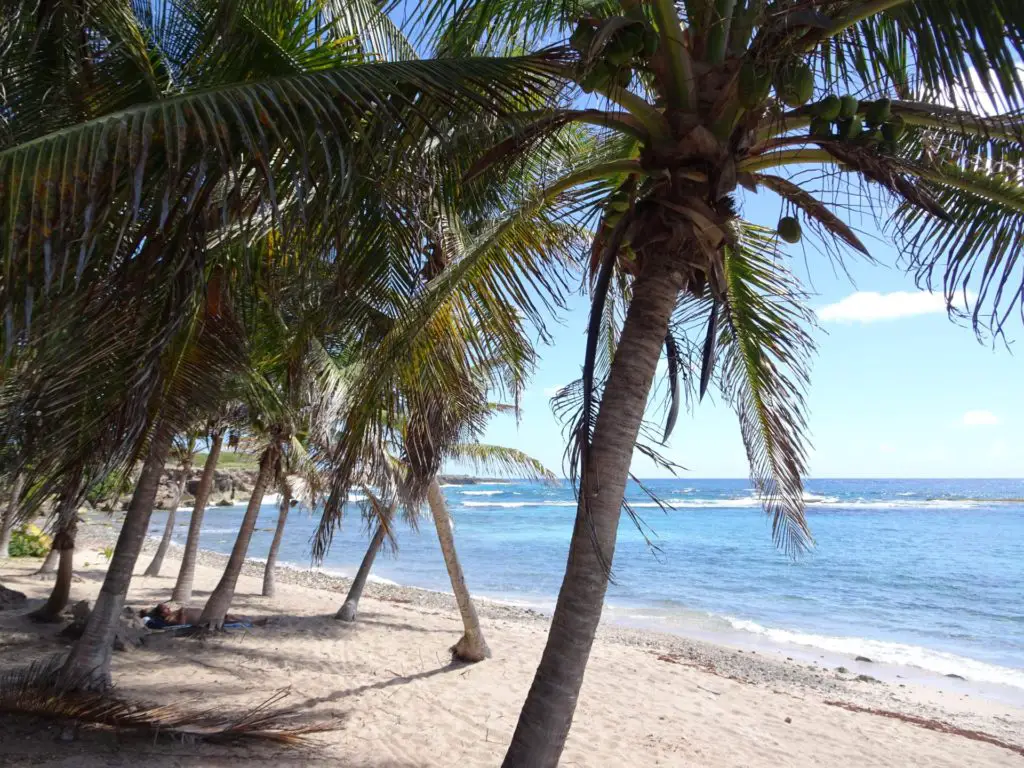
If you’re looking for lots of sunshine and nice weather, you should come in the driest months between January and March. We visited in February and had only warm and mostly sunny days.
How Long to Stay
As often, this really depends on what you want to get out of your visit. In a week we were able to explore a good chunk of the main island with side-trips to the Îles des Saintes and La Désirade. If you want to add a few days at a beach resort, 10 days would probably be ideal.
If you only have time for a short visit to Guadeloupe (like if you’re doing island-hopping, for instance), I’d say that you can do the absolute highlights in three days, although I always prefer traveling a little slower.
How to Get to Guadeloupe
By Plane
The main airport to the north of Pointe-à-Pitre can be reached non-stop from several North American airports (New York JFK, Miami, Montreal) as well as from Europe. We flew in from Paris Orly, but Brussels Airport has regular connections, as do some other, mostly French, cities.
By Boat
If you’re island-hopping the Lesser Antilles, taking the boat is often cheaper and in my opinion more atmospheric. A fantastic destination to combine with a trip to Guadeloupe would be beautiful Dominica directly to the south, which is my favourite island that I’ve visited in the Caribbean. You can get there in about 2½ hours by boat from Pointe-à-Pitre.
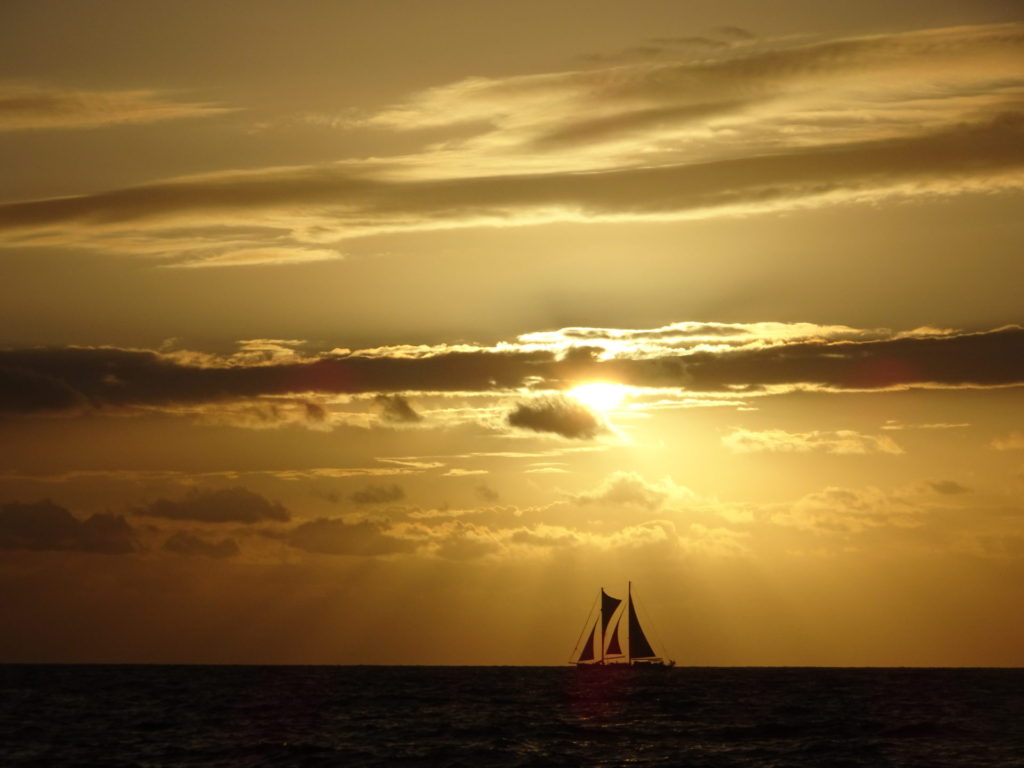
You can also continue south to Martinique with the same ferry. You can check out my guide with all the relevant information here.
How to Get Around
We explored the island by bus (and occasionally by hitch-hiking), and if you’ve got some flexibility, it’s definitely doable.
That said, we found that Guadeloupe is a place where your own set of wheels really comes in handy, as a lot of attractions are somewhat out of the way and the bus service can be a bit infrequent. If you want to rent a car, you can search for the best current offer in the box below.
Backpacking Advice for Guadeloupe
Alright, here’s the thing: The Lesser Antilles are not exactly the ideal choice if you’re on a super tight budget, but that doesn’t mean that there aren’t ways to save some bucks if you do it right.
I already mentioned two ways to cut costs above: to use ferries instead of planes when you’re traveling from or to Dominica or Martinique and to use Guadeloupe’s public bus system to get around.
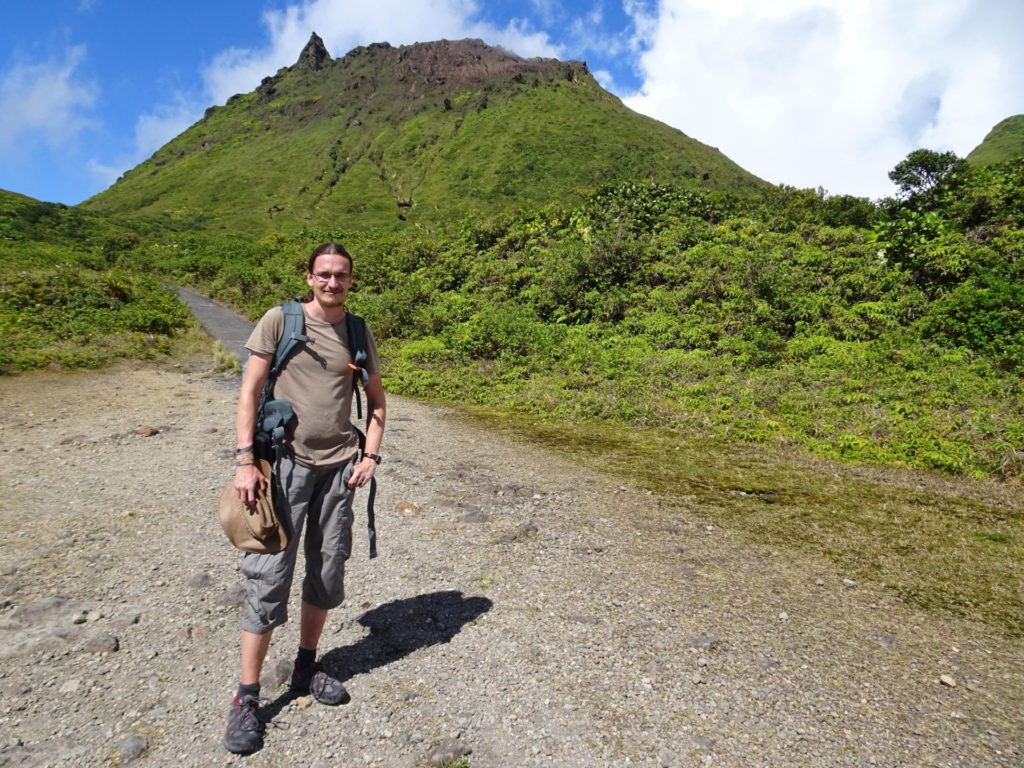
Another is to focus your sightseeing a bit more on natural attractions, which you can often visit for free. The most impressive of these would be the hike to the top of La Soufrière Volcano, the highest point on the Lesser Antilles.
Budget Accommodation
There are many places to stay on Guadeloupe, but a lot of these are either resort hotels or upscale holiday homes, as the island mostly seems to cater to tourists who are looking for more of a relaxing beach holiday.
Your best bet for budget accommodation are private rooms (often with bathrooms that you share with the owners), which can often be found on AirBNB, Booking.com or both. In many cases, a few are also listed on the tourism websites of the different towns and villages on the island.
If you’re traveling during the high season from January to March, it’s probably a good idea to book at least a few days ahead.
We occasionally just showed up at a place (as we tend to do) and lucked out, but people were always somewhat incredulous that we hadn’t made a reservation before, so if you want to make sure, make a booking or at least call ahead. You can browse for places to stay in the map below
Cheap Food
Another thing that isn’t exactly cheap on the island is food, so if you have to watch your budget, my advice is to only ever eat out during lunch, when a lot of restaurants have cheaper set menus. This is a great deal, especially when it comes to fish and seafood. In the evening prices rise, and you’d be better off self-catering or sticking to fast-food.
In many towns, there are small food trucks that sell sandwiches, burgers and the like. These are usually concentrated around the main square (for example, in Pointe-à-Pitre that would be Place de la Victoire). A lot of the more popular beaches also have a couple of snack stalls, like Grande-Anse in Deshaies.
Apart from that, you can find some cheaper bistros in the bigger towns, like Basse-Terre or Pointe-à-Pitre, serving pizzas, kebab, etc. Not exactly the quintessential Caribbean food, but great if you’re ona budget.
Our Daily Guadeloupe Backpacking Budget
By sticking to public transport, mainly checking out free natural attractions, eating out only during lunch and staying at privately rented rooms, we managed to get by on about 40 to 50€ per day.
If you rent a car, always dine out and stay at upscale hotels or resorts, you can easily pay upwards of 200€ a day.
Some Short Facts About Guadeloupe
- Population: approx. 385,000
- Capital: Basse-Terre
- Official Language: French and Creole (not many people speak English)
- Size: approx. 1,600 km² (630 sq mi.)
- Currency: Euro (€)
- Electrical Sockets: Type C and E