
If Guadeloupe itself is not enough of a tropical island paradise for you, I highly recommend you get yourself to the small Îles des Saintes archipelago off Basse-Terre’s southern coast.
The Saints’ Islands, which are named after the fact that Columbus ‘discovered’ them on All Saints’ Day, have some of my favourite beaches in the region, a cute village capital with a welcoming vibe and a couple of interesting historical sights.
As they had a useful strategic location, French and English colonial forces constantly clashed over the possession of the islands, culminating in the 1782 Battle of the Saintes. I guess that also explains why we came across so many ruined batteries and fortifications on Terre de Haut.
We found the Îles des Saintes to be the perfect place for a bit of relaxation and laid-back exploration at the end of our trip to Guadeloupe. Here’s everything you need to know about visiting the archipelago.

This post may contain affiliate links, and I might earn a small commission at no additional cost to you. For more info, click here.
What to See and Do on the Îles des Saintes
There are two main islands: the more developed Terre-de-Haut in the east and the less-visited Terre-de-Bas in the west of the archipelago. You can catch a ferry to both of them from Guadeloupe’s main island, although connections to Terre-de-Haut are much more frequent.
There’s also a boat service connecting the two islands. The tiny Ilet à Cabrit lies in the bay north of Terre-de-Haut, but you’d need to hire a boat to get there.
In the one and a half days we had on the Saintes, we stuck to Terre-de-Haut, the main island of the archipelago. Originally, we were planning on also exploring Terre-de-Bas, the other big island in the group, but the couple running our guesthouse advised us against it, as they thought it would betoo much otherwise.
They were absolutely right, as we needed both days to explore everything on Terre-de-Haut. Therefore, I’d recommend visiting Terre-de-Bas or Ilet à Cabrit only if you have two full days or more on Les Saintes, so you won’t have to rush around too much.
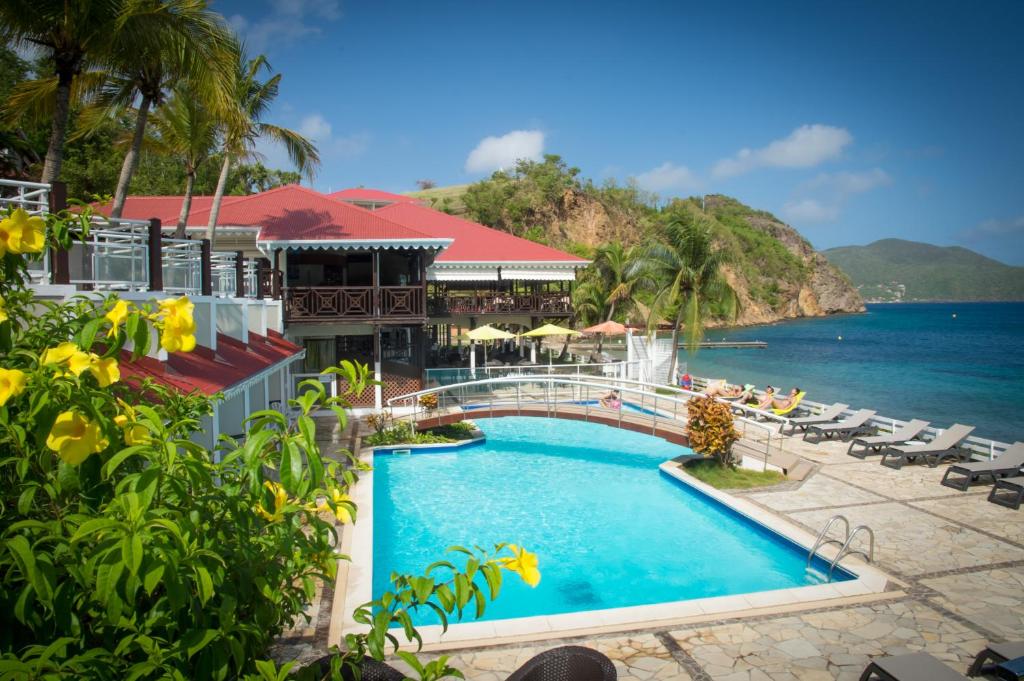
Îles des Saintes Hotel Tips
Budget: Les hamacs aux Saintes or Chez Brigitte et Pierrot (Tel. +590 995297)
Midrange: Le Marjulem
Luxury: Hôtel Bois Joli (pictured)
.
Le Bourg, the Small Main Village
The cute island capital Le Bourg was our entry point to Terre-de-Haut, as this is where the ferries from Trois-Rivières or Pointe-à-Pitre land. It’s a pretty little village full of tiny alleyways and small houses with cute little gardens.
We saw the biggest concentration of historical buildings in the quarter Le Mouillage near the harbour. We especially liked the quaint Town Hall (Mairie) at Place Hazier-du-Bousson, which is surrounded by pretty Flame Trees.
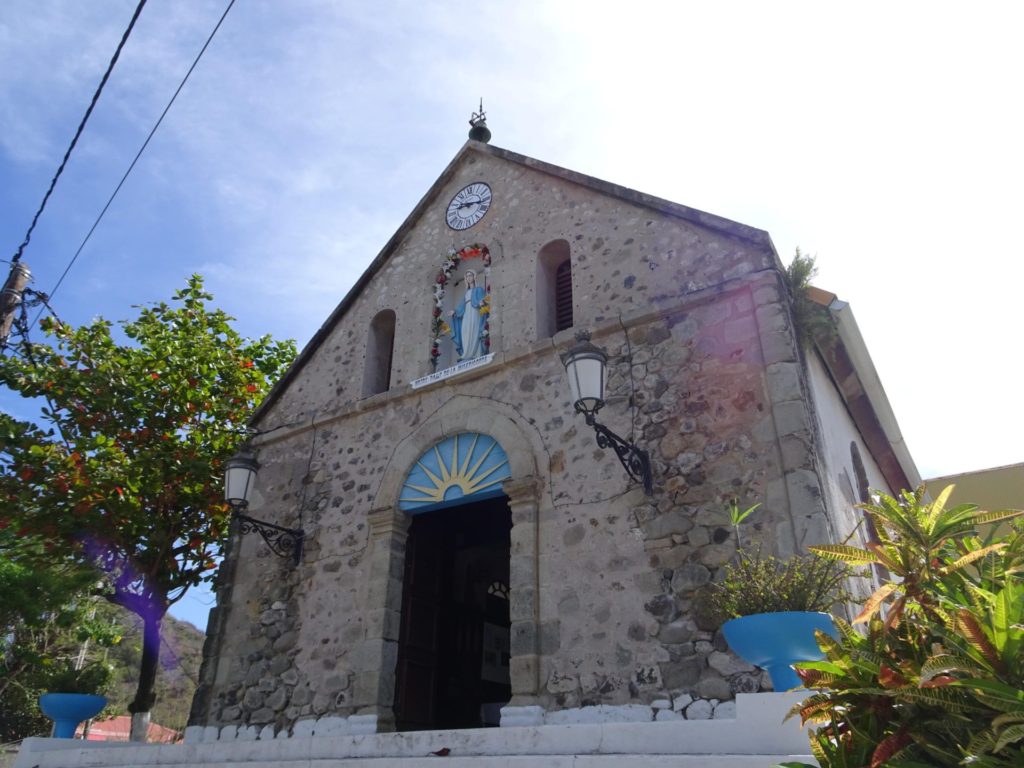
We also found the small Church of Notre-Dame de l’Assomption, slightly north of the square, to be worth a peek, especially for its unusual statue of the Virgin Mary with Baby Jesus, which is framed by the hull of an old fishing boat.
If you follow the coast west to the end of the village, you’ll come across the remains of a 19th-century fortification called Batterie de la Tête Rouge. Just walk in the direction of the red-and white painted radio tower to find it.
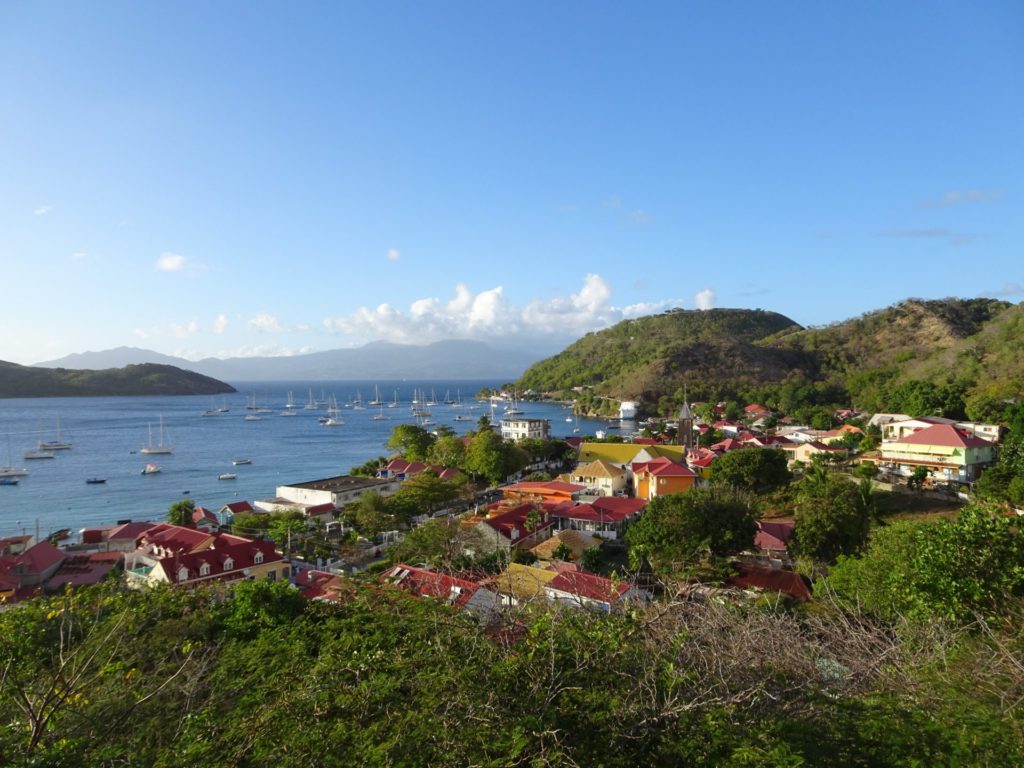
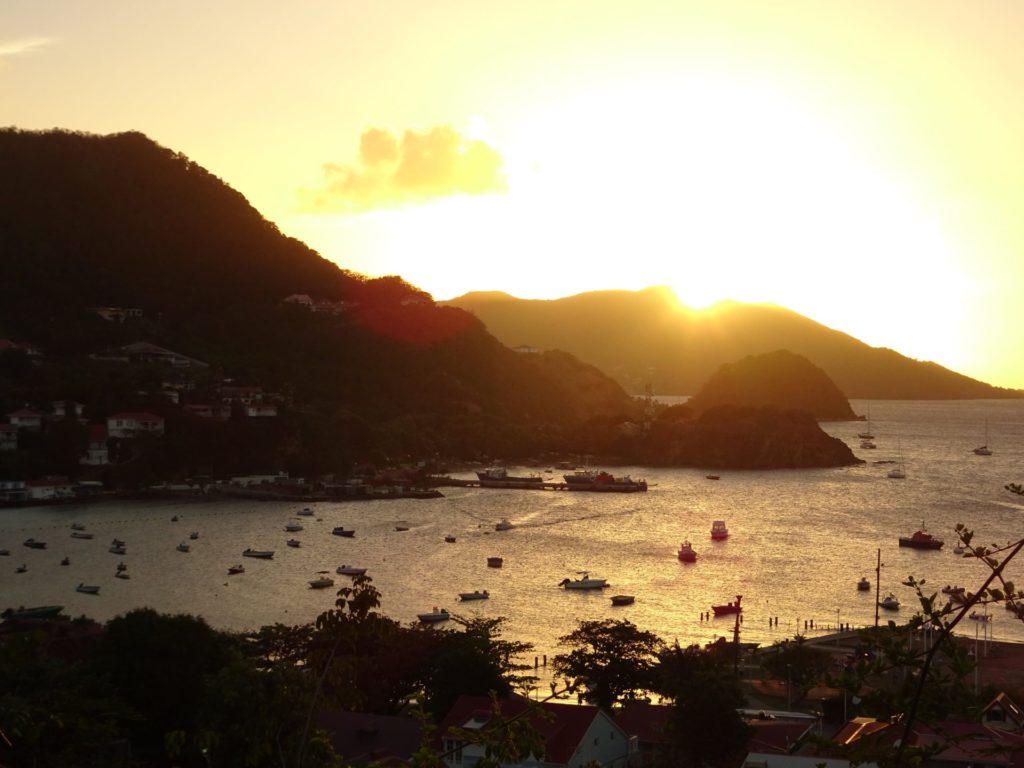
If you turn south-east at the Place Hazier-du-Bousson and follow the road to the southern coast, you’ll come across a set of stairs that wind their way up to a small viewpoint with a crucifix, called La Calvaire. There are some nice views of the village and bay, plus we found it a great place to watch the sunset.
There’s also the Chapelle des Marins, a small blue altar with a statue of the Virgin Mary, which is dedicated to sailors lost at sea.
It you return to the main road and walk a little further south-east, you’ll come across Cimetière Marin, the sailors cemetery, which has a nice location close to the sea.
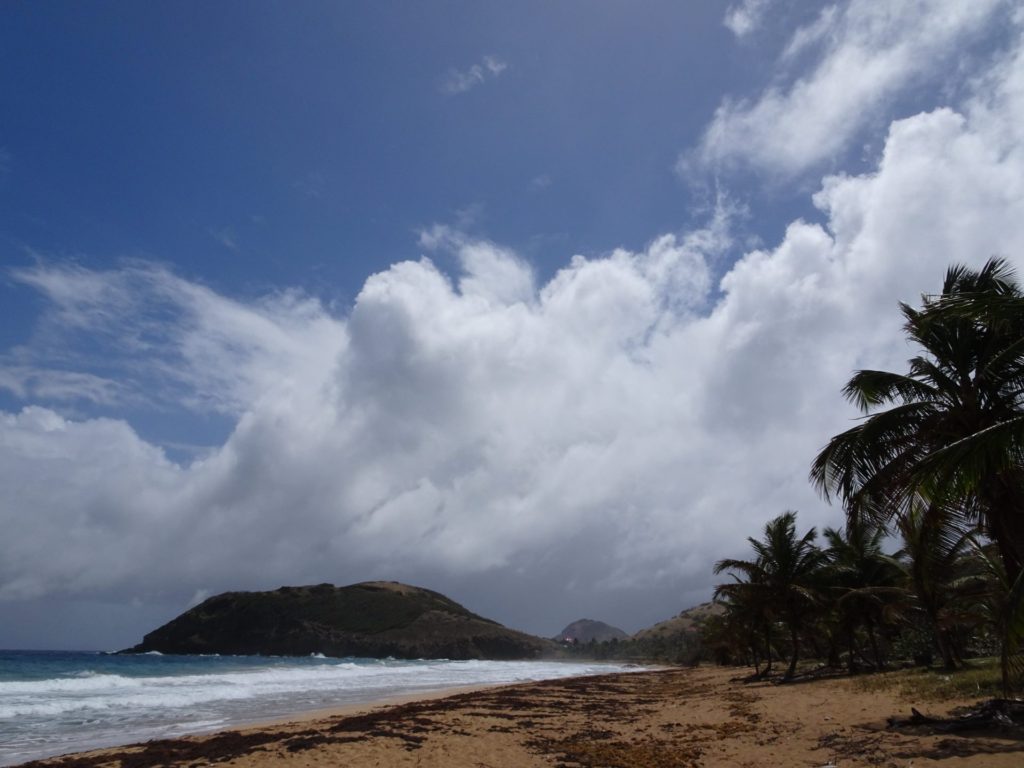
A bit further on lies the island’s tiny airstrip, which is located near the wild Grande-Anse Beach. The latter is a cool place to relax for a bit, but there are heavy undertows, so don’t get into the water here.
Fort Napoléon des Saintes
Despite what we first thought, the historic Fort Napoléon wasn’t built by the orders of the famous Corse with his height-induced inferiority complex, but in the mid-19th century by his descendant Napoleon III on the ruins of an older 18th century fort.
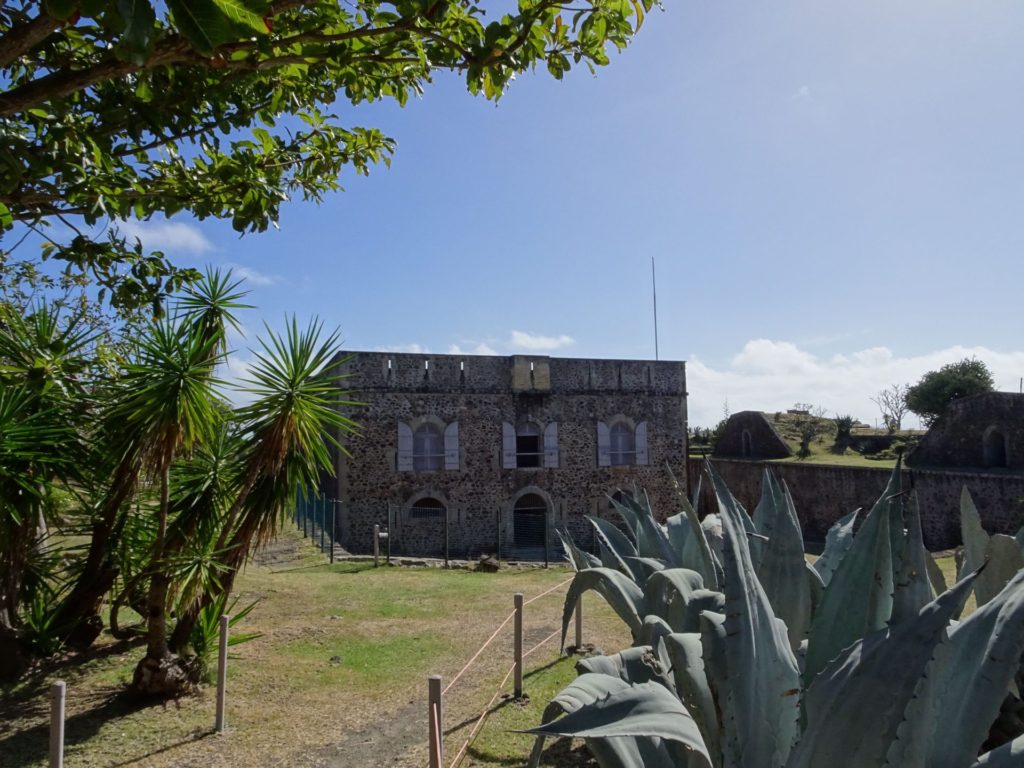
Inside there are some exhibitions that explain the construction and use of the fort itself and a small museum where we learned a little bit more about the history of the island (Spoiler Alert: lots of fishing going on).
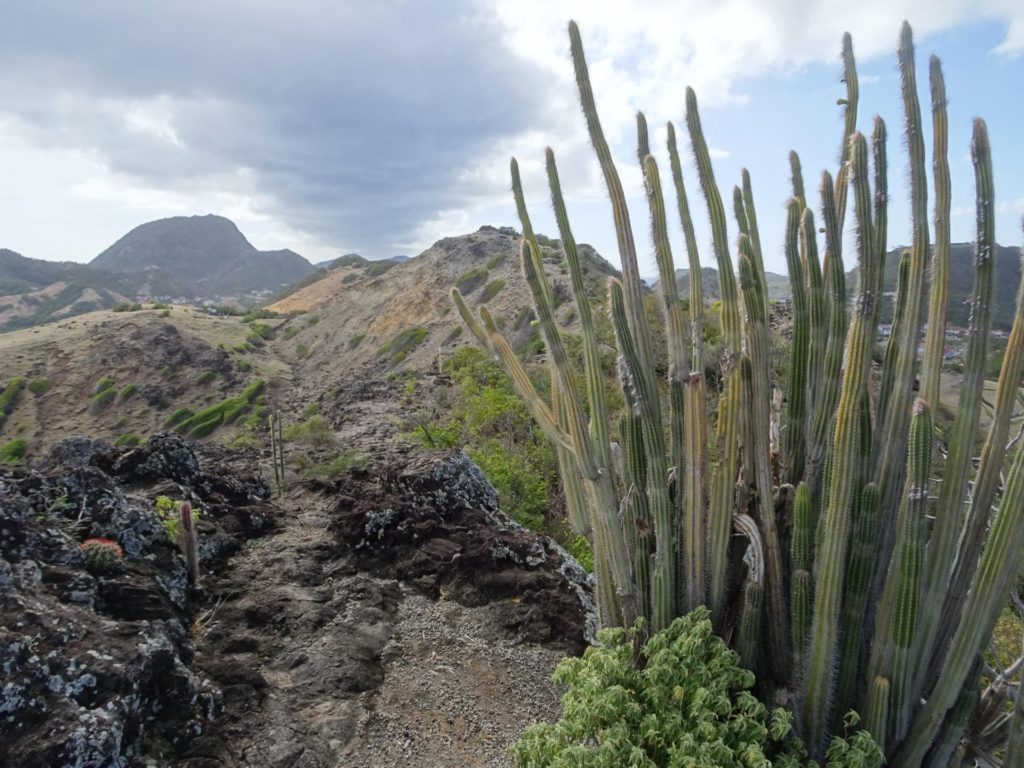
The little garden is also quite nice and has some giant, impressive cacti. The fort sits on the hill at the northern end of the big bay near Le Bourg. We paid 7€ and you can check the current opening times here.
Plage de la Pompierre
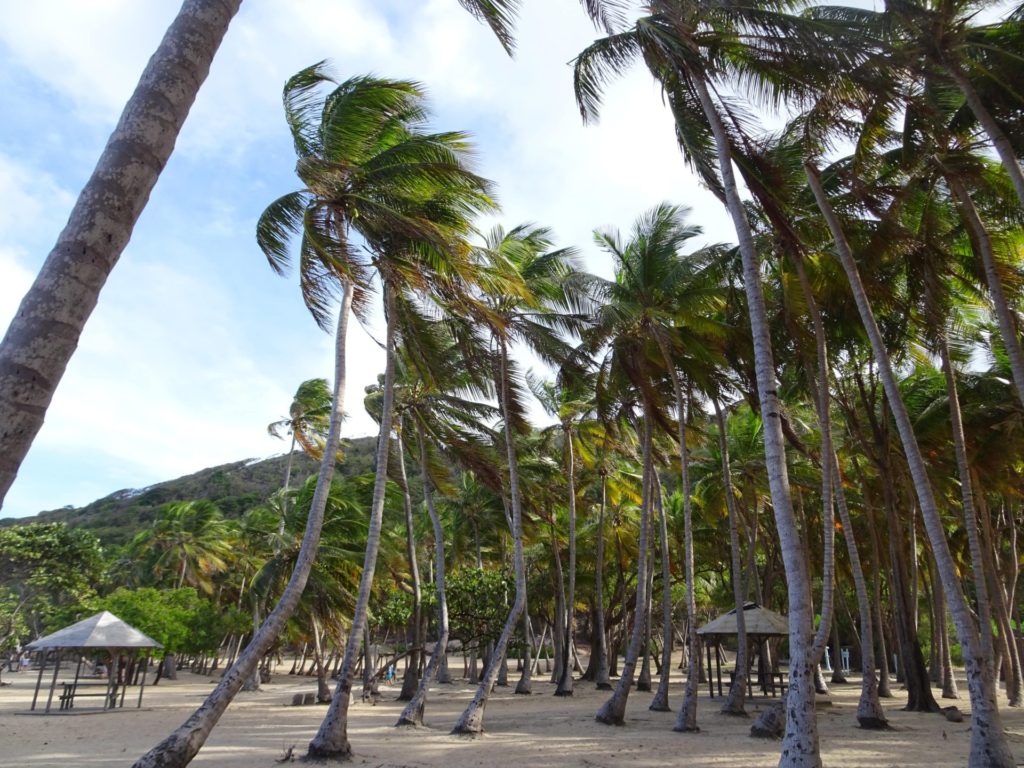
For us, this long stretch of white sand dotted by lots of coconut palms was by far the most beautiful beach on Terre-de-Haut and also the prettiest one that we had come across on Guadeloupe in general.
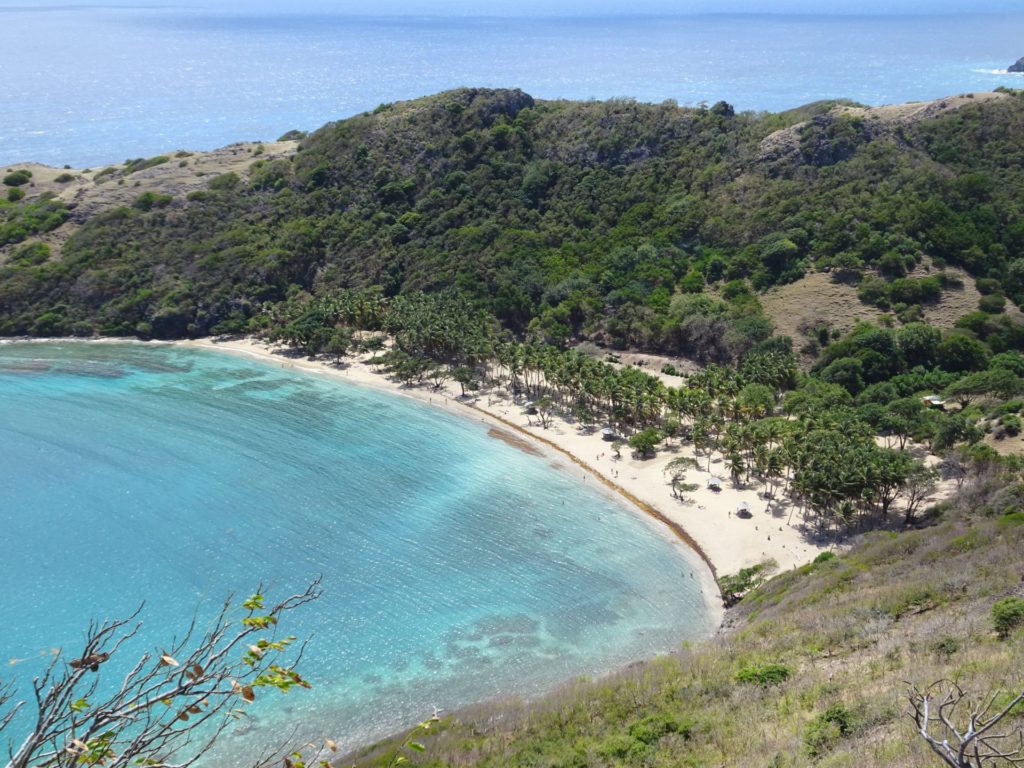
That said, you definitely have to come early or late if you want to avoid the crowds. We were here at around 5pm and it was alright, as the day-trippers had already left.
Apart from lazing at the beach, you can also hike into the hills at both ends of the bay to get some nice views of the beach from above. In my opinion, the best view is from Morne Morel, the hill to the north-west, which also has the ruins of Batterie Caroline, another small battery.
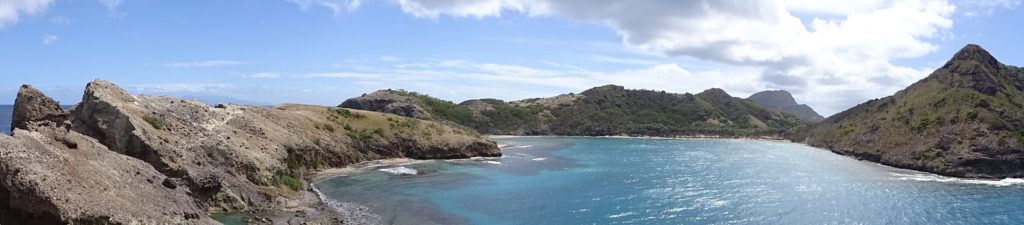
If you’re looking for something more adventurous, it’s actually possible to walk to Roches Percées, the small islet that you can see across the bay. You’ll have to carry your backpack or any other stuff that you’re lugging around over your head and finding the part of the water that is shallow enough is a bit trial and error but we found it fun nonetheless and once we were there, we had the islet all to ourselves.
Hiking Le Chameau Hill
The highest hill on Terre-de-Haut is Le Chameau, in the western part of the island and of course, there’s a hiking trail to the top. I’d recommend hiking up the eastern slope, and down the western slope, where you can continue straight to Plage de l’Anse Crawen for a swim.
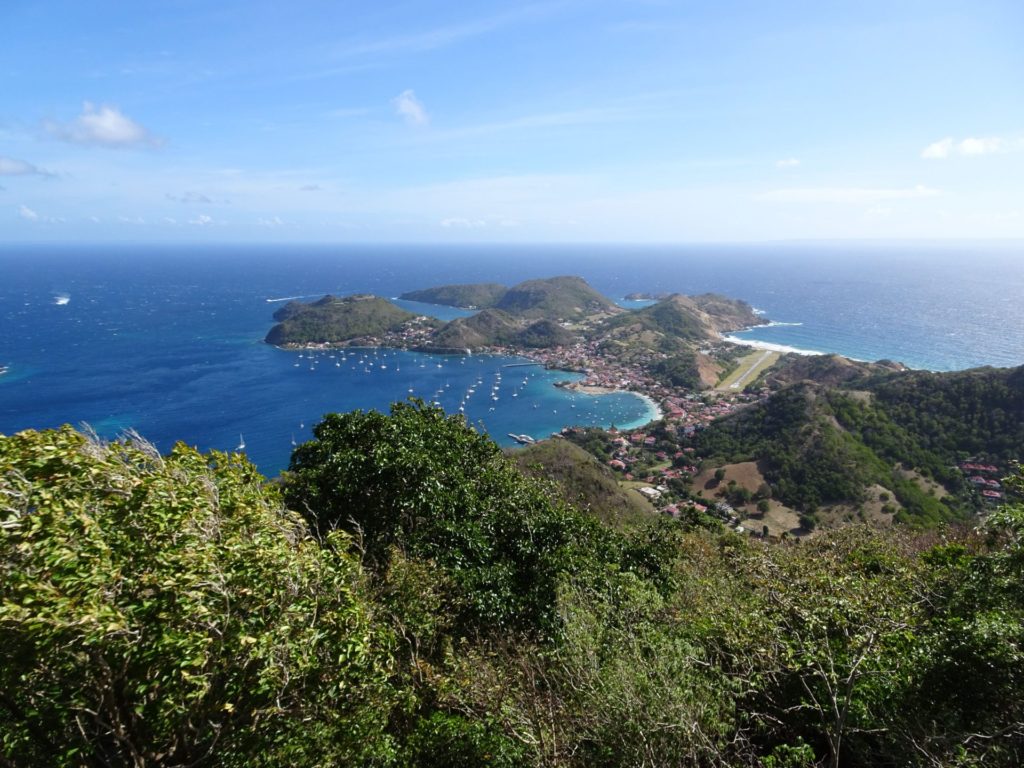
That way, you’ll get the best views east during the first part of the hike up, as there aren’t a lot of trees (or shade, so start early and definitely bring some sunscreen).
Both the western slope and the top of the hill are covered in trees, so you won’t have much of a view from there. At the summit, there’s the ruin of a small watchtower, which apparently used to have a ladder to the upper floor, but today you’d need some serious climbing skills to get up there and have a look over the treetops. Hiking up and down Le Chameau took us about two hours.
Plage de Pain de Sucre and Plage de l’Anse Crawen
Plage de Pain de Sucre is a small beach on the northern coast of Terre-de-Haut a kilometre or so west of Le Bourg (past the ruins of Batterie de la Tête Rouge). It was full of people when we were there, but the impressive rock formation Pain de Sucre north of the bay is worth checking out, even if the comparison to its namesake in Rio might be a bit of a stretch.
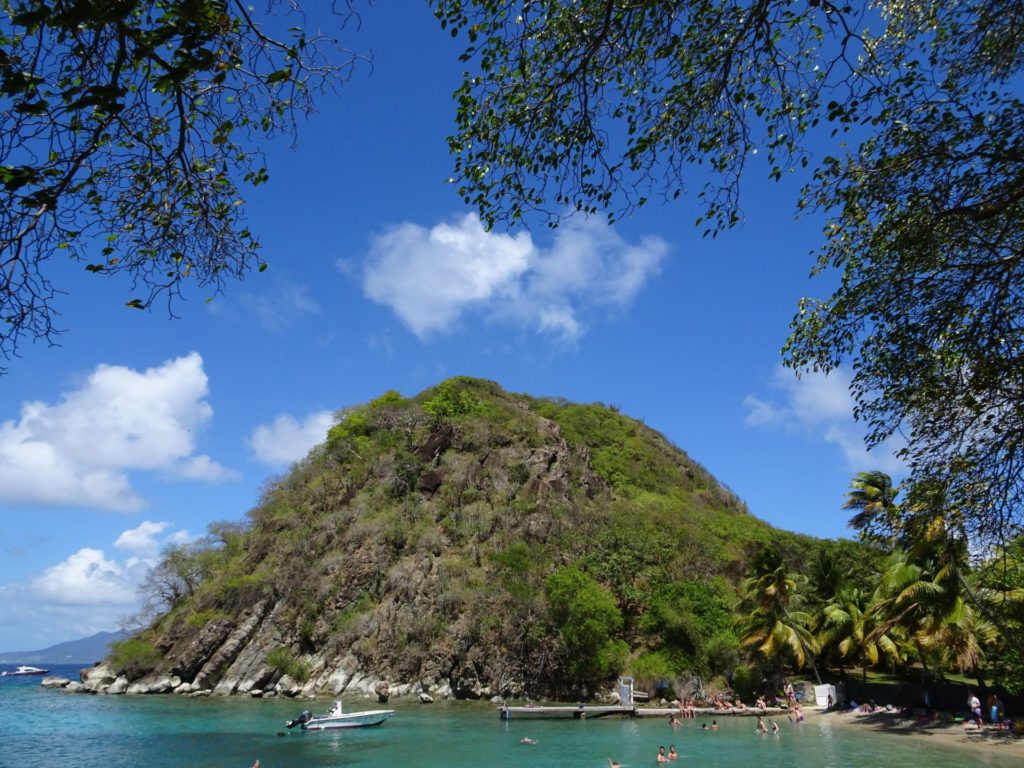
If you’re like us and prefer your beaches a little less crowded, you could check out Plage de l’Anse Crawen, which is a bit further west on the southern coast of the island. It might not be quite as pretty as its neighbour but we certainly found it to be more laid-back and there was hardly anyone else around.
Map of Terre-de-Haut
This map shows the locations of all the main sights and beaches that I mentioned above.
Practicalities
How to Get to the Îles des Saintes
There are two options to reach the Îles des Saintes by boat. The shorter, cheaper, and more frequent connection starts from the village of Trois-Rivières on the southern coast of Basse-Terre, the western half of the island, which you can reach from Pointe-à-Pitre’s Bergevin Bus Station.
The ferry return trip from Trois-Rivières to Le Bourg on Terre-de-Haut costs 25€ and takes about half an hour. You can check the current schedule here. The boat is rather small, and the trip was a bit rough, when we did it, so if you’re prone to seasickness, take some medication in advance.
On some days, the company L’express des Îles has a service from Pointe-à-Pitre to Terre-de-Haut, which takes about an hour and costs 40€ return. You can check the current schedule here.
If you’re in a serious hurry (or seriously prone to sea-sickness), Air Caraibes flies down to Terre-de-Haut from Pointe-à-Pitre or Basse-Terre on weekends in about 20 minutes. You can call them at +590 851501 to ask about the schedule and to make reservations, but it goes without saying that it will be much more pricey than the ferry.
How to Get Around
Terre-de-Haut is small enough to get around on foot, which is exactly what we did. We also saw a few places in Le Bourg renting bicycles and scooters, but the interior of the island is quite hilly, so I think walking is still the best option.
Where to Stay on the Îles des Saintes
We stayed in the small Guesthouse Chez Brigitte et Pierrot in Le Bourg, close to the city hall, where you can get rooms with a shared bathroom for about 35€. It’s basic, but clean and beautifully located, plus the couple running the place is super friendly and helpful. You can call them to make reservations (it’s easier if you speak a little French – Tel. +590 995297).
Another well-rated budget option would be Chez Caroline et Richard a little further to the west near the beautiful Plage de Pain de Sucre. There are lots of other options, most of them in the mid-range price sector. Check out the map below for more places to stay.
Where to Eat
As we assumed beforehand, fish and seafood abound on the island, and there are quite a few restaurants along the bay serving the catch of the day.
If you’re on a budget, I recommend going during lunchtime, when the prices are lower. We particularly liked Restaurant La Toumbana, which is located west of the Cimetière Marin.
If you have to save some money, there are a few places selling cheapish sandwiches near the church in Le Bourg. There’s also a small supermarket close to the church on the way to Plage de la Pompierre.
Something you should definitely try while you’re on the island are the tasty Tourments d’amour, which are small pastries filled with coconut cream that you can get in any bakery.