The Canary Archipelago’s second smallest island certainly packs a punch. Considering its size of only 270 square kilometers or 100 square miles, we were blown away by El Hierro’s varied landscapes and number of sights that really rival those on the bigger neighbouring islands.
We met a few people who visited El Hierro on a day trip from nearby Tenerife, La Palma or La Gomera, but in our opinion, you definitely have to stay a little longer to really get to know the island. Here’s my personal list of the must-see places on El Hierro.

This post may contain affiliate links, and I might earn a small commission at no additional cost to you. For more info, click here.
Guided Tours of El Hierro
If you don’t want to sort out your own transport or would just like to have the company of a local guide, there are a few sightseeing tours of El Hierro available. You can have a look at some options below.
15 Amazing Things to Do on El Hierro
Take a Walk Amid the Wind-Bent Juniper Trees at El Sabinar
The uniquely shaped Juniper trees on the windswept mountains at El Sabinar are one of the most famous symbols of El Hierro. Because they’ve been pounded by centuries of constantly blowing trade winds, the trees grow in all manners of weird, twisted shapes.
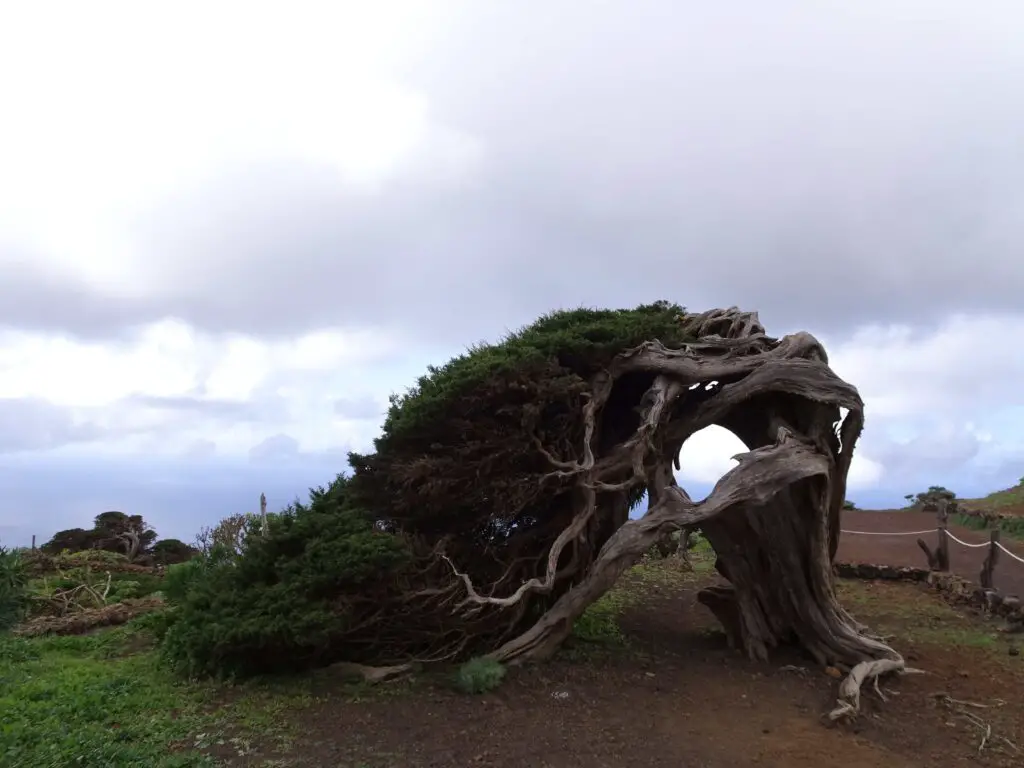
We really loved how unreal the trees looked. There’s a short circular walking trail that leads through the copse of trees and to the Mirador de Bascos, from where there are some awesome views of the northern El Golfo area.

El Hierro Hotel Tips
Budget: Hotel Boomerang
Midrange: Apartments at El Sitio
Luxury: Hotel Puntagrande (pictured)
.
Visit the Lighthouse at the End of the World
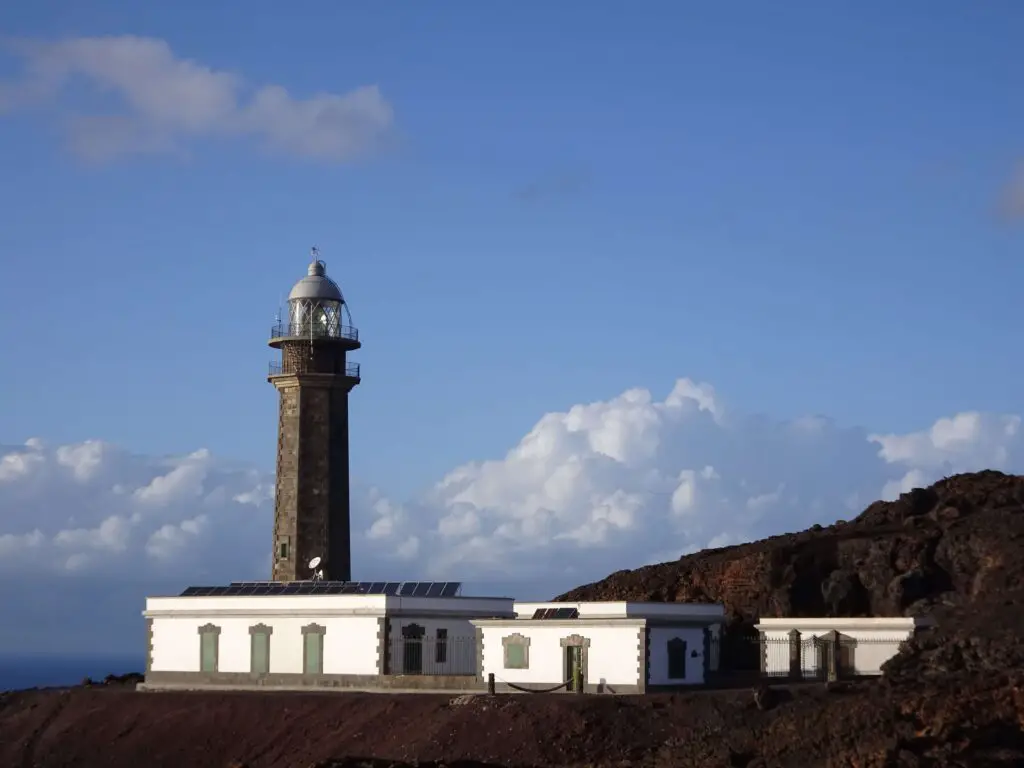
The Faro de Orchilla was considered the end of the known world by Europeans for a long time, and when we were standing on the nearby coastline, we could kind of imagine how they must have felt when they were staring out over the seemingly endless ocean.
Until 1883, the prime meridian used to run through this area at the southwestern tip of the island, and there’s a small meridian monument at the end of a nearby dirt road.
Our favourite spot here was the Cueva del Acantilado, which is a part of another huge lava tube. If you bring a torch, you can walk all the way to the end, where there’s a small viewpoint high above the crashing waves.
Hike the Magnificent Camino de la Virgen
At 28km or 17mi., this hiking trail runs once across almost the entire island. Every four years, people use this trail to carry the revered image of the Virgin Mary from the Ermita de la Virgen to the island capital of Valverde at the Bajada de la Virgen de los Reyes festivities.
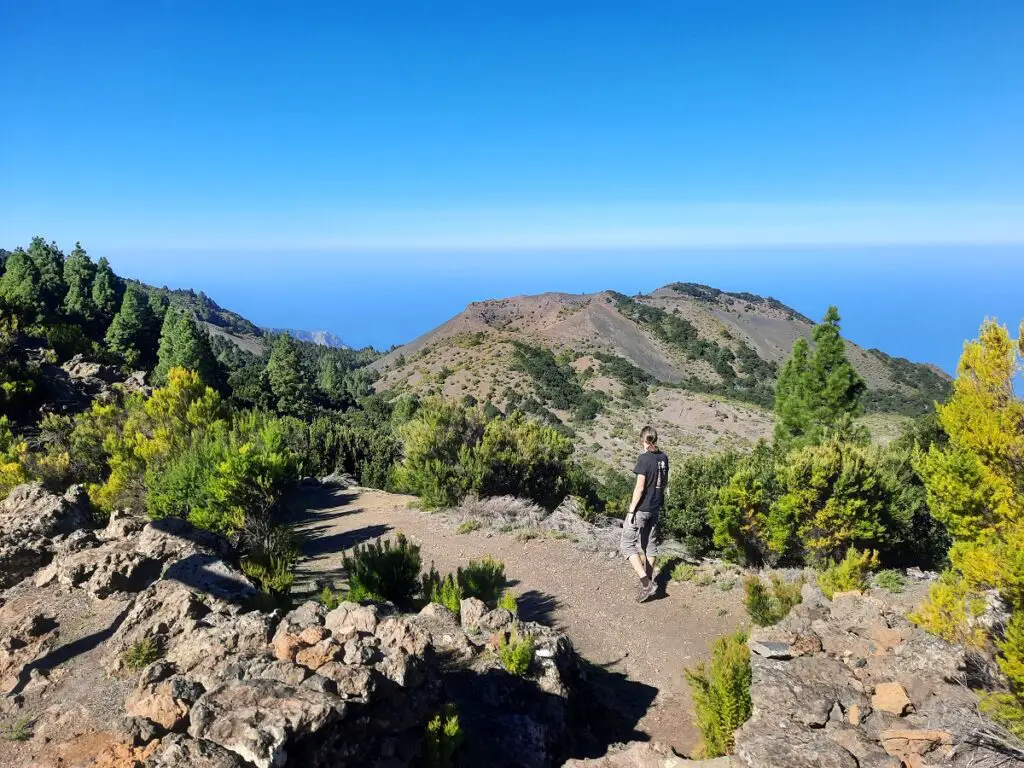
We came at a different time and had almost the entire trail completely to ourselves. Apart from that, we were blown away by the many different landscapes that we hiked through in just one day. If you just do one hike on the island, I highly recommend making it this one!
Check out César Manrique’s Unique Mirador de la Peña
Lanzarote’s favourite architect César Manrique also left traces on El Hierro. Like his other works, the Mirador de la Peña seems like the perfect blend of nature and architecture. In fact, it kind of looked to us as if it was growing naturally out of the rock of the cliff face.
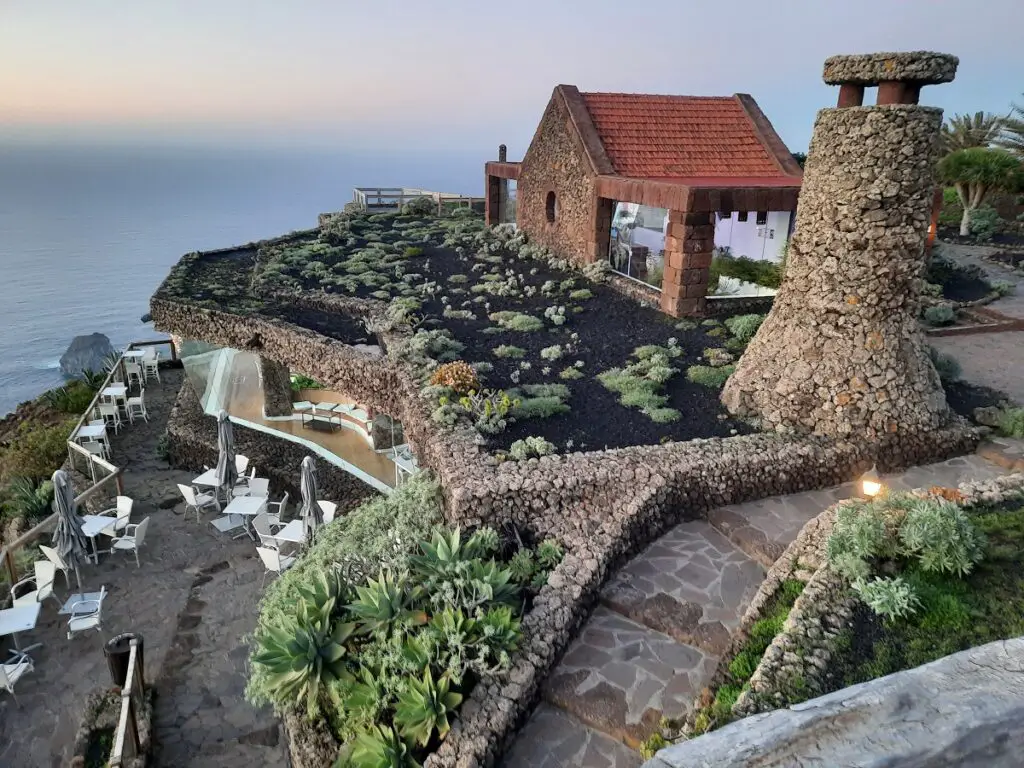
The view over the El Golfo Valley is amazing, too, and inside the fern-decorated halls of the viewpoint there’s a really good restaurant that serves local specialities like Cabrito frito (goat roasted in El Hierro style) or the famous El Hierro Cheesecake.
Take a Stroll Through the Magical Laurel Forests at La Llania
The mountains in the centre of the island are home to the incredibly atmospheric laurel forests of La Llania. Similar to the neighbouring islands the gnarled, moss-grown trees grow so densely that almost no daylight falls through the canopy.
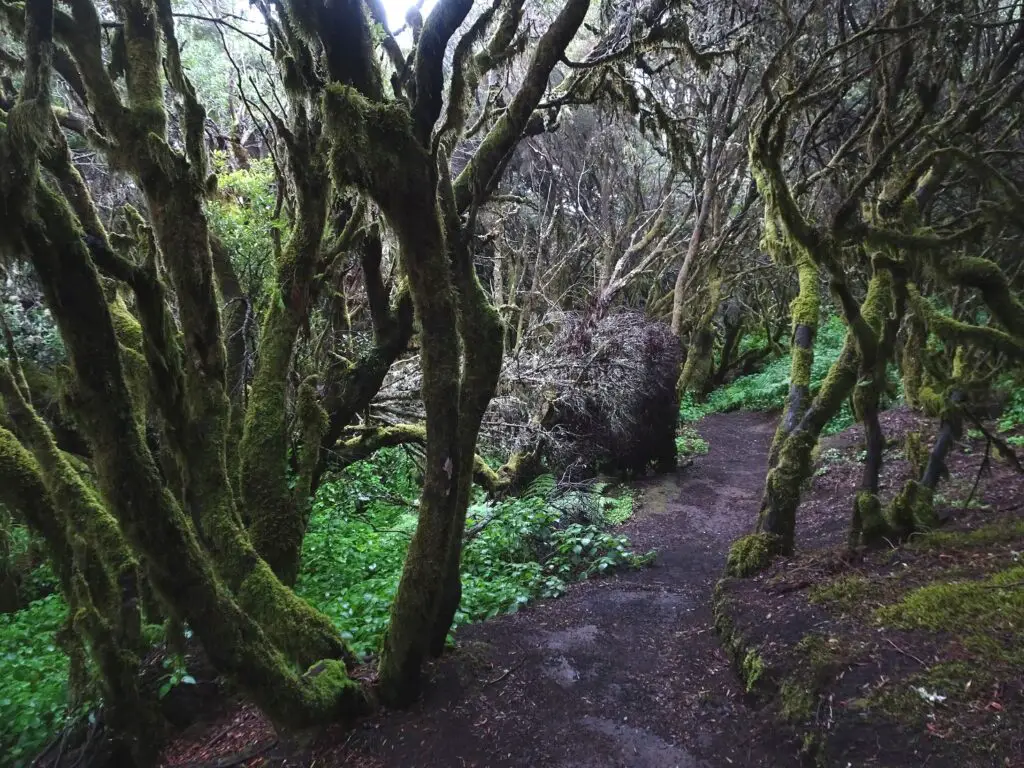
I think the forest wouldn’t be out of place in a (perhaps slightly creepy) fairy tale. There are three gentle circular walking trails that run through the trees. The nearby Mirador de la Llania viewpoint is also worth checking out while you’re in the area!
Meet the Endemic Giant Lizards at the Lagartario
Like most of the neighbouring islands, El Hierro has its own endemic subspecies of lagarto gigante (giant lizard). As they are very docile, many of them fell victim to feral cats that were introduced by the Spanish colonizers, and until the 1980s, people actually thought that they were extinct.
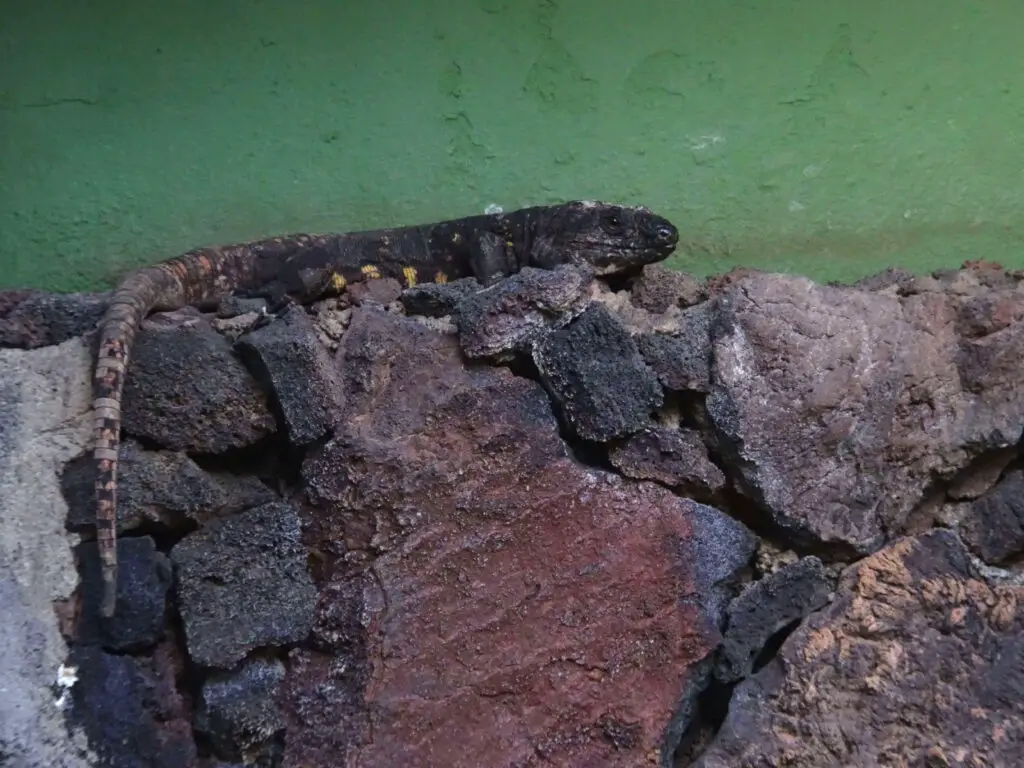
Ever since their rediscovery, the lagartario monitors their development and controls their breeding before reintroducing them into the wild. You can get a look at the lizards in their enclosures by taking an interesting guided tour of the treatment facility.
The lagartario is part of the Ecomuseo de Guinea, which also includes an open-air museum and a huge lava tube that you can explore parts of.
The entire museum complex is open daily from 10am to 6pm (double-check the current times here). The separate entrance fee is 9.50€, but it’s also included in the El Hierro Tourist Pass (see below).
Admire the View from Las Playas and Isora Viewpoints
On an island that’s full of impressive viewpoints, the Mirador de las Playas and Mirador de Isora were our favourites. Both look down over a steep cliff face to the eastern coast and offer slightly different views of the Roque de la Bonanza, Hotel Parador and the surrounding area.
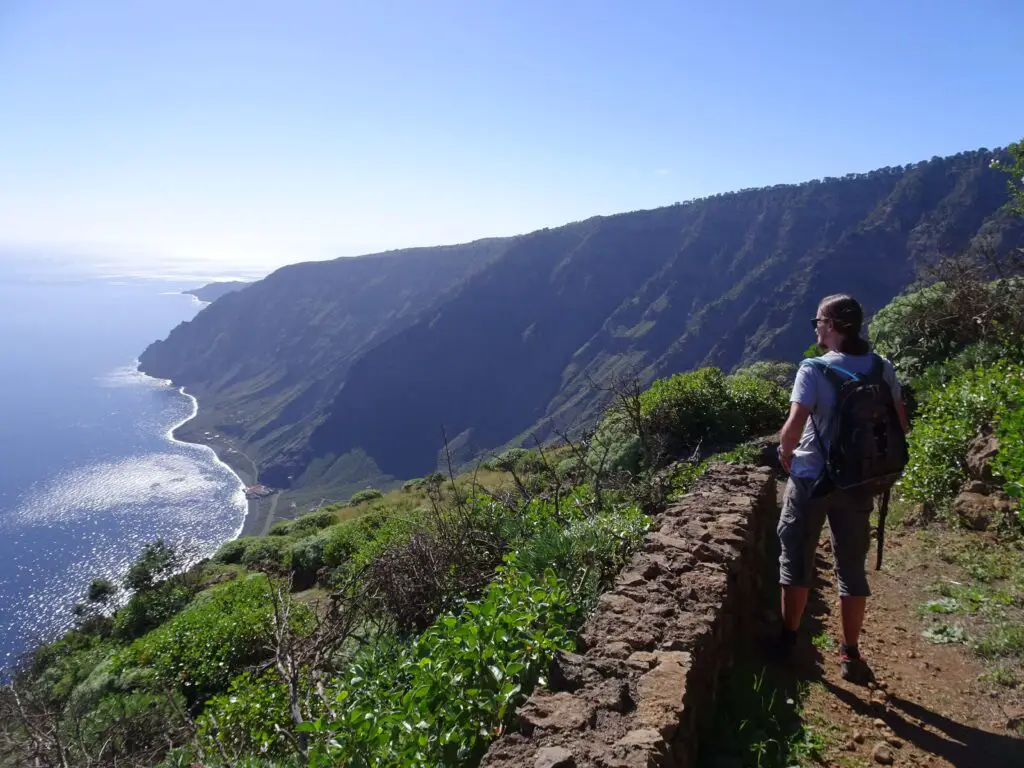
It’s easy to reach both of them by car (you can also get to the Mirador de Isora by public bus), but if you’re in the mood for a challenging hike, you can also walk up to the Mirador de Isora from the Las Playas Area down below (which we didn’t do, but who knows – maybe next time:).
Explore Valverde, the Cute Island Capital
Valverde is El Hierro’s quaint capital in the eastern part of the island. You should definitely check out the cute main square that is home to the Iglesia de Nuestra Señora de la Concepción (the biggest church on the island).
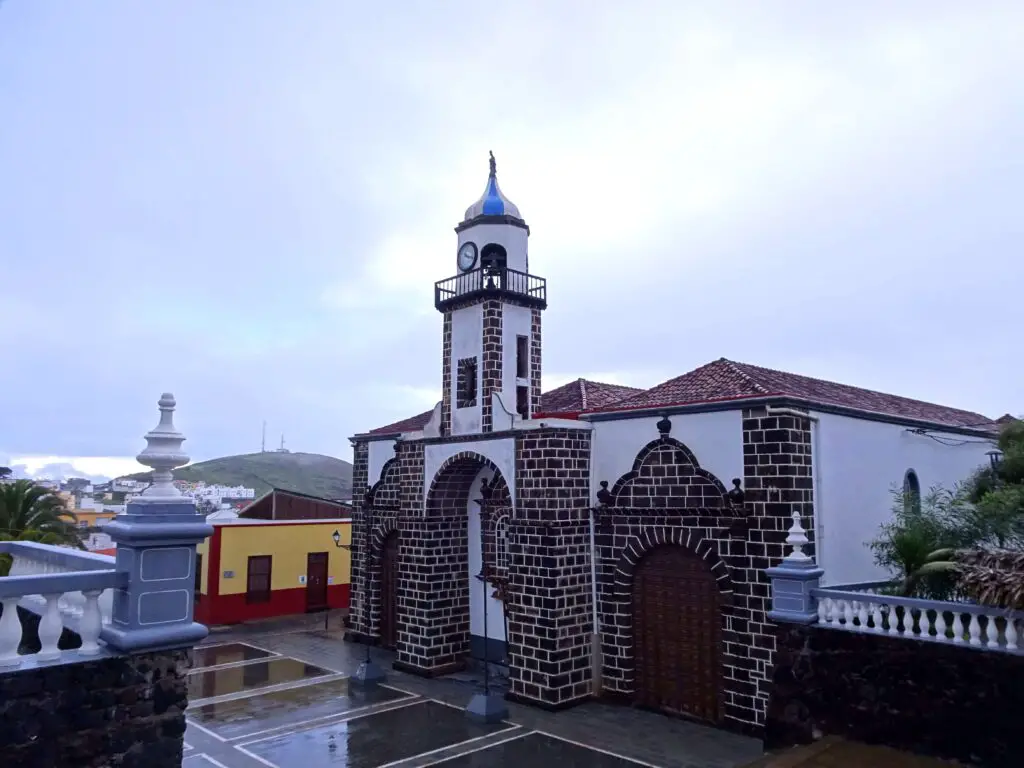
Another good place to check out is the Casa de las Quinteras Ethnographic Museum, where we learned about the island’s traditional crafts. Apart from that, we also found Valverde to be a good spot to try some Canarian food specialties.
I highly recommend dropping by the Fábrica de Quesadillas to try their famous local cheesecake. You can also have a look at my list of 6 Fun Things to Do in Valverde, El Hierro’s Tiny Capital.
Walk to El Hierro’s Cloud-Milking Garoé Tree
The Árbol Garoé was considered holy by the native Bimbache people for its ability to condense water out of low-lying clouds. For that reason, it’s also known as the ‘cloud milking tree’.
Unfortunately, the actual sacred tree was destroyed during a storm in 1610, but a replacement was planted in the original spot in the 1940s. For that reason, the tree itself is still rather small, but for us, the historical importance was what made the place worth visiting.
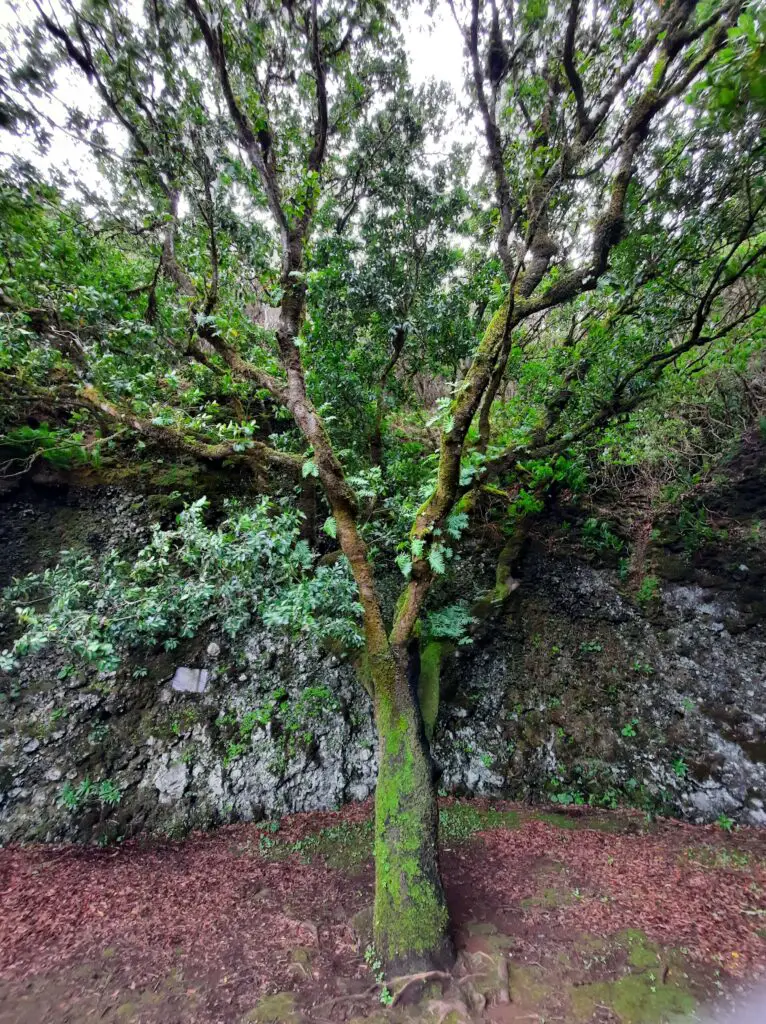
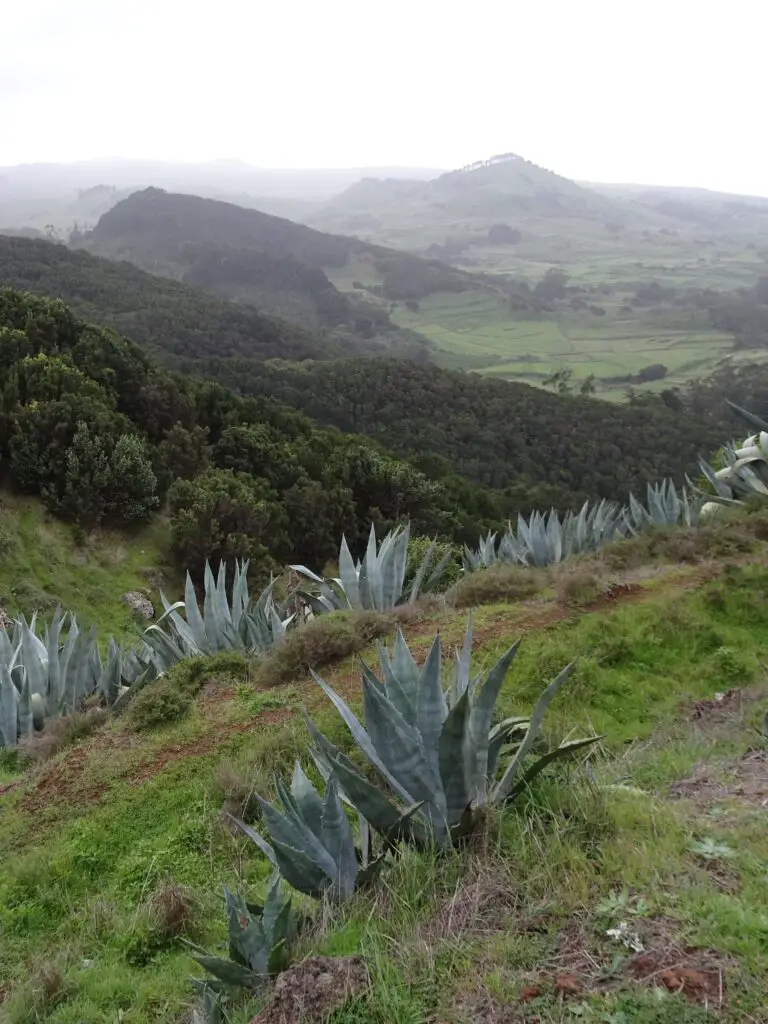
With a little imagination, we were kind of able to picture the Bimbache people scooping water out of the cisterns that they dug underneath the tree to collect the precious water. The surrounding area is very pretty, too.
When we were there, the place was open daily from 10am to 2pm and from 2.30pm to 6pm. You can double-check the current opening times here. The separate entrance fee is 2.50€, but it’s also included in the El Hierro Tourist Pass (see below).
Go for a Dive at the Mar de las Calmas
The Mar de las Calmas is an underwater reserve off the southern coast of the island. There are some impressive subsurface volcanic rock formations and lots of marine life.
During my dive, I managed to spot some huge groupers, plenty of trumpetfish, some triggerfish and two super colourful leopard eels.
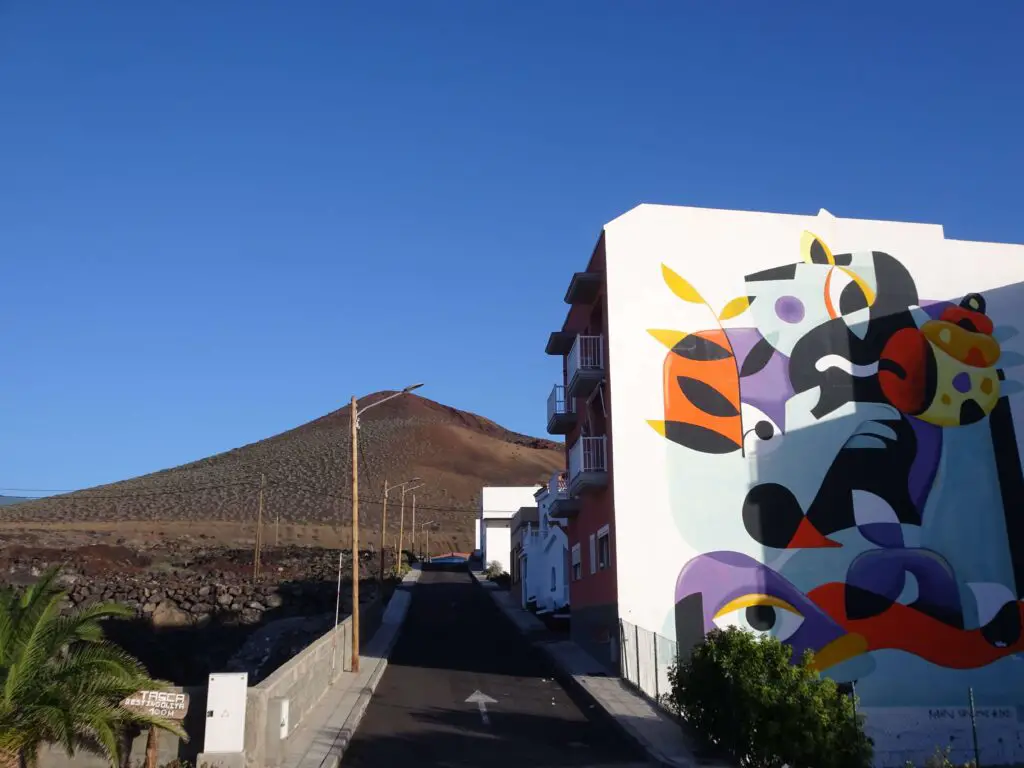
If you’re lucky, you also have a chance to see dolphins, sharks and turtles (I didn’t, though). The small beach town of La Restinga has a number of diving schools and resorts, some of which are open year-round. I joined a group dive with Arrecifal Diving School and was very happy with my experience.
Explore the Sleepy Fishing Village of Pozo de las Calcosas
At the northeastern tip of the island sits Pozo de las Calcosas, an old fishing village, which has been transformed into a modest summer resort for the locals. If you come at any other time of the year, you’ll likely have this atmospheric place to yourself, as was the case for us.
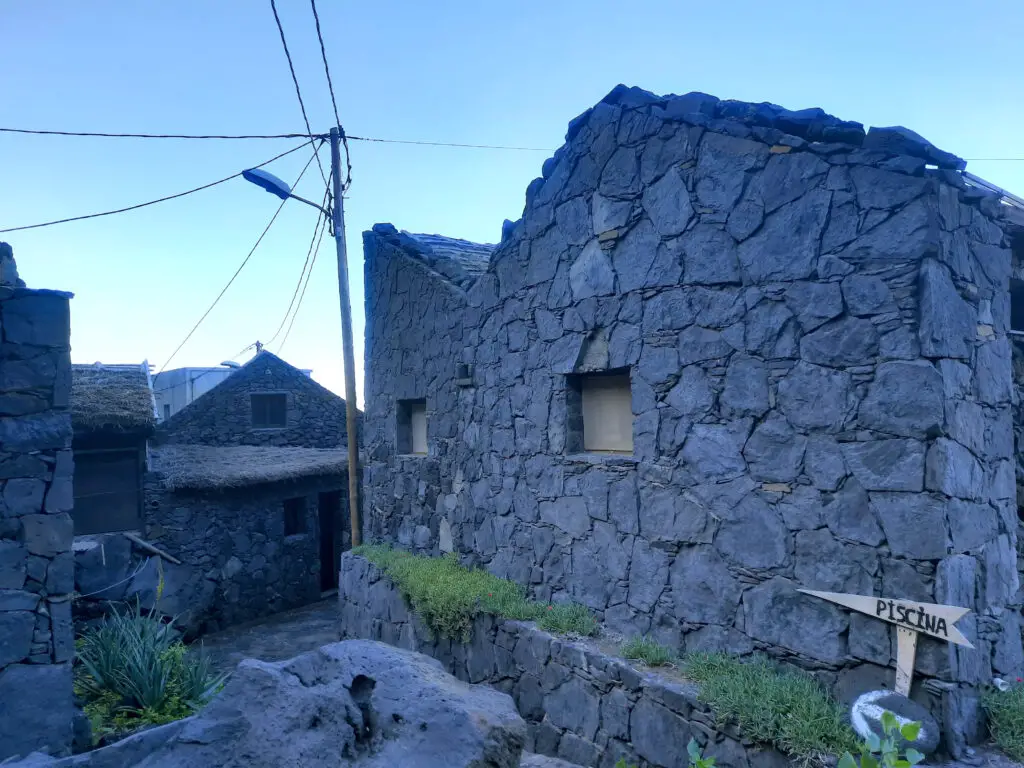
We were there in December and didn’t meet a single other soul in the entire village. There are some cute cobbled alleyways to explore and in the summer you can also take a dip in the nearby natural pools (in winter, the sea is much too rough, though!).
Visit the Roque de la Bonanza, One of the Island’s Symbols
The impressive stone arch Roque de la Bonanza, off the eastern coast of the island, sits at the northern tip of Las Playas Bay. It’s bordered by steep rock walls, and we thought that the surrounding area managed to feel somewhat foreboding and beautiful at the same time.
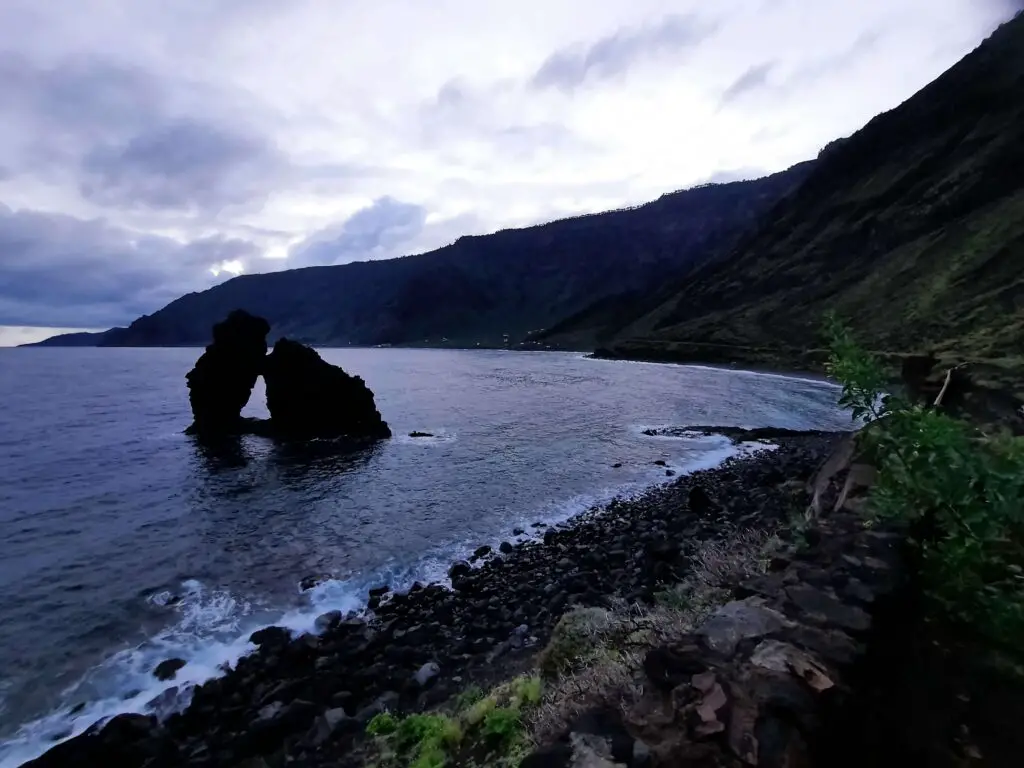
At the southern tip of Las Playas sits the Parador Hotel, which is said to be one of El Hierro’s fanciest hotels (and home to its fanciest restaurant).
Check out the Ancient Petroglyphs at El Julán
The Bimbache People left their traces all over the island, but never in such density as in the Julán area on the southern slopes of the island.
The Centro Cultural El Julán is a good place to learn what is known about the culture of El Hierro’s first inhabitants, but to see the main attraction, you’ll have to take a four-hour guided tour of the park.
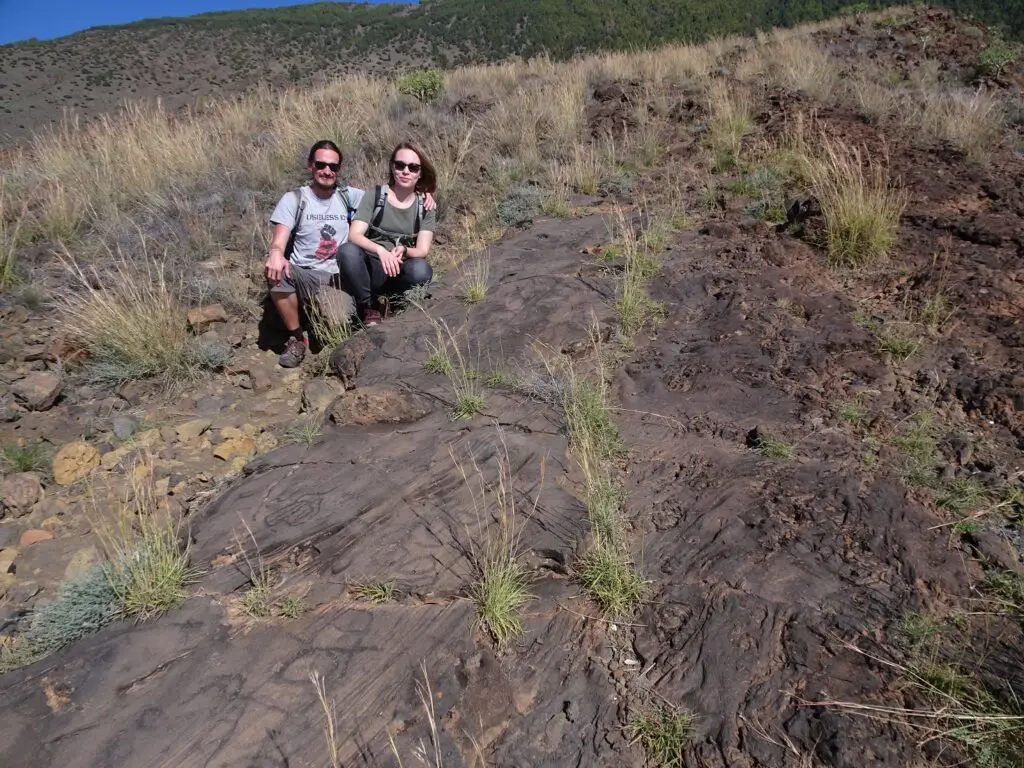
Near the Tagóror (a traditional meeting place), there are several large rock slabs that are covered in intricate rock carvings, which are thought to be at least 1,200 years old. Some archaeologists think that they were influenced by similar rock carvings from North Africa, but so far they haven’t been decoded (and perhaps never will be).
As an archaeologist myself, it goes without saying that I had to check this place out and I was very happy with the tour we got by our enthusiastic guide. You have to book the tour at least a day in advance. You can find the necessary contact info on the website of the cultural park.
Take a Dip at Charco Azul, the Island’s Prettiest Swimming Hole
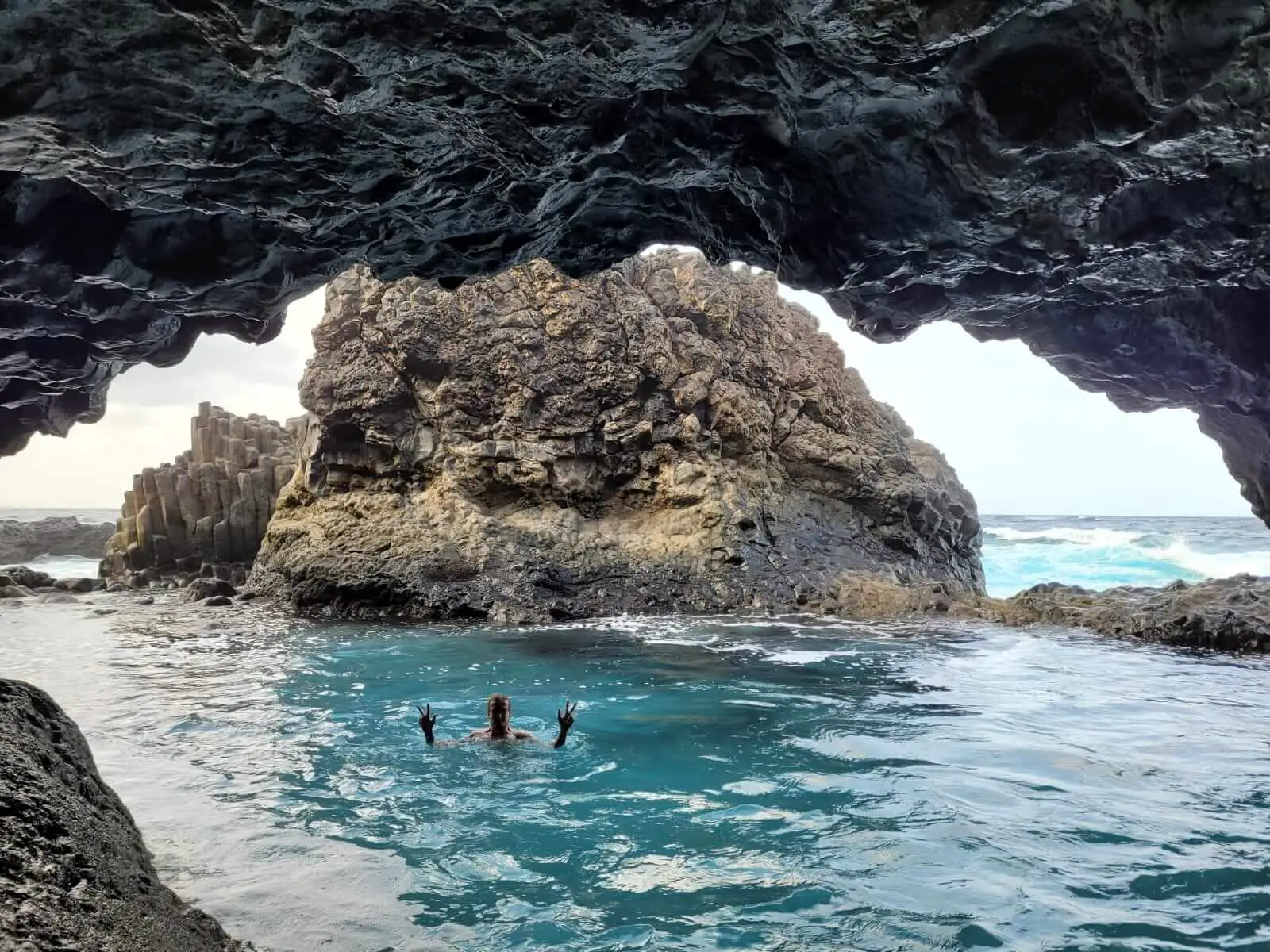
The coast of the Golfo Valley is full of natural swimming holes aka. charcos. Of all these, Charco Azul was our favourite, because of its beautiful location in a partially open lava tube.
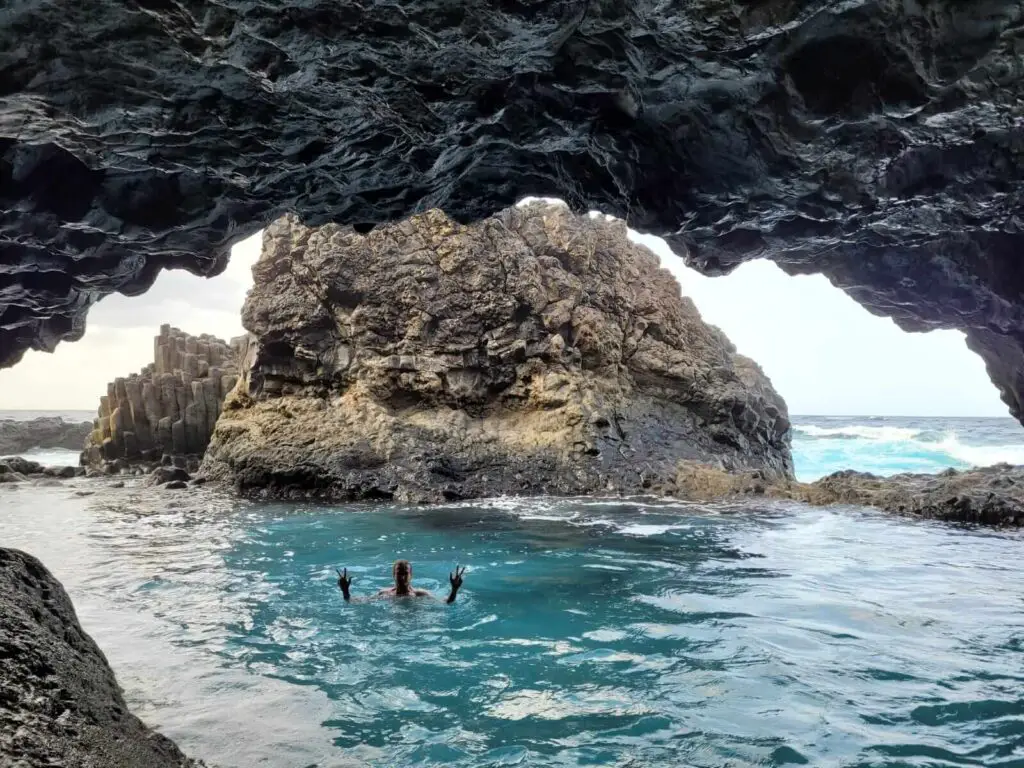
We were on the island in winter and this was also the only place sheltered enough to swim for a bit. That said, you’ll still have to make sure that the sea isn’t too rough, as it can wash over into the pools when you least expect it, making getting in and out of the pool a bit challenging (especially as the ground is slippery, too).
Visit the Isolated Ermita de la Virgen Sanctuary
The pretty whitewashed Ermita de la Virgen in the unpopulated La Dehesa Area in the island’s west is home to the island’s most important religious statue (the statue of the Virgen Mary that is carried along the Camino de la Virgen every four years).
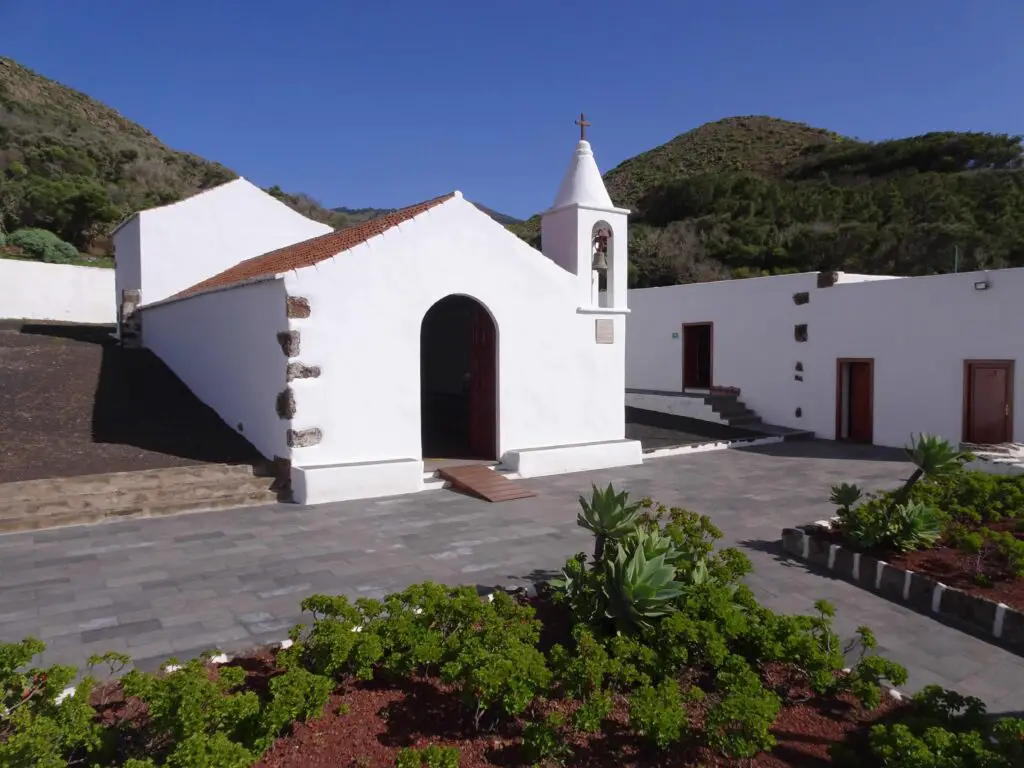
The main altar is pretty enough, but our favourite part was the cute little enclosed courtyard that surrounds the church. Nearby is the Cueva de Caracol, where shepherds carved some caves into the cliff face to be used as shelters in previous centuries.
La Dehesa is wildest and, in our opinion, the most spectacular part of the island. There are lots of other smaller sights scattered around the surrounding countryside.
Map of El Hierro
You can find all the places that I described above in this map of El Hierro.
Practicalities
Where to Stay in El Hierro
The island is small enough to make staying in a single location and exploring El Hierro from there a viable option. The most useful bases would be the capital of Valverde or the pretty Golfo Valley in the north.
If you want to stay at a truly unique place, Hotel Puntagrande is listed in the Guinness Book of World Records as the smallest hotel in the world. It was converted from an old marine trade station and has a prime location on a lava tongue that juts out into the Atlantic Ocean.
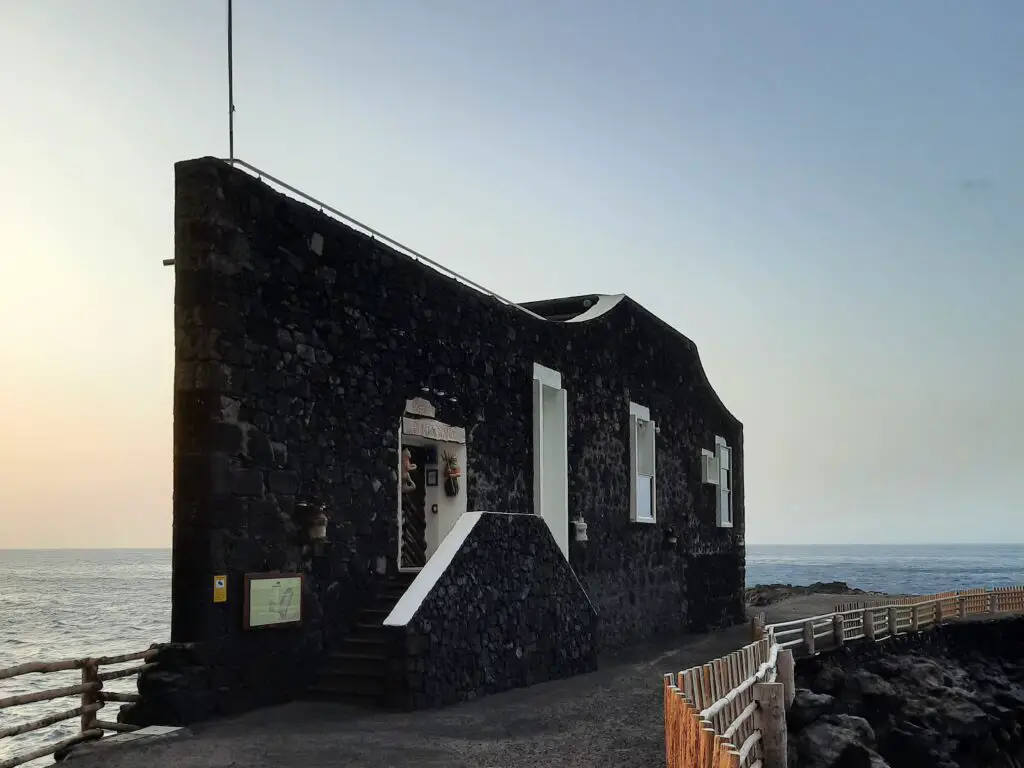
Otherwise, Apartments at El Sitio are located in a cluster of historical stone houses in the beautiful surroundings of La Frontera. There is a pretty communal garden with a view into the Golfo Valley.
If you have to pinch your pennies, staying in Valverde might be a good idea. One option would be pretty Hotel Boomerang, which is close to the main square and has a café attached, which serves awesome breakfasts. You can have a look at the map to find some more options.
El Hierro Tourist Pass
If you plan to visit a few of the island’s museums and the Árbol Garoé, you should definitely get the Pasaporte El Hierro, which includes entry to seven sites.
It’s sold for 17.95€ at Valverde’s tourist information office or at all of the Museums that are included in the pass. You can see which sites are included on this site.
Especially if you want to visit the Ecomuseo de Guinea and Lagartario, which is almost 10€ on its own, it’s really a no-brainer.
See Also
The Ultimate Three Day Itinerary for El Hierro, Canary Islands
Reaching El Hierro by Ferry From Tenerife – A Short Guide