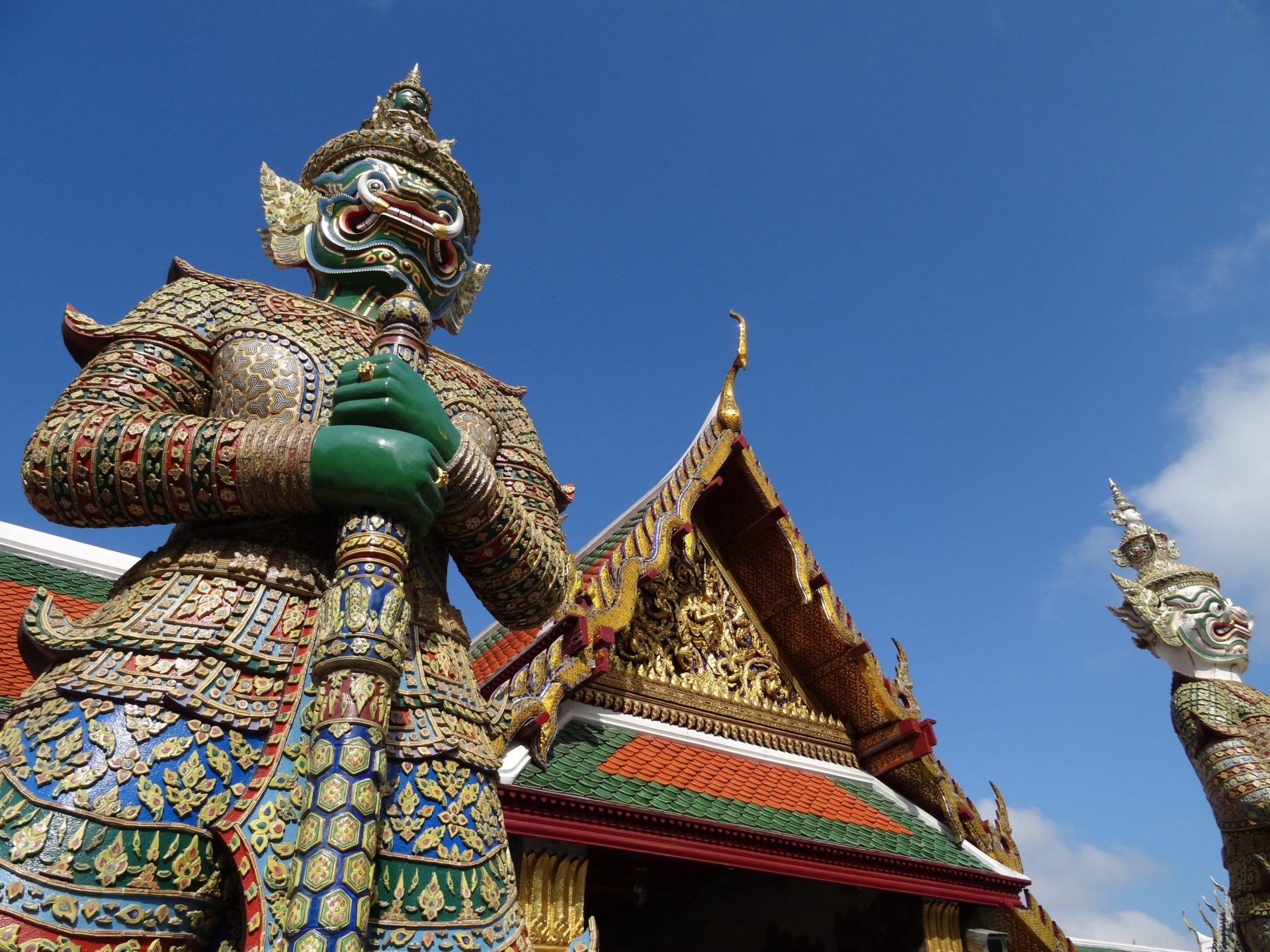
Bangkok’s Grand Palace is one of the most impressive architectural ensembles I came across in Thailand and home to the country’s most sacred Buddhist temple, which makes it one of the absolute must-see sights in a city filled with interesting places to check out.
From its construction in 1782, the complex was the permanent residence of the Thai king and his family for almost 150 years until they moved their residence to Dusit Palace in the early 20th century.
There are loads of impressive palace buildings on the grounds, as well as Wat Phra Kaew, which contains the famous Emerald Buddha statue that dates back to the 14th century. Here’s everything you need to know about visiting Bangkok’s top sight.

This post may contain affiliate links, and I might earn a small commission at no additional cost to you. For more info, click here.
Guided Tours of Bangkok’s Grand Palace
If you would like to get a bit more information about this elaborate place and its complex history, a guided tour might be the way to go for you. There are also self-guided tours available, if you want to visit on your own, but still want a little more info on all the little hidden details of the area.
Another great option, especially if you want to use your time as well as possible, would be this more extensive tour of the Ko Ratanakosin Neighborhood, which has very good reviews also includes a visit to the Reclining Buddha at Wat Pho as well as a longtail boat tour along the Chao Phraya River.
You can have a look at some more options below.
What to See at Wat Phra Kaew and the Grand Palace
There are two main areas of interest inside the palace grounds. For one, you have the Wat Phra Kaew Compound, which is also known as the Temple of the Emerald Buddha, and which was built in the late 18th century by order of King Rama I.
To this day, it’s the most important Buddhist temple in Thailand and the emerald Buddha statue in the main sanctuary is considered the sacred protector of the country. Outside of the temple area are the actual palace buildings, like the throne hall and the royal living quarters of the early Chakri Dynasty.
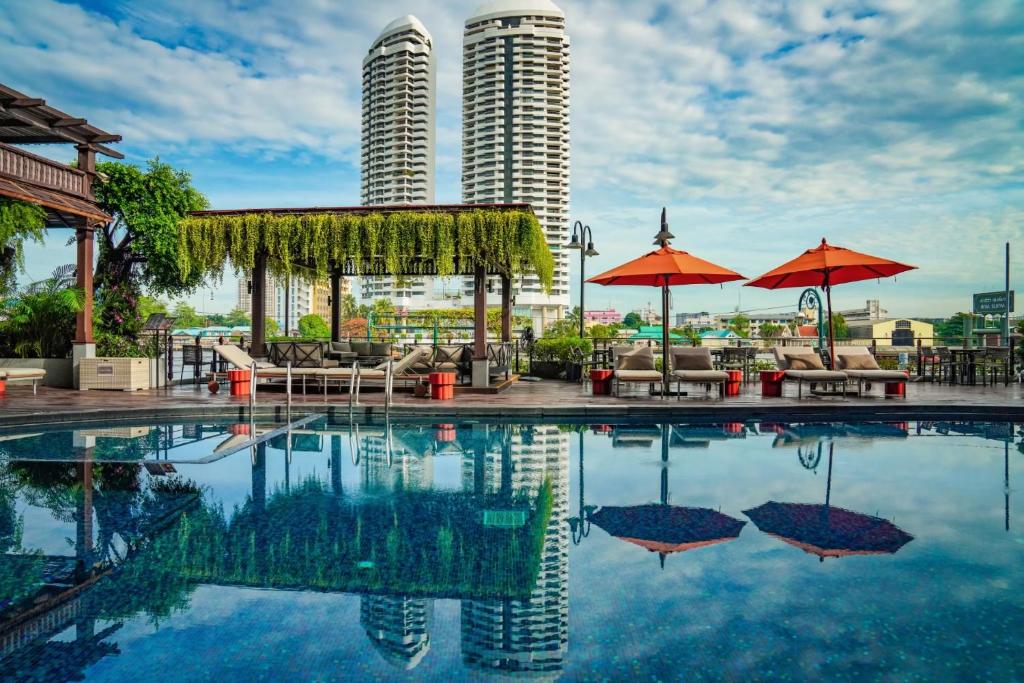
Hotel Tips for the Palace Area
Budget: Khao San Social Capsule Hostel
Midrange: Buddy Lodge
Luxury: Riva Surya Bangkok (pictured)
.
Wat Phra Kaew
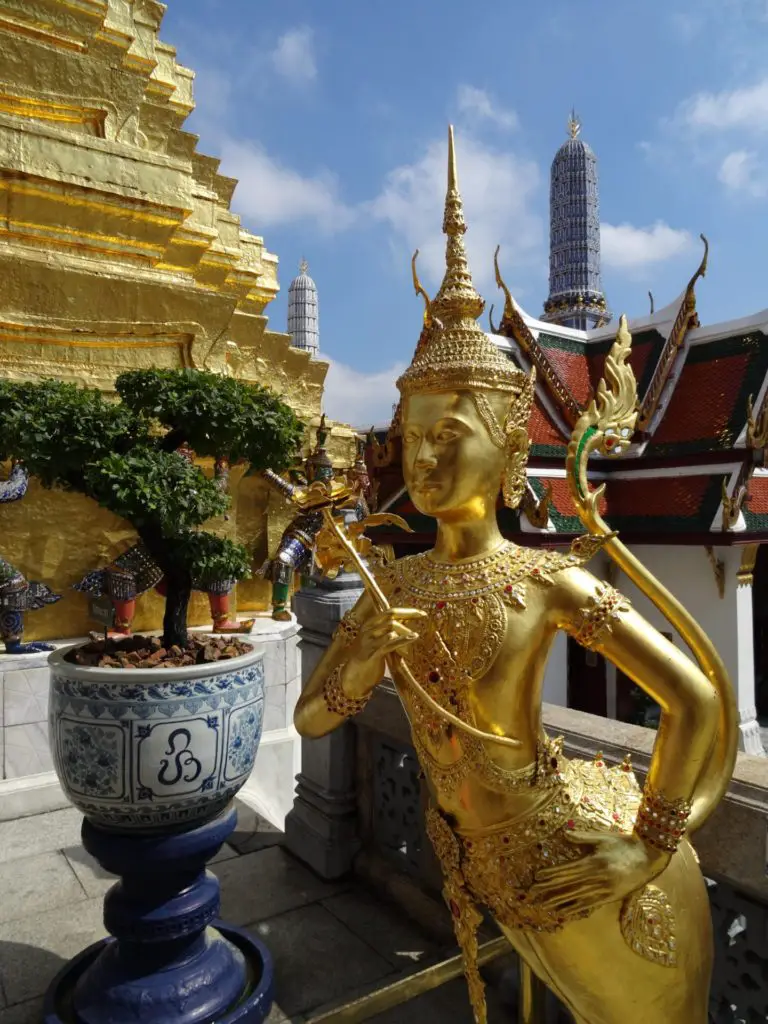
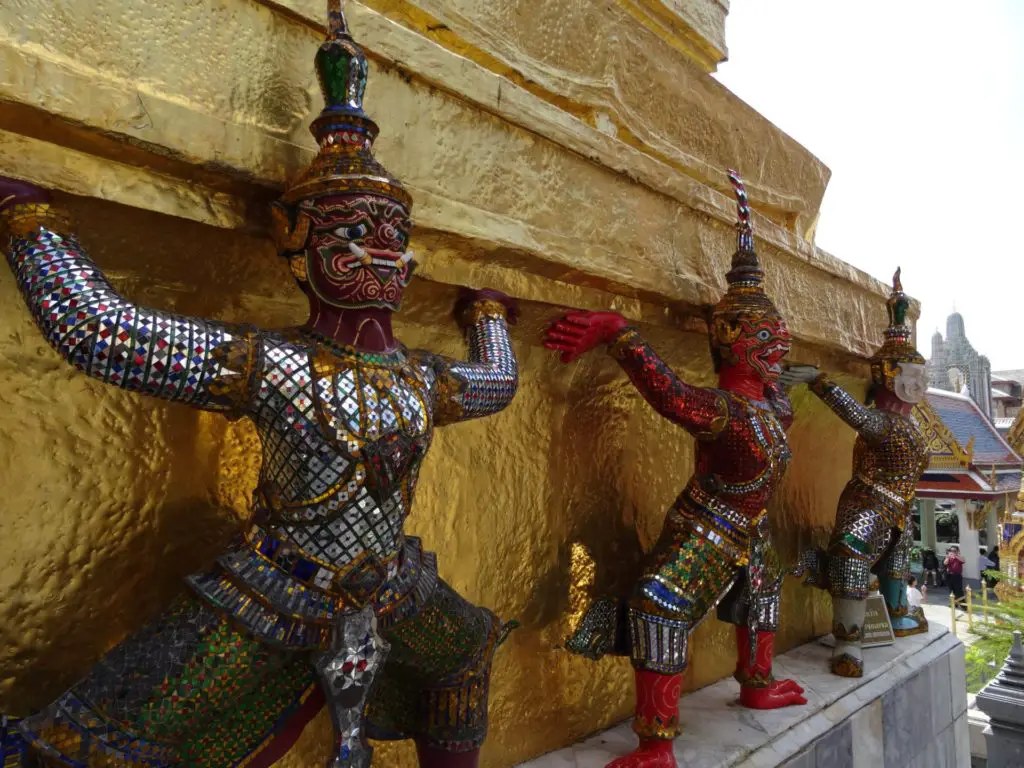
The main entrance to the complex is from the north through Wiset Chai Si Gate in the outer wall. From there, you’ll walk first south, than east to enter Wat Phra Kaew, the famous Temple of the Emerald Buddha, whose gates are protected by giant pairs of Yaksha (guardian deities from Buddhist mythology) clutching maces.
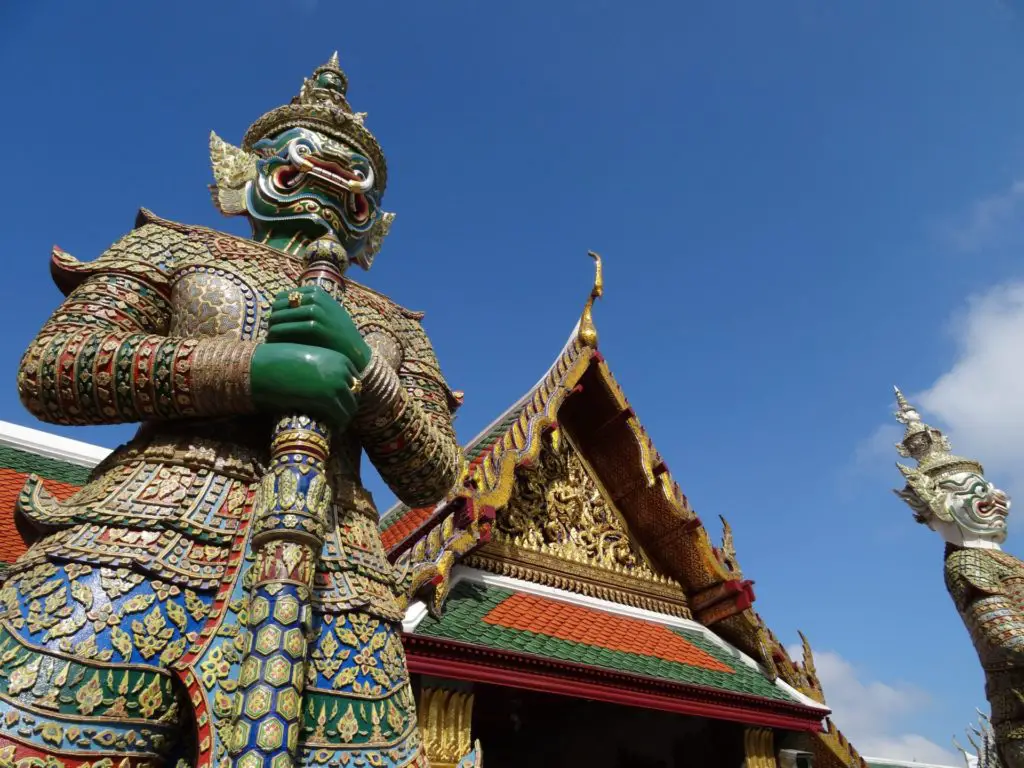
Even if you’ve already visited a score of Thai temples, I’m pretty sure this one will impress you. I was certainly blown away by the elaborate architecture and the incredibly intricate murals that show the story of the Ramakian. There are so many beautiful details that I didn’t really know where to look first.
The Emerald Buddha and the Temple Buildings
The famous Statue of the Emerald Buddha sits inside the Phra Ubosot (ordination hall), which is the big building at the southern end of the temple complex. It’s thought to come from the northern Thai Lan Na Kingdom where it’s said to have been found inside a stupa by a group of monks in the 15th century.
The statue, which shows the Gautama Buddha in a lotus position, isn’t actually made from emerald, but rather from jade or jasper. Depending on the season, it’s decorated in a different way. I visited at the end of the rainy season in October, when it had a gold-embossed kasaya (monk’s robe) draped over one shoulder and a pointed golden headpiece that’s studded with sapphires.
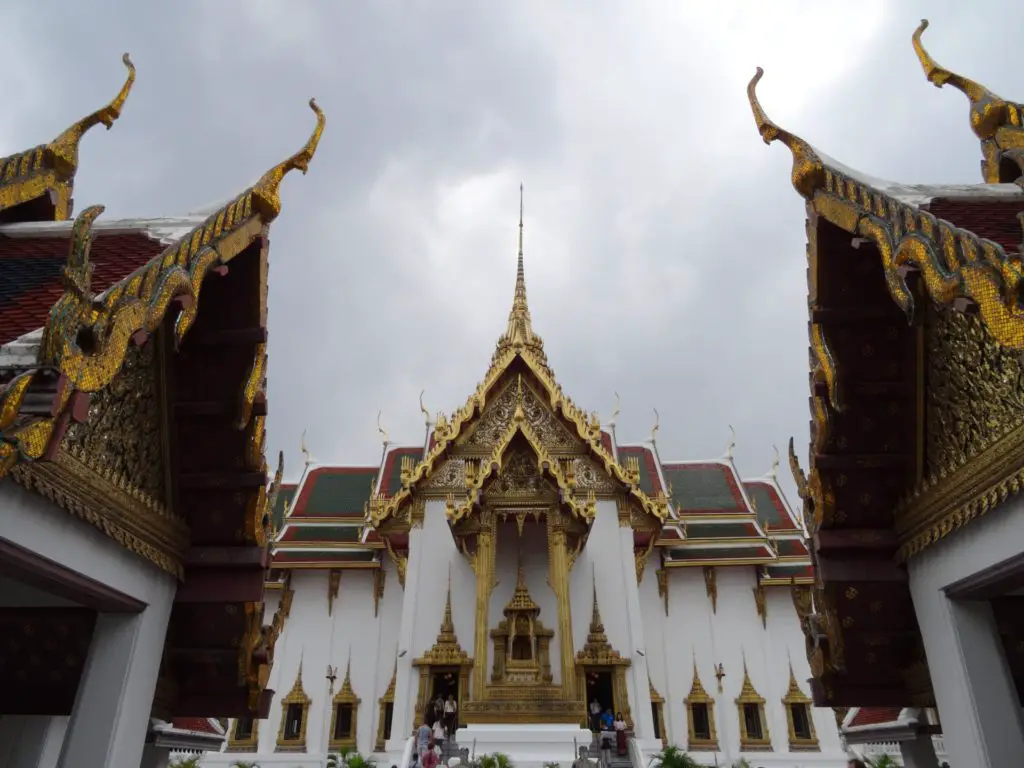
To the north of the Ubosot, the centre of the court is dominated by three impressive spires. Starting from the west, these are the golden Phra Si Rattana Chedi (Stupa) and the glazed steeples of the Phra Mondop Library and Royal Pantheon buildings, which all sit on a raised terrace.
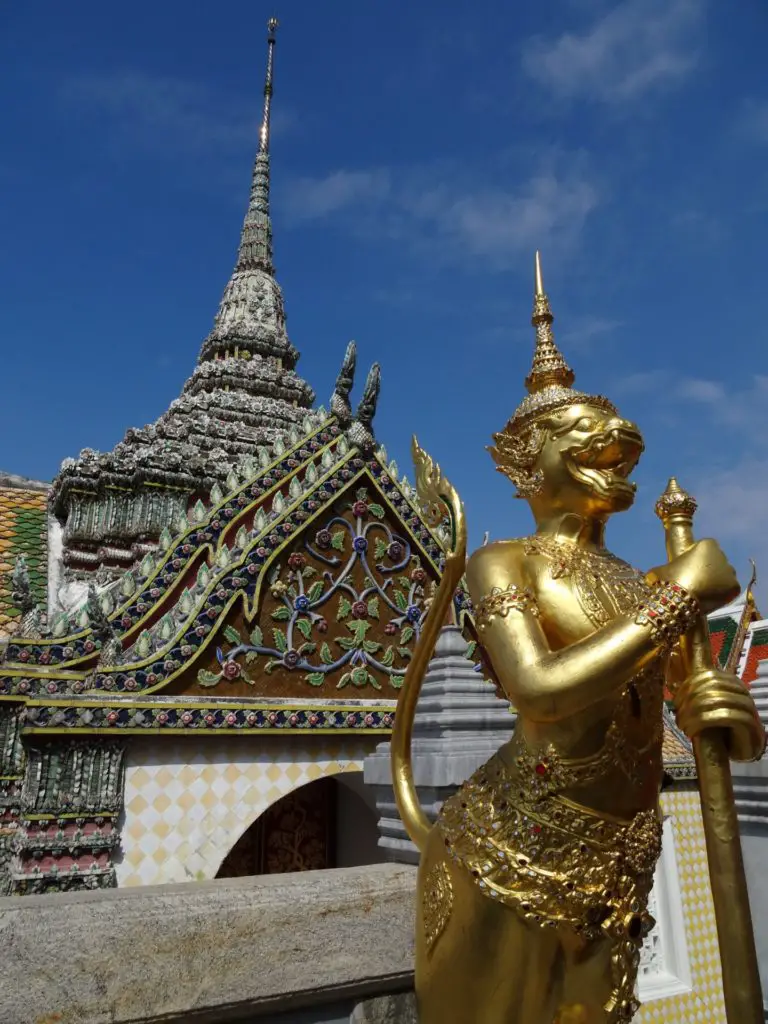
The Phra Mondop was one of my favourite buildings in the complex, with its beautifully decorated outer walls and columns, which are covered in shiny glass mosaics. Directly to the north is a small model of Angkor Wat. Apparently, this goes back to the story that Rama IV. originally wanted to move a Khmer temple to Bangkok, but ended up settling for the model instead.
Smaller Buildings and Ramakian Murals
At the northern end of the temple complex there are some buildings that seem a little plainer compared to the structures directly to the south (although plain is relative here) and reminded me more of the buildings in regular Buddhist temples in the country.
The westernmost building is Ho Phra Nak, a royal mausoleum that contains the ashes of the viceroys of the Chakri dynasty and in the middle sits Phra Sawet Kudakhan Wihan Yot, a Buddha image hall, which was originally built as a vihara, or Buddhist monastery building. In the north-eastern corner of the area is the Ho Phra Monthiantham (a scripture hall).
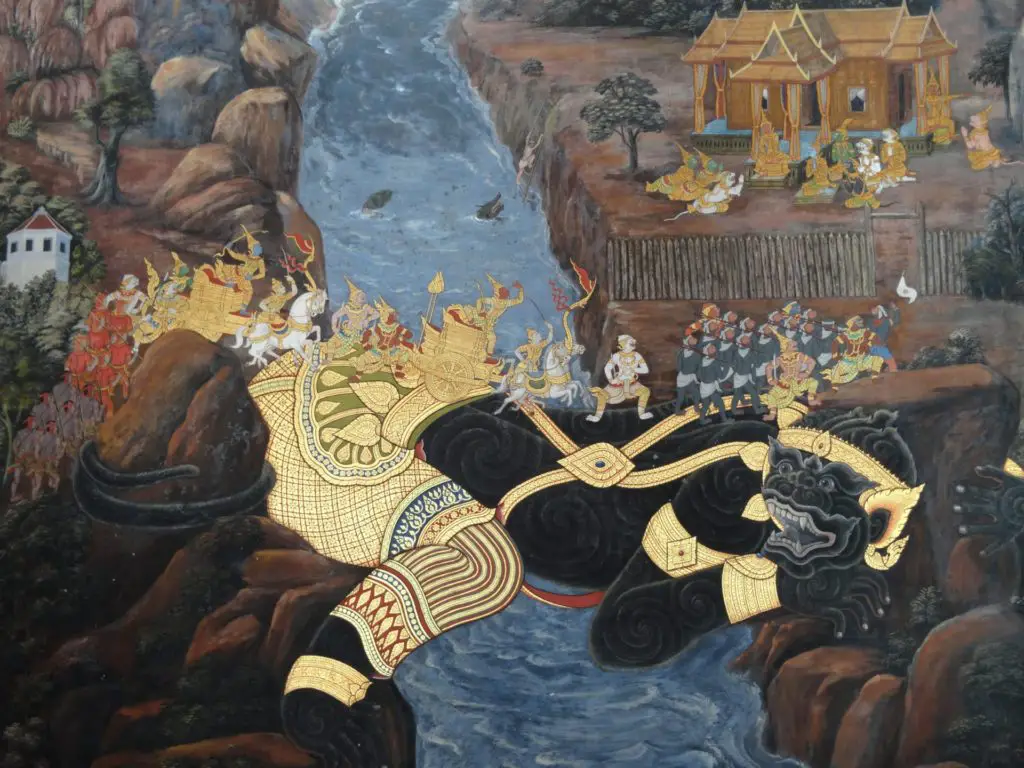
The entire exterior of the complex is surrounded by a covered walkway whose walls are decorated with seemingly endless murals depicting scenes from the Ramakian, the Thai national epic, which in turn is based on the Hindu Ramayana.
It tells the story of Prince Rama saving his wife Sita from the clutches of the many-faced demon Thotsakan (Ravana). The paintings were commissioned by King Rama I. in the late 18th century and there are 178 panels in total, each featuring more figures than your average Where’s Waldo book. Honestly, you could stare at them for hours and still not notice all the details.
The Buildings of the Grand Palace
The rest of the complex is home to some gigantic palace buildings, but hardly any of them are still used by the royal family on a day-to-day basis.
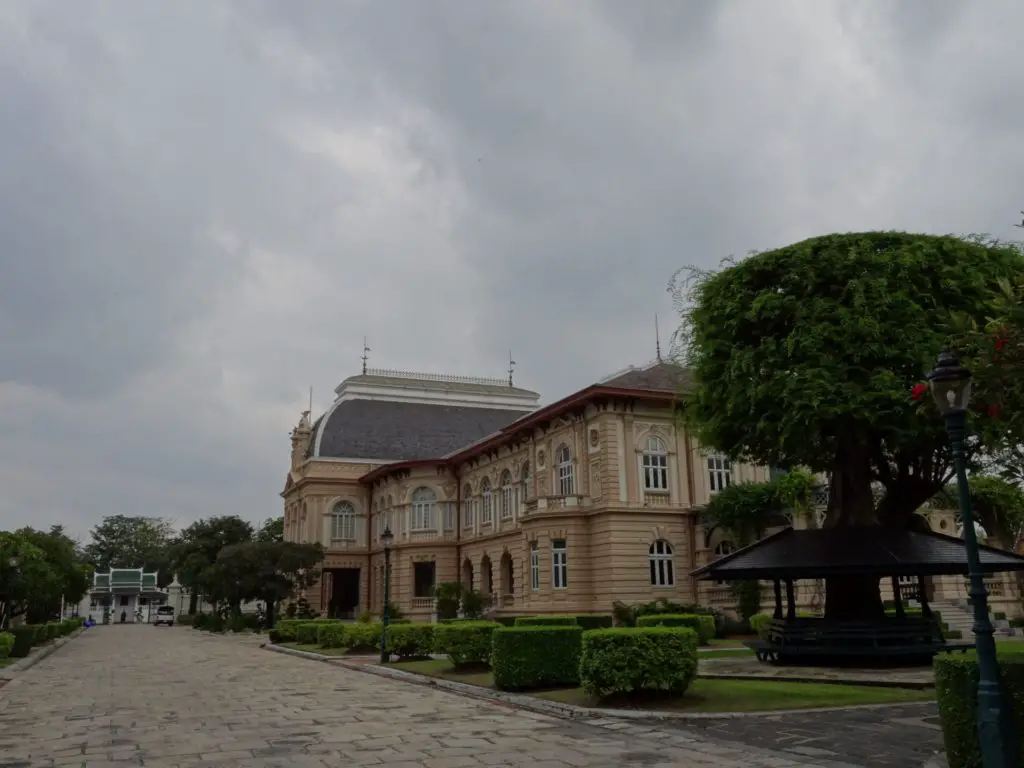
Boromphiman Hall is the royal hall located directly to the south of Wat Phra Kaew in the area known as Siwalai Garden. It was built around 1900 in a Neo-Renaissance style, and I thought that it wouldn’t be out of place in a capital somewhere in central Europe.
The enormous complex of buildings in the Middle Court to the west of here is the Phra Maha Monthien group, which is seen as the most important structure of the palace, as it used to be the private living area of the Siamese Kings and their families.
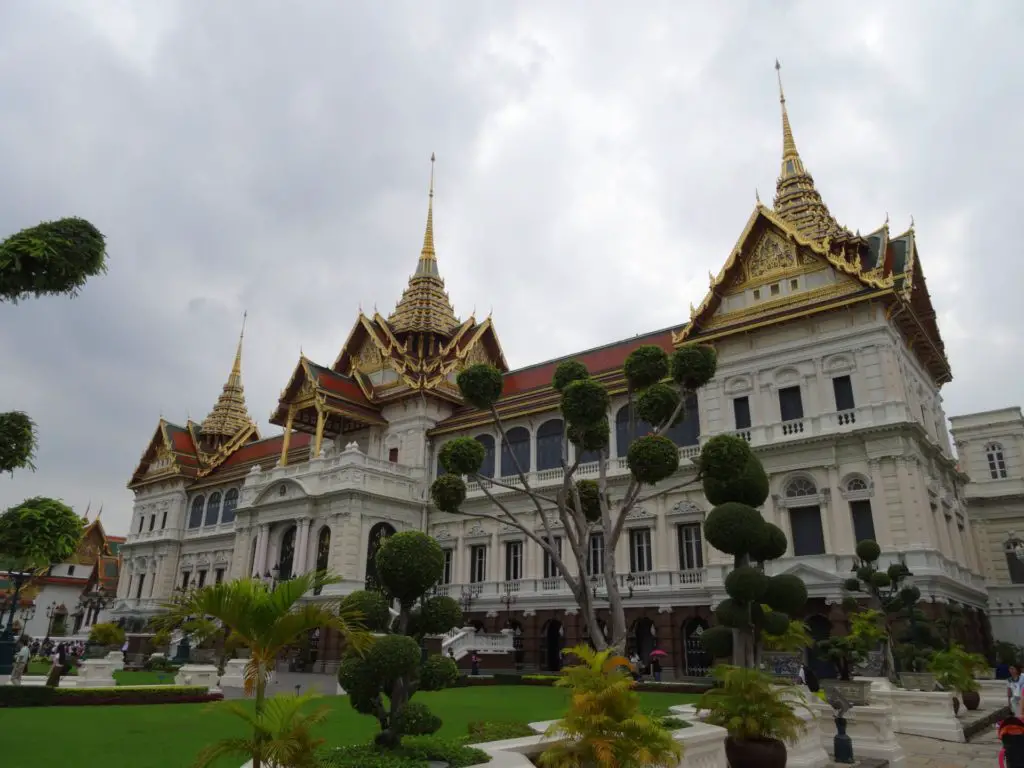
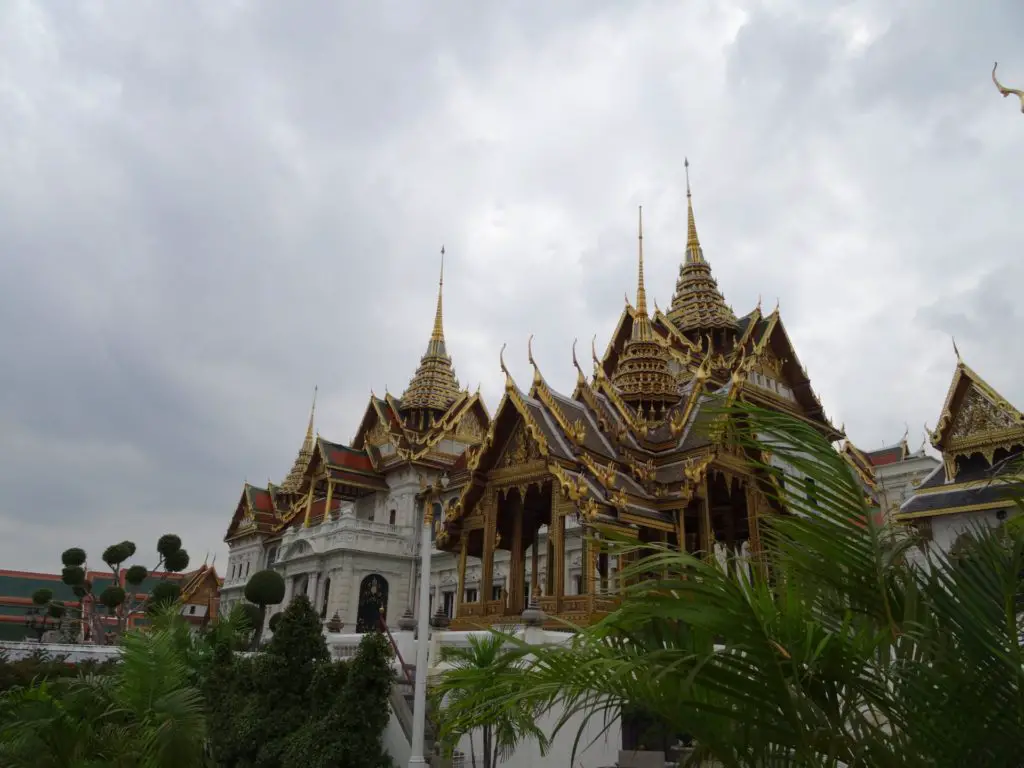
The Phaisan Thaksin Hall in the middle of this cluster is still used as the crowning location for the new Thai kings. Most of these buildings are not open to the public, with the exception of the Amarin Winitchai Throne Hall at the northern end, which has some super elaborate golden thrones inside.
Further west is the impressive Chakri Maha Prasat Hall from the late 19th century, which has three golden spires on its northernmost roof. This was my favourite building in the palace (apart from Wat Phra Kaew), as I found the mixture of traditional Thai and European architectural styles pretty interesting.
Finally, there’s Dusit Maha Prasat Hall, at the very western end of the complex. It was built on orders of Rama I. in 1790, which makes itthe oldest remaining building in the palace. Ever since his death, the building has been used as a place where the bodies of royal family members are laid during the mourning period.
Map of Bangkok’s Grand Palace Area
You can check some of the mentioned places in this map of the palace area.
Practicalities
Opening Times and When to Go
When I visited, the palace was open daily from 8:30AM to 3:30PM. Be sure to double-check the times here before you go. This is one of Thailand’s most popular sights and it can get very crowded. I recommend getting there at opening time and ideally midweek to avoid the worst of the crowds.
Is There a Dress Code?
There is – as this is one of Thailand’s most important religious and royal sites, you’ll need to wear appropriate clothes to even be allowed onto the grounds. I actually saw a few people who were turned away at the entrance. This is the complete list of prohibited clothes, as noted on the Official Grand Palace Website:
- No sleeveless shirts
- No vests
- No short top
- No see-through tops
- No short hot pants or short pants (including cargo pants)
- No torn pants
- No tight pants
- No bike pants (I think this means spandex pants and the like)
- No mini skirts
- No pants skirts
- No sleeping suit (I wonder how many people have tried wearing these before)
What’s the Entrance Fee?
Entrance for non-Thai Visitors is 500฿, which is pretty steep compared to other sights in the country, but it’s a large complex, and I spent about three hours there. For Thai citizens, the entrance is free.
It’s good to note that a ticket to the Grand Palace also gives you free admission to the newer Dusit Palace for about a week, so don’t get rid of your ticket after the visit if you plan to go there.
How to Get There
The palace lies in the Ko Ratanakosin neighborhood directly east of the Chao Phraya River and south of the Khao San Road area. If you stay in this popular area, you can simply walk to the palace in about 15 minutes. Otherwise, every taxi and tuk-tuk driver in the city knows the location of Bangkok’s most famous landmark.
If you want to go there by public transport, you could take the river taxi along the Chao Phraya River to the stop at Tha Chang Pier, which is directly west of the Palace Grounds. If you’re traveling by BTS Skytrain, you can connect to the River Taxi at Saphan Taksin Station on the dark green Silom Line.
Another option would be to take the MRT Subway to Sanam Chai Station, from where you’ll have to walk for 15 minutes north along Th. Sanam Chai to get to the entrance.
Finally, the closest public bus stop is Sanamluang (directly opposite Wat Phra Kaew). You can check connections from where you want to leave on this super useful site.
The Best Hotels in the Area
The Grand Palace is close to Bangkok’s most popular tourist area around Khao San Road. There are loads of places to stay in the area, many of them budget options. I stayed at Born Free Hostel on Soi Samsen 6, a couple of minutes north of Khao San Road, which was good, but I’m sure basically the same level of quality as most other places around.
There are also a couple of mid-range hotels in the area, like Buddy Lodge, which has good reviews, while the Riva Surya Bangkok would be one of the most luxurious choices around. You can browse for more options in the map below.
Where to Eat Near the Grand Palace
There are a couple of restaurants and cafés on the grounds of the Royal Palace, but you’ll definitely pay tourist prices there.
Your best bet for good value food is to walk north for five minutes from Tha Chang Pier outside the north-western corner of the palace complex to get to an area with plenty of affordable river-side restaurants.
See Also
Is Bangkok’s Khao San Road worth visiting?
Dusit Palace and other things to see in Bangkok’s Dusit District