Some people might have been surprised when UNESCO made the decision to put six 20th-century housing estates in Berlin on its list of World Heritage Sites in 2008. At first glance, they might not be as deserving of the status as more spectacular places like Japan’s Itsukushima Shrine or the Taj Mahal.
Even so, I can assure you that it’s absolutely worth visiting one or two of the sites, as long as you’re just the tiniest bit interested in historical architecture. As an incurable completist, I visited all the sites during a recent trip to Berlin, so I can tell you exactly which of them are worth your time.

This post may contain affiliate links, and I might earn a small commission at no additional cost to you. For more info, click here.
Some Historical Background
The buildings were designed by important German architects of the time, like Bruno Taut and Walter Gropius (of Bauhaus fame), who first implemented elements that became widely used later in 20th-century architecture.
For instance, they were some of the first to actively incorporate green spaces in their layout, which gives the estates a light and attractive feeling that most contemporary apartment buildings lacked.
That way, the architects managed to instil a bit of their artistic vision into a project, which was mainly aimed at providing cheap living space after the devastating destruction of the First World War.
I found the estates interesting, both for their role in German architectural history and the glimpse into the social efforts of a country, which was actually quite progressive before the rise of national socialism.
Berlin’s Modernist Housing Estates WHS
Gartenstadt Falkenberg aka. Tuschkastensiedlung
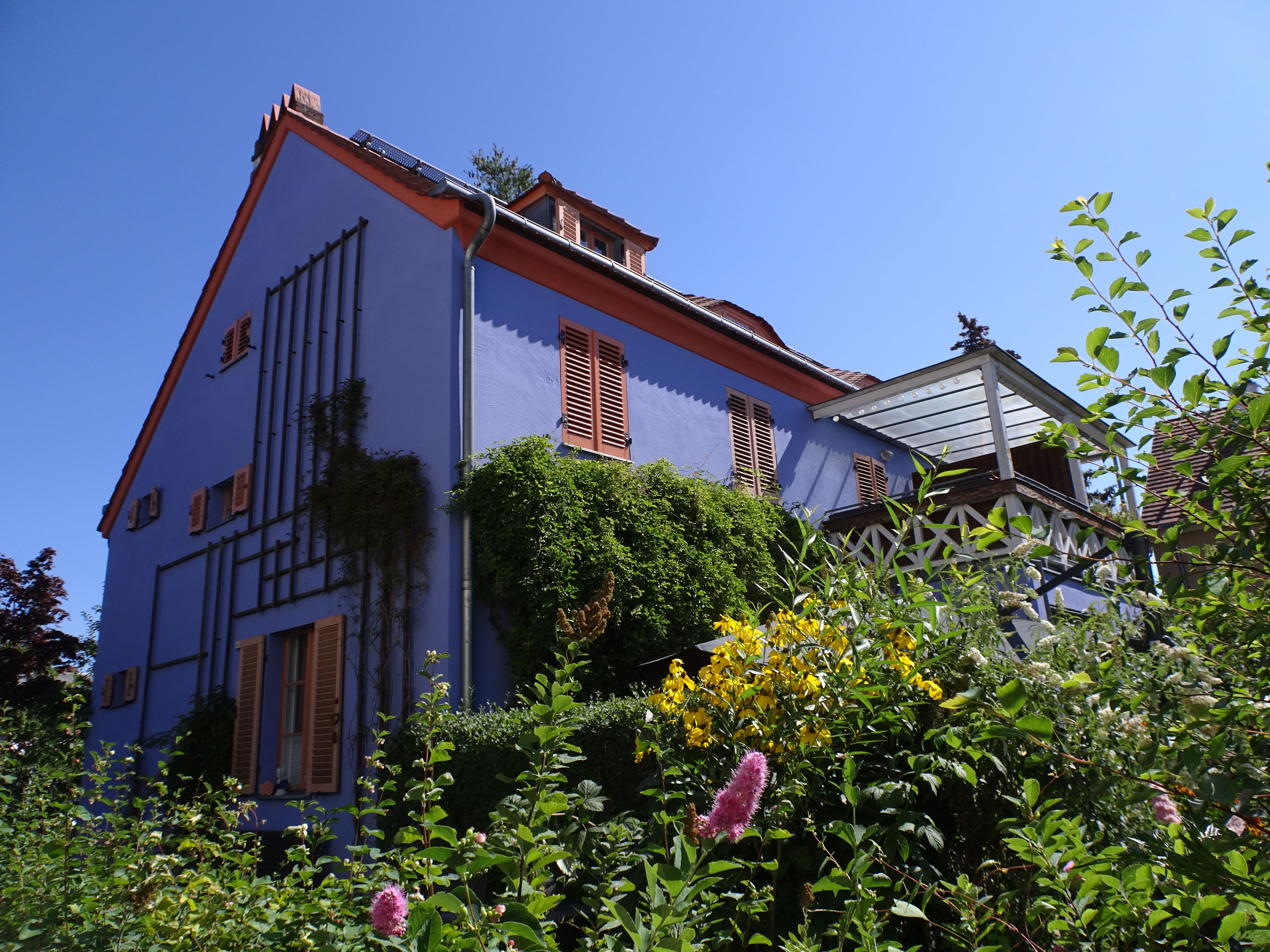
The settlement that is farthest from central Berlin is also the nicest one in my opinion. It has a distinct village-like atmosphere and I found it lots of fun to explore the colourful houses and flowery gardens of the fittingly named “Garden City”.
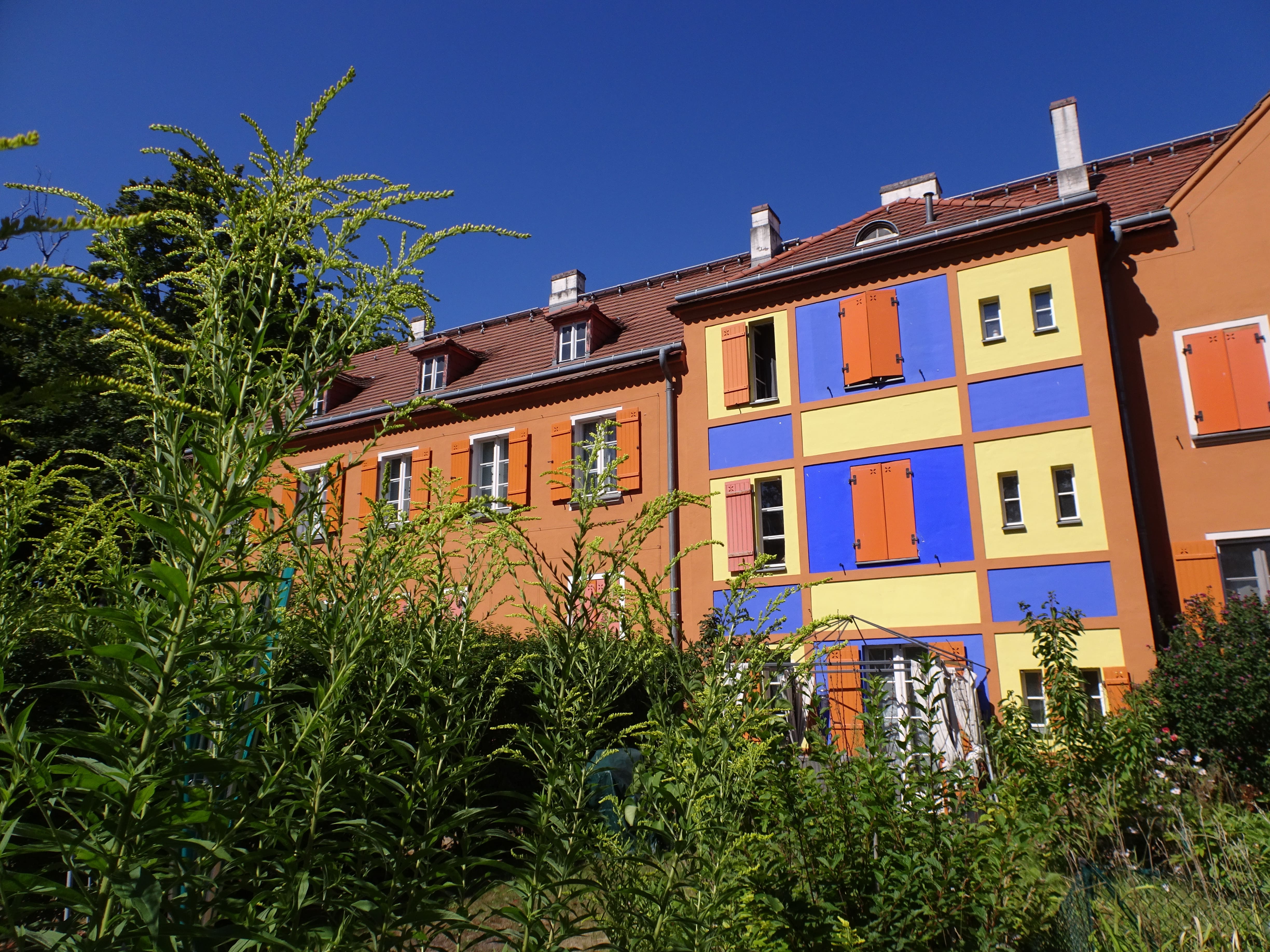
The nickname “Tuschkastensiedlung” translates to Paint Box Settlement, supposedly because all of the houses are painted in different colours. In my opinion, the most impressive buildings are along Akazienhof and Gartenstadtweg Streets.
Getting to the estate takes some time, but the area itself is rather small and I managed to see everything in about 30 minutes. If you only have time for one of the settlements, I’d recommend this one.
Reasons for visiting: The beautiful gardens, differing architectural styles and general peaceful atmosphere.
How to get there: Take Train S8, S46 or S85 to Grünau Station, then follow Bruno-Taut-Str. southwest for 5 minutes.
Großiedlung Britz aka. Hufeisensiedlung
The main structure of this varied settlement in Neukölln, which was designed by Bruno Taut, stands apart from all other housing estates on the list by being shaped like a horseshoe (Hufeisen).
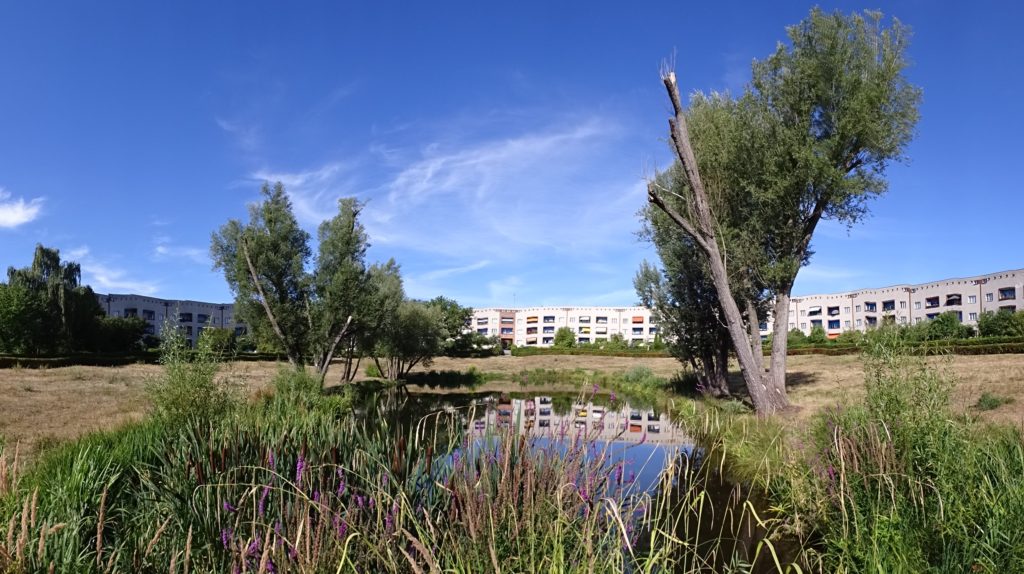
The structure is centred on a big meadow with a small pond in the middle. Outside the horseshoe, there are several rows of brightly painted terraced houses, whose doors are all designed in different, unique patterns.
There’s a small museum at the entrance of the horseshoe, which is open on Friday and Sunday from 2pm to 6pm. Apparently it has information on this estate and the other sites on the UNESCO list, but I was there on a Wednesday, so I couldn’t check it out.
I liked the unique and varied architecture of the estate as well as the peaceful suburban feel (but that might have been because I visited on a weekday morning). In any case, this is another complex that’s definitely worth checking out in my opinion.
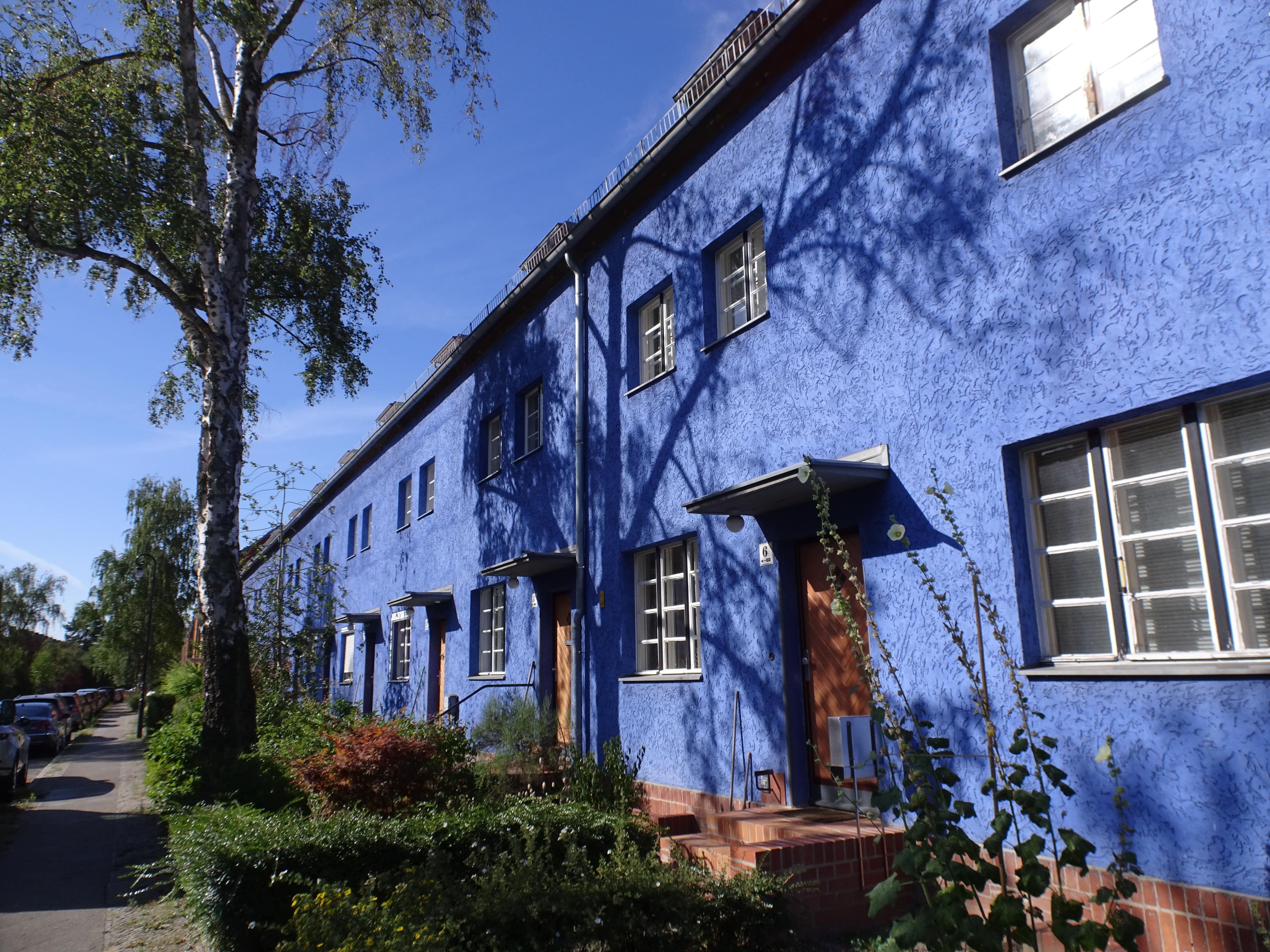
Reasons for visiting: The unusual layout and differing architectural styles.
How to get there: Take U7 to Blaschkoallee Station and walk west along Teterower Str. to reach the northern edge of the estate. Follow Fritz-Reuter-Allee south to get to the horseshoe.
Großiedlung Siemensstadt aka. Ringsiedlung
A whole host of architects were involved in the design and construction of this big estate in Berlin’s Charlottenburg neighbourhood.
For that reason, many of the buildings have very distinct appearances, like Hans Scharoun’s block at the southwestern edge of the settlement, which is called “Battleship” (Panzerkreuzer) by the locals. Looking at the balconies, I could kind of see where the name comes from.
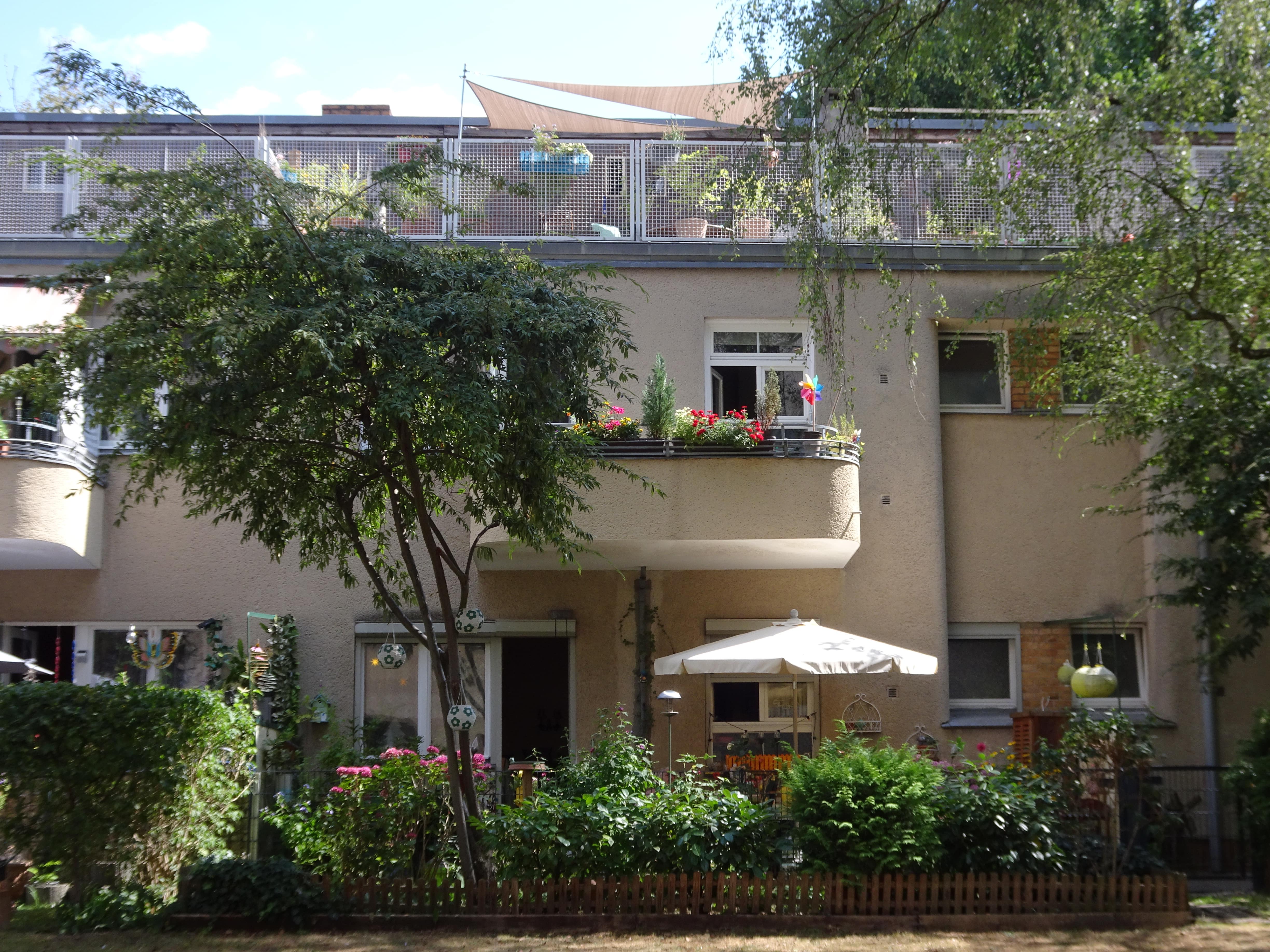
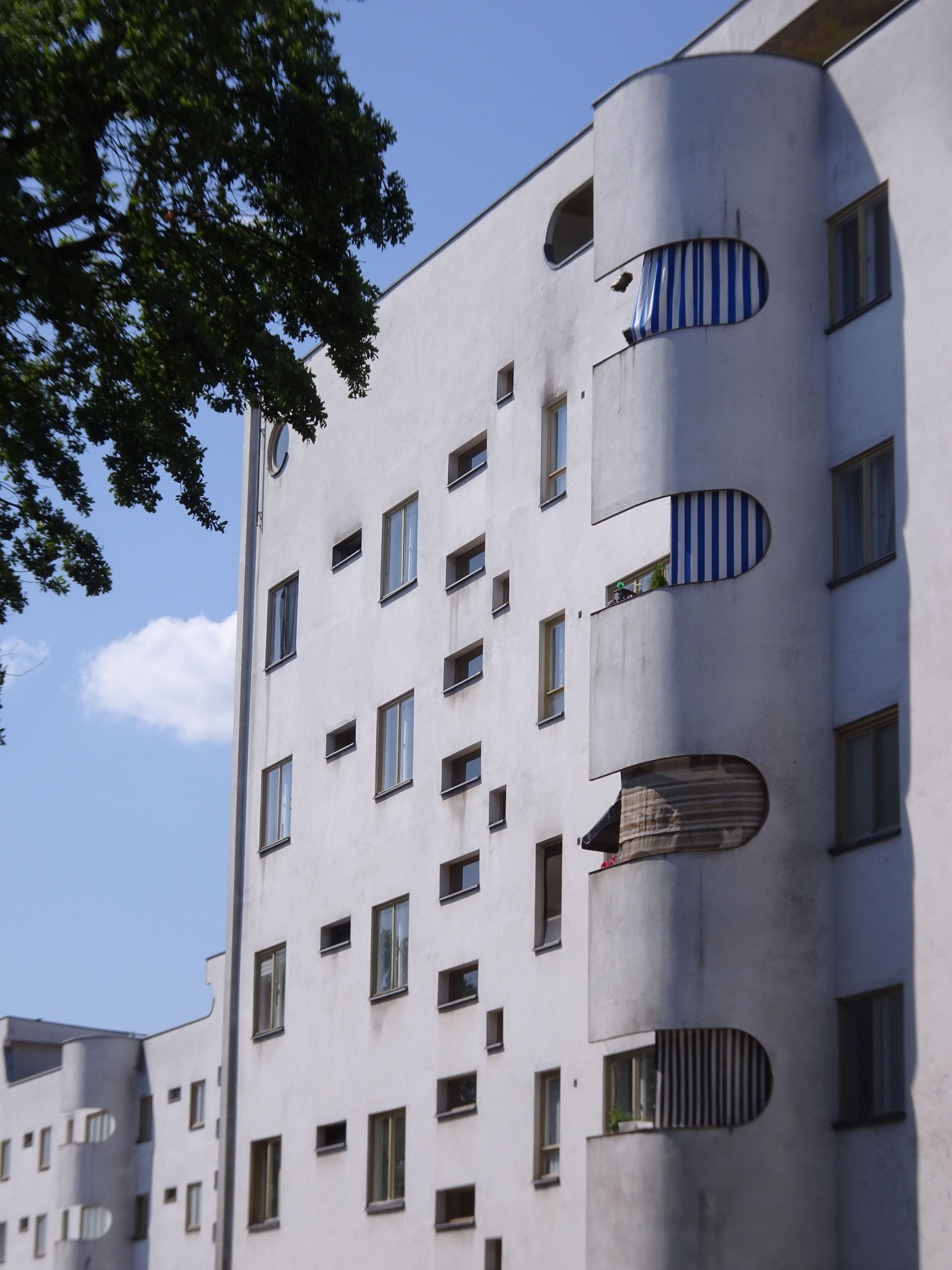
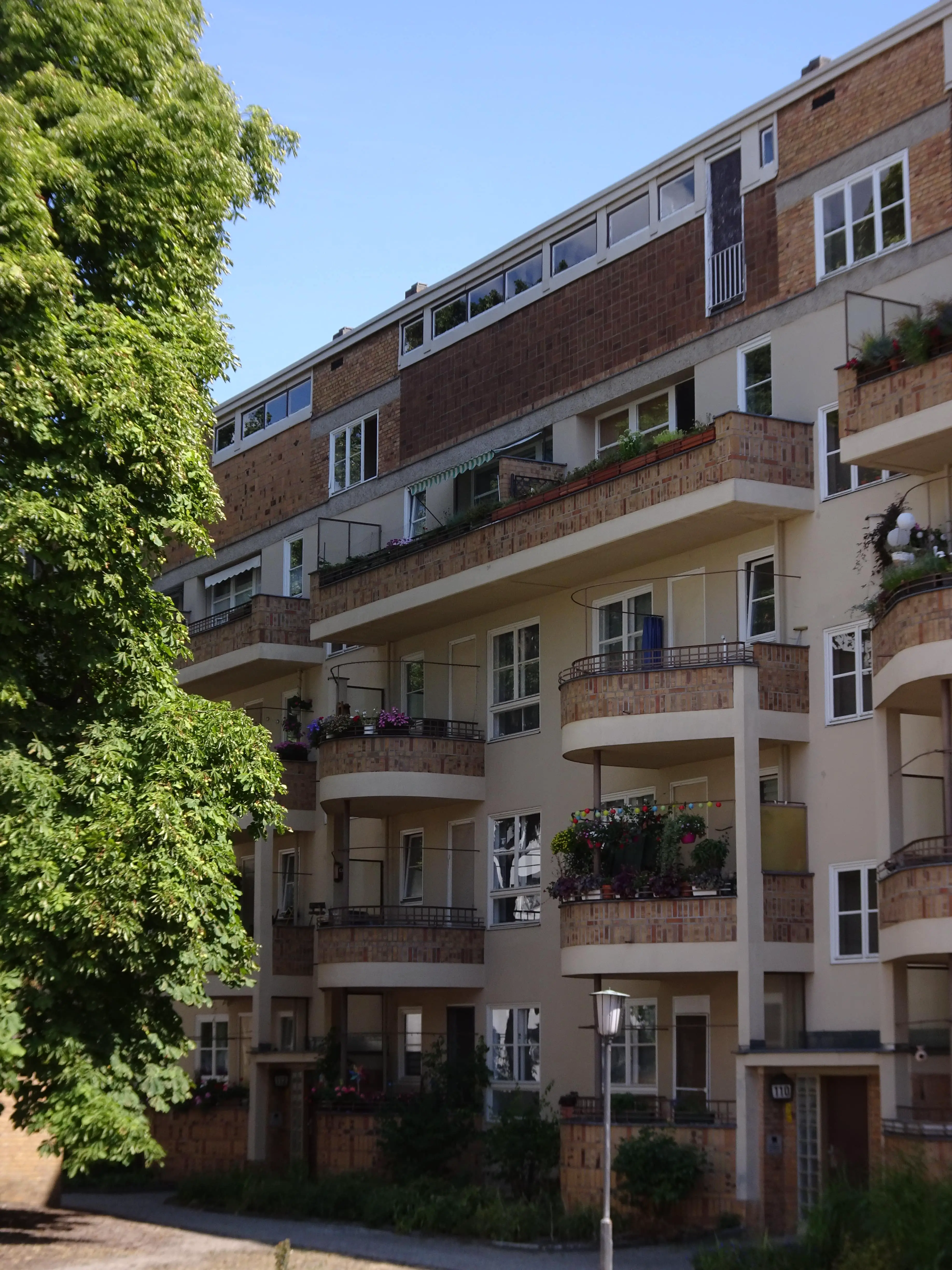
Other buildings were designed by Walter Gropius, Fred Forbát and Otto Bartning, who were all eminent figures in early 20th-century European architecture.
My favourites were the buildings by Paul Rudolf Henning in the northern part, which all have pretty little gardens. I also liked the cute small bar/café “Unser Eckchen” at the eastern edge of the complex.
Reasons for visiting: The differing architectural styles and beautiful gardens.
How to get there: Take U7 to Siemensdamm Station, then walk north along Jungfernheideweg to reach the western end of the estate.
Wohnstadt Carl Legien
This estate is located in the Prenzlauer Berg neighbourhood and is the closest site to central Berlin. If you’re short on time, you could make a small detour from exploring the main sights to check out this building complex to get a taste of the architecture.
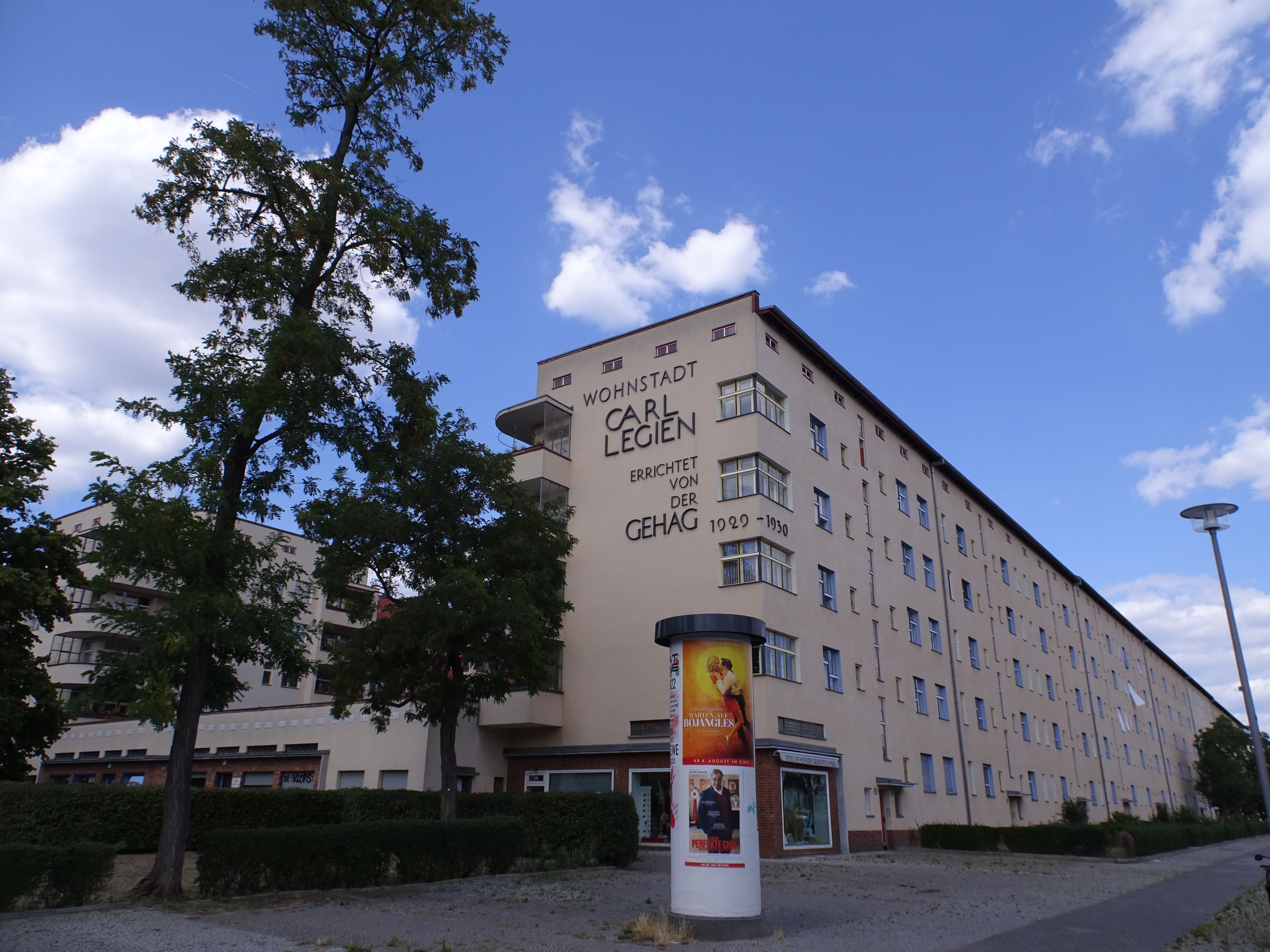
The estate mainly consists of U-shaped apartment blocks that open out to a central courtyard. I visited during the summer, when many of the balconies were beautifully decorated with flowers, which certainly added to the appeal.
Reasons for visiting: The peaceful atmosphere and the nice flowery gardens and balconies.
How to get there: Take S41, S42 or S8 to Prenzlauer Allee. The estate is directly to the north.
Weiße Stadt
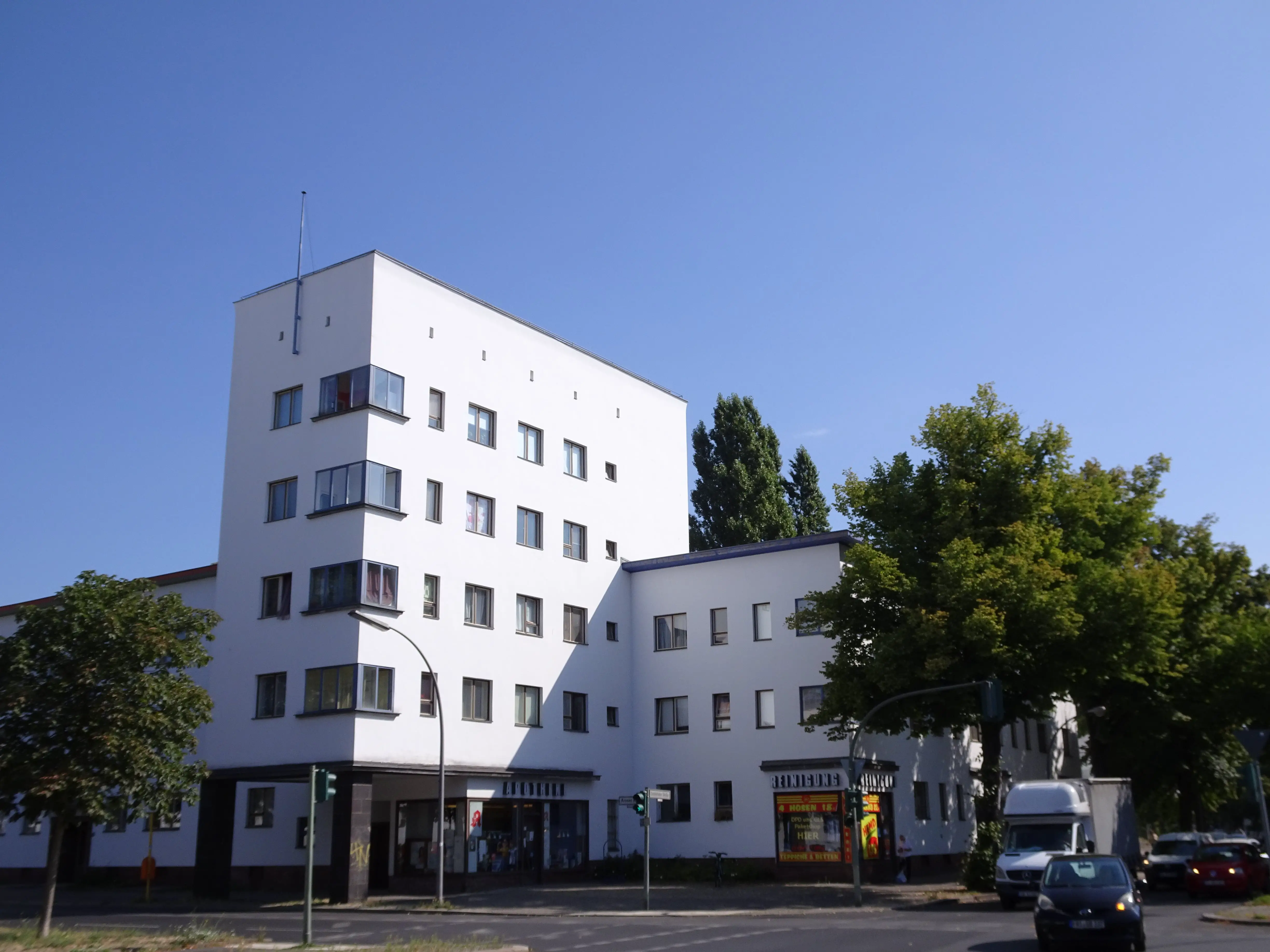
The “White City” is named for its blindingly white façades and was the last of the housing estates to be completed. Its look is somewhat more utilitarian than the other sites and if it weren’t for some unusual architectural elements, I’d say it’s probably not worth the trip for most people.
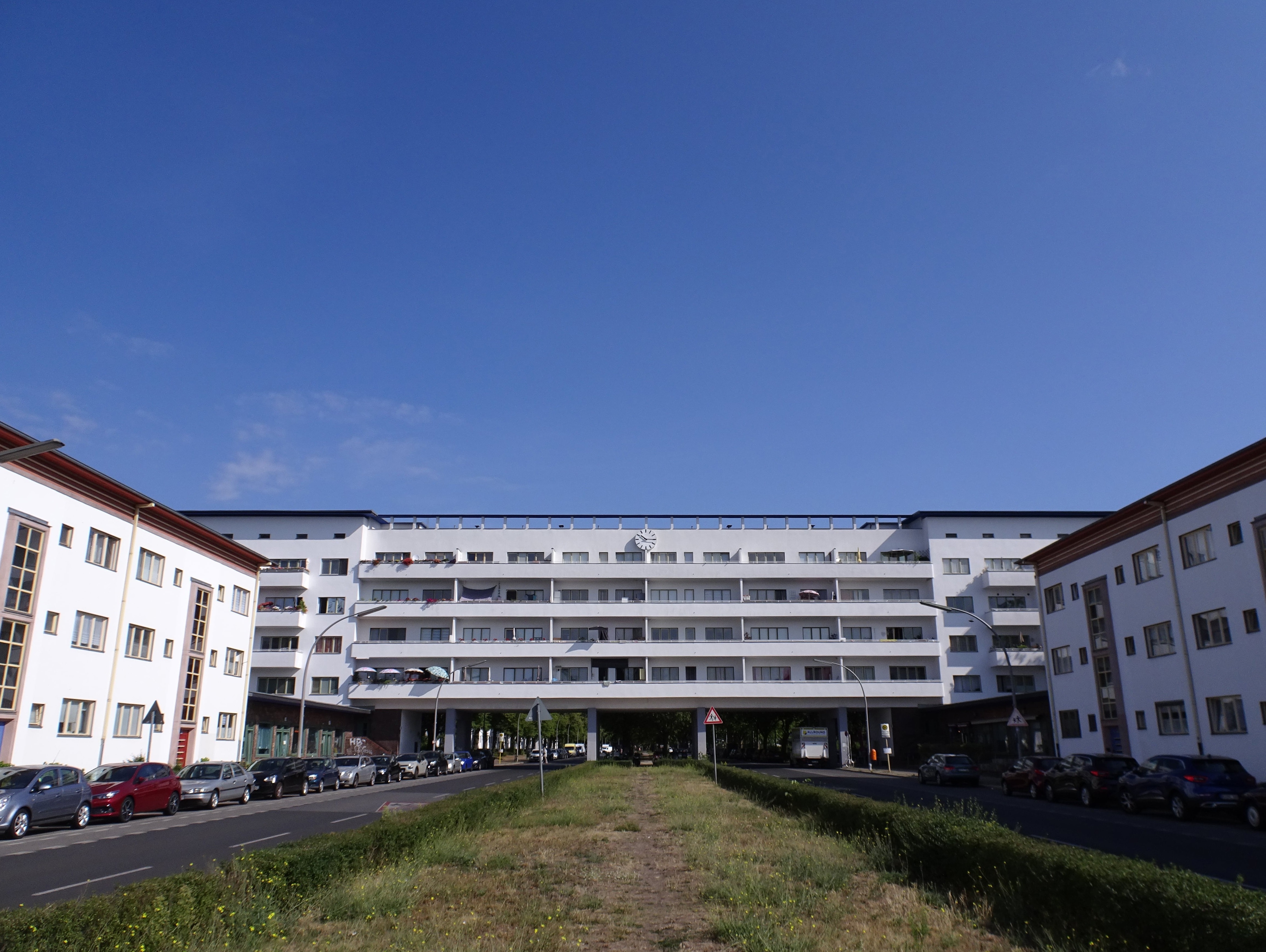
That said, I found the unusual bridge-like structure that spans the main street quite interesting, same as the gate-like duo of buildings that stands at the southern end of the settlement.
Reasons for visiting: The unusual architectural features.
How to get there: Take U8 to Residenzstr. Station, then walk 10 minutes west along Emmentaler Str. Afterwards you could follow Aroser Allee and Barfussstr. south for another 10 minutes to reach Siedlung Schillerpark.
Siedlung Schillerpark
This is the smallest of the sites after Gartenstadt Falkenberg, but unlike the latter one, Siedlung Schillerpark to me was the least interesting of the housing estates.
The red-brick buildings simply looked too much like countless other apartment buildings that I knew from cities all over Europe.
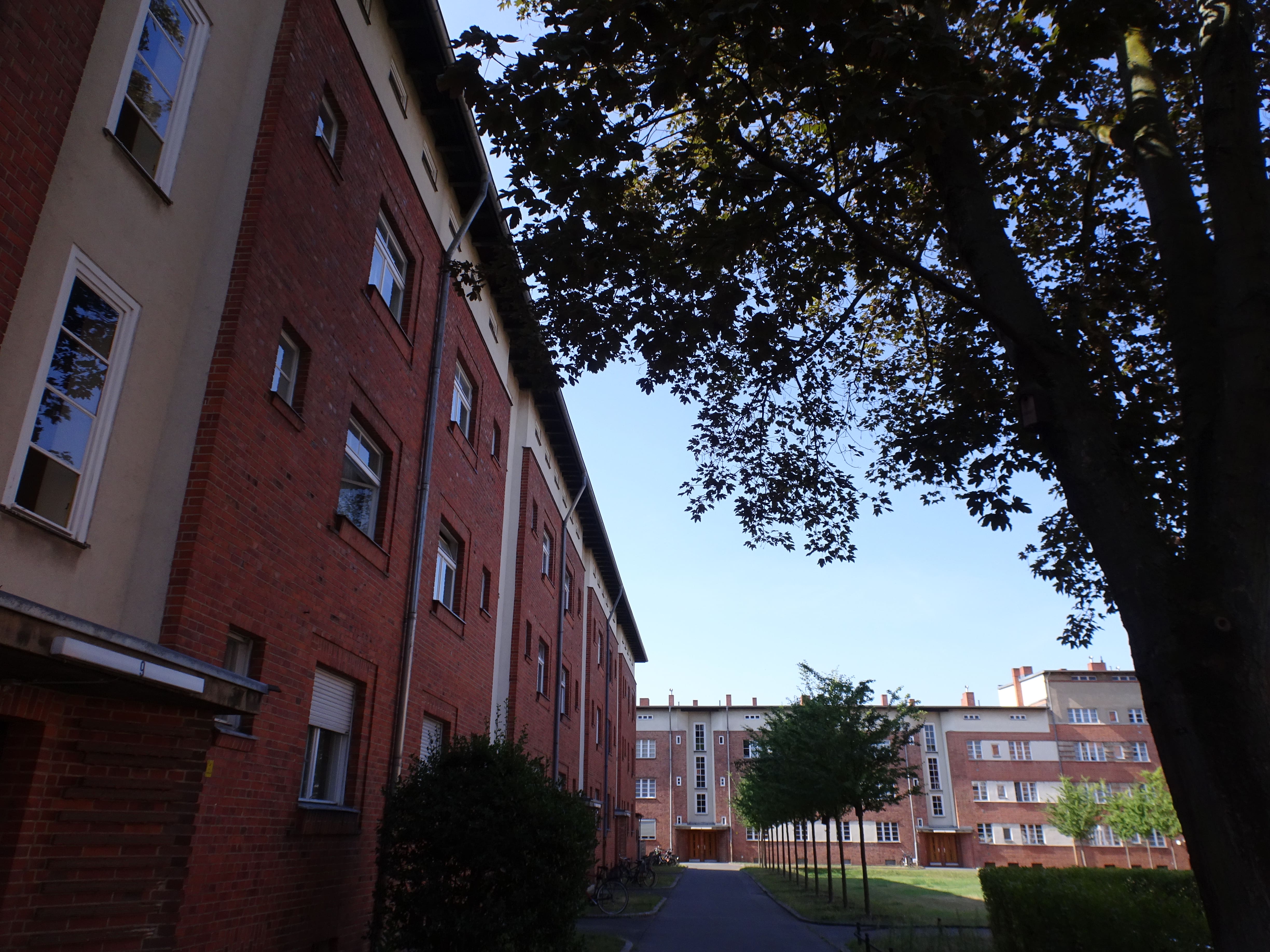
To be fair, this might be to its credit, as this was one of the precursors to that particular style of social housing and influenced the look of all these others.
The tree-studded courtyards and the location next to the pretty Schillerpark mean that there’s still a reason to drop by if you’re seriously into architecture or a compulsive completist like I am;-).
Reasons for visiting: The nice location and peaceful atmosphere.
How to get there: Take U8 to Franz-Neumann-Platz Station, then walk west along Holländerstr., turn south at Aroser Allee and finally follow Barfussstr. to reach the eastern end of the settlement. You can also easily combine Schillerpark with Weiße Stadt Estate (see above).
Which Housing Estate Is The Best?
First things first: All of them are in a way worth checking out and I didn’t regret visiting any of them. That said, some are clearly more attractive or interesting than others and if you only have time for one, I suggest either visiting Gartenstadt Falkenberg or the Hufeisensiedlung.
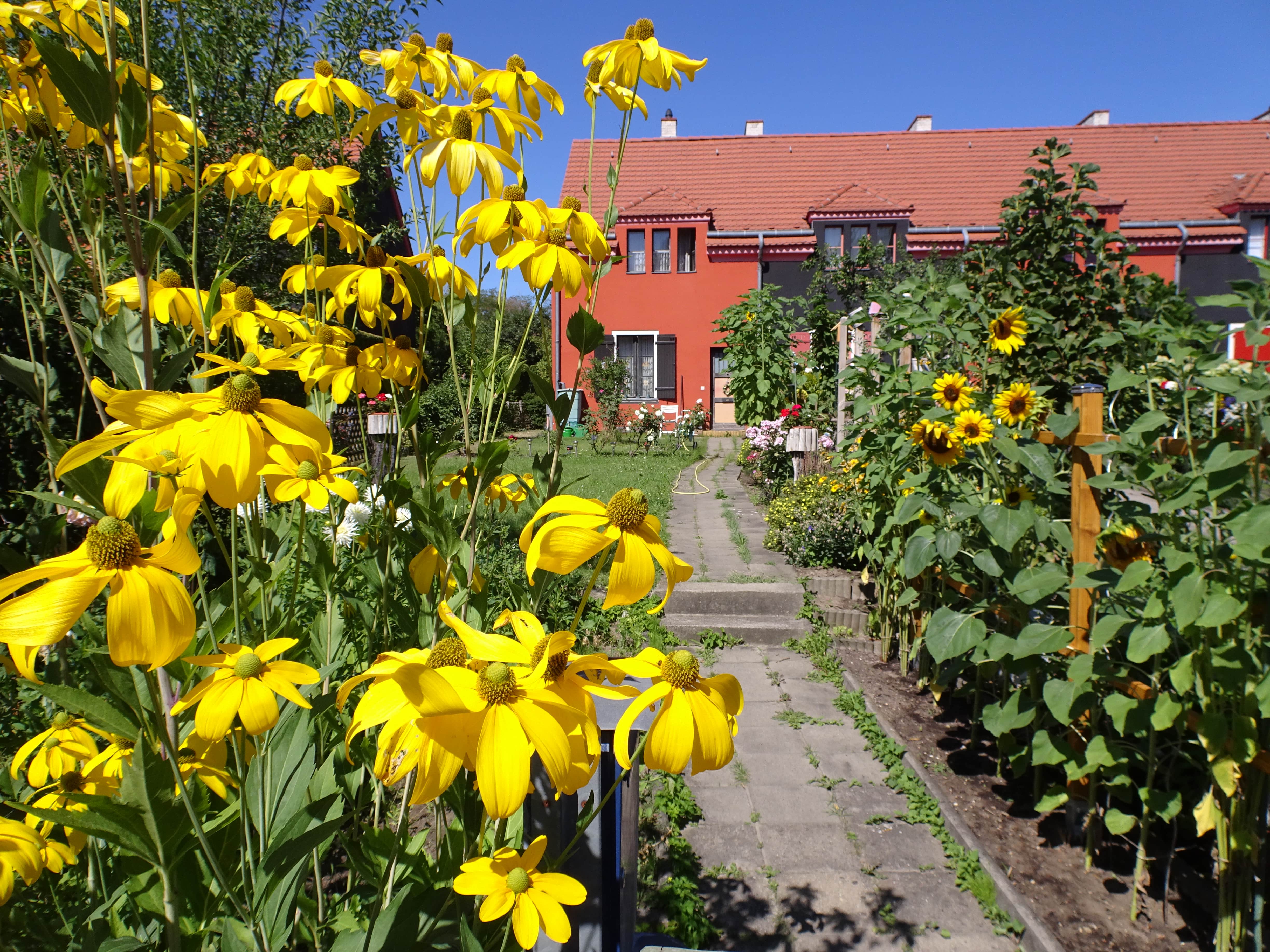
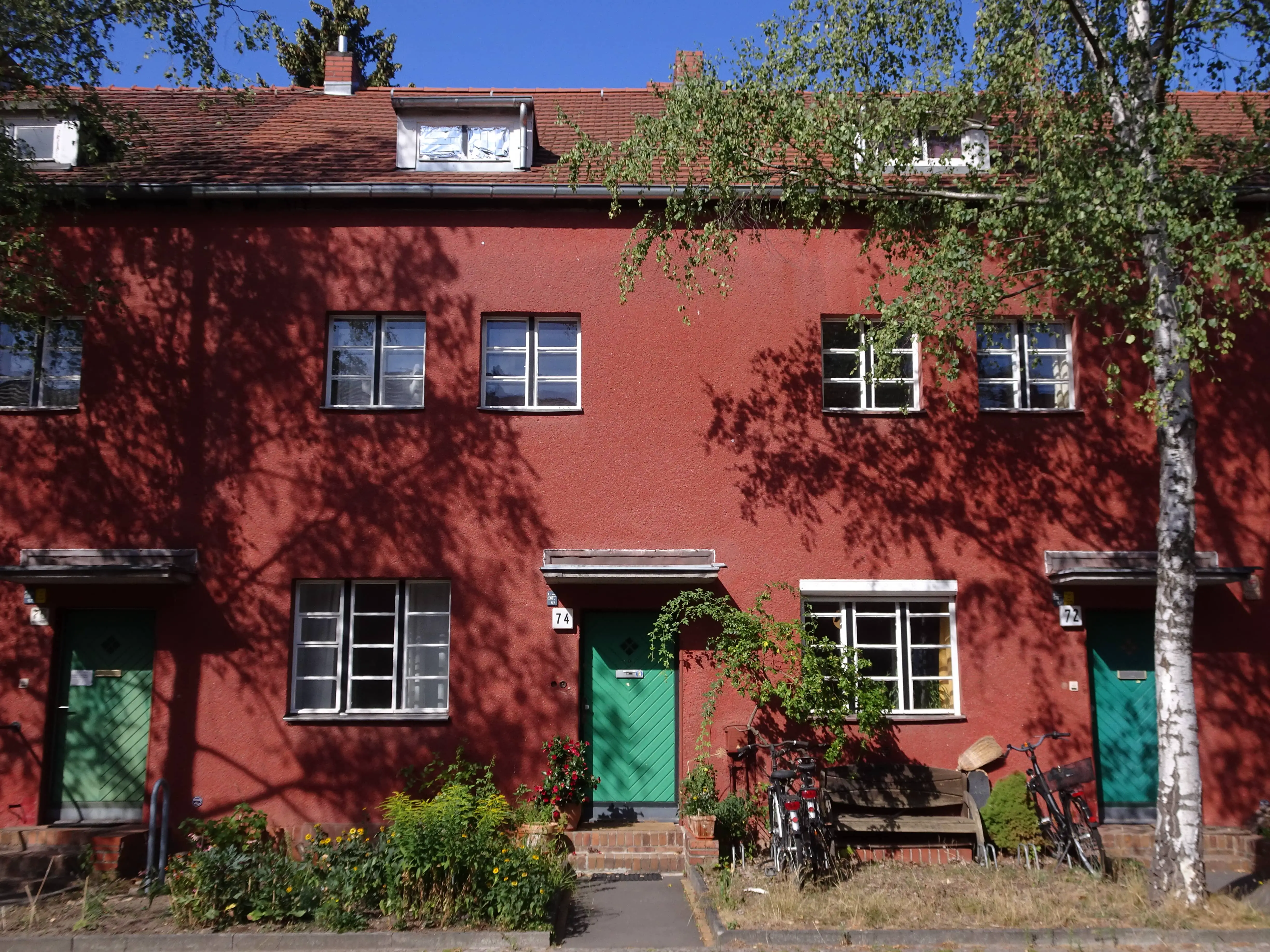
To me, both combined all the best elements from the other settlements: differing architectural styles, beautiful gardens and an altogether peaceful suburban atmosphere. If you have time for more, just go by the list above, as I’ve sorted them in the order I liked them most.
Map of Berlin’s Modernist Housing Estates
You can find all six listed estates in the map below. I also added the locations of the subway or train stations closest to the estates.
Practicalities
Is There an Entrance Fee to Visit the Sites?
All the sites can be visited for free. As they all still contain regular housing, you can only visit the outside, though. An exception is an apartment in the Hufeisensiedlung, which can be rented as a hotel room for a somewhat steep 150€ per night for two people. If you don’t want to spend that kind of money, you can check out the website for some impressions.
When to Visit
All of the estates can be visited 24/7 all through the year, but since I found the beautiful gardens around some of the houses to be a big part of their appeal, I recommend visiting either in spring or summer.
None of the estates are huge tourist attractions, so it doesn’t really matter at what time during the day you drop by. I don’t think they’ll ever be really crowded.
Other Cool Stuff to Do in Berlin
Visiting Berlin’s Abandoned Teufelsberg Radar Station
Exploring Berlin’s Abandoned Spreepark Theme Park
Visiting Berlin’s Twin-Peaks-themed Black Lodge Bar