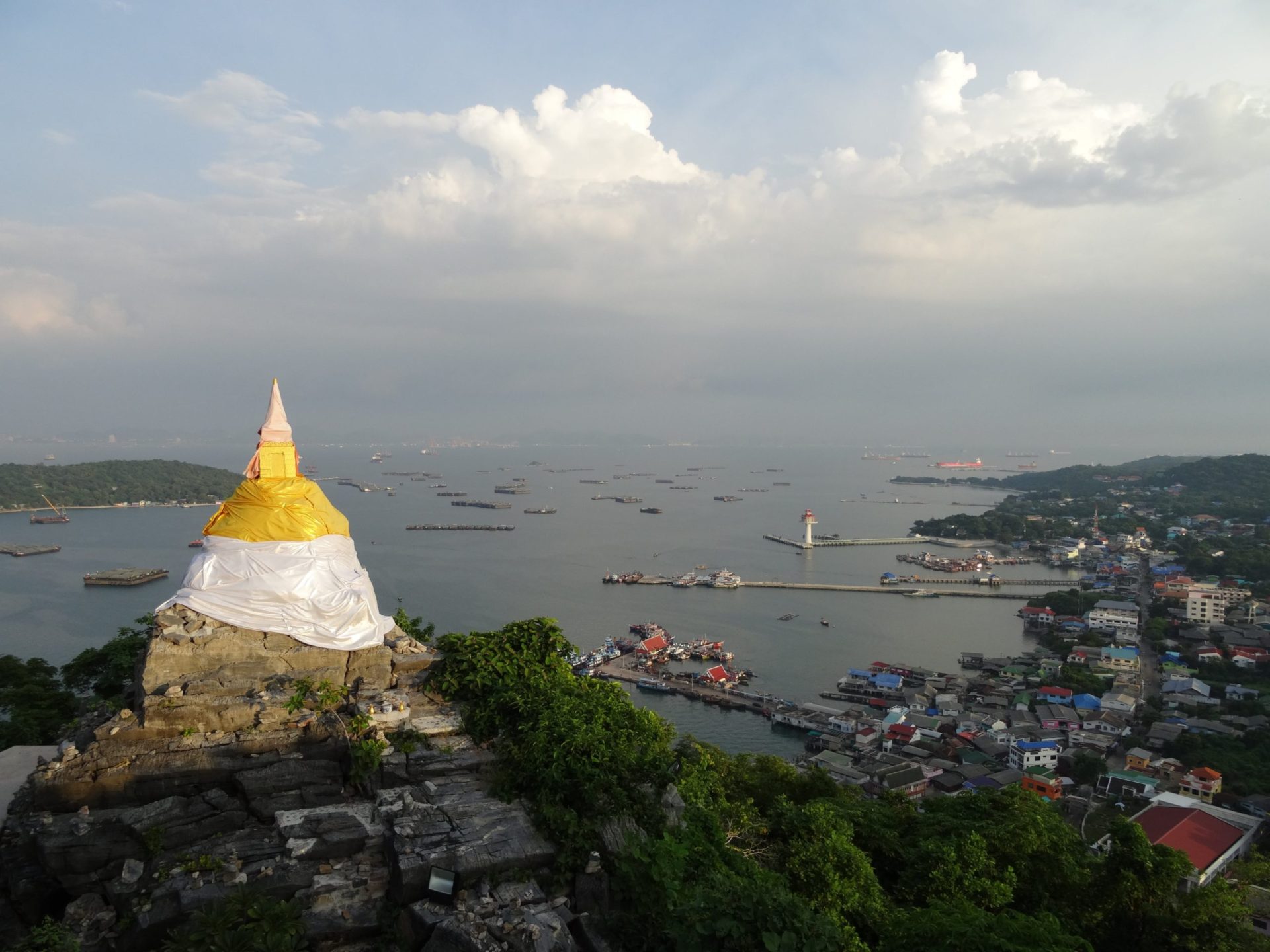
The islands in the Gulf of Thailand are usually super popular with foreign travelers, so I was somewhat surprised when I hardly met any other foreigners on Ko Sichang. I can only assume that the main reason is that there aren’t many beaches (or spots to party) compared to some other Thai islands, like for instance Ko Samet further southeast along the coast.
I’m not much of a beach bum to begin with and I always have a soft spot for places that fly under the radar, so I immediately liked Ko Sichang. Plus, there are a number of really wacky sights around the island.
Cave temples? Check. Golden ape statues? Check. Singing stones? Check. This isn’t your typical Thai island and I love it all the more for it. Read on for everything you need to know about visiting one of my favourite islands in the country.

This post may contain affiliate links, and I might earn a small commission at no additional cost to you. For more info, click here.
Guided Tours of Ko Sichang
If you don’t want to stay overnight on the island (or if you just want a local guide), there are a couple of organized day trips to Ko Sichang from Bangkok or Pattaya available. You can have a look at some other options below.
What to See and Do on Ko Sichang
One of the nice things about the island is that the sights are super diverse, ranging from theremains of a 19th-century royal palace to some amazing viewpoints and impressive limestone caves.
Plus, even if you’re templed-out after spending some time in Southeast Asia, the Buddhist places of worship on Ko Si Chang are quite unique and worth checking out.
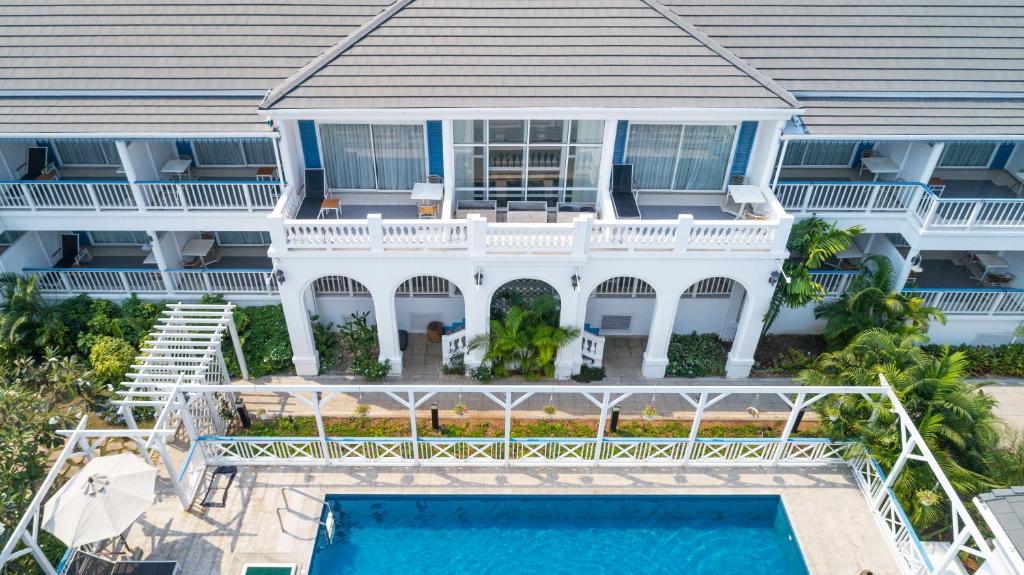
Best Hotels on Kosichang
Budget: Sichang Shine Khao Resort
Midrange: De’ Anchor
Luxury: Somewhere Koh Sichang (pictured)
.
Phra Chuthathut Summer Palace
At the end of the 19th century, King Chulalongkorn (Rama V.) ordered a summer palace to be built on Ko Sichang but it was abandoned only a few years later, when French forces occupied the island in the Franco-Siamese Crisis over the control of Laos in 1893.
The most impressive building of the palace was Vimanmek Teak Mansion, which was eventually transported to Bangkok’s Dusit Palace, where it became the main living quarters of the Royal Family, but there are still some smaller buildings in the pretty gardens of the old summer palace.
A lot of them have small exhibitions on the history of the Chakri Dynasty and some interesting old photographs of King Chulalongkorn’s visits to Ko Sichang. Inside the Phongsri Building is a bronze statue of the king and his family.
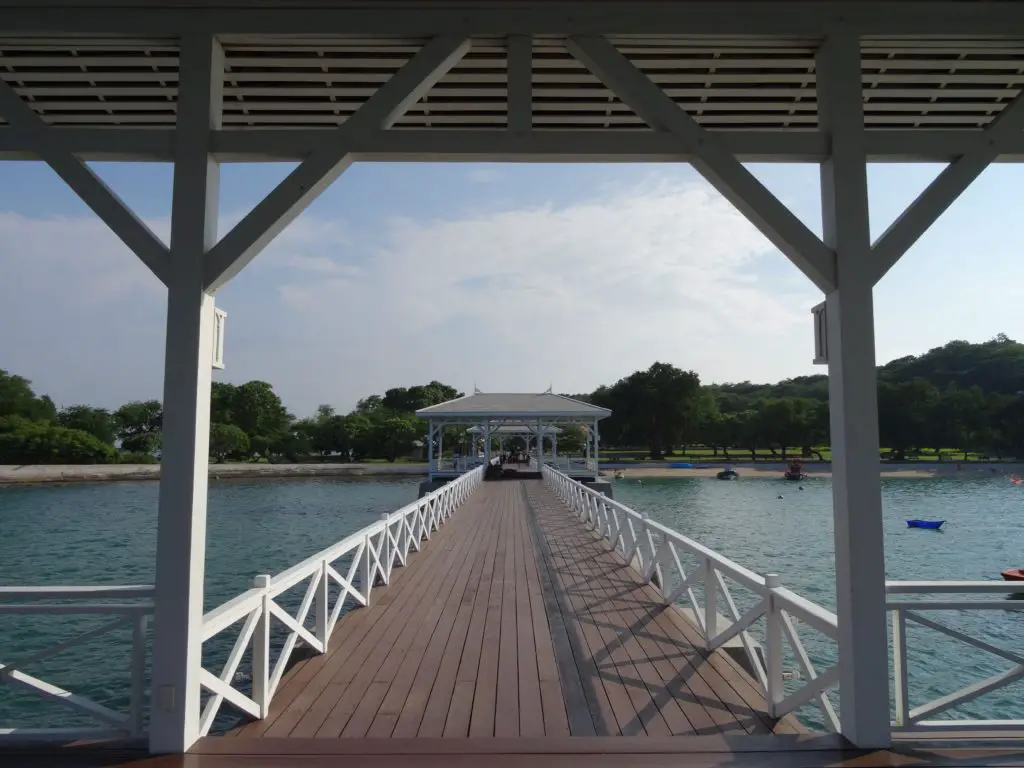
Nearby is the Saphan Asadang Balcony, which leads onto a bright white wooden pier that juts out into the Gulf of Thailand next to a tiny peninsula with a small lighthouse.
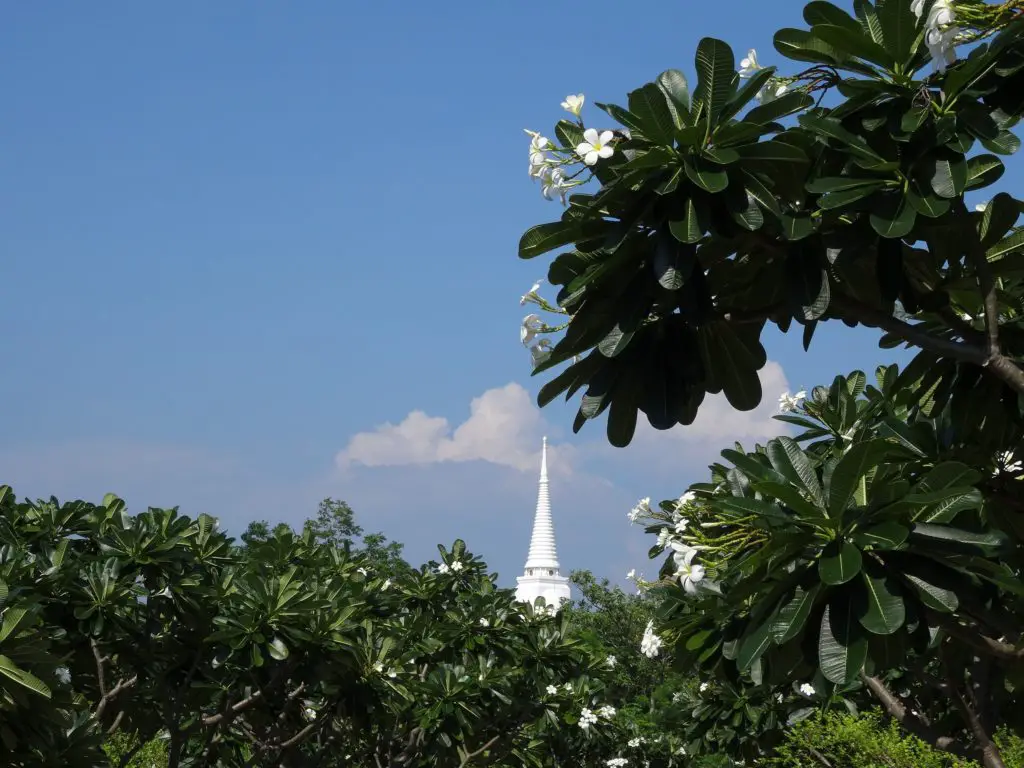
I also liked the small Wat Atsadang Nimit Temple at the western end of the grounds, which has a bright white chedi (stupa) that was surrounded by flowering frangipani bushes when I visited. There’s a small pathway at the western edge of the grounds that leads up to the temple.
On the way up there’s the so-called Singing Stone, which supposedly hums when you strike it at the right point, but to be honest, all I got was a somewhat metallic clank.
The palace grounds are about halfway down the east coast of the island, at the southern edge of the village. There’s no entrance fee.
San Jao Phaw Khao Yai (Chinese Temple)
The name of this impressive Chinese temple translates to “Shrine of the Father Spirit of the Great Hill”. I’d say ‘great hill’ sounds about right, as the temple sits close to the island’s highest point in the hills north of the village.
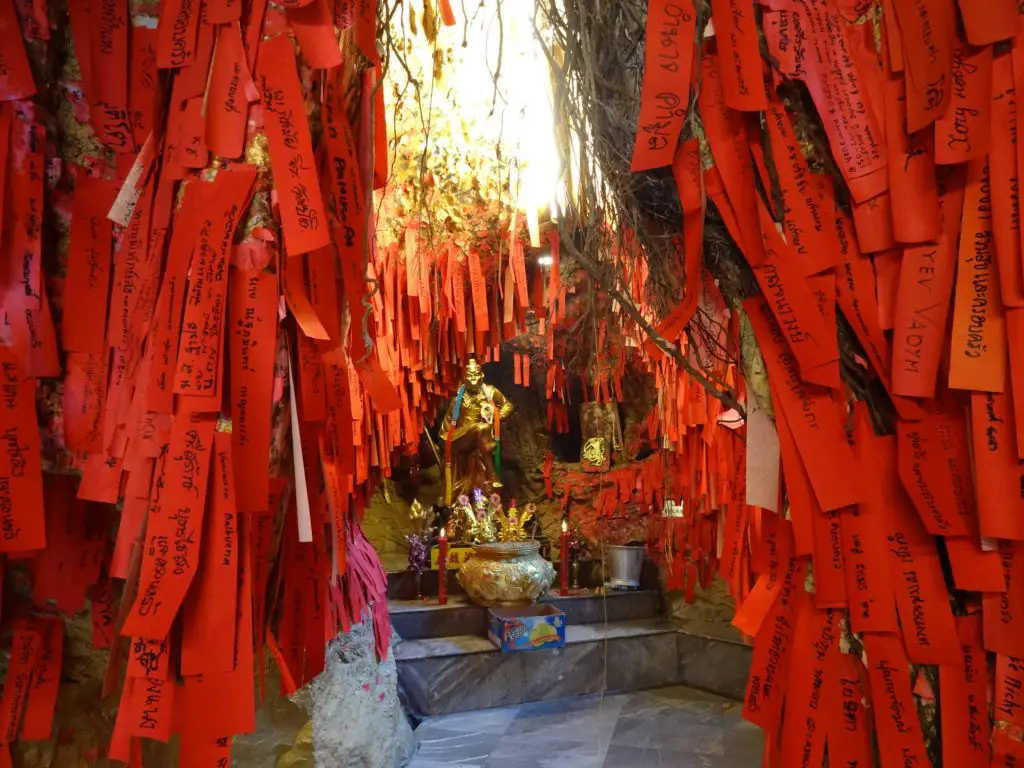
The main temple complex is full of dragon sculptures and gaudy statues of various deities, plus there’s an impressive shrine inside a cave that is centred on a golden ape statue (A variation of Hanuman, perhaps?). All around are hundreds of red paper slips with little written prayers.
I definitely recommend climbing further up the mountain from the main cluster of buildings to reach a stone representing Buddha’s Footprint, from where you’ll have a fantastic view of the village, bay and hilly interior of the island.
Wat Tham Yai Prik
Wat Tham Yai Prik is a more typical Thai Buddhist temple with a few buildings in a pretty garden with nice views down both sides of the island. The most interesting feature to me were some Meditation Cells inside little caves on the compound.
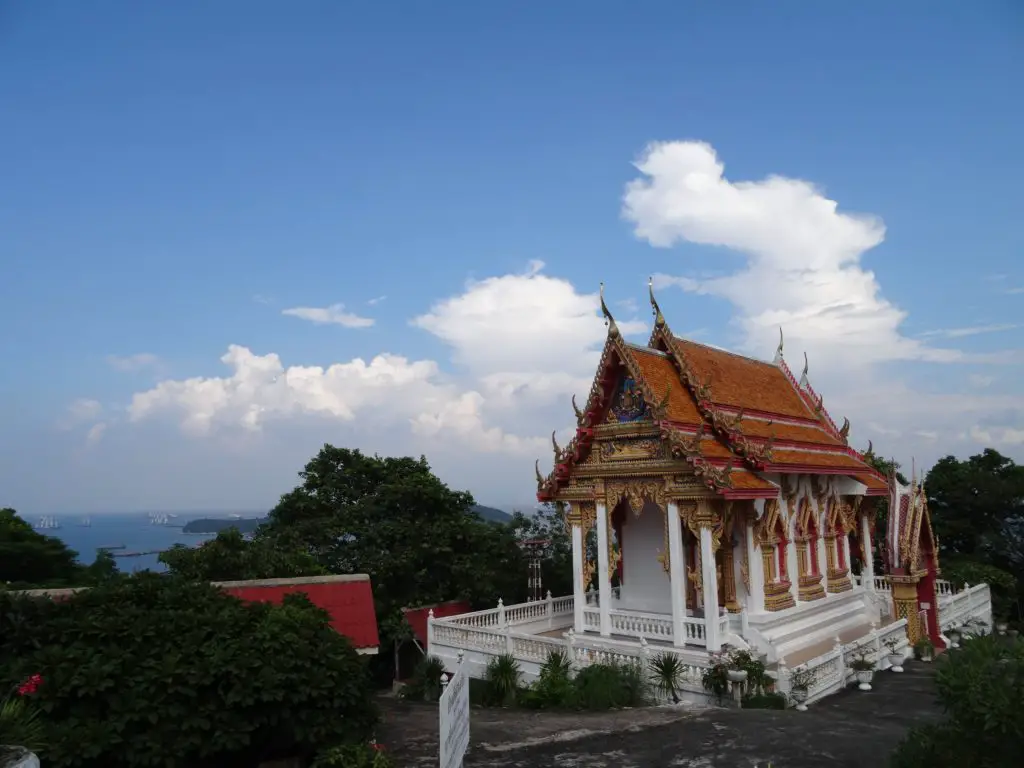
It’s best to take a flashlight, as I almost stepped on a tail-less whip scorpion in one of the cells. They’re not poisonous but they look like they come straight out of David Cronenberg’s nightmares.
The temple is in the hills at the western end of the village. You can find it by following the road south from the main pier and continuing south-west at the intersection with Th. Saowapa (the main road through the village).
Jak Kra Pong Cave Temple
This pretty cave-temple complex is centred on the big golden Buddha statue that you can see from all over the eastern part of the island. There are several pathways, which lead through tunnels in the rock and to cave shrines with statues of the Buddha and different Bodhisattvas (I even spotted a Ganesha).
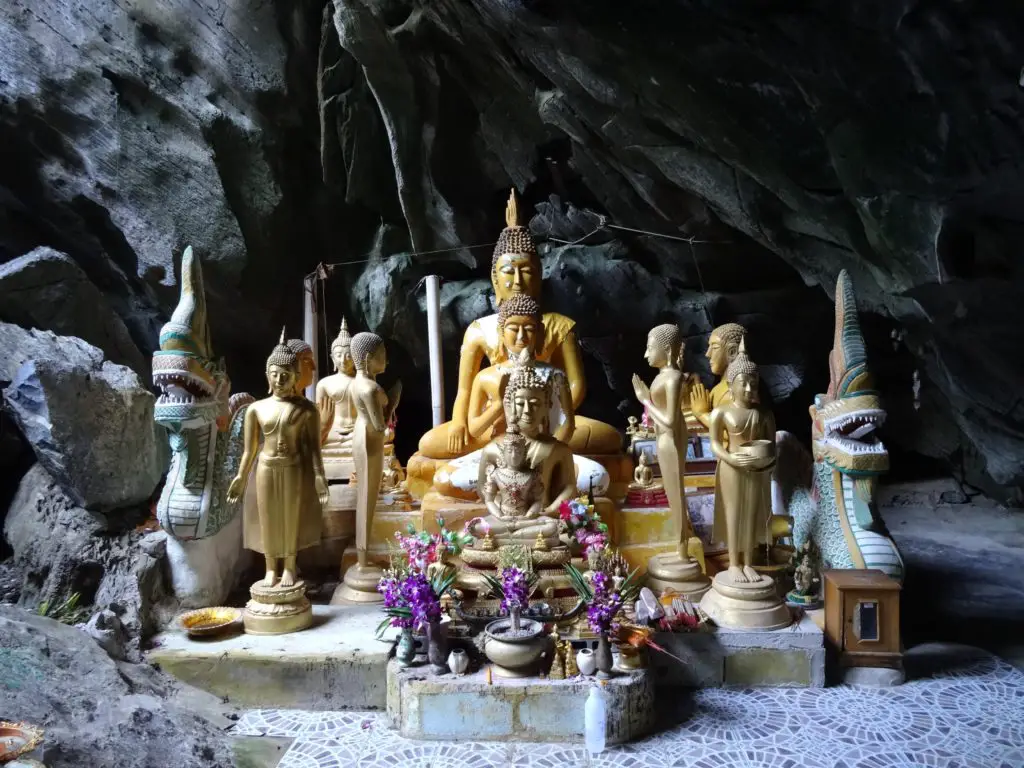
The friendly monk also showed me a way past their dormitories, where I could climb up to the golden chedi (stupa) on top of the caves. Once again, there are great views of the village and bay to the east, but you definitely have to watch your step, as there are lots of holes in the ground.
Also keep an eye out for the giant millipedes that I saw all over the island (including in my hotel room😅), but in especially large numbers on the grounds of this temple. The temple is located directly to the north of Wat Tham Yai Prik.
Taam Pang Beach and Kayaking
This is the only proper beach on the island and it was rather crowded when I dropped by. A cool thing to do here is to rent a small kayak and paddle along the coast for a different view of the island. I paddled all the way to Ko Yai Thao, a tiny islet off the southern tip of Ko Sichang, where I saw some giant iguanas.
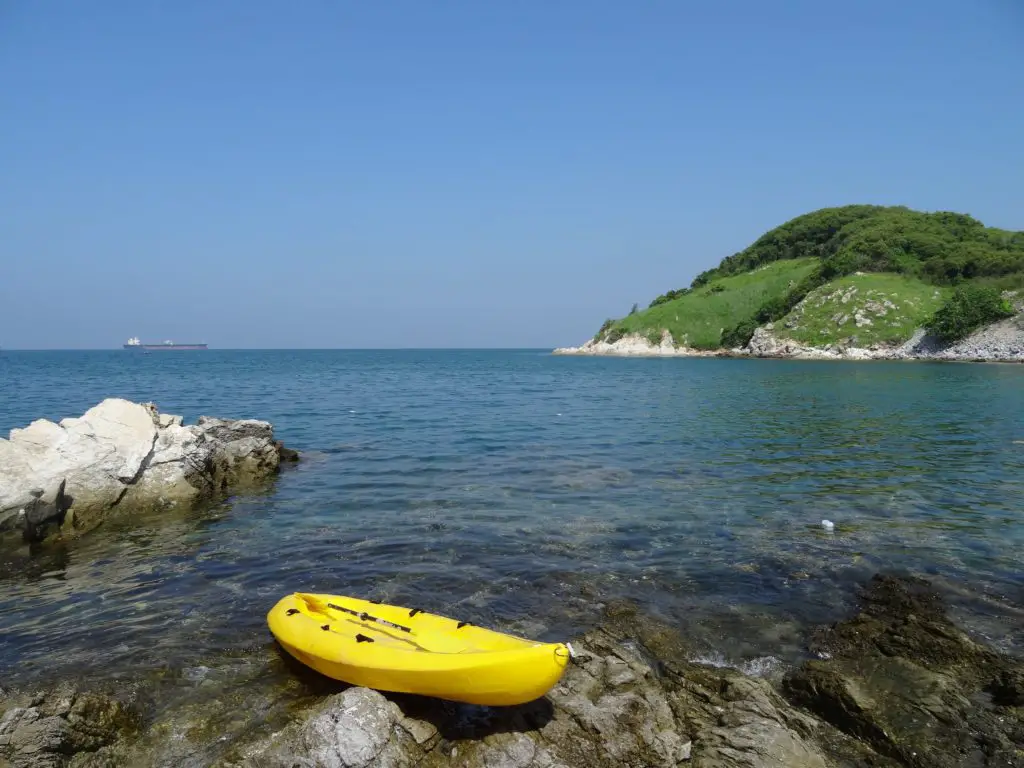
Just make sure to conserve your energy, as it suddenly got really windy when I went back, so returning to Taam Pang Beach was quite a struggle. I also always bring a waterproof bag to keep my belongings dry and safe while I’m in a small boat. Depending on how choppy the waves are, you can get quite wet.
The beach is located in a bay along the western coast of the island. Follow the main road south-west out of the village past the palace and turn west at the first big intersection to get there.
Cape Khao Khat Limestone Cliffs
At the northwestern coast of the island there’s an area of limestone-cliffs with a walkway and some viewpoints along the coast. Granted, this won’t be the most impressive cliff-face you’ve ever seen but I still found it worth checking out.
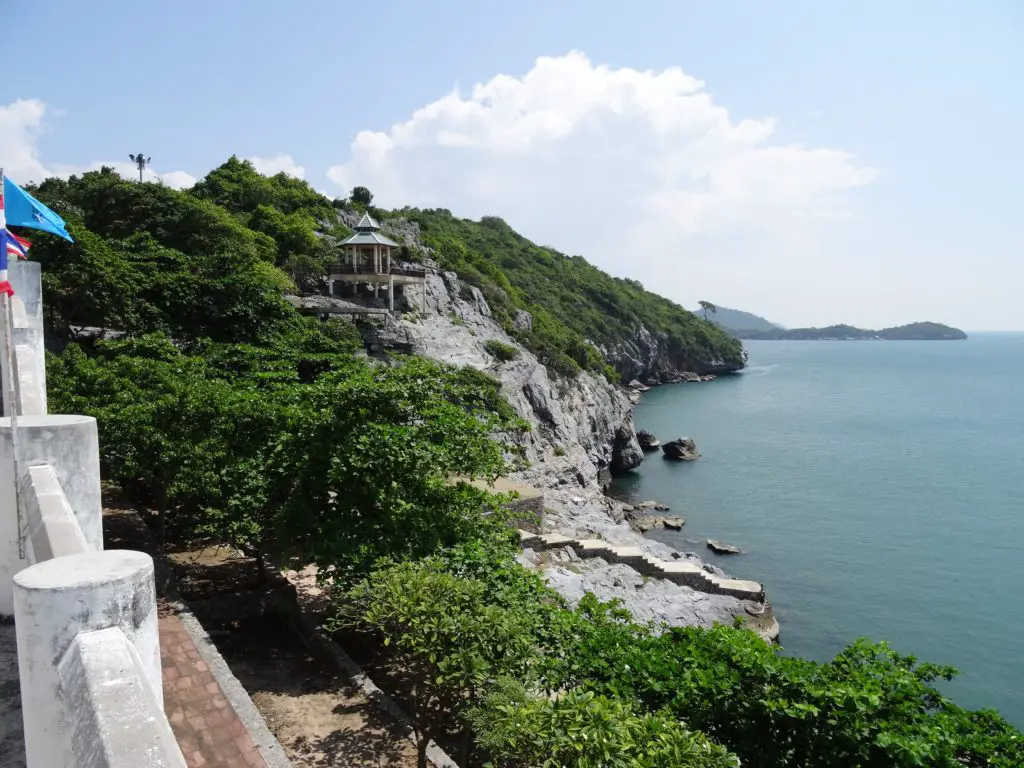
I also found it a nice place to watch the sunset. If you take a close look at the rock you can see its striated structure, which is a good illustration of how long it took for the cliffs to be slowly lifted out bit by bit from the seabed.
Chonlathassathan Research Aquarium
Directly north of the summer palace is the “Sichang Marine Science Research and Training Station” of Bangkok’s Chulalongkorn University. There are a few outdoor tanks and aquariums with local fish and other sea animals, that you’re allowed to peek in.
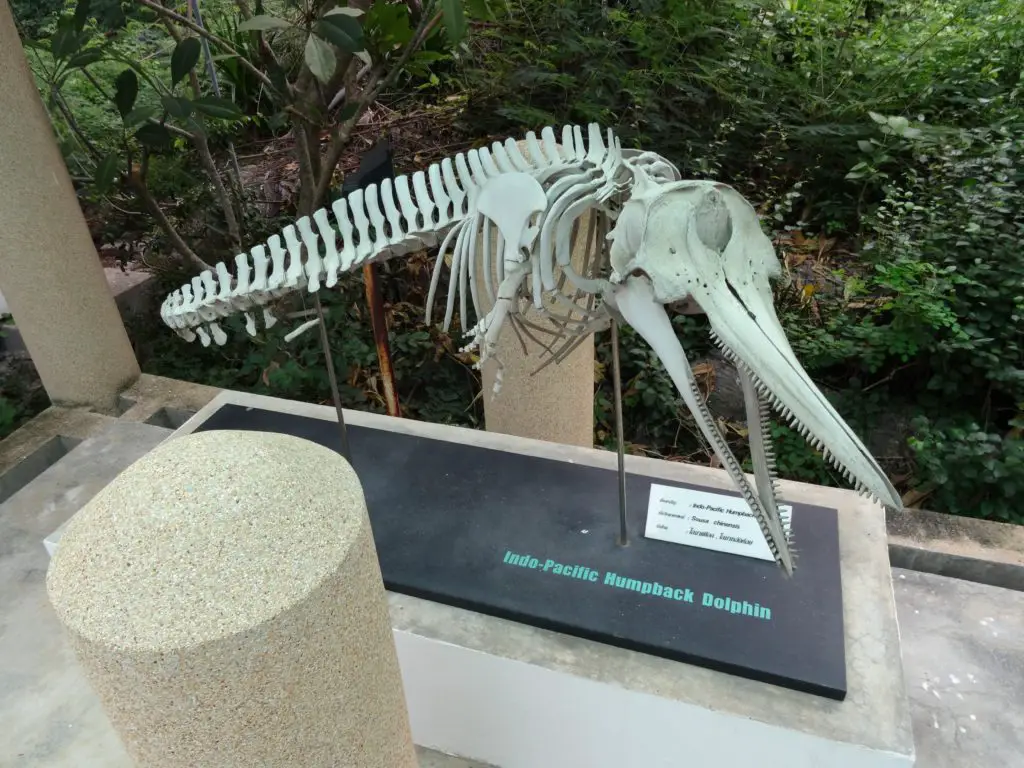
I was a bit taken aback by the gigantic sea urchins, which reminded me not walk along the seafloor in the waters surrounding the island. Otherwise, I found it a bit depressing, as some of the tanks felt way too small. Once again, there’s no entrance fee.
What to See in Sri Racha
Sri Racha is the jumping-off point for Ki Sichang and while there aren’t a whole lot of sights, I found the Chinese-Thai Wat Ko Loi on the small islet of Ko Loi by the old pier worth a peek.
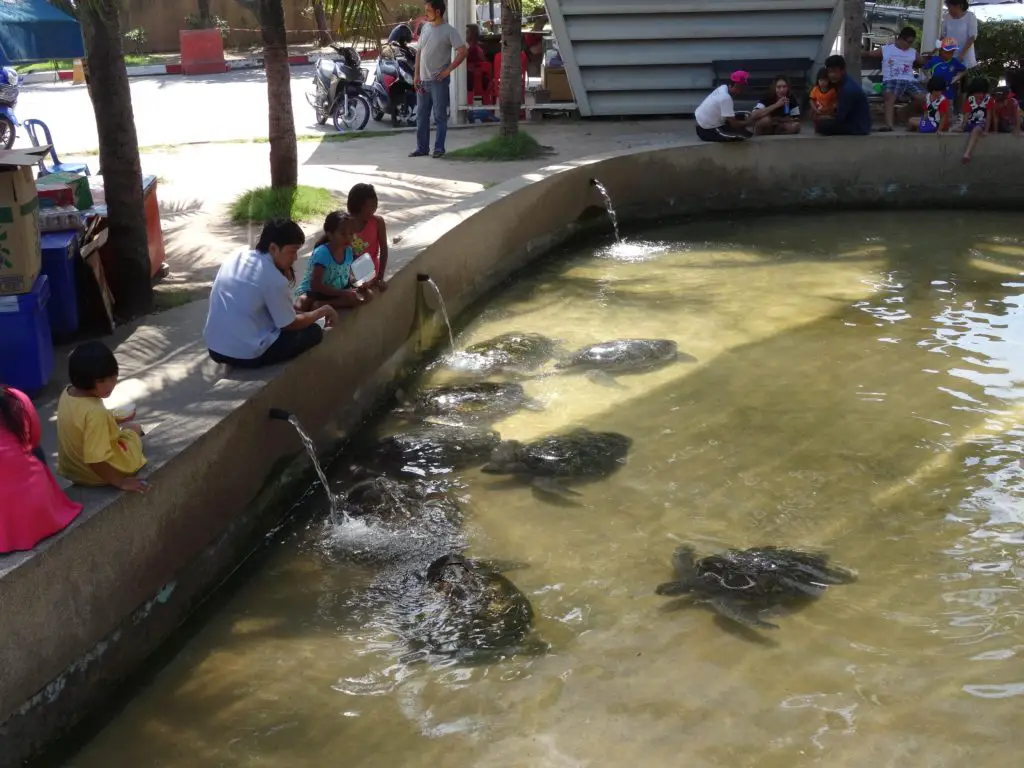
There’s a pretty Ubosot with gold-plated monk statues and some huge sea turtles swimming around several ponds on the grounds. There’s also a brightly painted Chinese style pavilion nearby.
If you have to wait for your ferry to Ko Si Chang like me, I found the palm-dotted Health Park on the mainland a nice place to sit for a bit in the shade.
Map of Ko Sichang
Here’s a map to give you an idea of the layout of the island with all the sights I mentioned above.
Practicalities
How to Get to Ko Sichang
To get to the island, you can take the ferry from the village of Sri Racha on the mainland. The ferry terminal is at Ko Loi pier near the Chinese-Thai Wat Ko Loi temple.
When I was there, the ferry went hourly between 7am and 8pm from Sri Racha to Ko Sichang and between 6am and 7pm from Ko Sihang to Sri Racha. The ride takes about 45 minutes. You can check here for the current schedule.
To get to Sri Racha, you can take any overland bus or minibus traveling along the coastal road between Bangkok (or Pattaya) to the north and Chanthaburi or Trat to the south. In Bangkok, big overland buses start from Ekamai and Mo Chit Mai Bus Station. The ride should take about 1.5 hours.
How to Get Around on Ko Sichang
I found the island small enough to explore on foot, but if you prefer you could also rent a scooter. Many guest houses have a couple available or otherwise there’s a place renting them right by the pier.
For my part, I was fine on foot, but when the receptionist at my hotel offered that her son could drop me off at Taam Pang Beach with his motorbike I accepted, not knowing that her son was only 8 years old. Live and learn, I guess.
Where to Stay on Ko Sichang
There are somereasonably priced hotels and guest houses, especially in the small village in the northern half of the island. I stayed at Sichang Shine Khao Resort, which might not be the most atmospheric of places, but it was perfectly decent and certainly the best value hotel on the island (plus the staff was very friendly).
Otherwise, there are a few midrange options, like De’ Anchor and Somewhere Koh Sichang is the best-rated upscale option. You can have a look at the map for more places to stay.
Where to Eat on Ko Sichang
Ko Sichang is famous for its seafood among Thais and I found it a good strategy to judge the quality of a restaurant by how many people I saw eating there.
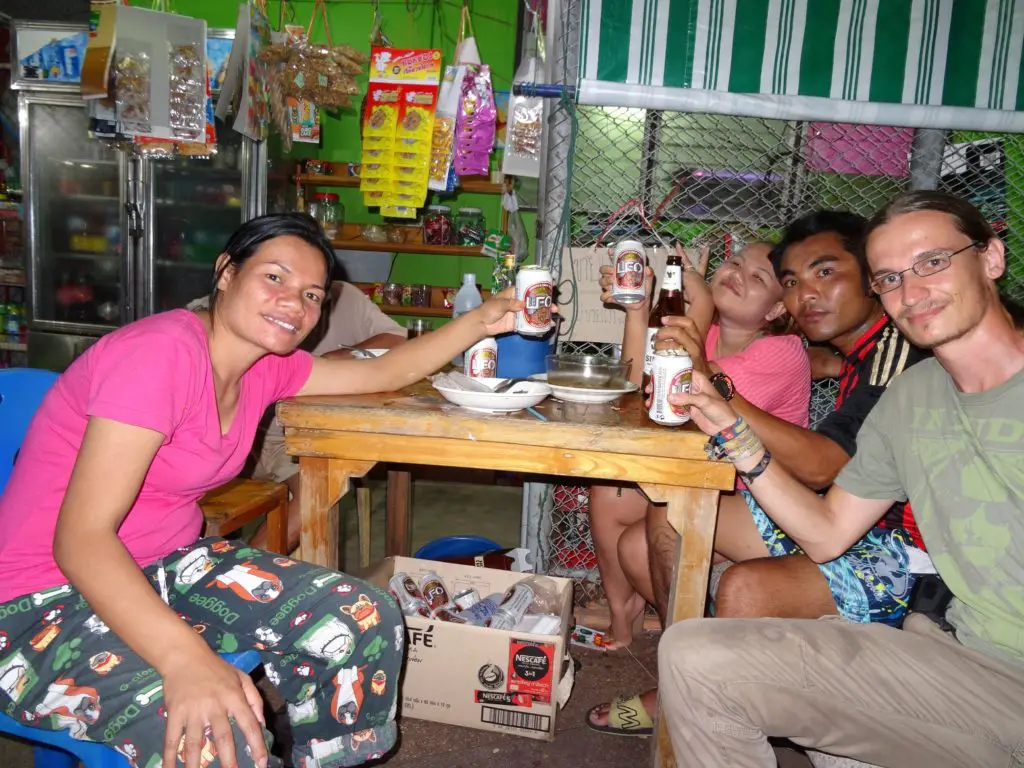
I particularly liked Chom Tawan Restaurant at the southern end of the village near the small aquarium, which had a great Tom Yum Kung (spicy and sour shrimp soup), but there are plenty of other places around.
Where to Go Next
Ko Samet, a pretty island further south-east along the coast
Chanthaburi, Thailand’s City of Gems