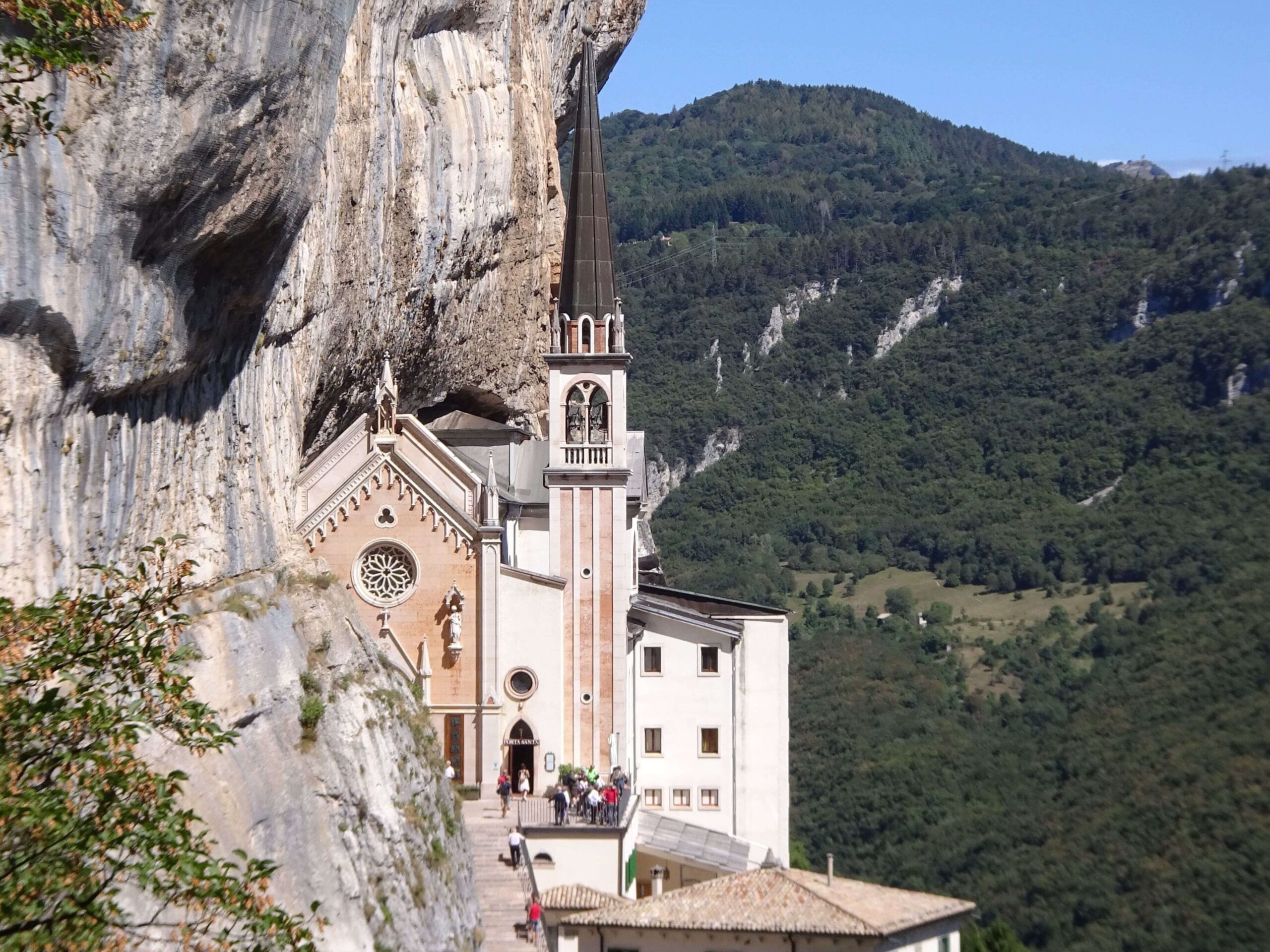
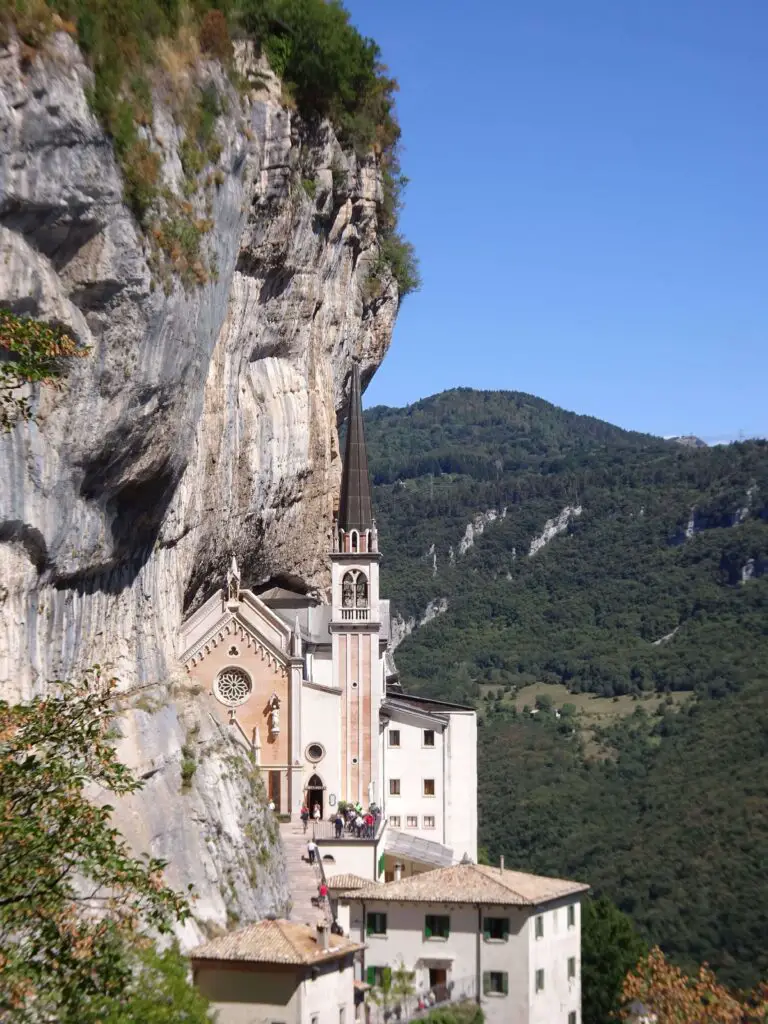
The Sanctuary of the Madonna della Corona was one of the most striking sights that we came across in Italy’s Veneto Region, as it clings dramatically to the side of a cliff hundreds of meters over the valley floor.
The church dates back to the 16th century, and is still one of Italy’s most important pilgrimage sites, which explains why we saw worshippers and tourists in equal numbers when we were there.
We visited the church on our driving tour of the Valpolicella Region and apart from the location, we liked the unusual architecture and the awesome views from the terraces around the building. Here’s everything you need to know about exploring the church.

This post may contain affiliate links, and I might earn a small commission at no additional cost to you. For more info, click here.




Guided Tours of the Sanctuary
If you don’t want to make your way to the Madonna della Corona on your own, you could take a guided tour from Garda or Verona. You can have a look at some options below.
The History of the Sanctuary
The story of the basilica goes back to medieval times, when a hermitage is said to have been erected here around 1000 AD by monks from Verona’s Basilica of San Zeno.
A bigger monastery was built in the 13th century, but the hermits still lived far removed from everyone else, as the isolated place was very difficult to get to.
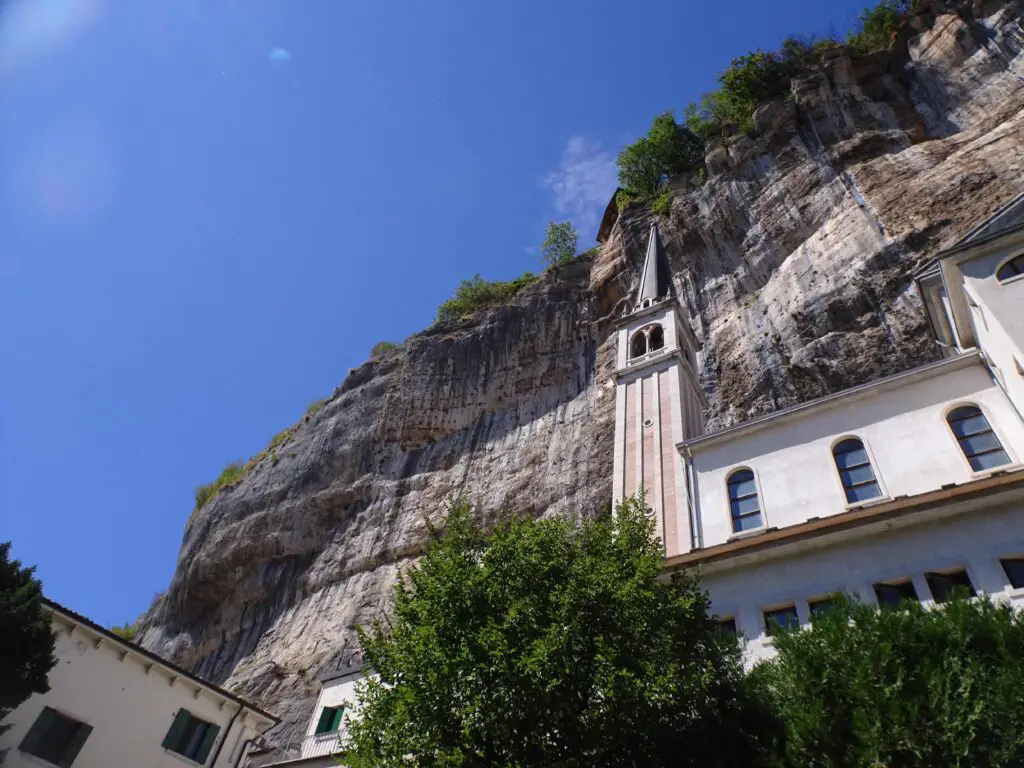
The church building itself dates to the 16th century, but has often been remodelled and expanded over time.
Around that time, a sculpture of the Virgin Mary is said to have appeared out of thin air, which kick-started the steady stream of pilgrims to the sanctuary, which still continues today.
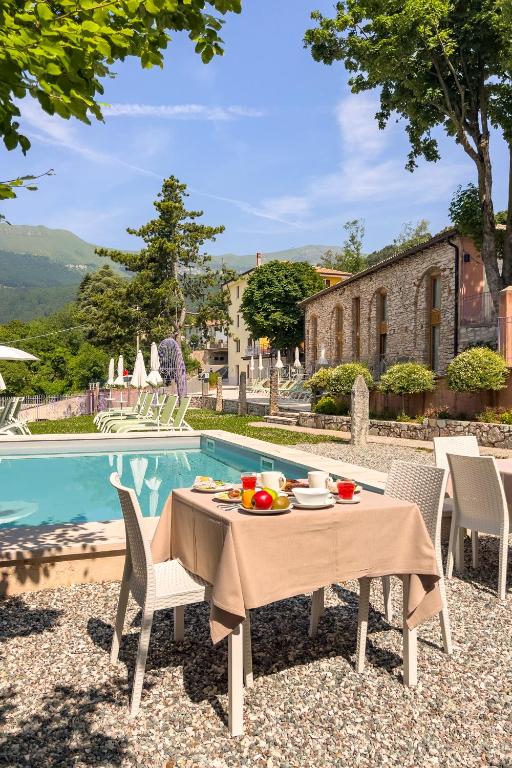
The Best Hotels in the Area
Budget: Agriturismo Preele
Midrange: Hotel Belvedere
Luxury: Hotel Corona (pictured)
.
What to See at the Sanctuary
The Way to the Sanctuary
When you’re walking to the church from Spiazzi village, you’ll have to follow a zig-zagging road down the mountain slope, which is decorated by some sculptures showing the Stations of the Cross.
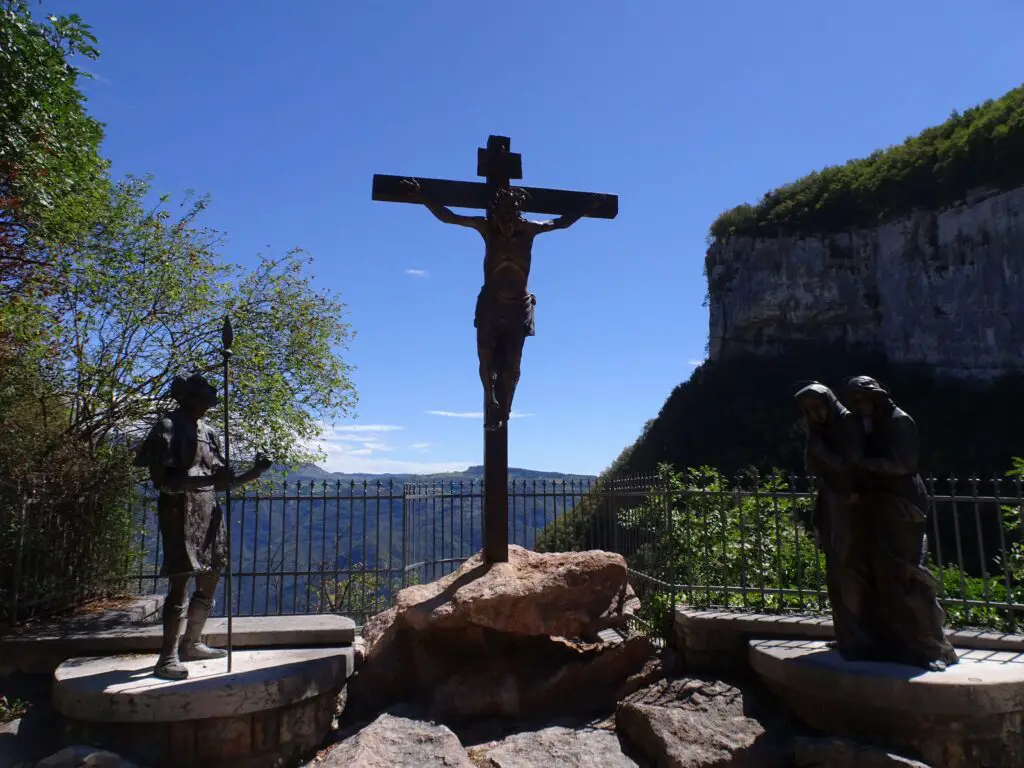
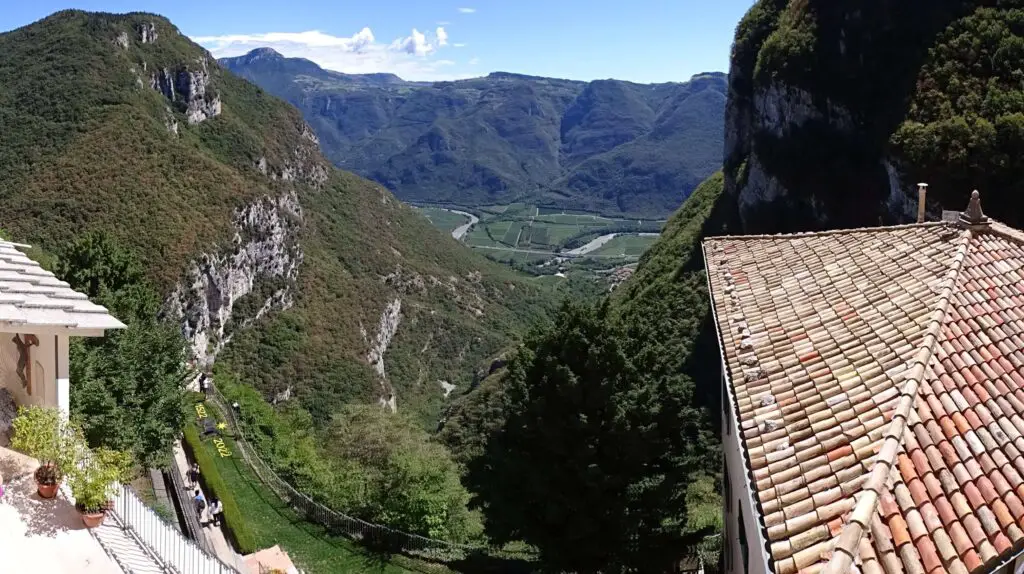
More importantly, there are also some great views of the Adige Valley to the east and over to the basilica. Alternatively, there’s a shorter and steeper path that leads down a several sets of stairs, but it doesn’t have the great views that the road has.
The last part of the path leads through a stone gallery that was cut through the rock. In our opinion, the section right before this tunnel has the best view of the sanctuary, so make sure to take a short detour there, even if you decide to use the stairs.
The Church
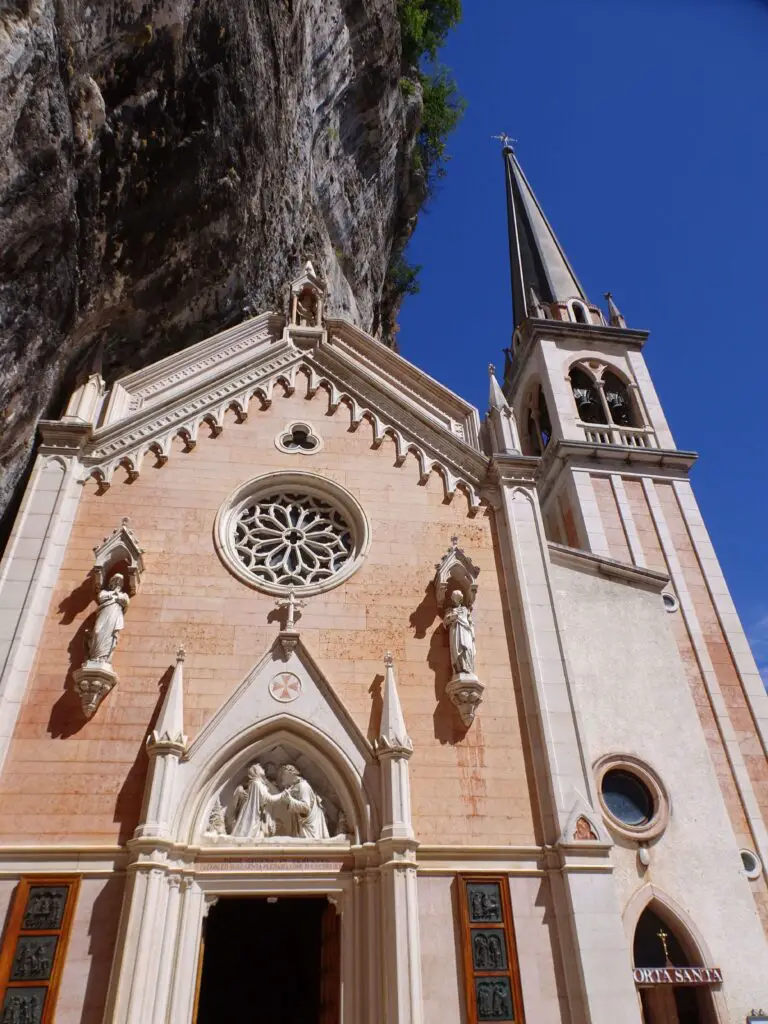
The Neo-Gothic church building directly touches the much taller cliff face, which makes it look pretty small from a distance, but once we were there, we realized that it’s actually quite large.
Outside, we liked the carved stone sculptures on the front façade and the bronze reliefs of biblical scenes framing the main portal.
Inside, the church has brightly painted walls and pillars, as well as a white barrel-vaulted ceiling, which makes the nave look bright even though there are only a few windows in the south wall.
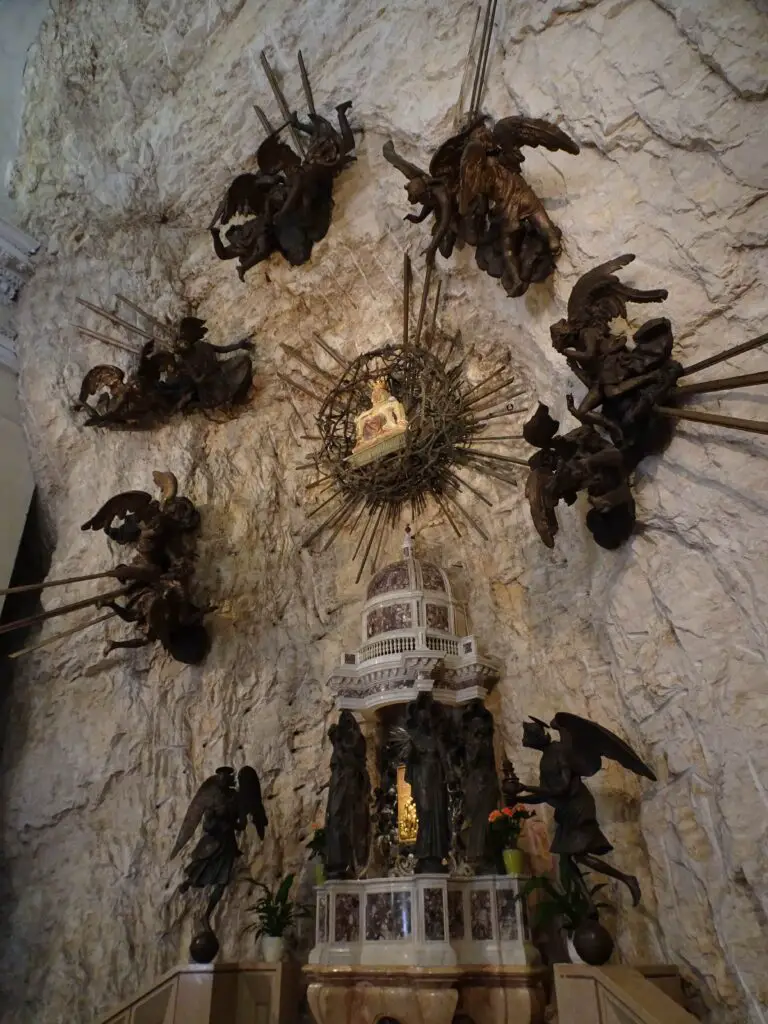
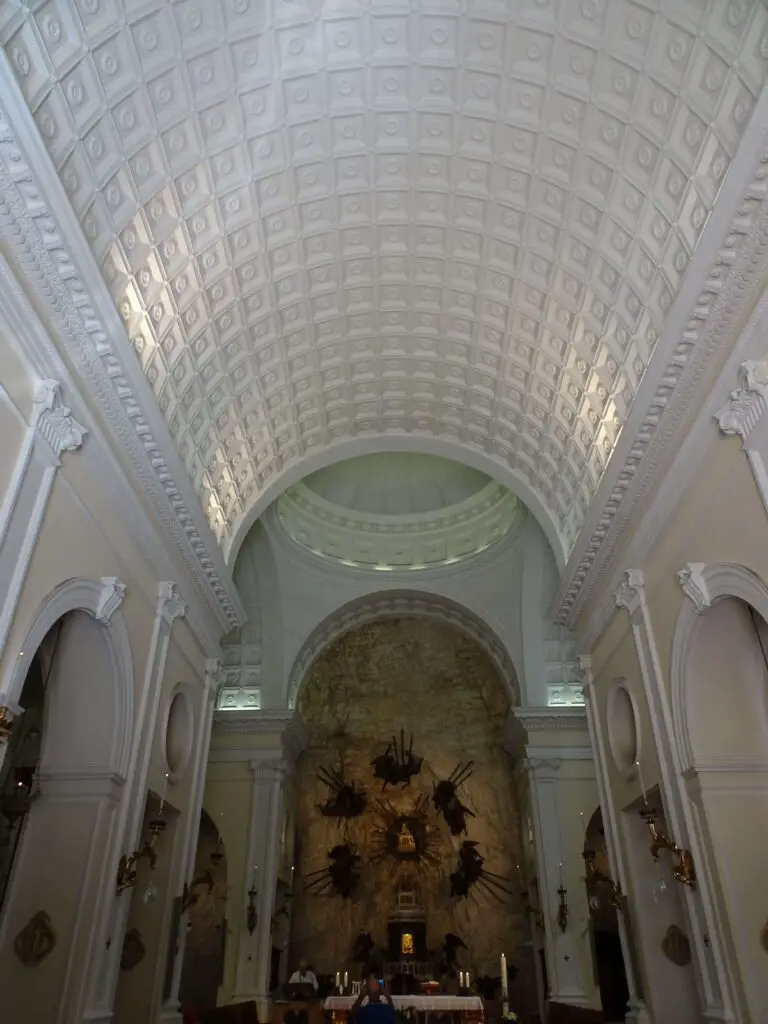
Our favourite feature inside was the unusual altar piece, which consists of bronze sculptures of angels that are joined directly to the rock face of the mountain. The Pietà sculpture in the middle of the altar is the one that is said to have miraculously appeared here in the 16th century, which turned the monastery into a pilgrimage site.
Chapel of Confessions and Scala Santa
There are several chapels around the main church that we found worth checking out. If you veer off to the right halfway up the stairs leading to the basilica, you’ll come to a small side chapel with a Scala Sancta (Holy Stairs), which are modelled on the one in Rome’s Basilica San Giovanni in Laterano.
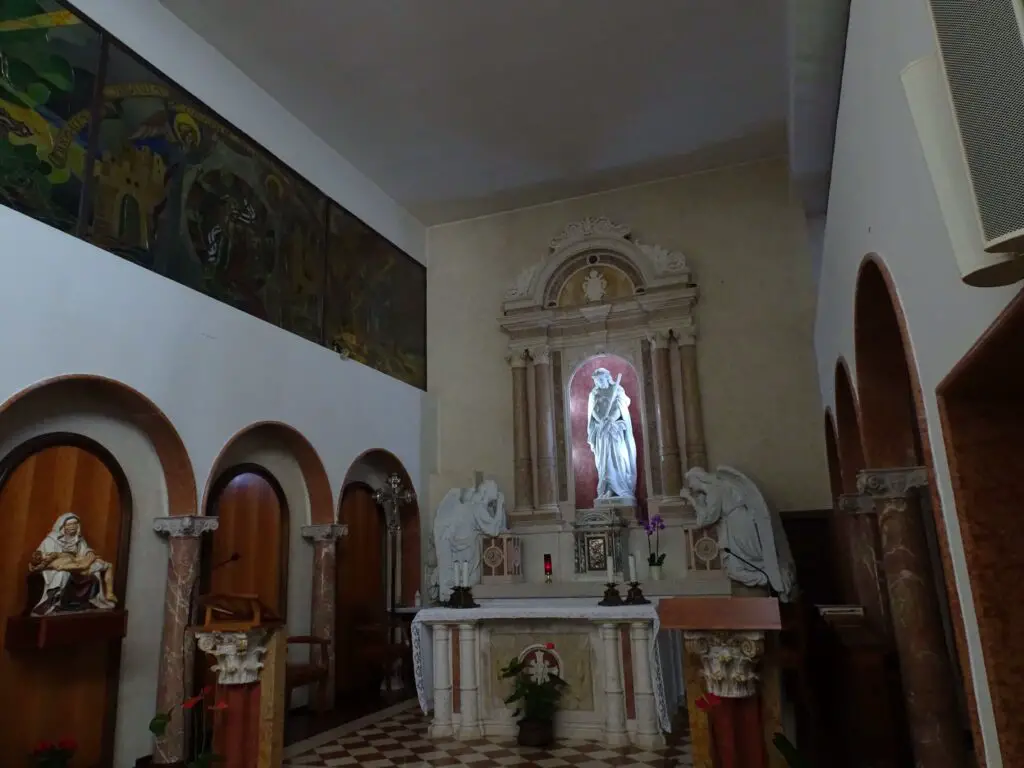
The stairs lead up to a small altar and if you feel like you seriously have to make up for something, you can climb the Scala Sancta on your knees. We decided to use the smaller stairway to the side to climb up with our feet instead (boring, I know).
Other Rooms and Terraces
If you pass the stairs leading to the basilica on the right instead of going up, you’ll come to a couple of rooms that contain votive objects, which were given to the church by pilgrims and a “Mater dolorosa”-collection of 80 Pietà images in different styles.
There’s also a large nativity scene, next to which you can go down a set of stairs and walk past a room full of glass cases with the mortal remains of several hermits that used to live here.
If you continue down the steps, you’ll reach the lower terrace of the complex, from where, in my opinion, you’ll have the best views of the valley floor. You can also check out the small “Sacellum pietatis” building, where the Pietà sculpture from the church is said to have originally appeared.
Another place with nice views is the small cafeteria between the church and tunnel, where we saw lots of pilgrims drinking Aperol Spritzes (celebrating being absolved of constantly drinking too much Aperol Spritz, I assume).
Practicalities
How to Get There
The easiest way to get there would be to rent a car (for instance in Verona or at Lake Garda). That’s what we did and we liked the possibility of stopping in a few small villages along the way. You can have a look below to find the best deals on rental cars.
That said, you can also get there by public transport from Lake Garda or Verona. From Lake Garda, you could take Bus 476 from Garda to reach the town of Spiazzi. The trip should take about 40 minutes. You can check the current connections and timetables on this site.
Reaching the sanctuary by bus from Verona is a little more complicated, but not impossible. To do it, you can take Bus 173 from Verona Porta Nuova to the terminus at Caprino Veronese and change to Bus 476 to reach Spiazzi.
The entire trip takes over two hours each way. Bus 476 has fewer connections, so you have to choose the right time to start in Verona or you’ll be stuck in Caprino Veronese for two hours. Once again, you can check current timetables and connections on this site.
Finally, you can also take a guided tour that includes transport, which would probably be the easiest way without renting a car. I’ve listed some more options at the beginning of the post.
Where to Stay Near the Sanctuary
We visited the basilica as a day trip from Verona, but if you would like to stay in the Monte Baldo area, there are some options available, like Hotel Corona or Hotel Belvedere.
See Also