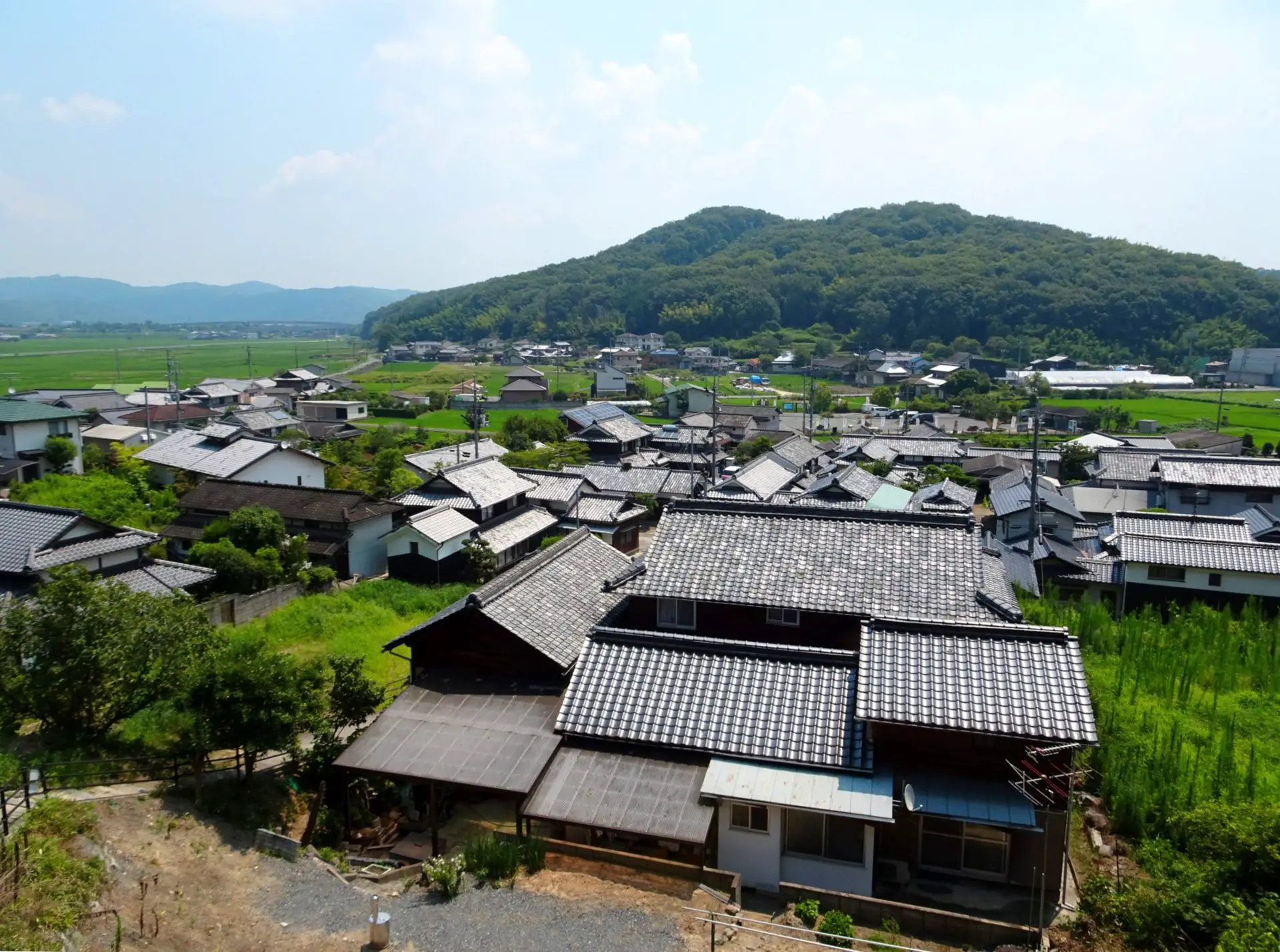
We had a lot of fun exploring Japan’s many unique cities, but after a while we were itching to get out into the beautiful nature that so far we had mostly glimpsed from Shinkansen windows while zipping by at 300 kilometres an hour.
Places like Mount Fuji or Shikoku’s Iya Valley are amazing natural destinations, but we also realized that we needed a few days to properly explore them. If you don’t have a lot of time, I can really recommend the half-day bike tour through the pretty rice fields and low-key historical sites of the Kibi Plain near Okayama.
The area is spread over the former domain of the 4th-century Kibi Kingdom, and you can still see its remains in the form of some gigantic burial mounds that rise out of the otherwise flat terrain. It’s a great way to get off Japan’s tourist trail, and we didn’t meet a single other foreigner during our trip.
Here’s everything you need to know about cycling the Kibi Plain.

This post may contain affiliate links, and I might earn a small commission at no additional cost to you. For more info, click here.





What to See on the Cycling Tour
When we rented our bike, we got a map that showed the route and some sights. There’s also plenty of signage along the way (also in English), so it’s impossible to get lost.
We did the tour from east to west, renting our bikes at Uedo Rent-a-Cycle at Bizen-Ichinomiya Train Station, so that’s how I’ll describe it, but you can also do it the other way round. You can find all the information on how to get to the start and end points and how to rent the bikes under ‘Practicalities’.
Okayama Hotel Tips
Budget: Kamp Houkan-cho Backpacker’s Inn
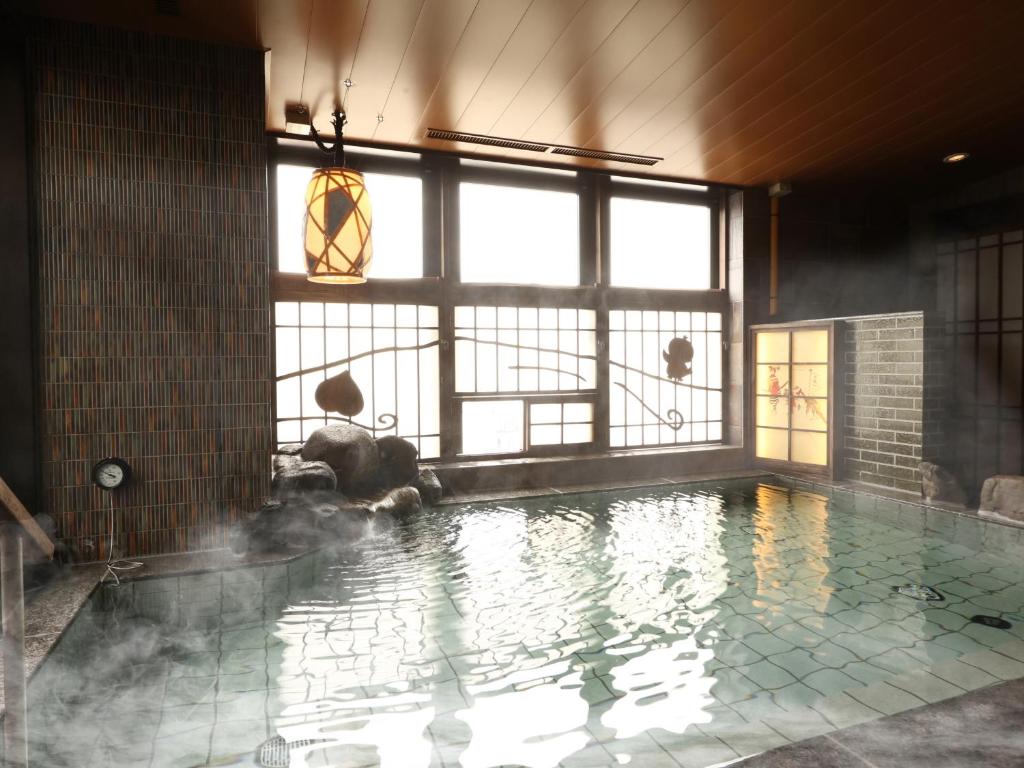
Midrange: Dormy Inn Okayama (pictured)
Luxury: The Residence Hotel
.
Kibitsuhiko Shinto Shrine
The first worthwhile stop sits almost directly south of the Bizen-Ichinomiya Train Station.
Kibitsuhiko Jinja is the most important Shinto shrine of the former Bizen Province and is said to have been built under Empress Suiko in the 7th century. Unfortunately, most of the current buildings are from the 1930s, because the complex was destroyed in a fire around that time.
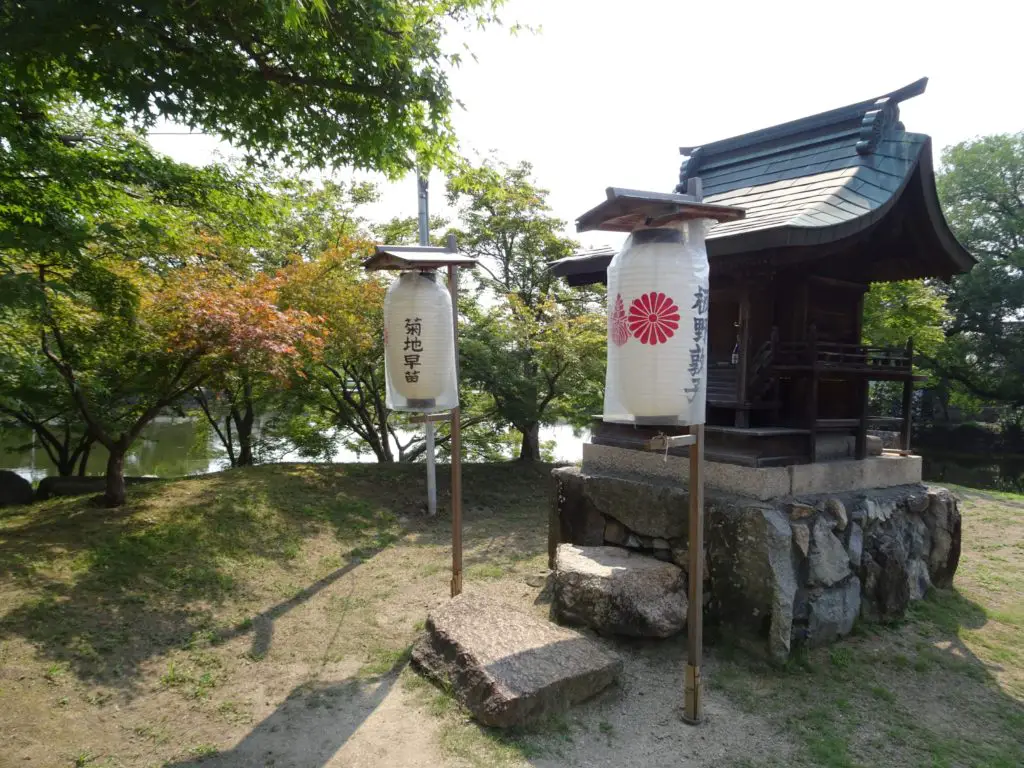
The most interesting features to us were some small shrines on two tiny islets in a pond, which was full of turtles. Of course there are also some bigger shrine buildings and a couple of large stone lanterns, which are said to be the biggest in Japan.
It was open from 6am to 6pm when we were there (double-check the times here). There’s no entrance fee.
Kibitsu Shinto Shrine
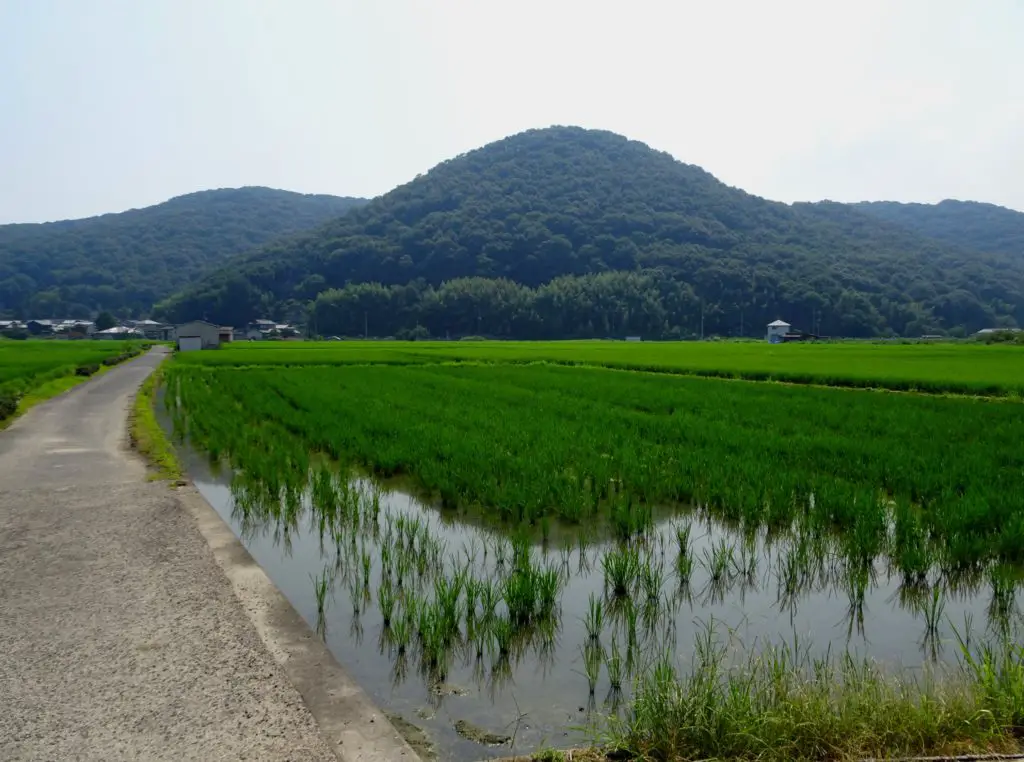
The first part of the cycling tour goes through a pretty landscape of rice fields and along a small canal. After a while you’ll reach Kibitsu Shrine, which is another important Shinto Shrine. This time it’s the main shrine of the former Bitchū Province (yep, you’ve crossed historic provincial borders).
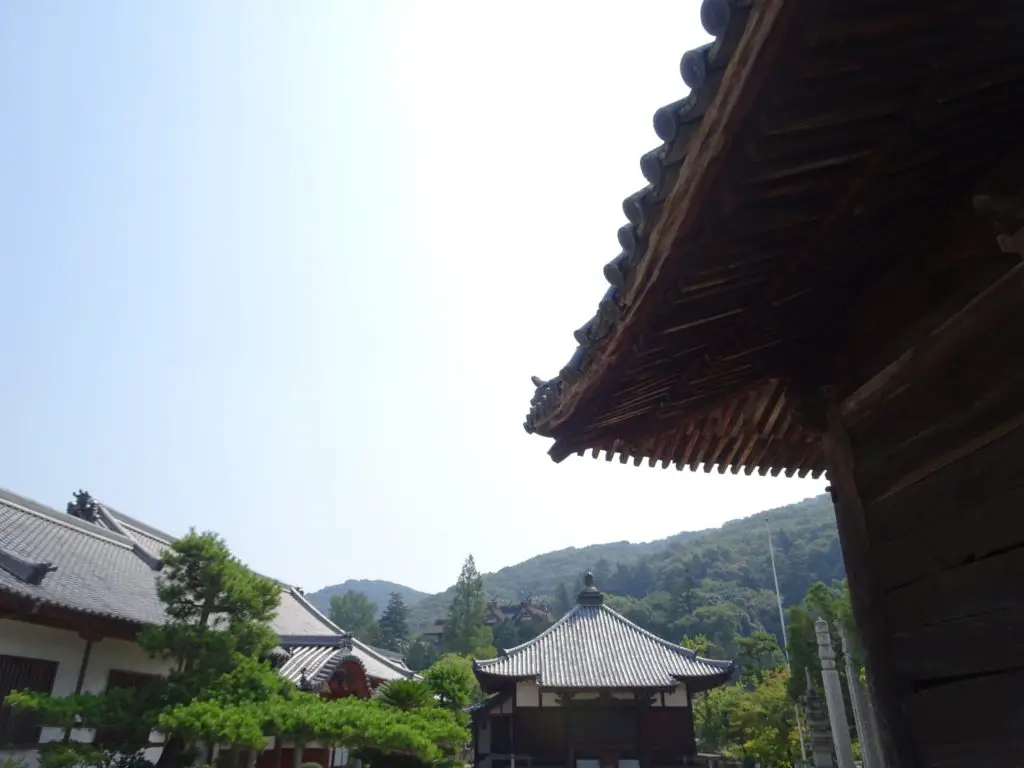
The honden (main hall) and haiden (worship hall) date to the Muromachi Period (1336 to 1573) and the former has been declared National Treasure of Japan.
Normally, it’s said to be open from 9am to 5pm, but somehow it was closed when we passed by. At least, we were able to get a peek past the gate.
Tatetsuki Burial Mound Ruins
Afterwards, the tour continues through the rice fields, where we spotted lots of egrets searching the water for fish. After crossing the Ashimori River, we took a small detour south to the Tatetsuki Burial Mound.
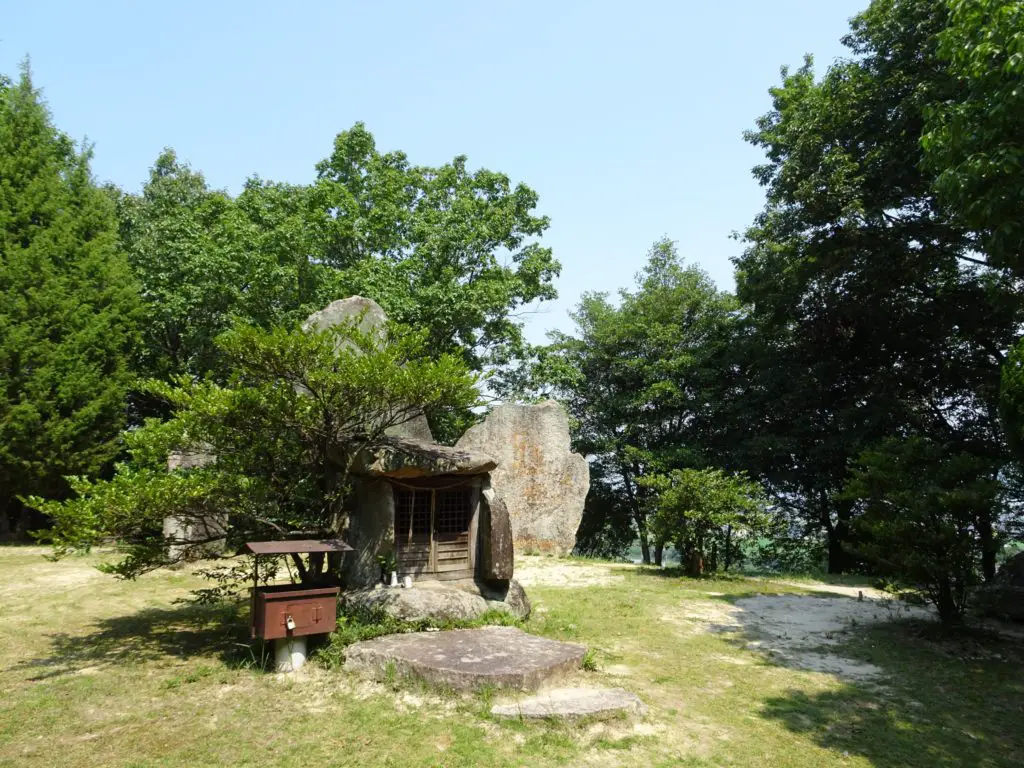
The mound has a diameter of more than 40m or 130ft. and was constructed in the late Yayoi Period in the 2nd century. It’s one of the largest grave mounds from that time in the country and the main theory seems to be that this was the burial site for a regional chieftain.
At the top, there’s a circle of monoliths around the former burial chamber, which used to hold a wooden coffin. There’s also a small shrine and a signboard about the archaeological excavations that took place here in the 1970s and 1980s.
Apparently, there also used to be at least twenty stone rows on the slopes, but we just saw a tiny remaining section at the southern base of the mound. The Tatetsuki Mound sits at the northern end of the Shoshinmachi residential area.
Tsukuriyama Kofun Burial Mound
A little further along the route, there’s an even larger burial mound from the Kofun Period (300 to 538). Many of the huge tombs from that era have a distinct keyhole shape, but it’s almost impossible to make that out from the ground.
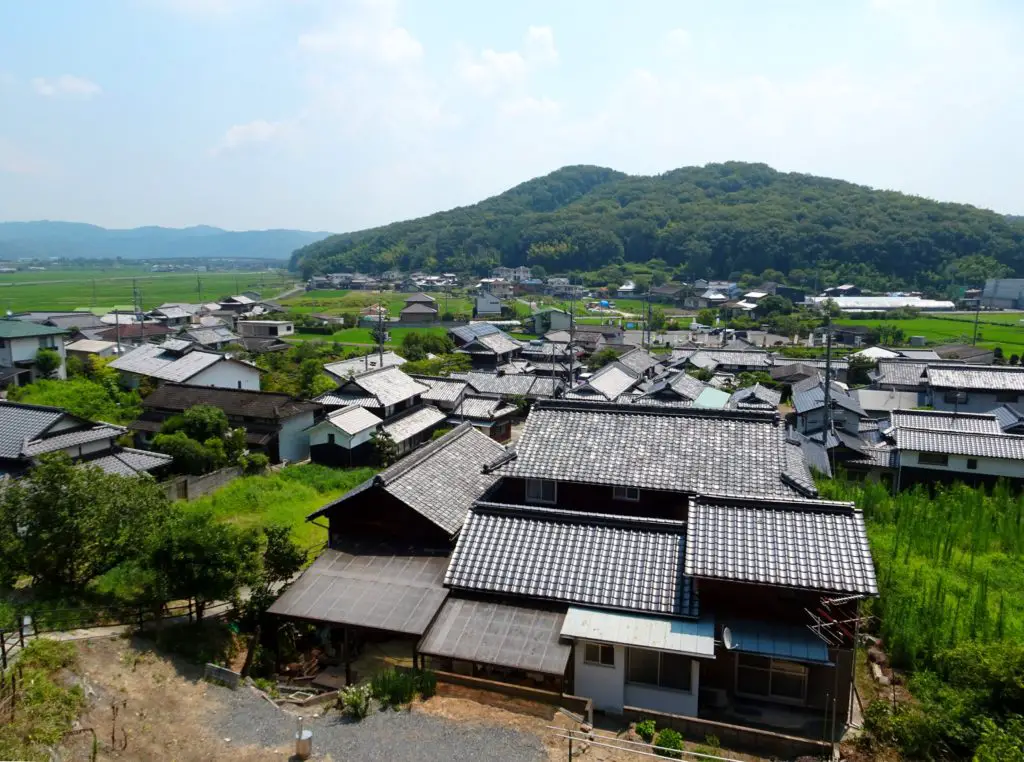
Tsukuriyama Kofun is the fourth-largest of its kind with a length of 286 meters (or 938 feet). The stone sarcophagus inside the burial chamber is thought to have held the remains of a local king of the Kibi Kingdom.
You’re also allowed to climb to the top from the eastern side, but it was pretty overgrown and we could just get some glimpses of the surrounding plains through the trees.
Bitchū Kokubun-ji Temple
About 15 minutes further along the route, you’ll come across this atmospheric Edo Era temple in the eastern outskirts of Soja City, which has some cute wooden shrine buildings in a pretty little garden.
The temple belongs to the Omura School of Shingon Buddhism, which is one of the few remaining East Asian lineages of the more esoteric Vajrayana Buddhist tradition, which today is more typical for the Himalayan regions.
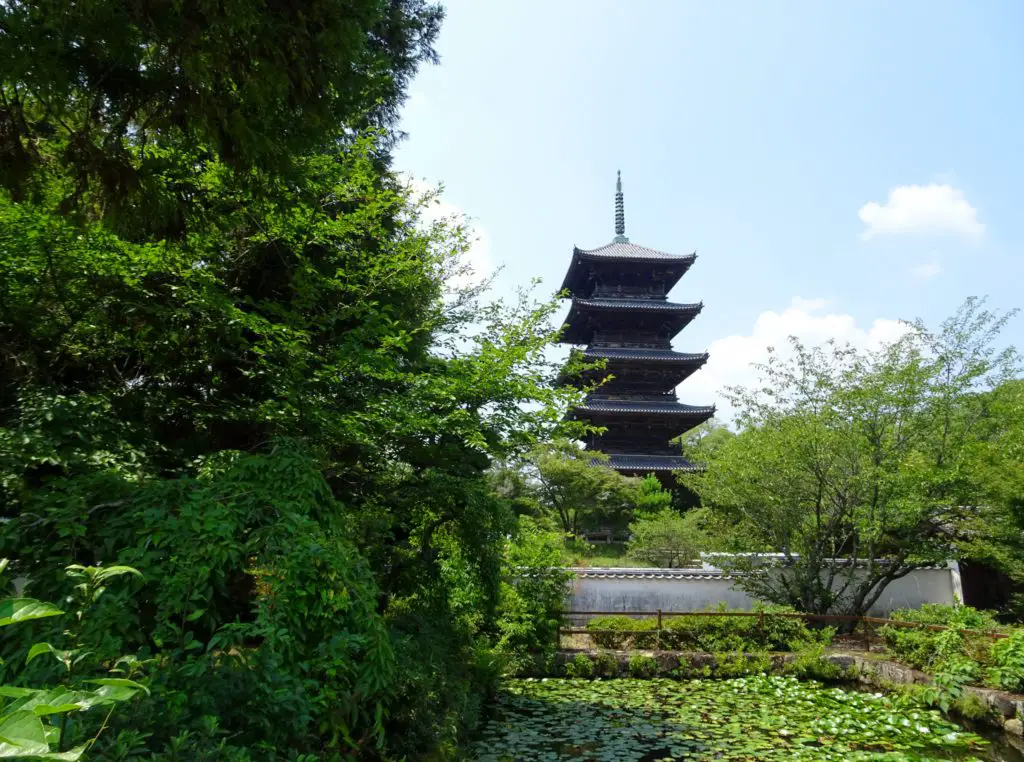
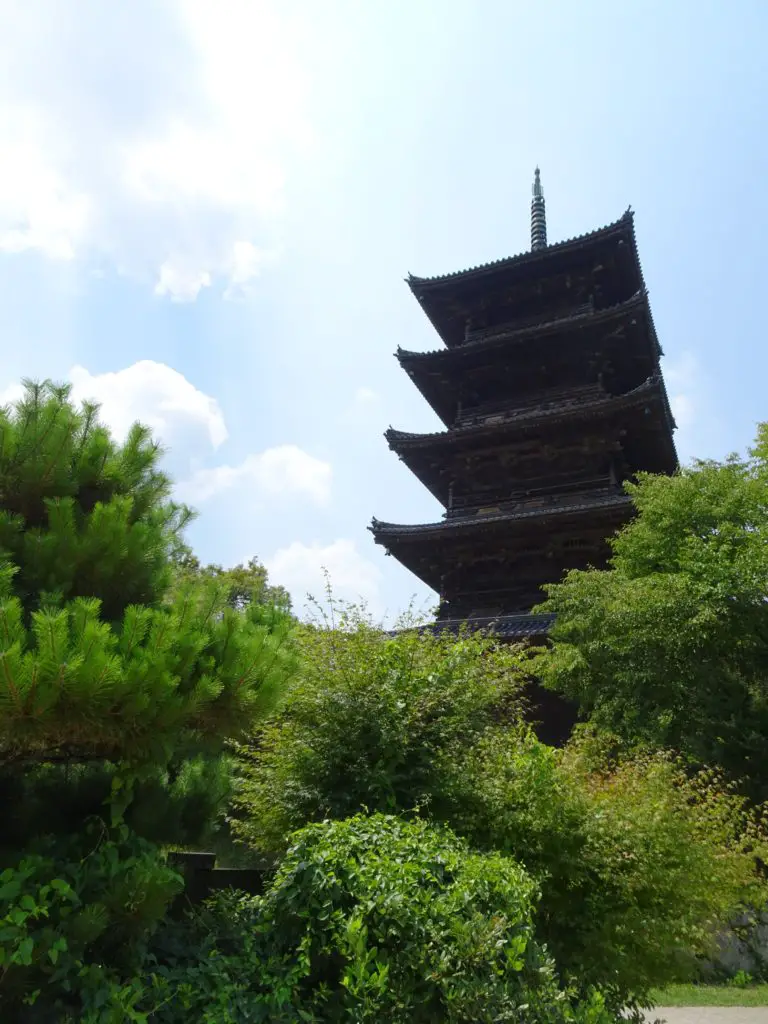
We especially liked the beautiful pagoda, which was built in 1844 and is said to be the last five-storied pagoda built in Japan to this date. The temple is open from 8am to 5pm and there’s no entrance fee.
Most of the rest of the tour leads through the centre of the small city of Soja, where you can return your bike at Araki Rent-a-Cycle near the train station and board the train back to Okayama.
Map of the Kibi Plain
You can find all the sights that I mentioned above and the exact route that we took (including detours) on this map of the Kibi Plain.
Practicalities
How to Get to the Kibi Plain
The plain stretches out between Soja in the west and Okayama in the east, which is where we based ourselves. The city has lots of hotels and guesthouses and a few cool sights in its own right. We found it very easy to do a half-day trip into the Kibi Plain from there.
From Okayama Station it’s just a 10-minute train ride (about 200¥) to Bizen-Ichinomiya Station along the JR Kibi Line, which is one of the starting points of the bike tour.
Alternatively, you can also start from the western end of the tour at Soja Station. Trains there on the JR Momotaro Line take about 40 minutes and cost approximately 400¥.
Where to Rent and Return the Bicycles
One of the cool things is that the bike rental stores at both ends of the tour have teamed up, so you won’t need to return to your starting point. We rented our bicycles at Uedo Rent-a-Cycle at Bizen-Ichinomiya JR Station and returned them at Araki Rent-a-Cycle near the Soja Train Station.
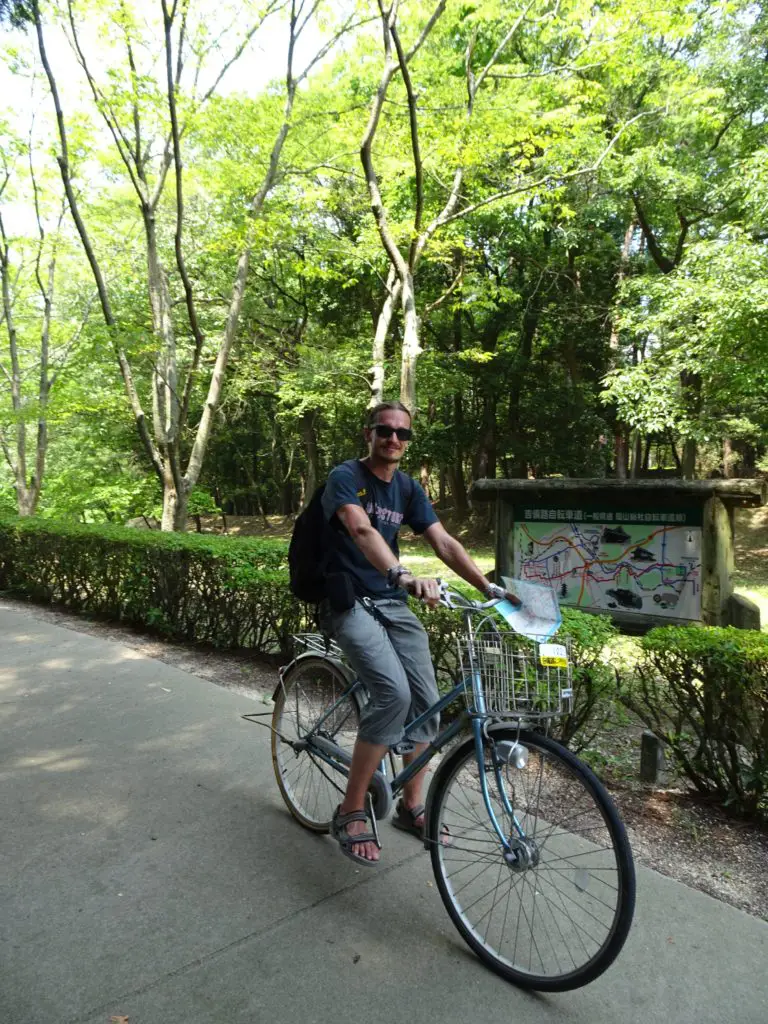
Both places were open from 9am to 5pm when we did the tour, (but make sure to double-check with them whether that’s still the case). We paid 1500¥ per bicycle, which gets you the bike for the entire day so you can take as much time as you need, as long as you return it by 6pm.
What Type of Bike to Get
We got a simple city bike, which was the cheapest option and absolutely sufficient for the mostly very flat trail. Otherwise, they also have special sports bikes and E-bikes available.
How Long Is the Tour?
The suggested route from Bizen-Ichinomiya to Soja is a little over 15km or 9 miles, but we took a few detours along the way, so it was more like 20km or 12 miles for us.
How Long Does the Tour Take?
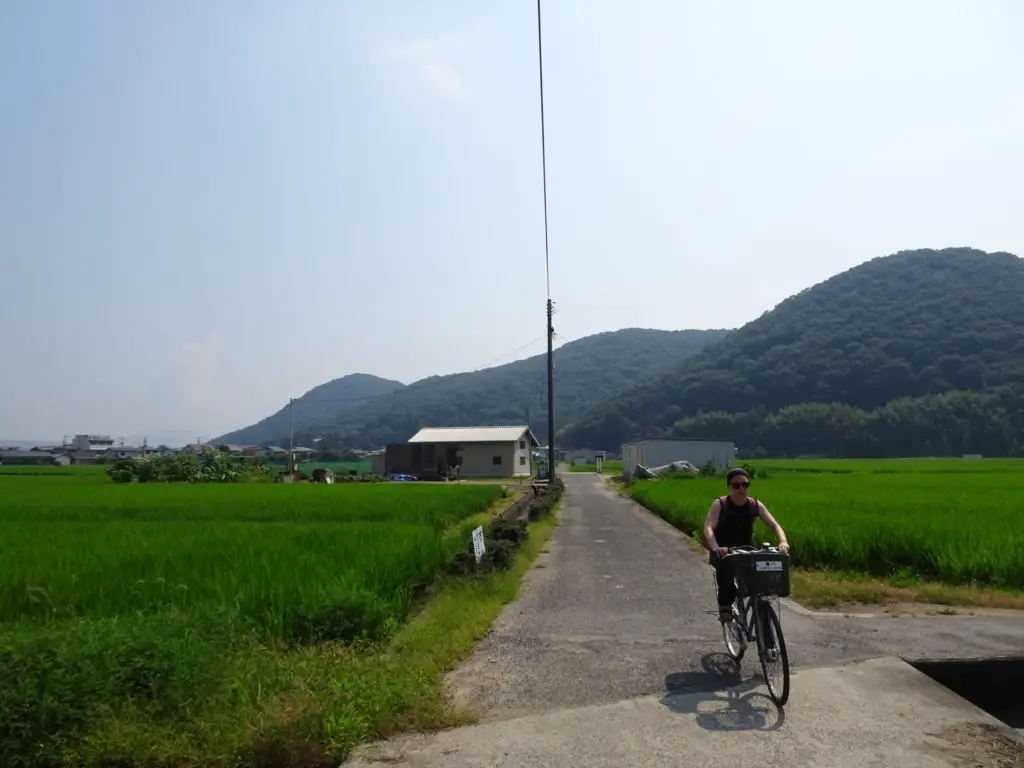
As the tour is quite short, you could easily do it in an hour or two. That said, the fun for us was going on some side quests and exploring a few low-key sights along the way, so I recommend not to rush. With a few stops and detours along the route, the whole thing took us about three hours.
Height Profile
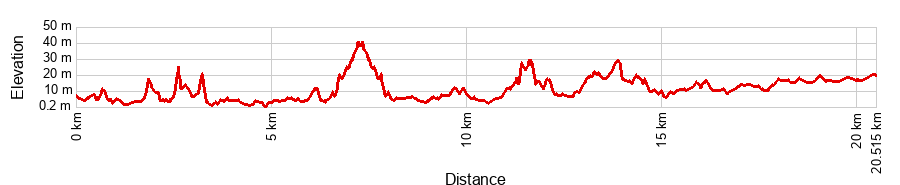
This is the height profile of our tour. As you can see, it’s very flat and the only spikes are the two burial mounds. At the Tatetsuki Burial Mound, there’s a road going almost all the way to the top, but at the Tsukuriyama Kofun Burial Mound we left our bikes at the foot and walked to the top.
Where to Go Next
Okayama, Capital of the “Land of Sunshine”
Miyajima Island, home to the awesome Itsukushima Shrine and its Floating Gateway
Naoshima, the quirky Art Island in the Seto Inland Sea