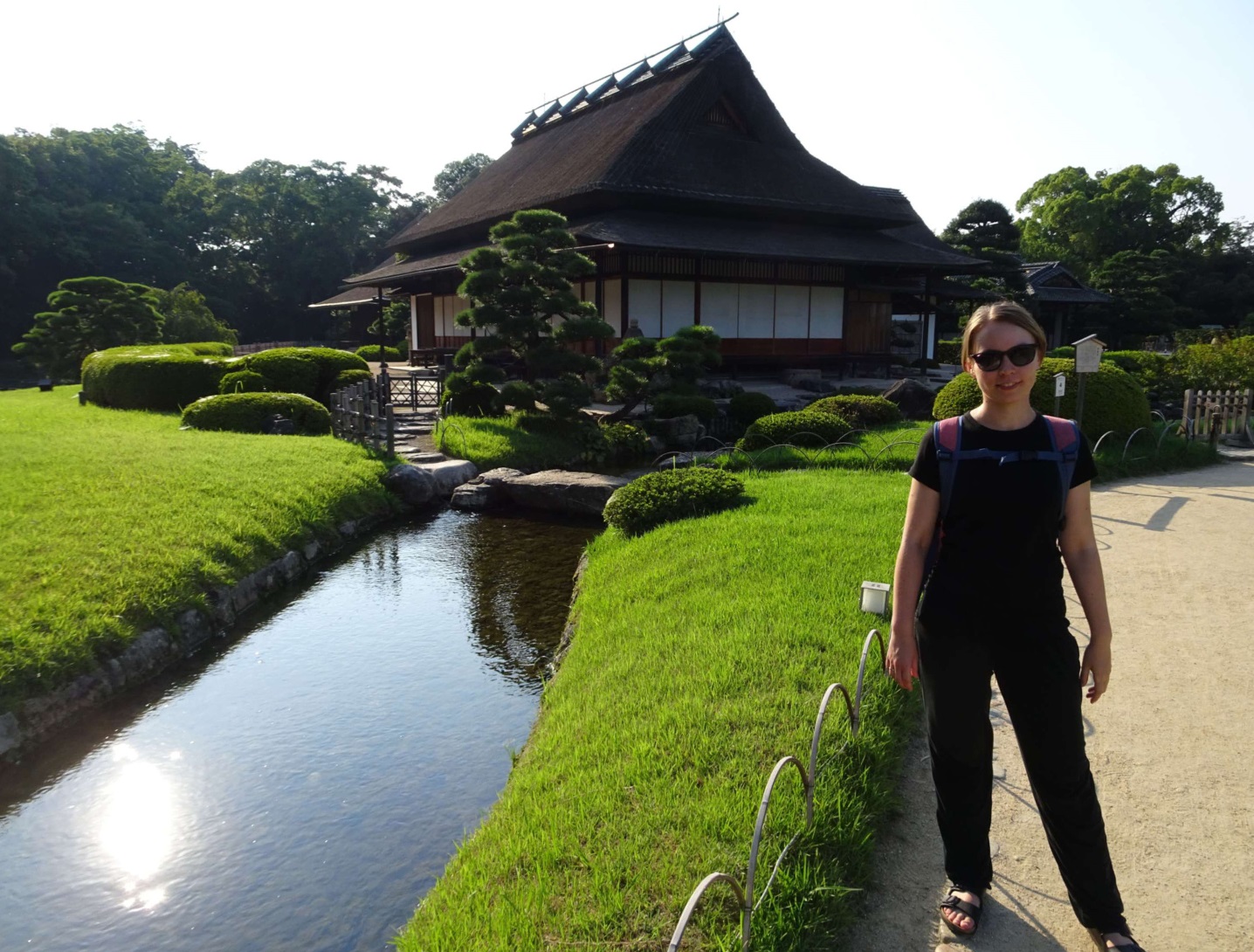
Okayama Prefecture in southern Honshu is also called the “Land of Sunshine“, as it’s one of Japan’s sunniest regions. The capital city, which is also called Okayama, is a cool destination, where we didn’t meet many other foreigners (especially compared to nearby Himeji).
The reason can’t be a lack of sights, because in my opinion, Okayama’s super beautiful Kōraku-en Garden and its unusual black castle alone make it worth a visit.
Apart from that, the city is surrounded by the pretty Kibi plain, which we explored on a slow bicycle tour that gave us a chance to see an attractive part of rural Honshu. Here are my recommendations for what not to miss in Okayama.

This post may contain affiliate links, and I might earn a small commission at no additional cost to you. For more info, click here.





Guided Tours of Okayama
If you’d like the company of a local guide, there are some tours of the city available, like this customizable four-hour tour of the most important places in the city. If you want to try something more out-of-the-ordinary, there’s also a unique standing bicycle tour to all of the city’s top sights available.
You can have a look at some other tours below.
What to See and Do in Okayama
The most interesting sights in the city are all clustered around the Okayama-jō Castle near the Asahi River at the eastern end of the city centre. Four or five hours should be more than enough time to see all of these.
Kōraku-en Garden
Kōraku-en has the reputation of being one of the most beautiful gardens in Japan and deservedly so, in our opinion. The garden was laid out in 1700 under the orders of Ikeda Tsunamasa, who was the feudal lord of Okayama Domain at that time.
Back then, nobody but the daimyō and his guests were allowed inside the garden and the complex was only opened to the general public in 1884. After large areas were destroyed by flooding in the 1930s and by bombings in World War II, it was restored based on historical paintings.
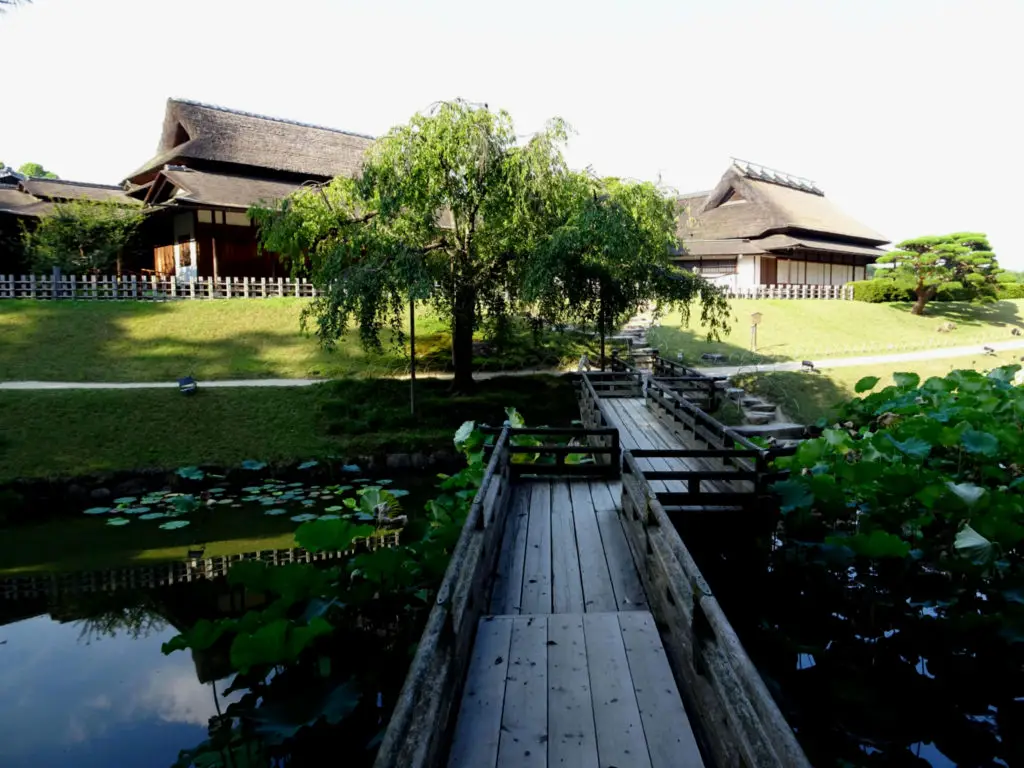
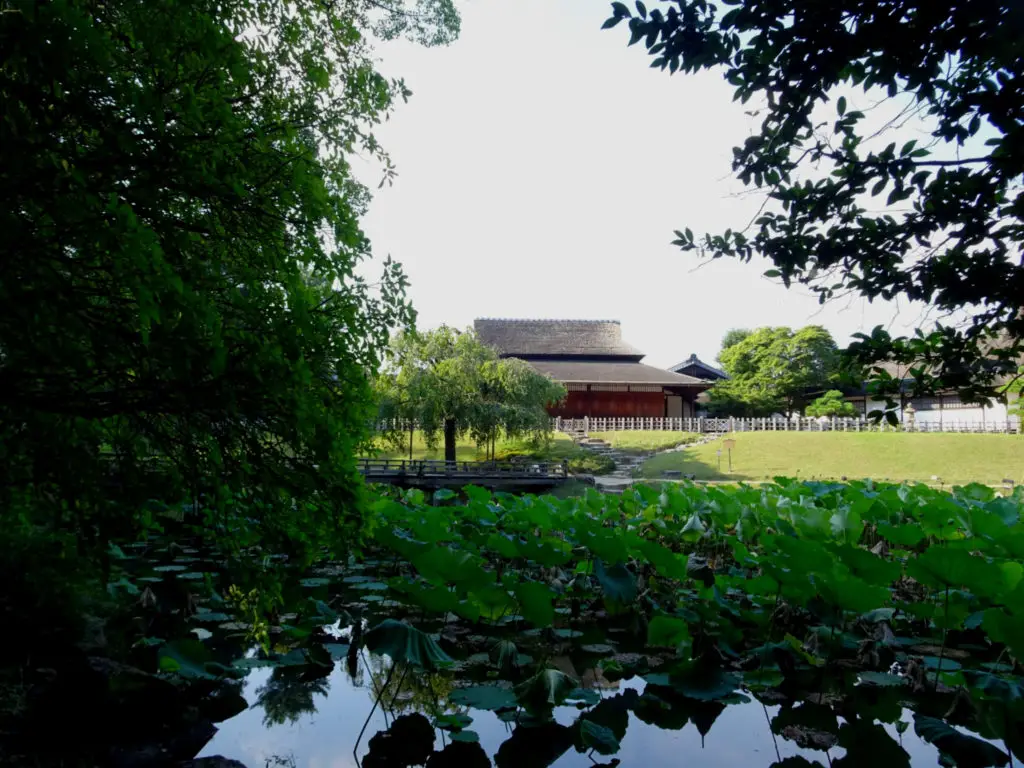
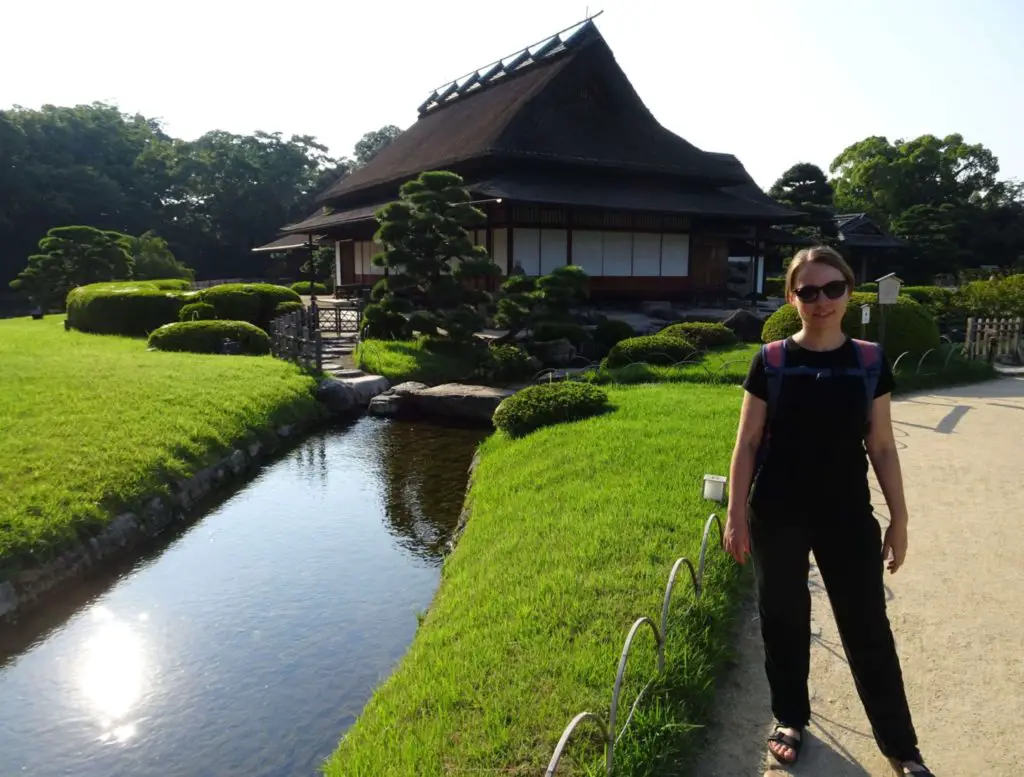
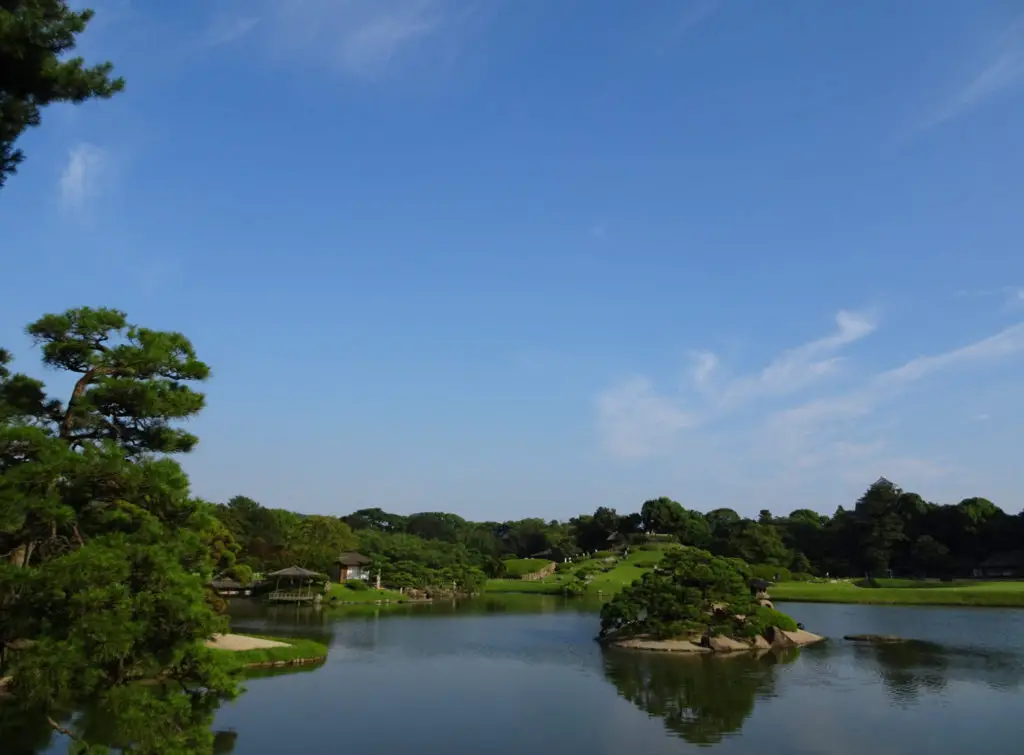
Nowadays, it’s listed as one of the “Three Great Gardens of Japan” (the others are Kenroku-en in Kanazawa and Kairaku-en in Mito). We, too, found it absolutely beautiful, and I’d even go so far as to call it my favourite historical garden in Japan after Ritsurin Koen in Takamatsu.
There are lots of ponds and cute little streams, and we saw tons of koi carps and turtles in many of them. The views all around the complex are fantastic, too, especially with the black-walled Okayama-jō Castle in the background.
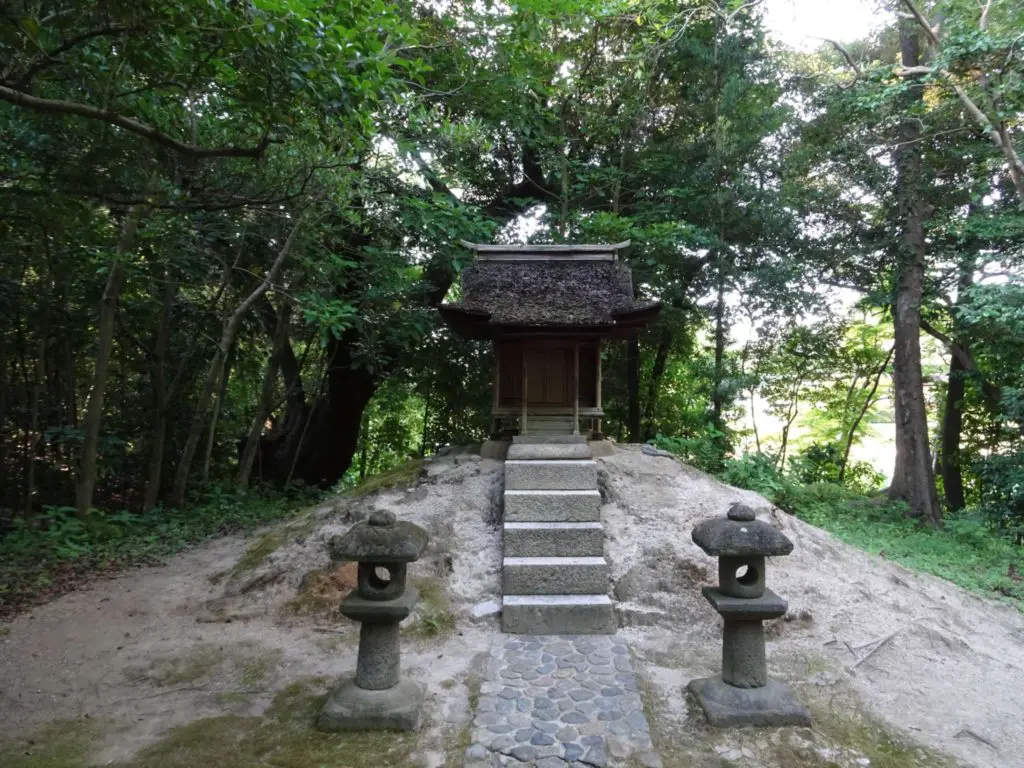
We also liked the different reed-thatched buildings from Edo times (1603 to 1868) (or at least reconstructed in an Edo era style) in different corners of the garden, including some small shrines and a few reception buildings for the lords of Okayama and their guests.
There’s also an iris garden, a tea plantation and even a rice field, which was full of herons when we were there. There’s a lot to see and part of the fun is to take it slow and unwind a bit, so I recommend spending at least an hour here, maybe even two.
The entrance fee was 500¥ when we visited and there are different opening times depending on the season. You can check the current ones here. Kōraku-en sits on a small island in the Asahi River directly north of the castle, where there’s a pedestrian bridge leading to the garden.
To get there from the train station, you can take the Okaden Bus Line 18 going in the direction of Fujiwara Danchi and get off at Korakuen Mae Bus Stop.
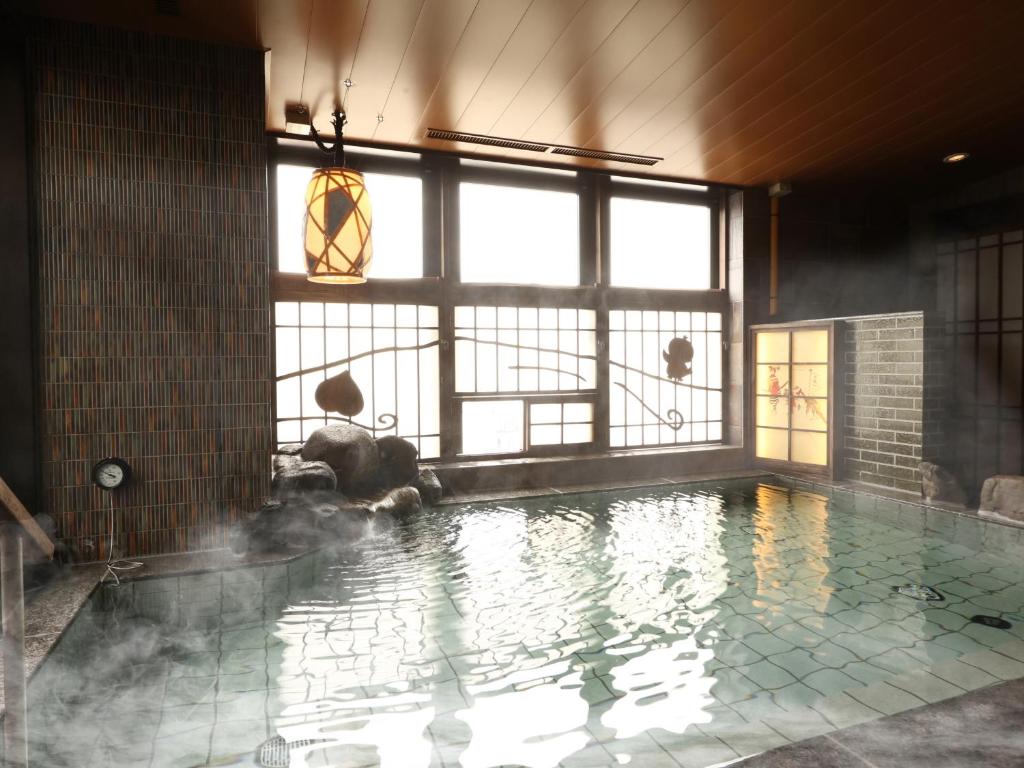
Okayama Hotel Tips
Budget: Kamp Houkan-cho Backpacker’s Inn
Midrange: Dormy Inn Okayama (pictured)
Luxury: The Residence Hotel
.
Okayama-jō Castle
Okayama’s impressive castle is also called “Crow Castle”, because of its black façade, which isn’t very common in Japan (although there are a few others, like Matsumoto Castle). It was originally constructed at the end of the 16th century, but it was completely destroyed by bombings during World War II.
The current version of the castle was rebuilt in 1966 and because of that, we didn’t find the interior construction and layout as interesting as in other castles that we had visited in the country, like Kochi Castle or Matsuyama Castle.
What we really liked instead, were the views from the top of the keep and the historical weapons and objects of daily use that were exhibited inside the castle keep. My favourite were some super impressive samurai armors.
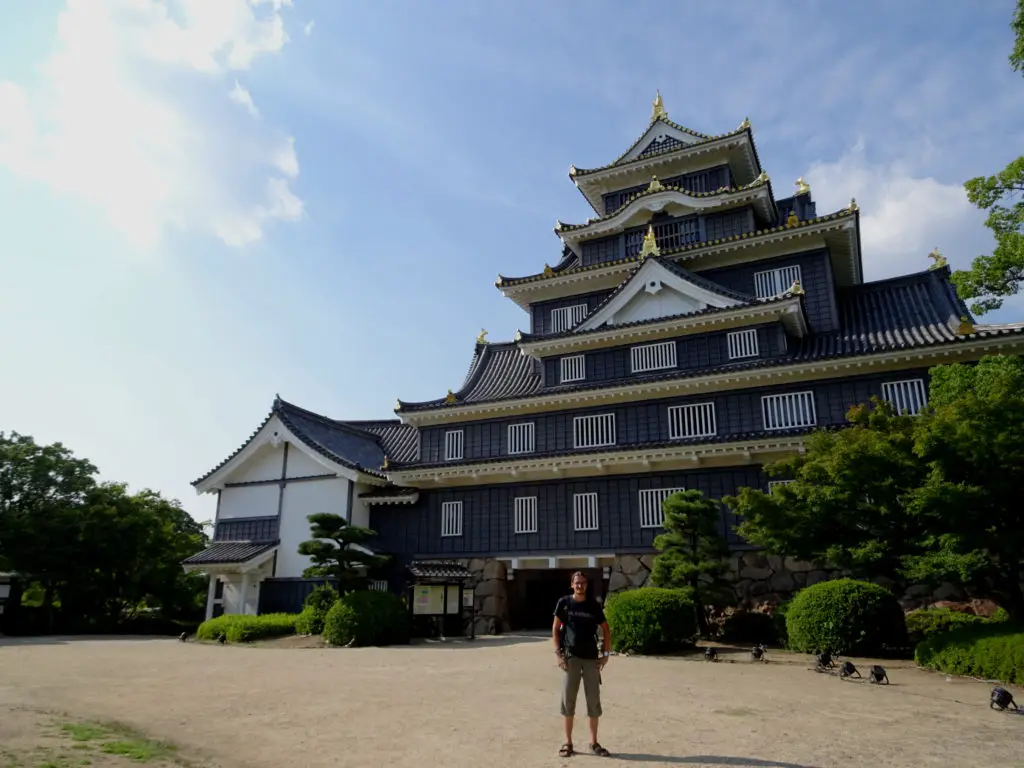
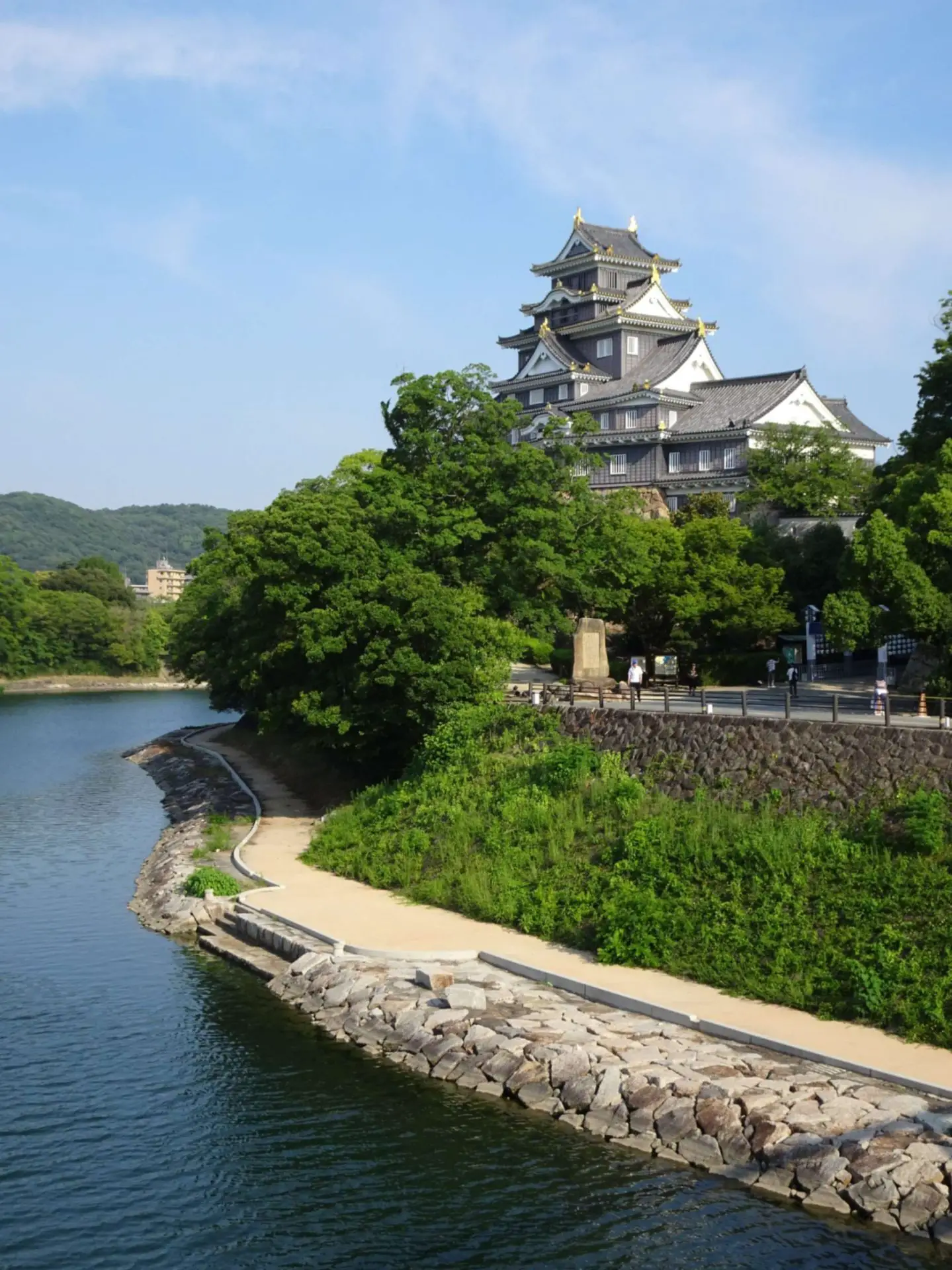
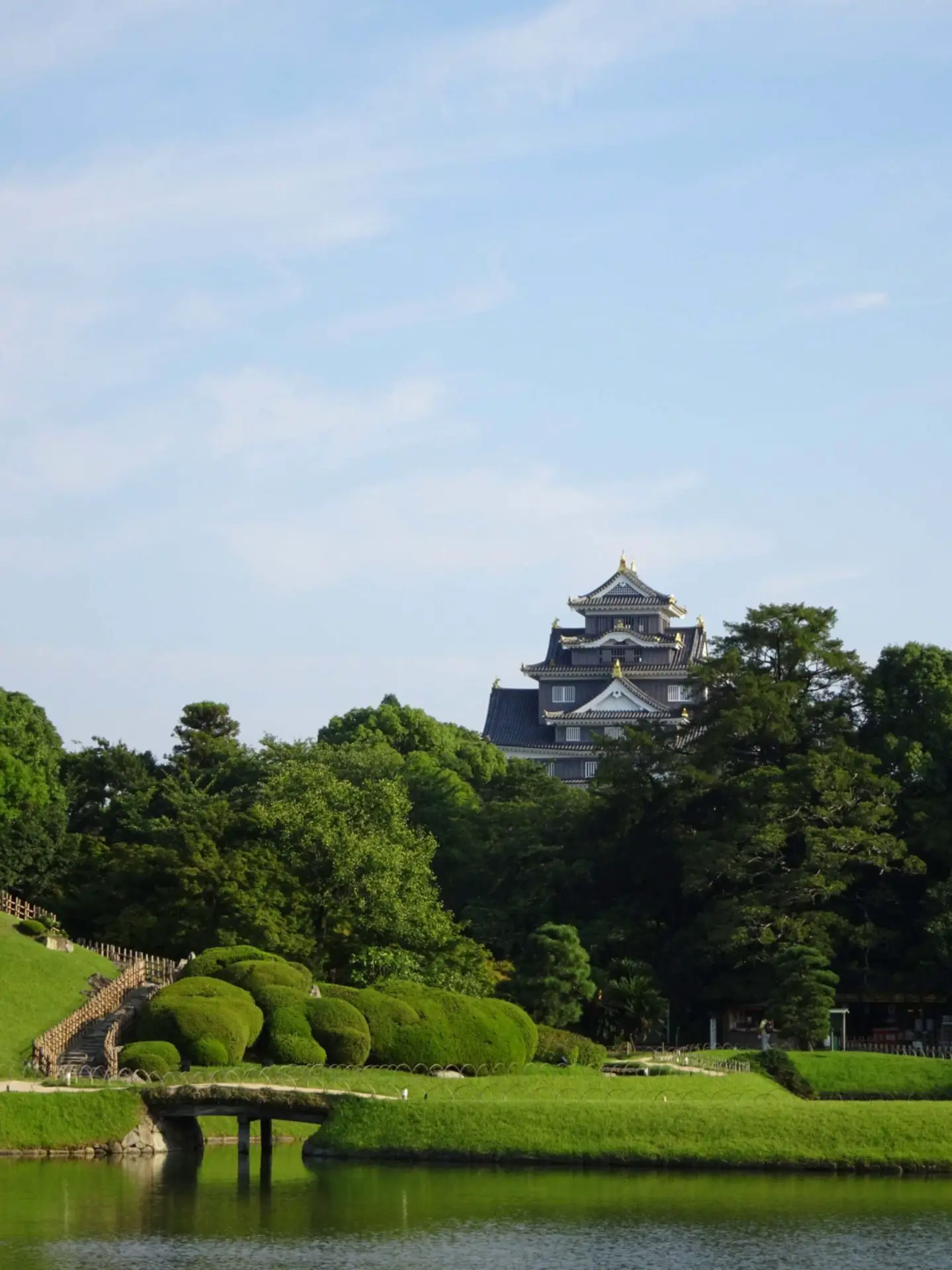
In general, we enjoyed our visit, but if you’re on a tight schedule and only have time for one or two castles in the country, I suggest checking out nearby Himeji Castle instead, which still appears as it did centuries ago.
The castle is open from 9am to 5:30pm (Double-check the current times here) and the entrance fee is 400¥. The castle is located east of the city centre on the western bank of the Asahi River and south of Kōraku-en Garden.
To get there by public transport from the train station, you could take the Higashiyama-bound tram to Shiroshita Stop and walk five minutes east from there.
Hayashibara Museum of Art
This small museum in a former Edo-period guest house has lots of beautiful artefacts that were collected by local businessman Ichiro Hayashibara. A lot of them are the former possessions of the Ikeda family (the daimyō dynasty that also built Kōraku-en Garden).
The collection includes some interesting historic swords, armours, masks, calligraphies and lacquer work. There isn’t anything you couldn’t see in any bigger museum in the country, but we still found it interesting, and you can easily drop by here after visiting Okayama Castle and Kōraku-en Garden.
It’s open from 10am to 5pm (double-check the times here) and the entrance fee is 600¥. It’s located west of the south-western corner of the castle moat.
Bike Tour Through the Kibi Plain
The pretty Kibi plain right outside of Okayama city is a fantastic place for a bicycle tour. The terrain is mostly very flat and there are some cool sights along the way, including a huge burial mound from the Kofun Period (300 to 538).
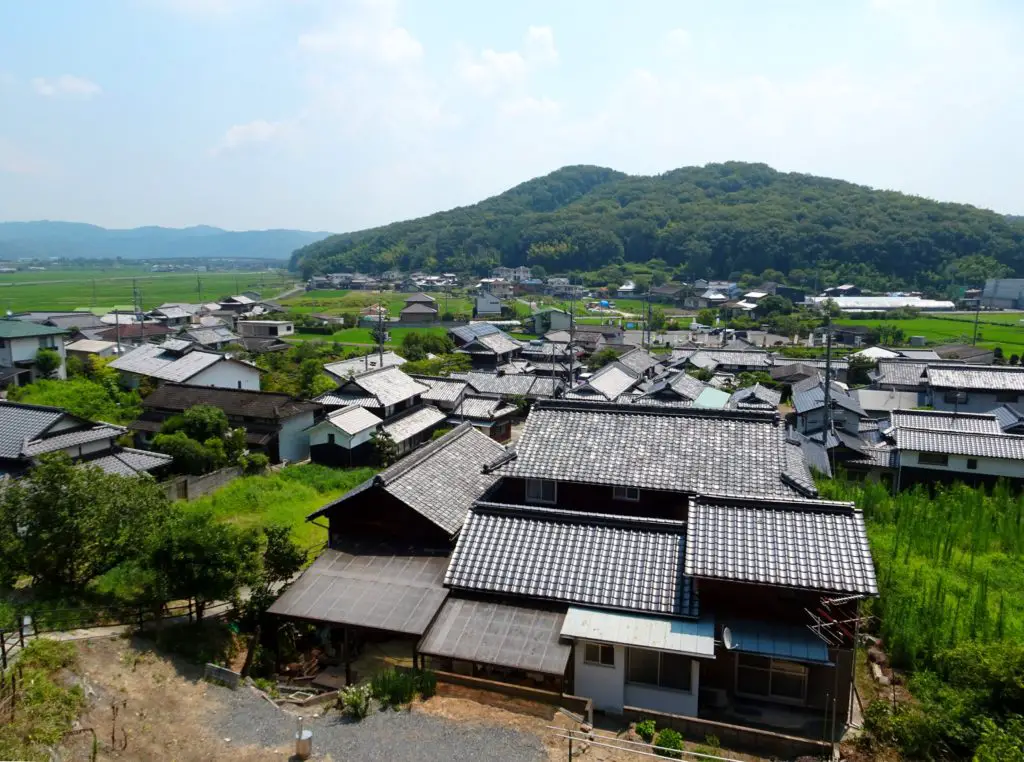
You can rent a bicycle at Uedo Rent-a-Cycle at Bizen-Ichinomiya JR Station and return it to Araki Rent-a-Cycle near the Soja Train Station. You can check out my dedicated guide to the bike tour for everything else that you need to know.
Try Some Local Specialties
The city is famous for its Demikatsudon, which consists of a breaded pork cutlet that is served atop rice and covered in tasty demiglace sauce. We ate it at Ajitsukasa Nomura, which is one of the most popular places in the city to try it.
Also make sure to try the city’s other speciality Kibi-Dango, which is a sweet millet dumpling. We bought ours at the Koeido Honten Sun Station Terrace Okayama Shop inside the JR Train Station.
Kibi-Dangos are connected to the legend of local folktale hero Momotarō, who is said to have gone on adventures with a motley crew consisting of a dog, a monkey and a pheasant. There’s also a statue of this group in front of the train station.
Map of Okayama
You can find all of the places that I mentioned above in this map of Okayama.
Practicalities
How to Get to Okayama
Okayama is located on the JR Sanyō Line and trains passing between Hiroshima (approx. 40 mins. / 3,000¥) and Kyoto (approx. 60 mins. / 3,700¥) stop in the city. On the way to Kyoto, trains also stop in Himeji (approx. 20 mins. / 1,500¥) and Shin-Osaka Station in Osaka (approx. 50 mins. / 3,000¥).
Where to Stay in Okayama
We stayed in the dormitory at the budget Kamp Houkan-cho Backpacker’s Inn & Lounge, which is located in a quiet residential area slightly west of the train station. That means you’ll have to leg it for a bit to get to the centre but it has a cool vibe, friendly staff and nice common hangout and bar area on the ground floor.
Otherwise, there are plenty of mid-range options in the city centre, like Dormy Inn Okayama, as well as a few luxury choices, like The Residence Hotel. Have a look at the map for some options.
Where to Go Next
Miyajima Island, home to the beautiful Itsukushima Shrine and its Floating Gateway
Naoshima, the quirky Art Island in the Seto Inland Sea
Himeji Castle, the biggest and most beautiful castle in Japan